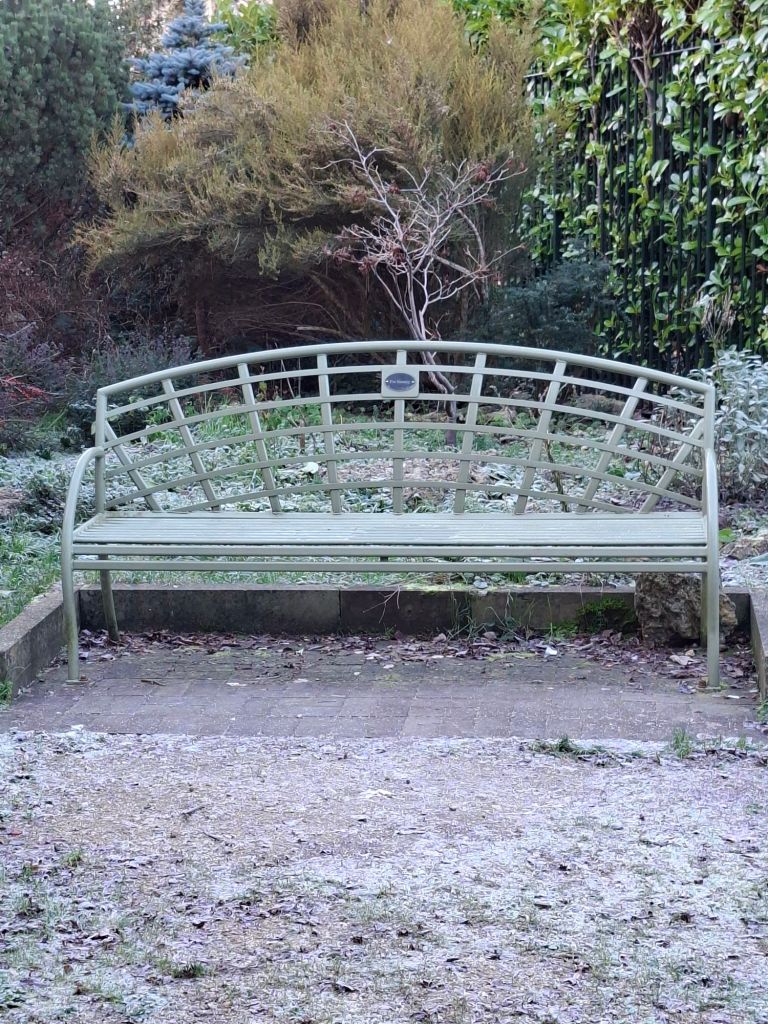
Yesterday, 5 January, I walked in Hillfield Gardens, Gloucester, in the early afternoon. Overall it was bright and sunny, despite being cold. But in shady spaces there were residues of frost.
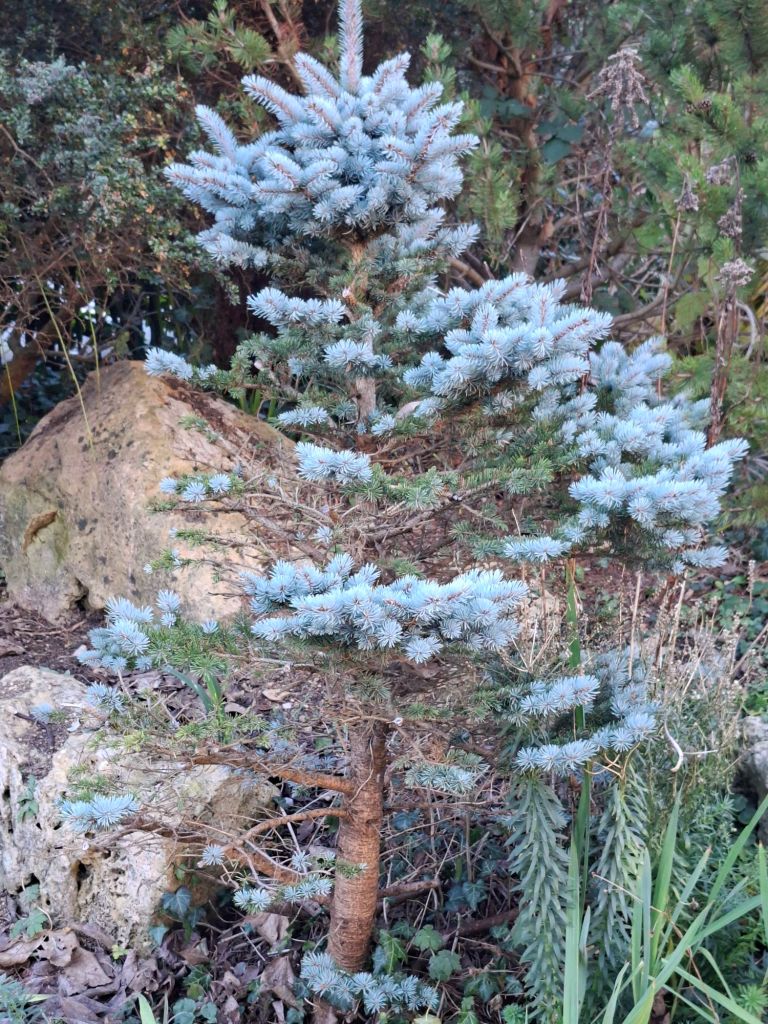
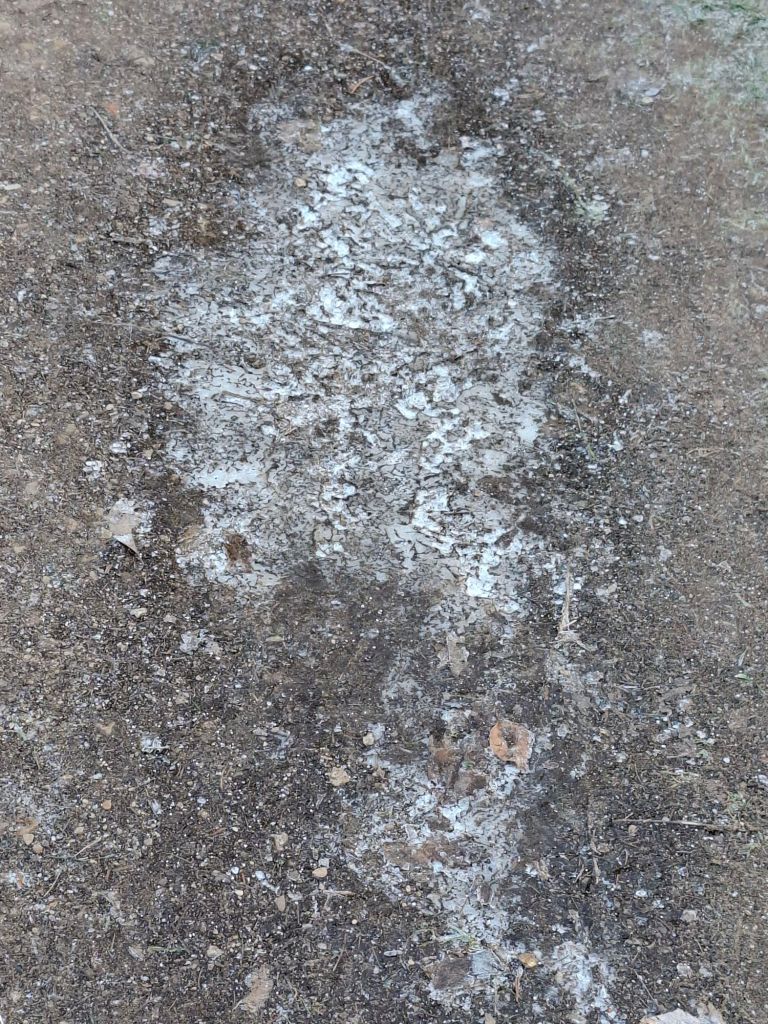
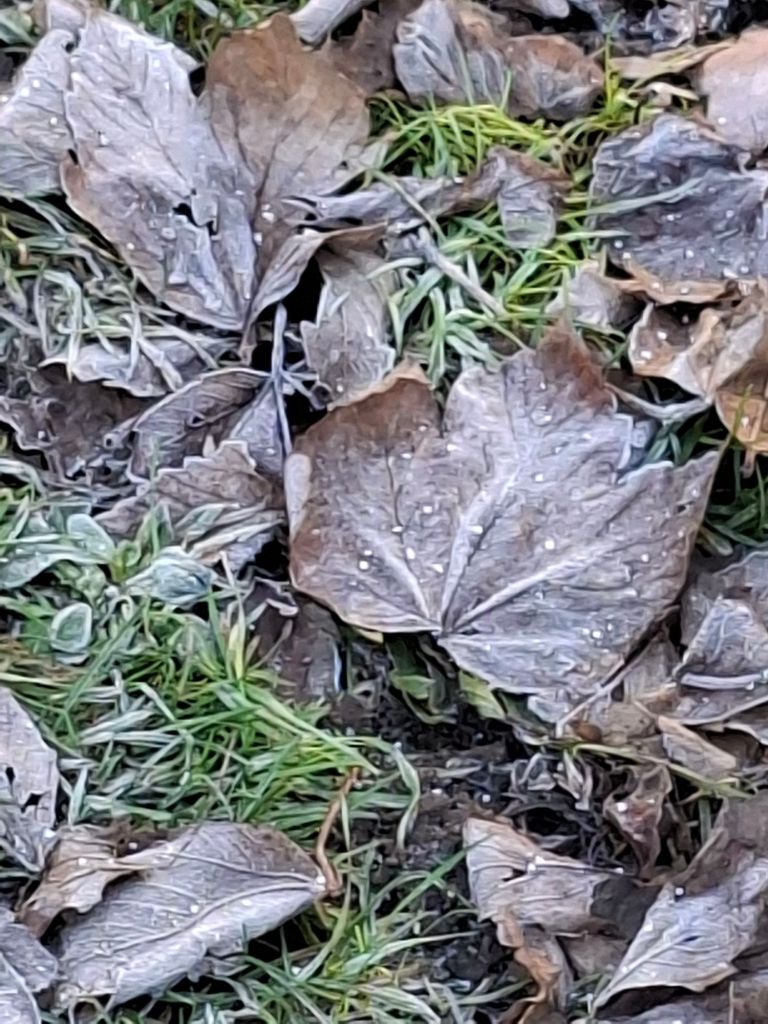
I noticed how they changed the look and feel of these spaces for me. They became quietly exotic, as if differently blessed than the green grass in the sunlit areas. A light dusting was enough to make a difference. The three pictures below show the effects of the frost’s magic dust on a small tree, an old puddle on the path and fallen leaves on grass. All very ordinary. But the touch of frost had made them special to me in that moment. They held my attention, and enriched my day. It was an instance of re-enchantment.
Now in the fourth week after my shoulder fracture, I have ventured out on a contemplative walk.
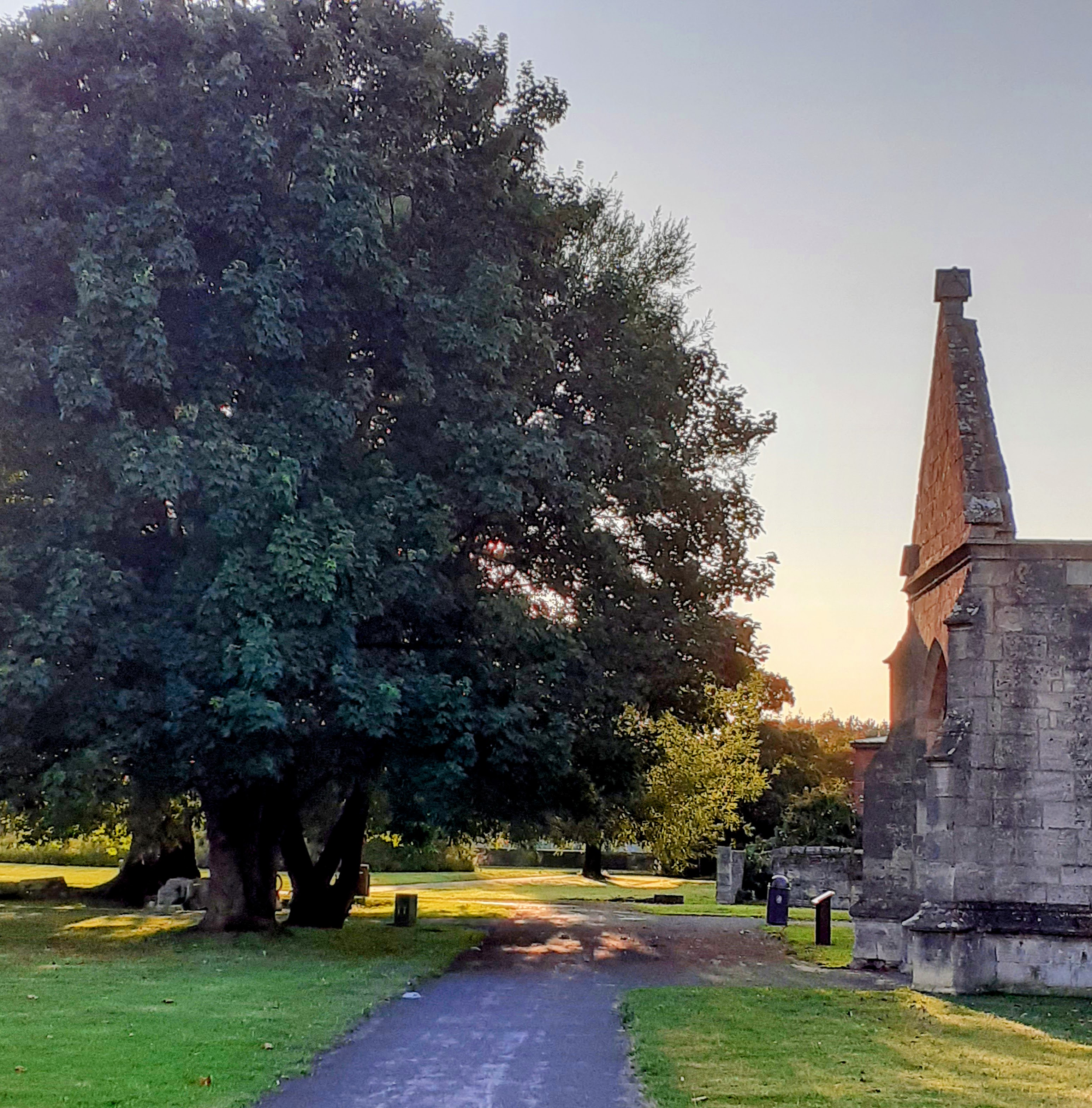
I rested for awhile in the erstwhile physic garden of Llanthony Secunda Priory. It is a friendly space for me. Yet at first I felt very small. An alien energetic sky raced high above me towards an unknown horizon.
I wasn’t used to the outdoors. The garden stretched in front of me, defined by a long straight path. I experienced the world as a place of distance and extension. I felt alarmingly unsheltered, until I stilled myself and looked down.
The sight of Michaelmas daisies altered my state. Seasonal flowers and a living, shining green. Although I didn’t move to touch them, I felt like a toddler reaching out for a mother’s hand. I was held again within the wheel of the year. Autumn, the season of bearing fruit.
I looked out further and received rhe assurance of an old stone wall, and the majesty of mature trees. The trees might be turning. The wall might be part of a ruin. But they were still in place, still present in time, still offering a quiet companionship.
These changes in perspective allowed me to experience the garden afresh, more closely and intimately. It was easier to be in, and easier to connect with. Still unsheltered, but unalarmed, I knew that I belong.
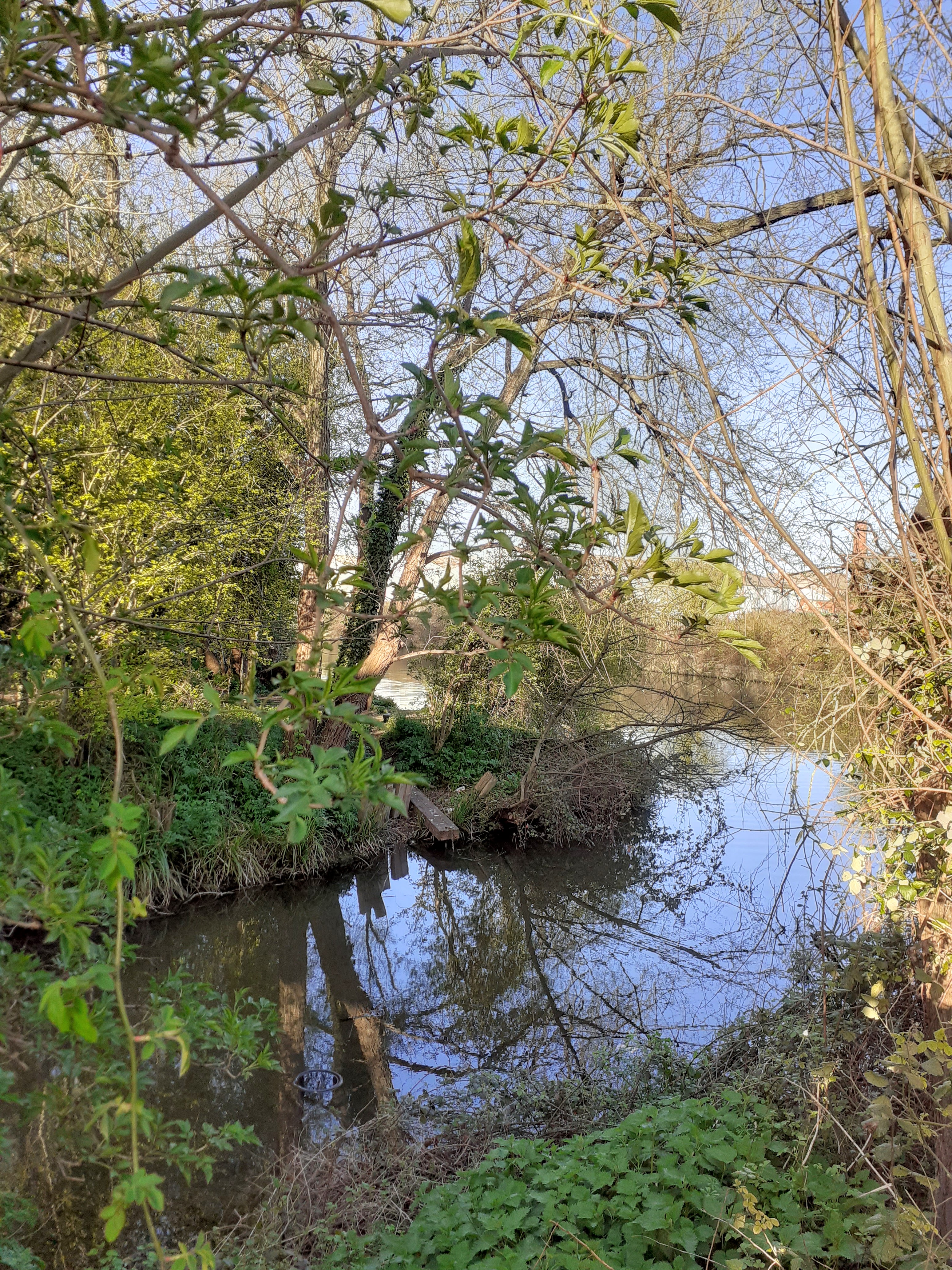
I’m on my first canal walk in a while. The picture above shows a small inlet into the bankside woods. It is Sunday 30 March, the first day of British Summer Time. I am encountering a long sunlit evening and feeling energised by the experience. I am drawing power from the clarity and strength of the light.
Sunset will be around 7.30 pm. The pictures above and below were taken a little before 6. I am glad to see blackthorn, a wood said to be used for wizard’s staffs, proclaiming the magic of spring.
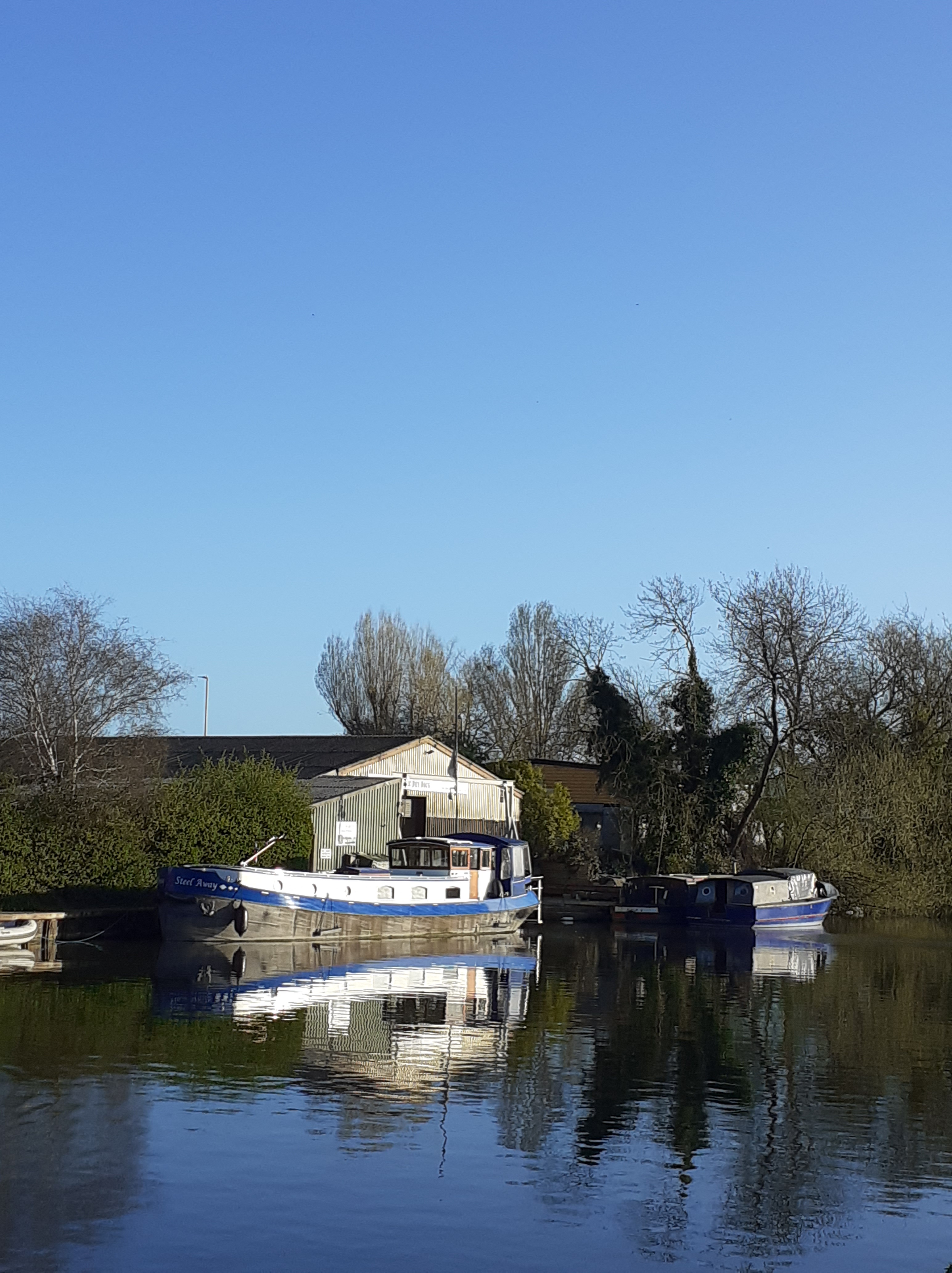
A little later, I focus my attention on a vivid yet tranquil blue sky, presiding over the canal scene below. I have the same powerful sense of of clarity and strength in the light, and of drawing energy from it.
Later on, at about 6.45 pm, I find a softer, gentler quality of light as I walk homewards through the woods. Looking down, I see it on my path.
Looking up, I see soft light on slender branches and the foliage below them. It feels like celebration.
My final image is of sunlight reflected in Gloucester Docks, both on a warehouse window and on the water. The sun is low now and beginning to set. Rather than pointing at it, as it descends, I point away from it to honour and record its power in another way. This marks the completion of a rejuvenating and regenerative spring forward walk.
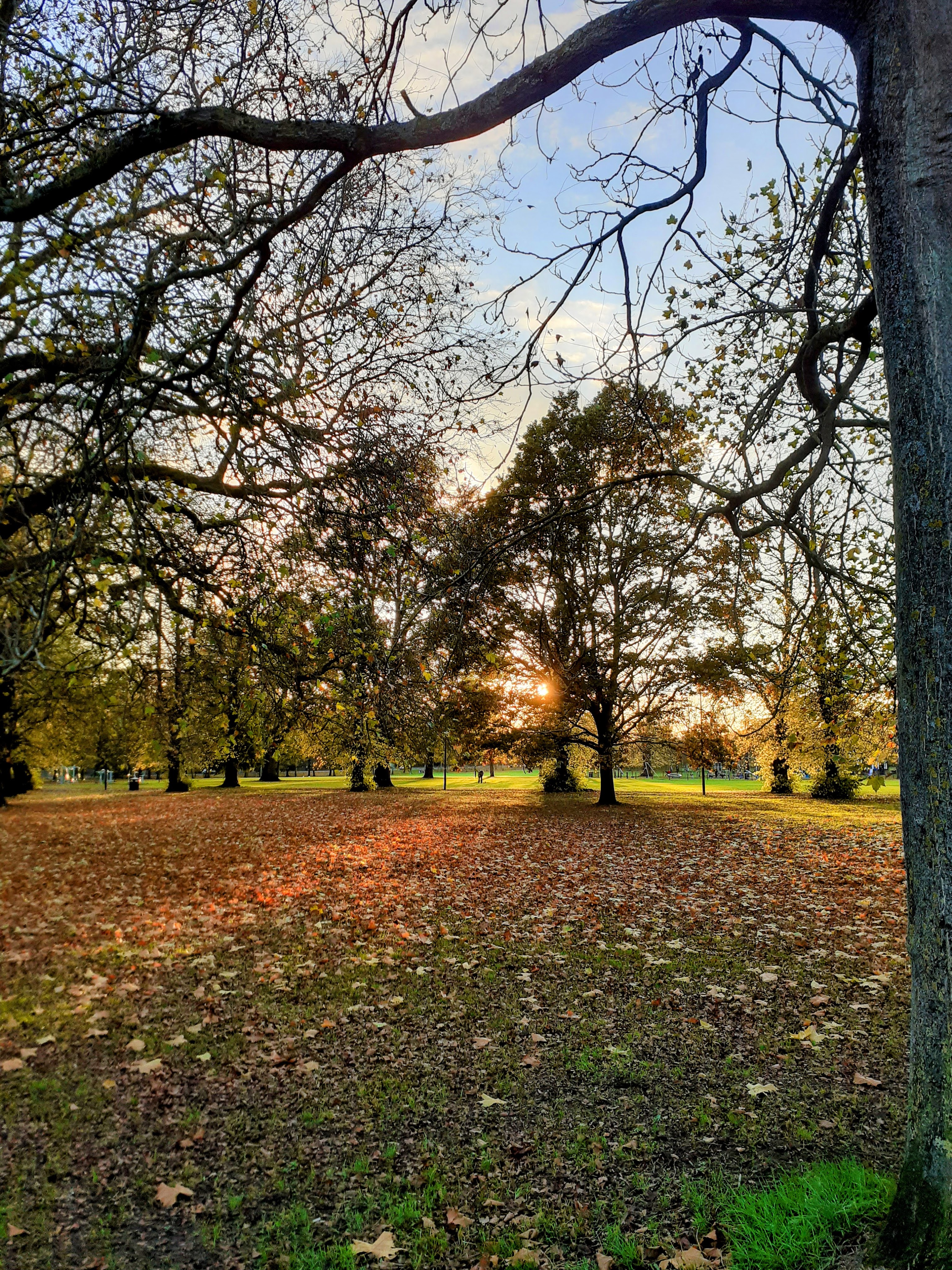
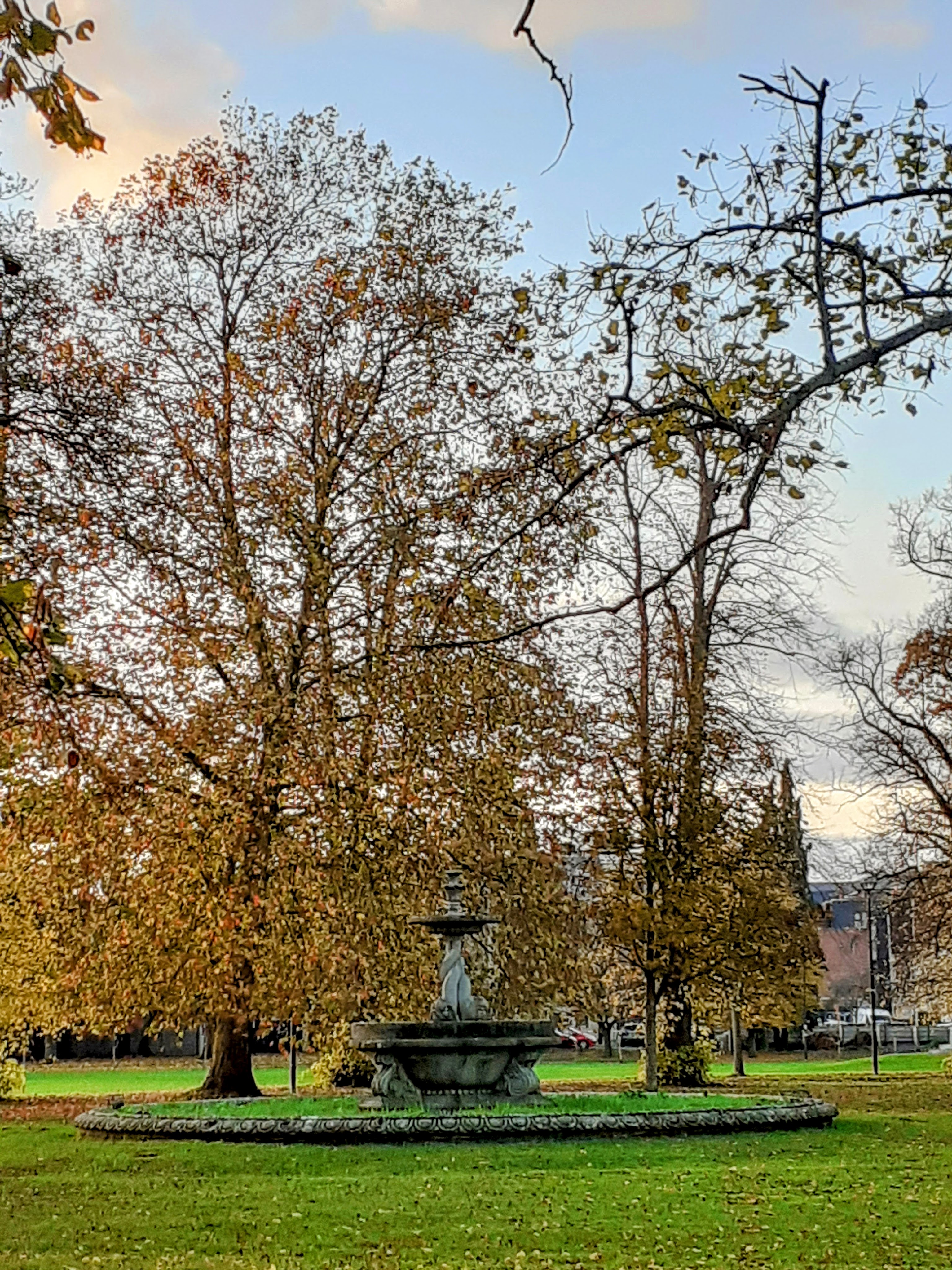
It’s about 3.45 pm on Thursday 14 November. For a few precious days there has been blue sky and a visible sun in my neighbourhood. But the days themselves are short and the sun is already falling in the sky. Its rays are brightly visible and they beautifully catch the leaves – those still on their trees, and those already on the ground. But much of the ground, apart from the carefully tended green lawns, is darker and more shadowy. It feels like a last hurrah of autumn before it gives way to winter.
I enjoy the park and the way that it is laid out. It is highly used and valued, and an important lung for the city. I am glad to have it here in Gloucester. Today is a quiet time, good for contemplation. It is easy to walk to from where I live and a good place to be with the land and the trees. My visits don’t require long periods of time or present much physical challenge. This is good for me at a time when I am unavailable for heroic physical journeys but very open to the magic of what is.
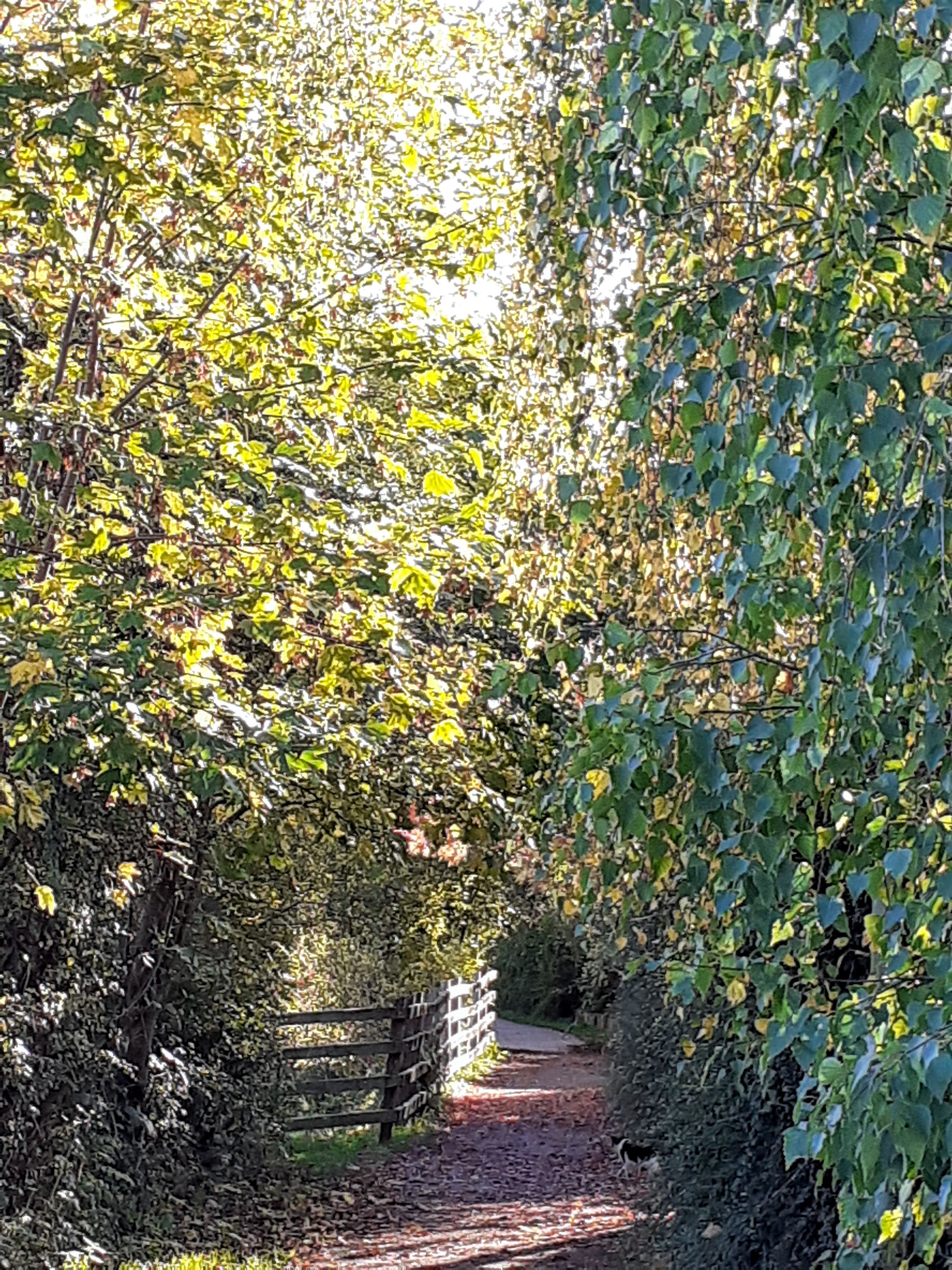
I am walking in woodland beside my local canal. These walks are infrequent now and all the more treasured. I notice how strong mid-afternoon light can be when the sky is clear, even on 22 October. Stepping energetically into its presence, I enter into a kind of communion. The light feels alive and I feel differently alive too – lifted, and touching into joy.
In the picture above, I feel as well as see the effects of the light on trees and water. In the picture below, I both feel and see the living light on leaves which themselves seem to greet me from their horizontal branch. I feel energised by this connection.
Looking up I see blue sky. I do not see the sun, but I can see its effects on the upper branches of trees. both subtle and magical. Looking down, I see a dance of light and shade, with the light present on a fence and on a pathway. A sense of the sacred pervades everything, and I feel blessed.
I first registered Contemplative Inquiry on 28 August 2012 and WordPress have sent me 12th anniversary greetings. That’s a long-term project by my historic standards. True, the first two years were tentative and I took an 8 month break in 2018/9. But my contemplative inquiry, both as blog and as practice, now feels like a settled part of my life. I continue to ground it in a form of modern Druidry with, Janus-like, both pagan and universalist faces.
Through my inquiry, I came over the years to understand myself as, at heart, ‘living presence in a field of living presence in a more than human world’. This may sound like something of a formula, but it is at least my own formula, providing a compressed account of my experience and understanding, It is not connected to any particular belief system, and arose through a simple recognition of what seems to be given to us, in joy and sorrow alike.
When I open and deepen to living presence, a gestalt of self-and-world, not just self, reveals itself in a sometimes transfiguring way. It is not complicated to practice or experience. In consequence I have found myself nudged, however haltingly, towards a spirit of openness, an acceptance that nothing stays the same, an ethic of interdependence and a life of abundant simplicity.
I no longer think of the inquiry as a path or journey. It is more like a deepening, or maturation, in place. Looking back at early blog posts I find seeds of my current view right at the beginning of my inquiry. As early as 2 September 2012 I wrote about Satish Kumar’s experience (1,2) of outdoor walking meditation. It made a strong impression on me. The difference today is that I have internalised it and given it my own unique flavour. This year I celebrate a clearer understanding and a more confident voice. I am grateful both to influences like Satish Kumar and to the version of me who launched this inquiry twelve years ago..
The five images in this blog record a dedicated solstice walk, an evening walk beginning 8 pm on 20 June. For me, the solstice period lasts around a week ending on 25 June. I like to acknowledge the stasis (standstill) element. My festival practice is not about a moment in time so much as honouring an extended pause before the wheel turns, at first slowly, towards the dark.
I sought immersion in the unique and sacred flavour of this day at this time in this place. I do not believe my images ‘capture’ that flavour – now gone with the moment it belonged to. But the pictures do provide a suggestive record of that time. They help my memory. They remind me especially that my experience of this practice in 2023 differs from that of 2022, when I first undertook it as a solo, contemplative form of midsummer celebration. (See: https://contemplativeinquiry.blog/2022/06/24/.)
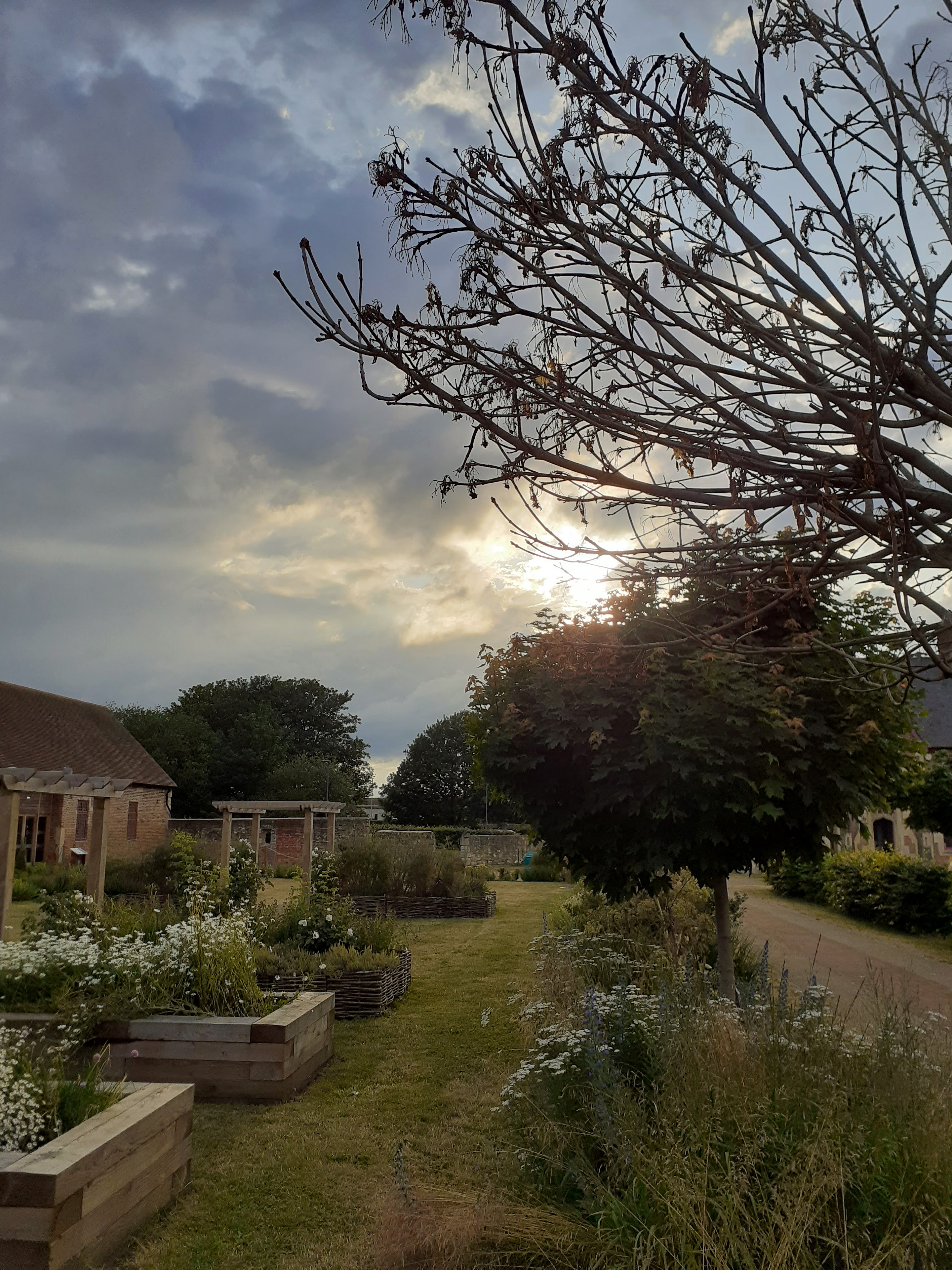
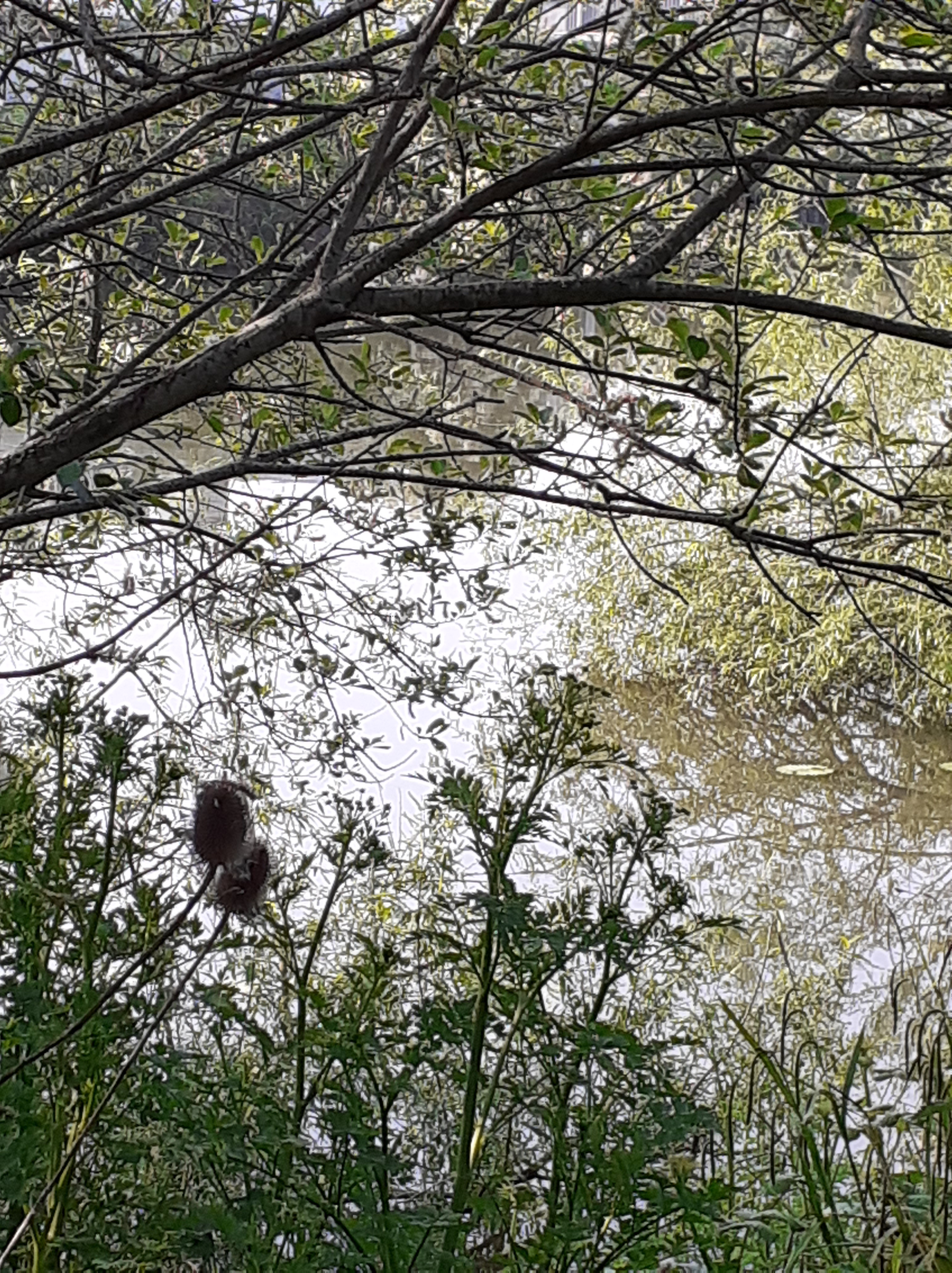
The first image (above) is of Llanthony Priory gardens, dominated this evening by a dramatic sky. Sunlight shines through heavy clouds, dark and suggestive of a storm that we had largely missed in Gloucester. Three canalside images (below) also display the energy of clouds with the sun backlighting them. I find both beauty and power here, indeed a strong sense of powers greater than mine, and indeed of ours collectively. This year, my seasonal immersion has an edge. A modern Druid, I celebrate the seasons and reverence the elements. But I certainly don’t own them, or decide how they are meant to be.
During my walk I spent a lot of time with my eyes turned upwards and skywards, with hints of both awe and foreboding. I understand how sky god spiritualites work. But I also looked across and down and found new life. A pair of swans and their cygnets were finding space on the water on a busy small marina. It is now surrounded by housing on three sides, yet they seemed flourishing and confident. Storm clouds of many kinds threaten. Life goes defiantly on.
The Irish name for May is Bealtaine. Linguistically at least, the May Day festival sets the scene for a calendar month. As I experience the wheel of the year in my own life, this feels right. May, the merry month, has always been special to me. Born towards the end of the month in 1949, I continue to feel newer and fresher in May, with a heightened sense of life. Changes happening around me, in the rest of nature, feed that sense. I’m part of something bigger.
The demarcation of time might be a product of human counting and naming, but it doesn’t feel arbitrary to me. Counting and naming have a powerful magic of their own. On 14 May 2023 I went on a morning walk, reaching a small wooded area at about 7.45 am. It was a time of dispersing mists and strengthening light. A time of warming up. I enjoyed it from the start, but there came a moment when my experience of the walk changed radically.
I see the wood. I stand at its edge. Hawthorn invites me in, decked in the green and white of the May season. I understand this as a moment for slowing down and shifting into a softer, more intuitive connection with the realm I am entering. I am moving into a kind of sacrament – a communion with nature in a unique time and place. I feel a joyful kind of reverence here, free of solemnity and unction. As I continue slowly on the path, sunlight, striking a slender tree trunk, illuminates my way.
Then comes a tanglewood immersion. Variations in wood. Variations in green. Variations in light – especially light. This place could be dark and dank. At times, no doubt, it appropriately is. But it is May now, and wonderfully backlit. There’s a yellowing of green that points to new light and growth rather than their decay. I have a strong sense of participating in a living world. My own vitality is boosted.
I am now drawn towards water. Again, some foliage is shaded. Other foliage is vividly lit up. On the water, the mist is still clearing. It is still fairly early in the day. It is at times like this that I feel most Druidic, very at home and blessed in this quiet connectedness.
A little later, I crouch at the water margin’s edge. Whereas the previous scene had a spacious serenity, this has intimations of activity, a small but crowded world of its own, with thriving plants and and a thriving sub aquatic realm beside them. Even in this small space, life is complex and abundant. The same holds, on a somewhat expanded scale, to this vulnerable scrap of woodland as a whole. I emerge from my sacrament refreshed and renewed, with the imprint of Bealtaine 2023 upon me.
Where I live, April 2023 brings qualities and freshness and new growth. My heart meets the moment as I walk in the bracing breeze. Sunny and overcast periods succeed each other. Moving through this enlivening space, I naturally welcome the energy of change it embodies.
But it’s not quite that simple. There’s an underlying turbulence too, which can easily challenge my balance. Slogans like ‘I am the sky. Everything else is weather’ aren’t enough. I, as natural man, have to ground and embody them. They have be be aligned with my felt sense.
I wasn’t sure how to talk about this when I discovered that someone else had done it for me. Philip Carr-Gomm, who until recently led OBOD (Order of Bards, Ovates and Druids), offers a regular podcast: Tea with a Druid. No 249 is about ‘finding calm in chaos’. It is up on YouTube as: https://www.youtube.com/watch?v=Ew4pD3OJen8
Philip suggests that the best way to deal with chaos, turbulence, or the everyday stress of modern life, is to turn to the stillness inside. Then it becomes possible to stay in the moment whilst expecting nothing. It takes work to get there – to identify ways of finding stability and calm even when all around is unstable and unpredictable.
Philip understands modern Druidry as a tradition of ‘mindfulness in natural settings’, whether real or visualised. The stillness found in those settings isn’t a dead stillness but a living one – leaves rustle, waves crash. The refreshment is somewhat different from that of a more abstract meditation where we sit with thoughts and feelings, finding the space beyond. In the podcast, Philip takes us through a meditation of the kind he describes. I thoroughly recommend it to anyone, whether or not involved in Druidry.
Returning to my recent walk, and the record of it, I see branches, buds and sky. I remember the movement in the sky, and a slight quivering of the wood. Records have their limitations. The stillness wasn’t one of complete stasis, as it may appear below. My current response is complicated by the human gift of memory, which is not the original experience. I am also absorbing someone else’s input. I am in a completely different here and now. But I am held within an enlivened tranquility, not at all that of the ‘tranquiliser’, and this is certainly a wonderful resource. Gratitude to the culture that has enabled it.















 Contemplative Inquiry