Contemplative Inquiry

This blog is about contemplative inquiry

Tag: non-dualism

THE BUBBLING SOURCE

“I am no longer your Master, because you have drunk, and become drunken, from the same bubbling source from which I spring.” From Saying 13, Gospel of Thomas (1).

In the Gospel of Thomas, Yeshua begins to treat Thomas as his peer. Asked by Yeshua “to what would you compare me?”, Thomas has replied, “Master, my mouth could never utter what you are like”. This reply contrasts sharply with Peter’s “you are like a righteous angel” and Matthew’s “you are like a wise philosopher”. Thomas has understood. He has dropped all his presuppositions and expectations. He has been able to meet Yeshua in living presence, at source. Whoever wrote this text is asking us to emulate Thomas, and therefore his teacher Yeshua. We all come from the same bubbling source, and are invited both to recognise this and live from the place of recognition. Peter and Matthew may remain constrained by limiting traditional narratives, but Thomas has understood, and two other disciples, Salome and Mary, are portrayed as being on the way.

Recently re-reading this story, I was moved by the force of the words ‘bubbling source from which I spring’. I am grateful to Jean-Yves LeLoup’s translation for this, because the standard academic translation speaks of the “bubbling spring that I have tended” (2), which for me lacks power in comparison. ‘Bubbling source from which I spring’ exactly describes my felt sense of ‘living presence’, recognising it in myself. In my formal practice, I work within a circle framework and I quickly grasped that it should be recognised as the power at the centre. Liturgically, I now greet it is ‘the bubbling source from which I spring and heart of living presence’. This feels right and good. It helps that ‘bubbling source’ is not specifically a water image in this translation. I am free to experience it internally, through my act of recognition, as a shift in energy and attention.

I feel as if I have integrated, or perhaps re-integrated, a depth dimension into the practice, and it feels richer. Since the Winter Solstice I have been closely following the wheel of the year. It represents the inheritance and continuing life of my Druidry. In many ways this is a naturalistic undertaking. But I am now powerfully reminded that my existing commitment to the flowing moment as my true home, and out of which these recent insights came, is not simply about living a slowed down time in a conventionally naturalistic sense. It is that – but it also allows the taste of timelessness and the sense of a primordial nature. The Thomas text reminds me of it. That I can recognise it is also partly thanks to my work in recent years with the practices of the Headless Way (3), the Direct Path (4,5), and Jeff Foster’s community (6). Ultimately this primordial nature is no-thing, but as no-thing it becomes everything, I discover a ‘bubbling source’. I seem to have reached a point where I can both integrate this learning and keep simple. Indeed the one seems to lead to the other. I am grateful that it is so.

(1) The Gospel of Thomas: the Gnostic Wisdom of Jesus (Translation from the Coptic, introduction and commentary by Jean-Yves LeLoup. English translation by Joseph Rowe. Foreword by Jacob Needleman). Rochester, VT: Inner Traditions, 2005

(2) The Gospel of Thomas: the Hidden Sayings of Jesus (New translation with introduction and notes by Marvin Meyer. Interpretation by Harold Bloom). San Francisco, CA: HarperSanFrancisco, 1992

(3) http://www.headless.org

(4) http://www.rupertspira.com

(5) http://www.greg-goode.com/

(6) http://www.lifewithoutacentre.com/

NOTE: This post continues a discussion begun at https://contemplativeinquiry.blog/2020/3/28/living-presence/ and continued at https://contemplativeinquiry.blog/2020/4/02/wisdom-writing/

WISDOM WRITING

At this strange moment in my life, I want to make my contemplative work more focused and integrated. Communing with the image above led to a deepening, related to the experience of ‘living presence’, and reported in a recent post (1). The process of writing that post has prompted further developments. One of them is a renewal of engagement with ancient wisdom writing.

My favourite books in this genre are the Tao Te Ching (2) and the Gospel of Thomas (3). My work with them has two aspects. One is to understand their cultural contexts, assisted by editors and commentators and further reading. The other is my direct response to the sayings. I am currently focusing on Thomas because some it its sayings influence my practice. Below I summarise contextual information. Each of my next two posts will cover a specific saying.

As a text, Thomas has more resemblance to ancient Jewish Wisdom literature (Proverbs, Ecclesiastes/Sirach) than either the canonical gospels or most Gnostic literature. Numbers of the sayings do also appear in Matthew, Mark and Luke, and Jesus/Yeshua defends Mary Magdalene against Peter – a common Gnostic trope. So there is some relationship with the canonical and Gnostic literatures. But there is no biographical information and no presentation of the teacher as a saviour from a super-celestial realm. There is no sense of the material world as a fallen or evil creation whether undermined by a cosmic adversary or ruled by a false god. Indeed there is no sense of the ‘kingdom of heaven’ being somewhere else at all: rather, it is “spread out over the whole earth, and people do not see it” – Saying 113 (1). Thomas can be seen as Gnostic in its sense of self-knowledge (gnosis) as transformational and because the individual is asked to identify with Jesus rather than ‘believe in’ him (4). The text is about self-transformation through a wisdom teaching that points us to our true nature. This makes it very different in cosmology and emphasis from the Gnostic movement that coalesced in the decades after Thomas was written.

Thomas was probably written in Edessa (now Urfa, a city of two million people in south east Turkey, close to the Syrian border), with the Coptic Nag Hammadi version (our only complete copy) a translation from a Greek or possibly Aramaic original (4). At the time of writing, thought to be the middle of the second century C.E., it was the capital of a Roman satellite state, not counted as within the borders of the empire. It rivalled Alexandria as a centre for book production, but had a different cultural feel – ascetic, contemplative and devotional, less concerned with creative myth-making. Christianities influenced by a Thomas tradition (though not necessarily this text) looked east and for many centuries flourished in the Middle East, Central Asia, China and India. In contrast to Europe, they were not religions of power and had to negotiate with other faiths – leading to significant cross-pollination in ways unimaginable in Constantinople or Rome. For example, they are said to have been an influence on Islamic Sufism, and as late as the thirteenth century, Rumi enjoyed good relations with a local Nestorian monastery (5). These eastern churches have stood by a view of theosis, full participation in the life of God. This is understood to have three stages: first, the purgative way, purification, katharsis; second, illumination, the illuminative way, the contemplative vision of God, theoria; and third, sainthood, the unitive way, theosis.

Essentially, this is a gradual path non-dualism. The Gospel of Thomas itself reads to me like a direct path non-dualism, as it does to other people at the present time – like Douglas Harding (6) and Francis Lucille. However I wouldn’t want to go too far in appropriating this ancient text for the purposes of a modern movement. It should be met, as far as possible, as what it is. I am concerned to respect and respond to it. I don’t need to agree with it or (worse) to make it agree with me.

The saying I want to look at in my next post is:

“I am no longer your Master, because you have drunk, and become drunken, from the same bubbling source from which I spring.” (from Saying 13)

In the following post, I will turn to:

“Yeshua said: when you bring forth that within you, then that will save you; if you do not, then that will kill you.” (Saying 70)

(1) https://contemplativeinquiry.blog/2020/03/28/living-presence/

(2) Lao Tzu Tao Te Ching: A Book about the Way and the Power of the Way (A new English version by Ursual K. Le Guin with the collaboration of J. P. Seaton, Professor of Chinese, University of North Carolina, Chapel Hill) Boston & London: Shambhala, 1998

(3) The Gospel of Thomas: the Gnostic Wisdom of Jesus (Translation from the Coptic, introduction and commentary by Jean-Yves LeLoup. English translation by Joseph Rowe. Foreword by Jacob Needleman) Rochester, VT: Inner Traditions, 2005

(4) Nicola Denzey Lewis Introduction to ‘Gnosticism’: Ancient Voices, Christian Worlds New York & Oxford: OUP, 2013

(5) Philip Jenkins The Lost History of Christianity: The Thousand-Year Golden Age of the Church in the Middle East, Africa and Asia – and How It Died HarperCollins e-books, 2008

(6) Douglas Harding A Jesus for Our Time. Chapter 14 in Look for Yourself: the Science and Art of Self-Realisation London: The Shollond Trust 2015 (first published the The Head Exchange in 1996)

BIOCENTRISM

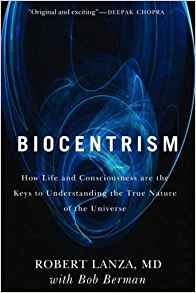
Biocentrism (1) and the follow-up Beyond Biocentrism (2) are science-referenced explorations of cosmos and consciousness. Unusually, they present a ‘consciousness first’ view. In the first book authors Robert Lanza and Bob Berman work through the evidence and identify seven principles of biocentrism.

“If one removes space and time as actual entities rather than subjective, relative and observer-created phenomena, it pulls the rug from the notion that an external world exists within its own independent skeleton. Where is this external objective existence if it has neither time nor space? we can, at this point formulate seven principles:

“First Principle of Biocentrism: What we perceive as reality is a process that involves our consciousness. An ‘external’ reality if it existed, would – by definition – have to exist in space. But this is meaningless, because space and time are not absolute realities but rather tools of the human and animal mind.

“Second Principle of Biocentrism: Our external and internal perceptions are inextricably intertwined. They are different sides of the same coin and cannot be divorced from one another.

“Third Principle of Biocentrism: The behaviour of subatomic particles – indeed all particles and objects – is inextricably linked to the presence of an observer. Without the presence of a conscious observer, they at best exist in an undetermined state of probability waves.

“Fourth Principle of Biocentrism: without consciousness, ‘matter’ dwells in an undetermined state of probability. Any universe that could have preceded consciousness only existed in a probability state.

“Fifth Principle of Biocentrism: the structure of the universe is explainable only through biocentrism. The universe is fine-tuned for life, which makes perfect sense as life creates the universe, not the other way around. The ‘universe’ is simply the complete spatio-temporal logic of the self.

“Sixth Principle of Biocentrism: Time does not have a real existence outside of animal-sense perception. It is the process by which we perceive changes in the universe.

“Seventh Principle of Biocentrism: Space, like time, is not an object or a thing. Space is another form of our animal understanding and does not have an independent reality. We carry space and time around with us like turtles with shells. Thus, there is no absolute self-existing matrix in which physical events occur independent of life.”

Beyond Biocentrism summarises and extends Biocentrism. It does not repeat the principles, but elegantly summarises the perspective of biocentrism and takes the argument into new territory. An appendix to the book lists its major topics as: the exploration of time; the unreality of death; the nonreality of space; the nature of consciousness; science proofs of biocentrism; asking about awareness in machines (probably no) and plants (certainly yes).

When I contemplate biocentric thinking, I feel engaged and intrigued – without taking a stance on its truth claims. I can see how the universe of the space/time continuum, and within it the earth that I love, may be but a bubble of local, provisional reality. In the light of this narrative, simply experiencing life, being part of it, feels vividly magical. The effect is to ground me even more in my earth spirituality, gratefully celebrating the experienced here and now.

(1) Robert Lanza, MD, with Bob Berman Biocentrism: How Life and Consciousness are the Keys to Understanding the True Nature of the Universe Dallas, TX: Benbella Books, 2009

(2) Robert Lanza, MD, with Bob Berman Beyond Biocentrism: Rethinking Time, Space, Consciousness, and the Illusion of Death Dallas, TX: Benbella Books, 2016

SCEPTICISM, OPENNESS AND FLOW

This post summarises where I stand philosophically at this stage of my inquiry, and how my stance affects my practice. When investigating the Direct Path (1) I realised that one possible destination might be radical scepticism about everything. Awakening to Awareness as ultimate ground of being is not the inevitable end point. The only Direct Path teacher who publicly discusses this is Greg Goode (2), who says: “Over the years, I had studied many philosophies and paths. I was aware of a variety of vocabularies. And now, unless I was explicitly playing the role of a direct path participant, none of these vocabularies seemed preferable in terms of truth or accuracy. When I was left to myself, experience didn’t show up as anything at all. There was nothing strictly true or strictly false to say about it”.

Goode reports a sense of confirmation on reading a privately circulated document attributed to Shri Atamananda Krishna Menon, founder of the Direct Path. According to Greg Goode, the gist is “that we can’t say anything at all … everything is paradoxical. We can’t even say that it’s consciousness or that anything exists! It’s a joyful, effusive case of saying without saying!” It helped Goode to get to his final position of ‘joyful irony’, which I have discussed in an earlier post. (3). His key point is that “the joyful ironist has found loving, open-hearted happiness without dogmatism”. For this to work “the joy and the irony must work together. If you’re joyful without being ironic, you’ll still have attachments to your own views of things. And if you’re ironic without being joyful, you may be bitter, cynical, sarcastic and pessimistic. Heartfelt wisdom includes both sides. Joy adds love to irony. Irony adds clarity to joy.” (2)

This sounds almost postmodern, but in fact echoes an ancient wisdom. Philip Carr-Gomm (4) shows its presence in Jain ethics, grounded in the three principles: ahimsa, aparigraha and anekant. Ahimsa is the doctrine of harmlessness or non-violence. Aparigraha is the doctrine of non-attachment, non-possessiveness or non-acquisition, Anekant is a doctrine of many-sidedness, multiple viewpoints, non-absolutism or non-one-sidedness. The three principles can be seen as completing each other, with non-absolutism as an intellectual aspect of non-violence and non-attachment, and hence a virtue.

Pyrrho of Elis, a Greek philosopher of the fourth century BCE, probably met both Jains and Buddhists, when accompanying Alexander ‘the Great’ to India. Indian influence is certainly evident the school of philosophy he created on his return home. In Greek culture this school was treated as a form of Scepticism, but unlike other Sceptics, Pyrrhonists “neither made truth claims nor denied the possibility of making them. Instead, they cultivated a deeply embedded attitude of suspension of judgement (epoche), allowing possibilities to stand open within the process of continuing inquiry. Such a turning away from the drive for intellectual closure enables peace of mind (ataraxia) in our engagement with the richness and diversity of experience” (5).  This teaching seems to combine the Jain view of non-absolutism and the Buddhist view of equanimity and freedom from dukka, (suffering or dis-ease).

As my contemplative inquiry has progressed, I have grown increasingly attracted to the wisdom of this view. I name it as openness, to keep my inquiry process appreciative rather than deconstructive. I have written about it before and this post builds on others. What I notice now is a greater clarity and confidence in this view, reinforcing my stance of At-Homeness in ‘the flowing moment’. Although not perfectly reliable, this At-Homeness is as close as I get to a place of safety. Everything else is uncertain. Everything else can be taken away. I treat ‘flowing moment’ as a simple description of living experience. I find stillness there if I slow down and attend to it. Stillness can be a portal to spontaneous joy and appreciation if I open up and am present to them . It is a good basis for coming back to Earth. From this space I can better connect with other beings, the wider world and the wheel of the year.

(1) A name given to the teachings inspired by Shri Atmananda Krishna Menon (1883 -1959).

(2) Greg Goode After Awareness: The End of the Path Oakland, CA: Non-Duality Press, 2016

(3) https://contemplativeinquiry.wordpress.com/2019/06/11/greg-goode-and-joyful-irony/

(4) Philip Carr-Gomm Seek Teachings Everywhere: Combining Druid Spirituality with Other Traditions Lewes, UK: Oak Tree Press, 2019 (Foreword by Peter Owen Jones)

(5) Arne Naess Scepticism Abingdon: Routledge, 2015 (First published 1968. Scepticism is the last book Arne Naess wrote as an academic philosopher, before going on to devote himself to the development of deep ecology, coining the term ecosophy to describe his stance.)

EMPTINESS AND INTERBEING

At this point in my inquiry I want to refine my understanding of ’emptiness’. The Buddhist teacher Thich Nhat Hanh is a great help here, in his final commentary on the Prajnaparamita Heart Sutra .

Thich Nhat Hanh discusses Buddha’s teaching that everything is “a manifestation of causes and conditions” and that nothing is permanent or unchanging. This applies to the whole cosmos, and not just to the apparent world. “Whether you call it atman (the soul) or Brahman (ultimate divinity), whether you call it the individual self or the universal self, you cannot find anything there”. Buddha’s teaching was aimed at undermining both of these notions. Nothing has any ‘self-nature’ (we might use the term ‘essence’).

Thich Nhat Hanh pursues this right into the territory of emptiness. “There are still many people who are drawn into thinking that emptiness is the ground of being, the ontological ground of everything. But emptiness, when understood rightly, is the absence of any ontological ground. … We must not be caught by the notion of emptiness as an eternal thing. It cannot be any kind of absolute or ultimate reality. This is why it can be empty. Our notion of emptiness should be removed. It is empty.”

He goes on to say: “the insight of interbeing is that nothing can exist by itself alone, that each thing exists only in relation to everything else … looking from the perspective of space we call emptiness ‘interbeing’; looking from the perspective of time we call it ‘impermanence’ … to be empty is to be alive, to breathe in and breathe out. Emptiness is impermanence; it is change … we should celebrate. … When you have a kernel of corn and entrust it to the soil, you hope it will be a tall corn plant. If there is no impermanence, the kernel of corn will remain a kernel of corn forever and you will never have an ear of corn to eat. Impermanence is crucial to the life of everything”.

This is one side of an age old controversy within spiritualities of Indian origin. In this blog, I have given friendly attention to the other side as well – particularly Direct Path teachers like Rupert Spira and Greg Goode and the Indian influenced Douglas Harding. In the end I don’t make an absolute judgement about it. My Sophian ‘At-Homeness in the flowing moment’ is compatible with both views. But I’m now finding greater energy and aliveness in the framework here presented by Thich Nhat Hanh.

Increasingly, when I do Direct Path exercises I experience a breaking down of assumptions about experience itself, and a tremendous opening out … but no container called ‘Awareness’ to fill a God sized hole. It’s similar for me with the Harding exercises. My experience is broadly the same, but my felt sense has shifted, and my narrative with it. I’m moving away from big picture truth claims about this, because I have become sceptical that exercises like this provide any grounds for them, one way or the other. Rather, I lean in to an evolving personal understanding, always provisional, of my contemplative experiences.

As a shorthand, I can talk about the tension between a ‘Oneness’ framing and an ‘interbeing’ framing of what people call non-duality. The difference can seem subtle – and it may be best to use ambiguous, open-ended words like ‘Tao’ and preserve a sense of mystery. But at this turning of the year, ‘interbeing’ is my preferred term. It fits better with the eco-spirituality which I take from my Druid journey, and affirms the relational basis of my Sophian Way.

(1) Thich Nhat Hanh The Other Shore: a New Translation of the Heart Sutra with Commentaries Berkeley, CA: Parallax Press, 2017

See also: https://contemplativeinquiry.wordpress.com/2017/10/21/the-uses-of-emptiness/ an earlier post that I’ve been able to draw on here.

WINTER MORNING LIGHT

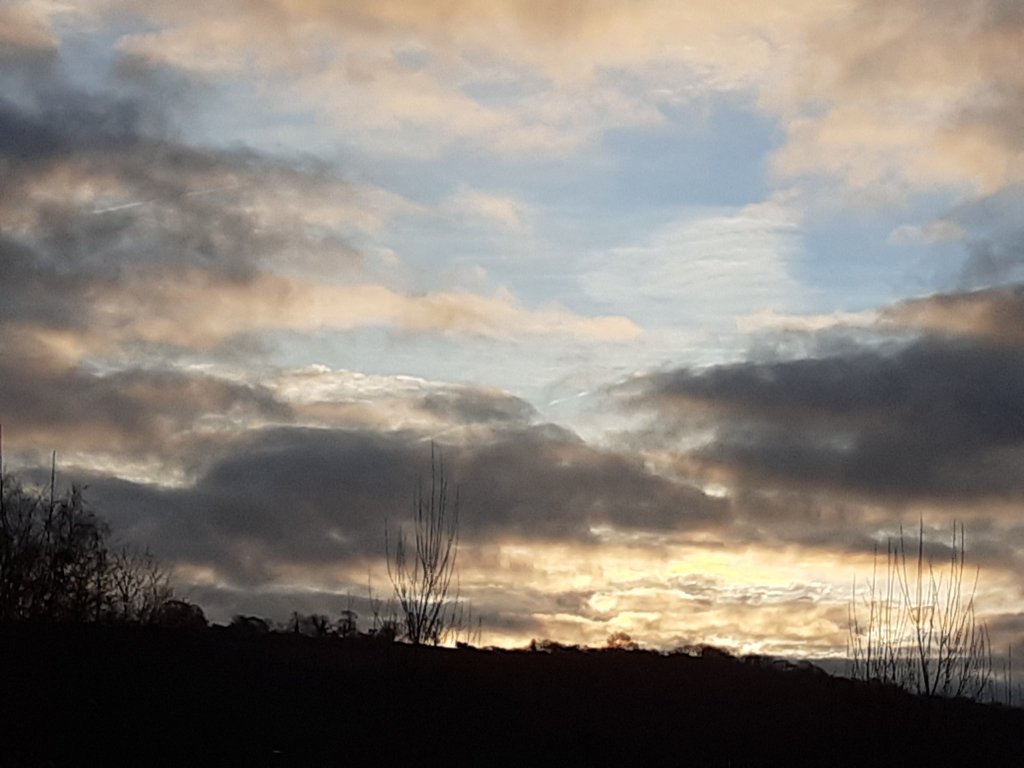
This is 7 December where I live, a little after 8 am, itself a little after the moment of dawn. The sunrise is still early in its process, fifteen days before the turn of the year. I took the pictures on one of my regular canal walks, this time between Stroud and Brimscombe in Gloucestershire, England.

This year I am paying close attention to the dance of place and time. It is part of my re-grounding after my adventures in non-duality, yet retaining the learning they brought. I surrender to the experience of winter sunlight. I breathe it in, and it fills the world, enacting a primal awareness. At the same time I acknowledge the particularity of time and place, of movement and change in nature. I also know that my observation of this winter light, at this time and in this place, is unique. It will never happen again in quite this way. It makes me glad to be alive and here for it. This gift is all the greater, and all the more to be treasured, for that very vulnerability, personal and collective, of which I am also conscious.

INTEGRATION

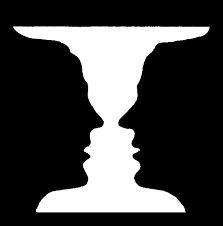
This is my grail image. I can see a chalice against a formless yet shape-creating background, or I can see two beings, with an enabling space between them. Two worlds; one image. Flicking rapidly between them, there comes a point where I can see them both, in the same place, at the same time.

I see the whole as an image of integration. Myth making just a little, I can point to a primal void, from which I am in no way separate, a cosmic mother, from whom I am distinct yet also in no way separate, and the birth of multiple individual forms of which I am one. With individuality comes otherness – and a world of connection/separation, community/exile, love/hate, joy/fear, generosity/contraction, conflict/co-operation, solidarity/predation. By integration I don’t here mean making the bad stuff go away, though efforts in that direction are immensely important. I am pointing, rather, to a capacity to hold all experience in presence and awareness: the deep experiential acceptance that all of the above, right up to void and creation, are happening here and happening now. They are the reality within which I awaken.

The Christian grail quest, which concerns the healing of the soul and its opening into spirit, partly evolved from older stories about the healing of the land, and maintains a wasteland motif. In Mahayana Buddhism enlightenment makes no sense if any sentient being is left behind. The modern Western Mystery tradition provides ways of bringing these stories together, with more of a tilt at this point in our history towards the collective dimension. I have written before that “for me the grail represents the presence and energy of Sophia”*, and has power for me on my Sophian Way. On this way, the ‘inner’ and ‘outer’ work go hand in hand: these are in any case conventional and limiting terms.

I understand the future as demanding cultures of resilience. Because of that I am glad that I have retained a foothold in Druidry and Paganism, because I see them as cultures of possibility in this regard. My Sophian Way has been a personal one, arising unexpectedly within my Druid education, and given some scope for recognition because of the way my Druid education worked. It fits better into the OBOD community, with its Universalist opening and invitation to learn from all traditions, than into any Christian, Gnostic or New Age community that I know of.

Yesterday I made a symbolic re-connection with OBOD (for I had never really left) by taking out a subscription to its magazine Touchstone after a lapse. Here at least I can name the Sophian Way unequivocally as a Goddess devotion without going through flips and twists about what ‘divine feminine’ might mean. At the same time, the name Sophia does reference insights and influences from other traditions, including secular philosophy, as befits a Goddess of Wisdom. For me, this is another kind of integration, whose fruits will manifest over time.

THE FLOW OF INQUIRY

There’s a saying that we never see the same stream twice. It’s true, from a certain perspective. The water is always different. In this recent picture there’s more of it than is usual. The flow is faster and more energised. But in another sense, it is clearly the same stream. There’s a pattern and a placing that make it the same. Not forever. But enough to give it an identity of its own. Enough for us to recognise it, and to be in relationship with it over time.

I think of my inquiry in the same way. It is clearly a process of inquiring, not a thing. It has changed a lot over the years. But I notice, looking back, that it does also have characteristic points of reference and recurring themes. It has its own kind of flow. I see for example that whilst taking up practices of self-inquiry linked to non-dualist movements, I have not embraced the movements. I have gone to them for insight, not belonging. Instead, I have naturalised the insight and reframed it in my own terms – such as stilling into presence, or finding home in the flowing moment. The central focus on Sophia, and the naming of a Sophian Way, has helped here. In my world, contemplative inquiry is a core Sophian practice.

I have also kept a least half a foot in the cultural matrix of modern Druidry, Paganism, animism and eco-spirituality. These movements are closer to my heart and imagination, and feel more like my cultural home. For me, emptiness only has meaning as a home to fullness and and an exuberant multiplicity of forms. The Sophia card (Major Arcana II) in the Byzantine Tarot has a vision of Sophia as present in all of creation and the natural world, and also “watching over the steps of the Holy Fool on his journey and guiding those who seek her blessing to find their own path through the world”*. I am not at all sure about the word ‘holy’, but I see Sophia in the stream, and sense the guidance there.

*John Matthews and Cilla Conway The Byzantine Tarot: Wisdom of an Ancient Empire London: Connections, 2015

NON-DUALITY AND YOGA NIDRA

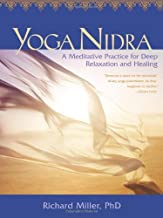
This post is built around Dr. Richard Miller’s approach to Yoga Nidra (1) and my response to it. The resource I am working with – a book and a CD – was published in 2005. My concern in writing is with how a “meditative practice for deep relaxation and healing” can also be what one reviewer (2) described as the “perfect tool” for the author’s non-dual teachings. For the recommended practices “require only presence, and as such represent both the path and the goal of non-dual practice.”

The word non-dual is a translation of the Sanskrit advaita, literally ‘not two’. I remember a podcast in which Peter Russell (3), a long-term practitioner and writer in this field, cautioned against a tendency to equate ‘not two’ with ‘one’. He then told an ancient Indian story about the making of clay pots. A potter takes a lump of clay and makes two pots. One clay; two pots. In the Indian tradition, this is a ‘consciousness first’ understanding, and modern versions draw on terms like presence, awareness, ground of being, or true nature to point to our ultimate identity as this consciousness. ‘God’ is also used in this way. The understanding is that we are never separate from this identity, though we may feel separate from it, or forget it, or ‘not believe’ in it. After all, most of our attention is on our individual life in the world with all its pulls, stresses and demands.

Early in his book, Richard Miller describes his first experience of Yoga Nidra:

“Our instructor led us through Shavasana, the traditional yogic pose for inducing deep relaxation while lying completely still on the floor. The instructor expertly guided us into being conscious of sensations throughout our body, as well as to opposing experiences, such as warmth-coolness, agitation-calmness, fear-equanimity, sorrow-joy, and separation-oneness. I was invited to rotate may attention through the sensations elicited by pairs of opposites until I was able to embody these opposing experiences with neither attachment or aversion to what I was experiencing.

“I drove home that evening feeling totally relaxed and expansively present. For the first time in years, I felt free of all conflict, radiantly joyful, and attuned wit the entire universe. I experienced life as being perfect just as it was and felt myself to be a spacious nonlocalized presence. Instead of my usual experience of being in the world, I was having a nonmental experience of the world being within me, similar to experiences I had known as a child”.

Miller’s motivation to continue was “a longing in me to consciously awaken into and fully abide as this sense of presence”. As well as becoming a yoga teacher and psychotherapist he has worked with Direct Path teachings as a student of Jean Klein. He describes the very term Yoga Nidra as a paradox, a play on the words ‘sleep’ and ‘awake’ as it means ‘the sleep of the Yogi’. The implication is that the normal person is asleep to their true nature through all states of consciousness – waking, dreaming and deep sleep – while the Yogi is one who is awake and knows his or her true nature across all states, including sleep. The practice therefore involves both deep relaxation and deep inquiry.

A full practice on Miller’s CD begins with two commitments – one to a form of mindfulness at the edge of sleep where, for the reasons pointed to above, it is OK to ‘fall asleep’ since there is a trust that the process will continue to run at other levels. The second is described as a ‘heartfelt prayer’, articulated as though it has already been fulfilled – for in the absolute, there is only now: Miller gives the example ‘my friend is whole, healed and healthy’. Then the meditation moves through seven stages, the first six of which address specific forms of awareness: body and sensation; breath and energy; feelings and emotions; thoughts, beliefs and images; desire, pleasure and joy; and witness/ego-I. The final stage (sahaj) is our natural state, ‘the awareness of changeless Being’. Each stage provides an opportunity to identify conventionally positive and conventionally negative experiences, and to hold both in a wider embrace. The sixth stage inquires into the very nature of the ‘I’ that believes itself to be a separate witness, enabling the simple being of the final stage. The whole practice lasts about 35 minutes.

I’ve been looking for an evening practice to complement my morning one. After only a week, it has the right feel, the right format and the right length for me at this point in my life. Over the last three or four years non-duality has become my common sense. During this period I have worked a good deal with the ‘Seeing’ experiments of Douglas Harding’s Headless Way (4) and also with substantial resources from Direct Path teachers Greg Goode (5) and Rupert Spira (6). A non-dual view, as a working assumption, is now both cognitively and experientially well installed.

I don’t have a deep interest in non-dualist metaphysics for its own sake. I am deeply committed to this world and my human life. What I find is that a non-dual model of reality adds to my experience of human life in the world, and cannot be separated from it. I find myself leaning in to this nourishing and illuminating possibility, and committed to commit to living by it. Roger Miller’s Yoga Nidra has met me where I am. I am very grateful for this gentle, life-affirming, and subtle practice, which helps to maintain me on this path.

(1) Richard Miller Yoga Nidra: A Meditative Practice for Deep Relaxation and Holding Boulder, CO: Sounds True, 2005

(2) Stephen Cope, author of Yoga and the Quest for the True Self and The Wisdom Of Yoga

(3) https://www.peterrussell.com/

(4) http://www.headless.org/

(5) Greg Goode The Direct Path: A User Guide Non-Duality Press, 2012 (UK edition)

(6) Rupert Spira Transparent Body: Luminous World: the Tantric Yoga of Sensation and Perception Oxford: Sahaja Publications, 2016

MAP AND TERRITORY

The Empress Wu Zetian ruled the Chinese empire alone from 690-705, the only woman ever to do so. It was the time of the Tang dynasty, when China was open to central Asian and Indian cultural influence. Wu herself had a strong Buddhist commitment.

She was curious about the world view of an esoteric Buddhist school, the Hwa Yen. In this view, all the universes were seen as a single living organism, characterised by mutually interdependent and interpenetrating processes of becoming and unbecoming. The Empress asked for a simple and practical demonstration of this complex vision.

The Hwa Yen sage Fa-tsang was given a palace room in which he placed eight large mirrors, each at one of the eight points of the compass. He placed a ninth mirror on the ceiling and a tenth on the floor. Then he suspended a candle from the ceiling in the centre of the room. The Empress was delighted at the effects thus created. ‘How beautiful! How marvellous!’ she cried. Fa-tsang explained how the reflection of the flame in each of the ten mirrors demonstrated the relationship of the One and the many, and also how each mirror also reflected the reflections of the flame in all the other mirrors, until myriad flames filled them all. The reflections were mutually identical. In one sense they were interchangeable; in another sense they existed individually. Then Fa-tsang covered one of the reflections to show the significant consequences this had for the whole. He described the relationship between the reflections as ‘One in All; All in One; One in One; All in All ‘.

Hwa Yen Buddhists also spoke of ‘The Great Compassionate Heart’. They understood it as a quality of awareness that sees all phenomena including ourselves as arising out of Emptiness, remaining part of the Emptiness whilst assuming a temporal form, and finally falling back into Emptiness and being reabsorbed. “It is a quality of awareness that quite naturally expresses itself in acts of deepest, yet quite unsentimental reverence and compassion for all that is, the just and the unjust, humans, animals, plants and stones”.*

Fa-tsang was careful to provide a ‘the-map-is-not-the-territory’ caveat. “Of course, I must point out, Your Majesty, that this is only a rough approximation and static parable of the real state of affairs in the universe – for the universe is limitless and in it an all is in perpetual, multidimensional motion”. Yet he had still taken care to provide his Empress with a beautiful, memorable and instructive map. Such maps, and the sense of ‘Great Compassionate Heart’ which they foster are of great value. They can nourish the seeker and illuminate the way, for rulers and non-rulers alike.

*Richard Miller Yoga Nidra: a Meditative Practice for Deep Relaxation and Healing Boulder, CO: Sounds True, 2005 (A more extended version of the story is included in this book.)

Earth Eclectic

music that celebrates Earth and speaks to the heart

Sarah Fuhro Star-Flower Alchemy

Follow the Moon's Cycle

Muddy Feet

Meeting nature on nature's terms

Rosher.Net

A little bit of Mark Rosher in South Gloucestershire, England

Becoming Part of the Land

A monastic polytheist's and animist’s journal

selkiewife

Selkie Writing…

Charlotte Rodgers

Images and words set against a backdrop of outsider art.

Prof Jem Bendell

living with metacrisis and collapse

Towint

The pagan path. The Old Ways In New Times

The Druids Garden

Spiritual journeys in tending the living earth, permaculture, and nature-inspired arts

The Blog of Baphomet

a magickal dialogue between nature and culture

This Simple Life

The gentle art of living with less

Musings of a Scottish Hearth Druid and Heathen

Thoughts about living, loving and worshiping as an autistic Hearth Druid and Heathen. One woman's journey.

Wheel of the Year Blog

An place to read and share stories about the celtic seasonal festivals

Walking the Druid Path

Just another WordPress.com site

anima monday

Exploring our connection to the wider world

Grounded Space Focusing

Become more grounded and spacious with yourself and others, through your own body’s wisdom

The Earthbound Report

Good lives on our one planet

Hopeless Vendetta

News for the residents of Hopeless, Maine