 In formal terms, this is a five star review of Enchanting the Shadowlands, a book of numinous poems and short stories by Lorna Smithers. She describes it as “gathered from my local landscape in response to an imperative from a Brythonic god called Gwyn ap Nudd”. If you have any interest in the lingering subtle resonance of the old Celtic and pre-Celtic world in parts of England like the poet’s native northwest, you will appreciate this volume. If you have any interest in ‘awen’ as an inspirational force or creative current, and what it is to be ‘awenydd’, you will appreciate this volume. If you have any interest in poetry and landscape, or what is now called psycho-geography, you are likely to appreciate this volume. I strongly recommend this book.
More deeply, I am hoping in a small way to share something of the magic of the work as I have experienced it. I find that the best way in is to say that, for me, the resonance of the project, its feeling-tone, can be found in the first two verses of ‘A Journeying Song’, one of the later poems in the collection.
1: Horse and Hound
She will carry me
down invisible horse paths.
He will lead us
to invisible lands.
She will carry me
beyond the stolen skyline.
He will lead us
to where horizons end.
2: The Dreaming Land
The dream is not a dream
it is the life force of the land.
A living memory,
it is the dawn. It is the damned.
The dream is not a sleep.
It is a wakefulness
of past people and their dreams.
It is mistakes and shining laughter.
When I read these lines, I can feel myself riding the mare who will “carry me down invisible horse paths”, led (in my mind’s eye) by a large and shaggy hound. I can easily accept that, surrendering to the instinctive wisdom of these animal powers, I might find myself beyond a “broken skyline” at a place where “horizons end”. I can settle into the felt apprehension of a Dreaming Land where the dream is not a dream, but “the life force of the land, a living memory” and a “wakefulness of past people and their dreams”. The words are a portal to the living reality of the experience itself. In that sense, these two brief verses stand as a microcosm of the whole book.
Peneverdant/Penwortham, the locality described, is a watery place. Its first human inhabitants are called “The Dwellers in the Water Country”, drawn by the obvious attractions of auroch and deer and also by destiny and “the dream of a bard”.
They came with the splash of oars
and the steady splash of feet
drawn by auroch, deer and destiny,
the dream of a bard
who saw the green hill rising
from a wilderness of carr and marsh.
The awenydd poet’s own seership, her own process of inspired and connected reaching back, is caught in her ‘Prayer for Netholme’.
I write this prayer for the White One
Who loaned to me a mare of mist,
Led me across the marsh of time
And granted me the seer’s gift.
For later periods, the poetry is sometimes dialogical with older texts – such as the Domesday Survey of 1086, or James Flockhart’s ‘De Mowbray:A legend of Penwortham’. The latter is referenced in in ‘St. Mary’s Well, Twilight’ – a poem that also includes finely wrought observation of nature and the meaning it makes for the observer/the observer makes for it.
The setting sun is casting his vast aura
With a majesty I never dreamt him capable of
Enflaming clouds in luminescent orange and red,
Purple like mountains behind the trees.
The birds are singing as if it is their last dusk song.
I enlist bold robin, blackbird and little wren …
As if this is the evening of all evenings
And will be their last so better make it their best.
It is hard to write freshly about sunsets, though I do think this is well-managed even in the first four lines, especially through bringing in a delighted shift in the observer’s perception, and then going on to dare purple poetry. But what makes this section of the poem for me is the succeeding lines, which create a foreground for the majestic sunset background through the activity of the birds and their commitment to Being while it lasts.
Throughout the book we are aware of the interweaving of two worlds. This is done particularly well in the stories, which are every bit as inspired as the poetry. I was especially moved by the last, called ‘The Brown-Eared Hound: Rivington, October 31st. 1917’. It concerns sudden, shocking bereavement and also a direct experience of Gwyn’s wild hunt. I could almost see a novel, or at any rate novella, in this story – bringing together the world of Wilfrid Owen, D.H Lawrence and Virginia Wolf with that of living Brythonic myth. At the same time the piece as written did everything it needed to.
I don’t think it is possible to do this volume justice in a single review. It’s hard, with poetry. So I’m suggesting that readers also have a look at Crychydd’s review in https://barddos.wordpress.com/2015/02/04 and the author’s own discussions about her work and its continuing development at: http://lornasmithers.wordpress.com/
Lorna Smithers Enchanting the Shadowlands Lulu, 2015

 Clare Cameron (1896 – 1983) was an English poet and mystic, whose life spanned much of the twentieth century. In 1930 her Green Fields of England, centred on footpath travels in the English countryside, was compared to the work of Richard Jefferies and Edward Thomas in the previous generation. At this period, she was involved with the Hermetic Order of the Golden Dawn. For two years the noted occultist Israel Regardie worked for her husband Thomas Burke and wrote the first of his books on the Kabbalah at their home. Later, Clare became associated with the London Buddhist Society under the leadership of Christmas Humphries and formed a friendship with the young Alan Watts, who she succeeded as editor of the journal Buddhism in England (later The Middle Way) when he left for the U.S. in 1938. Gradually Clare moved in a more Christian direction, and for over 20 years she edited The Science of Thought Review, based on the ideas of the mystical teacher Henry Hamblin.
 Throughout all these changes Clare drew on her experience of nature as sacred within a spirituality that emphasized the sanctity of existence and the silent background of being. Politically she championed women’s empowerment, non-violence in both aims and methods, the view that interdependence applies to countries as well as people, and the growing attention to environmental causes. She also supported the early development of interfaith dialogue.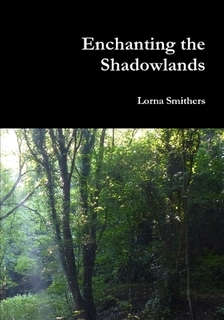
 Contemplative Inquiry