Contemplative Inquiry

This blog is about contemplative inquiry

Tag: Nature mysticism

STATES OF LIGHT

This is the face of dawn outside my window, just after 6.30 a.m. I welcome the mid September day, appreciating this moment in the year. I like the infusion of pink into grey clouds, and the suggestion of warmth in the old church tower.

I have now grown used to getting up in the dark, and to beginning my morning practice with an awareness of darkness outside. The nurturing dark and enabling light are both part of my experience. A transient time of balance has begun. It feels numinous to me, and a time of great potential. I am energetically alert and alive.

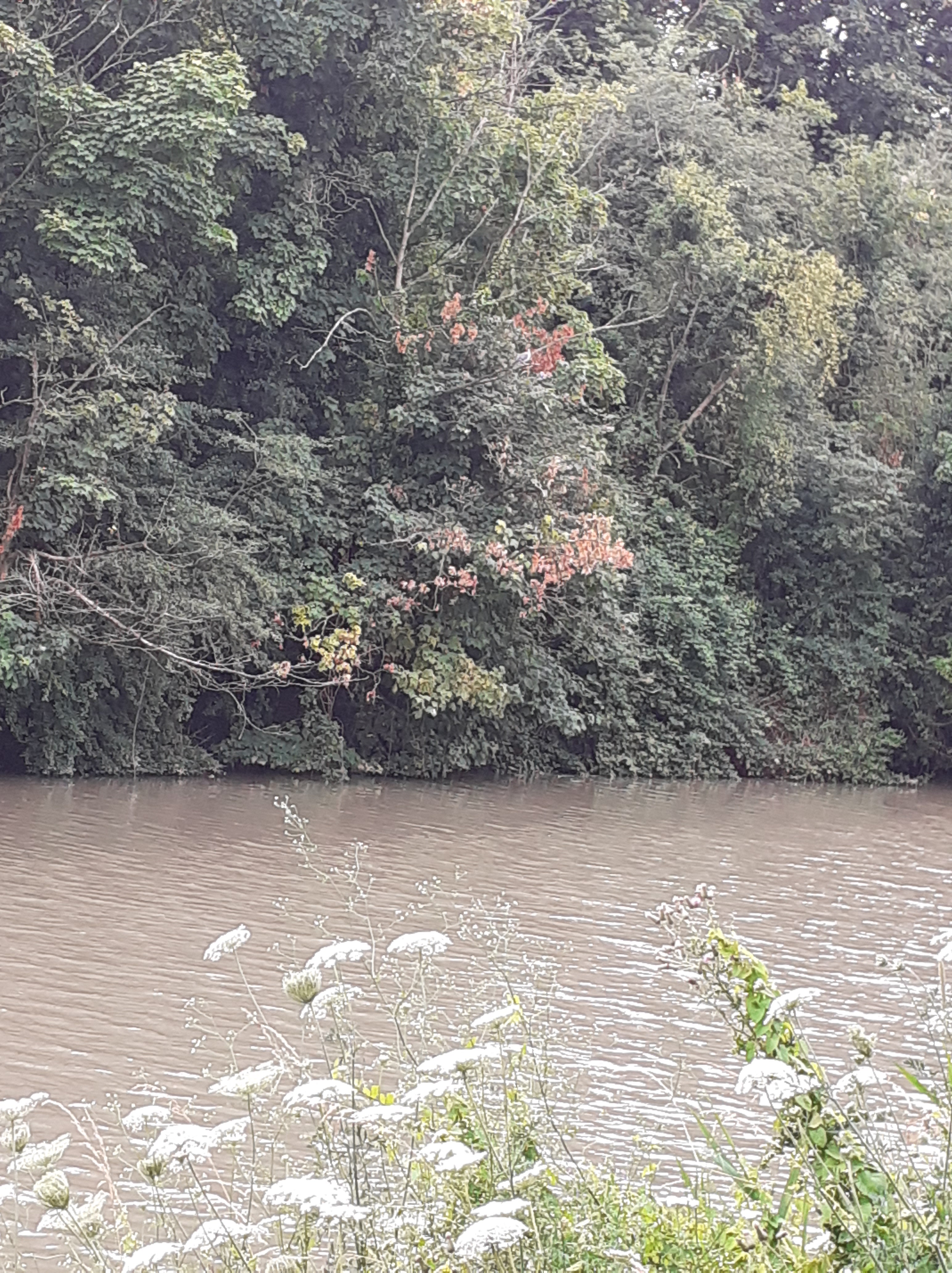
Later, a little before 9 a.m., I am walking by the Gloucester-Sharpness canal. I notice light on leaves, and its influence on the gaps between trunks. The view, here, is over water. But it is the influence of sunlight that makes the greatest impression on me – captured in the picture as well as in real time.

By contrast, the spaces furthest away from the light source are able to show their earthiness, their woodiness and the depth of their green. The light is everywhere, but it is subtle and not over-bearing. It reveals its influence in different ways. Rather than radiating raw power, it allows possibilities in this small, fragile habitat. Contemplating autumnal states of light, as I approach the autumn equinox, I have been shown something about power and its manifestation.

THE GATEWAY TO TWILIGHT

High summer becomes late summer, in my world, with a gentle movement into the evening of the year. In the picture above, taken a little after 8 pm, I at first feel, as much as see, a suggestion of muting light. On looking up, the blue of the sky seems influenced by a subtle greying effect that is independent of the clouds. Looking down, the buildings are shadowy and their reflections in the water are set within a gathering darkness.

The picture below was taken at 9 pm on the following day. The grey in the sky owes everything to clouds, whereas the orange and yellow are connected to sunset. The latter is reflected in the water, and electric lighting is now also present. The day is changing, but not yet into night. This is an in-between time, twilight. It is its own, extended moment, quietly shifting in the physical world, profoundly influential in my psychic world.

I feel joy with an edge of melancholy. It is a familiar feeling that stretches deeply into my early life, prior to language, older than memory itself. It seems to come from deep time, and to be pre-personal, not just about ‘me’. I am any finite being, moving from day towards night, from summer towards winter, from life towards death. Having shifted decisively away from the zenith, I find myself, for now, in a beautiful moment. The Gloucester docks provide me with a magical space for walking, standing still, experiencing and recording this time.

POEM: CONFRONTED BY CHRYSANTHEMUMS

For his morning tea

A priest sits down

In utter silence –

Confronted by chrysanthemums.

Matsuo Basho The Narrow Road to the Deep North and Other Travel Sketches London: Penguin Books, 1966 (translated with an introduction by Nobuyuki Yuasa)

The introduction names Matsuo Basho (1644-94) as one of the greatest figures in Japanese literature, and describes his life and work. A younger son of a minor samurai family, at nine years old he was sent to the Todo family as page and study-mate for Yoshitada, its eleven year old heir. Yoshitada, born with a delicate constitution, was more interested in literary than in military arts, and he and Basho studied the fashionable art of linked verse under the poet Kigin.

When Yoshitada died at the age of 25, Basho left the service of the Todo family by running away to Kyoto where he spent five years studying Japanese and Chinese classics at Buddhist temples. Later he based himself in the younger city of Edo (now Tokyo) where he felt greater freedom to find his own direction as a poet.

Dissatisfied with the, to him, superficial culture of Edo’s ‘floating world’, Basho turned to Zen and learned meditation from the Zen priest Buccho. Poetry still came first for Basho, but his understanding and practice changed. He wrote of his own work: “What is important is to keep our mind high in the world of true understanding, and returning to the world of our daily experience to seek therein the truth of beauty. No matter what we may be doing at a given moment, we must not forget that it has a bearing upon our everlasting self which is poetry”. Basho is a pen name, and the name of a species of banana tree about which Basho said: “the big trunk of the tree is untouched by the axe, for it is utterly useless as building wood. I love the tree, however, for its very uselessness … I sit underneath it, and enjoy the wind and rain that blow against it”.

Discussing the relationship between the poet and nature, he wrote: “go to the pine if you want to learn about the pine, or to the bamboo if you want to learn about the bamboo. And in doing so, you must leave your subjective pre-occupation with yourself. Otherwise you impose yourself on the object and do not learn. Your poetry issues of its own accord when you and the object have become one – when you have plunged deep enough into the object to see something like a hidden glimmering there. However well phrased your poetry might be – if the object and yourself are separate – then your poetry is not true poetry but merely your subjective counterfeit.”

By the time Basho came to write travel sketches, mixing haiku and prose in the genre known as haibun, he had spent some years casting away his material attachments. Now he had “nothing else to cast away but his own self which was in him as well as around him. He had to cast this self away, for otherwise he was not able to restore his true identity (what he calls ‘the everlasting self which is poetry’ in the passage above). … He left his house ‘caring nought for his provisions in the state of sheer ecstasy'”.

I love the haiku at the top of this post. I love the freshness and naturalness of the priest’s encounter with a flower that is steeped in the formal (and auspicious) symbolism of both Buddhist tradition and Japanese national culture, but is offered here in its simple yet extraordinary essence.

I cannot claim real understanding of traditional Japanese Zen culture and its relationship to creative arts. I have a smattering of knowledge and an awareness of some principles. But I am sure that much is lost in translation. What I do have is the capacity to open myself up to the words and images. Here I find the resonance of a richer experience of being, better grounded whilst also more spacious.

For his morning tea

A priest sits down

In utter silence –

Confronted by chrysanthemums.

LUGHNASADH 2022: RE-ENCHANTING TIME

A familiar sight at this time of year: a family of swans, adolescent cygnets with their parents. A superficial glance at the picture gives me a satisfying sense of near completion, of an annual cycle showing its results. It is a still image, literally a snapshot. Nothing in it can change.

Yet when I took the photo, the swans were highly mobile, constantly shifting their relative positions while sometimes gliding elegantly along the canal and sometimes pausing to investigate its banks. I also foresaw their likely passage through a more extended time. Soon enough, the cygnets will be grown up and on their own. A new beginning enabled by an ending.

I live in southern England, where daylight hours have begun noticeably to shorten. Lughnasadh (Lammas) marks the beginning of August. This festival initiates a quarter that moves through the autumn equinox and ends at Samhain. These three months embrace decline, decay and eventually death, whilst also celebrating grain and fruit harvests and (in past times) the culling of livestock to see us through the winter. The themes belong together.

I treasure this attunement to cycles of time. Part of my contemplative life rests in the timeless. Another part, more worldly, enriches my experience of time. By contrast mainstream western culture characterises time as a limited resource to be measured and priced; to be ‘spent’ productively and not ‘wasted’. The phrase ‘time is money’ comes to mind. This time hurtles onwards like a runaway train into a future always packaged as better, even redemptive, but now looking increasingly dystopian.

But any time we can know is a matter of human perception, and therefore malleable. There are, and have been, many ways for humans to live in time. For me, living the cyclical time of the eightfold wheel of the year, widely practised in Druid and Pagan culture, continues to be a re-enchanting experience.

MIDSUMMER CELEBRATION 2022

The place is called Lower Parting, though it is actually a joining. The parting is 3km (just under two miles) up river. There, the River Severn divides into two channels, east and west, to flow around Alney Island. When taking the picture above, I was standing near the point where the channels meet again. It was around 9 a.m. on 22 June. I had not been there before.

Although every time and place is ultimately sacred, some times and places are easier for me to honour. In my experience this is partly a property of the times and places, partly down to culture and tradition, and partly to do with my own inner and outer availability.

On this occasion, I was within a midsummer period which for me lasts from a day or so before the solstice until around 25 June. I like to acknowledge the stasis (standstill) element within the solstice experience. It is not just about a point of time. Like its midwinter opposite and twin, my midsummer allows an extended pause before the wheel of the year turns. My walk on 22 June was an intentional celebration of the midsummer stasis, something between an outdoor walking meditation and a miniature festival pilgrimage. It was built around my first encounter with an intuited special place, now that I am fit enough once more to walk the required distance.

I can easily understand why people in many parts of the world have seen water, especially flowing water, as sacred. I am on a quiet part of a quiet island in the middle of Gloucester city. The wetland here is blissfully unfit for development, and now a nature reserve. I was able to stand here and look out at the joining of the waters, under a blue sky, and surrender to a benign spirit of place. I didn’t have to attend to my attention. In this extended, flowing, moment, nature was doing that for me. I found, here, a generous horizon, and a living peace that invites participation. I am glad and grateful to have discovered this place on this day.

In my tradition, at every seasonal festival, we are asked to think not only of the time we are celebrating, but also of its opposite. Walking back from Lower Parting, I see features in the landscape that help me. My pictures below do not evoke winter, but they do show light and shade within a single image. On planet Earth, the time of my summer is the time of someone else’s winter. These are both ways in which opposites complement each other in an interconnected world.

TOWARDS ALBAN HEFIN: EVENING LIGHT, FLOWERING PLANTS

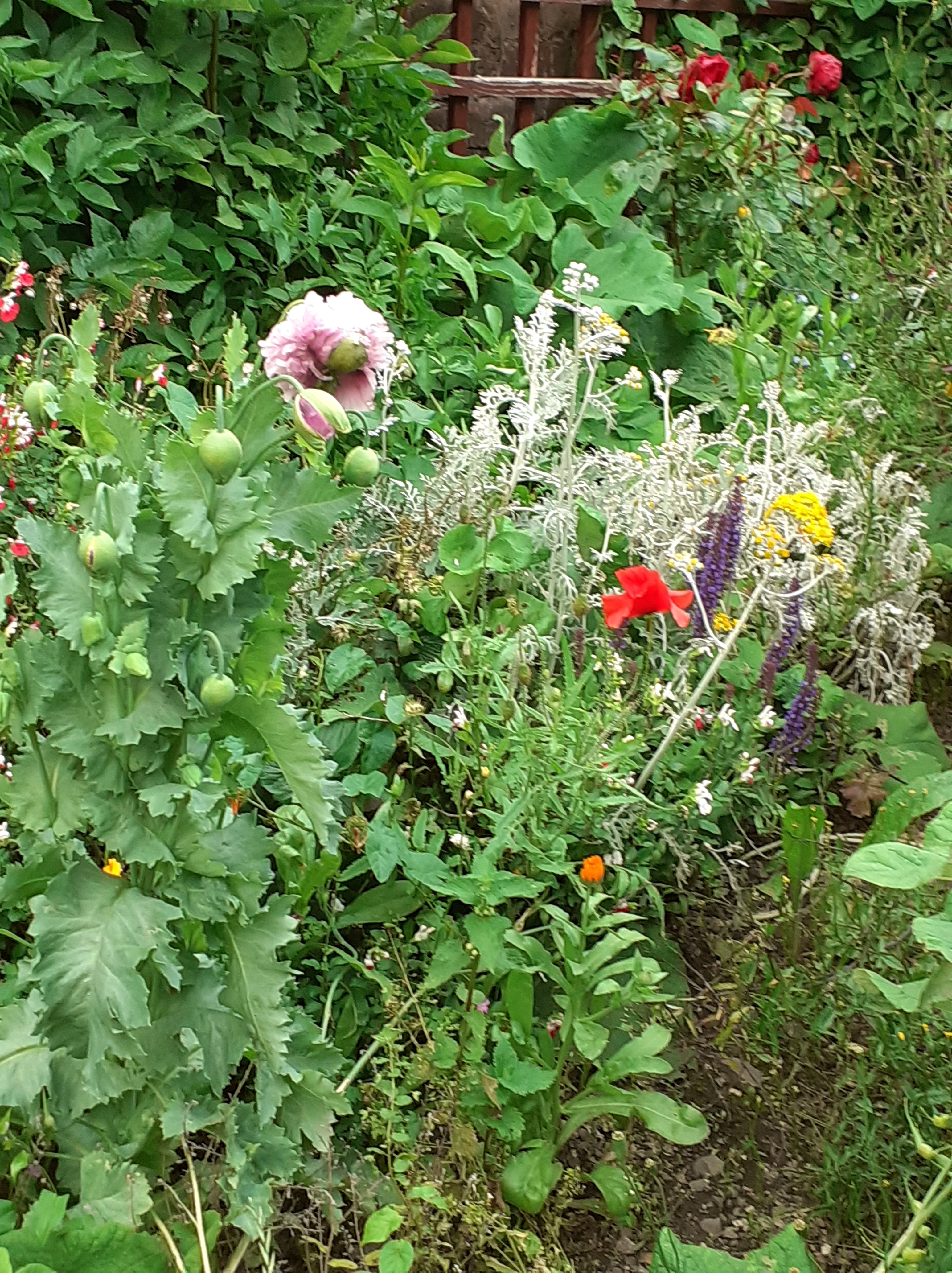
An evening walk on 10 June, around 7pm. We are approaching the summer solstice, Alban Hefin in OBOD Druidry. It is a late moment in the rising year. We are in a now familiar Georgian neighbourhood, where I often focus on sky and buildings. But here my attention is on the earth, and patches of green growth a little recessed from the kerbside. What draws me is a strong sense of light enabling life, relatively late in the day, touching the plants to ensure their thriving.

Flowering plants appeared quite late in this history of our planet, less than a hundred million years ago. Over time they helped to shape the habitat in which we have appeared and made our home. Seemingly fragile, they have, over time, exerted a tremendous collective power. It seems only right to honour them and recognise what they have done for us. May we preserve the habitat on which they and we depend.

WILD ROSES ON ALNEY ISLAND

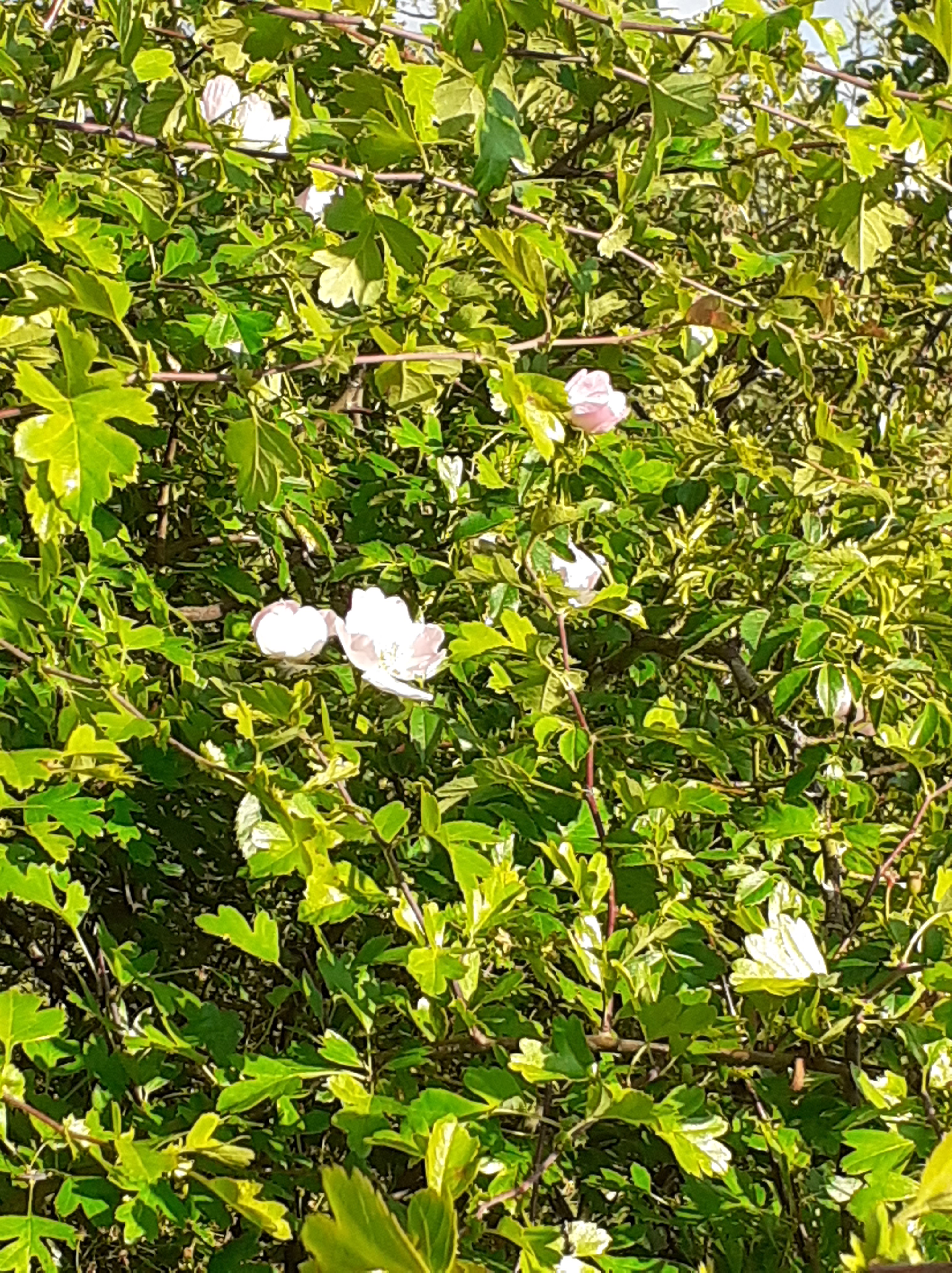
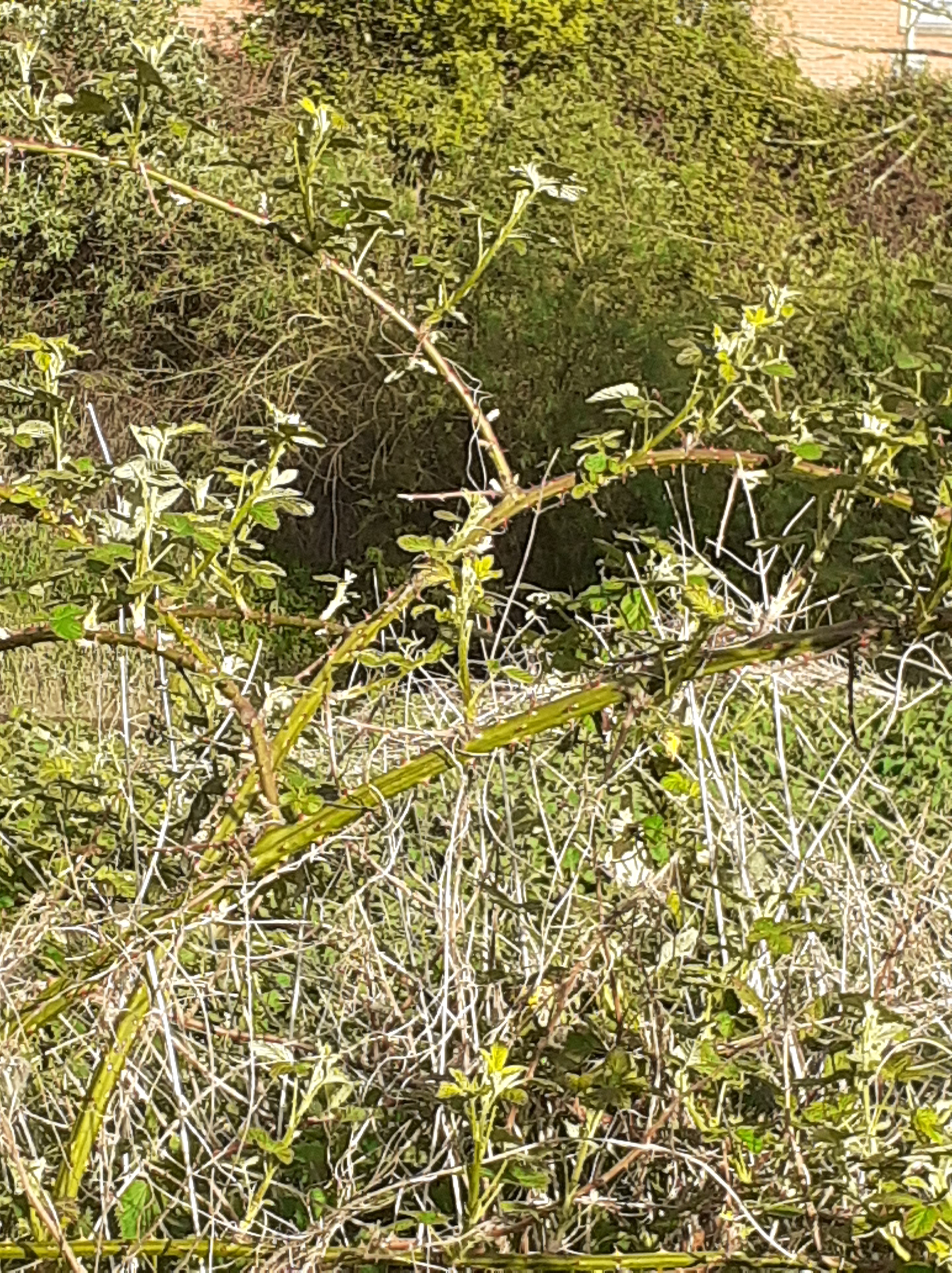
Alney Island is now established as a place where I come up for air. Yesterday evening I went there with my wife Elaine, feeling on good form. It was a relatively cool evening, easy to walk in. This picture, which looks back from the island to Gloucester Docks, records the appearance of wild roses. I associate them with midsummer, but there they are, a little early this year. They may seem fragile, but they have established a position in this riot of green.

Two weeks ago I had a spirometry test which showed that my core health problem was asthma, not COPD, though I have a mild COPD as well. This has led to a change in medication as well as understanding, and thereby increased my confidence. This walk was freed to be all pleasure, companionship and celebration. Namaste to Elaine.

Wild roses have had a special meaning for me since an encounter with them on the banks of the Tweed near Melrose Abbey in the Scottish border country many years ago. In my Contemplative Druidry (1) I describe how I walked into “A wholly unexpected and not at all dramatic epiphany” triggered by simple observing a wild rose on the river bank. Subject/object distinctions dissolved, busting me out of the limited experience (prison?) of ‘self’, as that term is generally used and understood. The direct experience was brief. The after effects were longer lasting, and the consequence was a reframe of my Druidry.

Yesterday I was surprised by wild roses again, and I feel blessed.

(1) James Nichol , Contemplative Druidry: People, Practice and Potential, Amazon/Kindle, 2014.  https://www.amazon.co.uk/contemplative-druidry-people-practice-potential/dp/1500807206/

PEONIES IN LATE MAY

As I look at these peonies, I delight in their lushness. But the word ‘poignant’ also comes to mind. Delight is mixed with sadness, and a sense of time slipping away. These are probably the last pictures of these peonies that I will take. They are in the back garden of our old home on the day it was emptied of our remaining possessions. Historically they have ushered in the first fullness of summer. They have confirmed a warm sense of home, year after year, as the wheel turns.

But now I am leaving a place Elaine and I called home for many years, at a time when the future remains uncertain on many levels. The stability of the wheel itself, or at least of its local manifestations, is palpably in question. You have to work perversely hard, now, to maintain an ignorance and denial of the climate crisis. Even here, in a cool temperate island.

I cannot dwell in sadness alone, potentially drawn down into a stuck and demobilised distress. The health and viriditas in my bodymind won’t allow it. I find myself staying open to a delight in what is given, here, in these seasonal images. The invitation to celebrate the bounty of nature in an everyday modest setting is very strong, and I respond. The nudge to make a record is likewise strong. Records and memory matter. They change any living moment to which they are invited. The opportunity to contemplate this image of peonies, knowing the context of the picture-taking, is a resource for future times.

WATER MEADOW WALK

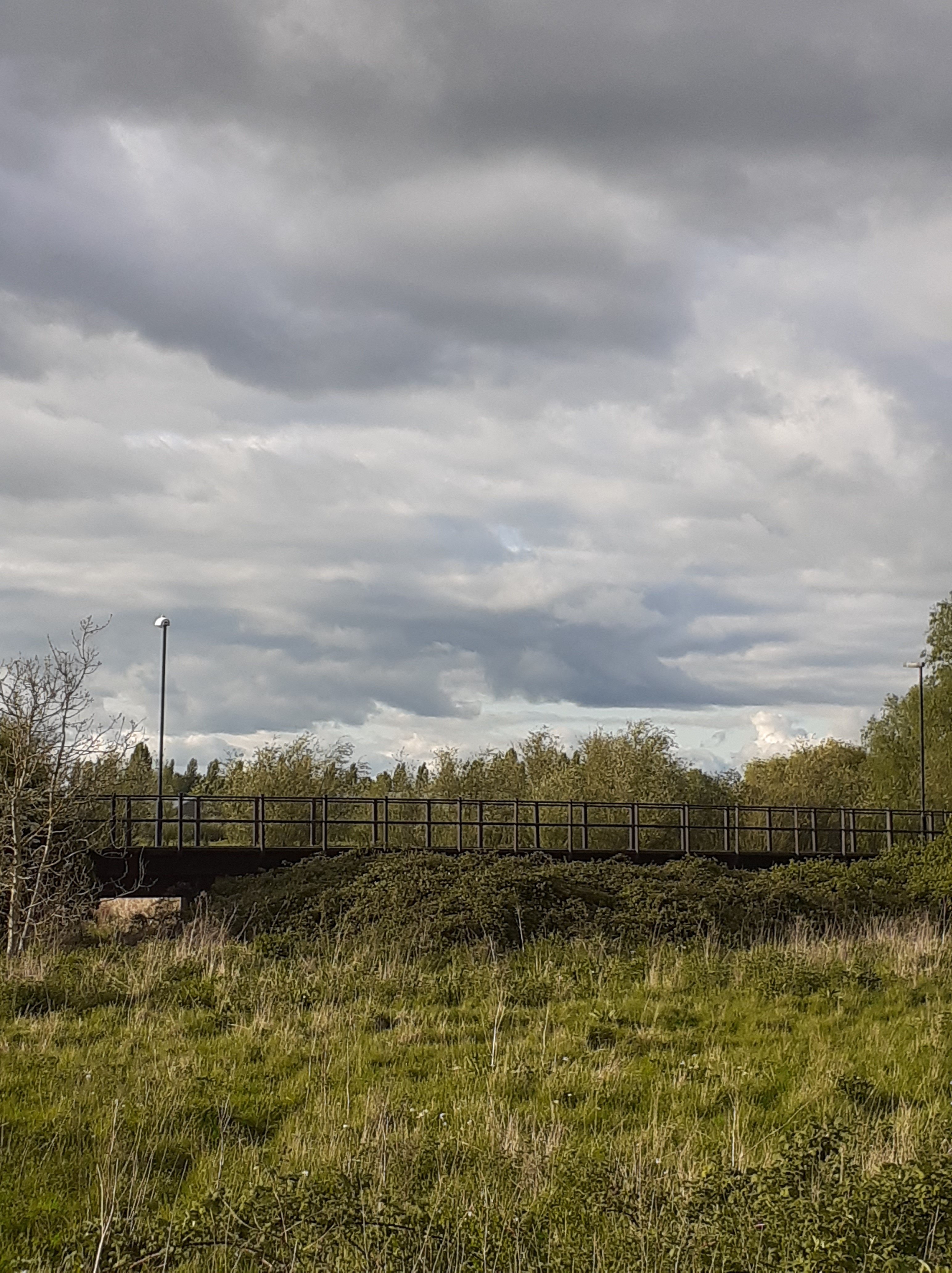
A water meadow during a dry spell. A secluded space on the fringe of the old city. Luckily for its own life, it facilitates the management of flooding. This space is available to the public, and on this walk it seems less frequented than I would have expected. It is not grandly wild, but feels different from anywhere else I have discovered in easy walking distance from my home. I like its flatness, its greenness, and its openness to the sky.

I walk here in the early evening, grateful for the path, challenging the pollen to do its worst. Lifelong hay fever has made me less of a nature boy than I might have been, certainly at this time of year. But I don’t like feeling restricted, even with my new health complications. Walking in an open space like this, particularly when there is a good breeze, lifts my spirits.

From a contemplative perspective, I am in very friendly territory. My senses relax into a more porous relationship with my surroundings. I begin to disappear into the landscape, losing myself in the experience of the moment. Very briefly, I am the path, the sky and the bramble.

Back in my envelope of skin I see grey above me, and I start to wonder about rain. I am not dressed for it. Luckily, at least for me, no rain falls. I do notice that the riot of life around me might like a good fresh soaking. But I’m conscious of my own interests now. I head for the shelter of my home.

WATER MARGIN: TUNING IN TO PLACE

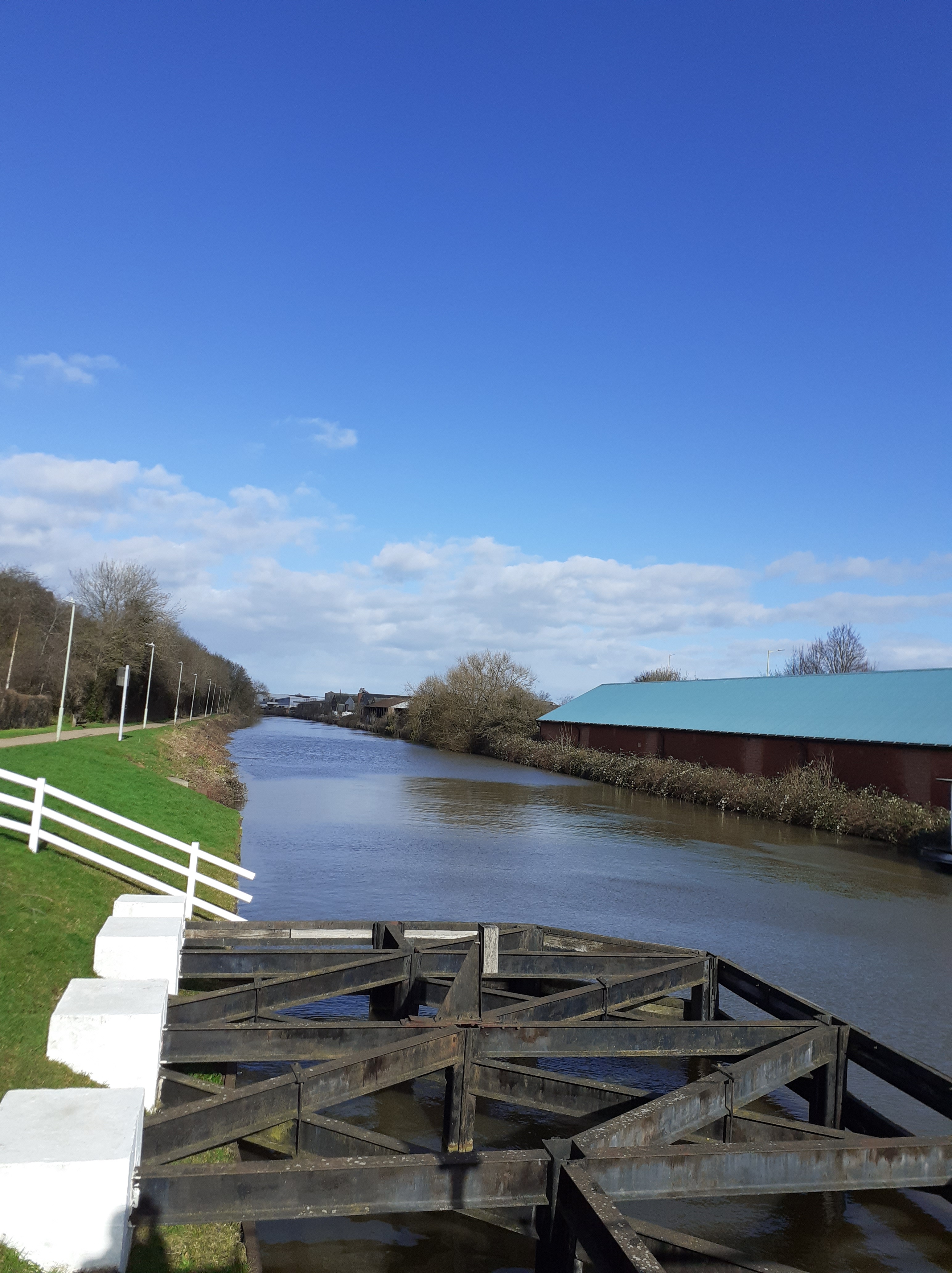
I was facing strong sunlight. I even felt warm. I risked taking a picture by angling down into the water. The water rewarded me with a patches of reflected light. I accepted a somewhat darkening effect in the photograph as a whole. The solar reality was brighter to my eyes, almost too much for them, flooding the path before me with intense light. When I looked back to where I had been, the light was gentler. My picture below shows a clear blue sky that I could confidently open up to include.

Though winter is not exactly over, I was experiencing an undoubtedly spring day. I was in a spring frame of mind, welcoming the change of season, as the wheel turns, and welcoming a still new landscape into my life. I have chosen this canal path as a place of regular walks and engagement. Over time, in the rising year, I will get to see and know it better. I seem to be a water margin Druid at heart, and I am finding possibilities in this new, more densely urban context. I find the energy of life everywhere I look – whether land, water, or sky.

Earth Eclectic

music that celebrates Earth and speaks to the heart

Sarah Fuhro Star-Flower Alchemy

Follow the Moon's Cycle

Muddy Feet

Meeting nature on nature's terms

Rosher.Net

A little bit of Mark Rosher in South Gloucestershire, England

Becoming Part of the Land

A monastic polytheist's and animist’s journal

selkiewife

Selkie Writing…

Charlotte Rodgers

Images and words set against a backdrop of outsider art.

Prof Jem Bendell

living with metacrisis and collapse

Towint

The pagan path. The Old Ways In New Times

The Druids Garden

Spiritual journeys in tending the living earth, permaculture, and nature-inspired arts

The Blog of Baphomet

a magickal dialogue between nature and culture

This Simple Life

The gentle art of living with less

Musings of a Scottish Hearth Druid and Heathen

Thoughts about living, loving and worshiping as an autistic Hearth Druid and Heathen. One woman's journey.

Wheel of the Year Blog

An place to read and share stories about the celtic seasonal festivals

Walking the Druid Path

Just another WordPress.com site

anima monday

Exploring our connection to the wider world

Grounded Space Focusing

Become more grounded and spacious with yourself and others, through your own body’s wisdom

The Earthbound Report

Good lives on our one planet

Hopeless Vendetta

News for the residents of Hopeless, Maine