Contemplative Inquiry

This blog is about contemplative inquiry

Tag: Mysticism

SEEING: THOMAS TRAHERNE

“Will you see the Infancy of this sublime and celestial Greatness? Those Pure and Virgin Apprehensions I had from the Womb, and the Divine Light wherewith I was born, are the Best unto this Day, wherein I can see the Universe …. They are unattainable by Book, and therefore I will teach them by experience.” (1)

‘Unattainable by Book’ was fighting talk  in seventeenth century England. What sort of person was using this language? Thomas Traherne (1636-74) was the son of a prosperous Hereford shoemaker – big house, numerous resident apprentices.  He grew up during the civil war (1642-49) and England’s  republican experiment (1649-1660) in a naturally royalist area. He entered Brasenose College, Oxford, in 1652 (16 being a normal age at the time) under a strictly Puritan head, took  a BA in 1656 and was appointed minister at the Herefordshire Parish of Credenhill by the Commissioners for the Approbation of Public Preachers in 1657. As soon as Charles II returned to England Traherne arranged to be ordained as Credenhill’s Anglican vicar, developed strong links with the renewed life of Hereford Cathedral, and also found time to be Chaplain to Sir Orlando Bridgeman, Charles’ Lord Privy Seal. A modern commentator (1) describes Traherne as “distinguished from his seventeenth century peers by the fact that he is blissfully untroubled by the tensions, doubts, anxieties that (we are repeatedly told) mark the age in general”.

Traherne is best remembered as a mystic, and his reputation has strengthened over the last century. His diction is of his time, but in the culture of the English language his note seems that of a later age, whilst ultimately timeless.

“Your Enjoyment of the World is never right, till evry Morning you awake in Heaven; see yourself in your father’s Palace: and look upon the Skies and the Earth and the Air, as Celestial Joys: having such a Reverend Esteem of all, as if you were among the Angels …

“You never Enjoy the World aright, til the Sea itself floweth in your Veins, till you are clothed with the Heavens, and Crowned with the Stars: and perceiv yourself to be the Sole Heir of the whole World: and more then so, becaus Men are in it who are evry one Sole Heirs, as well as you….

“Till you are intimately Acquainted with that Shady Nothing out of which the world was made … you never Enjoy the World.”

I’ve enjoyed Traherne for some years. A highly committed Christian, he breaks through formalistic theology, as if drinking directly from a Divine spring. I’ve appreciated him as a kind of Romantic panentheist, from before the time when either term came into use. Now I’m reading him as a Seer as understood in the Headless Way, and I have a clearer focus – the previous one was already fine, but a little fuzzy. Traherne’s human account of Seeing is embedded in time, place and tradition – as is mine. At another level – one awakened joy.

(1) Thomas Traherne Poetry and Prose London: Society for Promoting Christian Knowledge, 2002. (Selected and introduced by Denise Inge for the series The Golden Age of Spiritual Writing)


SOPHIAN MAGIC 101

My Temple of Sophia is a magical space. So what do I mean by magic? What is its place in a contemplative inquiry? What makes it Sophian?

On magic, I tend to take my cue from R.J. Stewart (1). He says: “Magic is a set of methods arranging awareness according to patterns. The serious application of magical methods leads to transformation; it is the transformation that is of value, not the magical methods themselves. The basis of magic is utterly practical and experiential”.

This is very good news from an inquiry point of view. Stewart is careful to say that magic is neither a truth or religion – nor yet a philosophy, though “echoes of profound philosophy” are to be found within magical traditions. In my universe, the Way of Sophia is more than a magical tradition. But magic, with its precise focusing of will and intention, its experimental approach, and its interest in outcomes, has a strong and valued place.

When starting an inquiry, I prefer to start with some sort of model, from which I will depart over time after I have gained enough experience to evaluate and modify it. R.J. Stewart – again – is a good model of Western Way integration, in particular through bringing together Celtic traditions and Kabbalah. In my Way of Sophia work I will be drawing on  Kabbalist patterning – again with the intention of gaining experience and then playing creatively. Indeed, this process has already begun.

I inaugurated my Temple of Sophia at about 4 a.m. on Tuesday 22 March and I am following Stewart in his view of five fundamentals in magical practice. As I move around the circle, I notice a cousinship with my previous OBOD Druid practice, whilst also recognizing difference.

CONCENTRATION – linked to the east, the element of air, and a view of origination.

MEDITATION – linked to the south, the element of fire, and a view of creation.

VISUALISATION – linked to west, the element of water, and a view of formation.

RITUAL PATTERNING – linked to the north, the element of earth, and a view of expression.

MEDIATION – the fifth fundamental, associated with Spirit, and in circle terms at the centre. Stewart points out that in mystical and religious discourse, the word ‘inspiration’ is used as an alternative. But in this context I find mediation the better word, more powerful as well as more specific. In the most general terms, we mediate the “constant power of Spirit”.

I want to say a little bit about all five fundamentals, with a particular emphasis on CONCENTRATION at this stage. Stewart says that before even starting, we need some ability to achieve inner silence, stilling the repetitive dialogue that we all have. In this context we are simply looking for a level of silence that will allow us to switch our focus fully onto the relevant inner disciplines. We are not here in the business of investigating the monkey mind itself. Stewart (1) offers brief exercises specifically for stilling the mind and generating silence. Having achieved this, we launch the work. Achieving silence is the first use of concentration. Holding it throughout the magical working is the next. Will Parfitt (2) has a valuable comment about concentration. It is often seen as strenuous, about being “very deliberate”, indeed somewhat compulsive – and above all an effort. He reminds us that it does not have to be this way. He notes that children at play concentrate effectively – to the point where it is hard to draw them away – yet without obvious strain and effort. This is possible because they are interested and excited. He says “it is that simple – if you are interested you can concentrate; if you are not interested you can’t and would be better off doing something else”. When I re-read this I felt sad for the many children and adults who lack adequate choices in this matter. More happily, I have noticed that I am finding concentration in the Temple of Sophia easy. My will and enthusiasm are behind it.

R.J. Stewart offers concise and simple definitions of meditation, visualization and ritual in magical work, and I will see how I go with these, in this inquiry, as time goes on:

MEDITATION: the discipline of directing consciousness inwardly upon chosen subjects.

VISUALIZATION: the act of controlled image making and development of inner vision.

RITUAL PATTERNING: the fusion of creative imagination with effective expression.

On MEDIATION I need to say a bit more, because this is where I become specifically Sophian. The purpose of my Temple is to mediate the Light of Sophia. For me, at this stage, this involves both energetic and contemplative work.

The energetic work is based around a strong development of Kabbalist middle pillar practice where I open myself to the light presence and light energy of Sophia, and let them fill me. Over the last few days this has had very strong effects. At an inquiry level, outside the Temple, it raises a Kabbalist version of the “are chakras real?” question. I’ll be writing about that in due course. On the contemplative side – again using an R.J. Stewart definition relating to magical work – I enter into a “wordless, formless fusion of consciousness with a chosen subject”.

This is the Light of Sophia – and I sit within the light generated by the energy work, and indeed go through a process that leads, when the work is going well, to the wordless, formless fusion described, wrapped and rapt in a form of Samadhi. But the larger aim is both to be and to represent that Light in the world – to mediate it. I will say more about all this, and what it means, when I better understand the implications for me. So far I know only that I have a strong sense of contact and a general direction. The inquiry itself will show me the way.

  • J. Stewart (1987) Living Magical Arts: Imagination and Magic for the 21st. Century Poole: Blandford Press
  • Will Parfitt (1988) The Living Qabalah: A Practical and Experiential Guide to Understanding the Tree of Life Shaftesbury: Element Books

I AND YOU

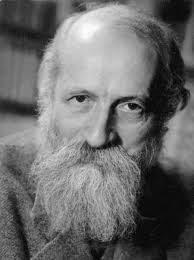
MBI and Thou was written by the Jewish scholar and theologian Martin Buber in the 1920’s and first translated into English in 1937. I’ve used a 1970 translation by Walter Kaufmann*, who prefers the term ‘I and You’ since ‘I and Thou’ sounds formal and churchy in modern English. The subject is ‘I-ness’ and the way it comes into existence only through alterity, though linkage to the other: for Buber this means other humans, other life in nature, and spiritual beings. Buber distinguishes two forms of such linkage: ‘I-It’ and ‘I-You’. The second demands more of us – and it brings “the breath of eternal life” into the world. Buber makes this distinction very clearly in the passage below.

“The I of the basic word I-You is different from the basic word I-It.

“The I of the basic word I-It appears as an ego and becomes conscious of itself as a subject (of experience and use).

“The I of the basic word I-You appears as a person and becomes conscious of itself as subjectivity (without any dependent genitive).

“Egos appear by setting themselves apart from other egos.

“Persons appear by entering into relation with other persons.

“One is the spiritual form of natural differentiation, the other that of natural association.

“The purpose of setting oneself apart is to experience and use, and the purpose of that is ‘living’ – which means dying one human life long.

“The purpose of relation is the relation itself – touching the You. For as soon as we touch a You, we are touched by the breath of eternal life.

“Whoever stands in relation, participates in an actuality, that is, in a being that is neither merely a part of him nor merely outside him. All actuality is an actuality in which I participate without being able to appropriate it. Where there is no participation, there is no actuality. Where there is self-appropriation, there is no actuality. The more directly the You is touched, the more perfect is the participation.

“The I is actual through its participation in actuality. The more perfect the participation is, the more actual the I becomes.”

Buber has been described as a ‘religious existentialist’, though he personally didn’t like the term. Whilst willing to share with all, He was not a Universalist and always saw himself as speaking specifically out of his ancestral tradition. He also wrote Tales of the Hasidim about the intensely devotional form of mystical Judaism that first developed in Central and Eastern Europe and then found new homes elsewhere, especially in North America and the Holy Land itself.

*Martin Buber, I and Thou Charles Scribner’s Sons: New York City, NY, USA, 1970 (A translation with a Prologue I and You and notes, by William Kaufmann)

THE MYSTIC SENSE

In his book on Zen Paganism (1), Tom Swiss has a chapter called The Mystic Sense. He includes Mystic, a poem by D.H. Lawrence.


They call all experiences of the

senses mystic, when the

experience is considered.

So an apple becomes mystic

when I taste in it

the summer and the snows, the

wild welter of earth

and the insistence of the sun.


Swiss notes, “one specific, wonderful deep type of beauty comes … from the perception of a relationship between our immediate subjective experience and the broader world”. He adds that depending on our social conditioning and religious training we may come to conceptualise this in terms like ‘cosmic consciousness’, ‘the presence of the divine’, ‘the perception of emptiness’, a feeling of ‘oneness with the universe’, or of ‘sacredness’ or an experience of ‘no-mind’. They are all expressions of the mystical sense, and we have entered a period in which we can let go of any residual belief that this sense is a rare possession, or the exclusive province of a few spiritual specialists and champions.

The way we make meaning and find a language for such experiences may still be heavily conditioned by culture and still be used to justify the truth of dogmas that have in reality “only provided a filter” and “determined what color glasses” we are wearing when we “behold the Clear Light”. But behold it we do, in many different ways, and “with practice we can develop this sense”. Indeed we can “even manage to perceive the mystical experience from multiple perspectives, to swap the glasses for a couple of different colors”. In this context, Swiss reminds us that “this is one of the goals of ceremonial magic, as practised by occultists and Pagans” and not at all confined to still, meditative states.


  1. Swiss, Tom (2013) Why Buddha touched the earth: Zen Paganism for the 21st. century Stafford, UK: Megalithica books
Earth Eclectic

music that celebrates Earth and speaks to the heart

Sarah Fuhro Star-Flower Alchemy

Follow the Moon's Cycle

Muddy Feet

Meeting nature on nature's terms

Rosher.Net

A little bit of Mark Rosher in South Gloucestershire, England

Becoming Part of the Land

A monastic polytheist's and animist’s journal

selkiewife

Selkie Writing…

Charlotte Rodgers

Images and words set against a backdrop of outsider art.

Prof Jem Bendell

living with metacrisis and collapse

Towint

The pagan path. The Old Ways In New Times

The Druids Garden

Spiritual journeys in tending the living earth, permaculture, and nature-inspired arts

The Blog of Baphomet

a magickal dialogue between nature and culture

This Simple Life

The gentle art of living with less

Musings of a Scottish Hearth Druid and Heathen

Thoughts about living, loving and worshiping as an autistic Hearth Druid and Heathen. One woman's journey.

Wheel of the Year Blog

An place to read and share stories about the celtic seasonal festivals

Walking the Druid Path

Just another WordPress.com site

anima monday

Exploring our connection to the wider world

Grounded Space Focusing

Become more grounded and spacious with yourself and others, through your own body’s wisdom

The Earthbound Report

Good lives on our one planet

Hopeless Vendetta

News for the residents of Hopeless, Maine