Contemplative Inquiry

This blog is about contemplative inquiry

Tag: Movement

SURFACE AND DEPTH

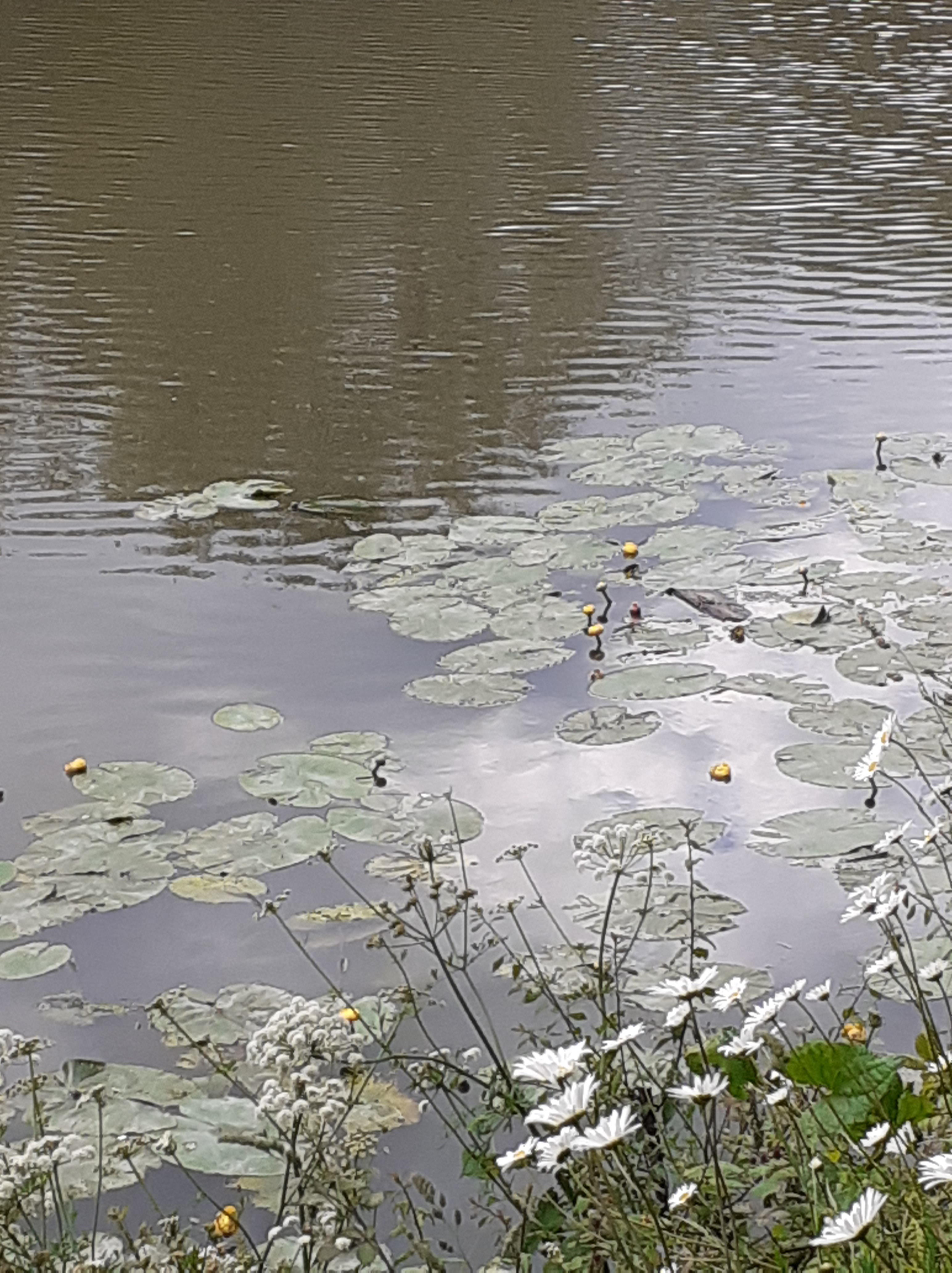
I took this picture some time ago and kept it as an image of tranquillity. Now, when I contemplate it for any length of time, the ripples on the water seem to be alive and moving. The vegetation, also alive, is still.

Although the scene presented here contains both stillness and movement, I identify strongly with the moving ripples in the background. Despite all my contemplative inquiring, movement continues to be my default setting, albeit now less agitated and turbulent than in the past. The phrase ‘stream of consciousness’ comes to mind. The natural flow of this stream includes spaces freed up from cogitation and narrative. But the stream flows on.

I am glad of this. Some traditional teachings, when emphasising the non-separation of ‘ocean and wave’, lean towards invalidating the individuality of the waves even whilst their brief distinctive identities last. But for me, the purpose of being human is to live a human life, knowingly embedded within a rich natural and cultural history. This is why I have stayed with modern Druidry as my main point of spiritual reference.

I have also found a liberating expansion of my human life in realising my non-separation from the living presence of the cosmos. It has busted me out of a certain kind of prison, one of neediness and dependency on surface satisfactions. Just as well, in an age of – increasingly surreal – ‘capitalist realism’ (1). Eckhardt Tolle has offered me the most convincing strategies for standing in the larger life – in particular through his recognition that ultimate satisfaction is inseparable from the present moment, and his account of what is really meant by that much abused term (2). He is currently a second point of reference in my spiritual work.

My photograph continues to offer an image of tranquillity. It is just that, at least for me, tranquillity isn’t as straightforward as it may look.

(1) Mark Fisher Capitalist Realism: Is There No Alternative? Winchester, UK & Washington. USA: O Books, 2009

(2) Eckhardt Tolle A New Earth: Create A Better Life London: Penguin Books, 2016 (Rev. ed. First edition 2005)

MUSICAL MEDITATION: THE SHAKUHACHI FLUTE

Shakuhachi flute music is a meditation for players and listeners alike. It is dance of sound and silence, of movement and stillness. Some people call it, ‘blowing Zen’. In this music, a rise and fall of notes gives way to space and stillness, which in turn give way to a rise and fall of notes. Eckhardt Tolle identifies shakuhachi flute music as a portal to the experience of consciousness being conscious of itself – and so a direct realization of what he calls the Deep I.

Bamboo flutes first came to Japan from China in the 7th century CE (1). The current shakuhachi was developed in Japan in the16th century. It is called fuke shakuhachi because of the instrument’s role in the Fuke sect of Japanese Zen Buddhism. Monks known as komusu (priests of nothingness, or emptiness monks) who used the shakuhachi as a spiritual tool. Their songs were paced according to the players’ breathing and were considered meditation as much as music.

Their spiritual practice required them to move from place to place playing the shakuhachi and begging for alms. The monks wore wicker baskets over their heads, as a symbol of their detachment from the world. But the world being the place that it is, it was more like a semi-detachment. Travel around Japan was restricted by the Shogunate at that time, and the Fuke only got their exemption by agreeing to spy for the authorities and allowing the Shogun to send out his own spies in the guise of Fuke monks. In response to these developments, several particularly difficult shakuhachi pieces became known as tests. If you could play them, you were a real Fuke. If you couldn’t, you were probably a spy and might very well be killed in unfriendly territory. With the Meiji Restoration, beginning in 1868, the Fuke sect was abolished along with the Shogunate itself, and shakuhachi playing was banned for a number of years.

The Wikipedia article on shakuhachi (1) provides information about the instrument and its capabilities, as well as its current international popularity and the formal link with Zen broken.. There is an International Shakuhachi Society which maintains a directory of notable professional, amateur and teaching shakuhachi players.

(1) https://en.wkipedia.org/wiki/Shakuhachi/ (NB This reference gets you to a page where you will need to type in Shakuhachi)

Earth Eclectic

music that celebrates Earth and speaks to the heart

Sarah Fuhro Star-Flower Alchemy

Follow the Moon's Cycle

Muddy Feet

Meeting nature on nature's terms

Rosher.Net

A little bit of Mark Rosher in South Gloucestershire, England

Becoming Part of the Land

A monastic polytheist's and animist’s journal

selkiewife

Selkie Writing…

Charlotte Rodgers

Images and words set against a backdrop of outsider art.

Prof Jem Bendell

living with metacrisis and collapse

Towint

The pagan path. The Old Ways In New Times

The Druids Garden

Spiritual journeys in tending the living earth, permaculture, and nature-inspired arts

The Blog of Baphomet

a magickal dialogue between nature and culture

This Simple Life

The gentle art of living with less

Musings of a Scottish Hearth Druid and Heathen

Thoughts about living, loving and worshiping as an autistic Hearth Druid and Heathen. One woman's journey.

Wheel of the Year Blog

An place to read and share stories about the celtic seasonal festivals

Walking the Druid Path

Just another WordPress.com site

anima monday

Exploring our connection to the wider world

Grounded Space Focusing

Become more grounded and spacious with yourself and others, through your own body’s wisdom

The Earthbound Report

Good lives on our one planet

Hopeless Vendetta

News for the residents of Hopeless, Maine