Contemplative Inquiry

This blog is about contemplative inquiry

Tag: Midwinter

THE SUN SETS ON 2024

It is very close to the turn of the year. The sun is now setting on 2024. The sunset pictures above and below are from 15 December at 4pm, taken from a balcony window. Vivid imagery after long days of sunless grey. It feels weird and alien, almost as if I’m looking out on another planet. 2024 has often felt like that, at times beautiful, at times scary and disorienting, at times a test of endurance.

Looking back at 2024 in a seasonal but non-festive way, I find a hard year with extraordinary moments. Personally, it was dominated by my wife Elaine’s accident in Gran Canaria and her gradual and ongoing recovery. A roller coaster of a year. Currently I feel good about my spiritual inquiry and practice, which I experience as a great blessing. But I do not want to impose any expectations on 2025. Let the new year be what it will.

MIDWINTER LIGHT IN 2023

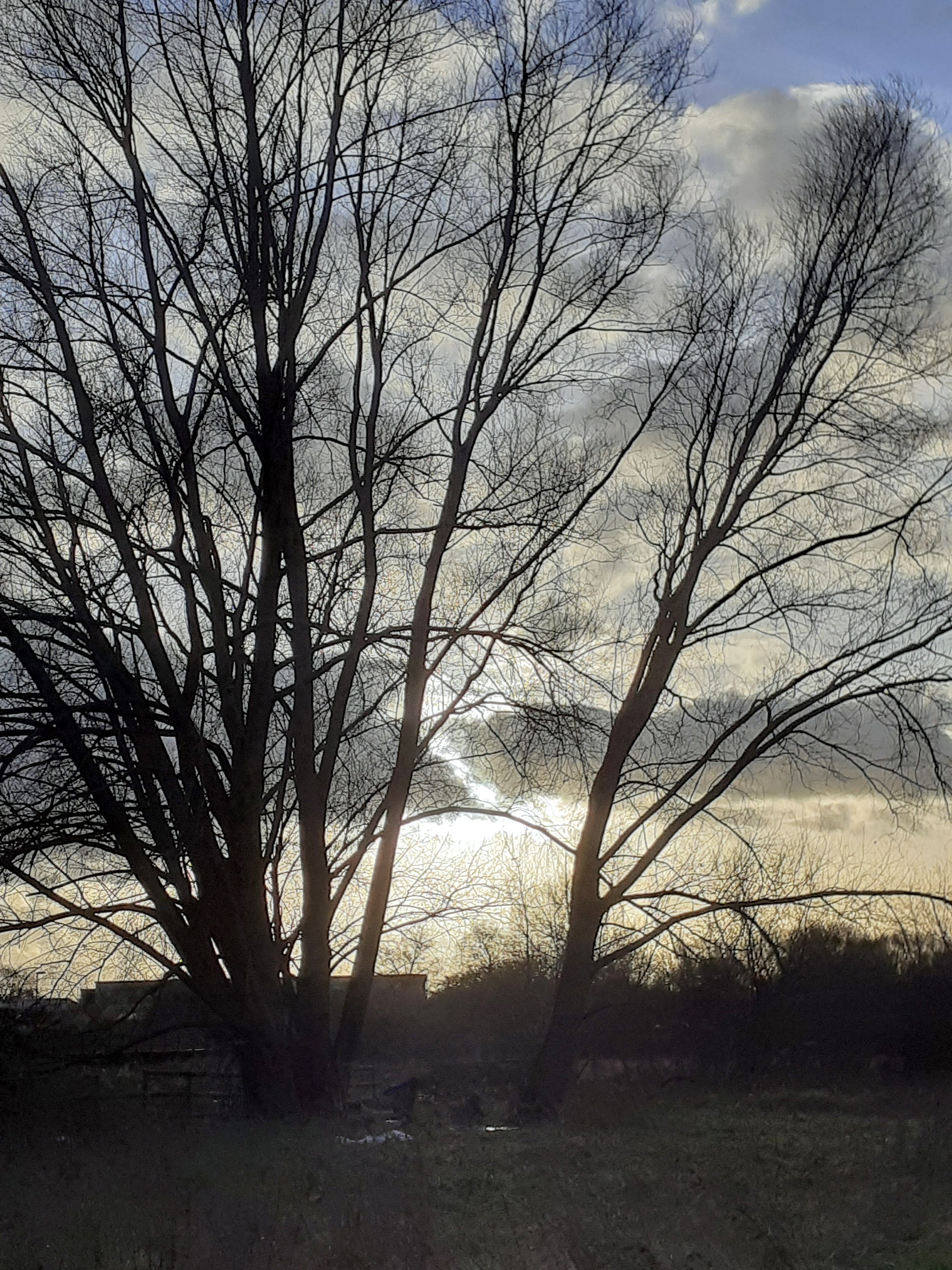
Seasonal Blessings to all readers, and my best wishes for 2024! I took these photos between 2.20 and 2.50 pm on 21 December, the last day before the Solstice, and a little more than an hour before sunset in Southern England.

The location is Alney Island, Gloucester, which I had not been to for some time. I encountered a sun that was low in the sky, clearly sinking, but still having an obvious influence on the landscape. Above, you can see a powerful luminescence behind the starkness of the trees. Immediately below, you can see light effects on the river and the trees themselves.

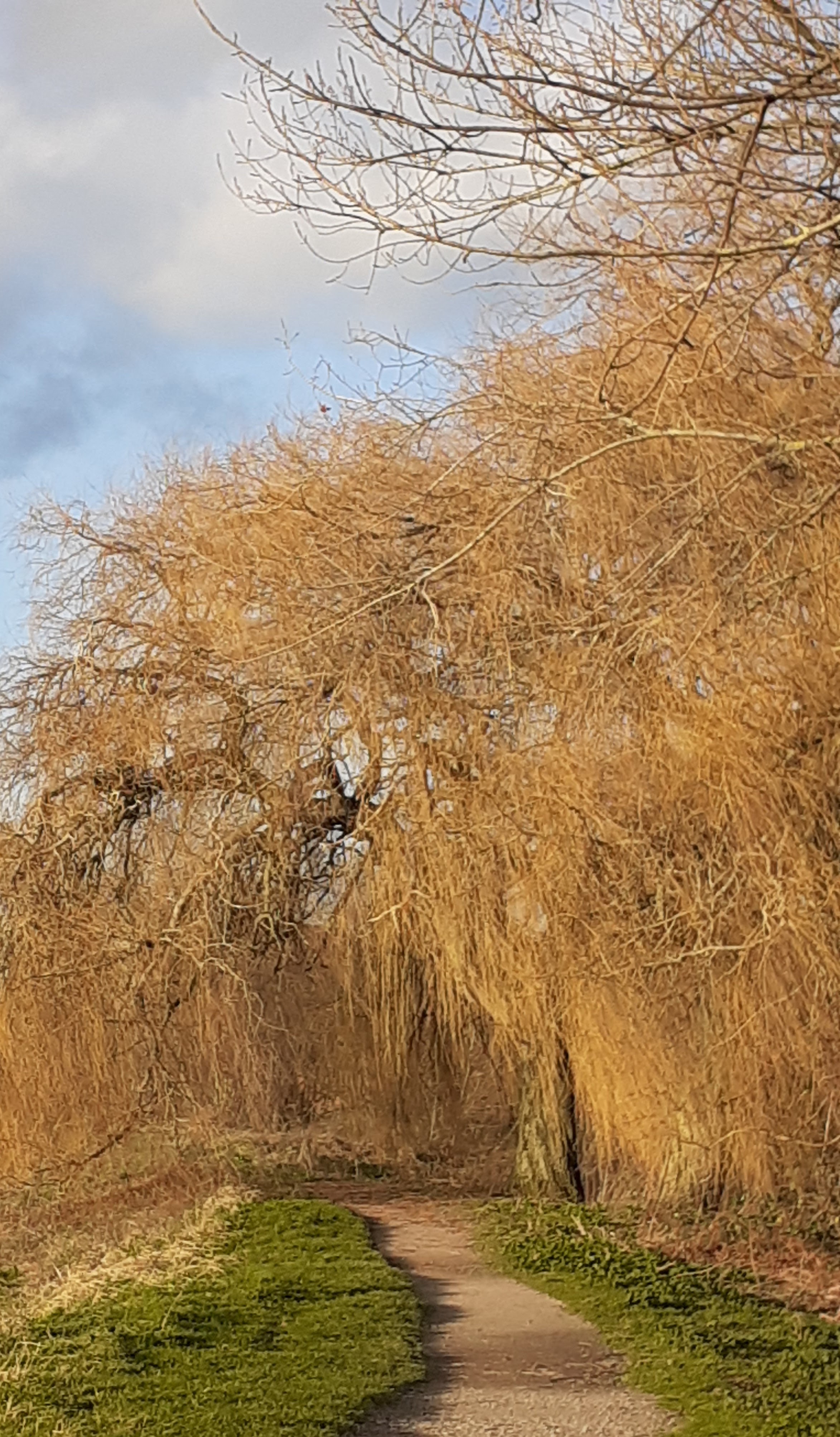
In the picture below, the midwinter sunshine is clearer and stronger. I love the way in which the willows show their vitality and abundance even when they have lost their leaves. The path is relatively dry, yet surrounded by green grass. There is a play of light and shade. There is blue as well as cloud in the sky.

On the ground, in the afternoon, and now in the evening as I write, I am thinking of light and dark, and of waxing and waning, as natural phenomena. I am not thinking in moral or metaphysical terms. These are different considerations, with a tendency moreover towards abstraction and absolutism. In my experience, nature tends to be nuanced. Different things are going on at the same time. Certainly where I live, there is always some balance of light and dark. The balance shifts, but both are always in play.

We treat tomorrow’s sunrise as the beginning of a turn. Here, in 2023, the afternoon before the change seems like a friendly one for an annual nadir of the light. This is also a bit how I am thinking about myself. Towards the end of November, when I last wrote a post of this type, I was celebrating a recovery from illness, and the opportunity of a good day. A good day was about what it was. Many people have pointed out in the last year or so that Covid-19 seems to have a long tail. I have been physically restricted beyond what I think of as normal.

I’m aware of a 75th birthday coming up next year, at which time our government will no longer consider my death as premature. Yet I am in good heart and feeling resilient. Without being presumptuous, I’m leaning in to longevity. I’m checking my capabilities and energy levels, anticipating some adjustments, and noticing the many rays of light which present themselves in my world.

BOOK REVIEW: SMALL THINGS LIKE THESE

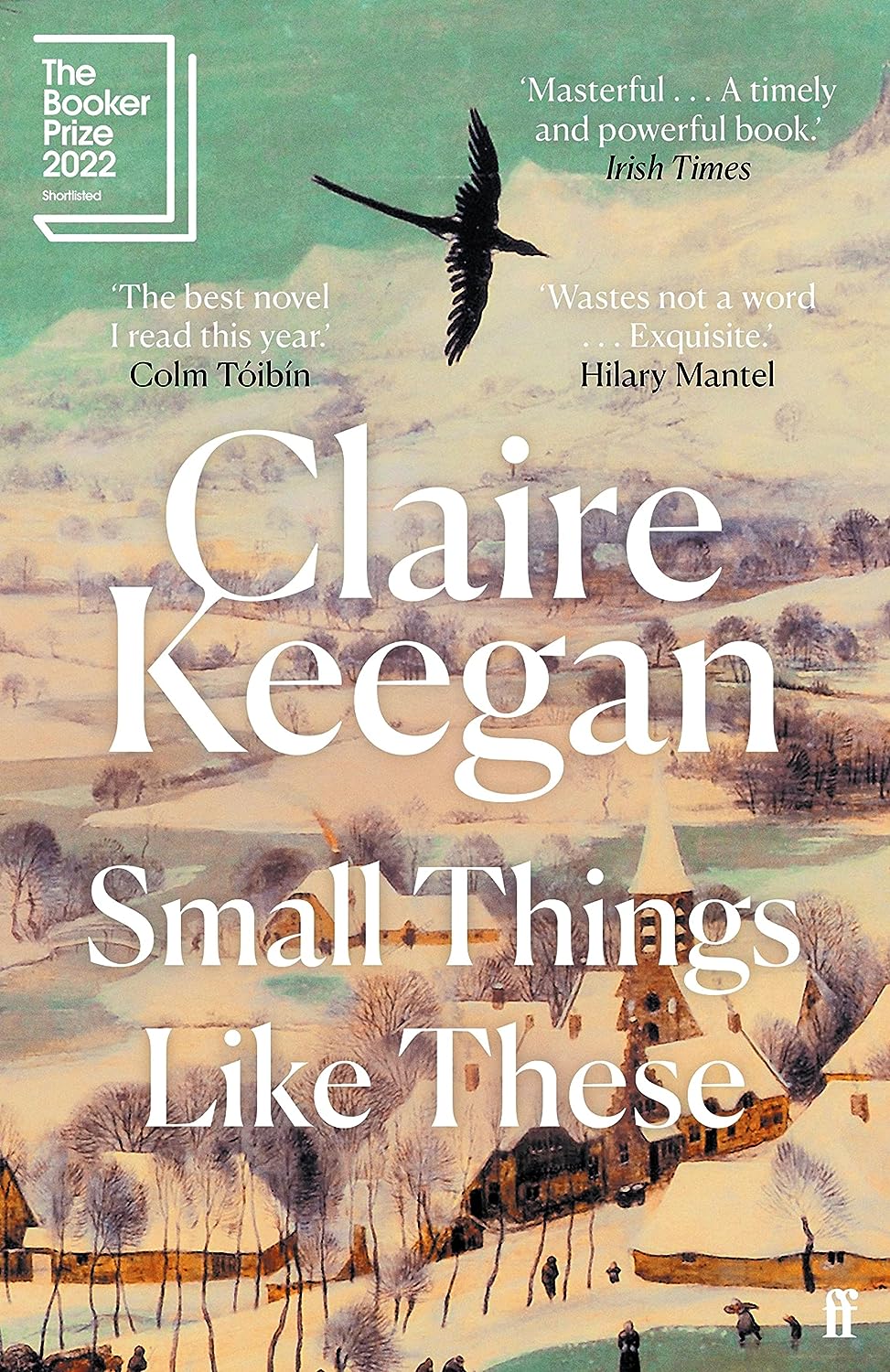
Beautifully written, and highly recommended. Claire Keegan’s Small Things Like These (1) is a novella set in the small Irish town of New Ross in the cold December of 1985, “a December of crows”. New Ross is in many ways a strong community, but business is bad. There are closures, poverty and emigration. The central, point-of-view character is Bill Furlong, a coal and timber merchant, adequately prosperous and very busy at this time of year. Born on 1 April 1946, he is a pillar of his community, a regular if tepid church goer, married with five daughters. The older of these are at St. Margaret’s, “the only good school for girls in town”.

But Bill is also something of an outsider. His father is unknown. ‘Furlong’ is his mother’s family name. She herself becomes pregnant at the age of 16, whilst working as a maid for the Protestant widow Mrs. Wilson, comfortable on a military pension and a decent sized farm. Mrs. Wilson chooses to keep her on and takes an interest in the boy. This interest continues after his mother’s sudden death when he is 12. Technical School leads to an opportunity at the coal yard where he works his way up and subsequently becomes the owner. When he gets engaged to Eileen, Mrs. Wilson gives him some thousands of pounds to establish himself. He enjoys being a family man and a good provider. The Christmas season, with its time at home, rich food and present giving is a welcome opportunity to celebrate.

Bill is naturally generous, refuses to judge people harshly and is prone to spontaneous acts of kindness, the “small things like these” of the title. The main action of the novella begins when he personally delivers a Christmas coal and wood order to the local convent, a powerful-looking place on the hill, where the nuns run both a “training”, or possibly “reforming”, school for girls” and a popular laundry business. There is some lack of clarity over the detail. They might be involved in arranging adoptions as well. Although a little set apart, it is one of the major institutions of the town.

Arriving in the dark at the covent coal house door Bill finds the bolt stiff with frost and has to force it open. There he finds a young girl, Sarah, who has clearly been locked in there for some time. She asks him to take her away or at least ask the whereabouts of her 14 month old baby who has been taken from her. The Mother Superior becomes involved and embarks on an unconvincing performance of compassion involving tea and cake for both Bill and the girl, and a story about Sarah’s incarceration as the result of a game with other girls.

Bill, going home, realizes that he forgot to ask about the baby. He recollects the numerous locks in the convent buildings and broken glass on the tops of walls. He is unhappy and misses his way home, fetching up in a remote spot he doesn’t recognize. In one of the novella’s occasional fairytale moments, he asks an old man with a billhook: “will you mind telling me where this road will take me?” The old man replies: “this road will take you wherever you want to go, son”.

On his return he tells Eileen and, separately, two friends his story. They are keen to talk him out of any public comment or further action. The convent is powerful. Other church institutions would rally round it. It is also his largest customer with the capacity to influence others. Bill has worked very hard to get where he is. Why risk financial disaster? But he is strongly affected by his encounter with Sarah. He finds himself becoming reluctant even to attend mass, let alone take the sacrament. He thinks of what Mrs. Wilson did for him, particularly since he is now fairly sure that his father was not one of her own relatives.

Late on Christmas Eve he goes back to the convent on foot, unbolts the coalhouse door, finds Sarah, and begins the walk through town to his home, “the excitement in his heart matched by the fear of what he could not yet see but knew he would encounter”. On this journey, he also recognizes a “fresh, new, unrecognisable joy in his heart … some part of him was going wild, he knew … never once in his whole and unremarkable life had he known a happiness akin to this”. The narrative ends when he reaches the door of his family home. On the other side of that door lies the beginning of another story, and another day.

(1) Claire Keegan Small Things Like These London: Faber & Faber, 2021

The author has dedicated this story to the women and children who suffered time in Ireland’s mother and baby homes and Magdalen laundries. In a note on the text she adds: “Ireland’s last Magdalen laundry was not closed down until 1996. It is not known how many girls and women were concealed, incarcerated and forced to labour in these institutions. Ten thousand is the modest figure; thirty thousand is probably more accurate. Most of the records from the Magdalene laundries were destroyed, lost or made inaccessible. Rarely was any of these girls’ or women’s work recognised or acknowledged in any way. Many girls and women lost their babies. Some lost their lives. Some or most lost the lives they could have had. … These institutions were run and financed by the Catholic Church in concert with the Irish State. No apology was issued by the Irish government until Taoiseach Enda Kelly did so in 2013”.

MIDSUMMER CELEBRATION 2022

The place is called Lower Parting, though it is actually a joining. The parting is 3km (just under two miles) up river. There, the River Severn divides into two channels, east and west, to flow around Alney Island. When taking the picture above, I was standing near the point where the channels meet again. It was around 9 a.m. on 22 June. I had not been there before.

Although every time and place is ultimately sacred, some times and places are easier for me to honour. In my experience this is partly a property of the times and places, partly down to culture and tradition, and partly to do with my own inner and outer availability.

On this occasion, I was within a midsummer period which for me lasts from a day or so before the solstice until around 25 June. I like to acknowledge the stasis (standstill) element within the solstice experience. It is not just about a point of time. Like its midwinter opposite and twin, my midsummer allows an extended pause before the wheel of the year turns. My walk on 22 June was an intentional celebration of the midsummer stasis, something between an outdoor walking meditation and a miniature festival pilgrimage. It was built around my first encounter with an intuited special place, now that I am fit enough once more to walk the required distance.

I can easily understand why people in many parts of the world have seen water, especially flowing water, as sacred. I am on a quiet part of a quiet island in the middle of Gloucester city. The wetland here is blissfully unfit for development, and now a nature reserve. I was able to stand here and look out at the joining of the waters, under a blue sky, and surrender to a benign spirit of place. I didn’t have to attend to my attention. In this extended, flowing, moment, nature was doing that for me. I found, here, a generous horizon, and a living peace that invites participation. I am glad and grateful to have discovered this place on this day.

In my tradition, at every seasonal festival, we are asked to think not only of the time we are celebrating, but also of its opposite. Walking back from Lower Parting, I see features in the landscape that help me. My pictures below do not evoke winter, but they do show light and shade within a single image. On planet Earth, the time of my summer is the time of someone else’s winter. These are both ways in which opposites complement each other in an interconnected world.

STILLNESS IN A TURNING WORLD

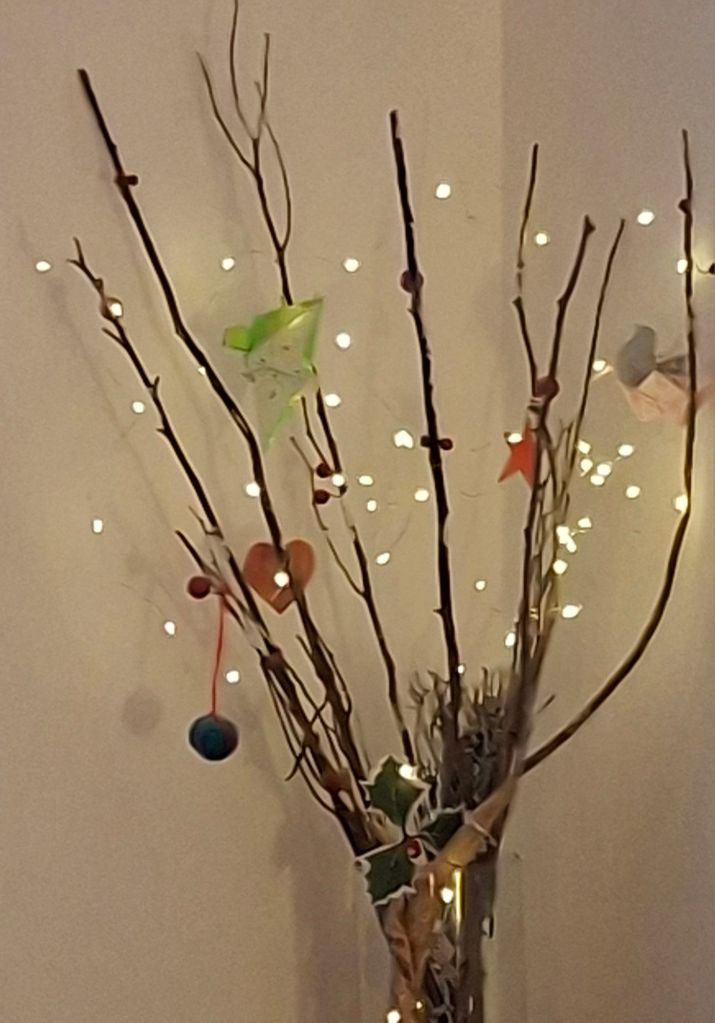
Late on Christmas morning, I went out for a midwinter walk. It was relatively warm outside (8C/46F). The world seemed static and still. Yet I had the sense of a new year quietly being born, somewhere under the surface. Ripples in the water seemed to me to confirm this.

The midwinter season that I observe in nature can be like that – superficial dullness masking dynamic transformation. Life is strong in this watery place. The wheel continues to turn. There may be harsh weeks ahead, but the overall movement of time is already leaning towards regeneration, rather than the seasonal dying of late autumn and early winter.

At times like this I sense the presence of an ancient cosmic motherhood that gives me hope for the coming year. May all beings be blessed.

THE PASSAGE OF TIME

The years roll on, with ever increasing speed. This is me in 1952, sitting to have my picture taken in a photographer’s studio. I just about remember the occasion as a significant event, for which I was carefully dressed and coached. I am pleased to report that this eager, inquisitive (if slightly anxious?) boy has never died, though at times he is hard to find. His image reminds me of the magical, light bringing child in each of us, whatever else we have become. Buried, it may be. Wounded, confined or hiding, in some cases, at some times. But still there, still embodied in old and hidden places, awaiting renewed recognition and love.

This is midwinter and a time of reminiscing and stocktaking. On 20 December 2019 I wrote: “I’m peering in to the 2020s. Calendar numbers might be arbitrary, but they are numbers of power in our culture. They award shape and identity to years and decades. Part of me sees the 2020s as pure science fiction, with an increasingly dystopian tilt. Themes of alarm, determination, resourcing and resilience come up for me at multiple levels”. (https://contemplativeinquiry.blog/2019/12/20/approaching-the-years-turn/).

At that time I undertook to give more attention to the wheel of the year, and to cultivate certain values: lovingkindness; positive health and well-being; a life of abundant simplicity; and a spirit of openness, creativity and wisdom (https://contemplativeinquiry.blog/2019/12/27/values-for-2020). Sometimes during the year I have been on point and sometimes I have not. I do feel overall that these were good choices for the year of Covid-19 and I have at least paid them conscious attention.

I do not approach 2021 with new and different thinking. I expect it to be another challenging year, especially in the early months, no doubt in a slightly different way. I will bring the same approach to 2021 as to 2020, perhaps enhancing the qualities of simplicity and openness, leaning more towards the centre rather than the periphery of the wheel. This could be the role of the elder within. There is room both for youth and age in one person.

Earth Eclectic

music that celebrates Earth and speaks to the heart

Sarah Fuhro Star-Flower Alchemy

Follow the Moon's Cycle

Muddy Feet

Meeting nature on nature's terms

Rosher.Net

A little bit of Mark Rosher in South Gloucestershire, England

Becoming Part of the Land

A monastic polytheist's and animist’s journal

selkiewife

Selkie Writing…

Charlotte Rodgers

Images and words set against a backdrop of outsider art.

Prof Jem Bendell

living with metacrisis and collapse

Towint

The pagan path. The Old Ways In New Times

The Druids Garden

Spiritual journeys in tending the living earth, permaculture, and nature-inspired arts

The Blog of Baphomet

a magickal dialogue between nature and culture

This Simple Life

The gentle art of living with less

Musings of a Scottish Hearth Druid and Heathen

Thoughts about living, loving and worshiping as an autistic Hearth Druid and Heathen. One woman's journey.

Wheel of the Year Blog

An place to read and share stories about the celtic seasonal festivals

Walking the Druid Path

Just another WordPress.com site

anima monday

Exploring our connection to the wider world

Grounded Space Focusing

Become more grounded and spacious with yourself and others, through your own body’s wisdom

The Earthbound Report

Good lives on our one planet

Hopeless Vendetta

News for the residents of Hopeless, Maine