Contemplative Inquiry

This blog is about contemplative inquiry

Tag: meditation

TOUCHING AWEN

This post describes a meditation in the late evening followed by a dream overnight. The two together became a way of touching awen. My intuition tells me that I need this dimension of experience to weather the pandemic and its aftermath.

I have a modern Druid’s understanding of awen at work in the activities of creativity, healing and the cultivation of wisdom. For me this means that each domain is at its best when influenced by the others – creativity, for example, as a form of healing and of wisdom generation. All of them have both a personal and collective dimension. We cannot be effectively creative, healthy and wise in a world turning to Waste and cursed with a Wasteland common sense. Even at its most apparently individualised and withdrawn, awen pushes back against Wasteland culture. Knowing this gives me resources and adds substance to my path.

For the meditation, I lay on my bed star-shaped, with my legs and arms spread out. I began with an awen mantra meditation synchronised with the breath. I let this go as I sank more fully into the meditative state I call ‘at-homeness’ in the flowing moment. Here, conventional distinctions between world, body and mind soon lose their hold. Words like ‘inner’ and ‘outer’ no longer describe anything. The at-homeness becomes dispersed and dissolved into simple experiencing, freed from any notion of a person having experiences.

What then arose, on this occasion, was a sense of the timeless origin of all possibilities and potentials. Narrating it now, I might talk of the feeling of an infinite space that is no place, where worlds and times are yet to be formed or named. In clock time this was a brief yet compelling experience. I ended the meditation with a strong sense of connection to source, and in the night that followed, I had a dream.

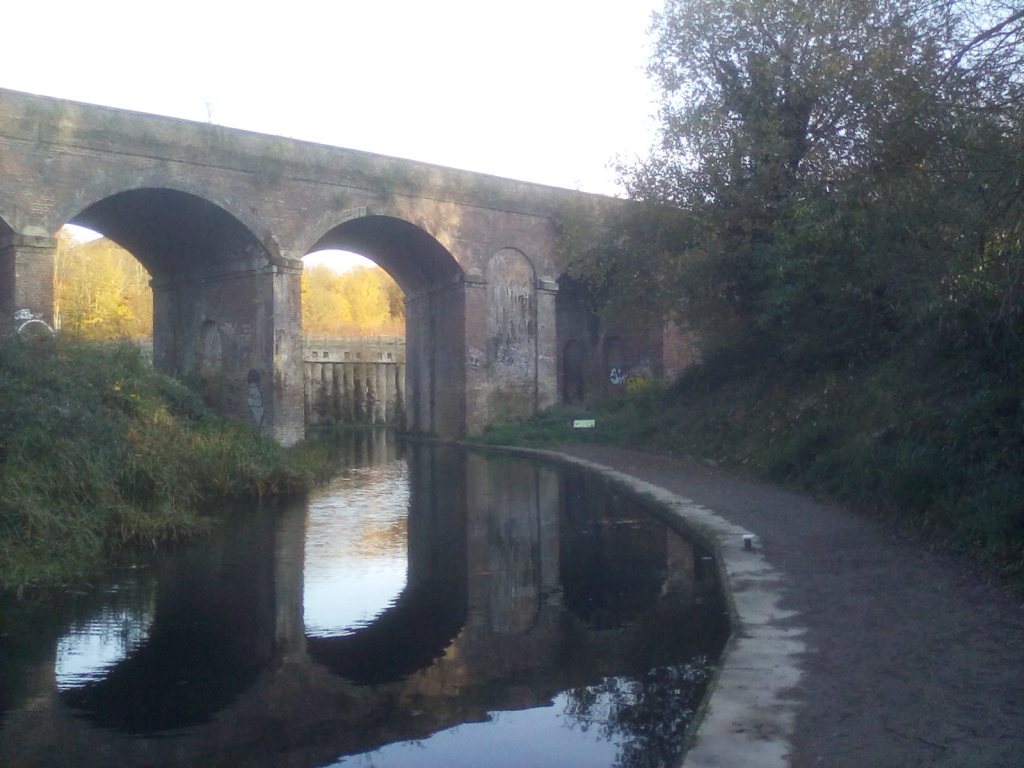
I find myself walking beside a river after sunset. I anxiously think: ‘I am not from around here. I need to be back by dark’. I have to go through a tunnel under a major intersection of modern roads. In this sparsely lit place, I realise that I am walking through water. It is over the top of my boots. They should be inundated, but they are not. My feet are happily dry. As I near the tunnel exit, I get a  glimpse of the city ahead.

Then I am in full sunlight, in this city that I know and love, despite its never being in the same place or having the same architecture. This time it is metropolitan and coastal. It has wonderful buildings of varying vintages, intriguingly laid out, and calling me onward. Whenever I think about needing to get somewhere (and I’m not even sure where that somewhere might be, or what reason I would have for going there) new urban vistas appear before me, as if saying ‘Come and look at this … and this … and this’.

Now I am in a beach area – estuarial, rather than facing the open sea, and so a little sheltered. There are numbers of people around – walking or cycling mostly, not many in the water. It is far from overcrowded. As I continue walking, I see shops and cafes perched on a low cliff that seem tastefully designed and lovingly kept. But there is a prohibition on my interacting with anyone in this city, and my money is good for nothing. I settle for the simple enjoyment of this place. It is enough.

I wake up. The dream leaves me with feelings of lightness and wellbeing. I have a sense of touching awen.

DEEP REST AND THE MAGIC OF AWEN

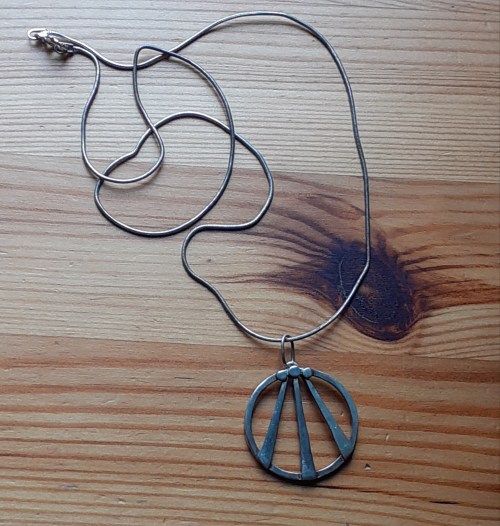
2020 is beginning its journey from Beltane to Midsummer in my neighbourhood, and I am feeling the call of Awen. Hence the pendant. I am also looking at the theme of balance (1). There’s a question for me about balancing the call of Awen with my commitment to the deep rest of contemplation and its nourishing effects.

As a fruit of my contemplative inquiry, I found ‘at-homeness in the flowing moment’. This at-homeness nourishes my life. It is not dependent on belief or circumstance, but on the ultimate acceptance that the experienced moment is what is given. Being alive, having experiences, and being aware that I have experiences is an extraordinary set of gifts. But it has taken me a while to find deep rest in simple experiencing, at will.

When I go home to the flowing moment, I slow down the stream of consciousness without attempting either to halt it or to put it to work. A stillness lives within the flow and finds its place there. I experience ‘now’ as state of presence, rather than a unit of time. A pervasive sense of deep rest emerges from ‘just being’. Immersed in being, I can lose my sense of a boundaried, separate self.

But I am also an embodied human, in a perpetual process of becoming, When I hear the call of Awen, I feel as if a larger life is inviting me to share in the magic of creation as a co-creator. It is likely that humans began calling, chanting and music-making before they developed conceptual speech. Awen is close to source, deeply involved in the emergence and flourishing of our collective and personal voices. Gaelic tradition speaks of the Oran Mor as the great song in which all beings have a part.

In this final, dynamic stage of the rising year, I do feel called in this way. My initial response has been to re-incorporate Awen into my practice both as a three-syllable chant (aah-ooo-wen) and as a two-syllable mantra meditation (aah, on the inbreath; wen, on the outbreath). This is already changing the feel of the practice. When chanting this is through the sound, with its distinctive pulse and vibration, and through a strong felt resonance in my body. In the meditation, the awen mantra seems to enliven my breath, making it very real as the breath of life. It also energises my body as a whole, less dramatically but more subtly than the chant. Overall, I sense myself as enlivened, inspired, and activated. Awen is influencing my experience, and my inquiry. I will see where this magic leads me.

(1) https://contemplativeinquiry.blog/2020/04/29/beltane-2020/

INWARD TRAINING

The Way fills the entire world

It is everywhere that people are

But people are unable to understand this.

When you are released by this one word:

You reach up to the heavens above;

You stretch down to the earth below;

You pervade the nine inhabited regions.

What does it mean to be released by it?

The answer resides in the calmness of the mind.

When your mind is well ordered, your sense are well ordered.

When your mind is calm, your senses are calmed.

What makes them well ordered is the mind;

What makes them calm is the mind.

By means of the mind you store the mind.

Within the mind there is yet another mind.

That mind within the mind: it is an awareness that precedes words.

Only after there is awareness does it take shape;

Only after it takes shape is there a word.

Only after there is a word is it implemented.

Only after it is implemented is there order.

Without order, you will always be chaotic.

If chaotic, you die. (1)

The early Taoist classic Inward Training (Nei-yeh) (1) comes out of an oral tradition in which teachers gave their pupils verses to learn and study. Hence the emphatic and somewhat repetitive flavour of the text. Teacher pupil relationships of this kind are very ancient in China, likely emerging out of an indigenous Chinese shamanism (2).

Translator and editor Harold Roth suggests that the ‘one word’ that releases people is Tao itself, used as the focus of meditation, somewhat in the manner of mantra work. When the mind is calm, another mind becomes available – the mind within the mind, that precedes words and takes shape prior to their emergence.

Tao, in this understanding, is experienced as a foundational and pervasive cosmic process in which we can centre ourselves. The recommended practice helps us to cleanse the doors of perception, and achieve that centring. My experience of contemplative inquiry, and the Druid training that preceded it, is that ‘inward training’ works.

(1) Roth, Harold D. (1999) Original Tao: ‘Inward Training’ and the foundations of Taoist mysticism New York, NY: Columbia University Press

(2) https://contemplativeinquiry.blog/2014/08/12/

LIVING PRESENCE

In my part of the world, we have begun the greening of the year. But I can’t go out to meet it, or if so, only a little. I can’t go out, so I have to go in. In the greening of my contemplative life, a sense of ‘living presence’ has been the key.

My bespoke liturgy speaks to me and at times asks for change. A section of my morning practice, an affirmation of ‘at-homeness in the present moment’, wants to expand into a ‘celebration of living presence’. At-homeness stood for a place of safety and regeneration. ‘Living presence’ includes that and points to more. In the celebration, I affirm myself as ‘living presence in a field of living presence: here, now and home’. I’ve added a period of walking meditation (20 minutes or so), mindful to breath and footfall and also including liv-ing pres-ence as a mantra over two full breaths.

The Phrase ‘living presence’ came up spontaneously but realising that I didn’t actually make it up, I checked up on where I first came across it. It comes from the Sufi teacher Kabir Edmund Helminski (1). “Presence signifies the quality of consciously being here … the way in which we occupy space. Presence shapes our self-image and emotional tone. Presence determines the degree of our alertness, openness and warmth. Presence decides whether we leak and scatter our energy or embody and direct it”.

For Helminski, presence is also our link to the divine. since in the bigger picture it is “the presence of Absolute Being reflected through the human being. We can learn to activate this presence at will. Once activated, we can find this presence both within and without. Because we find it extending beyond the boundaries of what we thought was ourselves, we are freed from separation, from duality. We can then speak of being in this presence”.

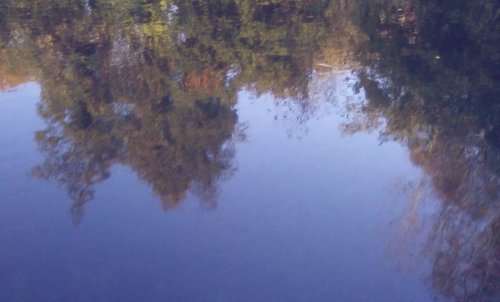
My picture of leaves in light against a darker background is, for me, an image of living presence. It wasn’t intended to look like this, but I’m glad that it does. It said ‘living presence’ to me as soon as I saw it. Each leaf grows out of the tree and is extended by the light of the sun. All are enabled and nourished by ‘interbeing’, the Buddhist teacher Thich Nhat Hanh’s (2) reframe of ‘dependent origination’. But the elements of darkness and shade, whilst delineating the tree trunk, also suggest the mystery of a primordial nature, no-thing in itself yet making everything possible. The picture seems to be saying that the potential for greening is everywhere, outside and within.

(1) Kabir Edmund Helminski Living Presence: A Sufi Way to Mindfulness & the Essential Self New York, NY: Jeremy P. Tarcher/Putnam, 1992

(2) Thich Nhat Hanh The Other Shore: A New translation of the Heart Sutra with Commentaries Berkeley, CA: Palm Leaves Press, 2017

REBLOG: ATHEOPAGANISM FOR SOLITARIES

We’re a subgroup of a subculture. Of a couple of them, actually: atheism and Paganism. So it’s not a surprise that though there are many of us collectively, we are spread thinly and may live far away from anyone else who identifies as practicing the path of Atheopaganism. Thus, this post, about practicing as a […]

Atheopaganism for Solitaries — Atheopaganism

NOVEMBER REFLECTIONS

In recent years, I have experienced November as a special month. Moving on from Samhain, it begins winter, and where I live it sees most of the fall. It is a reorientation towards darkness and inwardness. I began my contemplative inquiry, at first limited to OBOD, then to Druidry more widely, finally becoming universal, in November 2011 following a Samhain ritual.

I find November calmer than December, where I tend to feel jangled by the agitated dominance of capitalist consumerism and its appropriation of a Christian festival, itself the appropriation of a Pagan one. The old festivals had an offer for everyone, at least in principle. Now you have to have money to participate, and increasing numbers of people don’t. So I find December an awkward, uneasy time, a ‘festive season’ that, collectively, doesn’t quite ring true.

This sense of a problematic December has made the whole month of November special to me, and powerful for my inquiry. This year I have rejigged my daily practice and replaced a long morning session with shorter sessions in the morning and evening. In the morning I wake up and greet the day with a slightly ritualised (thanks to Druidry) set of exercises. Before going to bed I do a yoga nidra meditation, listening to an audio download. Both practices are grounded in what I would now call a sacrament of presence, and awareness that every experience points towards a source of being from which I am not separate. In this intersection of time and eternity I find my home. I don’t need special ‘spiritual’ experiences. This spirituality doesn’t require them: the work is to enhance my capacity to welcome any experience, including my resistance to negative ones, and find ways to respond. Hence I look to simple, regular practices that provide pragmatic benefits and also remind me of this core insight.

I find that the inquiry aspect of my contemplative inquiry is shifting its focus to personal life, relationships, culture and nature. What’s going on? How am I placed? How am I responding? What difference does my Sophian Way – with contemplative inquiry as its main expression – actually make? These are my November reflections for 2019.

NON-DUALITY AND YOGA NIDRA

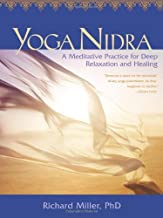
This post is built around Dr. Richard Miller’s approach to Yoga Nidra (1) and my response to it. The resource I am working with – a book and a CD – was published in 2005. My concern in writing is with how a “meditative practice for deep relaxation and healing” can also be what one reviewer (2) described as the “perfect tool” for the author’s non-dual teachings. For the recommended practices “require only presence, and as such represent both the path and the goal of non-dual practice.”

The word non-dual is a translation of the Sanskrit advaita, literally ‘not two’. I remember a podcast in which Peter Russell (3), a long-term practitioner and writer in this field, cautioned against a tendency to equate ‘not two’ with ‘one’. He then told an ancient Indian story about the making of clay pots. A potter takes a lump of clay and makes two pots. One clay; two pots. In the Indian tradition, this is a ‘consciousness first’ understanding, and modern versions draw on terms like presence, awareness, ground of being, or true nature to point to our ultimate identity as this consciousness. ‘God’ is also used in this way. The understanding is that we are never separate from this identity, though we may feel separate from it, or forget it, or ‘not believe’ in it. After all, most of our attention is on our individual life in the world with all its pulls, stresses and demands.

Early in his book, Richard Miller describes his first experience of Yoga Nidra:

“Our instructor led us through Shavasana, the traditional yogic pose for inducing deep relaxation while lying completely still on the floor. The instructor expertly guided us into being conscious of sensations throughout our body, as well as to opposing experiences, such as warmth-coolness, agitation-calmness, fear-equanimity, sorrow-joy, and separation-oneness. I was invited to rotate may attention through the sensations elicited by pairs of opposites until I was able to embody these opposing experiences with neither attachment or aversion to what I was experiencing.

“I drove home that evening feeling totally relaxed and expansively present. For the first time in years, I felt free of all conflict, radiantly joyful, and attuned wit the entire universe. I experienced life as being perfect just as it was and felt myself to be a spacious nonlocalized presence. Instead of my usual experience of being in the world, I was having a nonmental experience of the world being within me, similar to experiences I had known as a child”.

Miller’s motivation to continue was “a longing in me to consciously awaken into and fully abide as this sense of presence”. As well as becoming a yoga teacher and psychotherapist he has worked with Direct Path teachings as a student of Jean Klein. He describes the very term Yoga Nidra as a paradox, a play on the words ‘sleep’ and ‘awake’ as it means ‘the sleep of the Yogi’. The implication is that the normal person is asleep to their true nature through all states of consciousness – waking, dreaming and deep sleep – while the Yogi is one who is awake and knows his or her true nature across all states, including sleep. The practice therefore involves both deep relaxation and deep inquiry.

A full practice on Miller’s CD begins with two commitments – one to a form of mindfulness at the edge of sleep where, for the reasons pointed to above, it is OK to ‘fall asleep’ since there is a trust that the process will continue to run at other levels. The second is described as a ‘heartfelt prayer’, articulated as though it has already been fulfilled – for in the absolute, there is only now: Miller gives the example ‘my friend is whole, healed and healthy’. Then the meditation moves through seven stages, the first six of which address specific forms of awareness: body and sensation; breath and energy; feelings and emotions; thoughts, beliefs and images; desire, pleasure and joy; and witness/ego-I. The final stage (sahaj) is our natural state, ‘the awareness of changeless Being’. Each stage provides an opportunity to identify conventionally positive and conventionally negative experiences, and to hold both in a wider embrace. The sixth stage inquires into the very nature of the ‘I’ that believes itself to be a separate witness, enabling the simple being of the final stage. The whole practice lasts about 35 minutes.

I’ve been looking for an evening practice to complement my morning one. After only a week, it has the right feel, the right format and the right length for me at this point in my life. Over the last three or four years non-duality has become my common sense. During this period I have worked a good deal with the ‘Seeing’ experiments of Douglas Harding’s Headless Way (4) and also with substantial resources from Direct Path teachers Greg Goode (5) and Rupert Spira (6). A non-dual view, as a working assumption, is now both cognitively and experientially well installed.

I don’t have a deep interest in non-dualist metaphysics for its own sake. I am deeply committed to this world and my human life. What I find is that a non-dual model of reality adds to my experience of human life in the world, and cannot be separated from it. I find myself leaning in to this nourishing and illuminating possibility, and committed to commit to living by it. Roger Miller’s Yoga Nidra has met me where I am. I am very grateful for this gentle, life-affirming, and subtle practice, which helps to maintain me on this path.

(1) Richard Miller Yoga Nidra: A Meditative Practice for Deep Relaxation and Holding Boulder, CO: Sounds True, 2005

(2) Stephen Cope, author of Yoga and the Quest for the True Self and The Wisdom Of Yoga

(3) https://www.peterrussell.com/

(4) http://www.headless.org/

(5) Greg Goode The Direct Path: A User Guide Non-Duality Press, 2012 (UK edition)

(6) Rupert Spira Transparent Body: Luminous World: the Tantric Yoga of Sensation and Perception Oxford: Sahaja Publications, 2016

FEELINGS AND CONTEMPLATION

“In meditation, when a wave of feeling comes to visit – a grief, a fear, an unexpected anger or melancholy – can you stay present with that wave, breathe into it, let go of trying to ‘let go’ of it, and simply let it be, let it live, let it express itself right now within you? Can you notice the impulse in you to resist it, to refuse it, distract yourself from it and move away from your experience? Don’t judge or shame yourself for that impulse either, for wanting to have a different experience that you’re having – it’s an old habit, this urge to disconnect, this impulse to flee, this addiction to ‘elsewhere’.

” But see, today, if you can stay very close to ‘what is’, see if you can actually connect with the visiting feeling, gently lean in to your experience as it happens. Instead of shutting down, moving away, denying the energy in the body, can you gently open up to it? Can you flush it with curious attention? Let it move in you? Stay present throughout its life cycle, as it is born, expresses what it has to express, and falls back into Presence, its oceanic home?” (1)

The extract above is from a piece by Jeff Foster called When We Push Feelings Away. I support his approach, though I don’t now make firm distinctions between an activity called ‘meditation’ and the spontaneous flow of attention. I can stay present with the wave of feeling, and breathe into it, whether I’m ‘in meditation’ as a defined practice or not.  Meditation, once exotic and formal, has become naturalised. My contemplative life is pared down and minimalist, holding a strong sense of the sacred in daily life, including the work of self-healing. Jeff Foster continues:

“… One day, deep in meditation, perhaps, we remember, all feelings are sacred and have a right to exist in us, even the messiest and most inconvenient and painful ones. And we remember to turn towards our feelings instead of turning away. To soften into them. To make room for them instead of numbing them or ignoring them. …. So much creativity is released, so much relief is felt, when we break this age-old pattern of self-abandonment and repression, go beyond our careful conditioning, and try something totally new: staying close to feelings, as they emerge in the freshness of the living moment, waving to us, calling to us, seeking their true home in our heart of hearts.”

Jeff Foster calls this piece Pushing Feelings Away. I like his concern with holding and acceptance within what he calls Presence. I call my overall path a Sophian Way, and not The Sophian Way, because it is a solitary path that morphs and shifts.  Jeff Foster works with personal feelings from a transpersonal, non-dual  perspective that I find very Sophian, characterised  by wisdom, contemplation and compassion. My own path brings together this approach with the Eco-spirituality – or ‘Nature Mysticism’ – catalysed by my experience of modern Druidry.

(1) Jeff Foster The Joy of True Meditation: words of encouragement for tired minds and wild hearts Salisbury: New Sarum Press, 2019

ENLIGHTENMENT IS NOW

“Enlightenment is always enlightenment about something. You don’t need to practice eight years to have some enlightenment. Enlightenment is our daily business. If you practice mindfulness and concentration you may get insight, or enlightenment, several times a day. Just breathing in, you can be enlightened about the fact that you are alive. To be alive is already a miracle. While breathing in and making one step, we allow the light of mindfulness to be lit like a candle in our heart. We know that to be walking on this beautiful planet Earth is a wonder. And that kind of awareness and insight can bring peace and happiness already. We don’t want anything else. To be alive, to breathe in, and to make one step, is already wonderful enough. This is already enlightenment. And with the light of mindfulness in us we become a saint, we become a Buddha, we become a bodhisattva. We are a light for the world.”

Thich Nhat Hanh The Other Shore: a New Translation of the Heart Sutra with Commentaries Berkeley, CA: Palm Leaves Press, 2017

INQUIRY AND HEART

Recently I have noticed a change in my notion of inquiry. I experience, at the same time, both a greater precision and a softening in my understanding of ‘inquiry’. Rupert Spira (1) makes a helpful point.

“This path is sometimes referred to as self-inquiry or self-investigation. However, these terms – translations of the Sanskrit term atma vichara – are potentially misleading. They imply an activity of the mind rather than, as Ramana Maharshi described it, a sinking or relaxing of the mind into ‘the heart’, that is, into its source of pure Awareness and Consciousness. The term may, therefore, be more accurately be described as ‘self-abiding’ or ‘self-resting’, and is the essence of what is known in various spiritual and religious traditions as prayer, mediation, self-remembering, Hesychasm in the Greek Orthodox Church, or the practice of the presence of God in the mystical Christian tradition.”

At the time of writing, I have three means of heart inquiry by this definition. The first is quintessentially Sophian – a repetition, synchronised with the breath, of the name Ama-Aima (pronounced ahh-mah-ahee-mah). In its tradition of origin (2). this Aramaic name for the Divine Mother brings together Her transcendental and immanent aspects, and the repetition of the name invokes Her light energy and presence, which is the light energy and presence of the cosmos. As I breathe the name, entering into its pulse and vibration, I begin to find that this presence-energy is breathing me, until the distinctions themselves disappear. I treat this work formally, as a sacrament or mystery, and part of a daily practice.

The second is Seeing, and the practices of the Headless Way, described as ‘experiments’ in that family. – see www.headless.org/. I use a variety of these practices depending on the circumstances. The advantage of Seeing is that I can drop into it at any time during the day.

The third is the rawer approach laid out by Jeff Foster (https://lifewithoutacentre.com/ ), which turns the ‘Light of Oneness’, back onto the experience of the struggling human. It flows from his own journey of “venturing into the darkness of myself” (3), before “breaking through the veil of dualistic mind to a   Light that had been there all along”. Here, we enter into a loving encounter with whatever experience is happening and finding a way to accept  – not the content of the experience itself, which may be horrible and need resisting – but the reality that this is the experience that is happening, the one demanding attention. Loving attention to our struggles may not stop suffering but can make them more workable. As with Seeing, I can drop into this meditation at any time – by slowing down, breathing and just being there, with loving curiosity and attention. It works with mixed and good experiences too.

I find that a combination of these practices serves me well. Reading, writing and digital media of relevance to the practices support my sense od direction and my understanding.

(1) Rupert Spira Transparent Body, Luminous World: The Tantric Yoga of Sensation and Perception Oxford: Sahaja Publications, 2016

(2) Tau Malachi Gnosis of the Cosmic Christ: a Gnostic Christian Kabbalah Saint Paul, MN: Llewellyn Publications, 2005

(3) Jeff Foster The Joy of True Meditation: Words of Encouragement for Tired Minds and Wild Hearts Salisbury, UK: New Sarum Press, 2019

Earth Eclectic

music that celebrates Earth and speaks to the heart

Sarah Fuhro Star-Flower Alchemy

Follow the Moon's Cycle

Muddy Feet

Meeting nature on nature's terms

Rosher.Net

A little bit of Mark Rosher in South Gloucestershire, England

Becoming Part of the Land

A monastic polytheist's and animist’s journal

selkiewife

Selkie Writing…

Charlotte Rodgers

Images and words set against a backdrop of outsider art.

Prof Jem Bendell

living with metacrisis and collapse

Towint

The pagan path. The Old Ways In New Times

The Druids Garden

Spiritual journeys in tending the living earth, permaculture, and nature-inspired arts

The Blog of Baphomet

a magickal dialogue between nature and culture

This Simple Life

The gentle art of living with less

Musings of a Scottish Hearth Druid and Heathen

Thoughts about living, loving and worshiping as an autistic Hearth Druid and Heathen. One woman's journey.

Wheel of the Year Blog

An place to read and share stories about the celtic seasonal festivals

Walking the Druid Path

Just another WordPress.com site

anima monday

Exploring our connection to the wider world

Grounded Space Focusing

Become more grounded and spacious with yourself and others, through your own body’s wisdom

The Earthbound Report

Good lives on our one planet

Hopeless Vendetta

News for the residents of Hopeless, Maine