Contemplative Inquiry

This blog is about contemplative inquiry

Tag: Magic

PRE-SUNSET: A WALK IN THE PARK

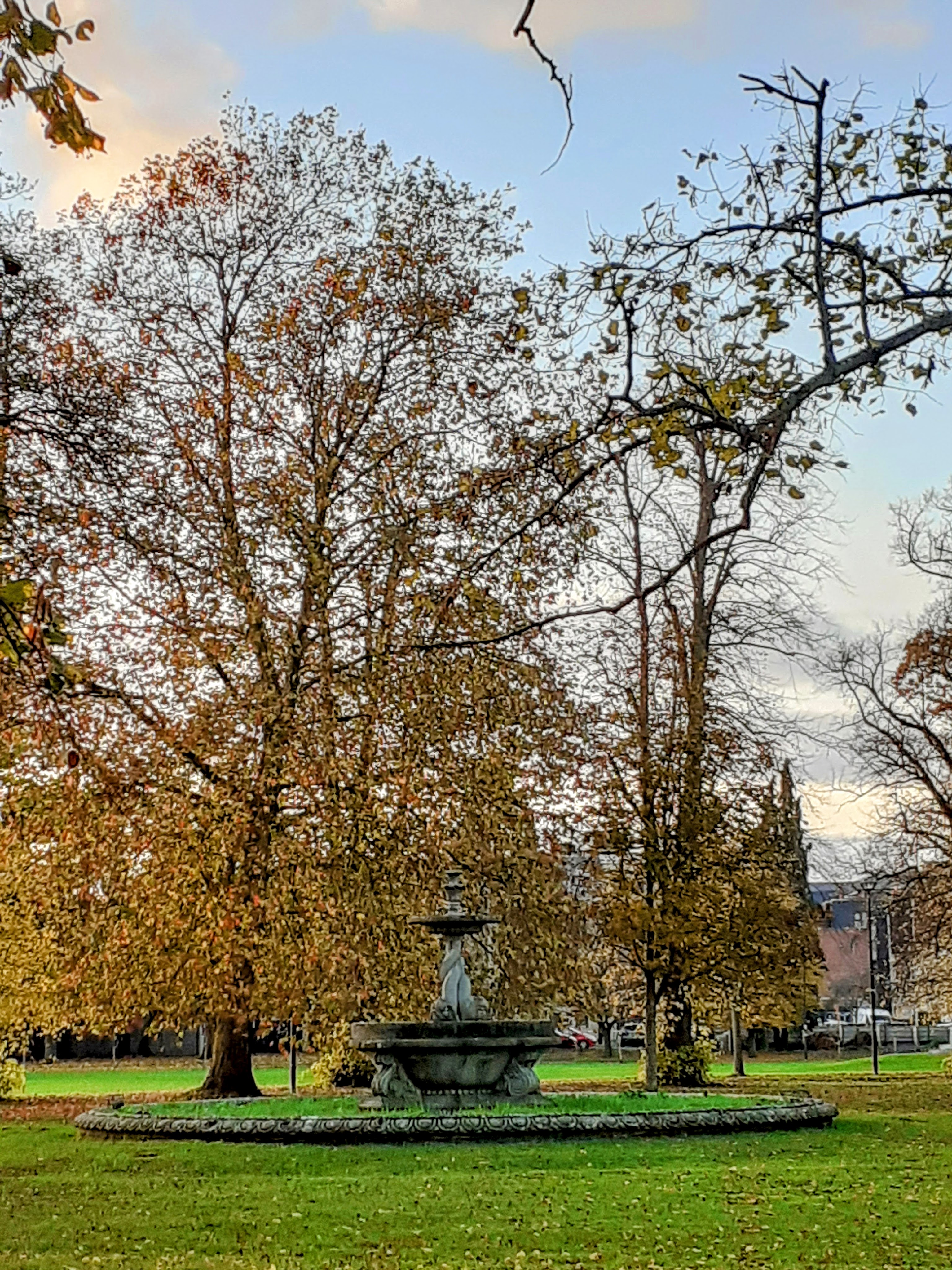
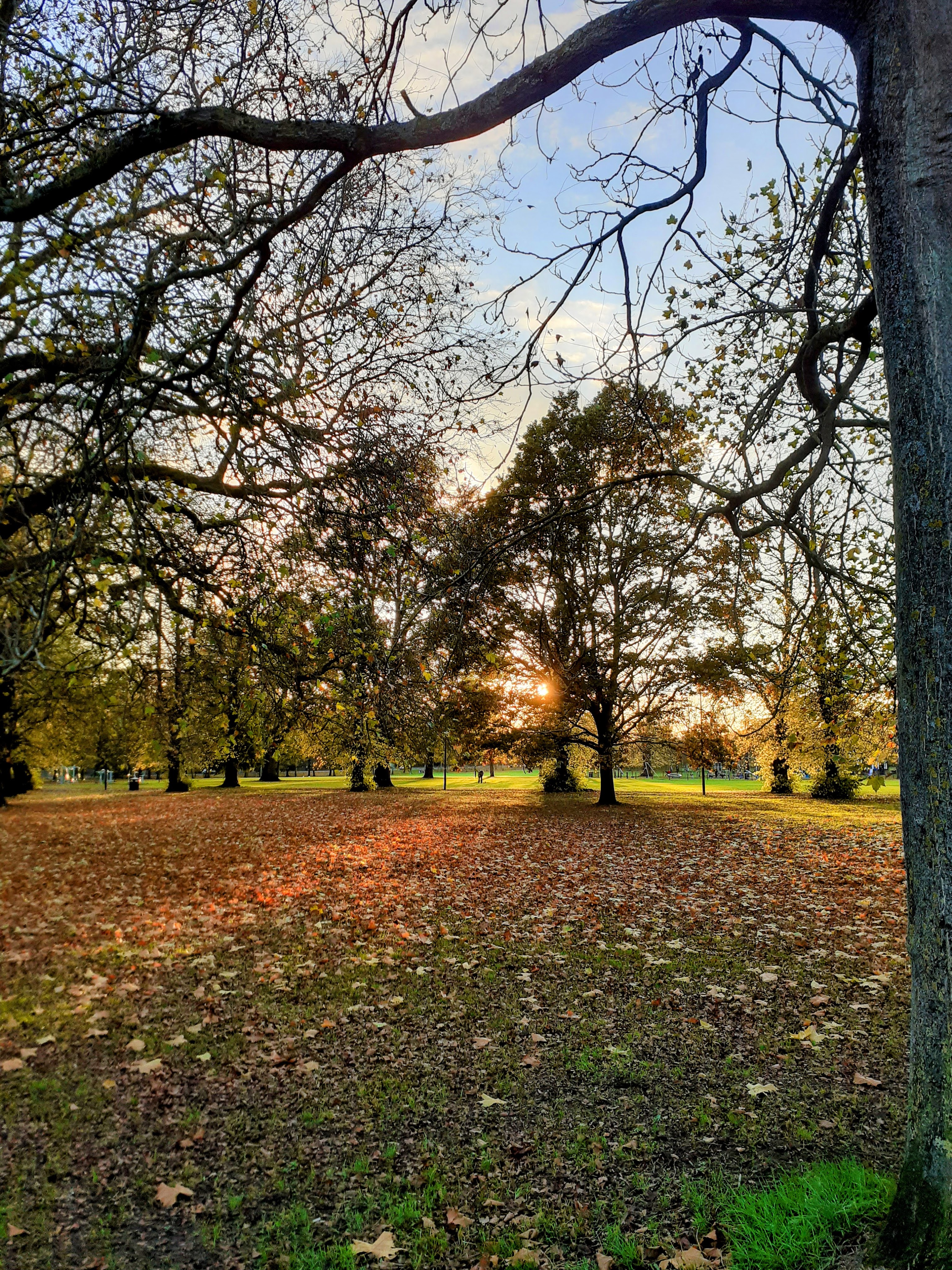
It’s about 3.45 pm on Thursday 14 November. For a few precious days there has been blue sky and a visible sun in my neighbourhood. But the days themselves are short and the sun is already falling in the sky. Its rays are brightly visible and they beautifully catch the leaves – those still on their trees, and those already on the ground. But much of the ground, apart from the carefully tended green lawns, is darker and more shadowy. It feels like a last hurrah of autumn before it gives way to winter.

I enjoy the park and the way that it is laid out. It is highly used and valued, and an important lung for the city. I am glad to have it here in Gloucester. Today is a quiet time, good for contemplation. It is easy to walk to from where I live and a good place to be with the land and the trees. My visits don’t require long periods of time or present much physical challenge. This is good for me at a time when I am unavailable for heroic physical journeys but very open to the magic of what is.

THE IMAGE AND THE SONG

“I am the Mabon. I am the child.

I am YR, the Golden Bough.

I am the dart that the yew lets fly

Three pure rays, the pillars of life.

I am the wren, the King of Birds.

I am the Bard and the teller of lies.

I am a song within the heart.

I am the light that will never die.

I am stars within the Void.

I am the eye of the Aeon.” (1)

For more than a decade, my spiritual practice has been mobilised around a contemplative inquiry. For me, this has been successful in its own terms, but I’m conscious now of something missing. It’s as if, for earnest, intelligent and ethical reasons, I have whitewashed the walls in the church of me. Now I want my murals back. So, recently I have started a course correction.

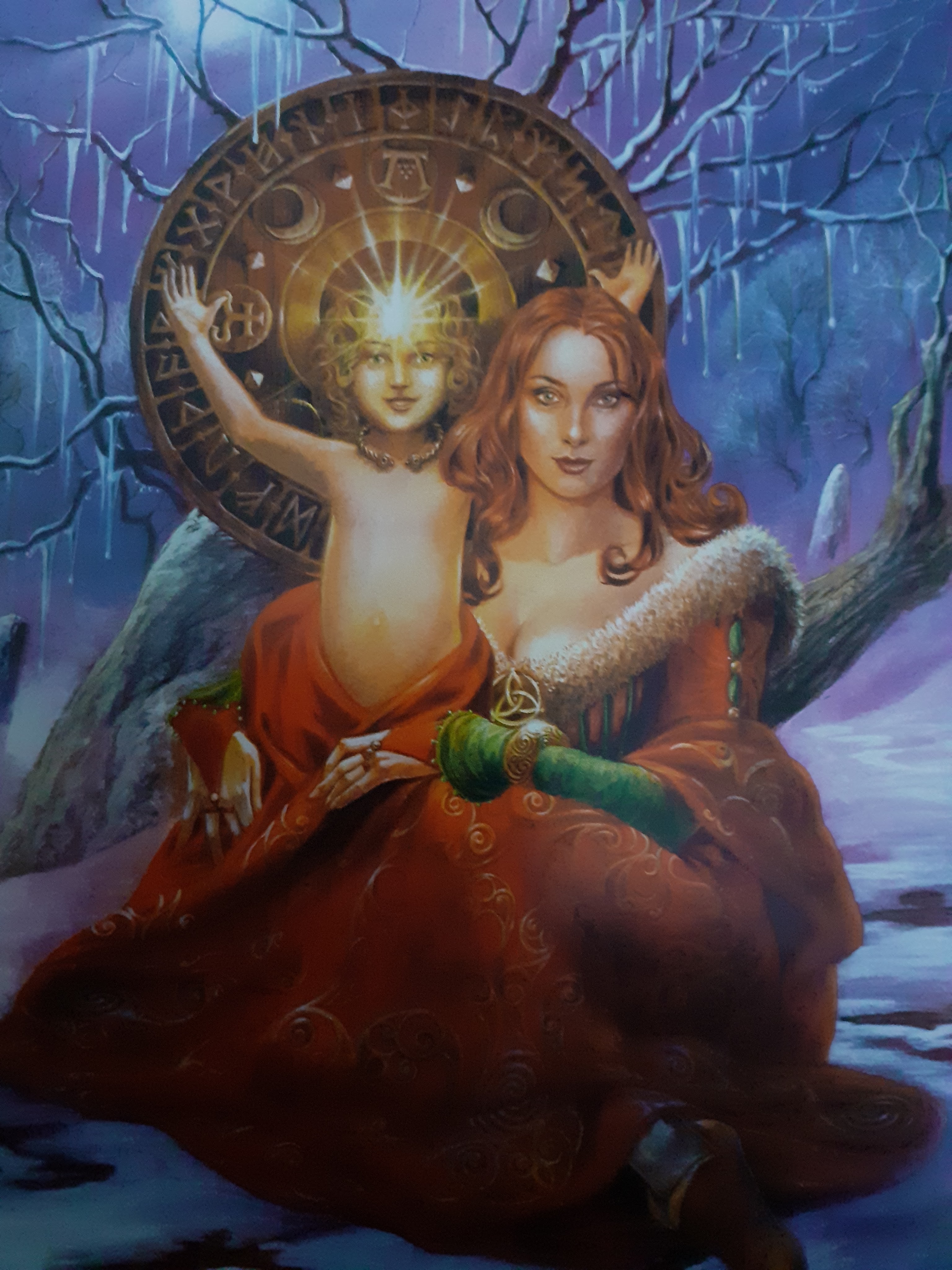
This course correction includes a glance back at my own pre-inquiry practices, happily well documented. The image of Modron and Mabon used to walk with me: Modron as the primal mother and Mabon as the primal child (2). They were archetypal figures, not everyday humans. My understanding was that these names were from a pre-Celtic language, retained in Brythonic speech. I am not sure if this is true, but for me it offered the possibility that even the surviving Celtic stories (3) were not the first. I was free to dream. In this dreaming I was powerfully influenced by the image at the top of this post (received as a midwinter holiday gift from my wife, then partner, Elaine, in 2007) and by the Silver on the Tree song that follows.

I see the child in the image as androgyne, and not in their earliest infancy. In the song, Mabon is not gendered. The mother in the picture is clearly the Goddess as Mother. Different stories can be drawn from this. In my own journey I tilt the child back somewhat to the masculine. In this pairing, She is Zoe, the life eternal. He is Bios, the life that comes and goes and comes again. Like Taliesin (4), transmuting out of his identity as Gwion, Mabon becomes in a sense his own father. So my midwinter picture appears to reference the Christmas story, but in important ways diverges from it. The image shows a magical midwinter child, who will indeed have an illuminating and transformational influence, but who is not exactly a redeemer in the Christian sense. This is drawn out in the Silver in the Tree song, which includes specifically Celtic references and extends beyond them.

Both Mother and Child live strongly within me, in the imaginal realm. I like and use the old language, Modron and Mabon, because of its sense of ancient mystery. But what it points to is universal. Part of my work now is to re-open my contact with them, who after another fashion I also am.

(1) Silver in the Tree in their 1991 album Eye of the Aeon

(2) NOTE: I am aware that there are divergent visions of Mabon. One centred the Autumn Equinox has become powerful and influential in recent years. Happily modern Druidry is not a religion of the Book though it is enriched by its books. This new literature follows the oral tradition practice of allowing stories to evolve and change in divergent directions. I see this as a strength.

(3) Caitlin Matthews Mabon and the Guardians of Celtic Britain: Hero Myths in the Mabinogion Rochester, VT: Inner Traditions, 2002 (Revised edition of Mabon and the Mysteries of Britain, 1987)

(4) If you visit Loch Maben in Dumfriesshire, in south west Scotland, you may find the feeling-tone similar to the much larger Lake Bala, strongly associated with Taliesin, in north Wales.

AFTER THE LIGHNING FLASH: A MISTY EQUINOX MORNING

Last Friday afternoon we were at the centre of a big storm. Lightning flashed dramatically just outside our windows. It was scary in the delicious way that can happen when linked to a subjective sense of safety. But we learned later in the day that one of the buildings in our estate had suffered a direct hit which the lightning conductors were unable to hold. There was a leak in the roof and water ran down the stair wells. I understand that the damage is not as severe as it might have been. But is certainly compromises any sense of immunity. It could have been worse and it could have been us.

Now it is Sunday 22 September, generally marked as the Autumn Equinox in these parts. I am in a familiar space (1) but experiencing it in another way. The current clock time is about 7.45 am (an hour after sunrise) and I’m looking out on a distinctly misty morning. The background wooded hills are very sketchy. True, there is clear light and shade in the foreground and I feel calm after a time of storm and rain. But they will likely be back soon. The mist and murk in the east suggest that anything could emerge from the most benign of spaces: the world reveals itself as volatile and shifting.

This is not an exclusively equinoctial phenomenon, but I have always linked the equinoxes – especially in autumn – with this kind of dynamic mutability. The Lightning Flash is a great archetypal symbol, not least for Druids. In antique theory, we are supposed to be able to summon them, though I’ve never tried it myself. I do know how to find the opportunity in disruptive change, though at this time of my life I have ceased to look for it. I much prefer the calm.

(1) See: https://contemplativeinquiry.blog/2024/09/17/poem-at-the-beginning-of-sunset

THE BOOK OF TALIESIN: A SONG OF THE WIND

The Book of Taliesin: Poems of Warfare and Praise in an Enchanted Britain (1) is a modern English translation, first published in 2019, of the medieval Welsh collection brought together under the name The Book of Taliesin. It is translated and introduced by Gwyneth Lewis, National Poet of Wales 2005-6, who teaches at Middlebury College in Vermont, and Rowan Williams, formerly Archbishop of Canterbury and later Master of Magdalene College, Cambridge. Both are native Welsh speakers. I highly recommend this version to anyone who wants a translation tailored to a 21st century readership, and to improve their knowledge of the history and culture from which these poems spring.

The Song of the Wind, from which I present extracts, is an example of the Dyfalu (guessing) mode: the poet creates a sequence of riddles, metaphors and fanciful tropes in order to describe an object. When – as here – the answer is given by the title, the result is a performance of inventive paraphrase, designed to display the poet’s virtuosity. The evocation of the wind is connected to the part of Taliesin’s story in which Elffin, his patron, is imprisoned by Maelgwn Gwynedd in Deganwy Castle. Taleisin’s poetry conjures up a gale that demolishes the castle and frees Elffin. Evidently a capable bard could do that, back in the day.

“Guess who it is:

Made before the Flood,

A mighty creature,

No flesh, no bone,

No veins, no blood,

No head and no feet.

No older, no younger

Than he was before.

He’s not turned aside

By fear, nor by death.

He doesn’t experience

The needs of creatures.

…..

“He’s in fields, in woods,

With no hand, no foot;

Feels no age, isn’t struck

By pain or bad luck.

“And he wasn’t born,

So he can’t be seen.

He’s at sea and on land;

He’s unseeing and unseen.

“He’s brave, he’s bold

As he crosses the land.

He’s mute, he’s loud.

He’s full of sorrow,

He’s the noisiest one

On the face of the earth.

“He’s evil, he’s good,

He’s here, he’s there,

Creates a mess,

Makes no redress.

He makes no amends,

Because he’s blameless.

He’s wet, he’s dry;

He often comes by.”

(1) Gwyneth Lewis and Rowan Williams The Book of Taliesin: Poems of Warfare and Praise in an Enchanted Britain Penguin Random House UK, 2020 (First published in hardback Penguin Classics in 2019)

For the two other posts about this translation please see: https://contemplativeinquiry.blog/2023/08/10 and:

https://contemplativeinquiry.blog/2023/08/12

THE ROOKERY: MAGIC IN A FORMAL GARDEN

Streatham’s Rookery (1) is a formal garden within Streatham Common, one of south London’s many remarkable green spaces. I made a connection with it in 1992 when living close by.

About a year before I discovered OBOD Druidry, I was working with R. J. Stewart’s The Way of Merlin (2). This taught me, first of all, about sacred space. “Sacred space is space enlivened by consciousness. Let us be in no doubt that all space is sacred, all being. Yet if humans dedicate a zone, a location, something remarkable happens within that defined sphere of consciousness and energy. The space talks back”.

I was an urban seeker and used what the city gave me. From an early age I had been fed by imagery of secret and magical gardens. The Rookery, built in the then Spa village of Streatham (1) became my sacred space. Towards its centre, a wishing well testified to the power of healing waters. It was a good place to begin my journey. The space became more alive, and I, included within the gestalt, became more alive with it.

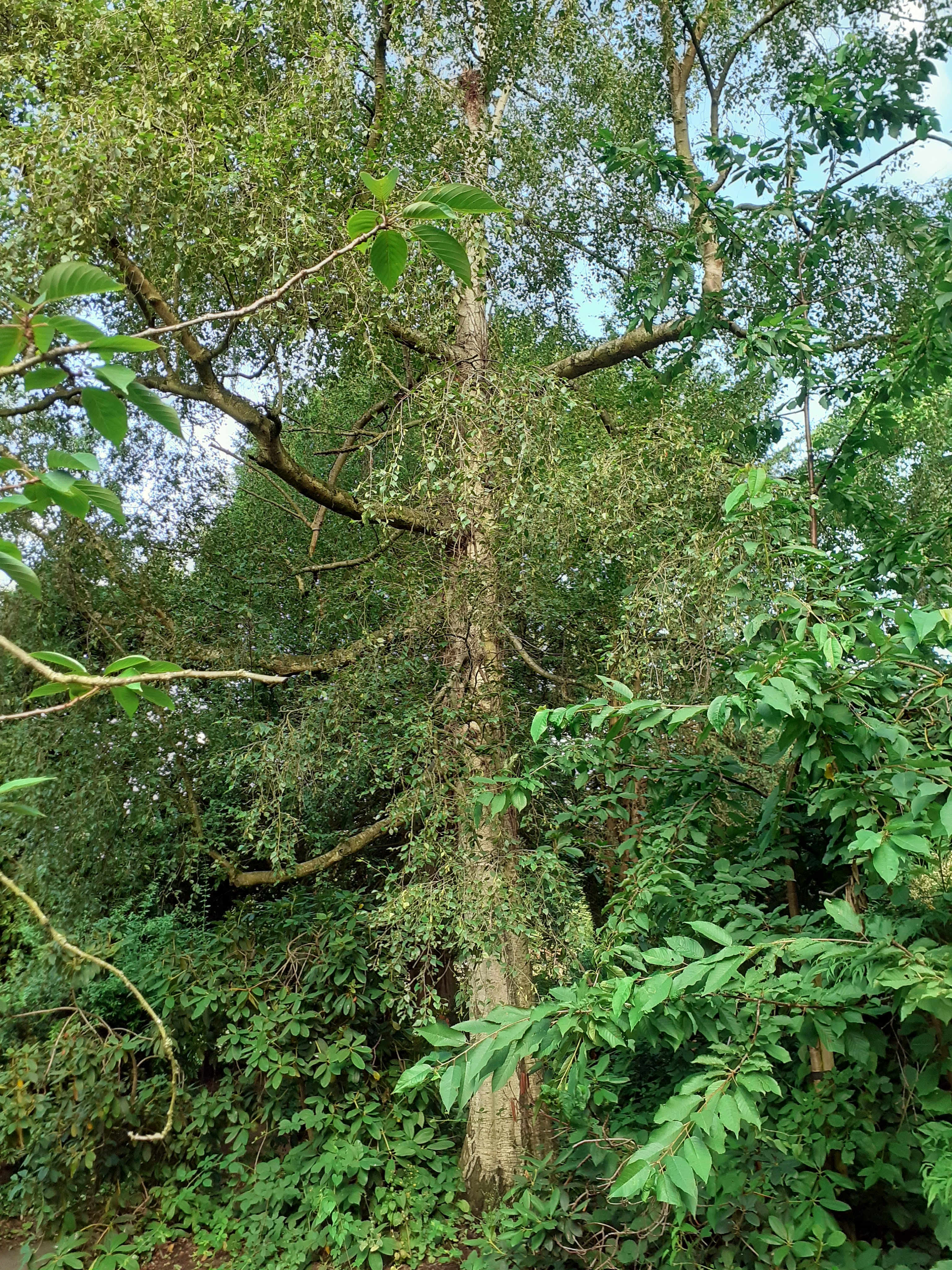
After establishing a sacred space, I was asked to begin a relationship with a spring and a tree. Stewart said: “we need to relate to such locations. This is a physical relationship first and foremost … we are one with the land, and trees, springs and caves are power points that tap into the energies of the land, and then reach into other dimensions altogether”. I found my spring quite easily (above). But there were almost too many trees to choose from, and I recall hesitating about my choice, to the point even of changing trees on my second or third visit. On my recent re-visit – woven into a rare family weekend in London – I found it easy to find the spring again but harder to remember my tree. I settled on the mature birch below, a good choice for a new, Goddess related undertaking (2). But I cannot vouch for it as my choice in 1992.

Sacred space (“the land talks back”), and befriending a spring and a tree: for me, these were the most powerful lessons from R. J. Stewart’s work. They were a helpful preparation for my later Druid training. I was very pleased to revisit this space in July 2023 and share it with family members.

(1) Streatham was in Surrey before becoming part of the County of London in 1889, and then Greater London in 1965. It began as a settlement around the old Roman road (Street Ham) from London to the south coast at Portslade, Brighton, the site a Roman port long lost to erosion. It appears in the Domesday Book of 1086 as Estreham. The village remained largely unchanged until the 18th century, when its natural springs, known as Streatham Wells, were first celebrated for their health-giving properties. The reputation of the spa, and improved turnpike roads, attracted wealthy city of London merchants to build their country residences in Streatham.

The Rookery began as a large private house with its own landscaped gardens. Much later, when the house and gardens were threatened with disposal and redevelopment, it was bought by public subscription and laid out as a formal open space, first opening to the general public in 1913. The Rookery is now one of the London Borough of Lambeth’s Green Flag Award-winning parks, directly managed by Streatham Common Cooperative (SCCoop), a local community-led enterprise.

(2) R. J. Stewart The Way of Merlin: The Prophet, The Goddess and the Land London: The Aquarian Press, 1991

‘MAGIC/DELIGHT’

“When we see a magic trick – or anything else that catches us off guard in a magical way – in the moment of surprise our mind stops, and there is a flash of delight. We are in a state of mute wonder.

“The same bliss of wonder, delight, and amazement is the focus of this meditation. We use our response to propel ourselves into a state beyond the mind, a state where we see the magical nature of life.

Our delight in what we are seeing, coupled with an amazed mind, become a doorway into an intuitive flash in which we remember that life itself is like a magic show, a dream – and not at all what our worries little self was thinking it to be!

“This meditation encourages us to attend to all the moments of surprise and delight that occur throughout our day.

“The following contemplation can help prepare us to take full advantage of these moments.

Practice thinking of delight

“Bring to mind a memory of a time when you experienced surprise and delight;

“Focus on your reaction – feel fully your surprise and the wonderful sensation of your delight;

“In this thought-free moment, let the great bliss remind you of the true nature of reality;

“Remain alert for these moments as they occur throughout the day.” (1)

(1) Meditation 43 from: Lee Lyon The 112 Meditations from the Book of Divine Wisdom: the Meditations from the Vijnana Bhairava Tantra with Commentary and Practice Santa Fe, NM: Foundation for Integrative Meditation, 2019. See http://www.integrativemeditation.org

Lee Lyon’s introduction describes the Vijnana Bhairava Tantra as “a compendium of meditations from the 8th century Shaivite tradition in Kashmir. Acknowledged as one of the supreme jewels of the Tantric tradition of northern India, this much loved text had remained largely obscure until its rediscovery last century. … One of the great hallmarks of this tradition is its … enthusiastic engagement with all aspects of our life experience, even the ‘unspiritual’, as wonderful, natural gateways into our true nature”.

The basic teaching is to move through the surface appearance of our lives into “the pure energy behind form”. It is through engaging “the deeper energy in any experience, pleasurable or difficult, ecstatic or terrifying, that we move through the appearance of separation into the ever present Oneness.”

BRENDAN MYERS: A FOREST ENCOUNTER

“Over the last twelve years I have walked every trail, every hillcrest, every stream-edge within a two hour walking radius of my house: everything between Lac-Des-Fees and Pink Lake, and a little beyond. …. I still encounter things I never saw before. Last year I saw a Great Horned Owl in the park for the first time. Its swift yet stately flight above my head caught my eye; a dark shadow in front of the sun, silent, and powerful in its silence.

“It rested on a tree branch not more than twenty meters away, and regarded me. I regarded him in turn. I had known for years that there are owls in the area: I’ve heard their hooting, and seen their pellets on the ground. But until that day and for ten years, I hadn’t seen one here before. Further, and I think more importantly, since I had entered the forest that day for no particular purpose but to enjoy a warm afternoon, to reaffirm my love of for the park’s landmarks and vistas, and to experience a few hours of pure human freedom, in simpler words to play, the encounter with the owl could take on a magical meaning.

“In the light of such magic, what a magnificent animal he was! How proud he seemed, as though in charge of the world, as though I required his permission to take another step. How unpretentious too: this owl had no need to pretend to be something he was not. The size of his claws, the laser-focus of his eyes meeting mine, was proof enough that he was a predator. No need to flex his weapons or brandish them. And what a delightful conversation we might have, if he were to speak. How much he could tell of the places he had seen, the adventures he had while hunting, and the pleasure of flight… Much as I would have loved to stay and hear him speak, I decided to move on after a few minutes. I did not know whether meeting his eyes might be provocative. And much as I might enjoy telling the story of how I got owl-claw scars on my face, I would certainly not enjoy getting them.

“…. Such is the magic of the forest. It can mean what you want it to mean under the aspect of play, yet at the same time it can surprise, and threaten and reveal itself, in ways no human artifact can do. It can suggest a kind of magic no human artifact can adopt: the dramatic discovery of a world not made by human hands. Thus it participates in the play, bringing its own contribution to the emergence of meaning.” (1)

(1) Brendan Myers The Circle of Life is Broken: An Eco-Spiritual Philosophy of the Climate Crisis London UK & Washington USA: Moon Books (Earth Spirit Series)

NOTE: Brendan Myers is a Canadian philosopher and author currently living in Quebec, where he teaches philosophy at Heritage College, Gatineau. He has written extensively on Pagan themes from a philosophical perspective, and his most recent book takes them further through an exploration of the climate crisis. I will review the book in my next post.

FALLING: 2022

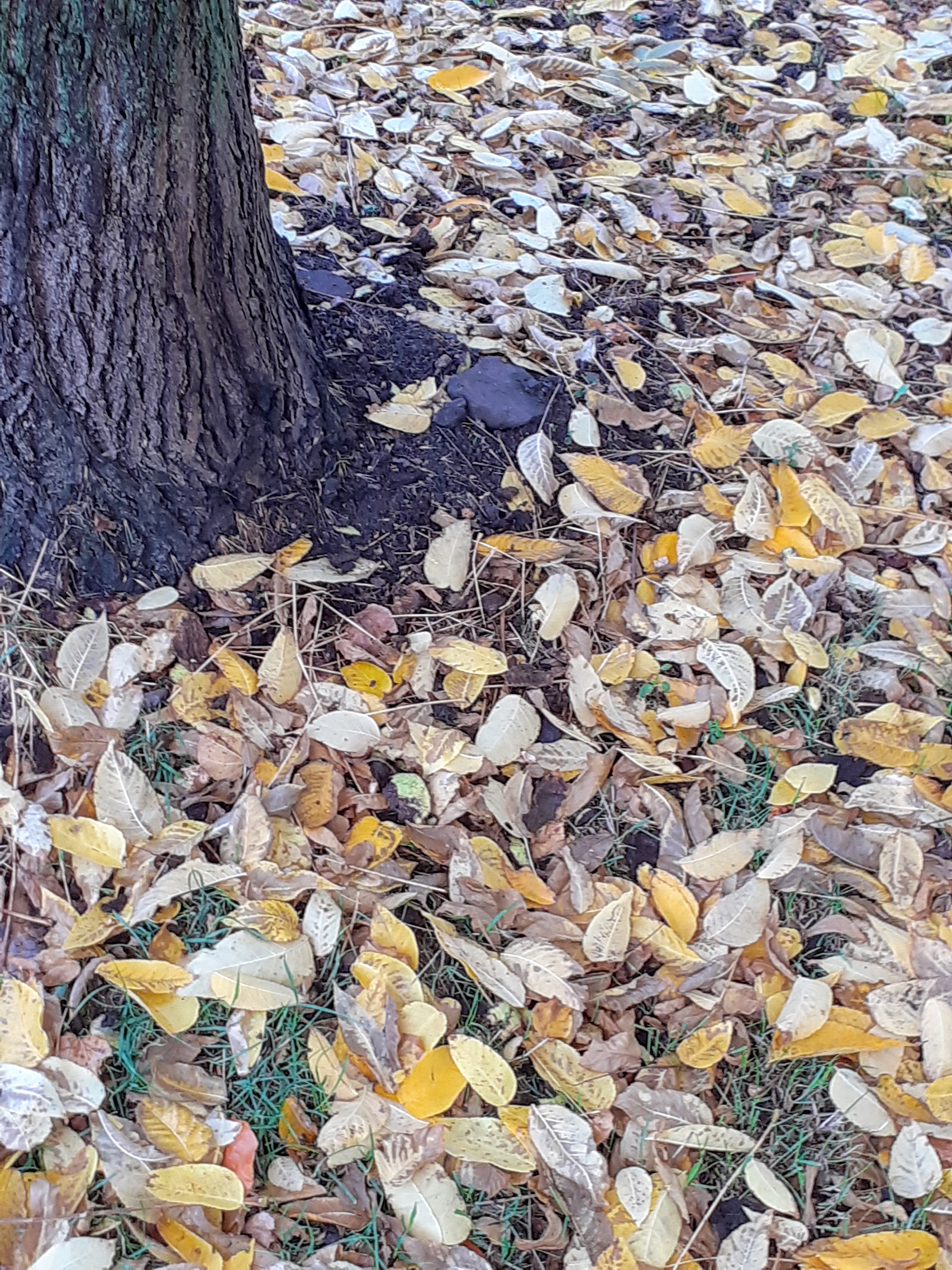
Vivid autumn colour signals a fall. Where I live, we are early in the process as yet. These leaves seem poignantly glorious to me. I respond to a beauty that I know will be short-lived. The tree is immersed in a cycle of dying and regeneration that furthers its larger life. Any sense of poignancy, glory and beauty is about me, being human.

I think of the last thirty years, and my own small deaths and regenerations over this period as I journeyed from my early forties to my early seventies. At the beginning I sensed a pull towards new priorities, which roughly fitted the Jungian notion of the second half of life as having different goals from the first. I experienced a nudge towards an inward, psycho-spiritual turn. I developed interests in experiential inquiry, Druidry/Western Mysteries, and contemplative spirituality, as part of this mid-life nudge.

This reduced my interest in career, acquisition and influence – though such interest had always been limited. In the nineties and noughties, I didn’t need a lot of money both to live well, if modestly, and accrue a reasonable retirement income. It would be much harder now. I am grateful to have experienced (relatively) favourable times, though of course the seeds of our current crises were already being sown.

Now I am ready for a new chapter, as my wife Elaine and I get ready to move to a new place of our own in Gloucester. The next move is into a smaller, more manageable space, and will involve elements of de-cluttering. I am the same tree but I will be shedding leaves and waiting for new ones to grow next year. In the moment I feel fragile, though my unknowing about the future also has an edge of wonder about the magic that may unfold. Falling is an oddly potent process at a special time of year.

DION FORTUNE: THE SEA PRIESTESS

I like to attune myself, imaginally, to significant moments in time, place and culture. I have always done this but I now think of it as an aspect of my Druidry. I have become more conscious about it.

Here I am contemplating an alignment of 1930’s Britain, Brean Down on the North Somerset coast (Bell Head in the book), and the occultist Dion Fortune. I am especially thinking of her determination to “bring back into modern life something that has been lost and forgotten and that is badly needed”. Rather than being a review of her book The Sea Priestess (1), this post is a reflection on spiritual ancestry, and an acknowledgement of her project’s success. As the publisher of the 2003 edition happily notes, “The Sea Priestess is a classic occult teaching novel with romantic overtones, and a foundation work for modern Wicca, paganism, and ritual magic”.

Gareth Knight outlines the main theme in his foreword to the 2003 edition. “The story concerns a high initiate, Vivien Le Fay Morgan – or Morgan Le Fay as she comes to be called – who is about to undertake a major work of sea and moon magic for which purpose she needs to find a suitable location upon which to build a temple complete with living accommodation. At the same time she needs to find a man suitable to train as her assistant in the magical work. With commendable economy of means, she kills two birds with one stone by selecting a local real estate agent, Wilfred Maxwell, who has the necessary professional contacts to find a location, together with sufficient skills to help her refurbish and redecorate it appropriately. He also has the temperament and personal circumstances that can make him a capable, if unlikely, magical apprentice.”

Wilfrid and Morgan get to know each other at weekends where he is busy turning an old army fort at the point of Bell Head, named Bell Knowle, into Morgan’s temple. They become close. But Morgan’s purpose is not personal. Working under the aegis of the Priest of the Moon, a discarnate being, she seeks to connect herself to “the ultimate spiritual source, known to Qabalists as the Great Unmanifest, the formless power behind the fount of creation itself. This in turn relates to the great zodiacal tides of the precession of the equinox, whereby in the coming Age of the Aquarius the old gods will be coming back, after another manner. Her own part in this is to make the way clear for the realization of the divine feminine as part of the cult of the Great Goddess, who, as our Lady Isis, comprises all goddesses – of the corn, of the dead, of the sea, of the moon”.

Morgan needs Wilfrid’s help in performing a ritual that depends on an exchange of sexual energy without involving physical sex. He needs to be in love with her, or at least infatuated, for the ritual to work. But there is to be no relationship thereafter. Morgan is completely honest about this with Wilfrid, but he finds it too difficult to take in. After the ritual, and the great storm and destruction of the temple that follows, Morgan disappears. Wilfrid is left with a brief letter re-emphasising that there is to be no further contact between them. There is no forwarding address. Wilfrid falls to pieces.

But this is not the end. Morgan has scrupulously adhered to an ethic of reciprocity in work of this kind. She has subtly nudged events so that he makes a connection with a young woman – his secretary at the estate agency – and they marry. There are pragmatic reasons for this too. Molly needs to escape from a violent and chaotic step father. Wilfrid (now aged 36) needs to stop living with his mother and older sister; he also needs to sort out his post-ritual depression and alcohol problems. Marriage as a solution is enabled by Wilfrid’s domestic neediness and Molly’s compulsive care-giving, shaky emotional foundations for a life-partnership. Morgan’s contribution is to lay the ground work for greater possibilities. She has already arranged to leave her magically imbued sapphires for Wilfrid’s wife to be.

After their marriage, the newly weds move out of town to Bell Head, where Morgan’s caretakers had kept a small farm. Morgan’s temple is ruined, but they inherit her books and magical working records. These influences inspire Molly to start “talking to the moon”. She begins to take on her own priestess role. Wilfrid recollects: “it was all different here from the fort, and yet it was taking on a life of its own. There was more of earth and less of the sea than out on the point, just as there was more of earth in Molly than in Morgan; yet it was cosmic earth, and I remember that the Great Goddess ruled both moon and earth and sea. Molly would never be a Sea Priestess, like Morgan, but there was awaking in her something of the primordial woman, and it was beginning to answer to the need in me.”

At the end of the book, on a midsummer’s night, the couple light a fire of cedar, sandalwood and juniper. Such a fire is known as a Fire of Azrael, first prepared by Wilfrid when working with Morgan. It enables trance states and communication with the ‘inner planes’, especially if blended with moonlight. Molly receives an extended transmission from the Priest of Moon, and her subtle sexual energies are enlivened. For “the Astral plane is ruled by the moon and the woman is her priestess; and when she comes in her ancient right, representing the moon, the moon-power is hers and she can fertilise the male with vitalising magnetic force”. Molly initiates the consummation of the couple’s magical relationship. They have now received the touch of Isis and the gates of the inner life are open.

I experience The Sea Priestess now, on the third of three readings separated by many years, as a voice from long ago. In some ways it isn’t. My parents were born within a few years of the fictional Molly, and had nowhere near this sense of gender, sexuality or spirituality, let alone magic. I suppose my own sense of temporal distance is partly due to the dynamic evolution of her influence, and that of others like her, in successive generations – not least in the thirty years since I first read The Sea Priestess. If she now seems old-fashioned, it is a back-handed tribute to the creative power she helped to unleash. Before we think of her being old-fashioned even today, we have to ask ourselves: compared to whom?

(1) Dion Fortune The Sea Priestess Boston, MA & York Beach, ME: Weiser, 2003 (Copyright 1935 Society of the Inner Light)

TREE MANDALA: BLACKTHORN

In my wheel of the year tree mandala (1), blackthorn (ogham, straif) covers 8-30 April, the final twenty-three days before Beltane. It has a beautiful white flower and elegant sharp thorns. I have seen descriptions of the latter as ‘vicious’, but they only hurt us if we invade the blackthorn’s space. The plant is not a triffid. It doesn’t come after us. So I don’t follow the line of tradition that links blackthorn to harsh fate. Blackthorn doesn’t ask to be turned into guardian hedges or crowns of thorn. That is down to our fellow humans.

The picture above comes from my magic year of 2007, happily well documented, when I was much engaged with trees and Druid study. I felt a pull towards blackthorn, more than towards the generality of hawthorn during that period. (I will write about the Glastonbury Thorn, the exception, at Beltane, my last tree mandala with a ‘memory lane’ theme).

I am drawn particularly to the strand of tradition that links blackthorn to powerfully creative magic – for it was long used in the making of wizards’ staffs. The text of The Green Man Oracle (2) suggests that “we have forgotten the magic that lies within us”. Blackthorn in particular has the ability to “foster waking dreams”. The Oracle adds that, “to access this personal magic, we must step away from busy, surface consciousness, and sink deeply into the ever flowing stream of our magical dreams. The ideas, scenes and presences that throng the deepest levels of our understanding require intense listening” Such magic, the Oracle continues, brings a light into the darkest places. For me that would mean just enough light to illuminate them, and not so much as to dazzle them into negation. How otherwise can the denizens of the dark be offered a welcome home if they want it, and in any event a better understanding?

(1) This mandala is based on my personal experience of trees in the neighbourhood as well as traditional lore. Moving around the spring quarter from 1 February, the positions and dates of the four trees are: Birch, north-east, 1-22 February; Ash & Ivy, east-north-east, 23 February – 16 March; Willow, east, 17 March – 7 April; Blackthorn, east-south-east, 8 – 30 April. The summer quarter then starts with Hawthorn at Beltane. For a complete list of the sixteen trees, see https://contemplativeinquiry.blog/2020/autumn-equinox-2020-hazel-salmon-awen/

(2) John Matthews & Will Worthington The Green Man Oracle London: Connections, 2003.

Earth Eclectic

music that celebrates Earth and speaks to the heart

Sarah Fuhro Star-Flower Alchemy

Follow the Moon's Cycle

Muddy Feet

Meeting nature on nature's terms

Rosher.Net

A little bit of Mark Rosher in South Gloucestershire, England

Becoming Part of the Land

A monastic polytheist's and animist’s journal

selkiewife

Selkie Writing…

Charlotte Rodgers

Images and words set against a backdrop of outsider art.

Prof Jem Bendell

living with metacrisis and collapse

Towint

The pagan path. The Old Ways In New Times

The Druids Garden

Spiritual journeys in tending the living earth, permaculture, and nature-inspired arts

The Blog of Baphomet

a magickal dialogue between nature and culture

This Simple Life

The gentle art of living with less

Musings of a Scottish Hearth Druid and Heathen

Thoughts about living, loving and worshiping as an autistic Hearth Druid and Heathen. One woman's journey.

Wheel of the Year Blog

An place to read and share stories about the celtic seasonal festivals

Walking the Druid Path

Just another WordPress.com site

anima monday

Exploring our connection to the wider world

Grounded Space Focusing

Become more grounded and spacious with yourself and others, through your own body’s wisdom

The Earthbound Report

Good lives on our one planet

Hopeless Vendetta

News for the residents of Hopeless, Maine