Contemplative Inquiry

This blog is about contemplative inquiry

Tag: Maelgwn

THE BOOK OF TALIESIN: A SONG OF THE WIND
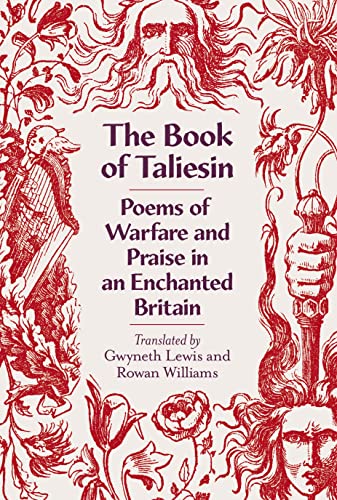
The Book of Taliesin: Poems of Warfare and Praise in an Enchanted Britain (1) is a modern English translation, first published in 2019, of the medieval Welsh collection brought together under the name The Book of Taliesin. It is translated and introduced by Gwyneth Lewis, National Poet of Wales 2005-6, who teaches at Middlebury College in Vermont, and Rowan Williams, formerly Archbishop of Canterbury and later Master of Magdalene College, Cambridge. Both are native Welsh speakers. I highly recommend this version to anyone who wants a translation tailored to a 21st century readership, and to improve their knowledge of the history and culture from which these poems spring.

The Song of the Wind, from which I present extracts, is an example of the Dyfalu (guessing) mode: the poet creates a sequence of riddles, metaphors and fanciful tropes in order to describe an object. When – as here – the answer is given by the title, the result is a performance of inventive paraphrase, designed to display the poet’s virtuosity. The evocation of the wind is connected to the part of Taliesin’s story in which Elffin, his patron, is imprisoned by Maelgwn Gwynedd in Deganwy Castle. Taleisin’s poetry conjures up a gale that demolishes the castle and frees Elffin. Evidently a capable bard could do that, back in the day.

“Guess who it is:

Made before the Flood,

A mighty creature,

No flesh, no bone,

No veins, no blood,

No head and no feet.

No older, no younger

Than he was before.

He’s not turned aside

By fear, nor by death.

He doesn’t experience

The needs of creatures.

…..

“He’s in fields, in woods,

With no hand, no foot;

Feels no age, isn’t struck

By pain or bad luck.

“And he wasn’t born,

So he can’t be seen.

He’s at sea and on land;

He’s unseeing and unseen.

“He’s brave, he’s bold

As he crosses the land.

He’s mute, he’s loud.

He’s full of sorrow,

He’s the noisiest one

On the face of the earth.

“He’s evil, he’s good,

He’s here, he’s there,

Creates a mess,

Makes no redress.

He makes no amends,

Because he’s blameless.

He’s wet, he’s dry;

He often comes by.”

(1) Gwyneth Lewis and Rowan Williams The Book of Taliesin: Poems of Warfare and Praise in an Enchanted Britain Penguin Random House UK, 2020 (First published in hardback Penguin Classics in 2019)

For the two other posts about this translation please see: https://contemplativeinquiry.blog/2023/08/10 and:

https://contemplativeinquiry.blog/2023/08/12

POEM: GORWYNION GAUAV (THE BRILLIANCES OF WINTER)

Last of flowers, in tufts around

Shines the gorse’s golden bloom:

Milk white lichens clothe the ground

‘Mid the flowerless heath and broom:

Bright are holly-berries, seen

Red, through leaves of glossy green.

Brightly, as on rocks they leap,

Shine on sea-waves, white with spray:

Brightly in the dingles deep,

Gleams the river’s foaming way;

Brightly through the distance show

Mountain summits clothed with snow.

Brightly where the torrents bound,

Shines the frozen colonnade,

Which the black rocks, dripping round,

And the flying spray have made:

Bright the ice drops on the ash

Leaning o’er the cataract’s dash.

Bright the hearth, where feast and song

Crown the warrior’s hour of peace,

While the snow storm drives along,

Bidding the war’s worst tempest cease:

Bright the hearth flame, flashing clear

On the up-hung shield and spear.

Bright the torchlight of the hall

When the wintry night winds blow;

Brightness when its splendours fall

On the mead-cup’s sparkling flow:

While the maiden’s smile of light

Makes the brightness trebly bright.

Close the portals; pile the hearth;

Strike the harp; the feast pursue;

Brim the horns; fire, music, mirth,

Mead and love, are winter’s due.

Spring to purple conflict calls

Swords that shine on winter’s walls.

This poem comes from The Misfortunes of Elphin written by Thomas Love Peacock in 1829.  The story is (very loosely) based on the last part of the Hanes Taliesin, in which the Bard Taliesin he has to free his patron Prince Elphin from imprisonment by Maelgon, the ruler of North Wales.  Taliesin has to win a Bardic contest at the court of the High King Arthur and thus be able to ask for Arthur’s support. Elphin is indeed liberated, through Arthur’s arrangement of a prisoner exchange. The poem above is presented as the work of Prince Llywarch, one of the contestants. It is well received: “Llywarch’s song was applauded, as representing a series of images with which all present were familiar, and which were all of them agreeable”.  It treats winter as, among other things, a period of respite from warfare. In future posts I will also present the entries of Merlin and the winner Taliesin.

Thomas Love Peacock was a slightly older contemporary of the Romantic poet Shelley and a close friend from 1812 until the latter’s departure for Italy in 1816. Indeed they continued to correspond, in letters that have been preserved, giving us valuable information about Shelley’s life in Italy.  Peacock too wrote poetry and within The Misfortunes of Elphin he offers a characteristically Romantic view of Awen as “the rapturous and abstracted state of poetical inspiration”, also recommending the triad: “the three dignities of poetry: the union of the true and the wonderful; the union of the beautiful and the wise; the union of art and of nature”. Peacock travelled in Wales and lived in Maentwrog, Merionethshire, for a time. I have used Peacock’s spellings of proper names throughout.

Earth Eclectic

music that celebrates Earth and speaks to the heart

Sarah Fuhro Star-Flower Alchemy

Follow the Moon's Cycle

Muddy Feet

Meeting nature on nature's terms

Rosher.Net

A little bit of Mark Rosher in South Gloucestershire, England

Becoming Part of the Land

A monastic polytheist's and animist’s journal

selkiewife

Selkie Writing…

Charlotte Rodgers

Images and words set against a backdrop of outsider art.

Prof Jem Bendell

living with metacrisis and collapse

Towint

The pagan path. The Old Ways In New Times

The Druids Garden

Spiritual journeys in tending the living earth, permaculture, and nature-inspired arts

The Blog of Baphomet

a magickal dialogue between nature and culture

This Simple Life

The gentle art of living with less

Musings of a Scottish Hearth Druid and Heathen

Thoughts about living, loving and worshiping as an autistic Hearth Druid and Heathen. One woman's journey.

Wheel of the Year Blog

An place to read and share stories about the celtic seasonal festivals

Walking the Druid Path

Just another WordPress.com site

anima monday

Exploring our connection to the wider world

Grounded Space Focusing

Become more grounded and spacious with yourself and others, through your own body’s wisdom

The Earthbound Report

Good lives on our one planet

Hopeless Vendetta

News for the residents of Hopeless, Maine