Contemplative Inquiry

This blog is about contemplative inquiry

Tag: Loch Maben

THE IMAGE AND THE SONG
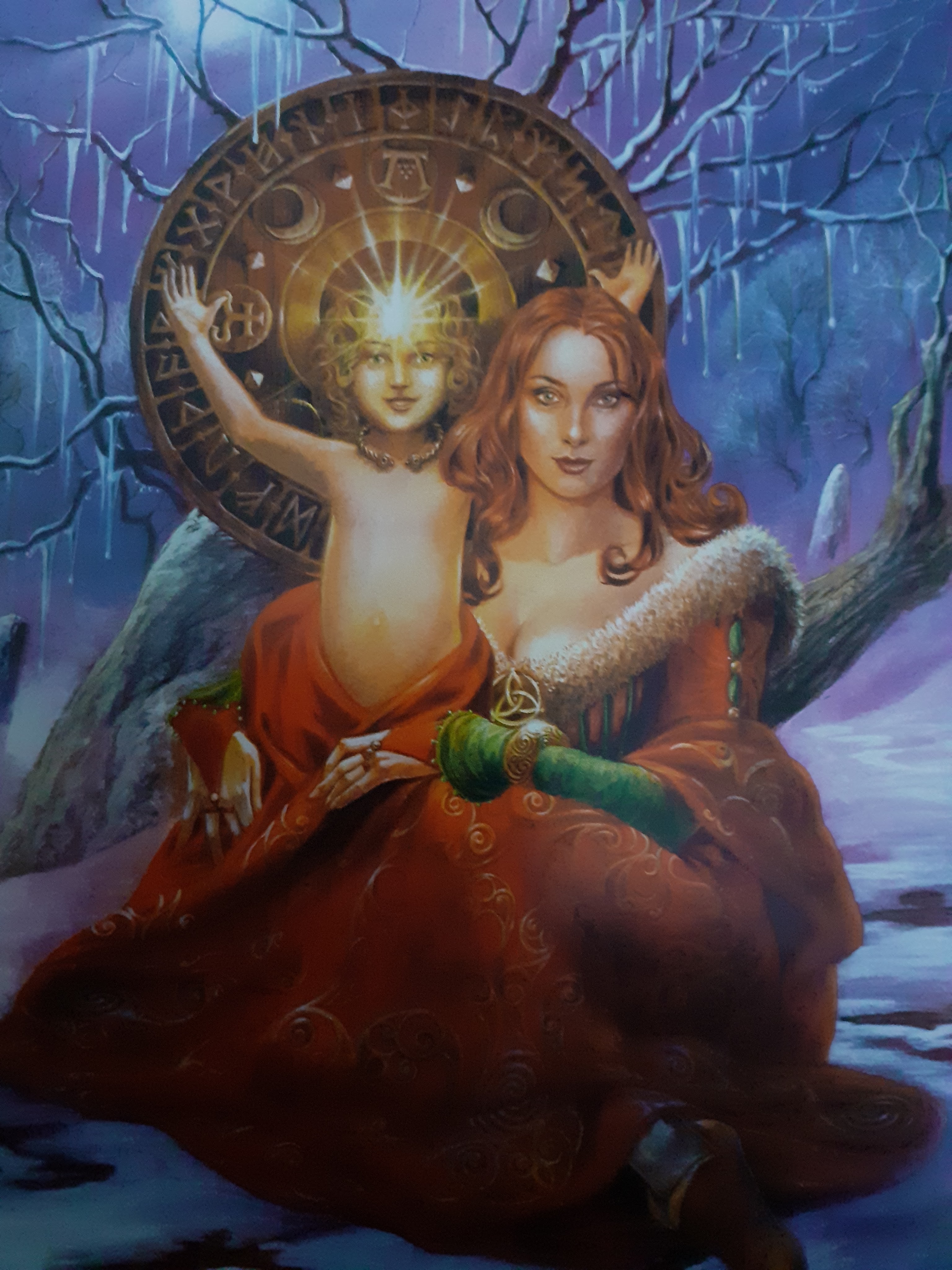
“I am the Mabon. I am the child.

I am YR, the Golden Bough.

I am the dart that the yew lets fly

Three pure rays, the pillars of life.

I am the wren, the King of Birds.

I am the Bard and the teller of lies.

I am a song within the heart.

I am the light that will never die.

I am stars within the Void.

I am the eye of the Aeon.” (1)

For more than a decade, my spiritual practice has been mobilised around a contemplative inquiry. For me, this has been successful in its own terms, but I’m conscious now of something missing. It’s as if, for earnest, intelligent and ethical reasons, I have whitewashed the walls in the church of me. Now I want my murals back. So, recently I have started a course correction.

This course correction includes a glance back at my own pre-inquiry practices, happily well documented. The image of Modron and Mabon used to walk with me: Modron as the primal mother and Mabon as the primal child (2). They were archetypal figures, not everyday humans. My understanding was that these names were from a pre-Celtic language, retained in Brythonic speech. I am not sure if this is true, but for me it offered the possibility that even the surviving Celtic stories (3) were not the first. I was free to dream. In this dreaming I was powerfully influenced by the image at the top of this post (received as a midwinter holiday gift from my wife, then partner, Elaine, in 2007) and by the Silver on the Tree song that follows.

I see the child in the image as androgyne, and not in their earliest infancy. In the song, Mabon is not gendered. The mother in the picture is clearly the Goddess as Mother. Different stories can be drawn from this. In my own journey I tilt the child back somewhat to the masculine. In this pairing, She is Zoe, the life eternal. He is Bios, the life that comes and goes and comes again. Like Taliesin (4), transmuting out of his identity as Gwion, Mabon becomes in a sense his own father. So my midwinter picture appears to reference the Christmas story, but in important ways diverges from it. The image shows a magical midwinter child, who will indeed have an illuminating and transformational influence, but who is not exactly a redeemer in the Christian sense. This is drawn out in the Silver in the Tree song, which includes specifically Celtic references and extends beyond them.

Both Mother and Child live strongly within me, in the imaginal realm. I like and use the old language, Modron and Mabon, because of its sense of ancient mystery. But what it points to is universal. Part of my work now is to re-open my contact with them, who after another fashion I also am.

(1) Silver in the Tree in their 1991 album Eye of the Aeon

(2) NOTE: I am aware that there are divergent visions of Mabon. One centred the Autumn Equinox has become powerful and influential in recent years. Happily modern Druidry is not a religion of the Book though it is enriched by its books. This new literature follows the oral tradition practice of allowing stories to evolve and change in divergent directions. I see this as a strength.

(3) Caitlin Matthews Mabon and the Guardians of Celtic Britain: Hero Myths in the Mabinogion Rochester, VT: Inner Traditions, 2002 (Revised edition of Mabon and the Mysteries of Britain, 1987)

(4) If you visit Loch Maben in Dumfriesshire, in south west Scotland, you may find the feeling-tone similar to the much larger Lake Bala, strongly associated with Taliesin, in north Wales.

PAGANISM IN ROMAN BRITAIN

This post concerns Ronald Hutton’s Gresham College lecture about Paganism in Roman Britain (1). In it, he summarises our current academic knowledge, and asks: how Romanised was British religion within the Roman Empire? It proves to be a hard question to answer, for three main reasons.

The first is that we know little about British religion immediately before the occupation, apart from the fact that Druids had a leading role in at least some religious activity.

The second is that, although the Romans generally honoured local gods and their worshippers, they made an exception for war gods and religious communities hostile to Roman rule. British Druids belonged to the latter category, so any ongoing British Druid activity is off the record. The Druids were in any case averse to written records about their calling.

The third is that we know the names of only a few people from this period, so get only occasional glimpses of individuals and their practices. Britons of any social standing tended to adopt Roman names, at least for the written record, but the records are too sparse to distinguish between the developing cultures of Romanised Britons and localised Romans. All we have is the Roman names. People who made do without Roman names go unrecorded.

These three limitations mean that we have limited knowledge, and that this knowledge is heavily tilted towards Roman practices and understandings. We do however have the names of a number of indigenous deities from the Roman period, and some understanding of their roles. According to Hutton, such deities tended to be highly localised, and connected to specific activities – like Coventina looking after the sacred spring at Carrowburgh not far from Hadrian’s wall. On the whole Goddesses were linked to the land, hills, rivers, springs and wells. Gods were concerned with war, protection, trade and travel.

Other gods were imported during the centuries of occupation. Continental Celtic culture brought Rosmerta, the Matres and Epona. Widely acknowledged Roman gods included Jupiter, Mars, Silvanus and Mercury. Other parts of the empire contributed Apollo, Bacchus, Mithras, Cybele and Athys, Isis and Serapis.

Hutton finds in both Romans and Celts a very different attitude to deity from that of the later arriving Christian faith. Pagan Gods asked for acknowledgement and respect. Beyond that they were not greatly interested in us. They did not make laws, issue commands or monitor our performance. The Latin word superstitio referred to excessive fear of the divine. Hutton characterises mainstream Roman British religion as largely transactional. Roman priesthood was a job for the local magistrates.

Hence, according to Hutton, there was no theology. If you wanted the gods’ help, and had the support and resources, you built shrines, enacted rituals and offered sacrifice. (Animal sacrifice was required to be swift and painless, or it did not please the gods.) If you looked for a deeper or more intense religious experience, and were deemed eligible, you sought initiation into a mystery school. If you were concerned with speculation about the cosmos and our place in it, or wanted a set of values and practices to live by, you turned to philosophy. The one religious demand made by the state was a public reverencing of the Emperor’s numen (the divine power within him) which the early Christians, other than Gnostics, risked martyrdom rather than acknowledge.

The lecture includes a discussion of hybridised (or ‘twinned’) deities and the high esteem in which they could be held – Sulis Minerva at Aquae Sulis (Bath), Apollo Maponus (with a major shrine a little beyond Hadrian’s Wall at Lochmaben) and Mars (or possibly Mercury) Nodens, at Lydney, close to the River Severn in the Forest of Dean.

Hutton ends with a rare opportunity to acknowledge a real, named person, Magnius. He is known to have been a Briton, a commoner with some resources. He had a tomb erected at Aquae Sulis for his daughter, who had died aged only eighteen months. A tomb for one so young was very rare, and the poignancy of this act reaches across the centuries to us, connecting humans who, from very different times and cultures, are united by the same capacity to love and to grieve. I found this a good note on which to end a lecture which provides some insight into a subject where much will always be unknown.

(1) https://www.gresham.ac.uk/ (Go to browse by series then lecture series 2022-23 then Finding Britain’s Lost Gods. The specific lecture is Paganism in Roman Britain.)

See also: https://contemplativeinquiry.blog/2022/10/06/learning-about-our-pagan-ancestors-and-learning-from-them/

Ronald Hutton is Professor of History at the University of Bristol, a specialist in Pagan and Druid studies, and enjoys a very high reputation within both the academic and Pagan communities.

Earth Eclectic

music that celebrates Earth and speaks to the heart

Sarah Fuhro Star-Flower Alchemy

Follow the Moon's Cycle

Muddy Feet

Meeting nature on nature's terms

Rosher.Net

A little bit of Mark Rosher in South Gloucestershire, England

Becoming Part of the Land

A monastic polytheist's and animist’s journal

selkiewife

Selkie Writing…

Charlotte Rodgers

Images and words set against a backdrop of outsider art.

Prof Jem Bendell

living with metacrisis and collapse

Towint

The pagan path. The Old Ways In New Times

The Druids Garden

Spiritual journeys in tending the living earth, permaculture, and nature-inspired arts

The Blog of Baphomet

a magickal dialogue between nature and culture

This Simple Life

The gentle art of living with less

Musings of a Scottish Hearth Druid and Heathen

Thoughts about living, loving and worshiping as an autistic Hearth Druid and Heathen. One woman's journey.

Wheel of the Year Blog

An place to read and share stories about the celtic seasonal festivals

Walking the Druid Path

Just another WordPress.com site

anima monday

Exploring our connection to the wider world

Grounded Space Focusing

Become more grounded and spacious with yourself and others, through your own body’s wisdom

The Earthbound Report

Good lives on our one planet

Hopeless Vendetta

News for the residents of Hopeless, Maine