Contemplative Inquiry

This blog is about contemplative inquiry

Tag: Llyvyr Taliesin

TALIESIN THE SHAPE SHIFTER
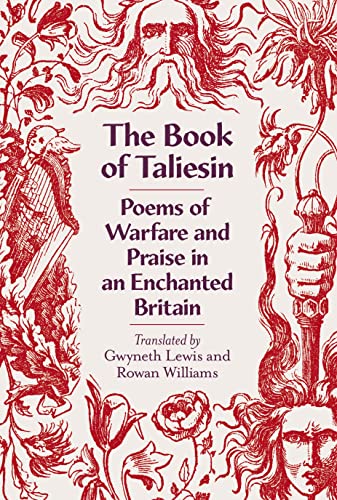
This is my third in a series of posts drawing on Gwyneth Lewis’ and Rowan Williams’ modern English version of The Book of Taliesin (1), an anthology of bardic poetry from medieval Wales. My first post introduced the book and offered extracts from A Song of the Wind (2). The second looked at the importance of ‘The Old North’ (territories in north-west England and southern Scotland that shared the same history, language and culture as the people of Wales) (3). This, final, post looks at the development of the Taliesin figure in the later middle ages. In particular, I focus on the anthology’s section entitled Legendary Poems and on the translators’ understandings of bardic poetry, shapeshifting and awen. I also look at their reasons for interpreting the Taliesin of these poems as “a kind of Christian shaman”.

In these poems, the use of shapeshifting language is presented as being a feature of competition between rival bards. “The Taliesin figure demonstrates his superiority … by spelling out at triumphant length the questions he can answer about which his rivals are ignorant, and by listing the various embodiments he has experienced”. The translators give an example of this in the opening of The Battle of the Trees.

“I was in many forms

Before my release:

I was a slim enchanted sword,

I believe in its play.

I was a drop in air,

The sparkling of stars,

A word inscribed,

A book in a priest’s hands,

A lantern shining

For a year and a half.

A bridge in crossing

Over threescore abers (= estuaries).

I was path, I was eagle,

I was a coracle at sea.

I was bubbles in beer,

I was a raindrop in a shower.

I was a sword in the hand;

I was a shield in battle.

I was a harp string,

Enchanted nine years

In water, foaming.

I was tinder in fire,

I was a forest ablaze”.

The editors comment: “these extraordinary poems reflect a sophisticated and complex understanding of poetic composition in which the concept of awen is central. It would be misleading to translate this idea of inspiration as ‘Muse’: it is better thought of as a state of altered consciousness in which the poet receives knowledge of matters beyond what can routinely be learned. According to Gerald of Wales’ description of the awenyddion, or inspired soothsayers, of the 12th century CE, the gift of awen produces the same kinds of extreme behaviour as are associated with spirit possession: loud shouting, trance and catalepsy, disconnected but also very elaborate speech, narrated experiences of supernatural encounters which trigger the exercise of this gift, and a subsequent inability to remember what was said under its influence”.

Poems like The Battle of the Trees may be “an attempt to reflect the style or register of such ecstatic states of consciousness”. However, the poems themselves may not be “transcriptions of specific compositions originating in altered states”. In cultures that have a “routine ritual space” for “ecstatic phenomena”, the irruption of the supernatural will follow a familiar pattern. “There will be expectations about both the actual expression and the transmission of what has been delivered”. If poetry is to be recognised as the authentic voice of ecstatic perception, “it must follow certain classical, normative exemplars of poetic ecstasy”. The Taliesin of these poems is a composite figure modelling how to speak as an awenydd. He demonstrates a particular way of being a poet and sounding like a poet of this kind.

Religious tensions appear in The Spoils of Annwfn. The bard rails against the ignorance of monks.

“And the monks herd together, a pack of dogs,

In the contest with those

Who have mastered the lore –

Whether wind takes one path,

Whether the sea is one water,

Whether fire’s unstoppable force is one spark.

The monks herd together, a pack of wolves,

In the contest with those who have mastered the lore –

They don’t know how darkness is severed from light,

They don’t know the course of the wind in its rushing,

Where the wind will lay waste, what land it strikes,

How many saints in the sky’s vault, and how many shrines.

I will praise the Prince, the Lord, the Great One.

Let me not be sad: Christ will repay me.”

The translators point out that the shapeshifter Taliesin of the 12th century CE, is “multifaceted” compared to the court bard of the 6th-9th centuries. The later literature links Taliesin “especially with stories involving the figure of the sorcerer Gwydion and the ‘children of Don'”. His status as dewin (sage or sorcerer) or occasionally derwyd (druid) is “so equal in importance to his standing as a poet that the two might more accurately be said to become inseparable”. But he is also shown, as in the extract above, dutifully commending his work to God and as “being familiar with theological questions, most notably those relating to the Incarnation, and with apocryphal traditions surrounding the biblical narratives”.

Lewis and Williams conclude that “this later Taliesin becomes a bridge figure between traditional Welsh lore and the cosmopolitan world of early medieval ecclesiastical learning”. The extract above reflects “a resentment of the new monastic foundations after the Norman Conquest, the Benedictine houses that sprang up in proximity to the new castles and settlements in the Welsh Marches (English/Welsh border counties). Monks from continental Europe are unlikely by this date to have been familiar with or sympathetic to the rather older style of clerical learning represented by the riddling and legendary elaborations of the Christian story found in the Irish or Anglo-Saxon texts of the early Middle Ages; Taliesin thus becomes a mouthpiece for this archaic Christian lore as well as the archetypal bard and seer”. This is why the translators characterise Taliesin in his shape-shifting period as a “Christian shaman”.

(1) Gwyneth Lewis and Rowan Williams The Book of Taliesin: Poems of Warfare and Praise in an Enchanted Britain Penguin Random House UK, 2020 (First published in hardback in Penguin Classics and 2019) Gwyneth Lewis was National Poet in Wales, 2005-6 and teaches at Middlebury College Vermont. Rowan Williams is a former Archbishop of Canterbury, subsequently Master of Magdalene College, Cambridge.

(2) https://contemplativeinquiry.blog/2023/08/07/

(3) https://contemplativeinquiry.blog/2023/08/10/

‘THE OLD NORTH’ IN THE BOOK OF TALIESIN

This is my second post about The Book of Taliesin: Poems of Warfare and Praise in an Enchanted Britain (1). The previous one introduced the book and included extracts from the poem A Song of the Wind. I am not qualified to judge the work of the translators Gwyneth Lewis and Rowan Williams. All I can say is that I find their their modern English version highly readable. I am also grateful for its detailed introduction, which has prompted me to write further posts drawing on it. This one shines a light on the ‘Old North’ (Hen Ogledd), a key location for this bardic tradition, and on poetry referencing the ‘heroic age’ of the 6th century CE (100 – 200 years after the Romans withdrew from Britain).

Llyvyr Taliessin is a 14th century manuscript bringing together “compositions ranging in date from the 9th century CE – possibly even the 6th – to the 13th century CE”. As such “it brings vividly into focus the history and culture of more than one unfamiliar world. It gathers together the kind of songs that might have been sung in the Northern British courts of the 6th century with the poems of Taliesin’s various anonymous successors in an ongoing bardic tradition, which transformed him into a North Welsh prophet, a kind of Christian shaman, and, eventually, an honorary laureate of Llewelyn the Great, the first medieval ruler to control practically the whole of an independent Wales” (1).

The oldest group of poems in the anthology, here grouped together as Heroic Poems, is linked to a Taliesin mentioned in chronicles of the early middle ages, a court bard of the 6th century ‘heroic age’. Here we find an “individual writer who appears in the chronicles and other early texts … celebrating the material and military exploits of a number of patrons, and enjoying the rich rewards of his work.” He is named in the early 9th century History of the Britons, composed in North Wales but showing considerable retrospective interest in in the struggles of various British rulers, some apparently from Cumbria and the Pennine regions, against the Angles of the territories that would by the later 7th century become the Kingdom of Northumbria.

The History of the Britons includes a list of five notable Bards said to have worked in that earlier period. These are Taliesin; Talhaearn, called ‘father of awen; Neirin (aka Aneirin); Blwchfardd; and Cian Guenith Guaut (Cian, wheat-harvest of song). Neirin is credited with the authorship of the Gododdin which laments the failure of a British King from Edinburgh, in or around the last decade of the 6th century, to defend or recapture territories from Northumbria. Taliesin is briefly mentioned in this poem as a contemporary. He is identified primarily as the court bard of King Urien of Rheged. Rheged was (probably, at least at times) an extensive territory including much of what is now north-west England and south-west Scotland. This Taliesin was concerned with warfare and praise rather than with enchantment.

The map below shows the heartlands of the culture that birthed this literature. Its northern border runs from modern Edinburgh to Dumbarton, along the Roman Antonine Wall. The people who lived between the two walls (Antonine in the north; Hadrian’s in the south) were not generally part of the Roman Empire but they were influenced by it. They identified as Britons, not Picts, who lived to the north of both walls and had always kept their independence. On the map everything to the east of the dotted line belongs to the Anglo-Saxons. The Britons hold the west, as far as the Mor Hafren/Bristol Channel. What isn’t shown on the map is the south-west peninsula, also mostly British at this time, but cut off by the fall of three crucial towns – Gloucester, Cirencester and Bath. The people who the West Saxons named as the West Welsh, and who remember their old identity in Cornwall to this day, seem to have no role in the literature that uses the name of Taliesin. Even within Wales, this literature has a northern orientation.

The role of court bard could be materially rewarding, as this extract from the poem Here At My Rest:

“Here at my rest

With the men of Rheged

Respect and welcome

And mead for me!

Mead for me

To mark his triumph,

Gifts of fine land

To win me wealth,

Wealth in plenty

Of glittering gold,

Golden good times

And high esteem.”

This is not just a personal boast. One way to make a patron look good was by pointing to his generosity. But the best way to show Urien to advantage was to describe his prowess as a warrior and war leader, as in the poem All Through One Year:

“Son, go to the door.

Listen to the noise.

What’s the commotion?

Is the earth shaking?

The sea rushing in?

Approaching, a tide

Of foot soldiers cry:

‘Foe on the hill,

Urien kills.

Foe in the vale,

Urien impales.

Foe on the mountain,

Urien smites him.

Foe on the slope,

Urien will slice him.

Foe on the ditch,

Urien will fright him.'”

Each of the poems extracted above has the same ending:

When I’m old, out breath,

Commanded by death,

I will feel delight

Praising Urien aright.”

This is formulaic completion of work in a very formal genre, though I find this translation fluid and lively. I have no idea of what it was like to be the person who wrote it, or even his real opinion of Urien. But that is not the point of these poems. The Brythonic Old North was situated within a world of warrior aristocracies and their ‘heroic’ values, in which the Britons were relentlessly harried by Angles, Saxons, Picts, Gaels and, to an extent, each other. In the context of time and place, the propagandist role of the court bards, and its importance to their warrior patrons, is very clear. What intrigues me more is the later transformation, where Taliesin morphs into the mythic shape-shifting figure described by Rowan Williams as a ‘Christian shaman’. I will write about this in a later post.

(1) Gwyneth Lewis and Rowan Williams The Book of Taliesin: Poems of Warfare and Praise in an Enchanted Britain Penguin Random House UK, 2020 (First published in hardback Penguin Classics in 2019)

For the two other posts about this translation, see: https://contemplativeinquiry.blog/2023/08/07 and:

https://contemplativeinquiry.blog/2023/08/12

Earth Eclectic

music that celebrates Earth and speaks to the heart

Sarah Fuhro Star-Flower Alchemy

Follow the Moon's Cycle

Muddy Feet

Meeting nature on nature's terms

Rosher.Net

A little bit of Mark Rosher in South Gloucestershire, England

Becoming Part of the Land

A monastic polytheist's and animist’s journal

selkiewife

Selkie Writing…

Charlotte Rodgers

Images and words set against a backdrop of outsider art.

Prof Jem Bendell

living with metacrisis and collapse

Towint

The pagan path. The Old Ways In New Times

The Druids Garden

Spiritual journeys in tending the living earth, permaculture, and nature-inspired arts

The Blog of Baphomet

a magickal dialogue between nature and culture

This Simple Life

The gentle art of living with less

Musings of a Scottish Hearth Druid and Heathen

Thoughts about living, loving and worshiping as an autistic Hearth Druid and Heathen. One woman's journey.

Wheel of the Year Blog

An place to read and share stories about the celtic seasonal festivals

Walking the Druid Path

Just another WordPress.com site

anima monday

Exploring our connection to the wider world

Grounded Space Focusing

Become more grounded and spacious with yourself and others, through your own body’s wisdom

The Earthbound Report

Good lives on our one planet

Hopeless Vendetta

News for the residents of Hopeless, Maine