TWILIGHT AT TW0 PM
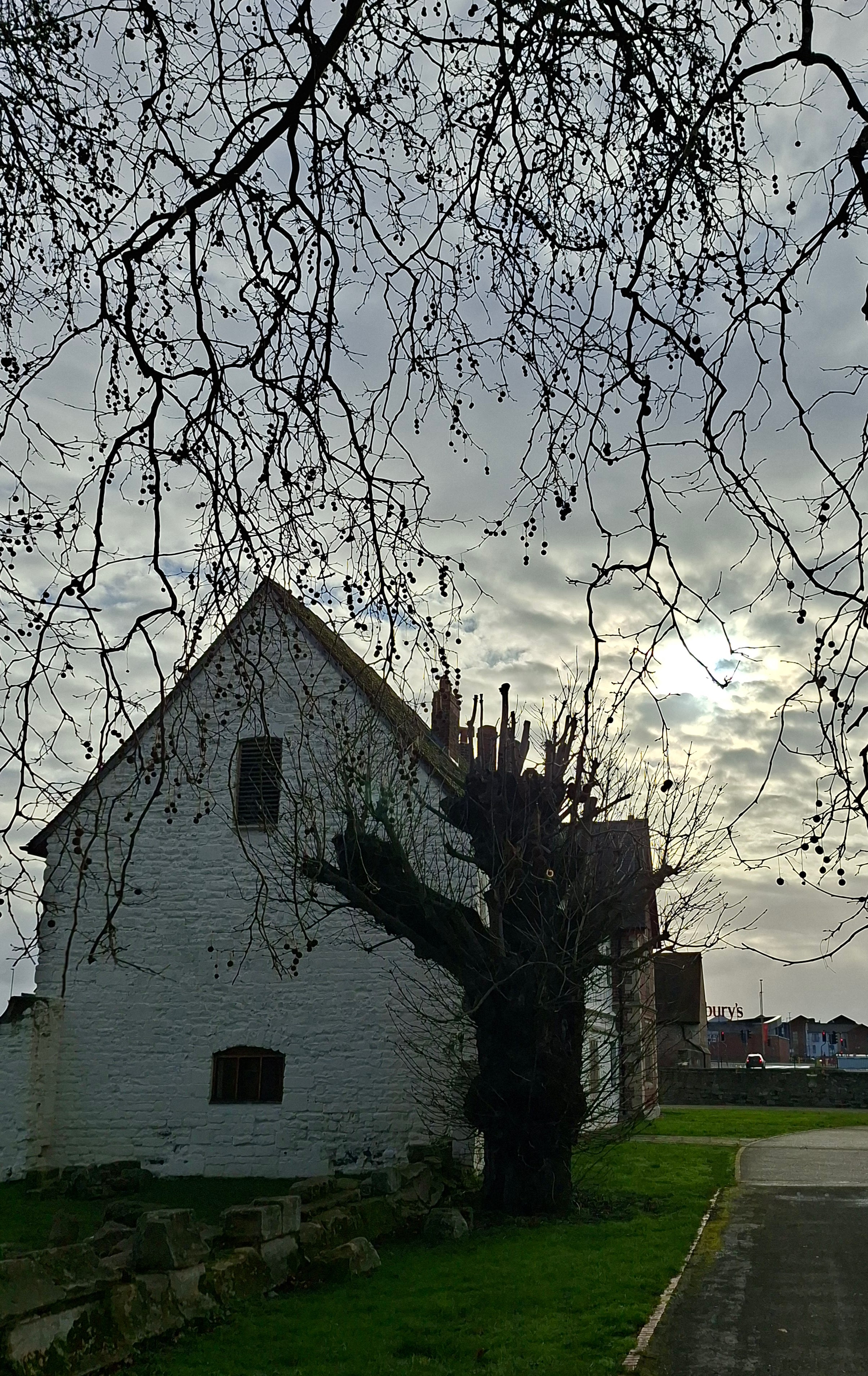
old wall, old tree – both in shade
clouds constrain the sun
and there’s stillness in the land

old wall, old tree – both in shade
clouds constrain the sun
and there’s stillness in the land
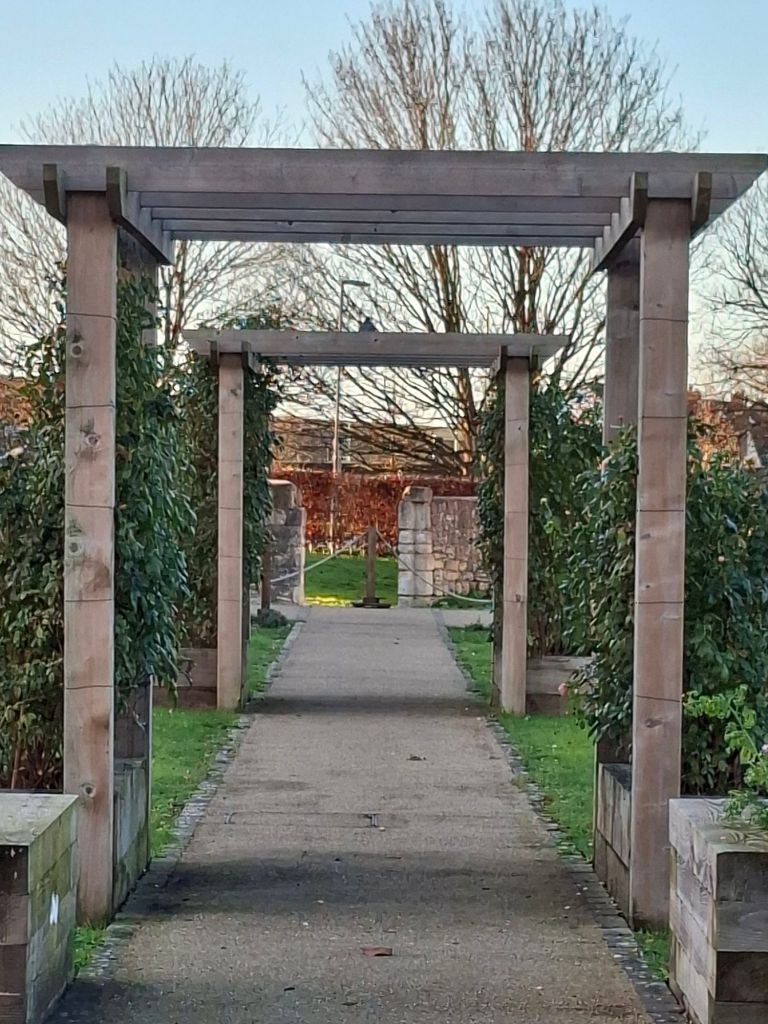
I have lived in Gloucester since January 2022. Specific locations in the city affect me in different ways.
The physic garden at Llanthony Secunda Priory is one of them. It feels both open and tranquil. Earth and sky are strongly present and jointly nurturing. It is a good space for unpressured reflection.
I was in the garden yesterday afternoon, feeling my way into 2026. It was a bright moment in the day, about an hour before the still early sunset. It was cold but not freezing. I was feeling good in myself. I wondered how my life with Elaine will unfold now that we are both a little more mobile. I reflected on the dance of loving and being loved.
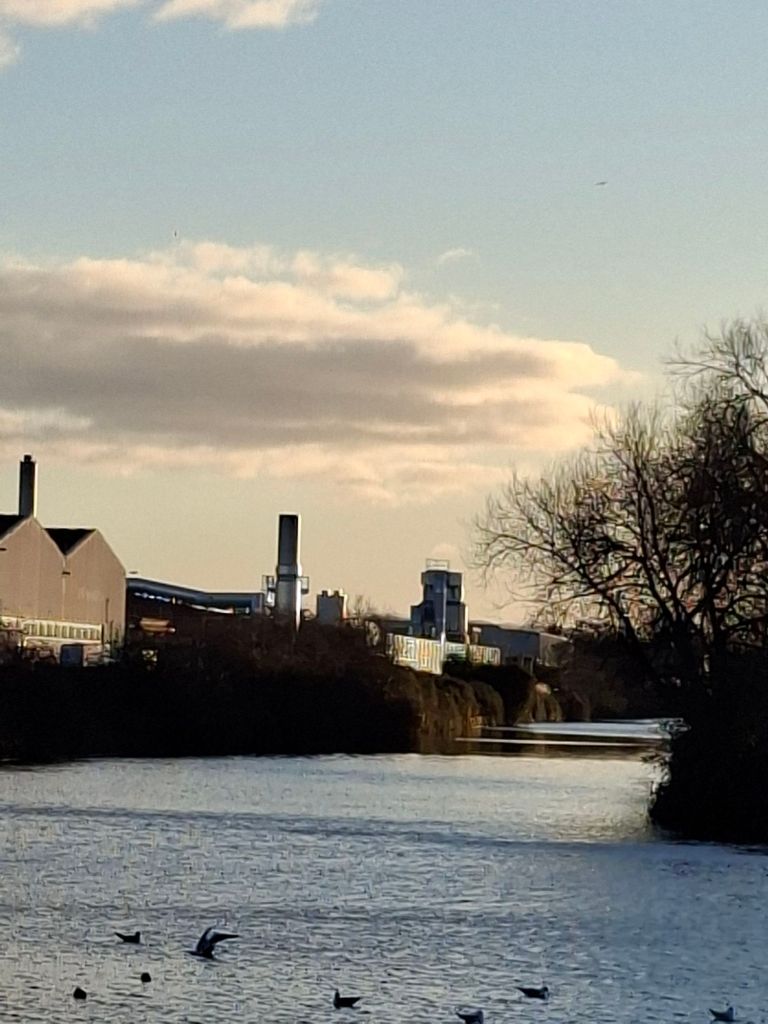
As I left the garden, I acknowledged my fears about the wider world. I walked to another favourite place, very close to Llanthony, where the Gloucester canal begins its journey out of the city. There is irrepressible bird life in the foreground and a (to me) liberating expanse of water beyond. My picture doesn’t tell me what’s around the corner and I am reminded to live with unknowing. I didn’t walk any further out on this occasion.
Returning home, I learned the news from Venezuela – in particular the kidnapping, as I would name it, of the President. I fear this may become yet another running sore in the life of the world. Modern Druidry, my spiritual anchor, has a strong commitment to justice and peace, where each is understood as compromised by the absence of the other.
Druidry isn’t an ‘above the battle’ path. Whilst not mandating any specific partisanship, this path does assert political values and points to a willingness to engage. So, in 2026, I’m asking myself more specifically where to put my now somewhat limited energies, and how justice and peace work meshes with my contemplative inquiry. Indeed, this is where my inquiry has now arrived.

Now in the fourth week after my shoulder fracture, I have ventured out on a contemplative walk.
I rested for awhile in the erstwhile physic garden of Llanthony Secunda Priory. It is a friendly space for me. Yet at first I felt very small. An alien energetic sky raced high above me towards an unknown horizon.
I wasn’t used to the outdoors. The garden stretched in front of me, defined by a long straight path. I experienced the world as a place of distance and extension. I felt alarmingly unsheltered, until I stilled myself and looked down.
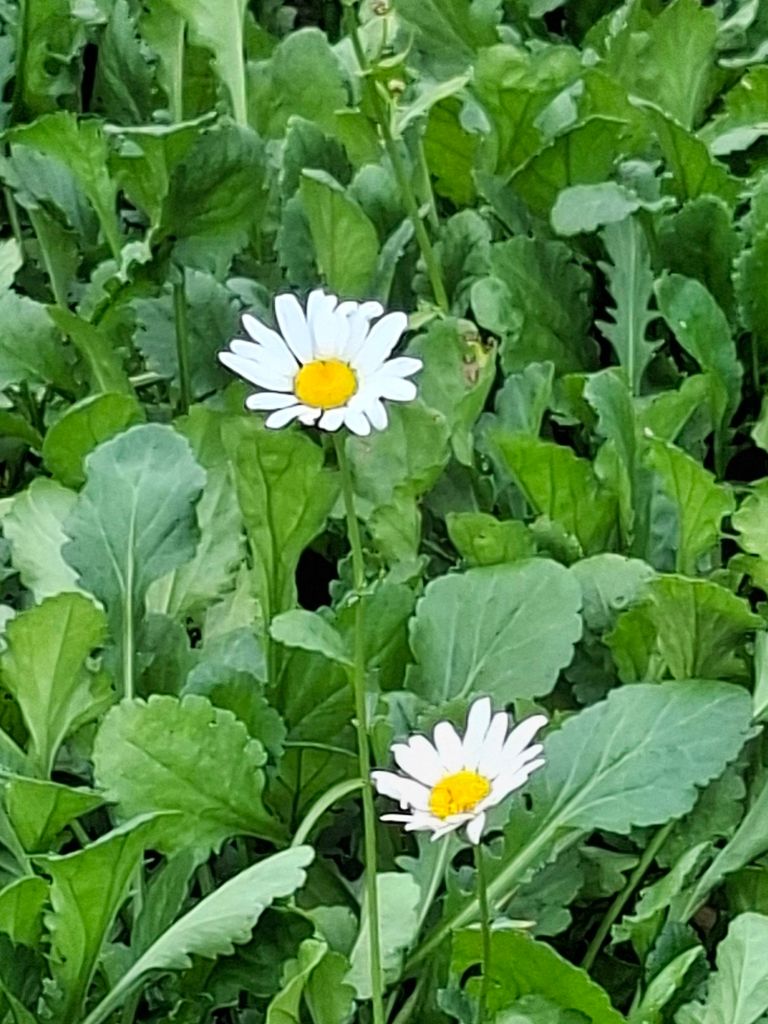
The sight of Michaelmas daisies altered my state. Seasonal flowers and a living, shining green. Although I didn’t move to touch them, I felt like a toddler reaching out for a mother’s hand. I was held again within the wheel of the year. Autumn, the season of bearing fruit.
I looked out further and received rhe assurance of an old stone wall, and the majesty of mature trees. The trees might be turning. The wall might be part of a ruin. But they were still in place, still present in time, still offering a quiet companionship.

These changes in perspective allowed me to experience the garden afresh, more closely and intimately. It was easier to be in, and easier to connect with. Still unsheltered, but unalarmed, I knew that I belong.


We have had a lot of wind and rain in recent days. Saturday was an exception. The sky was clear, vividly blue. The air seemed cleansed and fresh. I stood at the back of St. Mary de Crypt, above, and understood the sensibility that reaches up, aspirationally, to heaven. I could empathise with the yearning that goes with that, looking for something clear and bright and pure. It’s as if such a sky might hold a promise of peace, a peace that was alive and able to nurture beauty.
I am also glad that, by the standards of medieval churches (including others within walking distance) this St. Mary’s is modest and balanced in its upwards aspiration. It aspires, but does not run away from the earth. The picture below shows it as solidly grounded, and not altogether dwarfing the buildings that have been its neighbours for many years. The church is still consecrated and holds services from time to time. But now it functions largely as a busy community centre with a strong continuing role in Gloucester’s life. A solid presence in the heart of the city.

Looking in on the city park, I welcomed the same clear blue sky. But my eye was mostly drawn to the trees that it framed. Although this is still a winter scene, the colour of the willow suggests a strong presence of male catkins and the cycle of growth and change that is under way.

Leaving the park I made my way to the still living garden of the ruined Llanthony Secunda Priory, once the monks’ physic garden. It still feels like a place of healing and the present version is well maintained.
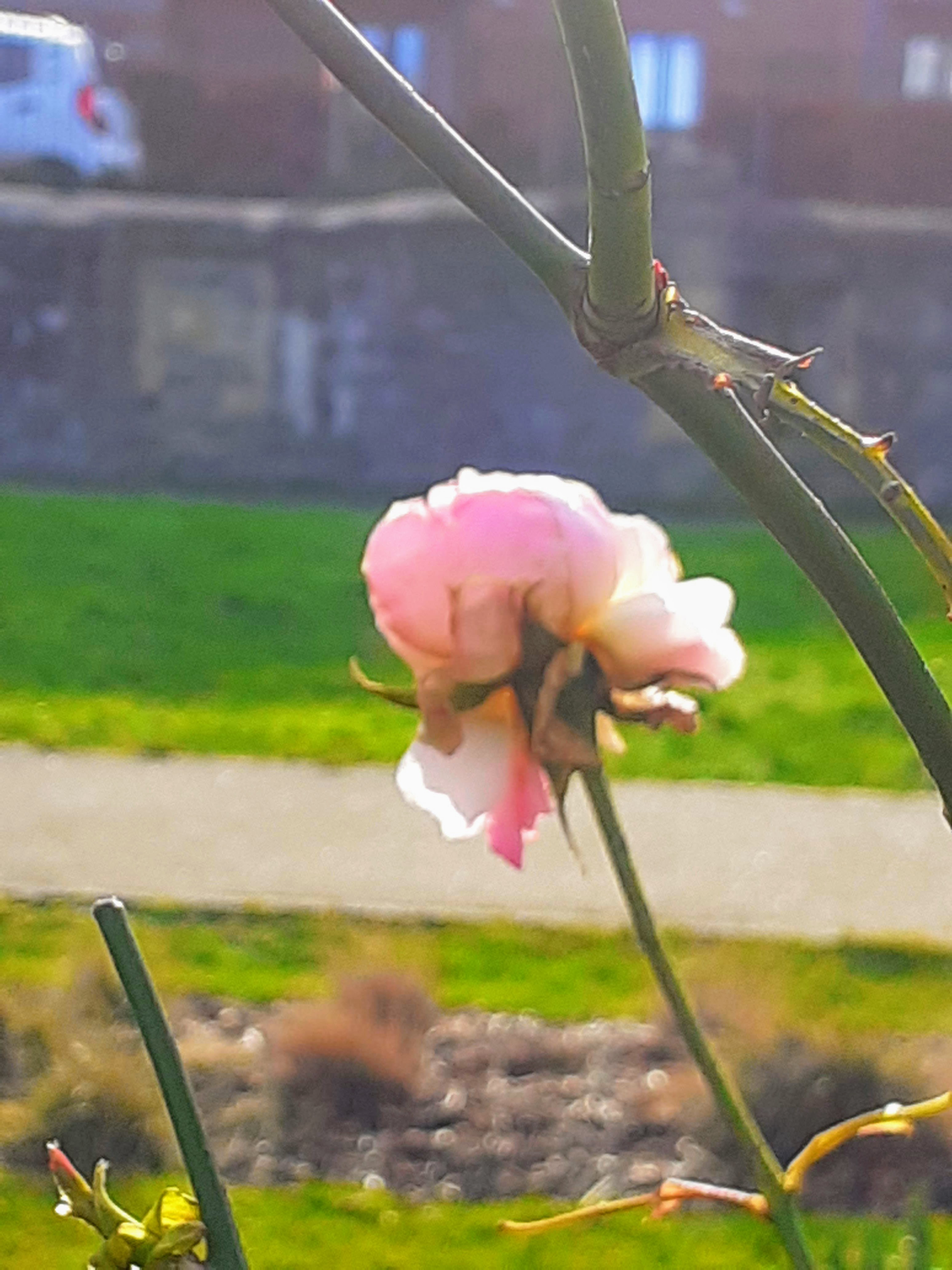
I was both surprised and delighted to see a rose in bloom. Roses have for a long time been a heart symbol for me, but I have generally associated them with summer and especially midsummer. I became aware of winter roses quite late last year and they were shop bought. I loved them but had some misgivings about their production. So I felt blessed to see one growing in the physic garden last Saturday. There’s no traditional link between Imbolc and roses that I know of. But seeing this rose in the ground, sunlight glinting on both petals and thorns, I had an Imbolc kind of feeling, as we approach the first festival of the rising year.

23 June 2024, around 8.15 pm. I’m enjoying my first contemplative walk for some days. I’m looking at an old wall, once part of the Llanthony Priory estate in Gloucester. The day has been one of rising temperatures and humidity. Even now, as the shadows deepen, I feel an energy and expectancy in the evening light.
The Priory here was for a time the largest landlord in the city and its surrounding district. In those days, midsummer was celebrated on 23/24 June. The Church celebrated the birth of John the Baptist, at the opposite end of the year from that of Jesus. (His beheading is remembered on 29 August). Popular celebrations on the evening/night of 23 June involved bonfires, and local festivities could be attributed to the saint, the season, or both.
In many cultures, the year has been divided into two contending halves, whether at the solstices, the equinoxes, or with the Beltane/Samhain division. Traditional Christianity flirts with this theme. I might think of summer and winter kings, king-slaying and the Goddess. I might also think of John, Jesus, and their respective human fates. In the case of John, Salome and her royal mother Herodias are a presence, along with their fateful demand for his head. These stories are not the same, but in the European Christian imagination they have at times been interwoven.
I might also think of the Green Man maturing to the point where he can “speak through the oak”, as “its crown forms his mask and its leafage his features” (1). To speak through the oak is to speak at another level, or from another dimension, a developmental moment that occurs at the year’s zenith (life’s zenith?) This maturation flows from from a willingness to surrender to a greater power. The purely personal direction can only be towards winter and death. But that’s not the whole story, even to a ‘sacred agnostic’ like me (2.) This is the midsummer evening’s tale that intrigues me the most.
The image below comes from a small patch in Llanthony Priory’s current garden, on the site of the original physic garden. I simply found it beautiful.
(1) Green Man Poem In: William Anderson Green Man: archetype of our oneness with the Earth Harper Collins: London & San Francisco, 1990 See: https://contemplativeinquiry.blog/2017/05/11/poem-green-man
(2) https://contemplativeinquiry.blog/2024/02/16/sacred-agnosticism


The haws are red and shiny on their hawthorn bushes. Blackberry remains tentative, its pale green fruit visible but still unripe. I see green leaves now leaning towards yellow. I am walking in a scrap of local woodland, bounded by a canal* on my left and housing some distance to my right. It is around 7.30 pm on 13 August, and I am opening up to the colours of late summer as they show themselves this year.

Looking up, I see a healthy crop of crab apples at different stages of ripening on their tree. The ripest apples are red, though their red is softer than that of the haws. The leaves of the apple tree are shinier than those in the background. I am aware of a light grey sky.

Nature in various forms finds a niche everywhere. This time has its own flowers, and again I see yellow. I am not the greatest botanist. and I cannot name with certainty these plucky if slightly battered blooms, saying hello from behind a fence. But I imagine them as poor relations of even the lesser celandine, and therefore almost certainly official weeds**. I hope and pray they remain safe here in these woods.
Below, looking at tangled leaves, I find a truly autumnal scene, in the yellowing and browning of leaves. It feels a bit early for this neighbourhood. The wheel of the year is still following its seasonal course, so far, but is becoming more erratic and unpredictable than in the past. I wonder about the future of the jet stream – and indeed the Gulf stream too. But in the moment, my heart opens and I love this pattern of plant life moving through its cycle and gradually, subtly, changing in appearance.

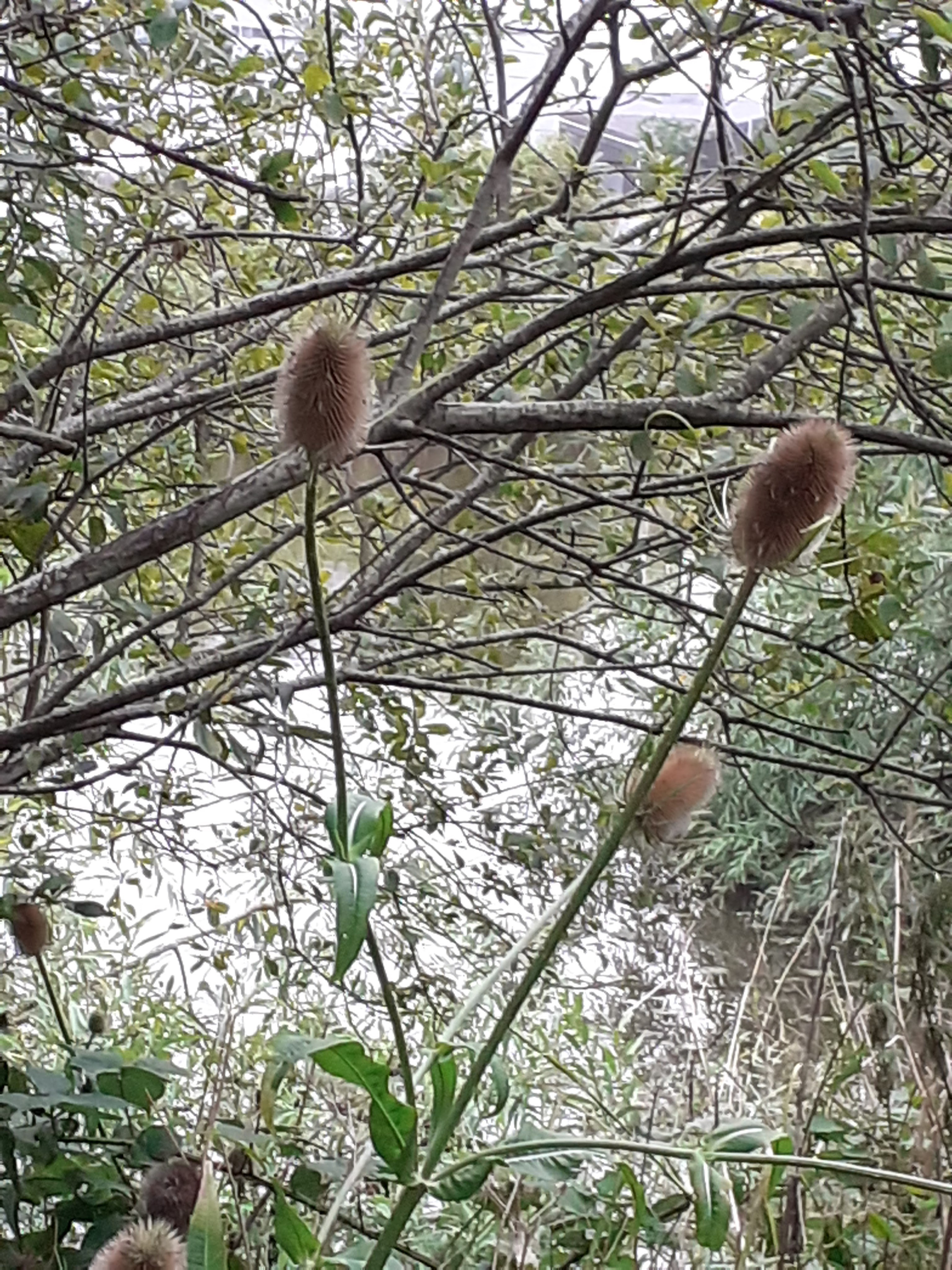
I photograph two teazel stalks, below, because I enjoy their shapes, because they are a further illustration of the browning theme, and also because of the visibility of the canal behind them. They don’t live in the canal, like bullrushes, but they like to be close. The image also includes an almost ghostly barge on the water below.
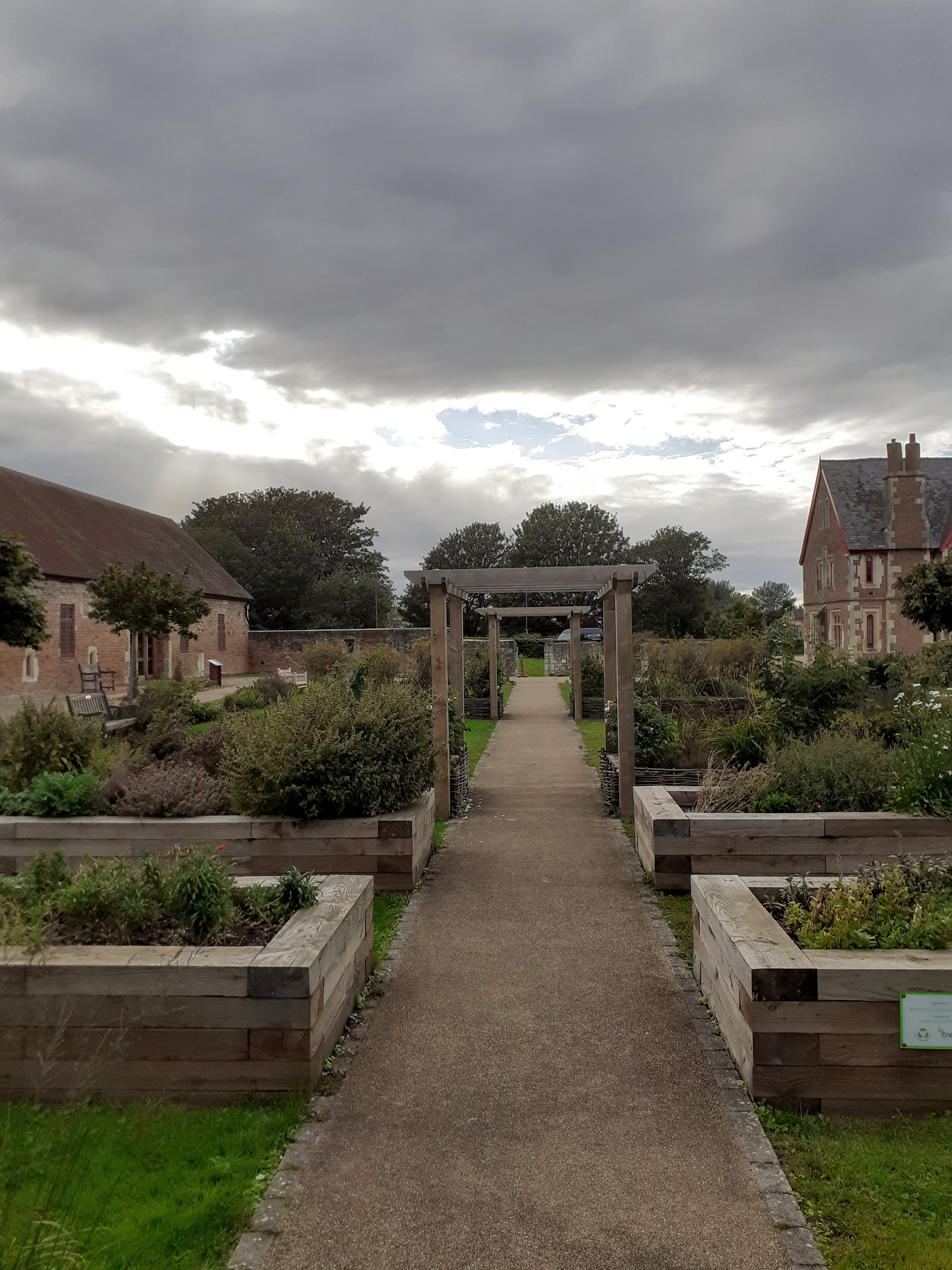
After leaving the woods, I am confronted (below) with the sky. I am facing west, across the Llanthony Priory gardens. I see dark stormy clouds, whose edgy brooding energy is somewhat modified by a blue opening in the distance. This dark grey, and the rain and storm it sometimes brings, have certainly been a feature of summer this year. There’s a strong contrast with last year at this time, when there was a heat wave, which for us still means C 30-35/F 86-95 with anything more being exceptional. In July 2022 part of the country briefly reached over C40/F 104 for the first time since records began. This year the grass is still green. Last year it burned up and the ground was parched and cracked.
Following the wheel of the year carefully, as it turns, is a valuable discipline for modern Druids, among others concerned with deep ecology (sacred ecology?) and the climate crisis. We don’t confine ourselves to celebrating our seasonal festivals, though we enjoy them too. For we now know experientially that the world is changing. The traditional rhythms of nature are not an eternal verity to rely on.
In some ways I find small personal observations emotionally more impactful than my limited knowledge of climate science and deep time geology. These are very helpful for context and framing, but personal experience is more immediate than these. It is also more deeply immediate, though less dramatic and disturbing, than reports of disaster elsewhere. Following the wheel of the year, we are doing more than making observations. We are celebrating and bearing witness to the life that surrounds us, offering our attention and energy to its continued flourishing. Blessings on the land.
*The Gloucester-Sharpness canal, England. Beyond the Gloucester docks, but not yet out of the city.
** A reader comments: “I think your mystery plant is ragwort, a much maligned ‘weed’ the destruction of which is encouraged by the UK government as it can be harmful to grazing animals yet is actually one of the best forage plants for pollinators”.
music that celebrates Earth and speaks to the heart
Follow the Moon's Cycle
Meeting nature on nature's terms
A little bit of Mark Rosher in South Gloucestershire, England
A monastic polytheist's and animist’s journal
Selkie Writing…
Images and words set against a backdrop of outsider art.
living with metacrisis and collapse
The pagan path. The Old Ways In New Times
Spiritual journeys in tending the living earth, permaculture, and nature-inspired arts
a magickal dialogue between nature and culture
The gentle art of living with less
Thoughts about living, loving and worshiping as an autistic Hearth Druid and Heathen. One woman's journey.
An place to read and share stories about the celtic seasonal festivals
Just another WordPress.com site
Exploring our connection to the wider world
Become more grounded and spacious with yourself and others, through your own body’s wisdom
Good lives on our one planet
News for the residents of Hopeless, Maine
 Contemplative Inquiry