Contemplative Inquiry

This blog is about contemplative inquiry

Tag: Japanese culture

THE GINKGO TREE

“Higher up, … in the middle of a small clearing, there stood a gigantic ginkgo tree. In the scheme of tiny streets, this was practically the one single unoccupied space, and of course this plot of land was only precisely as big as was necessary for the ancient tree to exist, for it to get both air and sunlight, for it to have enough strength to spread out roots beneath the earth.

Every other plant on the upward inclining streets of the quarter of Fukuine belonged to either something or someone: it was the property, ornament, and decoration, the carefully guarded and cared-for treasure of one or another family building, reaching out from tiny pristine courtyards with blooming or budding branches, the perennially green foliage emerging suddenly next to the eaves of the tiny, hidden gates, or the regularly repeating fence slats …

Only … the ginkgo tree that belonged to nothing and to no one stood by itself in the clearing as if there were’t even anything that it could be tethered to, as if it couldn’t even belong to anything, a kind of unbridled, wild, dangerous being rising high above every building and roof and tree, already with its full fresh crown in the unaccustomedly gentle early spring and with its multitude of peculiar, fan-shaped leaves, or rather leaves that much more resembled a heart cracked down the middle, sighing with the gentle wind.

This was the ginkgo, bearing within itself the numbed depths of innumerable geochronological ages, its thick trunk only able to bear a Shinto rope with its paper streamers, and below, the wild proliferation of a holly bush grown out from one of its sides; the ginkgo, accordingly, was the only one that rose from this peaceful world, and was well visible from below as well, like a kind of tower, because everything else ended up concealing the other things, one house hiding another, one street hidden by another.

Only it – this colossal, and, among all the other plants, frighteningly alien and unknowable ginkgo tree – ascended, and unmistakably, as if it had not arrived her directly from a hundred million years ago, the dark Cretaceous era from which it had originated, so that someone would have to notice it, someone looking up from below, from the direction of the train station, who, having arrived, and searching for the correct direction, would take a look around.”

Extract from: Laszlo Krasznahorkai A Mountain to the North, a Lake to the South, Paths to the West, a River to the East London: Tuskar Rock Press, 2023. Translated from the Hungarian by Ottilie Mulzet.

NB I have done some minor pruning (…) to keep the focus on the ginkgo. For the sake legibility in this blog format, I have also divided the extract into paragraphs which do not appear in the original text.
MUSICAL MEDITATION: THE SHAKUHACHI FLUTE

Shakuhachi flute music is a meditation for players and listeners alike. It is dance of sound and silence, of movement and stillness. Some people call it, ‘blowing Zen’. In this music, a rise and fall of notes gives way to space and stillness, which in turn give way to a rise and fall of notes. Eckhardt Tolle identifies shakuhachi flute music as a portal to the experience of consciousness being conscious of itself – and so a direct realization of what he calls the Deep I.

Bamboo flutes first came to Japan from China in the 7th century CE (1). The current shakuhachi was developed in Japan in the16th century. It is called fuke shakuhachi because of the instrument’s role in the Fuke sect of Japanese Zen Buddhism. Monks known as komusu (priests of nothingness, or emptiness monks) who used the shakuhachi as a spiritual tool. Their songs were paced according to the players’ breathing and were considered meditation as much as music.

Their spiritual practice required them to move from place to place playing the shakuhachi and begging for alms. The monks wore wicker baskets over their heads, as a symbol of their detachment from the world. But the world being the place that it is, it was more like a semi-detachment. Travel around Japan was restricted by the Shogunate at that time, and the Fuke only got their exemption by agreeing to spy for the authorities and allowing the Shogun to send out his own spies in the guise of Fuke monks. In response to these developments, several particularly difficult shakuhachi pieces became known as tests. If you could play them, you were a real Fuke. If you couldn’t, you were probably a spy and might very well be killed in unfriendly territory. With the Meiji Restoration, beginning in 1868, the Fuke sect was abolished along with the Shogunate itself, and shakuhachi playing was banned for a number of years.

The Wikipedia article on shakuhachi (1) provides information about the instrument and its capabilities, as well as its current international popularity and the formal link with Zen broken.. There is an International Shakuhachi Society which maintains a directory of notable professional, amateur and teaching shakuhachi players.

(1) https://en.wkipedia.org/wiki/Shakuhachi/ (NB This reference gets you to a page where you will need to type in Shakuhachi)

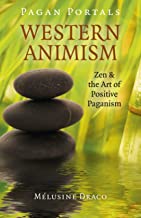
BOOK REVIEW: WESTERN ANIMISM

Western Animism: Zen and the Art of Positive Paganism. Highly recommended.

Melusine Draco is an established Pagan author, here writing mostly about Japanese culture. She draws on her Shinto upbringing by her father, a martial arts instructor and countryman. She contrasts the Abrahamic stigmatisation of Paganism and Animism in the West with the peaceful co-existence of Buddhism and Shinto in Japan, to the point where the line between them can be “decidedly hazy”. She suggests that the Japanese approach makes positive spirituality and living easier. All it really takes is “time to appreciate white clouds against the bright blue of a winter sky; the whisper of falling rain; the aroma of freshly baked bread … if we make a practice out of seeking out the positive, we tend to find it everywhere – even on ‘bad, black dog days’ when we can still hear water dreaming, or listen to the stones growing”.

In five relatively brief chapters, Melusine Draco covers a great deal of ground. She discusses Ki, “the unseen life force in our body and everywhere”, and the sense that there is no dividing line between the divine and human. She describes Kami, “the most ambiguous of spirits” and talks of “sermons in nature”. She describes a Zen teacher who, at the beginning of a lecture, paused to listen to a songbird outside the window, and then dismissed the class. She explains Kensho moments, sudden insights and awakenings that help us on our way. Exercises to facilitate such moments are scattered through the book.

Draco evokes a culture that celebrates life and its transience; stylises and thus sacralises everyday skills and activities; and pays respectful attention to nature, including Kami. Religion itself is based on respect rather than faith. Drawing on these riches, Draco suggests an alternative wheel of the year inspired by Japanese festivals and adapted for the West. A chapter on the Zen garden includes a wider discussion of sacred space and the use of plants. Her final chapter looks at Zen arts and aesthetics – including wabi-sabi, “defined as the beauty of things ‘imperfect, impermanent and incomplete’”. It also covers a Japanese view of concentration, meditation, contemplation, and the differences between them. For Draco, “contemplation is that state of consciousness which brings clairvoyant power. It must, because the basis of contemplation is a clairvoyant perception, a kind of spiritual intuition”.

Anyone interested in Japanese spirituality, and willing to be inspired by it, would benefit from reading this book.

Melusine Draco Western Animism: Zen and the Art of Positive Paganism Winchester UK & Washington USA: Moon Books, 2019 (Pagan Portals series)

Earth Eclectic

music that celebrates Earth and speaks to the heart

Sarah Fuhro Star-Flower Alchemy

Follow the Moon's Cycle

Muddy Feet

Meeting nature on nature's terms

Rosher.Net

A little bit of Mark Rosher in South Gloucestershire, England

Becoming Part of the Land

A monastic polytheist's and animist’s journal

selkiewife

Selkie Writing…

Charlotte Rodgers

Images and words set against a backdrop of outsider art.

Prof Jem Bendell

living with metacrisis and collapse

Towint

The pagan path. The Old Ways In New Times

The Druids Garden

Spiritual journeys in tending the living earth, permaculture, and nature-inspired arts

The Blog of Baphomet

a magickal dialogue between nature and culture

This Simple Life

The gentle art of living with less

Musings of a Scottish Hearth Druid and Heathen

Thoughts about living, loving and worshiping as an autistic Hearth Druid and Heathen. One woman's journey.

Wheel of the Year Blog

An place to read and share stories about the celtic seasonal festivals

Walking the Druid Path

Just another WordPress.com site

anima monday

Exploring our connection to the wider world

Grounded Space Focusing

Become more grounded and spacious with yourself and others, through your own body’s wisdom

The Earthbound Report

Good lives on our one planet

Hopeless Vendetta

News for the residents of Hopeless, Maine