Contemplative Inquiry

This blog is about contemplative inquiry

Tag: Islamic Mysticism

THE MYSTICISM OF SUFI MUSIC

“Music, the word we use in our everyday language, is nothing less than the picture of the Beloved. It is because music is the picture of the Beloved that we love music. But the question is: What is our Beloved, or where is our Beloved? The Beloved is that which is our source and goal. What we see of our Beloved before our physical eyes is the beauty of that which is before us. That part of our Beloved that is not before our physical eyes is that inner form of Beauty of which our Beloved speaks to us.” (1,2)

In these words, Hazrat Inayat Khan, musician, philosopher and Sufi teacher, explains the role of music in Sufi culture. Sufis seek a personal relationship, or union, with the Divine, which throughout their history has lead to conflicts with religious formalists within Islam. And whereas many of us who seek that connection, or union, find it in stillness and silence, Sufis often  seek and find it in music and movement – in states of expressive joy rather than quiet equanimity. Hazrat Inayat Khan continues:

“What makes … the musician sing beautiful songs? It is the inspiration that beauty gives. The Sufi has called this beauty Saqi, the divine Giver, who gives the wine of life to all. What is the wine of the Sufi? All beauty: in form, line and colour, in imagination, in sentiment, in manners – in all this he sees the one beauty. All these different forms are part of this Spirit of beauty, which is the life behind, always blessing … But among all the different arts, the art of music has been especially considered divine, because it is the exact miniature of the law working through the whole universe.

“Music inspires not only the soul of the great musician, but every infant, the instant it comes into the world, begins to move its little arms and legs with the rhythm of music. Therefore, it is no exaggeration to say that music is the language of beauty, the language of the One whom every living soul has loved. And we can understand that, if we realise the perfection of all this beauty as God, our Beloved, then it is natural that music, which we see in art and in the whole universe, should be called the Divine Art.”

The musical form above is called Qawwali. It arose in Hindustan, as a fusion of Persian, Arabic, Turkish and Indian traditions, for performance at Sufi shrines or dargahs. It is famous throughout Pakistan, India and Bangladesh. However the group featured above are from Birmingham, England. They have added to the fusion of Qawwali by introducing Western orchestral instruments and call their work ‘Orchestral Qawwali’. Man Kunto Maula is a well-known song in the modern Qawwali repertoire. The singer here is Abi Sampa and the production is by Rushil. This music does not directly reflect my personal practice, yet I feel moved and inspired by it when I listen.

(1) Hazrat Inayat Khan The Mysticism of Sound and Music: the Sufi Teaching of Hazrat Inayat Khan Delhi/Mumbai: Grapevine India, 2024 (Shambhala Dragon Editions)

(2) See also: https://contemplativeinquiry.blog/2025/01/21/the-way-of the heart/
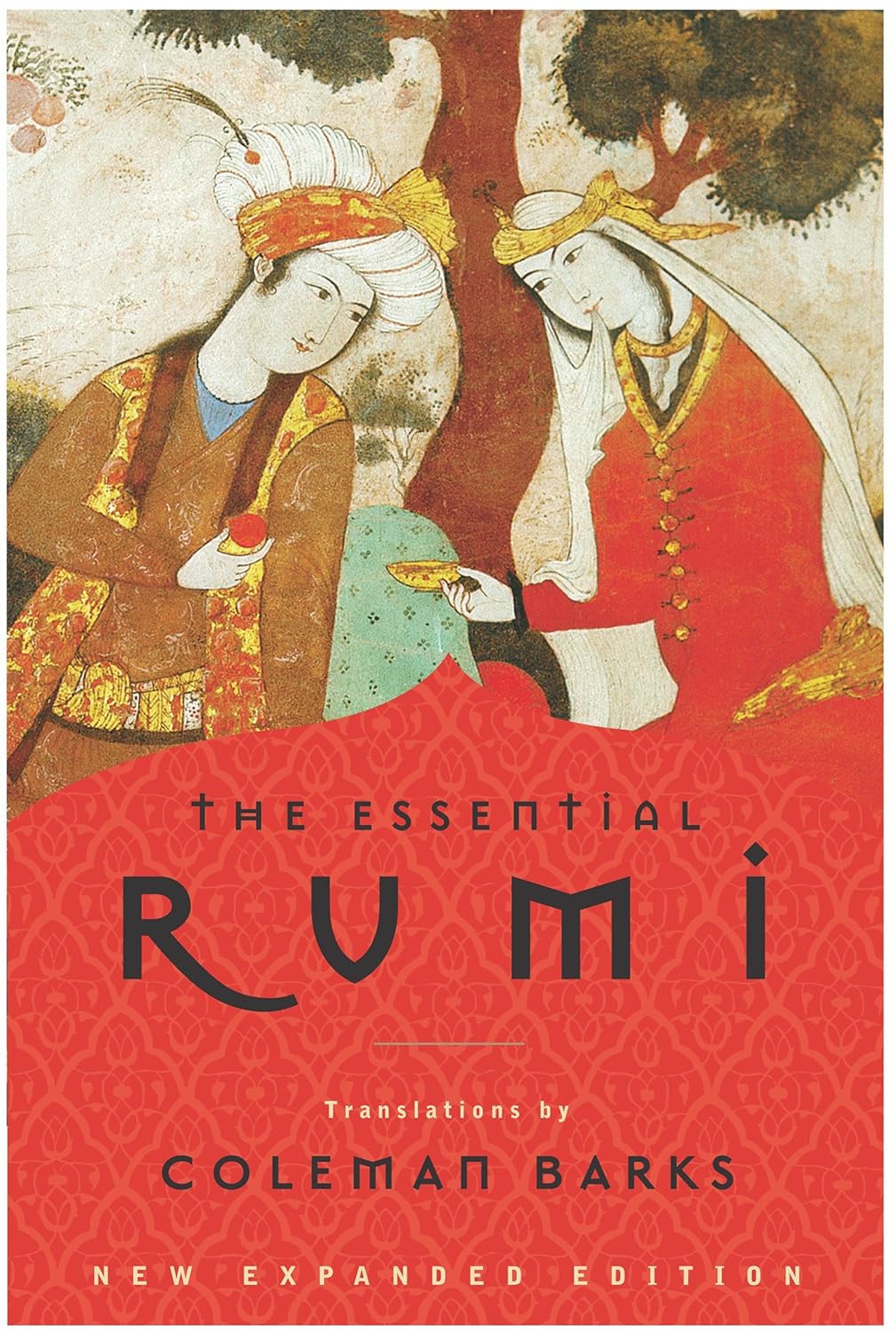
ESSENTIAL RUMI

I have long been an admirer of Rumi’s poetry and have recently been dipping into my copy of Coleman Barks’ accessible English translations in his The Essential Rumi (1). This is a substantial volume of poetry and teaching – with the two aspects not really distinguishable.

It is not a new book. My edition is from 2004, and still in print. Coleman Barks provides good information about Rumi in the context of his life and spiritual path as a Sufi Dervish (2), which I have condensed into a note at the end of this post. I think that Barks’ translation works well for people on a spiritual journey, not necessarily Sufis themselves. This seems fitting because Rumi reached out well beyond the world of religious scholars and jurists. He was remarkably ecumenically minded, in a culture where people of many faiths lived side by side.

The poem I offer here is Solomon’s Crooked Crown. Here the archetypal wise ruler, who is also anyone and everyone, learns from his own errors. Solomon doesn’t represent wisdom through being right all the time. He isn’t. He needs to be called out on occasions by his ‘crown’, or higher power. He is wise because he recognises inconvenient truth and answers the call.

“Solomon was busy judging others,

when it was his personal thoughts

that were disrupting the community.

His crown slid crooked on his head,

He put it on straight, but the crown went

awry again. Eight times this happened.

Finally he talked to his headpiece.

‘Why do you keep tilting over my eyes?’

‘I have to. When your power loses compassion,

I have to show what such a condition looks like.’

Immediately Solomon recognised the truth.

He knelt and asked forgiveness.

The crown centered itself on his crown.

When something goes wrong,

Accuse yourself first.

Even the wisdom of Plato or Solomon

can wobble and go blind.

Listen when your crown reminds you

of what makes you cold towards others,

as you pamper the greedy energy inside.”

NOTE (taken largely from Coleman Barks’ introduction, On Rumi)

Rumi was born on September 30, 1207, in Balkh, Afghanistan. Iranians and Afghans call him Jelaluddin Balkhi. At that time, Balkh was part of the increasingly hard-pressed Abbasid Caliphate. Fleeing from invading Mongol armies, his family emigrated to Konya, in modern Turkey, sometime between 1215 and 1220.

The name Rumi means ‘from Roman Anatolia’, now in modern Turkey and already by Rumi’s day long lost to the Romans and their Byzantine successors. Rumi’s father was a theologian, jurist and mystic. On his death Rumi took over the position of sheikh in his dervish (2) learning community in Konya. Rumi’s life seems to have been a fairly normal one for a religious scholar – teaching, meditating, helping the poor – until 1244 when he met the wandering dervish Shams of Tabriz. Shams had spent years travelling throughout the Middle East searching and praying for one who could ‘endure my company’.

Their encounter, and the mystical friendship that ensued, influenced Rumi into becoming the artist we remember. “He turned into a poet. began listening to music, and sang, whirling around, hour after hour” (1). Shams disappeared in 1248. He was most likely murdered with the connivance of one of Rumi’s sons and other disciples. They thought of Shams as a bad influence on Rumi as well as themselves feeling excluded by Rumi and Shams’ relationship.

After the heartbreak of Shams’ death, Rumi went on to compose the Mathnawi, “that great work that shifts so fantastically from theory to folklore to jokes to ecstatic poetry (1)”.

(1) The Essential Rumi Translated by Coleman Barks, with Reynold Nicholson, A. J. Arberry, John Moyne. New York, NY: HarperOne, 2004 expended edition

(2) Dervish – member of a Muslim, specifically Sufi, religious order who has taken vows of poverty and austerity. Dervish orders first appeared in the 12th century CE. The Mevlevi Order of Whirling Dervishes was founded by followers of Rumi.

Earth Eclectic

music that celebrates Earth and speaks to the heart

Sarah Fuhro Star-Flower Alchemy

Follow the Moon's Cycle

Muddy Feet

Meeting nature on nature's terms

Rosher.Net

A little bit of Mark Rosher in South Gloucestershire, England

Becoming Part of the Land

A monastic polytheist's and animist’s journal

selkiewife

Selkie Writing…

Charlotte Rodgers

Images and words set against a backdrop of outsider art.

Prof Jem Bendell

living with metacrisis and collapse

Towint

The pagan path. The Old Ways In New Times

The Druids Garden

Spiritual journeys in tending the living earth, permaculture, and nature-inspired arts

The Blog of Baphomet

a magickal dialogue between nature and culture

This Simple Life

The gentle art of living with less

Musings of a Scottish Hearth Druid and Heathen

Thoughts about living, loving and worshiping as an autistic Hearth Druid and Heathen. One woman's journey.

Wheel of the Year Blog

An place to read and share stories about the celtic seasonal festivals

Walking the Druid Path

Just another WordPress.com site

anima monday

Exploring our connection to the wider world

Grounded Space Focusing

Become more grounded and spacious with yourself and others, through your own body’s wisdom

The Earthbound Report

Good lives on our one planet

Hopeless Vendetta

News for the residents of Hopeless, Maine