Contemplative Inquiry

This blog is about contemplative inquiry

Tag: Interbeing

EXPLORING ‘EMPTINESS’: CARLO ROVELLI AND NAGARJUNA

A modern western humanist learns from an ancient Buddhist philosopher. Carlo Rovelli’s book Helgoland (1) is mostly about the development of quantum mechanics in the early to mid-twentieth century and the scientists who developed it. The title references ‘Werner Heisenberg’s sojourn on the remote island of Helgoland working on the maths. But one chapter concerns the second century CE Buddhist philosopher Nagarjuna, and how his work has helped Rovelli to frame a philosophical understanding of quantum phenomena.

“When speaking about quanta and their relational nature I had frequently met people who asked: Have you read Nagarjuna? … Though not widely read in the West, the work in question is hardly an obscure or minor one: it is one of the most important texts in Buddhist philosophy. … The central thesis of Nagarjuna’s book is simply that there is nothing that exists in itself, independently from something else.

“The resonance with quantum mechanics is immediate. Obviously Nagarjuna knew nothing, and could not have imagined anything, about quanta – that is not the point. The point is that philosophers offer original ways of re-thinking the world, and we can employ them if they turn out to be useful. The perspective offered by Nagarjuna make perhaps make it a little easier to think about the quantum world (2).

“If nothing exists in itself, everything exists only through dependence on something else, in relation to something else. The technical term used by Nagarjuna the absence of independent existence is ‘emptiness’ (sunyata): things are ‘empty’ in the sense of having no autonomous existence. They exist thanks to, as a function of, with respect to, in the perspective of, something else.

“If I look at a cloudy sky – to take a simplistic example – I can see a castle and a dragon. Does a castle and does a dragon really exist, up there in the sky? Obviously not: the dragon and the castle emerge from the encounter between the shape of the clouds and the sensations and thoughts in my head; in themselves they are empty entities, they do not exist. So far, so easy. But Nagarjuna also suggests that the clouds, the sky, sensations, thoughts and my own head are equally things that arise from the encounter with other things: they are empty entities.

“And myself, looking at the star, do I exist? No, not even I. So who is observing the star? No one says Nagarjuna. To see a star is a component of that set of interactions that I normally call my ‘self’. ‘What articulates language does not exist. The circle of thoughts does not exist.’ There is no ultimate or mysterious essence to understand that is the true essence of our being. ‘I’ is nothing other than the vast and interconnected set of phenomena that constitute it, each one dependent on something else. Centuries of Western speculation on the subject, and on the nature of consciousness, vanish like morning mist.

“Like much philosophy and much science, Nagarjuna distinguishes between two levels: conventional, apparent reality with its illusory and perspectival aspects, and ultimate reality. But in this case the distinction takes us in an unexpected direction: the ultimate reality, the essence, its absence, is vacuity. It does not exist.

“If every metaphysics seeks a primary substance, an essence on which everything may depend, the point of departure from which everything follows, Nagarjuna suggests that the ultimate substance, the point of departure … does not exist.

….

“The illusoriness of the world, its samsara, is a general theme of Buddhism; to recognize this is to reach nirvana, liberation and beatitude. For Nagarjuna, samsara and nirvana are the same thing: both empty of their own existence. Non-existent.

“So is emptiness the only reality? Is this, after all, the ultimate reality? No, writes Nagarjuna, in the most vertiginous chapter of the book: every perspective exists only in interdependence with something else, there is never an ultimate reality – and this is the case for his own perspective as well. Even emptiness is devoid of essence: it is conventional. No metaphysics survives. Emptiness is empty.

“Nagarjuna has given us a formidable conceptual tool for thinking about the relationality of quanta: we can think of interdependence without autonomous essence entering the equation, In fact interdependence – and this is the key argument made by Nagarjuna, requires us to forget all about autonomous essences.

“The long search for the ‘ultimate substance’ in physics has passed through matter, molecules, atoms, fields, elementary particles … and has been shipwrecked in the relational complexity of quantum field theory and general relativity. Is is possible that a philosopher from ancient India can provide us with a conceptual tool with which to extricate ourselves?”

“The fascination of Nagarjuna’s thought goes beyond questions raised by contemporary physics. His perspective has something dizzying about it. It resonates with the best of much Western philosophy, both classical and recent. … He speaks about reality, about its complexity and comprehensibility, but he defends us from the conceptual trap of wanting to find it an ultimate foundation.

“His is not metaphysical extravagance: it is sobriety. It recognizes the fact that to inquire about the ultimate foundation of everything is to ask a question that perhaps simply does not make sense.

“This does not shut down investigation. On the contrary, it liberates it. Nagarjuna is not a nihilist negating the reality of the world, and neither is he a sceptic denying that we can know anything about that reality. The world of phenomena is one that we can investigate, gradually improving our understanding of it. We may find general characteristics. But it is a world of interdependence and contingencies, not a world that we should trouble ourselves attempting to derive from an Absolute.

“I believe that one of the greatest mistakes made by human beings is to want certainties when trying to understand something. The search for knowledge is not nourished by certainty: it is nourished by a radical absence of certainty. Thanks to the acute awareness of our ignorance, we are open to doubt and can continue to learn and learn better. This has always been the strength of scientific thinking – thinking born of curiosity, revolt, change. There is no cardinal or final fixed point, philosophical or methodological, with which to anchor the adventure of knowledge.

“I am not a philosopher; I am a physicist: a simple mechanic. And this simple mechanic, who deals with quanta, is taught by Nagarjuna that it is possible to think of the manifestation of objects without having to ask what the object is in itself, independent from its manifestations.

“But Nagarjuna’s emptiness also nourishes an ethical stance that clears the sky of the endless disquietude: to understand that we do not exist as autonomous entities helps us free ourselves from attachments and suffering. Precisely because of its impermanence, because of the absence of any absolute, the now has meaning and is precious.

“For me as a human being, Nagarjuna teaches the serenity, the lightness and the shining beauty of the world: we are nothing but images of images. Reality, including ourselves, is nothing but a thin and fragile veil, beyond which … there is nothing.”

(1) Carlo Rovelli Helgoland global.penguinrandomhouse.com 2020 (Translated by Erica Segre & Simon Carnell, 2021) Carlo Rovelli is a theoretical physicist who has made significant contributions to the physics of space and time.

(2) The Fundamental Wisdom of the Middle Way: Nagarjuna’s Mulamadhyamakakarika: Translation and commentary by Jay L. Garfield. Oxford: The University Press, 1995. Nagarjuna, who lived in South India in approximately the second century CE, is the most important, influential and widely studied Mahayana Buddhist philosopher. At the time of publication Jay L. Garfield was Professor of Philosophy and Director of the Hampshire in India Program, an exchange program with the Tibetan Universities in exile, at Hampshire College, Amherst, Massachusetts. His translation is from a Tibetan, rather than Sanskrit, text.

CATCHING A MOMENT

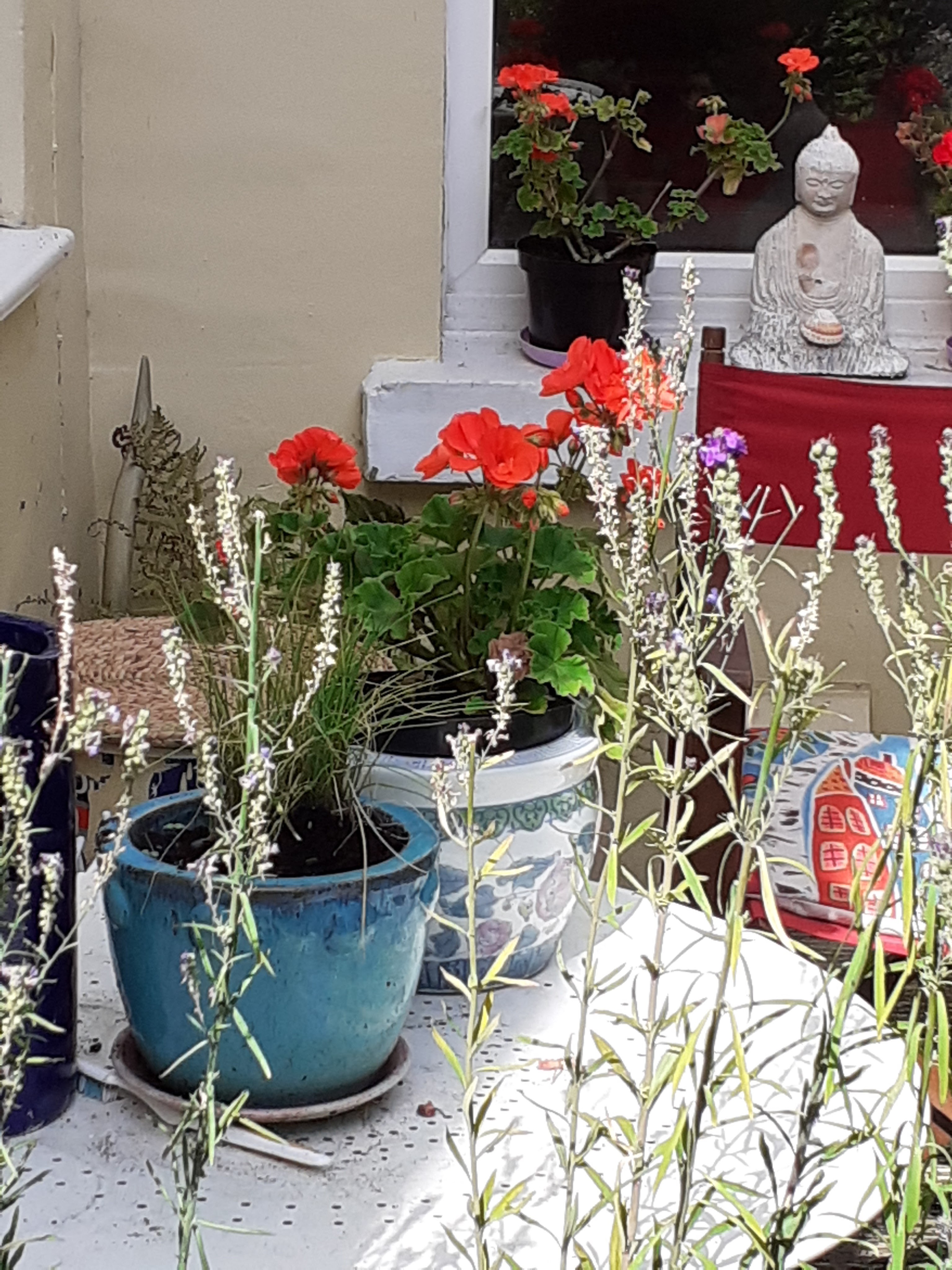
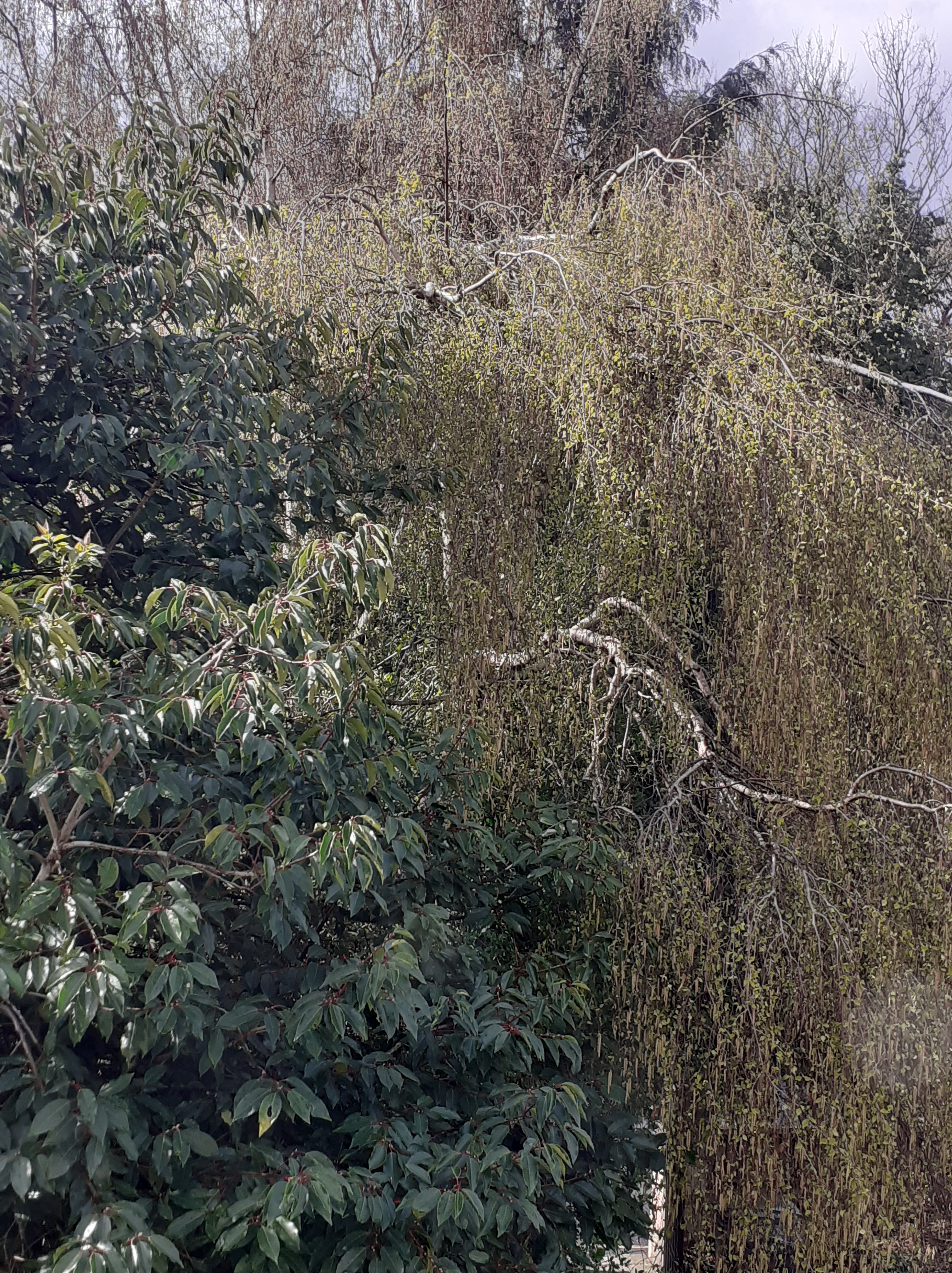
Above, inside looking out. Below, outside looking in – with added reflections.

Below again, from a little further back, the full richness of a sunlit moment, in a particular time and place. For me, it becomes the image and feeling-tone of its day, and, later on, a soft thought in memory.

WOODLAND CONTEMPLATION

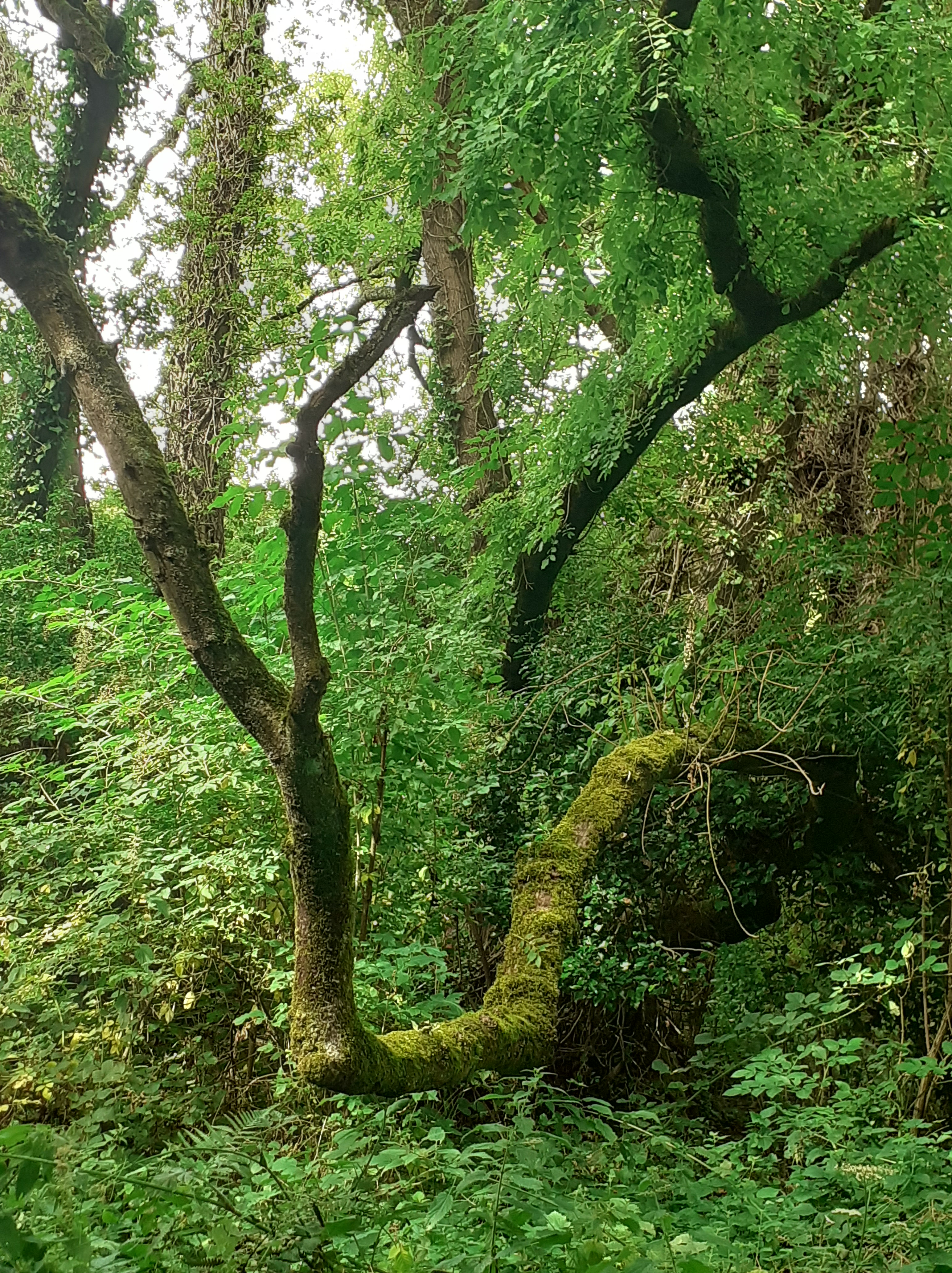
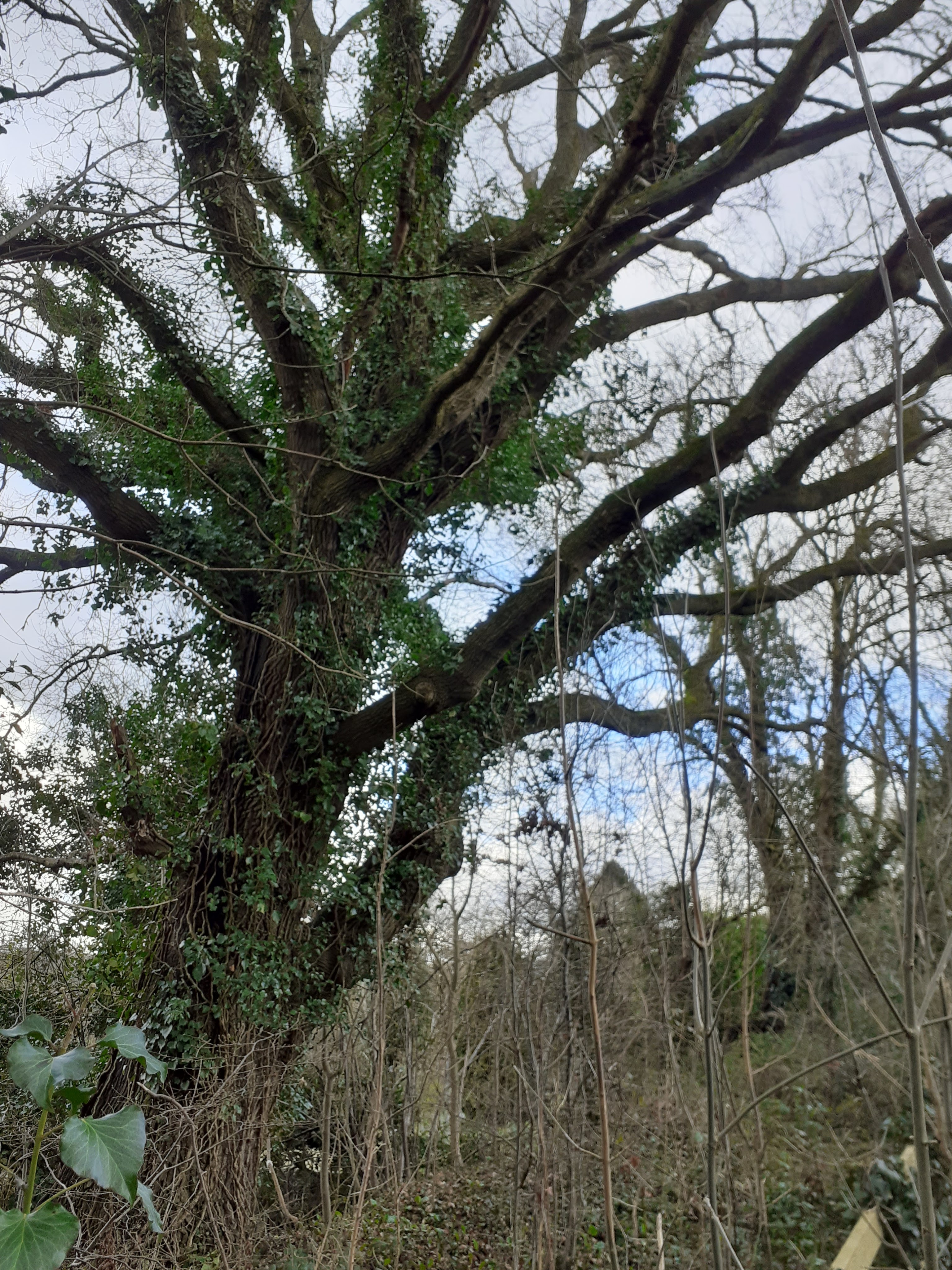
Becoming the single eye, the eye of contemplation, I am a stressless, frameless window. Unboundaried and immersed, beyond the sense of window, joyful experiencing is vivid and intimate. I am a broken branch, stuck in mud. I am a sticky ooze. I am the shadowy reflection of a tree. I am ripples on water.

Walking, I am a body in movement. Then I become a space for memories. I recall the words: “a green thought in a green shade”. Relishing these words, I become a green thought in a green shade. Then I fall into the role of self-conscious observer, morphing from my original state into another one – lacking the immediacy of the first, yet still worthy of welcome.

The woods reach out to me. They and I are distinct now, though we are still held together in the dynamism of a living world. The whole of life is in these woods as summer starts to wane.

PEACE AS PURPOSE

This image, the 3 of Wands from The Druidcraft Tarot (1), is one of purposeful effort beginning to be rewarded. The process is gradual but the promise is there. A young man looks with confidence at the world in front of his eyes. He seems at ease with himself, a young man resting in peace.

He has never really died in me, despite the ups and downs of life. Indeed I am better connected with him now than when I was actually young. I sometimes bubble up with an energetic optimism unlinked to any particular context. Delusional? I don’t think so. It is more the sense of a true nature, ageless and timeless, sustaining me in every time and season.

The image on the card suggests a wider resiliency of nature and organic growth. The purpose and intention of the fire element is in alliance with the regenerative powers of the earth. The sun is seen indirectly in the health of the plant kingdom, and indeed of the young man himself.

I consider my own purpose at this time of my life. I think of some old Druid liturgy that I have re-written for my own practice, without much changing the original meaning: “Deep within my innermost being I find peace. Silently, within the stillness of this space, I cultivate peace. Heartfully, within the wider web of life, may I radiate peace”. I understand ‘peace’ to be an active agent in human affairs and not a passive or negative absence of conflict. It is a value, and stance, to understand and act on more deeply over time.

At the level of personality, I do not consider myself a natural for this form of witnessing and action. I am a work in progress, to say the least. Hence the importance of formal spiritual points of reference and a formal practice. I need these kinds of support. Writing this blog helps too. I see it as contributing to a peer community conversation. This community is not closely defined and is subject to change. It does not, in itself, provide any identity or role other than the reading and writing of posts. But it is good to have a purpose working within it. I aim, overall, heartfully to radiate peace, at least at the level of discourse and values.

(1) Philip and Stephanie Carr-Gomm The DruidCraft Tarot: Use the Magic of Wicca and Druidry to Guide Your Life London: Connections, 2004. Illustrated by Will Worthington.

BLUE SKY, CLIMATE CRISIS AND DRUID PRAYER

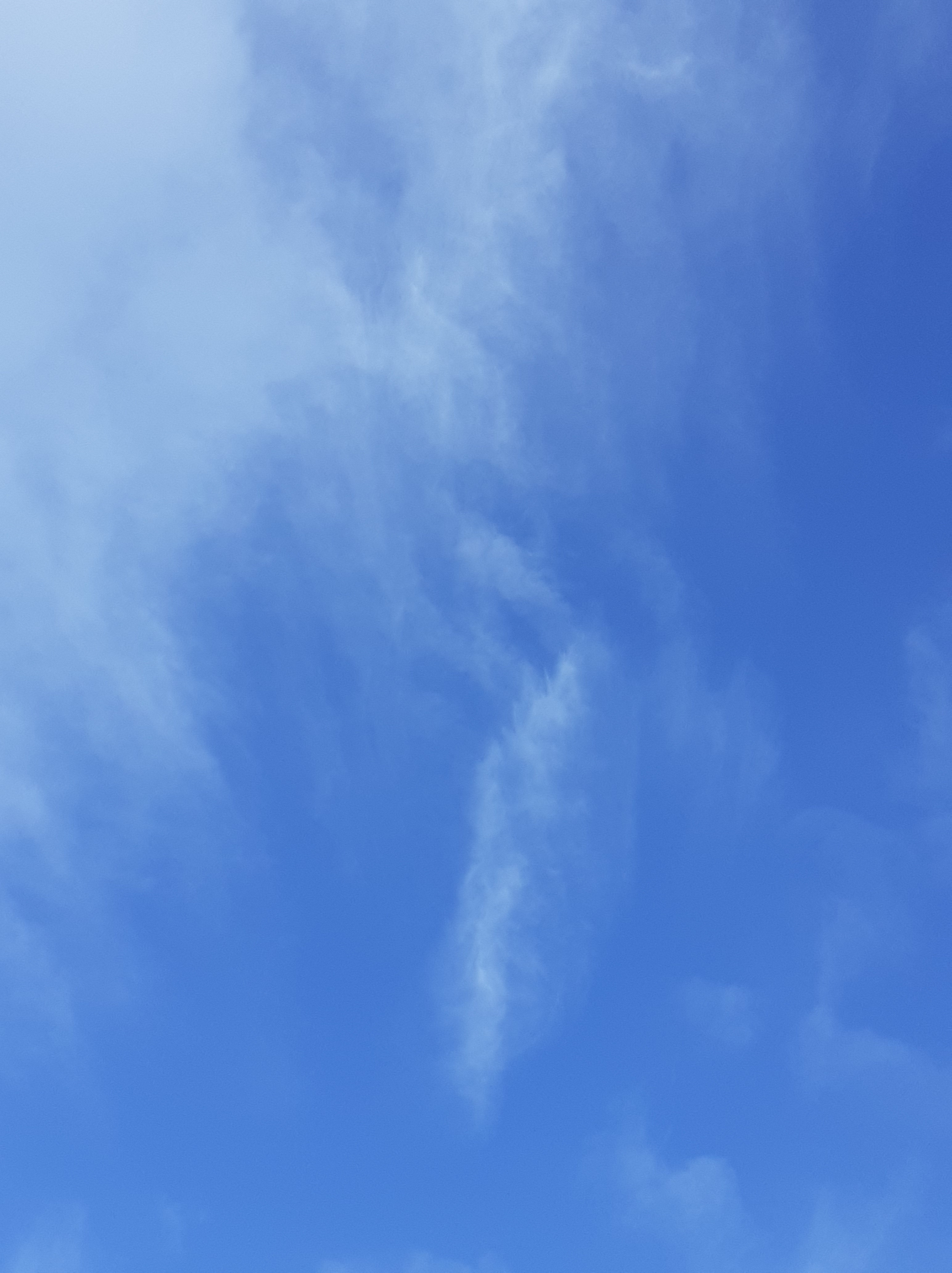
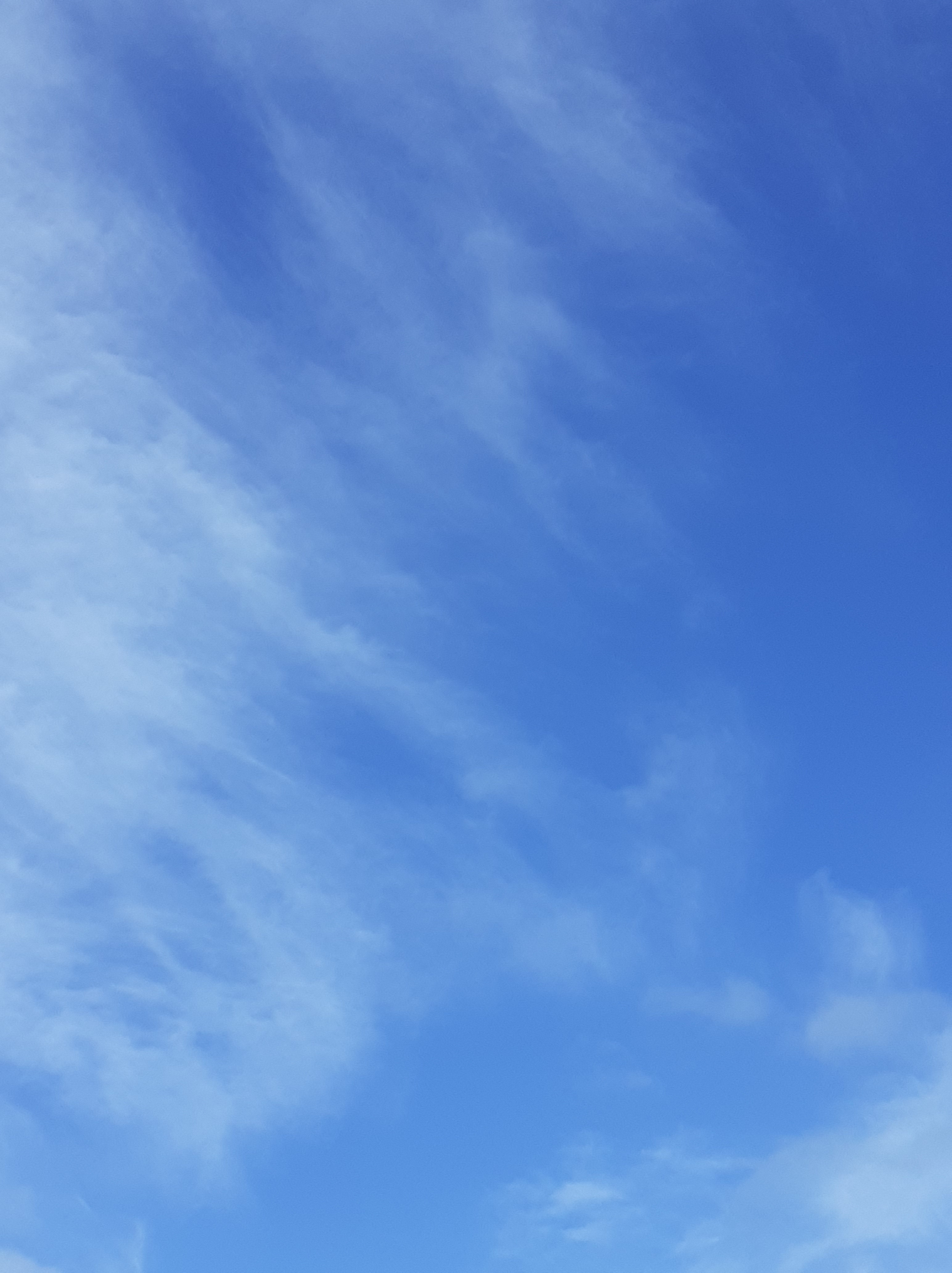
I love the sky in most weathers. I especially love it when it is azure blue and feels like a high domed roof, well able to contain the movement of wispy, shapeshifting clouds. The sky is part of nature, just like the earth. It is not a detached, alienated realm, beyond the influence of what some traditions might call our little life.

Sometimes I wish it was beyond our influence, as the news about the climate crisis goes on getting worse. The moment of joy is infused with a heartache that has every right to be there. It reminds me of our interconnectedness, and the Druid prayer for knowledge and love of justice, and, through that, the love of all existences (1).

I will stay open to my simple joy at inhabiting a living world of beauty and abundance, even if sadness keeps it company. The healing pleasure of sky-gazing is a part a long, common inheritance, not to be repressed, numbed or lost. I will continue to invite it in and let it nourish me.

(1) One modest practical way to enact the love of justice and of all existences, beyond lifestyle adjustments, is to support https://www.stopecocide.earth/ – now gaining momentum.

SUZANNE SIMARD: FINDING THE MOTHER TREE

Dr. Suzanne Simard grew up in the Monashee Mountains of British Columbia, in a family of low impact traditional foresters. She worked for many years a researcher in the Canadian Forest Service, before moving into academia. She is currently Professor of Forest Ecology at the University of British Columbia’s Faculty of Forestry. Throughout her career she has had a leading role in changing the way that science thinks about trees and forests. Her research on tree connectivity, communication and cooperation – and their impact on the health and biodiversity of forests – has shown how the imposed monocultures of commercial forestry are a disaster for forests, forestry and the wider ecology of the planet.

Her book Finding the Mother Tree: Uncovering the Wisdom and Intelligence of the Forest was published by Penguin Books in the UK, USA, Canada, Ireland and Australia in 2021 in paper, kindle and audio versions. It describes both a personal journey and a scientific one, and shows how the work Simard came to do grew out of the place and culture in which she was raised. It is as if her achievement had her name on it even at the beginning. I highly recommend this book to any one with an interest in ecology and the sentience of trees.

I cannot do justice in to this inspiring book and its thesis in a single post. Instead, I refer readers to a TED talk on How Trees Talk To Each Other (1), which Simard gave in 2016, summarising her work and its implications in just over 16 minutes. If the talk whets your appetite, the book will likely satisfy it. It says more about Suzanne Simard’s personal and family journey. It describes her ground-breaking (though also fraught and frustrating) time within the Canadian Forest Service in some detail. It also says something about the ecological wisdom of the indigenous peoples of the forest and takes Simard’s own research up to 2020.

(1) http://www.ted.com/talks/suzanne_simard_how_trees_talk_to_each_other?language=en/

MORE AT HOME: APRIL 2021

I am feeling more at home in a number of ways. A much loved view through a bedroom window is enough. I can look out and lose myself, holding an image both of continuity and change as the seasons move. One way in which I experience the year is in two halves. Beltane initiates the summer half of a two season year, with Samhain beginning winter.

I often find the extended six months ‘winter’ to be productive for my contemplative inquiry. In the six months now about to end, I have completed an important shift, a shift that reframes an inquiry insight dating from 2018. At that time I said: “I discovered an ‘at-homeness’ in the flowing moment, which nourishes and illuminates my life. Such at-homeness is not dependent on belief or circumstance, but on the ultimate acceptance that this is what is given.”

My view then was that it is best to steer away from metaphysical commitments, as the Buddha is said to have done. “At-homeness in the flowing moment” could work as a dignified existential choice for a humanist, an agnostic or a person with a stance of ‘sustainable nihilism’ (1). It could also work for people firmly based in contemplative versions of monotheist and polytheist spiritual traditions. Indeed it could work for anyone and would be blissfully light on doctrine and opportunities for argument and dissension.

That said, whist still fully embracing the original insight, I now find it incomplete. I have for some time been filled with the sense of a living cosmos, in a way that cuts across the grain of the culture I come from, with its parsimonious definition of ‘life’. I am animist in sharing Thich Nhat Hanh’s understanding of ‘Interbeing’, where everything is interconnected and nothing is really born, lives or dies in a state of separate selfhood (2). Life just changes. Now I have taken to heart the sense that the life which changes has a Source, or ground of Being, in which the whole web of life is embedded.

Hence I am human and I am also that ground of Being. Being cannot be found as an object, but I can apprehend Being in two ways. One is by looking in and finding my primordial and true nature in and as Being. The second is by looking out and finding Being everywhere and in everything. In each case, the inside/outside distinction finally dissolves. Humanly, I am distinct but not separate from Being, temporarily individuated in the world of space and time, as is everything else in this world. At the deepest level, as Being, I am no thing and yet present in and as everything.

I have reached a commitment to this view partly as a result of contemplative inquiry and partly as an act of faith, trusting my deepest understanding. In the wider world, this understanding is called ‘non-dual’ or ‘panentheist’. It is neither demonstrable nor falsifiable as a proposition, and I continue to appreciate that the map is not the territory. All words feel somehow wrong, just as the Tao Te Ching warns when it begins with “the name you can say isn’t the real name” (3). Yet Lao Tzu persisted with his writing, and gave the world one of its most loved scriptures. From time to time, the effort with language has to be made.

Modern movements (4,5) have made the experiential recognition of our true nature, or ultimate divinity, available to ordinary people through skilful means developed for our time. I have made connections with such movements, but I still anchor myself in Druidry. Humanly, a conscious I-I relationship with Source, or dwelling in and as Source, is not everything to me. I am drawn, too, to I-Thou relationship, honouring a devotional need that wants to be expressed. The Indian sages who first developed non-duality as a spiritual philosophy did not challenge or abandon the flourishing polytheism of their culture. They continued the practice of deity yoga. It serves the dance of being and becoming in this world. This, I believe, is the role of the Goddess in my life (6). I have much still to learn here. Meanwhile my at-homeness grows stronger.

(1) http://jonnyfluffypunk.co.uk/

(2) Thich Nhat Hanh The Other Shore: a New Translation of the Heart Sutra with Commentaries Berkeley, CA: Parallax Press, 2017

(3) Lao Tzu Tao Te Ching: A Book About the Way and the Power of the Way Boston & London: Shambhala, 1998 (New English version by Ursula K. Le Guin with the collaboration of J. P. Seaton)

(4) http://www.headless.org/

(5) https://eckharttolle.com/

(6) https://contemplativeinquiry.blog/2021/02/24/who-is-the-goddess-I-pray-to/

RIPPLE EFFECTS: WHERE PRAYER CAN BE VALID

The story of Elaine’s illness is her story. She is the central character and, in describing her experience, she has used the language of rebirth. Her words sound congruent and meaningful to me. I have a place in her story, and she in mine. We are together a lot of the time. Her dramatic hospitalisation and return have had significant ripple effects on me – not as a stone thrown into a pond rippling out in circles, but as distinctive currents moving in one body of water.

From an inquiry perspective, I find myself in a new place concerning prayer. Something in me broke open when Elaine was in hospital, after her own life-and-death crisis was past, but when she was still very ill, and it was still possible for something to go wrong. We couldn’t see each other of course but were texting. I wept and prayed when alone, having completely forgotten that I ‘don’t believe’ in petitionary prayer.

This is something that happens for many people in crisis, and I could have gone back to my previous setting, especially after Elaine came home, out of danger. But I haven’t – because I know that, regardless of any effect that my prayers may have had on Elaine’s wellbeing, they made me somehow more present, with a more porous and open sense being. Prayer seems to push me in the direction of compassionate capacity and availability, at the very least making me more conscious of my existing limitations and willing to move beyond them.

I have reflected on my practice, and the understandings behind it, and I have made changes. I wrote about my previous position in the post My Druid Prayer – https://contemplativeinquiry.blog/2020/08/27/ . I still respect it. I stand by my references to ‘Oneness’ as universal interbeing. The version of the prayer I offered was liked both by Humanist and Naturalist Druids and by those influenced by the example of non-theistic forms of Non-Duality, such as Buddhism and Taoism. I am glad to have written this revision, and I will continue to use it on some occasions. But in my daily evening practice, when I say the Druid Prayer, I have returned to tradition, beginning ‘Grant O Goddess your protection’ rather than ‘In the recognition of Oneness I find protection’. For my changed relationship to prayer also opens up a changed relationship with the divine, which I am exploring now and will write about soon. I am working towards a more integrated Druidry, inclusive of a devotional space where prayer can be valid.

WOODS AND WATER

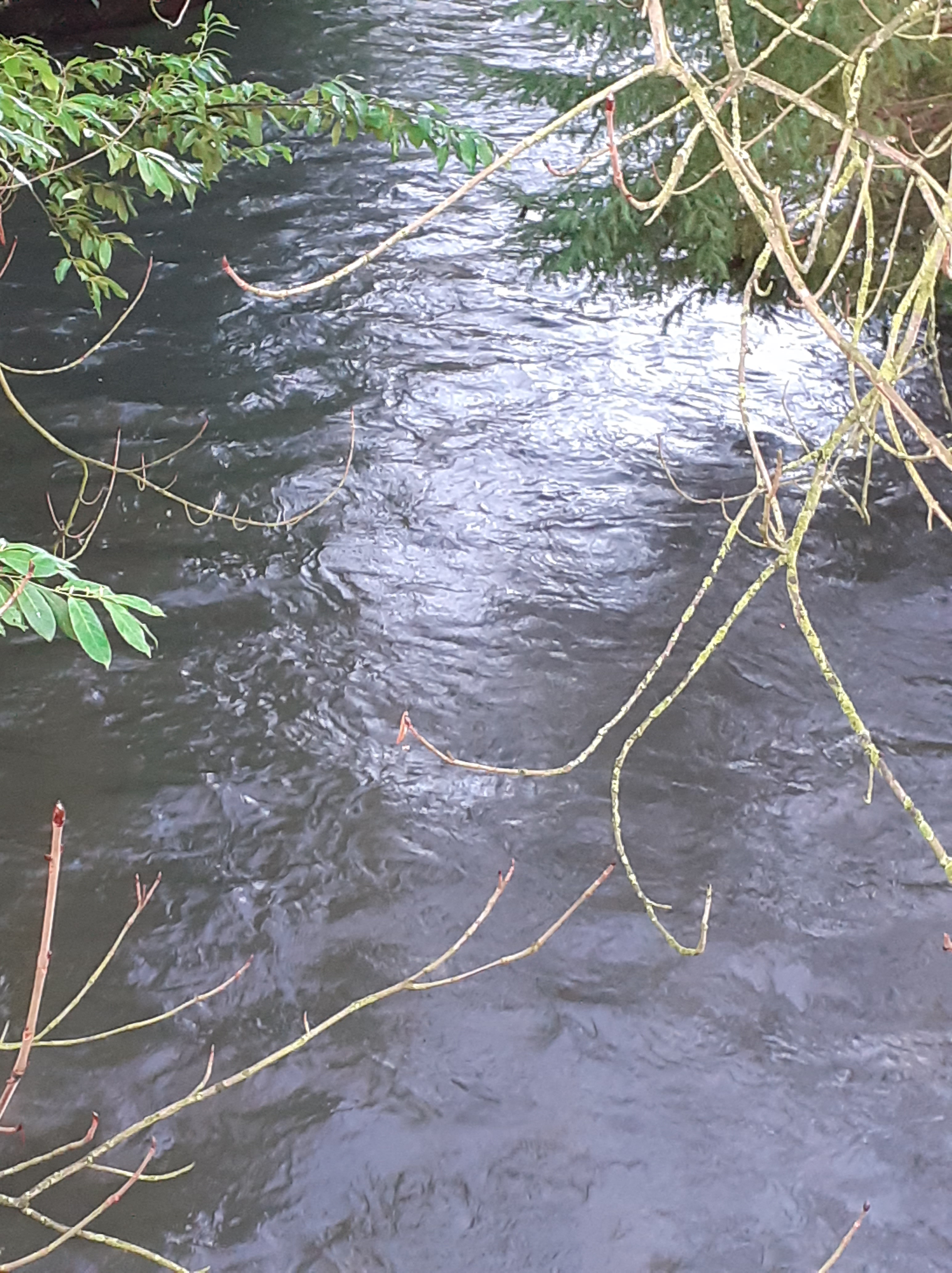
Yesterday, Thursday 18 February, was the first that felt like spring. The recent cold was gone. The rain that followed largely held off. I went out for a longer walk than for some time, and I felt a natural bubbling up of joy. It doesn’t take much, and I was able to open up to the renewing light and a sense of latent growth and possibility in the world around me. There are two months starting about now that have a sense of equinoctial wonder for me, with light and dark roughly in balance and a lot of change in the land. Yesterday felt like the beginning of this loved and valued time.

A good deal has been happening for me internally, which is influencing my spiritual practice and understanding in subtle but important ways. I will write about this in the weeks to come. But yesterday’s walk was a chance to be out in a woodland, as one being in the web of life connecting with others. Experiences like this are both simple and profound for me, and I feel grateful for the opportunity to have them.

THICH NHAT HANH ON LIVING BEINGS

In the extract below, Thich Nhat Hanh offers Buddhist thoughts, which seem to me to have considerable resonance for Druids, with their animist and earth-honouring perspective and their support for deep ecology.

“There is no absolute dividing line between animate and inanimate, between living matter and inert matter. In so-called inert matter there is life, and living beings are dependent on so-called inert matter. If we took the so-called inanimate elements out of you and me, we would not be able to live. We are made of non-human elements. This is what is taught in the Diamond Sutra, an ancient Buddhist text that could be considered the world’s first treatise on deep ecology. We cannot draw a hard distinction between human beings and other living beings, or between living beings and inert matter.

There is vitality in everything.

The entire cosmos is radiant with vitality.

“If we see the Earth as just a block of matter lying outside of us, then we have not yet truly seen the Earth. We need to be able to see that we are part of the Earth, and to see that the entire Earth is in us. The Earth is also alive; it has intelligence and creativity. … Looking with the eyes of non-discrimination, we can establish a very close relationship with the Earth. We look at the Earth with our heart and not with the eyes of cold reasoning. You are the planet, and the planet is you. The well-being of your body is not possible without the well-being of the planet. And that is why to protect the well-being of your body, we must protect the well-being of the planet. This is the insight of emptiness*.” (1)

  • To be empty, for Thich Nhat Hanh, is to be empty of a permanent, separate self. Hence ‘to be’ is to ‘inter-be’. He coined the word ‘inter-being’ to emphasise this point in his teaching.

(1) Thich Nhat Hanh The Art of Living London: Rider, 2017

Earth Eclectic

music that celebrates Earth and speaks to the heart

Sarah Fuhro Star-Flower Alchemy

Follow the Moon's Cycle

Muddy Feet

Meeting nature on nature's terms

Rosher.Net

A little bit of Mark Rosher in South Gloucestershire, England

Becoming Part of the Land

A monastic polytheist's and animist’s journal

selkiewife

Selkie Writing…

Charlotte Rodgers

Images and words set against a backdrop of outsider art.

Prof Jem Bendell

living with metacrisis and collapse

Towint

The pagan path. The Old Ways In New Times

The Druids Garden

Spiritual journeys in tending the living earth, permaculture, and nature-inspired arts

The Blog of Baphomet

a magickal dialogue between nature and culture

This Simple Life

The gentle art of living with less

Musings of a Scottish Hearth Druid and Heathen

Thoughts about living, loving and worshiping as an autistic Hearth Druid and Heathen. One woman's journey.

Wheel of the Year Blog

An place to read and share stories about the celtic seasonal festivals

Walking the Druid Path

Just another WordPress.com site

anima monday

Exploring our connection to the wider world

Grounded Space Focusing

Become more grounded and spacious with yourself and others, through your own body’s wisdom

The Earthbound Report

Good lives on our one planet

Hopeless Vendetta

News for the residents of Hopeless, Maine