Contemplative Inquiry

This blog is about contemplative inquiry

Tag: imagination

THE FEELING OF HOME

On completing a breath exercise I sometimes say, ‘I am the movements of the breath and stillness in the breath; living presence in a field of living presence in a more than human world: here, now, home’. This is both my most parsimonious and most spacious sense of home in a world where nothing lasts forever or stays the same. I find my ultimate feeling of home in simple breath and awareness.

Yet my body and feelings, my heart and my imagination cannot thrive on breath and awareness alone. I need love, loyalty and connection inside the turbulence and uncertainty of the world. For me, the risk of getting hurt is an acceptable price to pay.

Thinking simply of ‘home’ spaces, I have lived at my current address for two and a half years. Not long, but enough to establish familiarity and loyalty. The picture above was taken very close to the building I live in. Our estate has planted lavender and let the grasses grow wild. I have come to love this. Our public library building, opened in 1896, is in a  simplified and elegant form of 19th century Gothic in its last stage. I know it as a busy and widely loved place. I also know that it won’t be used for its present purpose much longer. Yet I continue to experience it as ‘home’.

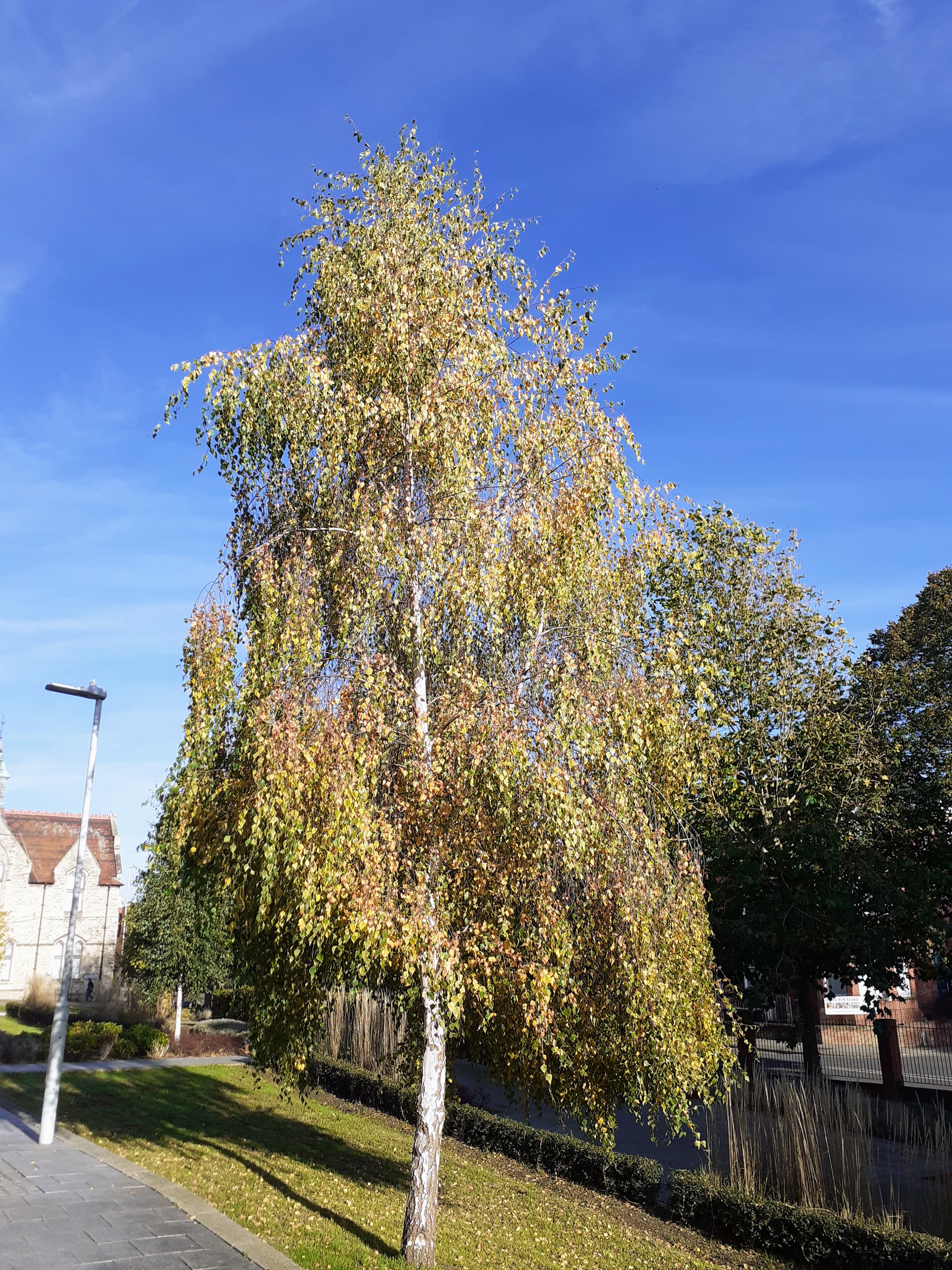
Earlier in the year, I wrote about a small group of birch trees growing up beside our flat. Then, they had a  bare  look apart from a few catkins (1). Now, in the picture below, they are in full leaf. I love the way they are now and also the way they have changed. Without impermanence and mutability nothing can happen. These very characteristics enable ‘living presence in a field of living presence in a more than human world’. They too are a necessary part of ‘home’.

(1) https://contemplativeinquiry.blog/2025/01/18/late-winter-regeneration/

THE MYTH OF THE JOURNEY AND THE MYTH OF THE NOW

I use the word ‘myth’ in a positive sense. Myth is a gift of imagination. It is a way of seeing beyond the limiting horizons of everyday life and culture. We can intuit a fuller, more spacious and generous reality, a reality with multiple dimensions. The specific myth of the journey, or quest, has had a powerful role in human history at both the personal and collective levels.

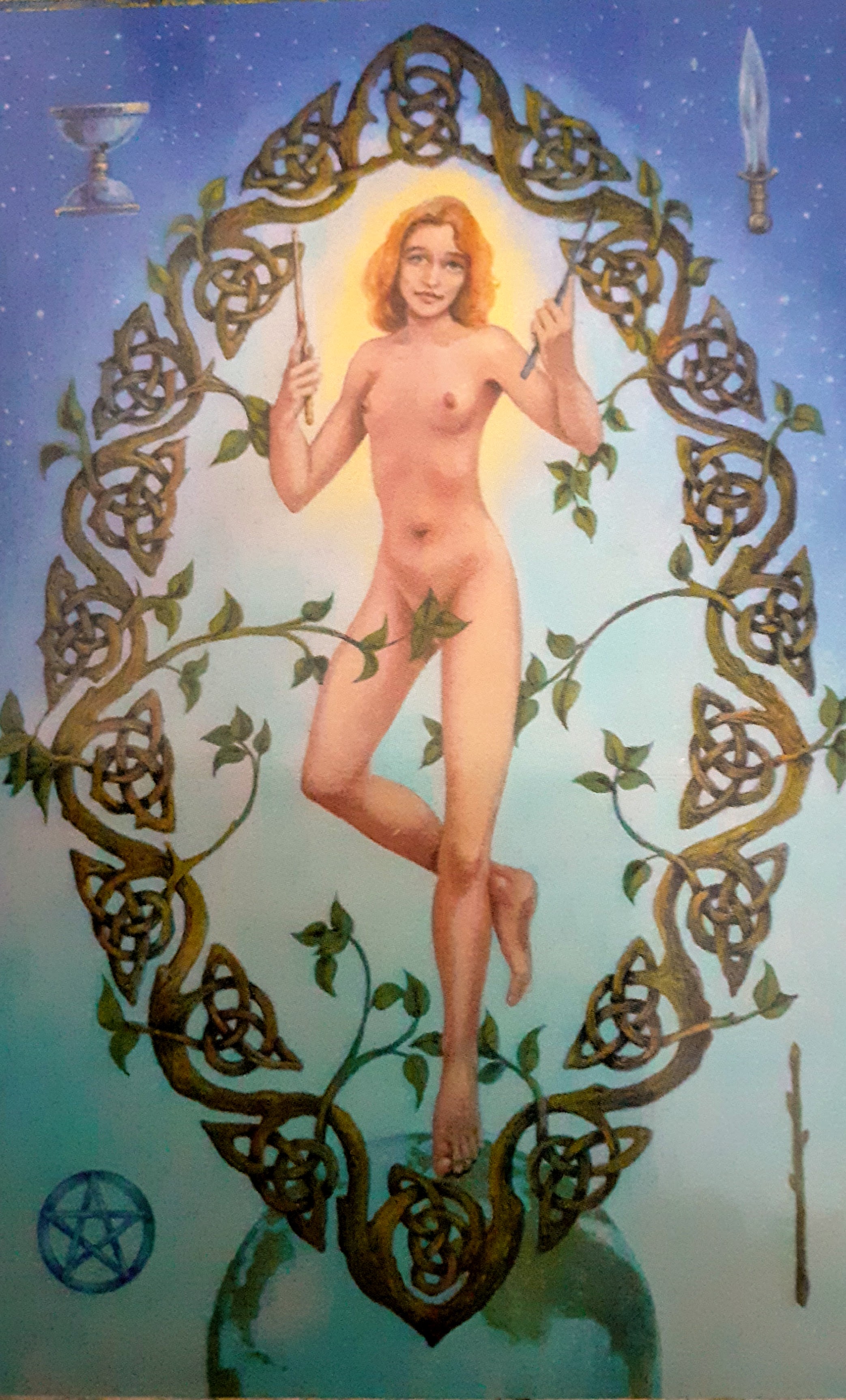
The picture above is the Fool, or innocent, as depicted the The Druidcraft Tarot (1). Trusting their inner knowing, the Fool steps over a cliff. It is a spring dawn, and a new beginning. The major Arcana are a map of the journey, which in essence, here, is seen as a refinement of the soul to the point where union with the divine is a lived experience. This experience is available here, in the world, and so the card indicating the completion of the journey (see picture below) is here called The World.

The mythology of the deck draws on the Welsh Celtic story of Taliesin and Ceridwen as well as the pan-European Arthurian grail quest, and broader Western Mysteries understandings derived from the Hermetic Order of the Golden Dawn. But any individual journey is its own new beginning and its fruits depend of making the journey in real time, and not clinging too tightly to traditional understandings.

In my own spiritual life, I have drawn both on the myth of the journey and another, apparently contradictory myth – that of the eternal moment, the transfigured here-and-now. Again, I find no disparagement in the word myth. This says that non-separation from the divine is a given. There is nowhere to go and nothing to do. Ultimately, there is no ontological difference in being awake to this reality than in being asleep to it. Yet lived experience is transformed by being awake to this reality and living from the awareness.

From a human perspective, coming to this awareness and then living it are, experientially, a journey in themselves. Another way of looking at it would be to say that I am the Fool and the Universe (my preferred term for the final card) at the same time, every day. In this way, I reconcile the myth of the journey with the myth of the now, and draw strength from both.

(1) Philip & Stephanie Carr-Gomm The Druidcraft Tarot: Using the Magic and Wicca and Druidry to Guide Your Life London, UK: Connections, 2004 (Illustrations by Will Worthington)

FAITH

In my Druid circle, I associate the northern quarter with faith. The quality and context of faith are not defined. They could simply mean faith in the practice and path. My contemplative inquiry overall has tended towards a stance of ‘sacred agnosticism’ (1), in which faith is not emphasised. This has served me in many ways. I have avoided mixing up the idea of ‘faith’ with affiliation to authoritarian movements, mandated beliefs, or the surrender of self-responsibility and personal discernment. I have been alert to the metaphysical group think and consensus collusion that can show up in any spiritual movement (other kinds of movement too). I have done my best to gather and evaluate information skilfully, when developing principles about how to live ethically and gracefully in an increasingly scary world.

And yet … this is not the whole story, or I would feel spiritually malnourished. In recent months I have experienced a strong felt sense of the divine. When I describe myself as ‘living presence in a field of living presence in a more than human world’ – an animist identification – the identification now seems more than animist, though the animism is still there. I pray more congruently to the Goddess as Ancient Mother and talk, less anthropomorphically, about the ‘bubbling source from which I spring’. The Divine is beyond name, form or description – and some people prefer a specialist, capitalised use of rather abstract terms like Consciousness, Awareness, Void, Ground of Being. But the ones from my own practice are the ones that work for me. They come from the intuitive heart and the imagination. To me they offer a deeper knowing, though I am personally cautious about the use of the word gnosis. For me, it can reduce the sense of mystery,  banishing the creative role of faith itself.

I have become a provisional panentheist, experiencing intimations of a divine which is everywhere and no-where, and from which we are not separate. This partly reprises work I did in the earlier days of my inquiry using the framework of non-duality. Now I find panentheism a better term than non-duality for affirming both the divine and the world. The earth spirituality in the Druid tradition is in no way compromised by a panentheist perspective. If anything it is enhanced.

(1) See https://contemplativeinquiry.blog/2024/02/16/sacred-agnos

THE IMAGE AND THE SONG

“I am the Mabon. I am the child.

I am YR, the Golden Bough.

I am the dart that the yew lets fly

Three pure rays, the pillars of life.

I am the wren, the King of Birds.

I am the Bard and the teller of lies.

I am a song within the heart.

I am the light that will never die.

I am stars within the Void.

I am the eye of the Aeon.” (1)

For more than a decade, my spiritual practice has been mobilised around a contemplative inquiry. For me, this has been successful in its own terms, but I’m conscious now of something missing. It’s as if, for earnest, intelligent and ethical reasons, I have whitewashed the walls in the church of me. Now I want my murals back. So, recently I have started a course correction.

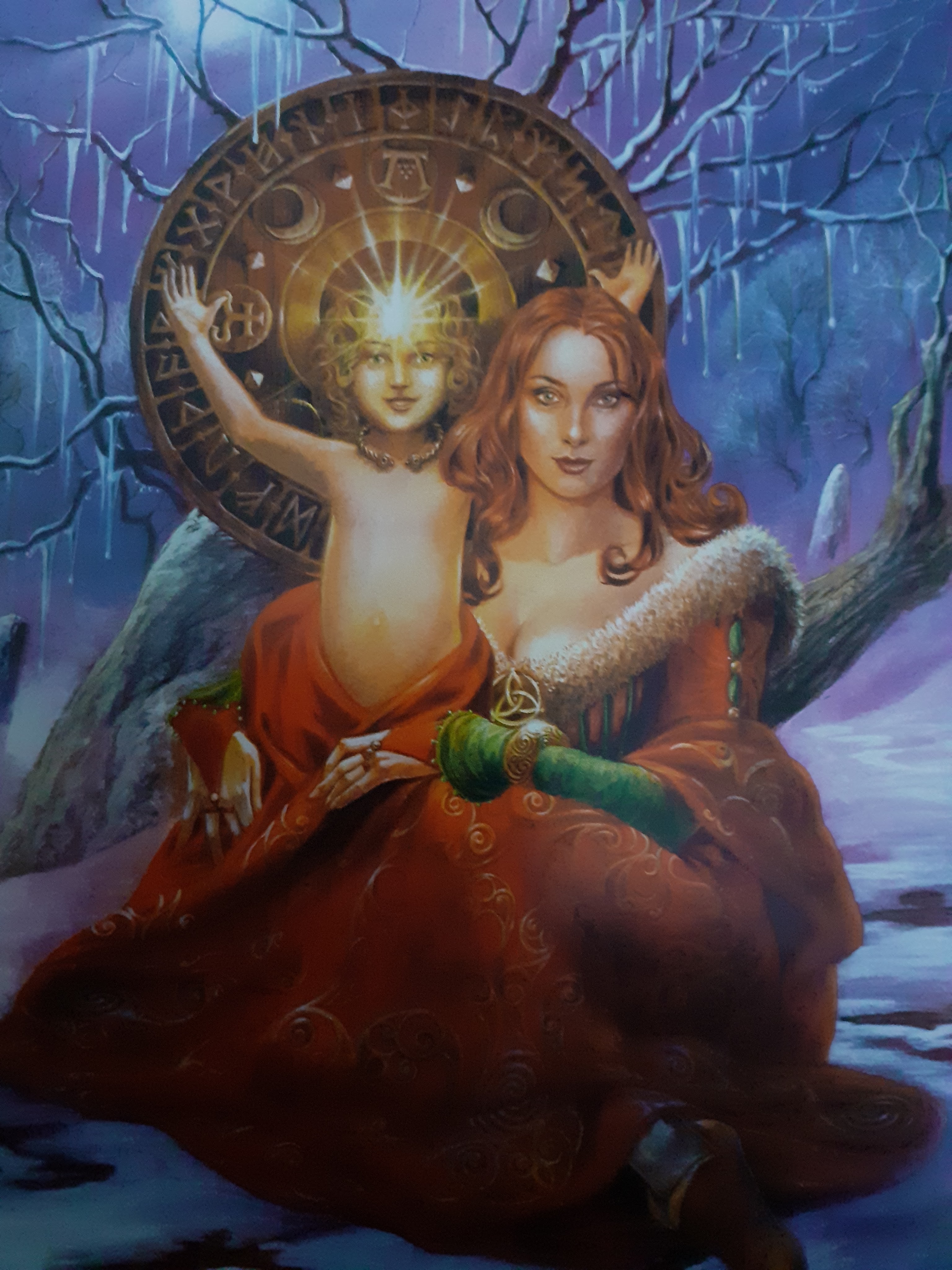
This course correction includes a glance back at my own pre-inquiry practices, happily well documented. The image of Modron and Mabon used to walk with me: Modron as the primal mother and Mabon as the primal child (2). They were archetypal figures, not everyday humans. My understanding was that these names were from a pre-Celtic language, retained in Brythonic speech. I am not sure if this is true, but for me it offered the possibility that even the surviving Celtic stories (3) were not the first. I was free to dream. In this dreaming I was powerfully influenced by the image at the top of this post (received as a midwinter holiday gift from my wife, then partner, Elaine, in 2007) and by the Silver on the Tree song that follows.

I see the child in the image as androgyne, and not in their earliest infancy. In the song, Mabon is not gendered. The mother in the picture is clearly the Goddess as Mother. Different stories can be drawn from this. In my own journey I tilt the child back somewhat to the masculine. In this pairing, She is Zoe, the life eternal. He is Bios, the life that comes and goes and comes again. Like Taliesin (4), transmuting out of his identity as Gwion, Mabon becomes in a sense his own father. So my midwinter picture appears to reference the Christmas story, but in important ways diverges from it. The image shows a magical midwinter child, who will indeed have an illuminating and transformational influence, but who is not exactly a redeemer in the Christian sense. This is drawn out in the Silver in the Tree song, which includes specifically Celtic references and extends beyond them.

Both Mother and Child live strongly within me, in the imaginal realm. I like and use the old language, Modron and Mabon, because of its sense of ancient mystery. But what it points to is universal. Part of my work now is to re-open my contact with them, who after another fashion I also am.

(1) Silver in the Tree in their 1991 album Eye of the Aeon

(2) NOTE: I am aware that there are divergent visions of Mabon. One centred the Autumn Equinox has become powerful and influential in recent years. Happily modern Druidry is not a religion of the Book though it is enriched by its books. This new literature follows the oral tradition practice of allowing stories to evolve and change in divergent directions. I see this as a strength.

(3) Caitlin Matthews Mabon and the Guardians of Celtic Britain: Hero Myths in the Mabinogion Rochester, VT: Inner Traditions, 2002 (Revised edition of Mabon and the Mysteries of Britain, 1987)

(4) If you visit Loch Maben in Dumfriesshire, in south west Scotland, you may find the feeling-tone similar to the much larger Lake Bala, strongly associated with Taliesin, in north Wales.

COUNTER CURRENTS IN A DECLINING YEAR

The November around me is grey and gloomy, though not especially cold. I notice this year that I am not entering the seasonal zeitgeist, not going with the flow of time as I normally do. Instead, I am marshalling my resources. I am pushing back. I am not all contemplative and I find myself more concerned with agency than with surrender to what is.

The Ace of Wands card in The Druidcraft Tarot (1) says, in the language of the mundus imaginalis (2): “Here the wand is offered to us from the heart of the sun – the source of creative fire, initiative and energy”. The card fell out of the pack when I believed I was looking for something else. I thought. ‘yes, I as an individual person am not dead. I am not ready to fade away into another realm or be dispersed into universe of interbeing. I’m here, now, home and not done yet. I have life, love and work yet to cherish and enjoy. I can still make things happen, should I so choose”.

I am inspired by my walks with my wife Elaine outside our flats as she relearns to walk with big new boots and a rollator. Such determination. The wand in the card is a birch wand, The wood is alive and leaves are falling from it. Elaine and I walk amongst at least two varieties of birch. One has finished shedding its leaves. The other hasn’t. For Druids, the birch is connected through the ogham alphabet with ideas of birth and new beginnings. Unseasonal or not, this is an energising place to be.

(1) Philip and Stephanie Carr-Gomm The Druidcraft Tarot: Use the Magic of Wicca and Druidry to Guide Your Life London: Connections, 2004 (Illustrated by Will Worthington)

(2) “Mundus Imaginalis or the Imaginal was a term coined by Henry Corbin, a friend and colleague of C. G. Jung. This concept captures the fundamental key to working with symbols and the creative imagination, allowing the psyche to move beyond the limiting constraints and one-sided attitude of the ego.” See; https://appliedjung.com/mundus-imaginalis/

(3) See; https://contemplativeinquiry.blog/2021/02/01/birch-new-beginnings/

BOOK REVIEW: ELEGANT SIMPLICITY

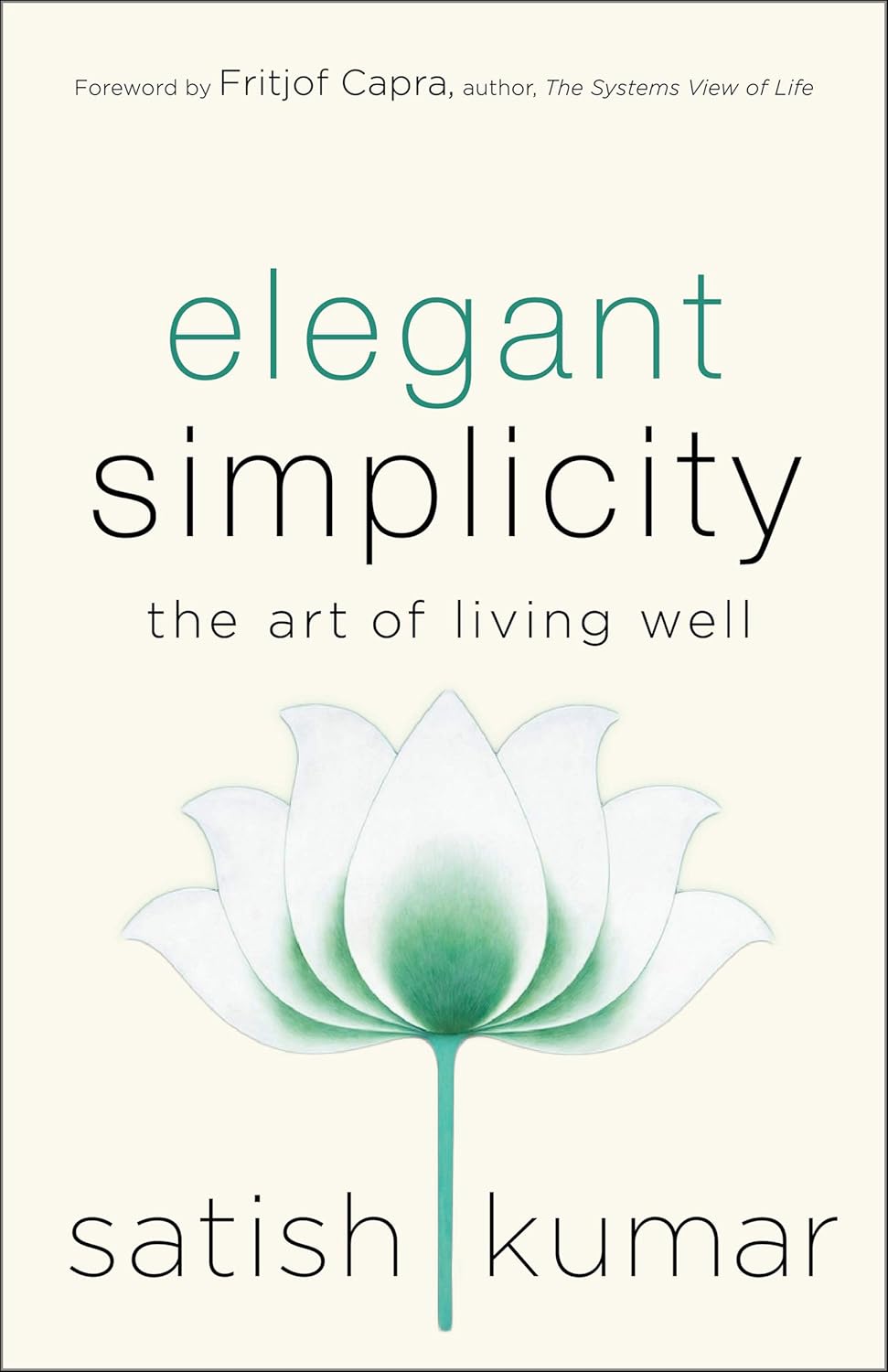
Highly recommended. Satish Kumar (born in 1936) published Elegant Simplicity: the Art of Living Well in 2019 (1). It begins with a foreword by Fritjof Capra and a preface by the author Let’s be Simple which quotes the 1848 Shaker song ‘Tis the gift to be simple, ‘Tis the gift to be free. The book summarises the author’s personal story as well as discussing his values. I have written posts based on some of his other work before (2). I especially recommend this book to anyone interested in knowing more about Satish Kumar’s practice (grounded in Jain spirituality and Gandhi’s non-violent activism) and his influence on deep ecology, creative arts and education.

Elegant Simplicity has a summarising quality, looking back on decades devoted to sacred activism in different forms. It is divided into fourteen chapters: Each is preceded by a brief and relevant quotation from another thinker. The chapter then becomes a meditation on the quote:

1 My Story: Beginnings – ‘True happiness lies in contentment’ Mahatma Gandhi.

2 Simplicity of Walking – ‘All truly great thoughts are conceived by walking’ Friedrich Nietzsche.

3 Life is a Pilgrimage – ‘Faith is not the clinging to a shrine but an endless pilgrimage of the heart’ Abraham Joshua Heschel.

4 Elegant Simplicity – ‘Any fool can make things complicated, it requires a genius to make them simple’ E. F. Schumacher.

5 A Society of Artists – ‘This world is but a canvas to our imagination’ Henry David Thoreau.

6 Yoga of Action – ‘Life is a process not a product’ Brian Goodwin.

7 Learning is Living – ‘Education is not preparation for life; education is life itself’ Thomas Dewey.

8 Right Relationships – ‘We are all related – relationships based on obligation lack dignity’ Wayne Dwyer.

9 Love Unlimited – ‘There is no charm equal to tenderness of the heart’ Jane Austin.

10 Power of Forgiveness – ‘It’s one of the greatest gifts you can give yourself, to forgive. Forgive everybody.’ Maya Angelou.

11 Dance of Opposites – ‘Life and death are one as the river and the sea are one’ Kahlil Gibran.

12 Deep Seeing – ‘To see clearly is poetry, prophecy, and religion, all in one’ John Ruskin.

13 Union of Science and Spirituality – ‘Science is not only compatible with spirituality; it is a profound source of spirituality’ Carl Sagan.

14 Soil, Soul and Society – ‘We live in an interconnected world and in an interconnected time so we need holistic solutions to our interconnected problems‘ Naomi Klein.

Fellow activist and author Vandana Shiva describes Elegant Simplicity as “the distillation” of Satish Kumar’s ideas and actions. “It shows the intimate connections between the inner and the outer world, soil, soul and society, beauty joy and non-violence. It indicates that the solutions to the big problems of our time – climate change, hate, violence, hopelessness and despair – lie in thinking and living with elegant simplicity, reducing our ecological footprint while enlarging our hearts and minds”.

For me, Satish Kumar is an inspiration rather than a direct model. Even in the conditions of the early 1960’s I would not have walked, or aspired to walk, from New Delhi to Washington DC without carrying any money. Yet Satish Kumar and his companion E. P. Menon succeeded and made a huge public impact at the time. Their peace pilgrimage gave oxygen to the campaign for nuclear disarmament. No state gave up its arms, but treaties limiting the numbers and testing of nuclear arms became normalised for some decades. Satish Kumar’s initiatives in deep ecology and education, especially the ‘small school’ and Schumacher College, have changed lives. Directly and indirectly, his influence has awakened many people from the dystopian trance of our dominant cultures. Satish Kumar is a widely revered elder: a peaceful warrior for a more liveable, generous and creative world.

(1) Satish Kumar Elegant Simplicity: The Art of Living Well New Society Publishers (https://www.newsociety.com): Gabriola Island, BC, Canada: 2019

(2) See previous posts:

NEWS OF A DEATH

TWO VIEWS OF THE DIVINE

OUTDOOR WALKING MEDITATION

NOTE: “Satish Kumar (born 9 August 1936)[1] is an Indian British activist and speaker. He has been a Jain monk, nuclear disarmament advocate and pacifist.[3]Now living in England, Kumar is founder and Director of Programmes of the Schumacher College international center for ecological studies, and is Editor Emeritus of Resurgence & Ecologist magazine. His most notable accomplishment is the completion, together with a companion, E. P. Menon, of a peace walk of over 8,000 miles in June 1962 for two and a half years, from New Delhi to MoscowParisLondon, and Washington, D.C., the capitals of the world’s earliest nuclear-armed countries.[4][5] He insists that reverence for nature should be at the heart of every political and social debate.” (Wikipedia)
WHAT’S MY NAME?

It is September. I am thinking about my Druid name Muin (blackberry). The plant is flourishing as it always does when given half a chance. But the fruits are less plentiful now and fairly small: thin pickings for the wayside walker. In the human world, we have largely moved on to the making of jam and wine from our existing harvest.

Today, I am thinking about my psychic and imaginal connection to Muin, and why I am standing by this name. For me, a Druid name is neither an alter ego nor a simple add-on to my other names. It is the name that calls me into my Druid identity and practice. In this context, I ask myself: as Muin, who am I? what do I stand for? who might I become? As I asked these questions in an imaginatively opened state, these lines came up. In a way, I believe, Muin is talking to James, whilst being an aspect of him (me) and anyone else who wants to listen.

Muin is my name.

I am blackberry:

bramble, fruit and wine.

I have deep roots

unseen by the outward eye.

I run riot underground.

I am an ogham letter,

Linked to ancient knowledge,

And bearer of underworld wisdom.

I am a guardian,

My barriers and boundaries

Snare the unwary.

Protecting great treasures

They sharply test

The unprepared.

Lucifer fell on me,

Hurled from high heaven.

Rough landing indeed.

But the heaven-referenced war

Of this light-bearer outcast

Is not my concern.

I am fruit of the fair folk,

Crushed for your drink,

As an offering to you:

A gateway to Seership

If you dare accept me

At the right time.

I am blackberry:

bramble, fruit and wine.

Muin is my name.

‘CONCRETE SCIENCE’ IN NEOLITHIC CULTURES

Extract from The Dawn of Everything: A New History of Humanity by David Graeber and David Wengrow (1), exploring the notion of ‘concrete science’. The idea comes from the anthropologist Claude Levi-Strauss, who is quoted as saying that “there are two distinct modes of scientific thought … two strategic levels at which nature is accessible to scientific enquiry: one roughly adapted to that of perception and imagination: the other at a remove from it”. ‘Concrete science’ is the first. The specific focus, in this part of the book, is on the development of Early Neolithic societies in lowland parts of the Fertile Crescent, especially along the valleys of the Jordan and Euphrates rivers.

Graeber and Wengrow write: “It’s important to recall that most of humanity’s greatest scientific discoveries – the invention of farming, pottery, weaving, metallurgy, systems of maritime navigation, monumental architecture, the classification and indeed domestication of plants and animals. and so on” come out of ‘concrete science’. But what does such a science actually look like, in the archaeological record? “The answer lies precisely in its ‘concreteness’. Invention in one domain finds echoes and analogies across a whole range of others, which might otherwise seem completely unrelated”.

“We can see this clearly in early Neolithic cereal cultivation. Recall that flood-retreat farming required people to establish durable settlements in mud-based environments, like swamps and lake margins. Doing so meant becoming intimate with the properties of soils and clays, carefully observing their fertility under different conditions, but also experimenting with them as tectonic materials, or even as vehicles of abstract thought. As well as supporting new forms of cultivation, soil and clay – mixed with wheat and chaff – became basic materials of construction: essential in building the first permanent houses; used to make ovens, furniture and insulation – almost everything, in fact, except pottery, a later invention in this part of the world.

“But clay was also used, in the same times and places, to (literally) model relationships of utterly different kinds, between men and women, people and animals. People started using its plastic qualities to figure out mental problems, making small geometric tokens that many see as direct precursors to later systems of mathematical notation. Archaeologists find these tiny numerical devices in direct association with figurines of herd animals and full-bodied women: the kind of miniatures that stimulate so much speculation about Neolithic spirituality, and which find later echoes in myths about the demiurgic, life-giving properties of clay. As we’ll soon see, earth and clay even come to redefine relationships between the living and the dead.

“Seen this way, the ‘origins of farming’ start to look less like and economic transition and more like a media revolution, which was also a social revolution, encompassing everything from horticulture to architecture, mathematics to thermodynamics, and from religion to the remodelling of gender roles. And while we can’t know who exactly was doing what in this brave new world, it’s abundantly clear that women’s work and knowledge were central to its creation; that the whole process was a fairly leisurely, even playful one, not forced by any environmental catastrophe or demographic tipping point and unmarked by major violent conflict. What’s more, it was all carried out in ways that made radical inequality an extremely unlikely outcome”.

(1) David Graeber and David Wengrow The Dawn of Everything: A New History of Humanity Penguin Books, 2022 (First published in Great Britain by Allen Lane in 2021)

NOTE ABOUT THE AUTHORS David Graeber was a professor of anthropology at the London School of Economics. He is the author of Debt: The First 5,000 Years. As an activist, he also helped to make Occupy Wall Street (2011) an era-defining moment. He died on 2 September 2020. David Wengrow is a professor of comparative archaeology at University College London. He conducts fieldwork in Africa and the Middle East and is the author of What Makes Civilisation? Following David Graeber’s death shortly after the text of The Dawn of Everything was completed, David Wengrow has overseen its publication.

LETTING GO OF MAY 2023

Where I live, the hawthorn is losing its blossom. It looks like a kind of death, but is in fact just another phase in the life cycle of this plant. Its goal is to bear fruit. For many years, as part of my regular Druid practice, I worked with a wheel of the year mandala involving sixteen plants (mostly trees, many of these being ogham trees (1,2). Hawthorn covered the period from 1-23 May. In a previous post I have also looked at the special case of the Glastonbury thorn, with which I felt a strong personal relationship before it was vandalised (3).

In his The Underworld Initiation (4), R. J. Stewart suggests that we see all members of the rose family as sharing the same symbolism – showing in nature a sequence of promise, pain and fulfilment: blossom, thorn and fruit. (For me it seems that the apparent dying back to bear fruit is the ‘pain’, if that’s the right word, rather than the slightly extraneous thorns. Maybe that’s too literal, or maybe I’m identifying too much with the plant as subject).

I notice that my own tree mandala, developing from a kind of dream time, includes three members of the family: blackthorn (8-30 April), hawthorn (1-23 May) and apple (1-23 August). Indeed my original version had the wild rose for midsummer (16 June – 8 July), before I replaced it with the more conventional oak. Yet in my heart’s imagination, the rose is my solarised midsummer and midday plant. More widely, this plant family, both naturally and imaginally, has been vividly important to me over the years.

R. J. Stewart was inspired by Scottish Border ballads, especially Thomas the Rhymer and Tam Lin. I like what he says about working with traditional sources. “One of the most damaging attacks that can be made upon a tradition is to ‘restore’ it, or to ‘prove’ an original model … restoration implies the withdrawal of the vivifying spirit into another world, leaving only a shadow behind … such a restoration can only be made within ourselves, by bringing our imaginations alive with the traditional symbols” and developing them in the way our inspiration prompts. Here and now, I can begin to let go of May 2023, and allow the peak of the light time to come in. The rose family is still there, as companion and teacher.

(1) https://contemplativeinquiry.blog/2020/09/20/autumn-equinox-2020-hazel-salmon-awen/ (A note at the end of the post explains the whole mandala)

(2) https://contemplativeinquiry.blog/2020/08/12/meditation-wisdoms-house (Explains the contemplative context of my tree mandala work)

(3) https://contemplativeinquiry.blog/2021/04/23/remembering-the-glastonbury-thorn/

(4) R. J. Stewart The Underworld Initiation: A Journey Towards Psychic Transformation Wellingborough: The Aquarian Press, 1985

IMAGINATION, ANIMATION, LIBERATION

Looking at the nymph statue above, I am reminded of The Lion, the Witch and The Wardrobe. There, the nymph would be one of Narnia’s magical beings, frozen in place as a statue. A malign ruler (for Lewis the witch) is at war with the free abundance of being with which Narnia has been blessed. Liberation, and reanimation, comes only at the end of a hard struggle.

I re-read The Chronicles of Narnia recently, and appreciate the series well enough to look beyond Lewis’ gratingly conservative and patriarchal theology. I like his use of imagination as a force that can bring us spiritually alive. In the sixth chronicle, The Silver Chair, a group of beings is held in a deep underworld realm with no access to the Narnian surface. Here, there is not even a limited or distorted opening to the light. The abundance of Narnia is not simply rejected and fought against. Instead, we find total denial of its existence. Here, there is a seemingly complete lack of access to enabling experiences and understandings. Moreover, this state of affairs is backed up by an active entrancement and policing of the subject population.

There is resistance all the same. Some of the denizens of this realm have been in Narnia, though they have been induced to forget it. Puddleglum, once a lugubrious marsh dweller in the upper world, finds courage and a voice even in this wretchedly dystopian place, infusing it with the promise of life even as he speaks: “Suppose we have only dreamed, or made up, all those things – trees and grass and sun and moon and stars and Aslan himself. Suppose we have. then all I can say is that, in that case, the made-up things seems a good deal more important than the real ones. Suppose this black pit of a kingdom of yours is the only world. Well, it strikes me as a pretty poor one. And that’s a funny thing, when you come to think of it. We’re just babies making up a game, it you’re right. But four babies playing a game can make a play-world which licks your real world hollow. That’s why I’m going to stand by the play-world. I’m on Aslan’s side even if there isn’t any Aslan to lead it. I’m going to live like as like a Narnian as I can even if there isn’t any Narnia. …. We’re leaving your court at once and setting out in the dark to spend our lives looking for the Overland. Not that our lives will be very long, I should think,; but that’s a small loss if the world’s as dull a place as you say” (1).

In such unpromising conditions, a quest is born.

(1) C. S Lewis The Silver Chair: Geoffrey Bles, 1953 (Chronicles of Narnia, Vol 6)

Earth Eclectic

music that celebrates Earth and speaks to the heart

Sarah Fuhro Star-Flower Alchemy

Follow the Moon's Cycle

Muddy Feet

Meeting nature on nature's terms

Rosher.Net

A little bit of Mark Rosher in South Gloucestershire, England

Becoming Part of the Land

A monastic polytheist's and animist’s journal

selkiewife

Selkie Writing…

Charlotte Rodgers

Images and words set against a backdrop of outsider art.

Prof Jem Bendell

living with metacrisis and collapse

Towint

The pagan path. The Old Ways In New Times

The Druids Garden

Spiritual journeys in tending the living earth, permaculture, and nature-inspired arts

The Blog of Baphomet

a magickal dialogue between nature and culture

This Simple Life

The gentle art of living with less

Musings of a Scottish Hearth Druid and Heathen

Thoughts about living, loving and worshiping as an autistic Hearth Druid and Heathen. One woman's journey.

Wheel of the Year Blog

An place to read and share stories about the celtic seasonal festivals

Walking the Druid Path

Just another WordPress.com site

anima monday

Exploring our connection to the wider world

Grounded Space Focusing

Become more grounded and spacious with yourself and others, through your own body’s wisdom

The Earthbound Report

Good lives on our one planet

Hopeless Vendetta

News for the residents of Hopeless, Maine