“Half-way between the certainty of science on one hand, and the supernatural on the other, is mystery …. Mystery is central to enchanted experience because enchantment is not a rational process of recognition, categorization, knowledge, facts or rationalizations. It is, instead, a pure experience of sensing and being.” (1)
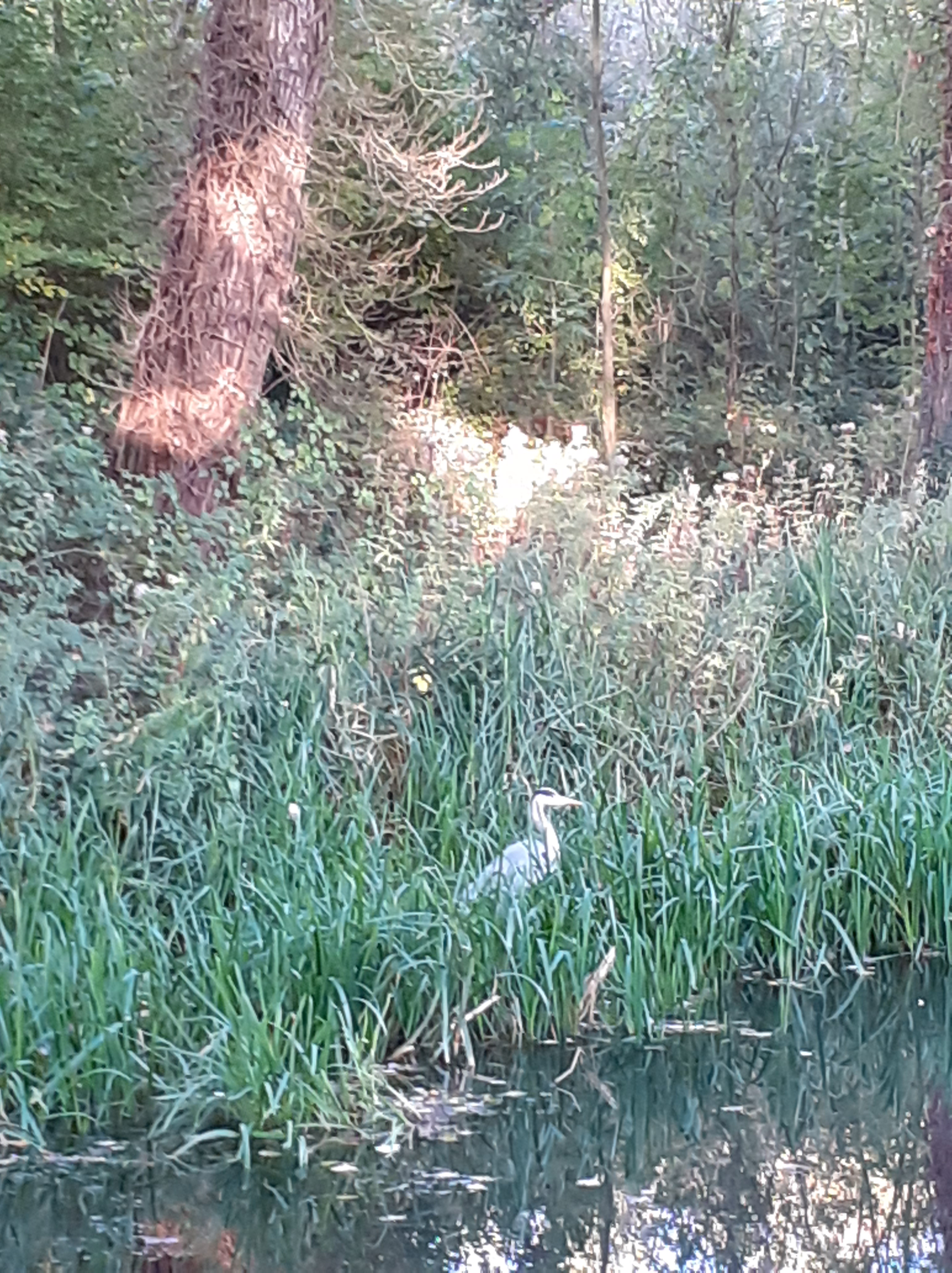
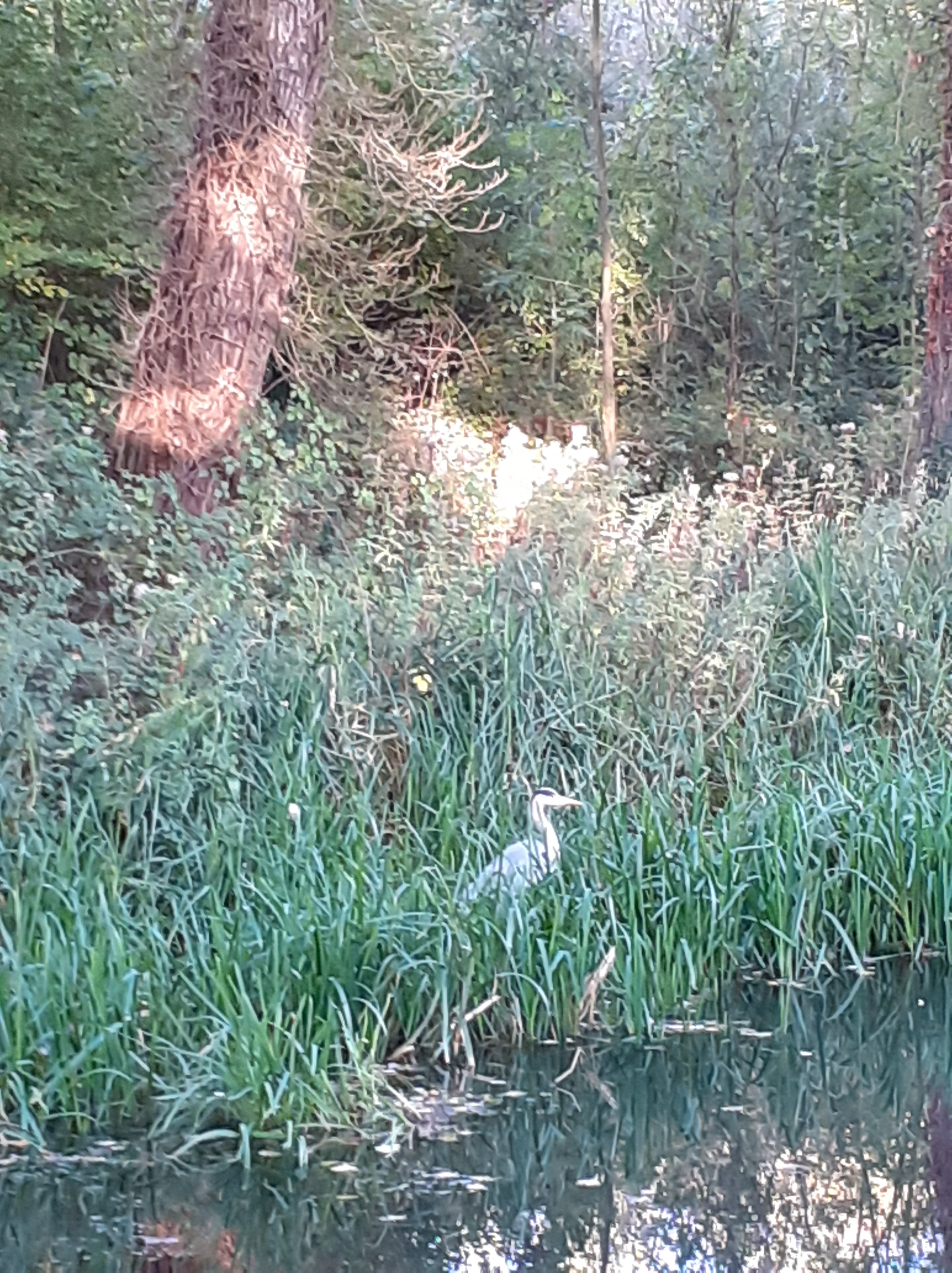
I saw the heron on 11 October 2020, in the first year of the pandemic and just a little after dawn. I had been walking for about forty minutes, beginning in near darkness and experiencing the gradual coming of the light. I described this walk at the time as an “enchanted meander” at a liminal point in that day (2).
My encounter with the heron was unexpected and I responded with “delighted surprise”. Four years later, reflecting on the memory, I note that I was able to experience delighted surprise from within stillness. In that moment I was a still human sharing space with a still heron on a still early morning. So the heron stayed in place, not needing to fly away. Beyond that there was no communing, but this was somehow blessing enough. Stillness of this kind, in contact with our more than human world, allows space for an enhanced bandwidth of experience. It is, perhaps, an opening to what Arran Stibbe calls “mystery”.
On that morning, my enhanced experience was partly displaced into the taking of a picture and also the wider purpose of my walk. That’s fine, a good enough choice. But I wonder what would have happened if I, like the heron, had stayed in place.
(1) Arran Stibbe Econarrative: Ethics, Ecology and the Search for New Narratives to Live By London: Bloomsbury Academic, 2024
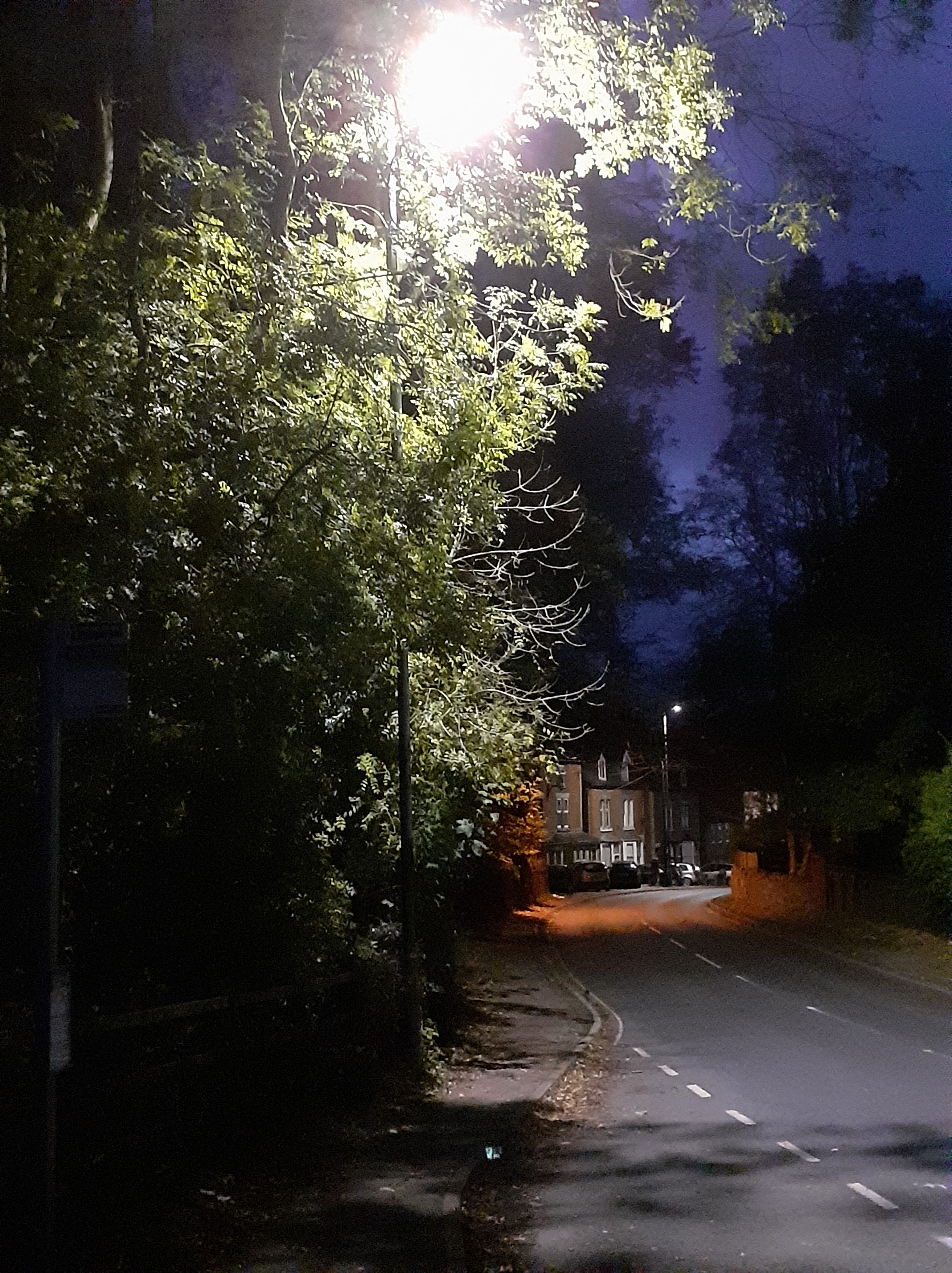
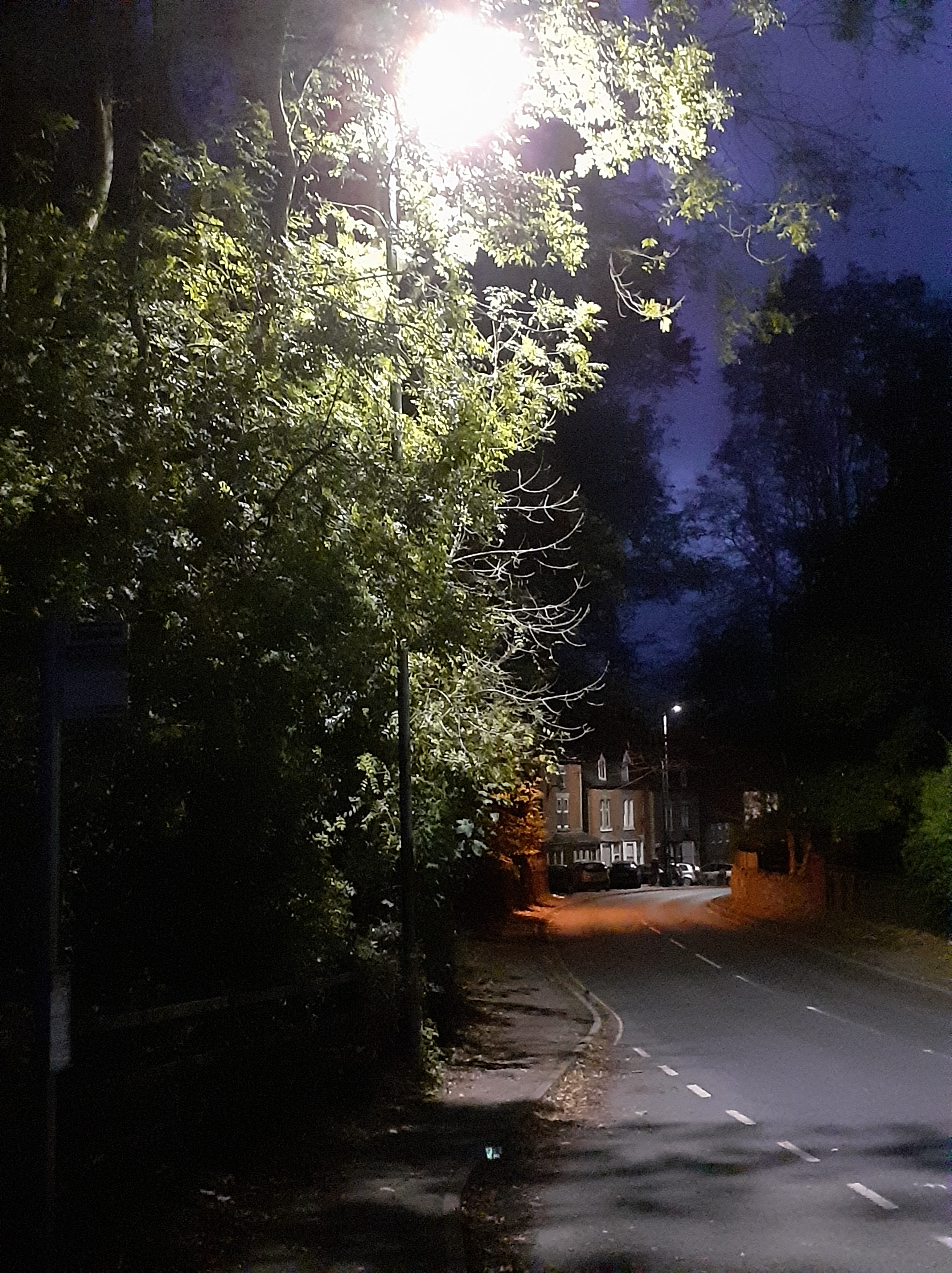
Sunday, 11 October, 6.40 am. My plan is to walk towards the dawn of a new day, but I take time to stop and photograph this liminal moment. It is still, on this normally busy road. It makes me almost nostalgic for the early days of lockdown in the spring.
In this moment, there are no cars and no other people. I am fine with the artificial light. I like the contrast of the street lights (bright and focused) with the softer light in the sky, dim yet with a promise of expansiveness. I enjoy the shadows and the presence, too, of outright darkness at this stage of my walk.
It takes me twenty minutes of enchanted meander to reach my next point, pictured above. The scene is inherently more spacious. Water and sky are prominent. It takes notable artefacts to make their presence felt. The main theme of the picture, as I look in a generally eastern direction, is the coming of the light. Clouds do not obscure it. The buildings have become more than silhouettes. There are the beginnings of colour and the detail it brings. I judge it OK to walk on the canal path itself, just visible on my right.
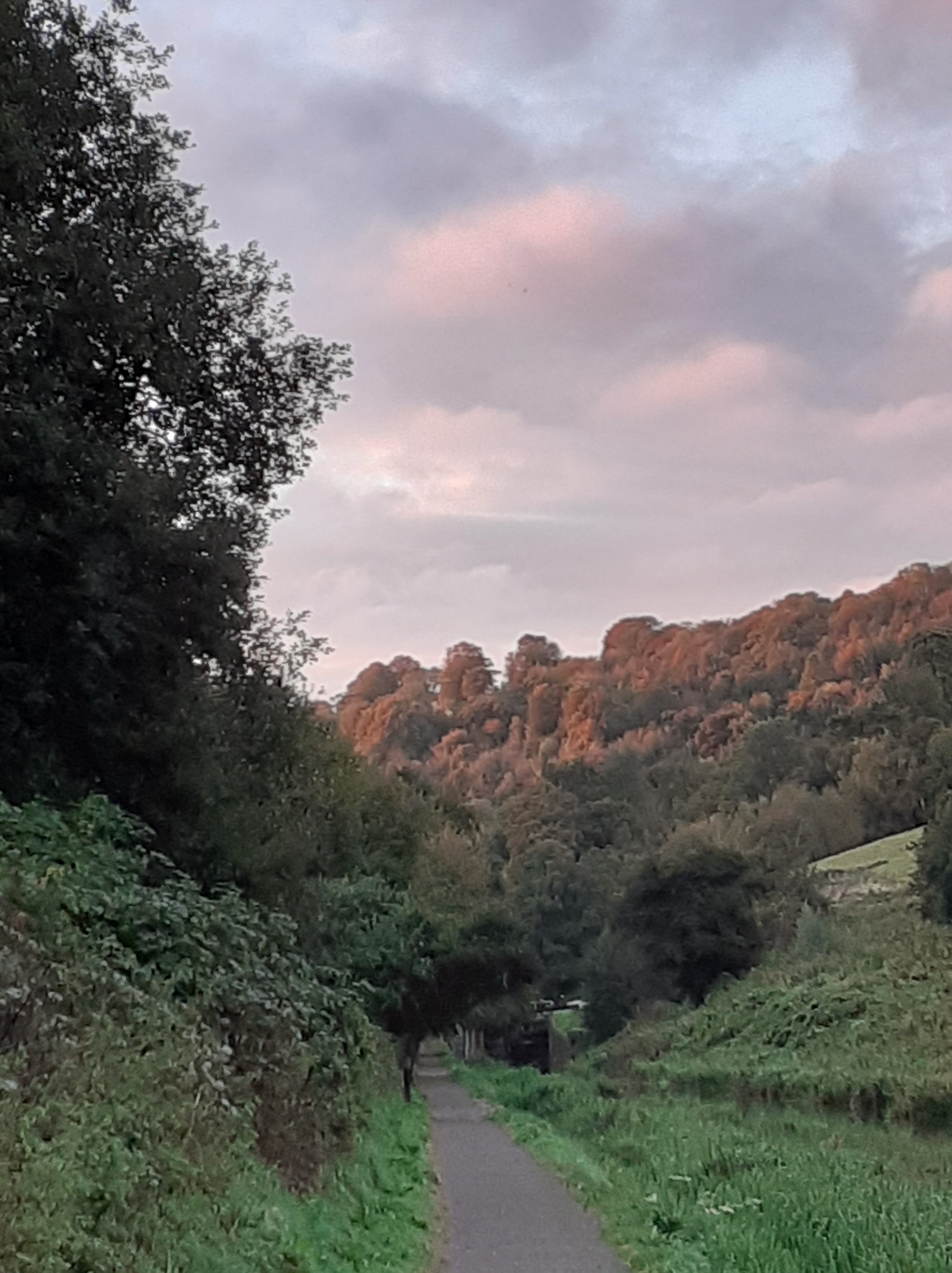
Another twenty minutes and the light seems to predominate, though I am not yet in full daylight. I am on the canal path. Even though the surroundings of the towpath are lushly green, the world I stand in is a little dusky, or dawny if there were such a word. Crepuscular. Looking up, I see pinkness in the sky, white clouds, hints of blue. I feel heartened and strangely moved by the effects of light on the autumn trees. They give me a warm sense of walking towards the sunrise, and encourage me to move on.
The picture immediately above is not part of my plan. It stems from delighted surprise followed by purposeful calm. Knowing about the heron in advance, I would likely have botched my picture in an anxious, clumsy effort to put the bird on record. I always have before. I think that herons fly away from me out of disdain rather than fear. This time I am a quiet human in a quiet world. I stand still for awhile and am almost elegant in my use of the phone. I wait for an intuited ‘right time’ before pressing the button. There is no drama at all. I do not know if the heron even notices me. The whole incident feels like a blessing of the still early morning.
Now, further on in my walk, the sun is on its ascent through the sky and I can picture it indirectly. The contrast between the sun kissed light areas and the shady ones is strong and vivid. I notice that, as the fading trees accept that their season is over, the ‘parasitic’ mistletoe – even the Druid Plant Oracle (1) calls it that – is gleefully green.
Now I am on my way back home. What draws my attention, after a little exploration, is the white owl. To me it looks very present and collected, situated just where it wants to be. It seems also to be acting as gatekeeper for its own arch.
I make stream of consciousness connections. I began my walk on the Bath Road. Bath is less than 30 miles away. There, the Romans turned a Celtic shrine into a city and called it Aquae Sulis (see http://www.romanbaths.co.uk/), acknowledging Sulis the Celtic goddess of the shrine. She was concerned with its waters and their healing potential whilst doubling up as a solar deity as well. The Romans called her Sulis Minerva, and that links her with owl wisdom. The white owl has a rich hinterland of associations for me. It makes the encounter significant. I note that two resonant avian images have met me on this walk into the sunrise, offering avenues for further contemplation.
(1) Philip & Stephanie Carr-Gomm The Druid Plant Oracle: Working with the Magical Flora of the Druid Tradition London: Connections, 2007. Illustrated by Will Worthington.





 Contemplative Inquiry