Contemplative Inquiry

This blog is about contemplative inquiry

Tag: Greek Paganism

“DULL, DREAMY, MOON-STRUCK”

Contemplative states come in different varieties. In today’s culture, we tend to privilege an alert language of mindfulness, presence and awakening. Through these tools, we learn take more responsibility for our own experience – not so much for what happens (though our effective agency may improve), as in how we respond. At a deeper level, we learn to embrace the gift of experiencing, even when specific experiences are unwanted or painful. We lean in to the at times heart-breaking miracle of human life.

There are other, also potent, ways to contemplate. In the following extract from his magical realist novel Atlantis (1) John Cowper Powys presents an archaic, more than human world, with a very different take on consciousness and our place in the cosmos. We are on the island of Ithaca, in the later life of its King Odysseus, following his belated return from the siege of Troy and resumption of control at home. We begin in a moment of great collective foreboding – something terrible is happening or about to happen. This is coincident with the old king planning a final voyage. In this place and time, a young boy encounters Atropos, oldest and most powerful of the three Fates. He intuitively grasps that sentient beings help to weave their own destiny simply by falling into states “wherein we simply escape for a moment from the trouble of being a conscious creature at all”.

“The longer Nisos Naubolides looked into the eyes of Fate and the longer Fate looked into the eyes of Nisos Naubilides the more clearly did the later realize that the imperishable frame of Atropos, the ‘one who could not be turned’, was made of a substance drawn from a level of existence outside both time and space, though cunningly adapted to play its part in each of them.

“The boy proved how ‘clever’ he was by imbibing, like an inexhaustible draught of timeless experience, much more at that moment than the mere physical nature of the oldest of the Fates; for there came over him in a trance that was more than a trance the surprising knowledge – and this … was really with him to the day of his death – that Atropos helps us in the creation of our individual fate by an infinitely long series of what some would call nothing but blind, stupid, dull dreamy, moon-struck ‘brown studies’, many of which take place inside the walls of houses, and others when we are moving about on our ordinary errands outside.

“In these interruptions of our ordinary consciousness we fall into a brainless, idea-less moment of dull abstraction in which we cease to think of anything in particular but just stare blindly and dully at some particular physical object, no matter what, that happens to be there at the moment. This object, in itself of no particular interest, and never selected for its real purpose is merely an object to stare at, lean upon, rest against and use as a trance=background, or brown-study foreground, or, if you like, a shoal beneath a stranded consciousness, or a reef of brainless abstraction, wherein we simply escape for a moment from the trouble of being a conscious creature at all.

“Nisos showed how born he was to be an interpreter if not a prophet by his complete acceptance – as from the trunk of his spruce-fir he faced the Mistress of Fate as she leaned against the trunk of her spruce-fir – of the revelation that our individual destiny is made up of an accumulation of brainless, uninspired brown-study moments of abstraction wherein we cease to be organic living creatures and almost become … things of wood and stone and clay and dust and earth, almost become what we were before we were intelligent of instinctive creatures: almost – but not quite!

“For, as our young friend looked Atropos in the face, there was permitted to him what is permitted to few among us mortals during our lifetime, namely the realization of what actually happens to us when we fall, as we all do, into these day-dreams. At that moment as Nisos Naubolides now knew well, all over the surface of the earth there were living creatures, many of them men, women and children, many of them horses, cattle, lions, wolves, foxes, wild asses and tame pigs, sheep and goats, rats and mice, who were standing or crouching, lying or sitting in one of these brooding trances when dazed or dreaming, we are asleep and yet not asleep.”

(1) John Cowper Powys Atlantis London: Faber & Faber, 2011 ebook edition.

NOTE: John Cowper Powys (1872-1963) grew up mainly in the English West Country, went to Cambridge University and then became a teacher and lecturer, mostly in the USA where he lived for about 30 years. On returning to the UK, after a short spell in Dorset, he settled in Wales in 1935 where he lived for the rest of his life. His best known works are Wolf Solent, A Glastonbury Romance, Maiden Castle, Weymouth Sands, Owen Glendower, Porius and his Autobiography. His literary editors describe him as having a “weird, mystical, brilliant and obsessive imagination.”

See also:

JOHN COWPER POWYS: PORIUS AND TALIESIN

THE BLESSINGS OF TIME

BOOK REVIEW: STAFF OF LAUREL, STAFF OF ASH

“If our place is imperilled, so are our myths. If we heal the one, we heal the other … So said priestesses who long ago spoke in the voice of doves. So said the prophetic oaks they tended, who murmured to their suppliants through wind blown leaves.”(1)

Staff of Laurel, Staff of Ash: Sacred Landscapes in Ancient Nature Myth is an inspirational collection of interwoven contemplations on landscape and myth; on enchantment, disenchantment and re-enchantment. I strongly recommend it to anyone with an interest in these themes.

Author Dianna Rhyan says of her own approach to writing: “assembled, these pages refused to assemble, and so altogether, they form a series of sketches, fallen like samaras*, whose order is ultimately undetermined. The priestess of Apollo wrote her prophecies on leaves. When strong winds came, they scattered all over her cave. Did she mind? Amidst the leaves, voices of winds and voices of trees, lost and found, thread their way.” This review shares something of the book’s flavour, rather than attempting a linear account of what is covers.

Rhyan draws strength from wild and marginal spaces, especially the Cuyahoga River in north eastern Ohio. She describes her close relationship with the land but is all too aware of a sadness in its silence. The genocidal displacement of the people who once lived there has erased their stories about this land and their relationship with it. As a mythologist, she looks further afield for inspiration, especially ancient Mesopotamia (now Iraq) and the early Greek speaking world. Even four thousand years ago, in the early Sumerian world, people had doubts about ‘civilisation’. We find the contrasting influences of the laurel, which blooms, and the ash, “a battle-earned artifact”.

In the Epic of Gilgamesh (2) the hero destroys a forest and its guardian at an early stage of his “futile immortality quest” and then goes out of his way to offend the Mother Goddess Inanna. In The Descent of Inanna, she herself must experience death, losing her identity and powers as she descends through seven gates to the Underworld controlled by her sister Ereshkigal. Asking, at each gate, ‘Gatekeeper, why is this done?’, she receives the reply ‘Silence, Inanna. Do not open your mouth against custom. The rules of the Great Below are flawless. You may not question what is perfect.’ Rhyan’s reading of this ritualised and repeated reply finds a new order in which free nature, and the Goddess perceived as its embodiment, need to be rigorously controlled. She comments on the way in which perfection “deadens” and rules “disarm”. For three days Inanna hangs dead, a carcass on a hook. But the upper world needs Inanna in order to reproduce itself and flourish. The Wisdom God Enki sends emissaries to Ershkigal to secure Inanna’s release. She does not stay dead.

Rhyan also draws on Greek sources from different periods. One of them, from Sophocles’ last play, Oedipus at Colonus, is about the final days of Oedipus, after he has blinded himself and been been exiled from his erstwhile kingdom of Thebes. These misfortunes follow the discovery that he has (unwittingly) killed his father, married his mother and thereby, as a source of pollution, caused a plague in the city. He is told: “seek no more to master anything”.

Oedipus is now a pauper, wandering in a wasteland. Letting go of his civic and social identities and surrendering to this fate, he survives. He is reborn as a child of nature on the goddess haunted mountain Cithaeron. For his awakened inner vision has guided him to the place where he was once, as an infant, left out to die. The compassionate nymphs who nursed him then are perhaps looking out for him once more. He has journeyed from palace to periphery, freed from all power and self-determination. At that point, he is given a new role, as guardian of the sacred grove at Colonus. It is a place beloved by immortals, a place of lush growth, where the nightingale sings, and with “cool waters” that never fail. Here, as this new version of himself, he will live out his days.

Late on in her book, Dianna Rhyan says: “if we look over our shoulder, not only what we threw away as detritus is following us. What we had despaired we had lost forever, long ago in the depths of ancient ages, is following us too. We require myth, intensely alive myth, to see it. It is very good at not being seen.” I see her as making a great contribution to making ‘intensely alive myth’ visible once more.

(1) Dianna Rhyan Staff of Laurel, Staff of Ash: Sacred Landscapes in Ancient Nature Myth Winchester, UK & Washington, USA: Moon Books, 2023

(2) https://contemplativeinquiry.blog/2023/05/30/

*Samaras: here, the winged maple seeds found in the author’s local woodlands.

WOODCHESTER GRAVEYARD REVISITED

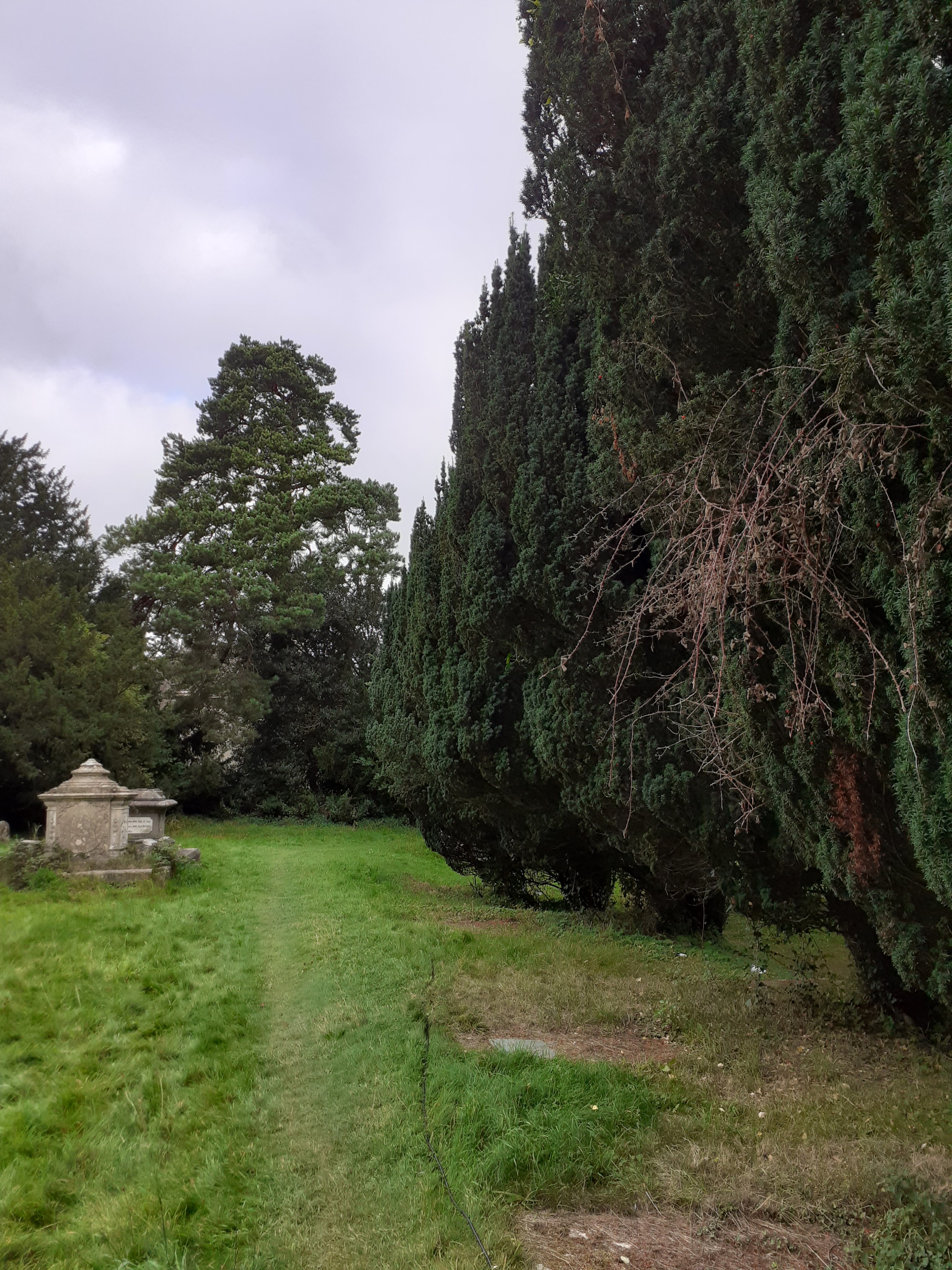
This is North Woodchester, about two miles from my home in Stroud. The old church has gone, its neat and tidy Victorian replacement some little distance away. But its graveyard is still consecrated, and still maintained. Happily, it is not overly manicured. There is room for nature and imaginative freedom. It feels like a place of many dimensions. I have long enjoyed spending time here, and first wrote about it seven years ago (1).

To the left of the path above, there is an extensive stretch of rough grass with nothing built over it. For there is another world below, a Romano-British mosaic made around 325 CE for the villa then on this site. The mosaic is now known as the Woodchester Orpheus. It originally covered the main reception room.

At that time, the city of Corinium (Cirencester) had about 20,000 inhabitants, making it the largest city in Britain apart from Londinium (London). The region was prosperous enough for Corinium to have a specialist workshop for making Orphic themed mosaics. Orpheus was popular with the Romano-British aristocracy of the day. He was, after all, an archetypal Bard. He could charm all forms of life, as shown in the Woodchester mosaic. He caused trees to dance and energised the very stones. He was a walker between the worlds, destined ultimately to become a talking head speaking prophecies. He spoke to a sensibility both Romanised and steeped in older Celtic tradition.

OLYMPUS DIGITAL CAMERA

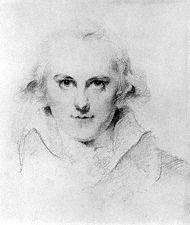
The mosaic was uncovered in 1793 by the Gloucestershire born antiquarian and engraver Samuel Lysons, His dig can be seen as an early move in the development of modern archaeology. The illustration above is his own, and he enjoyed a reputation for accuracy in an age notable for painstaking illustration.

Archaeology was still far from being a science and the dig itself caused damage. But Lysons was a recognised pioneer, becoming a Fellow of the Royal Society and an antiquary professor at the Royal Academy. The mosaic continued to be uncovered and re-covered over the years – seven times since 1880, the last time in 1973. By then there were serious worries about the damage being caused, and there are no plans to reveal it again. A replica was made over a painstaking ten year period and for a while placed on public display at the nearby Prinknash Abbey. But it was sold overseas in 2010.

I like seeing the mosaic through Lysons’ eyes, because for me the experience as a whole involves multiple layers of history and culture. When I look at his illustration, I see something of the late Roman empire, with a hint of something wilder from Orpheus’s archaic Thracian home, and I enjoy the lens of the later eighteenth century, combining both rational and romantic elements in the manner of that time. I appreciate these different layers of cultural ancestry and their enduring influence. For me the early modern one has some predominance – in this half-deserted graveyard with its ruins, the sleeping dead, and the mythic art of the ancients buried under my feet.

Indeed my experience of the graveyard is not all about Orpheus. I sense a spirit of place that accommodates all of these influences in a natural way. It is a place at home with loss and death and ancient memory. My personal experience varies, and can be edgy at times. But I do not find it particularly spooky. For me, it is a suggestive, multi-dimensional space simply being itself and not greatly concerned with what I bring or how I respond.

There are corners of the graveyard that seem actively gentle. Below, we see a now disused gateway sitting among trees. Not yet decaying, it nonetheless feels that it is being reclaimed by the land, rather than asserting itself as part of a built environment. An autumnal sun warms all. This corner, at this time, is a simple place of peace.

(1) https://contemplativeinquiry.blog/2014/10/07/the-woodchester-orpheus/

SCEPTICISM, OPENNESS AND FLOW

This post summarises where I stand philosophically at this stage of my inquiry, and how my stance affects my practice. When investigating the Direct Path (1) I realised that one possible destination might be radical scepticism about everything. Awakening to Awareness as ultimate ground of being is not the inevitable end point. The only Direct Path teacher who publicly discusses this is Greg Goode (2), who says: “Over the years, I had studied many philosophies and paths. I was aware of a variety of vocabularies. And now, unless I was explicitly playing the role of a direct path participant, none of these vocabularies seemed preferable in terms of truth or accuracy. When I was left to myself, experience didn’t show up as anything at all. There was nothing strictly true or strictly false to say about it”.

Goode reports a sense of confirmation on reading a privately circulated document attributed to Shri Atamananda Krishna Menon, founder of the Direct Path. According to Greg Goode, the gist is “that we can’t say anything at all … everything is paradoxical. We can’t even say that it’s consciousness or that anything exists! It’s a joyful, effusive case of saying without saying!” It helped Goode to get to his final position of ‘joyful irony’, which I have discussed in an earlier post. (3). His key point is that “the joyful ironist has found loving, open-hearted happiness without dogmatism”. For this to work “the joy and the irony must work together. If you’re joyful without being ironic, you’ll still have attachments to your own views of things. And if you’re ironic without being joyful, you may be bitter, cynical, sarcastic and pessimistic. Heartfelt wisdom includes both sides. Joy adds love to irony. Irony adds clarity to joy.” (2)

This sounds almost postmodern, but in fact echoes an ancient wisdom. Philip Carr-Gomm (4) shows its presence in Jain ethics, grounded in the three principles: ahimsa, aparigraha and anekant. Ahimsa is the doctrine of harmlessness or non-violence. Aparigraha is the doctrine of non-attachment, non-possessiveness or non-acquisition, Anekant is a doctrine of many-sidedness, multiple viewpoints, non-absolutism or non-one-sidedness. The three principles can be seen as completing each other, with non-absolutism as an intellectual aspect of non-violence and non-attachment, and hence a virtue.

Pyrrho of Elis, a Greek philosopher of the fourth century BCE, probably met both Jains and Buddhists, when accompanying Alexander ‘the Great’ to India. Indian influence is certainly evident the school of philosophy he created on his return home. In Greek culture this school was treated as a form of Scepticism, but unlike other Sceptics, Pyrrhonists “neither made truth claims nor denied the possibility of making them. Instead, they cultivated a deeply embedded attitude of suspension of judgement (epoche), allowing possibilities to stand open within the process of continuing inquiry. Such a turning away from the drive for intellectual closure enables peace of mind (ataraxia) in our engagement with the richness and diversity of experience” (5).  This teaching seems to combine the Jain view of non-absolutism and the Buddhist view of equanimity and freedom from dukka, (suffering or dis-ease).

As my contemplative inquiry has progressed, I have grown increasingly attracted to the wisdom of this view. I name it as openness, to keep my inquiry process appreciative rather than deconstructive. I have written about it before and this post builds on others. What I notice now is a greater clarity and confidence in this view, reinforcing my stance of At-Homeness in ‘the flowing moment’. Although not perfectly reliable, this At-Homeness is as close as I get to a place of safety. Everything else is uncertain. Everything else can be taken away. I treat ‘flowing moment’ as a simple description of living experience. I find stillness there if I slow down and attend to it. Stillness can be a portal to spontaneous joy and appreciation if I open up and am present to them . It is a good basis for coming back to Earth. From this space I can better connect with other beings, the wider world and the wheel of the year.

(1) A name given to the teachings inspired by Shri Atmananda Krishna Menon (1883 -1959).

(2) Greg Goode After Awareness: The End of the Path Oakland, CA: Non-Duality Press, 2016

(3) https://contemplativeinquiry.wordpress.com/2019/06/11/greg-goode-and-joyful-irony/

(4) Philip Carr-Gomm Seek Teachings Everywhere: Combining Druid Spirituality with Other Traditions Lewes, UK: Oak Tree Press, 2019 (Foreword by Peter Owen Jones)

(5) Arne Naess Scepticism Abingdon: Routledge, 2015 (First published 1968. Scepticism is the last book Arne Naess wrote as an academic philosopher, before going on to devote himself to the development of deep ecology, coining the term ecosophy to describe his stance.)

ARNE NAESS AS PHILOSOPHICAL VAGABOND

“Naess embodies the spirit of philosophy in its original sense as being a loving pursuit of wisdom. It is a deep exploration of our whole lives and context in pursuit of living wisely. The essence of Socratic inquiry is to know ourselves. From his work on Pyrrhonian scepticism to his … positive statements on pluralism and possibilism, Naess says he is a ‘philosophical vagabond’ or ‘wandering seeker’, what the ancient Greeks called a zetetic’” (1).

In 1968 Arne Naess (1912-2009) published Scepticism (2) two years before resigning as chair of philosophy at the University of Oslo to devote himself to environmental problems. Part of this book focuses on Sextus Empiricus (150-225 CE), the last recorded Pyrrhonist philosopher in a line going back to Pyrrho of Elis (c360-c272 BCE).

Pyrrhonists, as described by Sextus Empiricus, neither made truth claims nor denied the possibility of making them. Instead, they cultivated a deeply embedded attitude of suspension of judgement (epoche), allowing possibilities to stand open within the process of continuing inquiry. Such a turning away from the drive for intellectual closure enables peace of mind (ataraxia) in our engagement with the richness and diversity of experience. As Naess says, the Pyrrhonist philosopher “leaves questions open, but without leaving the question. He has however given up his original, ultimate aim of gaining peace of mind by finding truth because it so happened that he came by peace of mind in another way.” (2)

Naess was not himself a Pyrrhonist, but clearly valued the Pyrrhonist frame of mind. He took something from it into his later work, as is made clear in Alan Drengson’s introduction to Naess’s Ecology of Wisdom (1):

“… there is never one definitive interpretation of philosophical texts; there is never one description of an event and all processes are complex interactions involving changing forces and relations, internal and external. Experience and the processes around us form changing patterns or gestalts. The nature of reality is multidimensional and creative. … Our spontaneous experience is so rich and deep that we can never give a complete account of it in any language, be it mathematics, science, music or art … As a deep questioner and seeker, Naess remains free of dogmatic and monolithic doctrine about the world … [which]  partly explains why he celebrates a movement supported by diverse people with many world views”.

I enjoy this view of inquiry, and feel inspired to carry it forward more consciously in my own work. My sense is that it will bring my inquiry more into the world, without its losing its contemplative core.

(1) Arne Naess Ecology of Wisdom UK: Penguin Books, 2016 (Penguin Modern Classic. First published 2008)

(2) Arne Naess Scepticism Abingdon, UK: Routledge, 1968

See also:

https://contemplativeinquiry.wordpress.com/2019/04/27/pyrrho-scepticism-arne-naess/

https://contemplativeinquiry.wordpress.com/2019/04/25/spiritual-truth-claims/


PYRRHO, SCEPTICISM, ARNE NAESS

In my last post  https://contemplativeinquiry.wordpress.com/2019/04/25/spiritual-truth-claims/ ‎I introduced Pyrrho of Elis, a Pagan Greek philosopher who, returning from an extended visit to India, sounded a new note in Greek philosophy. In the Greek cultural context, this was heard as a variant form of Scepticism. Originally a skeptikos was “a seeker, one who inquires or examines, considers, deliberates etc.” (1) though over time Scepticism came to signify a kind of compulsive doubting, as it does now. The extract below shows the distinctiveness of Pyrrho’s project, and its likely debt to Buddhist ideas of the time.

“Pyrrhonism is commonly confused with Scepticism in Western philosophy. But unlike Sceptics, who believe there are no true beliefs, Pyrrhonists suspend judgement about all beliefs, including the belief that there are no true beliefs. Pyrrhonism was developed by a line of ancient Greek philosophers, from its founder Pyrrho of Elis in the fourth century BCE through Sextus Empiricus in the second century CE. Pyrrhonists offer no view, theory or knowledge about the world, but recommend instead a practice, a distinct way of life, designed to suspend beliefs and ease suffering. Since beliefs are attachments to what is not evident, they say, and are therefore distorting, uncertain, and subject to challenge and contradiction, they generate anxiety and fear, compounding suffering. By suspending judgement on beliefs, Pyrrhonists seek to liberate themselves from attachment to things nonevident; having achieved this, they claim a certain tranquillity (ataraxia) follows. Only appearances are evident, they say, these being sensations and thoughts which we cannot help having, which are involuntary, and it is by them rather than by our beliefs that we should live.

“Pyrrhonism bears a striking similarity to some Eastern non-dogmatic soteriological traditions, particularly Madhyamaka Buddhism. Indeed, its origins can plausibly be traced to the contacts between Pyrrho and the sages he encountered in India, where he travelled with Alexander the Great. Even though Pyrrhonism went on to develop in a Greek idiom without reference to Eastern traditions, the similarity is remarkable, suggesting a commonality of insight not much explored. Although Pyrrhonism has not been practised in the West since ancient times, its insights occasionally have been independently recovered, most recently in the work of Ludwig Wittgenstein. They remain relevant, perhaps more than ever, as an antidote to today’s cultures of belief.” (1)

Arne Naess, the Norwegian philosopher now associated with the the deep ecology movement and coiner of the term ‘ecosophy’, was a modern admirer of Pyrrhonism and wrote a book about it in 1968 (2). I intend to follow this up in my continuing inquiry, partly to find out how his engagement with Pyrrho and Greek Scepticism may have informed his later development..

  1. Adrian Kuzminski Pyrrhonism: How the Ancient Greeks Reinvented Buddhism New York: Lexington Books, 2008
  2. Arne Naess Scepticism Abingdon: Routledge, 2015 (First published 1968)

See also:

https://contemplativeinquiry.wordpress.com/2019/05/03/arne-naess-as-philosophical-vagabond/


SPIRITUAL TRUTH CLAIMS

Traditional spiritualities tend to be organized around metaphysical propositions that can neither be convincingly demonstrated nor refuted. Stephen Batchelor (1) gives examples: ‘God is love’, ‘creation arose from the breath of the One’, ‘bliss is eternal union with Brahman’, and ‘you will only come to the father through me’.

In the specific case of Buddhism, Batchelor questions the classical understanding of how craving causes suffering: “Craving is the origin of suffering because … it causes actions that lead to your being born, getting sick, growing old and dying”. These existential realities in themselves, and not simply how we deal with them, are included in the word dukka, which we translate as suffering. The overall claim makes sense only within the metaphysical framework of karma and rebirth.

Batchelor worries that, with a proposition of this kind, “one finds oneself in the language game ‘In Search of Truth’.” If you believe them to be true, then you qualify to be a Buddhist. If you don’t, you don’t qualify. “One is thus tacitly encouraged to take a further step of affirming a division between ‘believers’ and ‘nonbelievers’, between those who have gained access to the truth and those who have not. This establishes the kind of separation that can lead to cultish solidarity as well as hatred for others who fail to share one’s views. ‘When the word truth is uttered’ remarked the Italian philosopher Gianni Vattimo, ‘a shadow of violence is cast as well”.

I have noticed for myself that even in modern paths, where experiential and inquiry methods are favoured over blind belief, there can be a powerful narrative of ‘getting it’ or ‘not getting it’. There is no recognised space for getting something else. To me this suggests a continuing immersion in the language game ‘in Search of Truth’. I follow Stephen Batchelor in taking a secular turn partly for this reason, and my solution is a stance of positive sceptical openness. An ancient Western tradition, Pyrrhonism, supports this view. Its founder, the Greek Pagan philosopher Pyrrho of Elis, developed this teaching after returning from India, where he had accompanied the army of Alexander ‘the Great’. Pyrrhonism was understood in the Greek world as a variant form of the influential Sceptic school. It has parallels with currents in early Buddhism, sharing the notion of an inner peace linked to freedom from attachment to beliefs. But Greek philosophers were not monks, and it did not create a renunciate religious culture of the Indian kind. I will look at this tradition more closely as part of my continuing inquiry.

  1. Stephen Batchelor Secular Buddhism: Imagining the Dharma in an Uncertain World New Haven & London: Yale University Press, 2017


REVISED ‘ABOUT’ APRIL 2019

Over the lifetime of this blog I have made frequent revisions of its ‘About’ statement. Most are small. Occasionally, I make a major revision which I also publish as a post. Below is my revised and edited ‘About’ of 19 April 2019.

I am James Nichol and I live in Stroud, Gloucestershire, England. The Contemplative Inquiry blog started in August 2012, and includes personal sharing, discursive writing, poetry and book reviews. It explores contemplative themes and their role in human flourishing within the web of life.

In my own journey, I have found an At-Homeness in a flowing now, not linked to any specific doctrine. For me, this experience and stance enable greater presence, healing and peace. They also support imaginative openness and an ethic of aware interdependence.

I began this work within British Druidry. I continue to follow an earth-centred and embodied spiritual path, ‘secular’ rather than ‘religious’. I draw on diverse traditions, especially resonating with naturalist, eco-existentialist, pantheist and animist currents within and beyond modern Paganism.

I am wary of metaphysical truth claims, including materialist ones, with an ultimate stance of openness and unknowing. At the time of this revision, I am exploring a tradition initiated by the Greek Pagan philosopher Pyrrho of Elis, who developed his own school of contemplative scepticism after a visit to India.

My book, Contemplative Druidry: People, Practice and Potential, was published in 2014.  https://www.amazon.co.uk/contemplative-druidry-people-practice-potential/dp/1500807206/

A NEW INQUIRY CYCLE

After an eight-month silence, I feel prompted to write again. These months have featured both continuity and change in my contemplative life. I have decided to stay with the theme of Contemplative Inquiry, framing my work as a new inquiry cycle.

I  wrote in August 2018 that ‘I find ‘healing and grounding in a flowing now, the site of an unexpected At-Homeness’*. At the same time my ‘Sophian Way’ has taken what might be described as a secular turn, as a loving friendship with wisdom and its source. In this respect I follow in the footsteps of those ancient Greeks who invented philosophy (love of wisdom) as a new space somewhat independent of their gods and traditional stories.

They used this space to ask, more directly, questions about being human, about what it is that supports human flourishing, and looked for new ways of understanding the world in which they found themselves. I have come to value contemplative life mostly as a context and support in relating to myself, other people, culture and nature. Hence, again following the Greeks, my contemplative life and inquiry include (using their own terms) therapeutics, ethics, politics and aesthetics. Contemplative presence warmly holds the life of the body, feelings, mind and imagination. It is their ground and home. The inquiry moves beyond that space, and into the wider world.

In early posts, I will look in more detail at ways of working that now guide me, offer a new understanding of Sophia, engage with a deeper exploration of the term ‘secular’ and look at the problems raised by metaphysical truth claims and how I deal with them. I hope that these posts will establish the note of the new inquiry cycle.


ATHENE: PRACTICAL WISDOM

In Greek tradition, Athene is Goddess of Wisdom. Hers is a pragmatic wisdom – “good counsel, thinking through, or practical foresight – the capacity to reflect” (1) In a contest for the rulership of Attica, Poseidon shows that he rules the waves; Athene constructs the ship to ride them. Poseidon provides a horse; Athene bridles it and builds a chariot. Poseidon makes a salt spring gush up from the depths of the earth; Athene offers the carefully cultivated olive. Athene blends creative imagination with dexterity and skill. “She teaches weaving, wool-working, carpentry and all manner of handicrafts whose success depends on holding in the mind an image of the end”.

She also combines her Wisdom role with a Warrior one, where “even in war, she is controlled, in contrast to Ares’ savage and indiscriminate rage, and she easily defeats him in combat. She comes to the side of Achilles when he needs self-discipline, and to Odysseus when he needs strategy and foresight. Here, in the Iliad, Achilles is deliberating whether to reach for his sword in his quarrel with Agamemnon:

Now as he weighed in mind and spirit these two courses

and was drawing from his scabbard the great sword, Athene descended

from the sky.

The goddess standing behind Peleus’ son caught him by the fair hair,

appearing to him only, for no man of the others saw her.

Achilles in amazement turned about, and straightway

knew Pallas Athene and the terrible eyes shining.

“Significantly it is in a moment of reflection occasioned by his conflicting impulses that Athene appears, as the epiphany of his victory over unbridled instinct…. The quality of restraint is the value she embodies, and her ‘flashing eyes’ are the emblem of a lucid intelligence that can see beyond the immediate satisfaction.

The word metis was linked to this kind of wisdom, and it was highly valued. With metis, a person could chop wood better than through strength alone; pilot a ship through storms in the dark; or win a hotly contested chariot race. However, the word could also have overtones of shrewdness or craftiness or thinking too much on an event. Odysseus was known as polymetis (he of many counsels), with both Athene and Hermes to guide him.

At first glance, this seems a long way from the world of Sophia (Hokhmah) in Jewish and Gnostic tradition. But there are certain parallels. Three years ago (2), I wrote, “I am drawn to Sophia because for me she is fully in and of nature yet not locked in to the role of earth mother”. As an Olympian, Athene’s formal relation to nature is ambivalent, but she certainly has worldly concerns. Whilst also not locked into the role of earth mother, she too is willing to support and mentor humans. Sophia stands for awareness, which includes a willingness to see the world as clearly as possible and a capacity to hold and manage a measure of self-aware suffering. Athene, too, in a more pragmatic way, asks for an increase in awareness and a less impulsive response to experience. Sophia represents the energies of creativity and love as well as of wisdom. Athene is highly creative, and has her own wisdom, here based on skill, inventiveness and a capacity to be intentional and strategic. Although universal love and compassion feature little in the Homeric world, she is loyal to those she cares about and engaged with their fortunes. As a lens on how contemplation informs creativity and action, the archaic Athene extends and enriches my understanding of the Sophian archetype.

  1. Anne Baring Anne and Jules Cashford The Myth of the Goddess: Evolution of an Image London: Penguin, Arkana Books, 1993
  1. https://contemplativeinquiry.wordpress.com/2015/08/21/sophia-hohmah/
Earth Eclectic

music that celebrates Earth and speaks to the heart

Sarah Fuhro Star-Flower Alchemy

Follow the Moon's Cycle

Muddy Feet

Meeting nature on nature's terms

Rosher.Net

A little bit of Mark Rosher in South Gloucestershire, England

Becoming Part of the Land

A monastic polytheist's and animist’s journal

selkiewife

Selkie Writing…

Charlotte Rodgers

Images and words set against a backdrop of outsider art.

Prof Jem Bendell

living with metacrisis and collapse

Towint

The pagan path. The Old Ways In New Times

The Druids Garden

Spiritual journeys in tending the living earth, permaculture, and nature-inspired arts

The Blog of Baphomet

a magickal dialogue between nature and culture

This Simple Life

The gentle art of living with less

Musings of a Scottish Hearth Druid and Heathen

Thoughts about living, loving and worshiping as an autistic Hearth Druid and Heathen. One woman's journey.

Wheel of the Year Blog

An place to read and share stories about the celtic seasonal festivals

Walking the Druid Path

Just another WordPress.com site

anima monday

Exploring our connection to the wider world

Grounded Space Focusing

Become more grounded and spacious with yourself and others, through your own body’s wisdom

The Earthbound Report

Good lives on our one planet

Hopeless Vendetta

News for the residents of Hopeless, Maine