Contemplative Inquiry

This blog is about contemplative inquiry

Tag: Graham Harvey

ANIMISM FOR OUR TIMES

This post looks at Animism as the guiding principal of my Druidry. The term itself comes from nineteenth century anthropology, and is somewhat problematic. Scholars from European and North American backgrounds , formed by a mix of Christian and secular ideas, were studying, and labelling, the traditional practices of other people. The people themselves were mostly in the process of becoming colonial subjects and living in cultures under stress. So ‘Animism’ started out as a top-down classification, which gave Animists a lowly position in the hierarchy of cultural and spiritual life. A stigma persists to this day.

Despite this dubious history, the word ‘Animism’ is now being turned around by people from the global north itself, spiritually hungry in our now palpably faltering 21st century world. Some years ago, research by Graham Harvey distinguished two positive uses of the term Animism among modern western Pagans. “Some Pagans identified Animism as a part of their religious practice or experience which involved encounters with tree-spirits, river-spirits or ancestor-spirits. This Animism was metaphysical. … Other Pagans seemed to use ‘Animism’ as a short-hand reference to their efforts to re-imagine and re-direct human participation in the larger-than-human, multi-species community. This Animism was relational, embodied, eco-activist and often ‘naturalist’ rather than metaphysical” (1).

My Animism draws primarily on the second of the two accounts above. But it is deepened by a Buddhist influence, especially that of the Vietnamese Zen Master Thich Nhat Hanh: “There is no absolute dividing line between living matter and inert matter. If we took the so-called inanimate elements out of you and me, we would not be able to live. We are made of non-human elements. This is what is taught in the Diamond Sutra, an ancient Buddhist text that could be considered the world’s first treatise on deep ecology. We cannot draw a hard distinction between human beings and other living beings, or between living beings and inert matter. There is vitality in everything. The entire cosmos is radiant with vitality. If we see the Earth as a block of matter lying outside of us, then we have not yet truly seen the Earth. The Earth is also alive” (2).

Thich Nhat Hanh follows an old tradition. In thirteenth century Japan, Zen Master Eihei Dogen had taught that enlightenment is just ‘intimacy with all things’. Elsewhere in his own text, Thich Nhat Hanh says: “Just as a wave doesn’t need to go looking for water, we don’t need to go looking for the ultimate. The wave is the water. You already are what you want to become. You are made of the sun, moon and stars. You have everything inside you”. Thich Nhat Hanh explains that a flower is made only of non-flower elements. We can say that the flower is empty of separate self-existence. But that doesn’t mean that the flower is not there. “When you perceive reality in this way, you will not discriminate against the garbage in favour of the rose” (2).

This Buddhist wisdom doesn’t seem to me to come directly out of the four noble truths or eightfold path. The Buddhists of south-east and east Asia were at ease with the traditional Animism of their cultures, and the views expressed above appear to me to be at least partly a cultural gift from the Animists. Japan, for example, was intensely influenced by Buddhism without any thought of displacing Shinto, and the traditions readily interwove.

It was otherwise in the west. Already, In the first century CE, the Roman philosopher Plutarch wrote of the death of Great Pan, after the time of Jesus but before the rise of Christianity. James Hillman comments: “With Pan dead, so was Echo; we could no longer capture consciousness through reflecting within our instincts. … The person of Pan the mediator, like an ether who invisibly enveloped all natural beings with personal meaning, with brightness, had vanished. Stones became only stones – trees, trees; things, places, animals no longer this god or that, but became ‘symbols’, or were said to ‘belong’ to one god or another. When Pan is alive, then nature is too – the owl’s hoot is Athena and the mollusc on the shore is Aphrodite … Whatever was eaten, smelled, walked upon or watched, all were sensuous presences of archetypal significance”.” (3).

James Hillman, after service as Director of Studies as the Jung Institute in Zurich, went on to develop his own form of archetypal psychology. He was a strong proponent of Panpsychism, a world view very similar to forms of Animism being articulated today. Panpsychism literally means the ensoulment of everything (from the Greek), though the sound ‘Pan’ also associates us with the god. At the same time this view broadly fits with the understanding of Zen Buddhist Thich Nhat Hanh, described above.

‘Animism’ is for me a word, not a thing, or a another religious banner to raise. It points to a wide range of experiences, understandings, and articulations. Pinned down to a single, dictionary definition, it would lose its power and energy. Yet Animism has become the word that best describes my way of being a modern Druid, both as view and as practice. I find it grounding and regenerative to have decisively adopted this word.

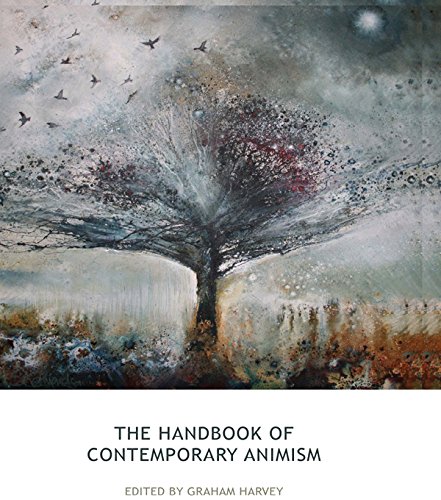
(1) Graham Harvey (ed.) The Handbook of Contemporary Animism London & New York: Routledge, 2014 (First published by Acumen in 2013)

(2) Thich Nhat Hanh The Art of Living London: Rider, 2017 (Rider is part of Penguin Random House)

(3) James Hillman The Essential James Hillman: A Blue fire London: Routledge, 1989 (Introduces and edited by Thomas Moore in collaboration with the author)

See also my recent post at https://contemplativeinquiry.blog/2023/07/02/animist-endarkenment which references Emma Restall Orr’s The Wakeful World: Animism, Mind and the Self in Nature
INQUIRY NINE YEARS ON

My contemplative inquiry began as part of a Druid initiative launched nine years ago on 1 November 2011. The inquiry “soon broadened into a wider exploration of contemplative spiritualities, drawing on the enduring wisdom of many times and places.” (1)

By August 2018, I had anchored the discovery of “an ‘at-homeness’ in the flowing moment, which nourishes and illuminates my life. Such at-homeness is not dependent on belief or circumstance, but on the ultimate acceptance that this is what is given. I have found that, for me, the realisation of this at-homeness has supported a spirit of openness, an ethic of interdependence and a life of abundant simplicity.” (1)

This is still my core insight. It does not tell me to be a Druid, or not to be a Druid. It does not give me a metaphysical or religious foundation of any kind, though it is possible to build these around it. It does not make my existential choices for me. I do find myself distant from faith based and devotional approaches to contemplation and spirituality. Recently, I have lost interest in debates about consciousness as foundational, or in distinctions between ‘lower’ and ‘higher’ manifestations of it. I was drawn to this philosophical openness in part by the ancient Greek philosopher Pyrrho of Elis, himself influenced by (probably) Buddhist and Jain teachers in India (2).

Experientially, it is as if I exist within a field of awareness, or presence, whilst also living a human life between earth and sky. Here, I am intimate with the stream of experience, but not fused with it – allowing a space for compassion towards the apparently unwanted sensations, feelings, thoughts, images, and strings of cogitation that continue to arise. Stepping back from demands for ‘healing’ and ‘transformation’, I discover myself to be simply and securely held.

Looking out, I find a living world. I am part of the web of life, deeply interconnected with other lives and with the whole. Here I align myself to those Pagans, identified by Graham Harvey (3,4), who “use ‘animism’ as a shorthand reference to their efforts to re-imagine and re-direct human participation in the larger-than-human, multi-species community. This animism was relational, embodied, eco-activist and often ‘naturalist’ rather than metaphysical.”

Understandings like this have re-anchored me in Druidry and Paganism. The Wheel of the Year is a wonderful basis for outward attention in spirituality. I am now also strongly drawn to questions of culture, history and human imagination, which I will explore more in future. Here again, I find an open and inclusive Druid perspective to be a good base to work from.

I seem to have satisfied myself on the questions with which I started in 2011, though not in the way I expected to. But new questions arise, and I no longer see an end point to my contemplative inquiry.

(1) https://contemplativeinquiry.blog/about/

(2) https://contemplativeinquiry.blog/2019/04/27/pyrrho-scepticism-arne-naess/

(3) Graham Harvey (ed.) The Handbook of Contemporary Animism London & New York: Routledge, 2014 (First published by Acumen in 2013)

(4) https://contemplativeinquiry.blog/2020/02/22/animism-is-a-hard-working-word/

Share this:

ANIMISM IS A HARD-WORKING WORD

Introducing The Handbook of Contemporary Animism (2013)* editor Graham Harvey describes animism as “a hard-working word”. For him, “it identifies a range of interesting phenomena but also labels several distinct ways of understanding such matters”.

Harvey’s own interest was sparked by postdoctoral research among varied groups of Pagans, which brought him into contact with people who identified as animists. It seemed to him that the word was being used in two contrasting ways. “Some Pagans identified animism as the part of their religious practice or experience which involved encounters with tree-spirits, river-spirits or ancestor-spirits. This animism was metaphysical … Other Pagans seemed to use ‘animism’ as a shorthand reference to their efforts to re-imagine and re-direct human participation in the larger-than-human, multi-species community. This animism was relational, embodied, eco-activist and often ‘naturalist’ rather than metaphysical.”

Fast-forward seven years to now, and ‘animist’ is clearly an important identifier for considerable numbers of people. many of whom draw on both kinds of understanding distinguished by Harvey. Accelerating environmental degradation, species loss and the ever more obvious climate crisis have given the second understanding greater salience and urgency, even when not reinforced by the first.

The Handbook gives valuable information about the history and hinterland of a word that I and my spiritual community use. For ‘animism’ did not arise as a term for people to describe their own experience. It comes from 19th century anthropology, developed by people from a dominant culture (largely European/North American, with a mix of Christian and secular ideas) to study the traditional practices of other people, most of whom were in the process of becoming colonial subjects and living in cultures under stress. Even in the current collection, with its de-colonised anthropology and room for first nations voices, ‘animism’, however positively reframed, is still an awkward piece of labelling for some contributors. One says, “we just call it tradition”.

So ‘animism’ is not innocent. Yet despite this dubious history, it is clear that animism does have inspirational potential as a positive term in our faltering 21st century world. Regardless of where we stand in our metaphysics, any of us can work to re-imagine and re-direct our “participation in the larger-than-human, multi-species community” in a way that is “relational, embodied” and, if we so choose, “eco-activist”. How we do these things is up to us. I will look at the work of some of the individual contributors in future posts.

  • Graham Harvey (ed.) The Handbook of Contemporary Animism London & New York: Routledge, 2014 (First published by Acumen in 2013)

ANIMISTIC HERMETICS

Following my last post I have received requests to describe ‘Animistic Hermetics’.

Animistic Hermetics involves going out into nature and carefully selecting something to work with. This might be something obviously alive, like a leaf or plant. It might be something conventionality regarded as inanimate, like earth or stone.

Once this is done, we go back into a group setting where the facilitator takes us through a 7 step process:

  1. An attunement to energetic self-awareness
  2. if granted permission, attunement to the chosen form (e.g. leaf, stone) in all senses
  3. a full meeting, approaching, merging, identification with the chosen form
  4. a withdrawal from the identification, and a parting with thanks
  5.  re-connection with energetic self-awareness
  6. writing/drawing
  7. sharing if appropriate

Elaine Knight, who has developed this practice in the form presented, adds:

“The steps 1 to 5 involve an energetic level of activation, attunement and sensing, meeting and communion, separation and return. Be respectful, ask permission and give thanks. Be receptive and open to what arises. Ground yourself well on your return. I recommend that the practice be guided by someone experienced and that plenty of time is allowed for each stage.

“I would like to thank Julie Bond for sharing her Lectio Divina reading from the book of nature as it inspired me to use my own energy work and hermetic practice in a completely different way.

“The attunement I use involves activating the light body and becoming aware of one’s core star. My hermetic journeying practice was originally concerned with the inner world  This practice however involves an open encounter and communion with a object co-existing in the apparent world.  An “I – Thou” experience rather than an “I – it” experience to quote Graham Harvey.  To date the experiences reported by those participating have been overwhelmingly animistic and often bardic and poetic. Animism and Hermetics I believe sit well together and I look forward to further encounters and explorations using the practice of Animistic Hermetics.”

BOOK REVIEW: CELEBRATING PLANET EARTH A PAGAN/CHRISTIAN CONVERSATION

61CwdX9mE3L__AA160_Highly recommended and available for pre-order via Amazon.  This blog is an enthusiastic early alert concerning Celebrating Planet Earth, edited by Denise Cush The book comes out of a weekend ‘conversation’ held at the Ammerdown Centre near Radstock, Somerset, England, from 31 January-2 February. Originally devised as a Druid/Christian event, it was widened to include other Pagans and was intended to generate “dialogue, reconciliation and renewal”. The hope was that the participants could explore their prejudices and preconceptions, learn more about each other, and find common ground in ‘Celebrating Planet Earth’, as the event was called. The book’s contributors were all involved in the conversation.

The book is aimed at Pagans and Christians interested in making connections; academics and undergraduate students in Study of Religions taking courses on inter-faith dialogue, Paganism and Christianity; and anyone with an interest in inter-faith activities. Some of the contributors are academics in the field, but as well as academic input, there is a practical emphasis on personal spirituality and ritual practice.

I’m part of the core audience. Whereas I experience the spiritual path as ultimately beyond names and forms, I stand in the world as a Pagan Druid. I had a Christian upbringing and in recent years I have learned from the Buddhist tradition, as well as Christian-based movements such as Sophian Gnosticism and the Ceile De. All of these have supported me in my own practice and in my personal concern with developing a stronger contemplative current within Druidry. So I’m at ease with what Philip Carr-Gomm, Chosen Chief of the Order of Bards, Ovates and Druids (OBOD), calls “fusion paths” in his chapter in this book.

From where I stand the ‘Celebrating Planet Earth’ more than meets its aims. It’s a feast. I felt that each contributor had thoroughly earned their place in it. It is divided into three parts, before moving on to editor’s reflections and conclusions. I want to say something about one chapter that spoke to me particularly strongly from each of the parts, as the best way in a short space of honouring the collection as a whole.

The first part is about ‘Addressing Our Fears and Prejudices’ and for this I pick out Graham Harvey’s chapter, ‘Fears and prejudices: a Pagan view’. For me, he has a very helpful analysis of what the task is and how to accomplish it. He makes it clear that “not everyone thinks alike” or should be expected to and that diversity has room for healthy opposition – properly handled, this can be a real gift. He makes the subtle point that the negotiation of difference is not just about fear and prejudice. It is also about avoiding the presupposition that “others are like us but not quite … that other people mean what we would mean when we say or do things”. Hence we need a refined quality of listening to avoid “talking past each other”.  On the question of fear and prejudice specifically, he suggests that the two things to remember are that we should indeed “resist and challenge the small visions and petty fantasies that are imposed on others” and that “when we talk about what people do, rather than what systems are alleged to do, we will keep diversity in clear view”. He usefully writes down polarised lists of what ‘Christians’ and ‘Pagans’ are contrastingly stereotyped as standing for – and invites us to make a reality check on the items in the list. It’s a very useful way of opening the reader up to the actual experiences of individuals and groups in later chapters.

The second part is about ‘Possibilities for Co-operation’ and for this I pick out Tess Ward’s chapter, ‘Better together: transformation through encounter’. Early in her life as an ordained priest, Tess Ward went into her own version of Dante’s ‘dark wood’, a wilderness in which she needed to die to one life so as to be born into another. She lost her existing theological frameworks and says of that time: “in that wilderness, what sustained me was not theology, but poetry, silence and nature”. Without leaving her Church, she found pointers in Buddhist ideas (Anthony Gormley, Pema Chodron), Earth paths and feminist spirituality. She quotes Carol Christ as saying: “awakening suggests that the self needs to notice what is already there … the ability to know is within the self, once the sleeping draft is refused … for women, awakening is not so much a giving up as a gaining … a grounding of selfhood … rather than a surrender of self”. She also quotes Kenneth White’s poem ‘Labrador’ – “I was loathe to name it too soon – simply content to use my senses – feeling my way – step by step – into the new reality”. As, renewed, she moves back into the world and her role, she knows that interventions in the world only have value when they come from personal experience. She shares with Matthew Fox the view that the result of such a crisis is not to abandon one’s own tradition “but to demand more of it”. She now leads celebrations of the Celtic Wheel of the Year as an affirmation of her transmutation of faith within a Christian framework. Partly this is an enhanced appreciation of being grounded in the natural world and its cycles. Partly it is an appreciation of the place that resources outside her traditional faith have had in deepening her journey.

The third part is about ‘The role of ritual practice, myth, music and for poetry in each tradition and in inter-faith encounter’. For this I pick out Alison Eve-Cudby’s chapter: ‘Woven together: can Christians and Pagans engage in shared ritual?’ The author has a leading role in the Ancient Arden Forest Church in a burgeoning movement of Forest Churches. She describes this movement as “a small and growing number of Christians responding to the Call of the Earth”. Ancient Arden has an emphasis on ritual and her formal answer to the question she poses is a carefully contextualised ‘yes’. She says: “if we take earth celebration, care and connection as our basis for doing ritual together, to contribute towards re-enchanting the land in this time of ecological crisis then I think that shared ritual is possible”. She offers a fresh and energised discussion of ritual and its purpose. She describes ritual as an embodied event, and a process of framing in which dramaturgy, rather than theology, is the organising principle. Whereas logocentric approaches assume that the symbolic system expressed in ritual must be coherent, performance as an unfolding event lays out symbols in a way that reveals their inconsistencies and contradictions. The work therefore involves negotiating and holding these within the ritual container. We fashion rituals that enable liveable, regenerated worlds. Ritual is a transformative process, “the pattern of actions is designed to synchronise the awareness of the different participants – human, non-human and other than human”.

The book’s conclusions suggest that meeting itself was of great benefit, and make it clear that the people involved want to continue their work in some way (topic based subgroups are mentioned). I would simply add that this book is a gift to us all, and that I am grateful for it.

Earth Eclectic

music that celebrates Earth and speaks to the heart

Sarah Fuhro Star-Flower Alchemy

Follow the Moon's Cycle

Muddy Feet

Meeting nature on nature's terms

Rosher.Net

A little bit of Mark Rosher in South Gloucestershire, England

Becoming Part of the Land

A monastic polytheist's and animist’s journal

selkiewife

Selkie Writing…

Charlotte Rodgers

Images and words set against a backdrop of outsider art.

Prof Jem Bendell

living with metacrisis and collapse

Towint

The pagan path. The Old Ways In New Times

The Druids Garden

Spiritual journeys in tending the living earth, permaculture, and nature-inspired arts

The Blog of Baphomet

a magickal dialogue between nature and culture

This Simple Life

The gentle art of living with less

Musings of a Scottish Hearth Druid and Heathen

Thoughts about living, loving and worshiping as an autistic Hearth Druid and Heathen. One woman's journey.

Wheel of the Year Blog

An place to read and share stories about the celtic seasonal festivals

Walking the Druid Path

Just another WordPress.com site

anima monday

Exploring our connection to the wider world

Grounded Space Focusing

Become more grounded and spacious with yourself and others, through your own body’s wisdom

The Earthbound Report

Good lives on our one planet

Hopeless Vendetta

News for the residents of Hopeless, Maine