Contemplative Inquiry

This blog is about contemplative inquiry

Tag: Garden

PLANT POWER IN A CATHEDRAL CLOSE

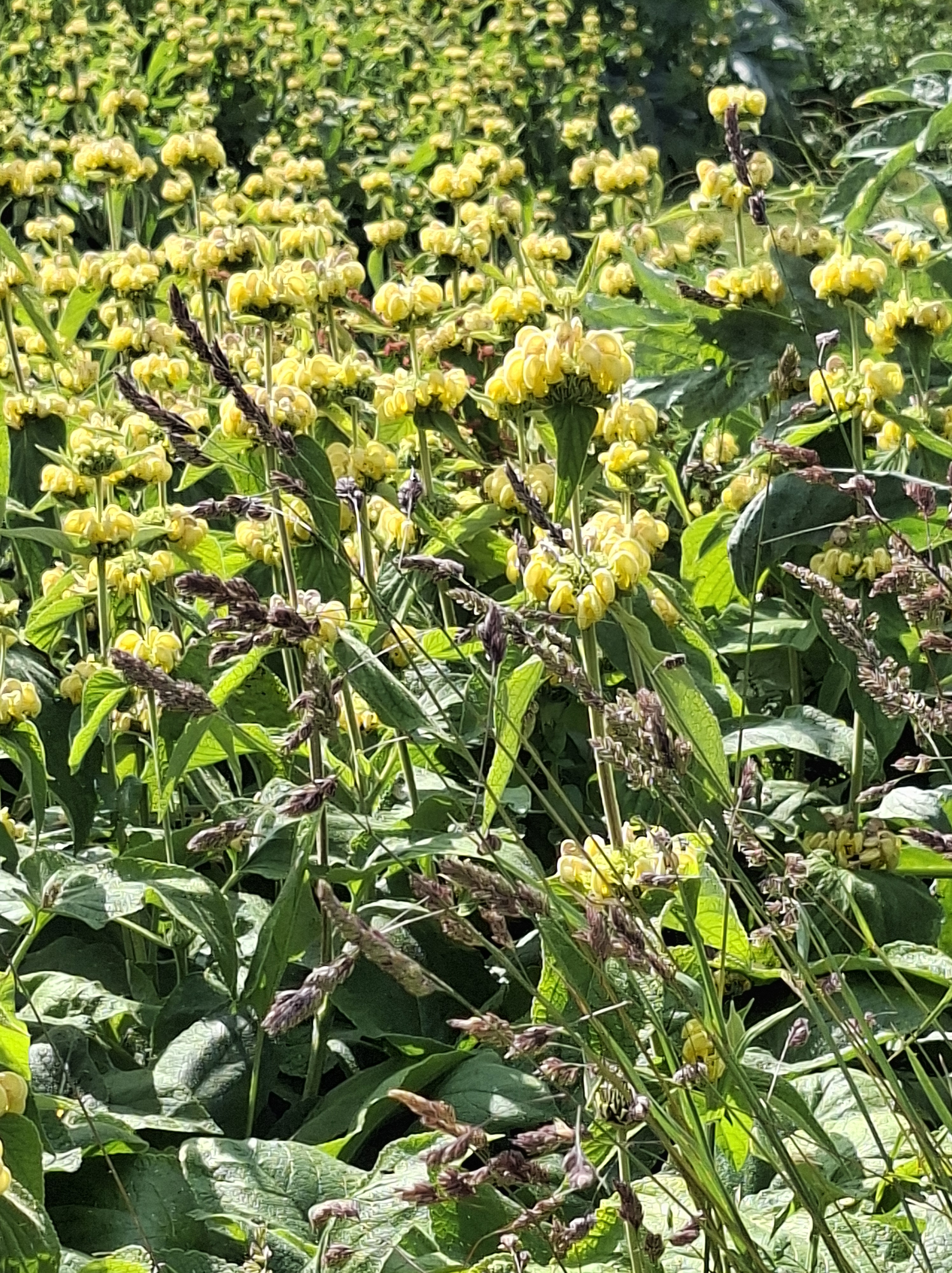
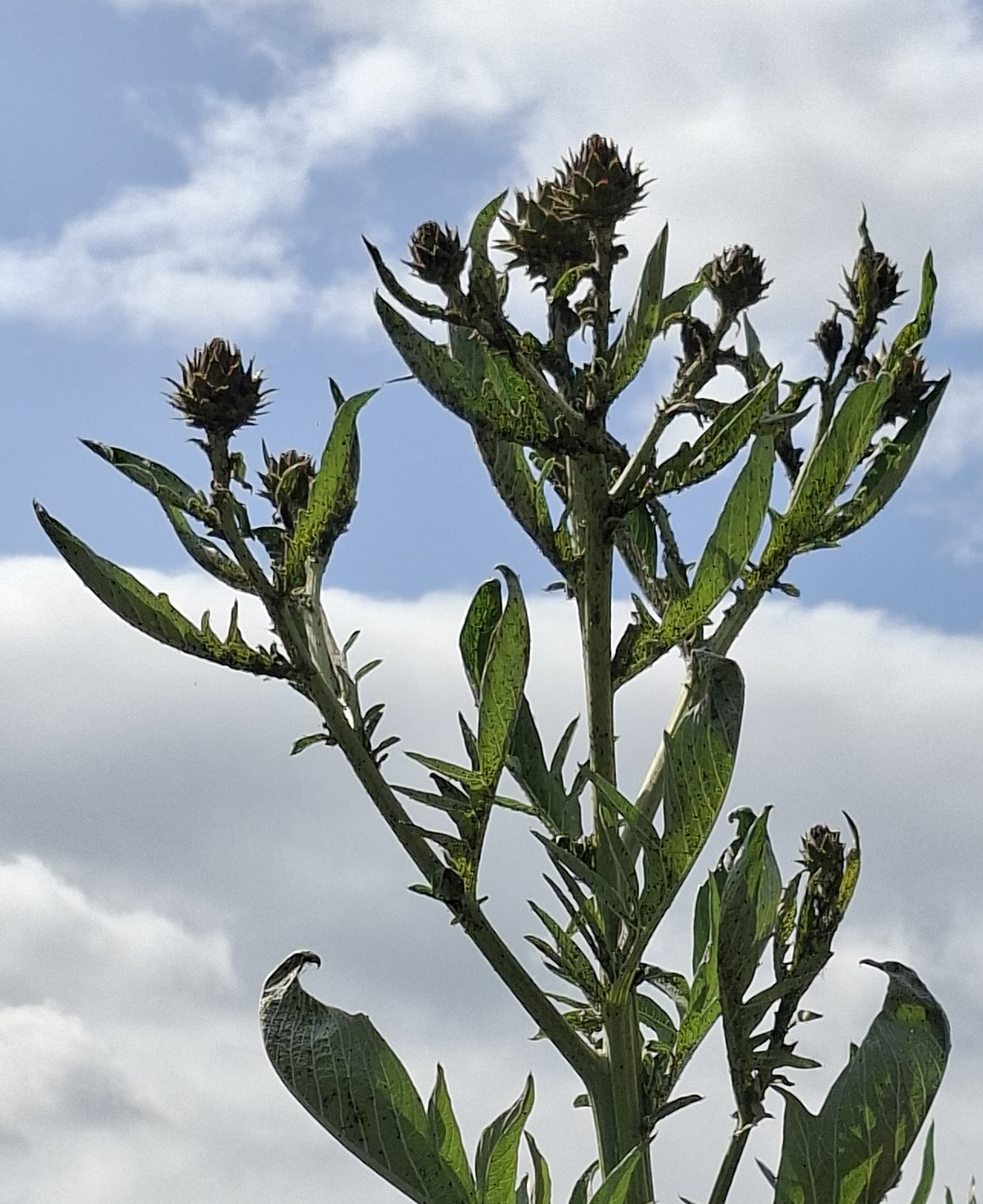
The garden in Gloucester Cathedral’s close is currently a magnificent riot. I was on a walk there with Elaine and we particularly noticed two powerful seeming plants that we couldn’t identify.  We simply sat with them, unnamed, and bathed in their energy. It was a glorious 1 June, the first day of our official meteorological summer, and one to savour and enjoy.  Only later did we do any research.

We are fairly sure that the plant above is yellow archangel and the plant below, looking like a giant thistle, is cardoon (canara cardunculus) aka prickly artichoke. Friendly feedback from readers on these identifications is welcome. If we are right both plants have long been recognised as sources of power and healing.

In our older traditions, yellow archangel was a symbol of harmony between flora and fauna. A custodian of wildlife, it fostered a bond that transcends mere survival. Herbalists still use this plant to relieve gout, sciatica and other pains of the joints and sinews. It has also been used to draw out splinters and thorns, clean and heal persistent sores, and to dissolve tumours. Yellow archangel can be used as food, in salads, soups and teas. In the wheel of our year, yellow archangel flowers  fully after the bluebells die away.

Cardoon is also a plant of power. Traditionally associated with Mars, it has the virtues of strength, protection and abundance. It is has been credited with the power to ward off evil spirits. It is also connected to ideas of nourishment, the riches of nature and, latterly, sustainable gardening. The plant can grow to 2.5 metres in height. Its thick stalks are used as a vegetable. Its full flowering is in late summer and autumn, with thistle-like purple flowers.

These plants, in this garden, are a celebration of values as well as of nature and healing. I see our world through the lens of Modern Druidry and Paganism. The custodians of this space will have a Christian lens. I am happy to note that in this context they seem to be much the same. When in this space, I feel that I am in a beautiful and energising oasis in the city.

MOMENTS OF CALM

We have had a lot of wind and rain in recent days. Saturday was an exception. The sky was clear, vividly blue. The air seemed cleansed and fresh. I stood at the back of St. Mary de Crypt, above, and understood the sensibility that reaches up, aspirationally, to heaven. I could empathise with the yearning that goes with that, looking for something clear and bright and pure. It’s as if such a sky might hold a promise of peace, a peace that was alive and able to nurture beauty.

I am also glad that, by the standards of medieval churches (including others within walking distance) this St. Mary’s is modest and balanced in its upwards aspiration. It aspires, but does not run away from the earth. The picture below shows it as solidly grounded, and not altogether dwarfing the buildings that have been its neighbours for many years. The church is still consecrated and holds services from time to time. But now it functions largely as a busy community centre with a strong continuing role in Gloucester’s life. A solid presence in the heart of the city.

Looking in on the city park, I welcomed the same clear blue sky. But my eye was mostly drawn to the trees that it framed. Although this is still a winter scene, the colour of the willow suggests a strong presence of male catkins and the cycle of growth and change that is under way.

Leaving the park I made my way to the still living garden of the ruined Llanthony Secunda Priory, once the monks’ physic garden. It still feels like a place of healing and the present version is well maintained.

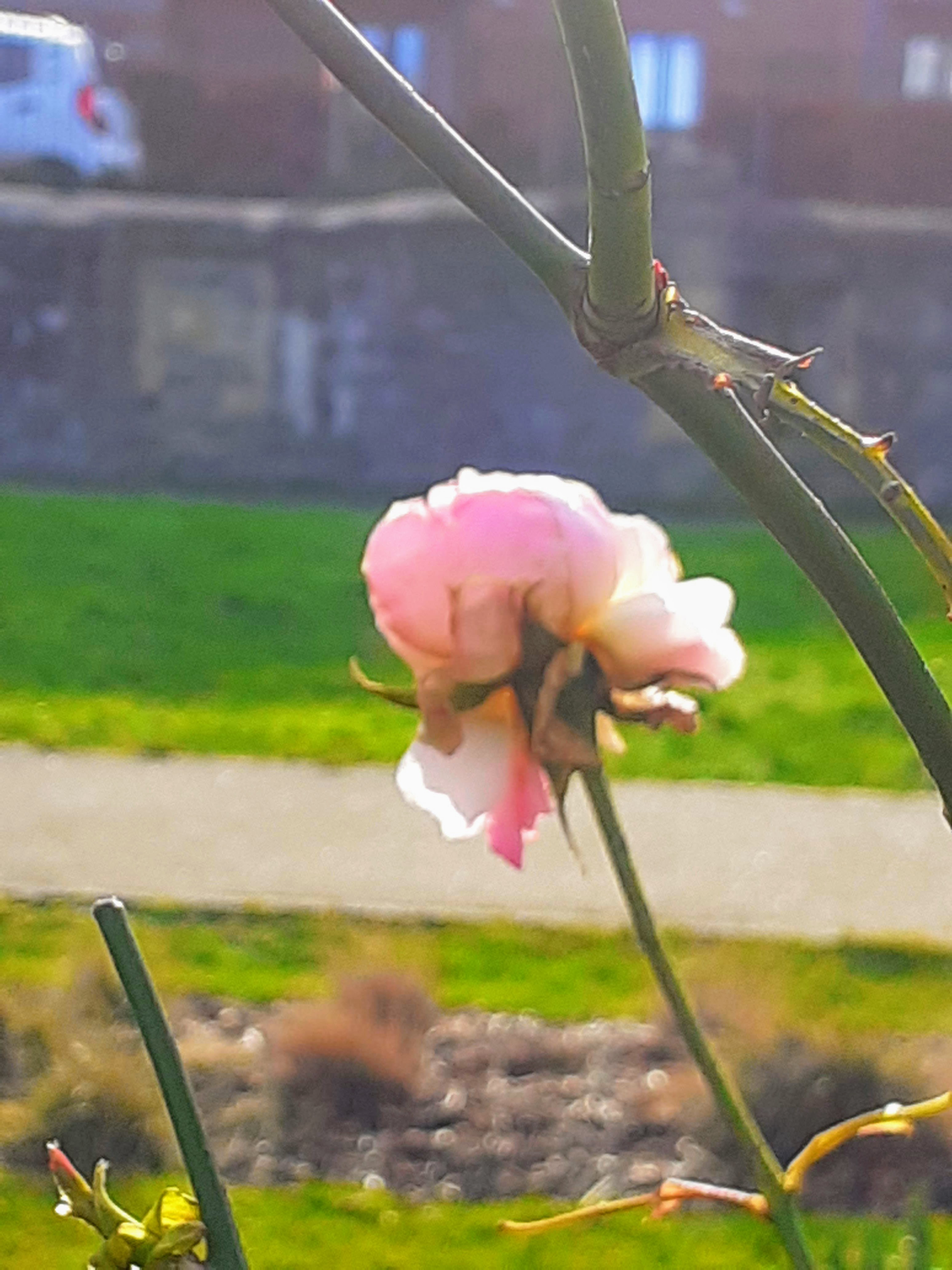
I was both surprised and delighted to see a rose in bloom. Roses have for a long time been a heart symbol for me, but I have generally associated them with summer and especially midsummer. I became aware of winter roses quite late last year and they were shop bought. I loved them but had some misgivings about their production. So I felt blessed to see one growing in the physic garden last Saturday. There’s no traditional link between Imbolc and roses that I know of. But seeing this rose in the ground, sunlight glinting on both petals and thorns, I had an Imbolc kind of feeling, as we approach the first festival of the rising year.

IMAGES FROM A TOWN GARDEN

Tumbledown gatehouse

Unbothered to impress:

You draw my eyes.

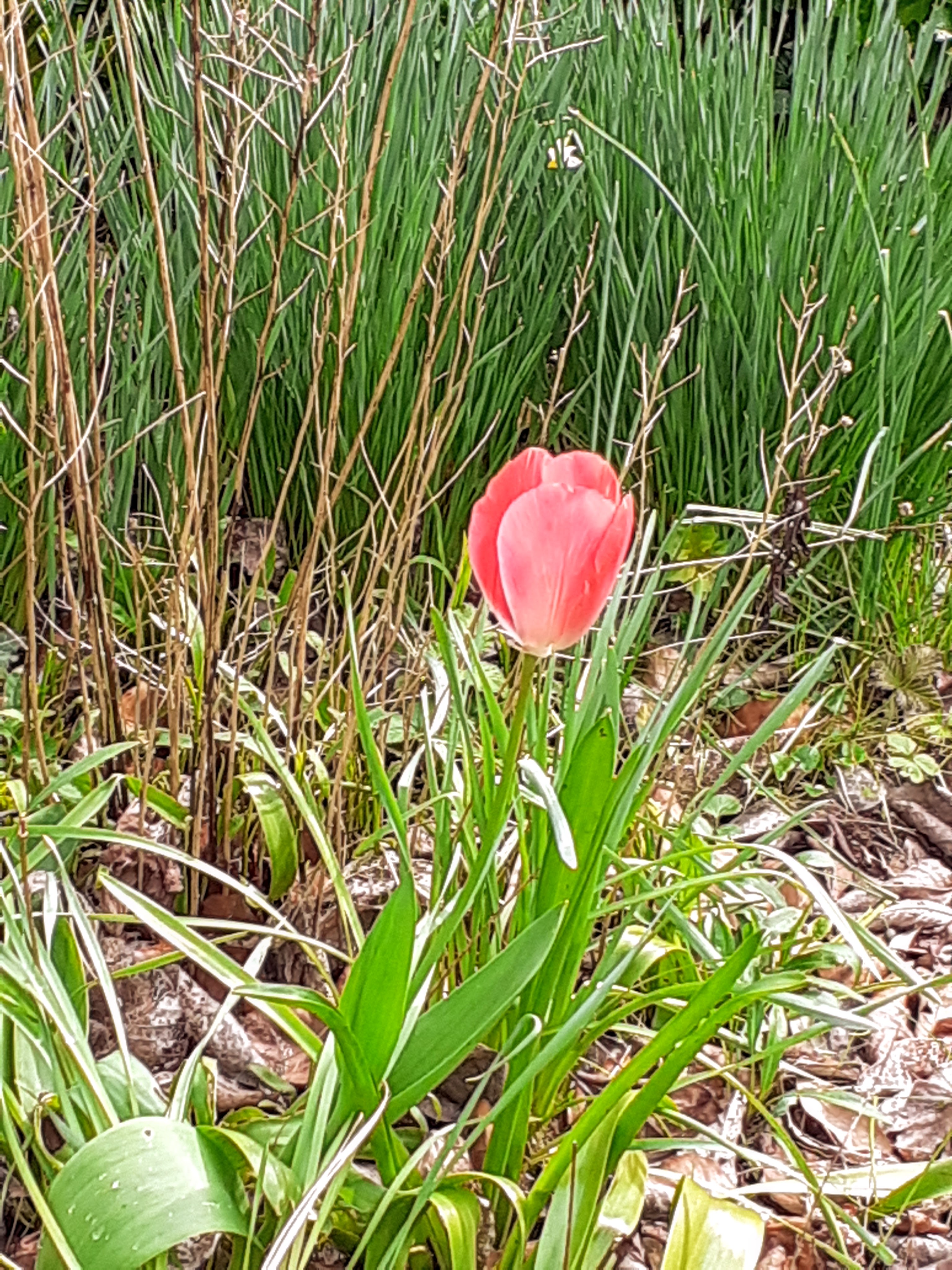
A single bloom

Among spiky grasses

Insists on beauty.

Six hundred years

In the life of this carving:

How much has changed?

Across the road,

Restrained elegance.

Here, a bursting life.

The lushness of spring:

Who can resist

Its fleeting appearance?

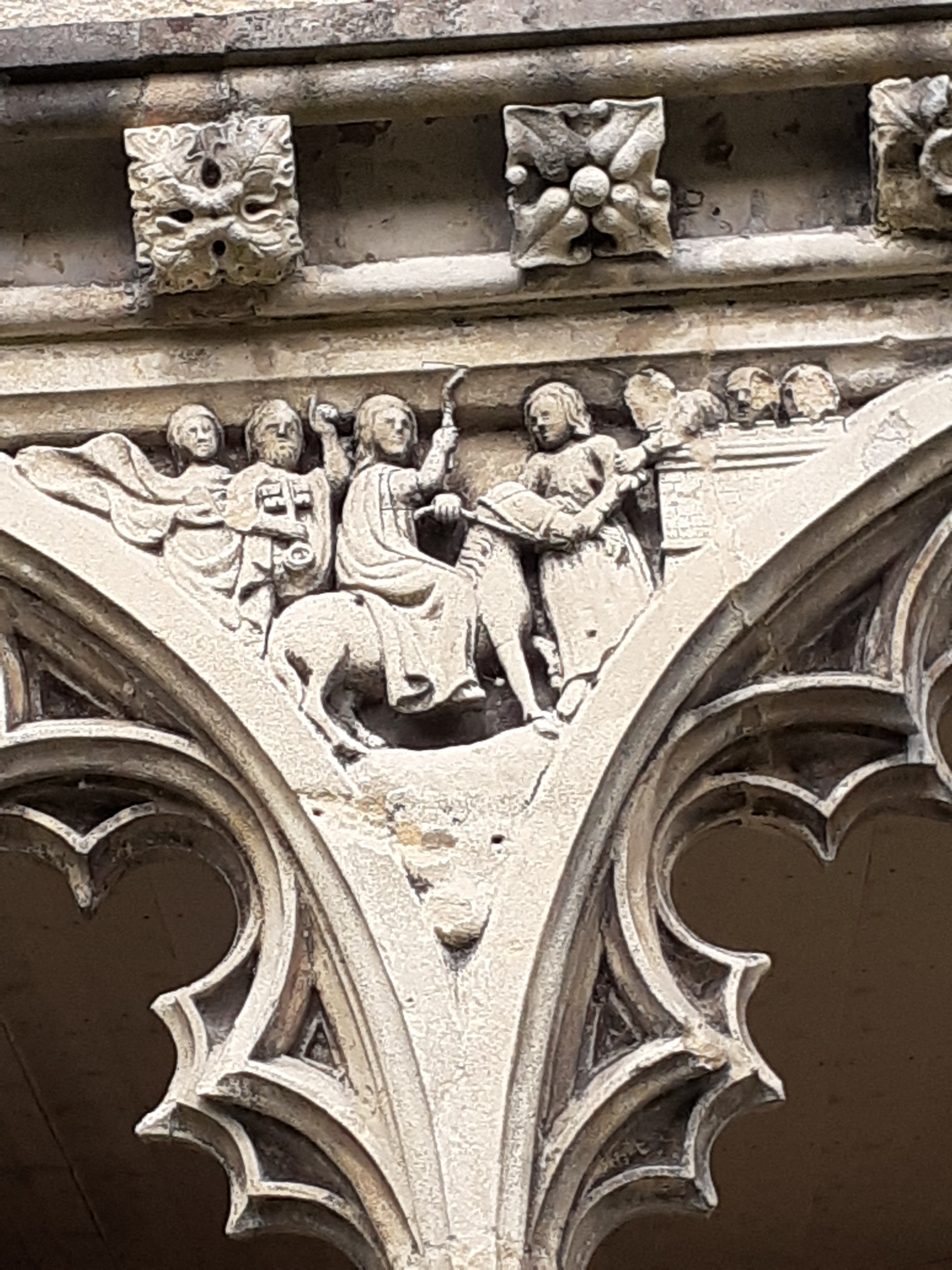
NOTE: At the beginning of April I discovered Hillfield Gardens – a little outside the centre of Gloucester, yet still in easy walking distance (or an easy bus ride) from where I live. Originally the gardens of a large house, Hillfield Gardens are about 1.6 hectares in extent. They are managed by a Friends Group on behalf of Gloucestershire County Council. For me the gardens are a tranquil space, different in feeling-tone from other local parks. Beyond that I don’t yet have a narrative about the gardens – more a set of discreet impressions. The pictures and words above are an attempt to share these impressions. The third picture is a detail from an 18th century gazebo using architectural details from a 14th century market house in Westgate Street demolished in 1780.

THE ROOKERY: MAGIC IN A FORMAL GARDEN

Streatham’s Rookery (1) is a formal garden within Streatham Common, one of south London’s many remarkable green spaces. I made a connection with it in 1992 when living close by.

About a year before I discovered OBOD Druidry, I was working with R. J. Stewart’s The Way of Merlin (2). This taught me, first of all, about sacred space. “Sacred space is space enlivened by consciousness. Let us be in no doubt that all space is sacred, all being. Yet if humans dedicate a zone, a location, something remarkable happens within that defined sphere of consciousness and energy. The space talks back”.

I was an urban seeker and used what the city gave me. From an early age I had been fed by imagery of secret and magical gardens. The Rookery, built in the then Spa village of Streatham (1) became my sacred space. Towards its centre, a wishing well testified to the power of healing waters. It was a good place to begin my journey. The space became more alive, and I, included within the gestalt, became more alive with it.

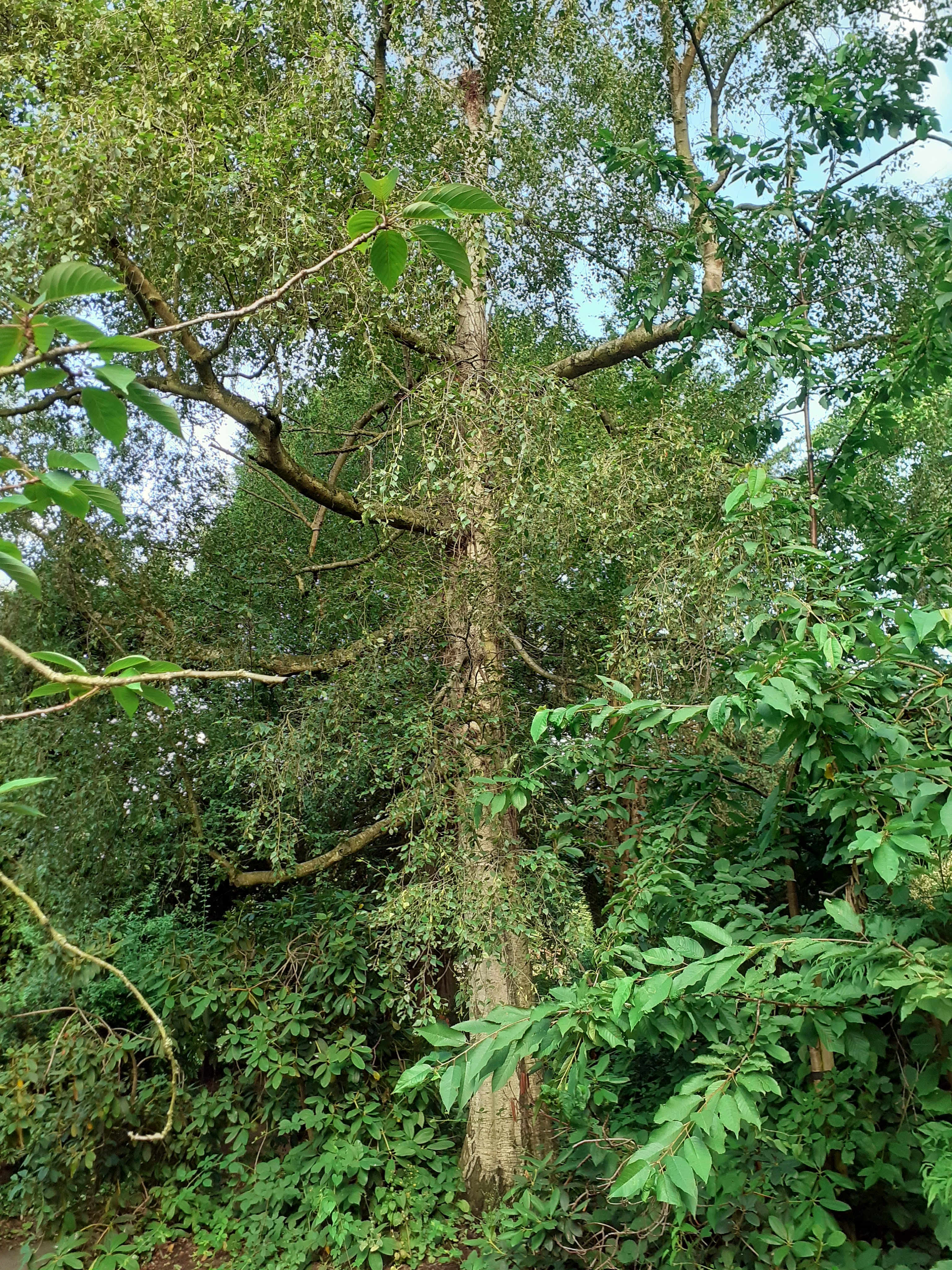
After establishing a sacred space, I was asked to begin a relationship with a spring and a tree. Stewart said: “we need to relate to such locations. This is a physical relationship first and foremost … we are one with the land, and trees, springs and caves are power points that tap into the energies of the land, and then reach into other dimensions altogether”. I found my spring quite easily (above). But there were almost too many trees to choose from, and I recall hesitating about my choice, to the point even of changing trees on my second or third visit. On my recent re-visit – woven into a rare family weekend in London – I found it easy to find the spring again but harder to remember my tree. I settled on the mature birch below, a good choice for a new, Goddess related undertaking (2). But I cannot vouch for it as my choice in 1992.

Sacred space (“the land talks back”), and befriending a spring and a tree: for me, these were the most powerful lessons from R. J. Stewart’s work. They were a helpful preparation for my later Druid training. I was very pleased to revisit this space in July 2023 and share it with family members.

(1) Streatham was in Surrey before becoming part of the County of London in 1889, and then Greater London in 1965. It began as a settlement around the old Roman road (Street Ham) from London to the south coast at Portslade, Brighton, the site a Roman port long lost to erosion. It appears in the Domesday Book of 1086 as Estreham. The village remained largely unchanged until the 18th century, when its natural springs, known as Streatham Wells, were first celebrated for their health-giving properties. The reputation of the spa, and improved turnpike roads, attracted wealthy city of London merchants to build their country residences in Streatham.

The Rookery began as a large private house with its own landscaped gardens. Much later, when the house and gardens were threatened with disposal and redevelopment, it was bought by public subscription and laid out as a formal open space, first opening to the general public in 1913. The Rookery is now one of the London Borough of Lambeth’s Green Flag Award-winning parks, directly managed by Streatham Common Cooperative (SCCoop), a local community-led enterprise.

(2) R. J. Stewart The Way of Merlin: The Prophet, The Goddess and the Land London: The Aquarian Press, 1991

A VISION

I look into the emptiness of the hooded one, no longer expecting to see a face or head. I know the hooded one only as the being who ferries me to Wisdom’s Island, each journey an Imramm in itself. That is all. No context or history for the hooded one. Just a tightly delimited contact.

Nevertheless, the question I have carefully not asked is telepathically answered. The voice in my head, which I know to be the voice of the hooded one, tells me: “whatever can be imagined has a form of existence – for better and for worse, as blessing and as curse”.

“Slightly theatrical” I think, as I stand in the rain and, already soaked, scan the sky for thunder. The lake, however, is not especially turbulent. I have no good reason to avoid the crossing. I take my seat. I sense the water getting deeper and see the island drawing nearer. I am committed, now.

The cliffs, usually nominal, rear above me. The path up is not merely steep but slippery. The actual ascent is almost as anxious making as the anticipation. I do not know whether the hooded one is watching me, but I like to think not. I certainly do not look down to check it out.

The woods at the top, a joy to reach, are dense and tangled in a way I have not experienced before. But they readily grant me passage into the sheep pasture beyond them. The sheep look stoical and accepting in the still driving rain.

The door in the wall is, as ever, open. It is good to be in the orchard, even in the rain. I feel warmer and easier inside. I begin to relax. But as I enter Wisdom’s House, I find the interior unlit. I can barely see the mosaic floor or the Rose Chapel opposite. The only light is on the stairs to the Upper Room. I take the hint.

A force like the wind, but subtler, thrusts me into a chair and puts a chalice into my hands. I cannot do other than drink from it, and so I am taken to the deeper interiority of Wisdom’s Garden. I am not an observer here. I become the fountain at the centre, which is the wellspring of the world. Rivers flow from me in each cardinal direction. As this vision fades, I become the tree of life, with roots extending deep into the underworld and branches reaching up to the stars.

Then I become the primal human pair, in an embrace that maintains aspects of union, brings the gift of relationship, and also introduces a new note of separation. At this point I am restored to the everyday world with a heightened, and perhaps more compassionate, sense of its challenges.

None of these images stay with me for long. They flash by with great intensity, leaving a strong imprint in my senses, mind and imagination. It is as if I have visited the place where the rich latency of unbeing starts to be. I see this as a current reality, always and everywhere, with the the journey and its metaphors as a useful aid to awareness. Whatever can be imagined has a form of existence, for better or worse, as blessing or as curse.

NOTE: this vision arose within my ‘wisdom’s house’ meditation practice. See: https://contemplativeinquiry.blog/2020/08/12/meditation-wisdoms-house/

PSYCHIC GARDEN: BLACKBIRDS

My wife Elaine and I have a blackbird pair, now with two fledglings, almost at our back door. They have created a precarious nest in a jasmine bush just outside. We have halted all clipping for the time being. Blackbirds have also appeared in Sophia’s garden, my Innerworld sanctuary and space for insight and healing.

The garden, which shifts over time, is now a place of midsummer twilight. It has a fountain at its centre. Water jets high into the air before cascading through a succession of bowls into a wide and shallow pool at the bottom. In the twilight, I find it hard to see clearly, though easy enough to hear. The perpetual movement of water makes its music. Otherwise, the garden is at first quiet.

I hear the blackbirds, two of them, without seeing them. This follows a visit in August last year, when there was only one. At that time, I wrote a post about blackbirds as birds of Rhiannon and other aspects of their place in Welsh mythology and modern Druidry: https://contemplativeinquiry.wordpress.com/2017/08/04/a-bird-of-rhiannon/

Shortly after writing the post, I discovered that Jean Markale, the sage of Broceliande, links the blackbird with Merlin, since merle is the French for blackbird and Geoffrey of Monmouth’s spoken language was French. (It was he who introduced the world to the name Merlin.) Without wanting to debate this derivation, I enjoy the sense of this common, plebeian bird, having such resonance and capacity. It contrasts with the image of the noble, highly trained predator – the merlin hawk – which I grew up with.

Somehow, through this discovery, I feel confirmed and affirmed as a civilian, rather than saint or sage, monk or magician. Those paths are fine, but not my own. Blackbirds are anchored in ordinary life. Yet they do sing at twilight, in ways that move and inspire us.

I take my seat, on the bench that’s offered, recognizing my entry into the fourth quarter of my life, with this lesson in mind.

(1) Jean Markale Merlin: Priest of Nature Rochester, VT: Inner Traditions (Kindle edition) Translated by Belle N. Burke


POEM: A WINTER EDEN

Warmest wishes to everyone for the festive season and the coming year. Here and now I don’t have a ‘deep midwinter’ feeling, despite the short days. I’ve been walking by my local canal in a largely green world, with a defining image of sunlight on ivy. Alders are growing catkins. Midges abound. Robert Frost’s poem below, in a snowy New England setting, celebrates the exuberance of life whenever it gets a chance.

A winter garden in an alder swamp,
Where conies now come out to sun and romp,
As near a paradise as it can be
And not melt snow or start a dormant tree.

It lifts existence on a plane of snow
One level higher than the earth below,
One level nearer heaven overhead,
And last year’s berries shining scarlet red.

It lifts a gaunt luxuriating beast
Where he can stretch and hold his highest feat
On some wild apple tree’s young tender bark,
What well may prove the year’s high girdle mark.

So near to paradise all pairing ends:
Here loveless birds now flock as winter friends,
Content with bud-inspecting. They presume
To say which buds are leaf and which are bloom.

A feather-hammer gives a double knock.
This Eden day is done at two o’clock.
An hour of winter day might seem too short
To make it worth life’s while to wake and sport.

Robert Frost

GOOD TASTE AT HOME

An aristocratic Zen perspective from medieval Japan. “Though home is of course merely a transient habitation, a place that is set up in beautiful taste to suit its owner is a wonderful thing. Even the moonlight is so much the more moving when it shines into a house where a refined person dwells in tranquil elegance. There is nothing fashionable or showy about the place, it is true, yet the grove of trees is redolent of age, the plants in the carefully untended garden carry a hint of delicate feelings, while the veranda and open-weave fence are tastefully done, and inside the house the casually disposed things have a tranquil, old-fashioned air. It is all most refined”.

Yoshida Kenko A cup of sake beneath the cherry trees Kindle edition of a Penguin Classic. This is a selection taken from Essays in idleness and probably written around 1329-31 CE. Translated into English by Meredith McKinney.

The son of an administration official, Kenko was born Urabe Kaneyoshi and served as  guards officer in the Imperial palace. He became a Buddhist monk in later life, living in a hermitage within a Zen monastery. He has been seen as the most important Japanese literary figure of his day, retaining something of a secular lens on the world despite his monastic standing.  He also wrote: “it is a most wonderful comfort to sit alone beneath a lamp, book spread before you, and commune with someone from the past whom you have never met.” I like him for writing that sentence, and I like being able to read it.

TEMPLE OF SOPHIA

My ‘Temple of Sophia’ recollects the active imagination work I did when practising Druidry and the Way of Sophia as a fusion path. The Temple keeps the work alive for me, though its presentation lacks the dynamism of the original set of practices when I was working them. The Temple structure owes something to the ‘art of memory’ of the ancient Greeks This was a system of impressing ‘places’ and ‘images’ on the mind, which continued into the dawn of modernity. Late practitioners included Giordano Bruno and the English alchemist Robert Fludd (1).

Here is how the visualisation goes.

“[I am] …on the water of a lake, in a rowing boat … mooring on the western shore … walking eastwards on a path between carved stones … on the left hand a Pictish ‘dancing seahorse’ … on the right hand, a Levantine image (a pomegranate tree, serpent coiled around the base, dove at the top) … moving up to the western door of the Temple of Sophia, a domed stone building, half hidden in extensive tree cover … basically round but with arms extended in each of the 4 cardinal directions to create an equal armed cruciform shape.

“I enter the temple through a porch at the western end, over which are written two lines from Primary Chief Bard, in the Book of Taliesin (2): I stood at the cross with Mary Magdalene; I received the Awen from Ceridwen’s cauldron. I find myself facing the eastern wing. Its most striking feature is a rose window at the back. It also has an altar whose white cloth is embroidered with a golden gnostic cross, and strewn with white and red rose petals. At the centre stands a chalice, white candles on either side. Looking around me I see steps spiraling downwards to a crypt, left (northern extension) and steps spiraling upwards to an upper room, right (southern extension).

“The main body of the temple is lit by chandeliers hanging from the ceiling as well as natural light from the windows. On the floor is a large mosaic given definition by the golden outline of a circle, crossed at the cardinal points by golden lines which merge at the centre within a fully golden circle, which includes 3 white seed pearls in a triangular cluster at the centre.

“Just outside the outer circle, around the wheel of the year, are depictions of 16 trees: yew, north-west; elder, north-north-west; holly, north; alder, north-north-east; birch, north-east; ash & ivy, east-north-east; willow, east; blackthorn, east-south-east; hawthorn, south-east; beech & bluebell, south-south-east; oak, south; gorse, south-south-west; apple, south-west; blackberry & vine, west-south-west; hazel, west; rowan, west-north-west. Each representation of a tree on the mosaic offers a portal for further communication with the tree. If I visualize myself standing on the image, then I may enter another imaginal landscape for a fuller experience – whether through sensing or communicating with the tree in question, or indeed becoming it.

“Moving in to the delineated quarters of the main circle, I find: north, a seated white hart in a yellow square; east, an eagle with wings outstretched, in a blue circle; south, a mottled brownish adder in a red triangle; west, a silver salmon over a silver crescent moon. These positions, too, are potential portals into an Innerworld landscape. If I visualize myself standing on an image, it has the power to take me to another imaginal landscape, and to forms of engagement – whether simply connecting, communicating or indeed journeying there. At the golden centre of the circle, the cluster of three white pearls recollects the three drops of inspiration distilled from Ceridwen’s cauldron and the visionary power of Awen. There are also other trinities – the triple goddess; the orthodox Christian trinity; or the divine mother, father and child; or the singularity of Tao becoming the two, three and 10,000 things. This is more a place for simple contemplation.

“Spiraling again out of the circle, and exiting north, I descend into the crypt. Here I find an empty sarcophagus dimly lit by candles. Two or three steps below the sarcophagus is a small, warm pool, lit by night lights – a ‘birthing pool’, perchance a re-birthing pool. There is an image of a coiled serpent at the bottom of the pool and a red ankh painted at the centre of the ceiling. I can spend time lying within the sarcophagus, contemplating change, death and dissolution. I can also move on to the birthing pool, and taste the experience there.

“Leaving the crypt and moving across the temple, I climb the steps to the upper room, which has a meditation chair at its centre, with a chalice, or grail, on a small table in front of it. There is a white dove painted on the ceiling; otherwise the room is plain. If I centre myself and drink from the chalice, saying, my heart is home to Sophia, I may find myself in a Garden. It has a fountain at the centre, surrounded by four flower beds of alternating red and white roses. There are fruit trees, apple, pear and plum, trained around the walls. Sometimes, full bright sunlight shines on the scene and strikes the dazzling water of the fountain, warming an illuminating each drop as it falls. At other times, I am in moonlit or starlit night, and I hear as much as see the fountain. Either way, I open myself to the experience of the Garden. Sophia herself as psychopomp may or may not appear. Indeed, there is no ultimate distinction between Sophia, the Garden and me.

“On coming back from the vision of the garden, I sit and rest for a while. Eventually I leave the upper room, and, descending into the main body of the temple. I walk to the south point of the circle and from there move, spiralling, into the centre. I face the altar at the east, bowing and giving thanks before I leave the temple.”

(1) Frances A. Yates The Art of Memory London: Pimlico, 1966

(2) John Matthews Taliesin: Shamanism and the Bardic Mysteries in Britain and Ireland London: The Aquarian Press, 1991

THE GARDEN AND THE GODDESS

I was sitting in meditation this morning, a simple attention-to-the-breath practice. I found myself flooded with a specific stream of imagery, and recognised three options. The first was to pull my attention back to the breath and keep it there. The second was to surf it awarely, with my attention focused on holding an observer position. The third was to surrender to it, also awarely – and to follow the images, the spontaneous stream of consciousness, and enter into them.

In the context I found the first choice a bit blinkered and almost aggressive and the second not quite satisfying. The third was the way to go. So I found myself in a garden, a walled garden, with the Song of the World, audible, expressing itself as the song of the sea not very far away. I recognised the place I was in. The garden was connected to a ruined temple, or chapel. I couldn’t determine what kind of people had built it, or worshipped there. It didn’t matter. The garden itself was the nemeton: tended not manicured, balancing cultivation and wildness.

At the centre of the garden was a fountain, surrounded by beds of roses, white and red. The rest of the garden was dedicated to fruit trees – apple, pear, peach, and also cherry – going so far indeed as to include fig and pomegranate and vines trained up the walls. There, too, was a white dove, moving between the trees. A magical place.

I knew this garden. It had changed somewhat, but I knew it. It was connected with the final version of the visualisation based meditations I used to do, in fact a modified version of the Sacred Grove meditation we do in OBOD. It’s my sacred space in the heart, an imaginal space in a realm of greater depth and interiority than the energetic heart centre, an Innerworld gateway to an intimated Otherworld.

When left to itself and not being edited by me for the purposes of Druidry, the feeling-tone is culturally at least as much Hellenistic and Levantine as indigenous and Celtic, and there are suggestions of places further away. At heart I am spiritually syncretistic and eclectic. When I first opted for Druidry as a community I chose OBOD because it provides a home for Druids of this ilk.

The garden has also, traditionally, been a place of the Goddess, a place for meeting and communion with Her.  When I used to do this practice, and named her, I called her Sophia – the Lady Wisdom.  But she has many names and took many forms. She was the fountain, the roses and the trees. She was garden itself, and the neighbouring sea. She was the dove. She could also be a serpent or an owl, especially at night in moonlight. But usually the garden was a day space, a solar space. I could feel her, more personally, as an invisible presence in the atmosphere of place. Very occasionally she appeared as a human woman – sometimes in the garden and focused on it, not engaging directly with me; more rarely still holding extended eye contact (‘soul-gazing’); once or twice standing behind me, Her hands on my shoulders. Today, in the vision of the garden, She returned to me, as deep recollection and as living presence.

Yet only a short time ago I wrote:

“The sense of the Goddess (under different names) as both cosmic birther and mentoring intermediary, which I have had throughout the whole period of my association with Druidry and Paganism, has died. This is not a matter of ultimate belief, where I have always had a form of non-dual view, but rather in a sense of a shift in archetypal poetics and psychology, of imaginal perception. It gives me a sense both of mourning and of release, of loss and of spaciousness”.

What do I make of this now? The dissolution of Goddess into Oran Mor (and of Oran Mor into latency, or Void, at some ultimate level) is a real experience.  The Goddess in the Garden is also a real experience – the experience of a numinous and compelling image. As I look at my previous words, ‘cosmic birther and mentoring intermediary’, I find them a little formulaic, a bit concrete and literal, and therefore a kind of subtle idolatry, by which I mean an unconscious manipulation of numinous imagery: re-making the Goddess in my image, rather than simply accepting the gift. It suggests an instrumental kind of relationship, with me covertly in charge whatever level of reverence or devotion I might proclaim: not quite authentic and not quite healthy. No wonder the Goddess dissolved. She had to, for a while.

The return feels different, because I’m allowing an image, giving space to it. An image is an image. The Goddess image has tremendous power, for me. It doesn’t ask for explanation or belief. It is just there, offering itself for connection. In the meditation of the garden, I let the image be. I don’t have a script. I don’t run a narrative. Of course the pattern of imagery builds an Innerworld presence of some consistency, as well as changing over time. Essentially, though, I let it be. I don’t go to the garden asking questions, asking for help, or entering into bargains, discussions and exchanges. They aren’t the point. The point is connection and deep communion. I used to think that breath meditation was passive and Innerworld work active. Now I think of it as almost the other way round.

Earth Eclectic

music that celebrates Earth and speaks to the heart

Sarah Fuhro Star-Flower Alchemy

Follow the Moon's Cycle

Muddy Feet

Meeting nature on nature's terms

Rosher.Net

A little bit of Mark Rosher in South Gloucestershire, England

Becoming Part of the Land

A monastic polytheist's and animist’s journal

selkiewife

Selkie Writing…

Charlotte Rodgers

Images and words set against a backdrop of outsider art.

Prof Jem Bendell

living with metacrisis and collapse

Towint

The pagan path. The Old Ways In New Times

The Druids Garden

Spiritual journeys in tending the living earth, permaculture, and nature-inspired arts

The Blog of Baphomet

a magickal dialogue between nature and culture

This Simple Life

The gentle art of living with less

Musings of a Scottish Hearth Druid and Heathen

Thoughts about living, loving and worshiping as an autistic Hearth Druid and Heathen. One woman's journey.

Wheel of the Year Blog

An place to read and share stories about the celtic seasonal festivals

Walking the Druid Path

Just another WordPress.com site

anima monday

Exploring our connection to the wider world

Grounded Space Focusing

Become more grounded and spacious with yourself and others, through your own body’s wisdom

The Earthbound Report

Good lives on our one planet

Hopeless Vendetta

News for the residents of Hopeless, Maine