I have lived in Gloucester since January 2022. Specific locations in the city affect me in different ways.
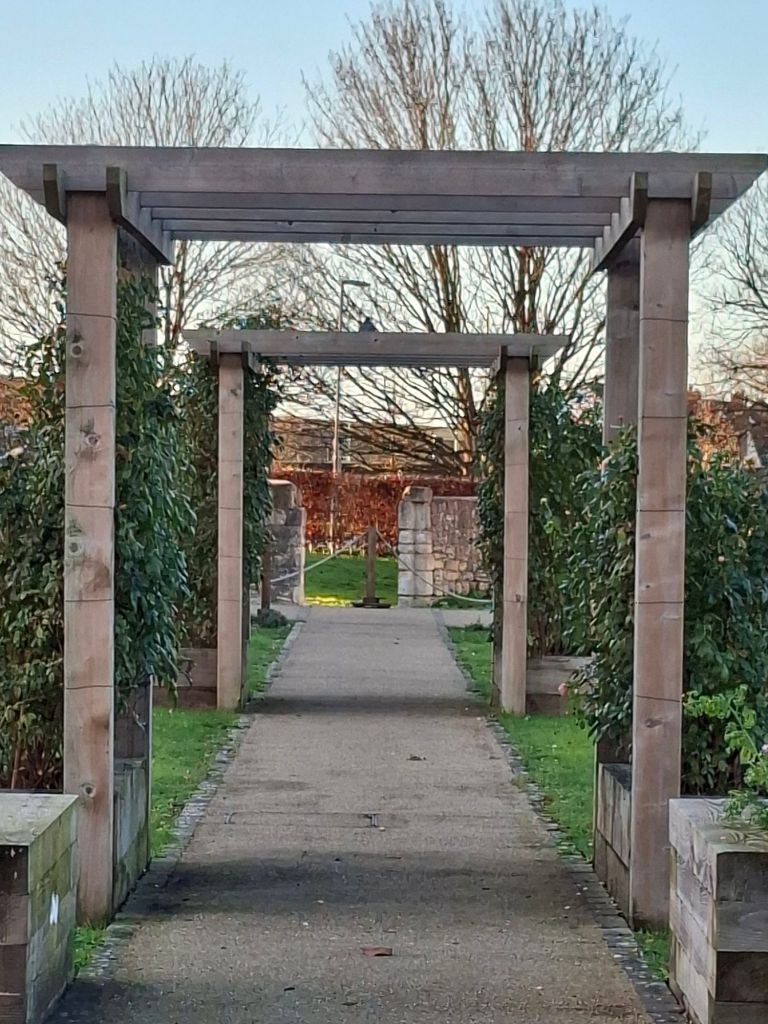
The physic garden at Llanthony Secunda Priory is one of them. It feels both open and tranquil. Earth and sky are strongly present and jointly nurturing. It is a good space for unpressured reflection.
I was in the garden yesterday afternoon, feeling my way into 2026. It was a bright moment in the day, about an hour before the still early sunset. It was cold but not freezing. I was feeling good in myself. I wondered how my life with Elaine will unfold now that we are both a little more mobile. I reflected on the dance of loving and being loved.
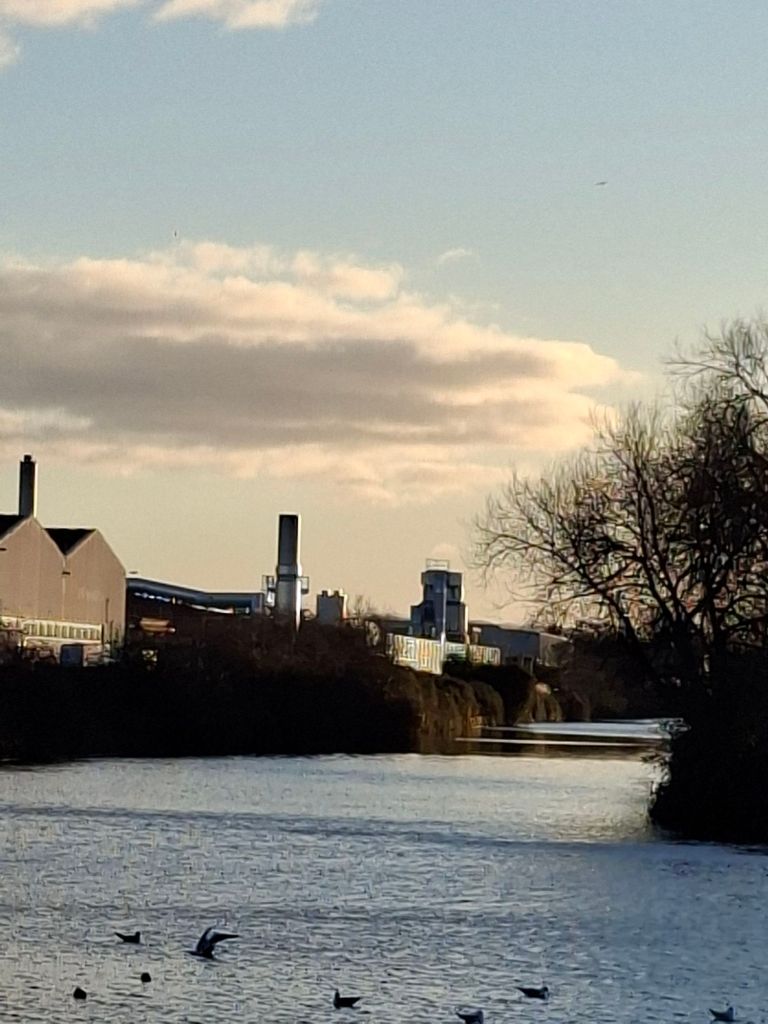
As I left the garden, I acknowledged my fears about the wider world. I walked to another favourite place, very close to Llanthony, where the Gloucester canal begins its journey out of the city. There is irrepressible bird life in the foreground and a (to me) liberating expanse of water beyond. My picture doesn’t tell me what’s around the corner and I am reminded to live with unknowing. I didn’t walk any further out on this occasion.
Returning home, I learned the news from Venezuela – in particular the kidnapping, as I would name it, of the President. I fear this may become yet another running sore in the life of the world. Modern Druidry, my spiritual anchor, has a strong commitment to justice and peace, where each is understood as compromised by the absence of the other.
Druidry isn’t an ‘above the battle’ path. Whilst not mandating any specific partisanship, this path does assert political values and points to a willingness to engage. So, in 2026, I’m asking myself more specifically where to put my now somewhat limited energies, and how justice and peace work meshes with my contemplative inquiry. Indeed, this is where my inquiry has now arrived.
Recent days have been rich in numinous images. Images that for me mark the divinity within our material reality. Above, the recent full moon: clear light at the centre and a blood moon halo suggesting a link with the earth, later to manifest in an eclipse. The sky is deep violet leaning into indigo. The shaded trees absorb the energy of the sky as well as of the earth. The whole image feels moving and inspiring – an image for contemplation which doesn’t need esoteric analysis. Its simple presence is enough.
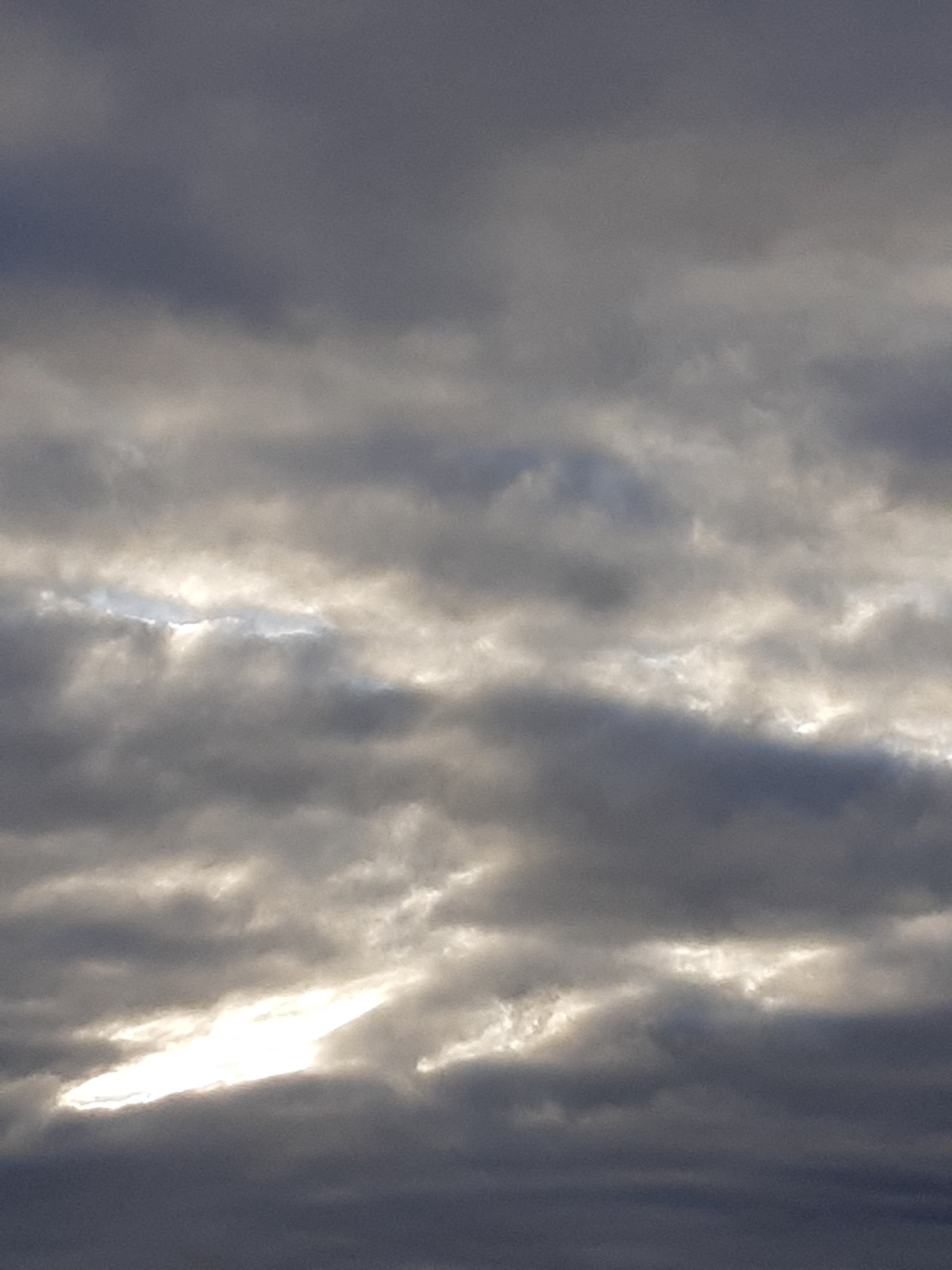
The same is true for the images that follow. Immediately below is a day time sky image. The day was frequently stormy, with high winds and hard rain. Dark clouds testify to moments of lightning, loud thunder and tumultuous rain. But the image itself records a period of respite. In a gap between the clouds, blue sky can be seen and the light pours strongly in.
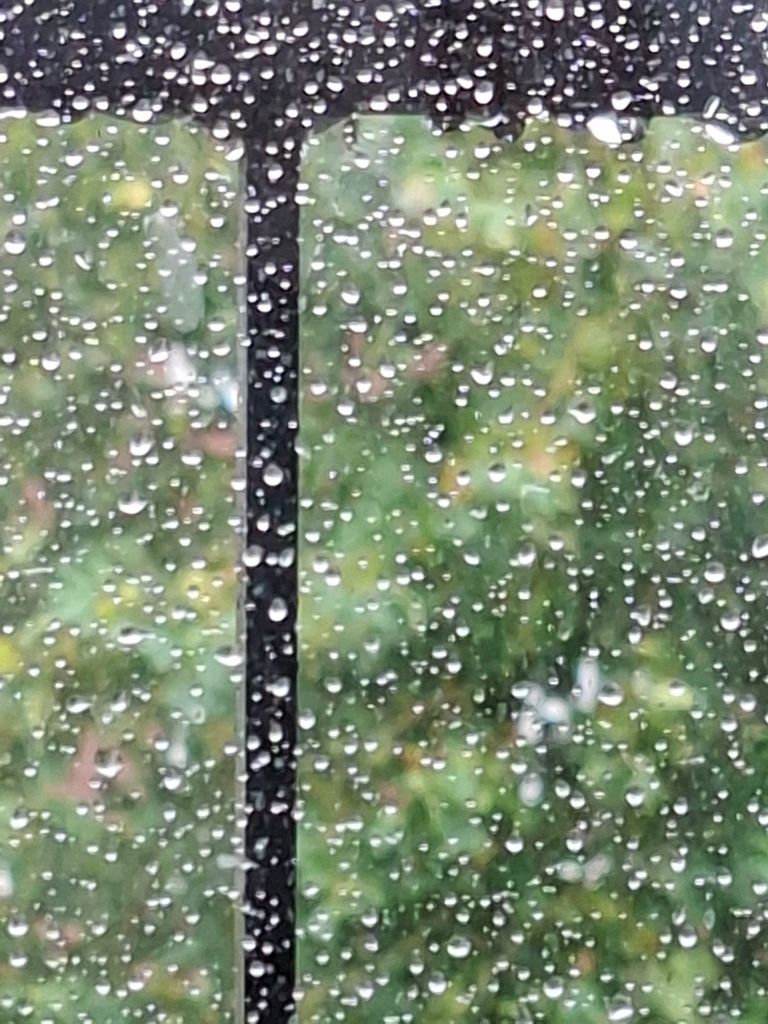
Rain on a window pane is central to the next image. The rain drops are the primary subject. What’s on the other side (a balcony garden) isn’t entirely clear in the picture and doesn’t need to be. I experience a great sense of cleansing and refreshment here – the water of life as it falls from the sky, each drop itself an ocean. I look out from my interior space, two stories above the ground floor, and connect with this bounty.
The two remaining images come from a recent walk on Alney Island – outdoors and on normally marshy ground. The first is a woodland space with its fresh entangled green. The ground still looks drier than it sometimes does, yet I sense health and recovery here. In the second image, I see a re-greened path with benignly rioting verges. Seeing what I see, I follow the green path.
Highly recommended, especially for readers interested in local initiatives to address the climate crisis. Bournebridge over Troubled Waters (1) is a sequel to Tony Emerson’s Unlikely Alliances, which I reviewed in October 2022 – (https://contemplativeinquiry.blog/2022/10/27/book-review-unlikely-alliances/). Although the new book stands on its own, I think it works best after reading Unlikely Alliances, now republished as Creating Hope in the Valley of the Bourne. The setting continues to be a fictional community on England’s south coast.
In the new book, we have reached the year 2030. The publisher’s blurb describes it as ‘a story of love and friendship’ as well as commitment to climate action. On my reading, the ways in which people do ‘love and friendship’ are integral to the action itself.
This is shown in a group of leading characters who gradually assemble together in an old rectory building. This is less by design than the need for decent housing and a belief that larger dwellings should be fully occupied. But the rectory evolves into a strong base for its residents’ flourishing.
In many ways they are a diverse group. But they all, sometimes with a little tlc, reveal themselves as naturally affectionate and ethically grounded. The culture of the house nurtures these co-operative qualities. It is a creative and supportive place to live. As part of the life of the house, the residents develop a system of peer mentoring for their work in the wider world. There’s also a concern, for some of them, about a progressive Christianity that honours the world and the flesh and is ecologically aware. I am reminded of Matthew Fox’s use of the term ‘original blessing’.
As was the case in Unlikely Alliances, the government is committed to climate action. The earlier book describes their Climate Action Plan, which has put serious wealth taxes in place, rationed fuel and food (especially meat), placed restrictions on air travel, created a Civilian Community Service Corps to provide training and jobs for the unemployed and 2 years national service for school and college leavers. Housing policy is not all about new build, but also addresses better use of existing resources.
The fields covered by our band of rectory activists and their colleagues include agriculture, hospitality, renewable energy, relevant university research, transport, housing, trades union development, clothing (new and renewed), second hand shops, and renovation, repair and maintenance services of various kinds. These are practical needs and also model a cultural shift away from throwaway consumerism. All of this work is depicted as dynamic and gaining momentum.
Temperatures are continuing to rise, and there is an unprecedented level of flooding to contend with. At the same time, vested interests and violent climate deniers, branded as ‘True Britannia’, continue to undermine the Climate Action Plan. Life goes on. Lovers get together. Children are born. Older people die and are lovingly remembered. Music is made. Rugby is played. Hospitality is exchanged. Events are organised and enjoyed. People maintain contact with family members further away, travelling throughout Britain and Ireland, though rarely further than that. It is not clear what the future will hold, but there are some grounds for optimism.
When I finished reading Bournebridge over Troubled Waters I felt as if pitched back into my own timeline. It’s as though my 2025 couldn’t be the one that led to their 2029-2034. I didn’t feel that way even when I read Unlikely Alliances in 2022. My reading of books like this seems to depend not only on who I am but when I am. If I become timeless, I can respond to these books as parables reminding us that we have the power to be better than we are. We just don’t use it enough. That’s a call to respond to whatever the outward circumstances or likely outcomes.
(1) Tony Emerson Bournebridge over Troubled Waters UK: The Conrad Press, 2O24 (www.the conradpress com)
We have had a lot of wind and rain in recent days. Saturday was an exception. The sky was clear, vividly blue. The air seemed cleansed and fresh. I stood at the back of St. Mary de Crypt, above, and understood the sensibility that reaches up, aspirationally, to heaven. I could empathise with the yearning that goes with that, looking for something clear and bright and pure. It’s as if such a sky might hold a promise of peace, a peace that was alive and able to nurture beauty.
I am also glad that, by the standards of medieval churches (including others within walking distance) this St. Mary’s is modest and balanced in its upwards aspiration. It aspires, but does not run away from the earth. The picture below shows it as solidly grounded, and not altogether dwarfing the buildings that have been its neighbours for many years. The church is still consecrated and holds services from time to time. But now it functions largely as a busy community centre with a strong continuing role in Gloucester’s life. A solid presence in the heart of the city.
Looking in on the city park, I welcomed the same clear blue sky. But my eye was mostly drawn to the trees that it framed. Although this is still a winter scene, the colour of the willow suggests a strong presence of male catkins and the cycle of growth and change that is under way.
Leaving the park I made my way to the still living garden of the ruined Llanthony Secunda Priory, once the monks’ physic garden. It still feels like a place of healing and the present version is well maintained.
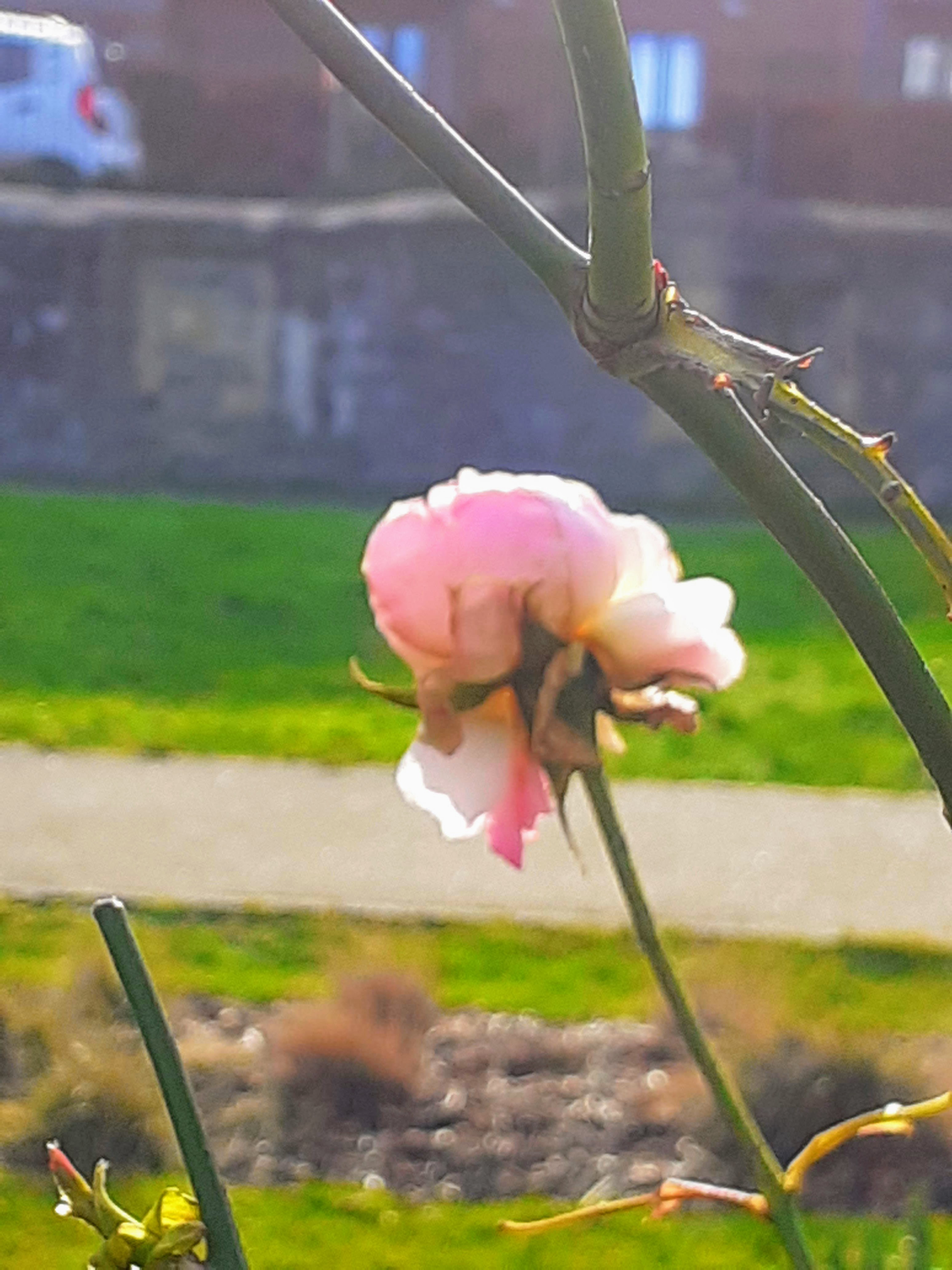
I was both surprised and delighted to see a rose in bloom. Roses have for a long time been a heart symbol for me, but I have generally associated them with summer and especially midsummer. I became aware of winter roses quite late last year and they were shop bought. I loved them but had some misgivings about their production. So I felt blessed to see one growing in the physic garden last Saturday. There’s no traditional link between Imbolc and roses that I know of. But seeing this rose in the ground, sunlight glinting on both petals and thorns, I had an Imbolc kind of feeling, as we approach the first festival of the rising year.
I took these pictures one recent evening in the wetlands of Alney Island, on the River Severn at Gloucester. It felt dark and broody most of the time. There was a threat of rain and storm though not the actuality. The feeling-tone suggested raw nature and remoteness: a place where I as a human didn’t exactly belong. Boggy land and turbulent sky were elementally indifferent to me and my concerns. I was simultaneously inspired and edgy.
Then the sky changed and I changed with it. I noticed the sun. It was declining but that didn’t matter. It was signalling its presence to me from a suitably safe distance. Comfort and familiarity returned. I was on a small reserve in the middle of a city. I had lost a moment of wildness and gained a perceived security. Being human, I both took the deal and wondered about the possibilities I may have abandoned..
My walking time is still restricted. Perhaps because of this, familiar outdoor spaces have become exotic and magical to my eyes. My limiting circumstances are paradoxically making me more focused and attentive, enhancing my felt quality of life. I am readier to find joy in simple, passing experiences.
On my contemplative walks, the shapes and colours of trees move me deeply. Grasses and sky have a similar impact. I am very aware of these July days. I am very aware of summer. I am very aware of my place in the world as the year turns in my immediate neighbourhood.
A little further away, I stand on a canal bridge (below) and look back towards the city, which seems distant and small. Water and sky give me space and perspective. I let the elements of water and air nourish me at a time when I am largely grounded.
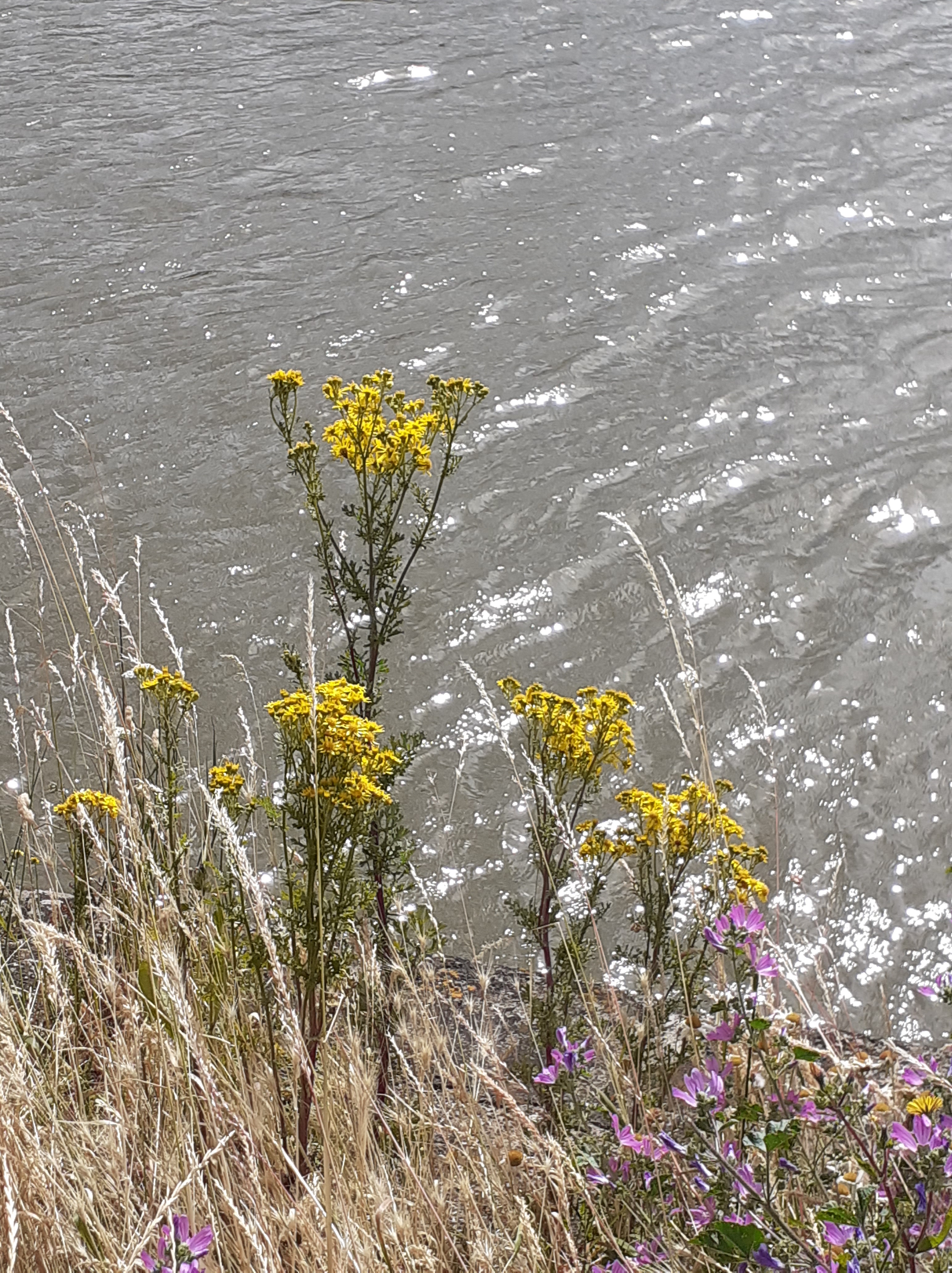
Close up at the water margin, I find light shining on the water. There is energy and movement here. The power of the sun is present in both a shifting luminosity on the water and the flowering resilience on the bank.
I shift into a meditation on the four classical elements – earth, water, air and fire – and how they work together to make the fifth (life, spirit) possible. Consciously engaged with the four, I can stand as the fifth, resourcing my individual life within a world of impermanence and interbeing.
From the modern animist perspective of his Unseen Beings: How We Forgot the World Is More Than Human, Erik Jampa Andersson looks at what we owe to our canine friends.
“In our own evolution as a species, non-humans have often played crucial roles. Plants and animals weren’t always just our food and possessions – they were are mentors, companions, even our ancestors.
“There’s one non-human, in particular, whose profound impact on our human story warrants far more recognition … They were descended from the beasts of legend – formidable hunters who commanded vast swathes of land with ferocious might. In many of our myths and legends, they were immortalized as guardians of the underworld and crucial intermediaries between the human and non-human domains. Before we had ever tamed a horse, milked a cow, or sown a field of grain, we had befriended a dog.
“… It’s believed that humans and wolves were gradually drawn together during the perilously harsh conditions of the Last Glacial Maximum [20,000+ years ago: JN]. As our paths began to cross more and more frequently in our pursuit of mutual prey, what likely started as a timid sharing of spoils led to an unusual sense of kinship between the two predators. Wolves were drawn into the warmth of human encampments, and ultimately made themselves quite at home at the foot of our beds. They offered us vital protection, companionship, and a natural ‘security alarm’ in a wild and dangerous world, while we provided them with warmth, food, and evidently also emotional satisfaction.
“Studies of canine intelligence have repeatedly attested to dogs’ advanced capacity for memory, social cognition, inferential learning, and even comprehension (and possible use) of human language. But beyond their clear intelligence, what deserves significantly more attention is the very real impact dogs have had on our own evolutionary trajectory.
“Unlike predators who prefer to prey on weaker animals, wolves thrived as persistence hunters, successfully felling giant mammals by stalking them to exhaustion in well-organized packs. As territorial animals, they also went to the great trouble of staking out their own tribal domains, maintaining a distinctly pastoral lifestyle in complex social groups.
“Such practices were wholly foreign to early humans and other simians, but by the time our ancestors found their footing in the Eurasian wilderness, they had become rather formidable and territorial pack hunters themselves. Researchers suggest that these novel human behaviours were at least partially influenced by our burgeoning relationship with canines, who introduced us to their world, taught us their hunting tricks, and afforded us peace of mind by protecting our settlements against less amiable foes.
“The domestication of dogs was one of the key forces that led to the development of fully modern humans, impacting our relationship with one another and the world at large for many millennia to come”.
(1) Erik Jampa Andersson Unseen Beings: How We Forgot the World is More Than Human Carlsbad, CA & New York City; London; Sydney; New Delhi: Hay House, 2023
“The wood thrush has a complex throat that allows it to sing two notes at the same time and harmonize with its own voice.
“Ancient poets in Sumer composed in more than one dialect, and the dialects were gendered. … For example, in Inanna’s Descent when a god or the (male) narrator speaks they use one dialect; when a goddess speaks, her words are in another mode. Noticing the difference between their tongues was a breakthrough that led to the decipherment of broken clay tablets that had long laid separated in museums across the world. I wonder how the artists performed the voices when poetry was sung.
“The score of musical Sumerian speech expands still further. ‘Wood’ had its own symbol in Sumerian, distinguishing it from the other raw materials or swaying trees. Signs expressed the difference between what is animate, inanimate, and intensely animate, in other words, divine.
“Intensively alive clay tablets on museum shelves burrow between Mesopotamian stone seals and terra cotta plaques, bearing nature symbols everywhere. We find compassion, delight, and danger in them: sea-Nammu, storm-Enlil, date palm-Inanna. Bird men on trial before bull-helmeted gods. Feather-skirted goddesses brandishing clusters of heavy fruit. Out of their shoulders leap lightning, grain, sunrays, and fishy streams.
“Humbaba* radiates melam, the vigor of being intensely alive, and Inanna radiates date palm blossoms, arrows, or bolts of energy from her shoulders. The symbol for divinity looked like a star. It radiated the vigor of uniquely dynamic forms of life.
“Look deep into life forms and see shimmering, pulsating cell membranes, the ceremonial fringed dancing-capes of being. Long before we saw a cell shimmer under a microscope, we saw life shimmer in myth”.
Dianna Rhyan Staff of Laurel, Staff of Ash: Sacred Landscapes in Ancient Nature Myth Winchester, UK & Washington, USA: Moon Books, 2023 (I plan to write a review of this book when I have had more time to digest it: see https://contemplativeinquiry.blog/2023/06/14/
*Humbaba is a ‘monstrous, though anthropomorphic, guardian of the Cedar Forest in Lebanon, equipped with superhuman powers in the form of 7 ‘auras’ (or ‘terrors’). In the Epic of Gilgamesh He is defeated (in some versions through trickery) by Gilgamesh and his companion Enkidu, who go on to cut down the forest. The domain of the ‘intensely animate’ is thereby shrunken as heroic ‘civilisation’ marches arrogantly on. Gilgamesh will learn lessons later in the epic.
See: The Epic of Gilgamesh: The Babylonian Epic Poem and Other Texts in Akkadian and Sumerian translated by Andrew George Penguin Random House UK, 2020 (2nd ed. First ed. 1999)
Highly recommended. Brendan Myers’ The Circle of Life is Broken (1) is subtitled “an eco-spiritual philosophy of the climate crisis”. Myers is a Pagan identified author and a professional philosopher who teaches at Heritage College, Gatineau, Quebec. His Paganism is naturalistically oriented, and animist in a sense that “the things of the natural world are in some hard-to-express manner alive and spiritually present”.
The book begins with an view of the Earth from outside, through the loving eyes and words of astronauts. “It is as if the Earth as a whole was only discovered in 1968, when Apollo-8 astronaut William Anders shot the famous Earthrise photograph; the image of the Earth coming out from behind the edge of the moon”. This ‘overview effect’ is balanced at the end of the book by an invitation to immerse ourselves more fully and awarely within the world, through the practices of a weekly green sabbatical and an annual ecological pilgrimage.
Between this beginning and ending there are three main sections, each addressing a ‘root question’. Each question is rigorously explored, before receiving a carefully formulated answer.
The first question asks: what is the circle of life? A key understanding is that ecologists today do not see the Earth as “an aggregate of individuals competing for resources and survival”. Rather, they “are teaching us to see the Earth as a complex system in which everything is directly or indirectly involved in all the life around it, and in which symbiosis and cooperation, across multiple levels, keep the system as a whole flourishing”. This is the circle of life that is now breaking down. “It isn’t simply changing form. It is also short-circuiting; it is falling apart”.
The second root question asks: who faces the circle of life? This concerns humans and how we deal with realities of a higher order than our own. The exploration includes a look at how people see the world at different life stages. Myers wants to know “what becomes of the human reality when cast in terms of the encounter with the Circle of Life as the ultimate reality?” He notes that the Circle goes almost unmentioned in the history of Western philosophy, and also explores a perceived a tension between our ‘being-ecological’ and our ‘being-free’.
The third root question asks: can the circle be healed? Myers quotes a saying of the philosopher Hegel: “the owl of Minerva takes its flight only when the shades of night are gathering”. When things are bad, new ideas and possibilities can emerge and philosophers especially are challenged to think big. Myers looks at the political and cultural obstacles to any healing process, with good sections on ‘eco-fascism’ and the ‘gatekeepers of human nature’. He also makes a number of specific positive proposals.
Although written in plain English as far as possible, The Circle is Broken is not a book to read in one sitting. Myers’ thinking is holistic, with room for scientific information, complex argument, deep feeling, contemplation and engagement. It is written with love and a sense of wonder, generously drawing on personal experience. I think of it as a long-term companion, a gift to anyone concerned with the climate crisis and creative responses to it.
(1) Brendan Myers The Circle of Life is Broken: An Eco-Spiritual Philosophy of the Climate Crisis Winchester UK & Washington USA: Moon Books 2022 (Earth Spirit series)
(2) For other posts about Brendan Myers’ work, see:
Highly recommended. Unlikely Alliances (1) is set in the years 2029-2033, in a fictional town on England’s south coast. It offers a degree of hope about the climate crisis, presenting a positive response to its challenges at the global, national and, especially, local levels. Towards the close of the book, one of the characters reflects on a benign economic austerity that includes social justice: “limited food in the shops, clothes and shoes having to last many years, trips abroad requiring special license … but look around us, are we really worse off?” The answer is a qualified no, on the grounds that everyday life has become less constrained and less stressful, thanks to the choices that have been made.
Unlikely Alliances offers a gentle, compassionate and good-humoured lens on a subject that can seem grim and edgy. The title refers to the changing political, professional and above all personal relationships of people working on adaptation goals in their Bourne Valley community. They are from a wide variety of backgrounds, including local government, academia, trade unions, churches, the voluntary sector, management consultancy, the hospitality industry, sports organisations and farming. Unexpected synergies are generated. The novel shows how its band of protagonists find themselves, each other and a new sense of purpose in this work. As fiction, the book has the space to be about lives as well as issues. New culture, adapted to new times, is created in the lived experience of friendship, romance and community building.
The Climate Action Plan of a progressive coalition government provides a political framework, drawing on ideas from the US 1930’s New Deal and the UK reconstruction post World War 2. It is in power because of a wake-up call resulting from a huge inundation in the Netherlands and the presence of a large number of Dutch refugees in Britain – a disaster too close to ignore. For the first time since the mid twentieth century, serious wealth taxes are in place. Food and fuel are rationed: everyone gets at least something at an affordable price. There are new approaches to housing. A Civilian Community Service Corps provides training and jobs for the unemployed and a two-years national community service for school and college leavers.
In crisis conditions, this government is broadly popular. Even so, it is vulnerable to defections within its own Parliamentary ranks, the vigorous opposition of vested interests and those who speak for them, and the violence of militant climate denialists on the street. These struggles are not minimised, and they are vividly portrayed in the book. But most of the focus is on resource and resiliency building at the local and regional levels, and on the changes in the lives of the main characters, as they open up to each other’s influence and affection. It is their efforts that prevail, since they come to make practical sense to more and more people.
A brief review cannot do full justice to a book that deals with a civilisation at the edge, presented from a stance of generosity and warm commitment to human flourishing. Tony Emerson has long experience of working with environmental issues and is also an accomplished storyteller. I found Unlikely Alliances heartening and enjoyable to read, and a well-informed glimpse into a possible near future.










 Contemplative Inquiry