Contemplative Inquiry

This blog is about contemplative inquiry

Tag: Druidry

GWYN, GWYTHYR AND CREIDDYLAD: A STORY FROM THE OLD NORTH

This post reblogged from Peneverdant looks at the traditional stories of the northern British (especially in north west England and southern Scotland) and surviving material from these stories in later Welsh literature.

Lorna Smithers's avatarThe Sanctuary of Vindos

Cherry BlossomCulhwch and Olwen is one of the oldest and most fascinating repositories of ancient British mythology. It originates from two texts; a fragmented version in The White Book of Rhydderch (1325) and full version in The Red Book of Hergest (1400). The main narrative centres on Culhwch’s quest to win Olwen for which he enlists the help of Arthur and his retinue; a medley of historical and mythological characters.

Embedded within it we find fragments of other tales which may be of older origin and have stood alone. These include the hunt for the legendary boar Twrch Twryth and release of Mabon from imprisonment in Gloucester. Most significantly for me as someone who venerates Gwyn ap Nudd, we find the story of his rivalry with Gwythyr ap Greidol for the love of Creiddylad and their battle for her every May Day.

This story is central to understanding Gwyn’s mythology. Because…

View original post 2,230 more words

ORAN MOR THE MAGIC OF SKYPE

Last night (my time) I had a Skype conversation with a group of people mostly in Nova Scotia (their early evening) and a person from Washington State, USA (early afternoon). I had been invited by Alix Sandra Huntley-Speirs of Alba Nuadh: the Druid Arts of Nova Scotia, a group which can be found on http://www.albanuadh.com

The topic was the Oran Mor, including its relationship to the contemplative thread in Druidry. As it happens I’ve been quite recently re-alerted to the Oran Mor, and it wasn’t a topic within my book Contemplative Druidry: People Practice and Potential which we also discussed a little bit. Additionally, the Nova Scotia group are wanting to incorporate their sense of the Oran Mor into their work together. So this made for a dynamic and flowing conversation. From my point of view I certainly needed to respond and think and talk on the spot. So I believe did everyone else.

I felt that I had been privileged to enter an authentic space of co-creation. I had a certainty that something of significance will come of this, both for the group and also for those of us who were in (literally) different places. I can’t ‘know’ that of course, yet I feel it strongly. Speaking for myself, I moved on in an important way. I moved from a space in which I was focused on early meanings and subsequent interpretations of Oran Mor, and how they might guide me, to one where my inquiry has become more visceral. How will The Oran Mor live through me, in my body, heart and mind. How will it shift my experience, my life world?

I appreciate all the people who made this conversation happen, including myself, and to the technology. I know that Alba Nuadh want to continue the practice of Skype conversations and I recommend others to experiment with this medium for Druid conversations.

ABOUT THE ORAN MOR (GREAT SONG)

In my last post, I presented my Amazon review of Jason Kirkey’s The Salmon in the Spring prefaced by his view of the Oran Mor (Great Song), itself somewhat indebted to earlier work by Frank MacKeown.  This followed on from my recent reading of a post involving the Oran Mor by Alison Leigh Lily at Q&A: What is the Song of the World, which I picked up through a reblog on Joanna van der Hoeven’s Down the Forest Path, and reblogged myself on https://contemplativeinquiry.wordpress.com/2015/4/2/ . Kirkey essentially sees the Oran Mor as something like the Divine Ground, or the Tao of Chinese mystical philosophy, something that includes all beings whether they be mountains, salmon, humans, midges, wolfhounds, gods or sidhe.

Soon after I read the book I discussed my take on the Oran Mor in a local radio interview, which can now  be found in the OBOD website on http://www.druidry.org/druid-way/other-paths/druidry-dharma/. Those interested can scroll down to AUDIO Druidry & Buddhism Stroud FM 141210.mp3.  At that time I was more involved in Buddhism than I am now, but generally I still stand by the things I said.

Concerning the Oran Mor, I focused on implications for the personal spiritual path rather than wider issues of cosmology. I suggested that we are invited to do three things:

  1. Learn to hear the Song. This is another way of talking about re-enchantment, the beginning of the conscious journey in paths like Druidry.
  2. Find our unique note, or sound, and sing it. Whilst each note is meaningless, indeed impossible, without the Song, the Song is itself dependent on our individual contributions.
  3. Learn to hear the silence behind and within the Song. For without that the Song, in our perception can become just a noise, even if a beautiful one. To awakening to a full awareness and appreciation of the Song, we need the dimension of silence and stillness as well as sound.

I have noticed one strange thing. When interviewed for Stroud FM (and about half-way through the piece), I confidently attributed these last sentiments to Jason Kirkey. But I’ve looked through the book again and I can’t find them there. So it seems to have been my way of inwardly digesting his book and in a sense the emergence of my own note in relation to the Oran Mor itself as concept, image and inspiration. Still, a mystery, and quite startling when I listened to the interview and then went through the text again. My self-image is one of being careful with attributions and acknowledgements. Perhaps that’s why I felt such a strong energetic pull when the Oran Mor was brought to my attention again.

BOOK REVIEW: THE SALMON IN THE SPRING

41-SK1+8TrL__BO2,204,203,200_PIsitb-sticker-v3-big,TopRight,0,-55_SX324_SY324_PIkin4,BottomRight,1,22_AA346_SH20_OU02_This is the review of Jason Kirkey’s Salmon in the Spring which I wrote for Amazon in 2010 (and for Touchstone, the OBOD in-house journal). It was the book that introduced me to The Great Song/Oran Mor – earlier explored in Frank MacEowen’s The Celtic Way of Seeing and The Mist-Filled Path. MacEowen wrote the foreword for Kirkey’s book. Kirkey revises the traditional sense (in the Christian centuries)  of the Oran Mor as a name for God. He says, rather, that “immanent in material processes is the implicate order of the cosmos: spirit, divine ground, Oran Mor (Great Song)”. I will say more about what this has meant both experientially and conceptually for me in future posts.

The review was a 5 star review and I strongly recommend it, as a book that manages both to be clear and to accommodate complexity.

“At the age of 12, Jason Kirkey had one of those ‘light bulb’ moments that can set a direction for life. A relative told him ‘nature does not require our belief. It is right there for us to experience’. Jason is from Massachusetts, of partly Irish ancestry and over time his new found awareness lead him to discover the ‘interplay of nature, story and ancestry’ as a practitioner of ‘Irish Earth-based spirituality and shamanism’.

“Jason presents personal story a thread within a larger, collective story; one in which spiritual traditions are moving through a process of re-imagination – of integration into the new story of the 21st century’. He describes going through a ‘dark night of the soul’ when an over-identified ‘attachment’ to his own tradition became narrow and constraining. He found resolution through the practice of sitting meditation and study at the Naropa University in Colorado. It wasn’t a matter of moving from one tradition to another, but of integrating the qualities of both.

“The Salmon in the Spring explores traditional stories – including the second battle of Maigh Tuireadh, Connla’s Well and the Song of the Silver Branch – in a process of creative revisioning for Celtic spirituality. It is a pioneer’s book and I recommend it to anyone interested in the possible futures of Celtic spirituality, Druidry and other paths in which the old stories are coming alive in new ways.”

Jason Kirkey The Salmon in the Spring: the Ecology of Celtic Spirituality San Francisco, CA, USA: Hiraeth Press, 2009

REBLOG: Q AND A: WHAT IS THE SONG OF THE WORLD?

This is a reblog of a reblog, with Joanna van der Hoeven’s Down the Forest Path blog as the intermediary. I too find the Oran Mor a very resonant image. Great that’s it’s getting more attention.

Joanna van der Hoeven's avatarDown the Forest Path

A brilliant blog post by Alison Leigh Lily, which has sparked something very special in my path through the forest!

The latest issue of the Alternative Religions Educational Network’s newsletter just came out this past weekend, and I was excited to be included as one of those featured in an interview with the editor, Christopher Blackwell. We chatted about my background being raised in a liberal Catholic tradition flavored by my father’s Irish heritage, and how that shaped my spiritual journey towards Druidry as I live and practice it today. It was great fun! One thing we touched on was the Oran Mór, or the Song of the World. Chris asked me to talk a little bit more about how this cosmological concept is reflected in my Druidry. You can read the excerpt here, or check out the whole interview.

via Q&A: What is the Song of the World?.

View original post

THOUGHT FOR THE DAY: STEPHEN BATCHELOR

Stephen Batchelor offers some thoughts on immediate experience and concepts of mind, soul and reincarnation.


“I had noticed that when listening to the song of a bird, it was impossible to differentiate the cooing of the wood pigeon, on the one hand, and the hearing of it, on the other.  Conceptually the two were different, but, in immediate experience, I could not have one without the other, I could not draw a line between them, I could not say where the bird song stopped and my hearing of it began.  There was just a single, primary, undifferentiated me-hearing-the-birdsong.

“Being-in-the-world means that I am inextricably linked into the fabric of this fluid, indivisible, and contingent reality I share with others.  There is no room for a disembodied mind or soul, however subtle, to float free of this condition, to contemplate it from a hypothetical Archimedean point outside.  Without such a mind or soul, it is hard to conceive of anything that will go into another life once this one comes to an end”.

Stephen Batchelor, 2011, Confession of a Buddhist atheist New York: Spiegel & Grau

EVENTS UPDATE

The Contemplative Druid residential retreat (17-19 April 2015). at Anybody’s Barn, Birchwood Hall, Storridge, Nr. Malvern, Worcestershire WR13 5EZ. is now fully booked. However anyone interested should still contact us as there is a waiting list and there is the possibility of future residential retreats.

Looking ahead, we will have a presence at Druid Camp (29 July – 2 August 2015) and we will also be  holding an open Contemplative Day in Stroud on 3 October 2015, from 10.30 a.m. – 4.30 p.m. at the St. Luke’s Medical Centre, 53 Caincross Road, Stroud Gloucestershire GL5 4EX. This will be facilitated by James Nichol, Nimue Brown and Elaine Knight. We will work with a maximum of twelve other participants, continue to build on the working methods we have developed in our local group over the last three years..

Contact grovelight@hotmail.co.uk for further information or to make a booking.

See http://contemplativedruidevents.tumblr.com for fuller events information, including the Stroud day on 3 October. For Druid Camp information see www.druidcamp.org.uk and www.facebook.com/groups/druidcamp/

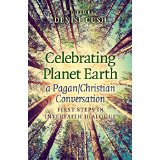
BOOK REVIEW: CELEBRATING PLANET EARTH A PAGAN/CHRISTIAN CONVERSATION

61CwdX9mE3L__AA160_Highly recommended and available for pre-order via Amazon.  This blog is an enthusiastic early alert concerning Celebrating Planet Earth, edited by Denise Cush The book comes out of a weekend ‘conversation’ held at the Ammerdown Centre near Radstock, Somerset, England, from 31 January-2 February. Originally devised as a Druid/Christian event, it was widened to include other Pagans and was intended to generate “dialogue, reconciliation and renewal”. The hope was that the participants could explore their prejudices and preconceptions, learn more about each other, and find common ground in ‘Celebrating Planet Earth’, as the event was called. The book’s contributors were all involved in the conversation.

The book is aimed at Pagans and Christians interested in making connections; academics and undergraduate students in Study of Religions taking courses on inter-faith dialogue, Paganism and Christianity; and anyone with an interest in inter-faith activities. Some of the contributors are academics in the field, but as well as academic input, there is a practical emphasis on personal spirituality and ritual practice.

I’m part of the core audience. Whereas I experience the spiritual path as ultimately beyond names and forms, I stand in the world as a Pagan Druid. I had a Christian upbringing and in recent years I have learned from the Buddhist tradition, as well as Christian-based movements such as Sophian Gnosticism and the Ceile De. All of these have supported me in my own practice and in my personal concern with developing a stronger contemplative current within Druidry. So I’m at ease with what Philip Carr-Gomm, Chosen Chief of the Order of Bards, Ovates and Druids (OBOD), calls “fusion paths” in his chapter in this book.

From where I stand the ‘Celebrating Planet Earth’ more than meets its aims. It’s a feast. I felt that each contributor had thoroughly earned their place in it. It is divided into three parts, before moving on to editor’s reflections and conclusions. I want to say something about one chapter that spoke to me particularly strongly from each of the parts, as the best way in a short space of honouring the collection as a whole.

The first part is about ‘Addressing Our Fears and Prejudices’ and for this I pick out Graham Harvey’s chapter, ‘Fears and prejudices: a Pagan view’. For me, he has a very helpful analysis of what the task is and how to accomplish it. He makes it clear that “not everyone thinks alike” or should be expected to and that diversity has room for healthy opposition – properly handled, this can be a real gift. He makes the subtle point that the negotiation of difference is not just about fear and prejudice. It is also about avoiding the presupposition that “others are like us but not quite … that other people mean what we would mean when we say or do things”. Hence we need a refined quality of listening to avoid “talking past each other”.  On the question of fear and prejudice specifically, he suggests that the two things to remember are that we should indeed “resist and challenge the small visions and petty fantasies that are imposed on others” and that “when we talk about what people do, rather than what systems are alleged to do, we will keep diversity in clear view”. He usefully writes down polarised lists of what ‘Christians’ and ‘Pagans’ are contrastingly stereotyped as standing for – and invites us to make a reality check on the items in the list. It’s a very useful way of opening the reader up to the actual experiences of individuals and groups in later chapters.

The second part is about ‘Possibilities for Co-operation’ and for this I pick out Tess Ward’s chapter, ‘Better together: transformation through encounter’. Early in her life as an ordained priest, Tess Ward went into her own version of Dante’s ‘dark wood’, a wilderness in which she needed to die to one life so as to be born into another. She lost her existing theological frameworks and says of that time: “in that wilderness, what sustained me was not theology, but poetry, silence and nature”. Without leaving her Church, she found pointers in Buddhist ideas (Anthony Gormley, Pema Chodron), Earth paths and feminist spirituality. She quotes Carol Christ as saying: “awakening suggests that the self needs to notice what is already there … the ability to know is within the self, once the sleeping draft is refused … for women, awakening is not so much a giving up as a gaining … a grounding of selfhood … rather than a surrender of self”. She also quotes Kenneth White’s poem ‘Labrador’ – “I was loathe to name it too soon – simply content to use my senses – feeling my way – step by step – into the new reality”. As, renewed, she moves back into the world and her role, she knows that interventions in the world only have value when they come from personal experience. She shares with Matthew Fox the view that the result of such a crisis is not to abandon one’s own tradition “but to demand more of it”. She now leads celebrations of the Celtic Wheel of the Year as an affirmation of her transmutation of faith within a Christian framework. Partly this is an enhanced appreciation of being grounded in the natural world and its cycles. Partly it is an appreciation of the place that resources outside her traditional faith have had in deepening her journey.

The third part is about ‘The role of ritual practice, myth, music and for poetry in each tradition and in inter-faith encounter’. For this I pick out Alison Eve-Cudby’s chapter: ‘Woven together: can Christians and Pagans engage in shared ritual?’ The author has a leading role in the Ancient Arden Forest Church in a burgeoning movement of Forest Churches. She describes this movement as “a small and growing number of Christians responding to the Call of the Earth”. Ancient Arden has an emphasis on ritual and her formal answer to the question she poses is a carefully contextualised ‘yes’. She says: “if we take earth celebration, care and connection as our basis for doing ritual together, to contribute towards re-enchanting the land in this time of ecological crisis then I think that shared ritual is possible”. She offers a fresh and energised discussion of ritual and its purpose. She describes ritual as an embodied event, and a process of framing in which dramaturgy, rather than theology, is the organising principle. Whereas logocentric approaches assume that the symbolic system expressed in ritual must be coherent, performance as an unfolding event lays out symbols in a way that reveals their inconsistencies and contradictions. The work therefore involves negotiating and holding these within the ritual container. We fashion rituals that enable liveable, regenerated worlds. Ritual is a transformative process, “the pattern of actions is designed to synchronise the awareness of the different participants – human, non-human and other than human”.

The book’s conclusions suggest that meeting itself was of great benefit, and make it clear that the people involved want to continue their work in some way (topic based subgroups are mentioned). I would simply add that this book is a gift to us all, and that I am grateful for it.

FUINN II: THE POETRY OF PRACTICE

I’m a Pagan Druid, happily placed in a tradition that values poetry and seership over dogma and system building. I experience my practice as a sort of poetry. In this poetry of practice, I am held in a compelling myth of origin, an ever-now origin, and I have found a new way of working with it.

My new collection of Fuinn (Ceile De chants in Scottish Gaelic) includes a very simple one which goes A Hu Thi (ah – hoo – hee) repeated over and over again. The Ceile De interpretation, a Celtic Christian one, is that this chant “represents the three stages of the unfolding of creation … A– the Great Mystery draws in its breath … Hu – that breath is breathed out, and creation is born from out of the Mystery … God becomes matter … Thi – the Divine nature, beingness and intention acts within the field of intention … Some Ceile De would say that this final stage represents Christ Consciousness.”

It’s a bit different for me. I’ve been working with this Fonn daily for a couple of weeks now.  I don’t chant. I use slow deep breathing with a silent awareness of the sounds. I find that for me, the A sets up a sense of latency, a subtle pulse and vibration on the brink of becoming. I feel it in the quality of my inbreath, as a kinaesthetic song. Hu the outbreath feels more vigorous and intentional; there’s a real sense of movement, expressed as exhalation – the breath moves out from my body, through my nostrils. Thi breathed in feels like the delighted expression of a new reality, one that I share in, distinct yet inseparable as a sentient being. This generally brings up feelings exhileration, gratitude and joy. It leads me on to the use of another Fonn as a contemplative and devotional prayer, which I wrote myself using my collection of Fuinn as a model.

A Brighde, A Brighde, solus an domhain; A Brighde, A Brigdhe, Brighde mo chridhe

A Vree-jah, A Vree-jah, solus an dowan; A Vree-jah, A Vree-jah, Bree-jah mo cree

Brighde, Brighde, light of the world; Brighde, Brighde, Brighde my heart

Brighde is the breath, the practice and the Fuinn. When writing my Fonn I wanted to build a felt sense of Brighde as cosmic birther, initiator into being, with a seat in my heart.  Her name evokes power and the prayer invokes relationship – identified as She is with primal generativity and the deep powers of life and land, and also One who inspires skill and accomplishment in those She supports and fosters. Through my experience of relationship and connection, deep levels of feeling and intuition are satisfied, in some way met. I feel empowered, with a sense of having more resources available to me. Why would this be? I don’t really know. What I do know is the value of practice as poetry, and the magic it holds.

The Ceile De can be found on http://www.ceilede.co.uk

LONDON, ANYBODYS BARN, DRUID CAMP

Elaine and I returned from London last week feeling pleased about our half-day introduction to Contemplative Druidry there. We were lucky (and grateful) for the colleagueship of Julie Bond and to be working with a supportive group. As people with different backgrounds and experiences, who generally didn’t know each other well, we worked together in an attentive and accepting atmosphere and were readily able to deepen into stillness. I for one was moved by this alone, as well as feeling confirmed in the belief that contemplative approaches have a role to play in Druidry and Paganism more widely.

Contemplative Druidry as we champion it doesn’t have a set of traditional teachings with which leaders nourish (or poison) their nestlings. We do talk about the book ‘Contemplative Druidry’ and the bones of what we do in our home group in Gloucestershire. But this is just to share the diverse perspectives of people who’ve been developing relevant ideas and practices in recent years. We describe our history and our practices not to impose them, but to seed possibilities, offer frameworks and then co-create new experiences with new people. I think that we managed this, in a promising way, in London.

I’ve recognised (or re-recognised) my personal preference for working in small, defined and intentional groups – however fleeting their life may be. It doesn’t take much to set the note for a small motivated group – culture-setting though the provision of some background, introductory sharing and a little lean ritual to provide definition and a safe container. In this work, I like an alternation between silence and speech. The process of deepening is supported by sharing and reflection. These define the context for our silence and stillness, as we gently move between narrative expression and simple being. Such a movement allows a group to co-create a collective moment in which all individuals can have a stake without surrendering their own existing understandings.  And for this I think that a small group (up to about a dozen or so) is best. Much beyond that, and the event has to be run a bit differently – tilting towards a more managerial approach or risking a relative loss of definition, or both.

We have two further ventures in the fairly near future. The first is our April retreat at Anybody’s Barn near Malvern. We have decided to reduce the numbers of available places both for the reasons above and to make the accommodation more spacious for those who attend. We already have enough bookings to go ahead, and at the time of writing have room for just 3 more people. I look forward to seeing how our way of working develops over a two day and two night period, and also to working with two other companions from our Gloucestershire home group (JJ Middleway and Karen Webb) as well as Elaine.

The second is Druid Camp 2015, which itself has a contemplative theme overall this year, including a dedicated working space co-ordinated by Nimue Brown, another member of the Gloucestershire group and also part of Contemplative Druid Events. Within this larger Druid Camp programme, Druid Contemplative Events will have a two hour session. Offering our session inside a bigger event (probably about 300 people) will be an opportunity to look at where ‘Contemplative Druidry’ may be going in the wider world (now that the meme is out there), and how our own approach fits in. Because the larger community will have already been created, we’ll be able to work with a larger than usual group in our session.

I see the Contemplative Druid Events journey as a continuous inquiry – a cycle of development, action and reflection followed by re-development, action, reflection … and so on, hoping thereby to improve Contemplative Druid Events’ ability to provide introductory sessions, workshops and retreats. These are still early days.

See http://contemplativedruidevents.tumblr.com for retreat information and http://anybodysbarn.co.uk/ for retreat accommodation. For Druid Camp information see www.druidcamp.org.uk and www.facebook.com/groups/druidcamp/

Earth Eclectic

music that celebrates Earth and speaks to the heart

Sarah Fuhro Star-Flower Alchemy

Follow the Moon's Cycle

Muddy Feet

Meeting nature on nature's terms

Rosher.Net

A little bit of Mark Rosher in South Gloucestershire, England

Becoming Part of the Land

A monastic polytheist's and animist’s journal

selkiewife

Selkie Writing…

Charlotte Rodgers

Images and words set against a backdrop of outsider art.

Prof Jem Bendell

living with metacrisis and collapse

Towint

The pagan path. The Old Ways In New Times

The Druids Garden

Spiritual journeys in tending the living earth, permaculture, and nature-inspired arts

The Blog of Baphomet

a magickal dialogue between nature and culture

This Simple Life

The gentle art of living with less

Musings of a Scottish Hearth Druid and Heathen

Thoughts about living, loving and worshiping as an autistic Hearth Druid and Heathen. One woman's journey.

Wheel of the Year Blog

An place to read and share stories about the celtic seasonal festivals

Walking the Druid Path

Just another WordPress.com site

anima monday

Exploring our connection to the wider world

Grounded Space Focusing

Become more grounded and spacious with yourself and others, through your own body’s wisdom

The Earthbound Report

Good lives on our one planet

Hopeless Vendetta

News for the residents of Hopeless, Maine