Contemplative Inquiry

This blog is about contemplative inquiry

Tag: Druidry

BOOK REVIEW: THIS ANCIENT HEART

A good book review of This Ancient Heart, copied from A Bad Witches Blog – http://www.badwitch.co.uk

 This Ancient Heart: Landscape, Ancestor, Self is a new compilation of essays on subjects at the core of many pagans’ spiritual beliefs – the relationship between the landscape, our ancestors and ourselves.

“Edited by Caitlín Matthews, author of dozens of books including Singing the Soul Back Home and Celtic Visions, with druid and activist Paul Davies, This Ancient Heart offers ten different perspectives on how our place of birth, the country we live in, those who have lived before us and those we share the land with now, can inspire and affect our spirituality.

“It starts with beautiful and inspiring writing from Emma Restall Orr and Philip Shallcrass (Bobcat and Greywolf) and ends with an afterword by celebrated historian Professor Ronald Hutton, author of Pagan Britain. The words of other luminaries grace the pages in between.

“Emma offers an impassioned call to respect the bones of those who have died – for them to remain buried rather than be dug up by archaeologists and put in museums. She has long campaigned for this as a founder of Honouring the Ancient Dead, and in her essay here she explains her thoughts and feelings on this subject. I know her writing is powerful because it made me question how I had thought about this in the past.

“Questioning is good. This is, overall, a book that makes you question preconceived ideas, not a book that reaffirms comfortable complacency. Professor Ronald Hutton, at the end of the book, states that some may feel aggrieved over this, ‘but they should not, if they really intend this book to have some effect on readers.’

“The essays are extremely wide-ranging in their subjects and styles. Greywolf talks about his connection with a tribe of wolf spirits – how that came about where it led him, including his own questioning of whether to eat a venison feast offered to him despite previously having been vegetarian.

“Jenny Blain looks at how the ‘spiritual ways of ‘seidr’ might give some insight to an understanding of the interaction of place and human-person, and how in turn relationships with wights [land spirits] and ancestors form part of how seidr is worked’.

“Robert J Wallis offers an evocative description of falconry on a cold winter morning and how it fits into the world-view of a heathen archaeologist.

“Caitlin Matthews, as well as co-editing the book, has written a chapter called Healing the Ancestral Communion: Pilgrimage Beyond Time and Space. This offers a practical guide to spiritually connecting with the land in which one lives and also the land of one’s birth. As Caitlin points out, these can be very different. She provided meditative and sensory exercises to heal the rift of disconnection.

“Camelia Elias offers a eulogy for a modern ancestor of tradition, Colin Murray. Throughout the 1970s and 80s Murray was responsible for the revival of all things Celtic in a way that was quite unprecedented”

“Pagans are not the only ones who find meditating on nature can be a spiritual practice. Quaker Sarah Hollingham offers examples and practical exercises in Tuning into the Landscape, that people of all spiritual paths and none could learn from.

“Science is addressed in How Genetics Unravels the Role of the Landscape in the Relationship Between Ancestors and Present by Luzie U Wingen.

“David Loxley looks at linguistics and how the way we frame sentences affects our view of the past, present and future.

“In The Heart of the Land: The Druidic Connection, Penny Billington looks at the importance of keeping balance – symmetry – between literal reality and spiritual yearning. She asks the reader to ‘imagine yourself for a moment on a hill at sunset, with the quiet buzzing of the insects invisible in the soft light.’ She continues: ‘From your vantage point you look over the dark lake to the west, where the molten streaks of light reflect in a shimmering water-path leading to you, and with the quiet stars appearing in the deep blue overhead. This momentary turning of our attention to the world of nature, even in the imaginal realm, can prompt a surprising sense of relaxation that slows our breathing and our over-busy brains’. She points out: ‘Science backs up these instincts’.

“Perhaps that is the overall message of the book; that it is good for us to feel a connection with the landscape and with those who have gone before us. Whether we follow a religion or spiritual path, or whether we are atheists, it is good to know where we are and where we come from, and spending time in the natural world can be healing.

This Ancient Heart: Landscape, Ancestor, Self is published by Moon Books

ANAM CARA

This post is about the anam cara, or spiritual friend in Gaelic tradition, and about the use of language. Recently I wrote about allowing more space and using fewer words. This wasn’t a renunciate view of language, which I value highly. My hope was that “more space” would allow “something new to emerge”, and that my words, though fewer, would be better chosen.

I am starting to see some fruits from this strategy. I’ve also recently said that I experienced Sophia “as a psychopomp or inner guru”. Now I would say, “anam cara”. This term is known from the early days of Christian monasticism in Ireland and is in current use within the Scottish-based Celie De – see http://www.ceilede.co.uk/

It is a mentoring relationship, not a peer one, but it includes the sense of a real personal connection, not just a role. People speculate about whether it is an inheritance from indigenous Druidry. Subjectively, my relation with Sophia feels like this: much more than psychopomp or inner guru. In my understanding ‘anam cara’ is gentler, subtler and less formal.

The Sophia I experience is not a rhetorical device (personification) or a glove puppet arbitrarily selected by me. She is also not – in my sense of things – a mind independent celestial being. Rather she is the felt presence, the voice, and at times the image of a deeper nature – and my inner link with the Oran Mor (the song of what is). From a personality perspective, this deeper nature is ‘not me’ and not owned and controlled by ‘me’, so I have to work at relationship.

From the perspective of deeper nature, the separation doesn’t exist. At times Sophia can point beyond herself and then I may enter the subjectivity of deeper nature and experience the world differently. The little ‘I’ and the anam cara are as one, beyond separation and immersed in the song. But most of the time that’s not how it is in my subjective life world, and a link to that fuller reality is provided by Sophia and her nudgings and promptings.

I don’t make any fundamental distinction between nature and spirit. All, for me, is contained in the word nature (or terms like the Oran Mor).  Nothing is lost. Cosmos, relationship and practice remain the same. But the use of a nature language is truer to my experience.

TOWARDS A CONTEMPLATIVE NOTE: REFLECTIONS ON 3 OCTOBER

I sense that we are finding a contemplative note in Druidry. To an extent we have had it for a while, but it’s becoming more assured. Last Saturday we had an open contemplative day in Stroud for Druids and fellow travellers willing to join us. I worked with Elaine Knight and Nimue Brown as co-facilitators. Some of the participants travelled a considerable distance for the event. Many of those present were new to each other. Some were new to this kind of event.

Yet the day felt very cohesive. For me, the group note resonated strongly though also softly. The vibration was a subtle one, interwoven with silence and stillness, whilst also clear and distinct. Building community together, and working together, we were more than the sum of our parts. We created a group identity, and sounded our note. I understand this as our small contribution and offering to the Oran Mor, the great song of what is.

I’ve been reflecting on how this happened, and on lessons to take forward. The main single factor has to be that everyone in the group understood the offer, was open to the experience, and wanted it to work. This is such an obvious aspect of a success that it can go unrecognised, like the so-called ‘placebo’ effect in healing: people engage their good will, almost unconsciously, and it has a strong positive effect.

On the facilitator side, there are several things we got right and that I want to remember. Having a record will help that.

We made a good choice of venue for the occasion, and this was supplemented by the blessing of a golden autumn day. The programme relied on activities, which someone at another of our events named as “simple but profound”. This choice is definitely part of our note. The building of our ritual container, whist still ‘lean’, was just a little bit more elaborate than in our local group. It clearly marked our sacred space and our expectations about how we would work in it.

I also found myself casting our circle in ‘the contemplative grove of druids’. This time I was careful to avoid the term ‘grove of contemplative druids’.  I have found naming ‘contemplative druidry’ to be a useful way of classifying a sub-set of interests within druidry. But I now believe that to think of people themselves as ‘contemplative druids’, a separate species within larger druid genus, is potentially divisive and doesn’t allow individuals to have inconveniently multiple interests. At the same time, when we join together in a contemplative event, we are indeed being intentional about contemplative practice. I have come to think of Contemplative Druid Events as a vehicle for a latent grove, a grove which constellates during our events and therefore deserves to be named. This grove provides space for our emerging note.

The note was considerably enriched when Nimue led a session that involved us in finding simple personal sounds and vocalising them over an extended period of time. After a while we could sense those diverse and discordant seeming sounds (our individual notes) come together as a collective sound where people spontaneously worked together. So the group note was worked for, discovered and explored in an absolutely literal way – and one which changed the atmosphere of the room. Later in the day, Elaine took the group through a version of an energy body exercise that went on to identify and reinforce the energetic connections between people, linking us as a group at subtle levels before moving into an animistic exercise. In my experience as a participant, these sections of the day were simple, profound and powerful too.

We made sure that we varied the pace of the day. Some of the work was relatively intense, but we had more leisurely and relaxed spaces as well, enjoyed time outside and made sure of an abundant supply of refreshments. For me, 3 October 2015 was a step forward in the evolution of our work. My heartfelt thanks to everyone involved.

THE PEACE OF SOPHIA

This post is about contemplation and peace – peace as lived experience, rather than as hope or idea. I am discovering the peace of Sophia.

In my practice I experience Sophia as a psychopomp or inner guru. Conventionally she is a guide of light. Actually she is a guide of dark as well. Either way she points beyond herself. Generally using a method of subtle prompts and suggestions, she opens my way to a deeper nature.

Just recently she has been showing me a way to peace as an inner space, like a well-spring at the core of being. This is not a new idea, nor yet a new experience. But there’s more clarity around it, more definition – also, in a felt sense, more weight.

It began with an intense vision of braided threads – black, white and red, the traditional goddess colours. I felt nudged to identify the colours with peace, joy and love. Peace had some primacy. Although this is a triadic image, I began to see it as a four: black, white, red and black. Here the peace of the Goddess is defining. It is linked both to origin and return, and to spaces within and between other forms of experience. It may seem like simple negation. But it is an active force, like the ‘emptiness’ in some Asian traditions.

The good news is that ‘peace’ does not depend on external conditions. It can be accessed and developed within, both individually and collectively. This is why, to a certain extent, practices like meditation can be a protective or resiliency factor in relation to bad outside conditions. The trick here is to avoid a descent into the wrong kind of magical thinking and expect too much. Challenges still have to be dealt with at their own level: it’s just that having a baseline of inner peace tends to make practitioners more resourceful in dealing with the busy apparent world.

Cultivating the peace of the Sophia is currently centre stage in my solo work. In his foreword to Contemplative Druidry Philip Carr-Gomm quoted the well-known line “Deep peace of the quiet Earth”. My extension of that thought, based my current experience, is to say ‘as without, so within’. I believe this double recognition is necessary. To the extent that I am a nature mystic, the aspect of nature with which I am most concerned is me, in particular a deeper nature behind the surface personality.  Only by attending to both this nature within and nature around and beyond me can I refine the relationship between them and so identify any gift I might have for the world.

MORE SPACE, FEWER WORDS

Just recently I’ve noticed a reluctance to write very much. I feel curious about this shift in my attention, and intuitively positive. My contemplative inquiry continues and my aims are the same. Yet the level of reading and writing that has shaped recent years no longer makes sense. It’s as though a phase has ended and a certain kind of job completed as far as it needs to be. I’m happy with what I’ve done, and I’m ready for a change in focus and expression. More space, fewer words: a reduction in apparent productivity, and an opportunity for something new to emerge if I’m willing to allow it.

In the meantime, I continue my contemplative practice in Druidry both solo and within my local group. I feel refreshed and sustained by these – so nothing’s changed there. More widely, Contemplative Druid Events is offering a contemplative day in Stroud on 3 October, a Dark on the Moon workshop in London on 7 February, and a weekend retreat near Malvern from 15-17 April. I’m enjoying this cautious expansion of outreach. Anyone interested in this work can follow its progress on:

http://contemplativedruidevents.tumblr.com


NATURE MYSTICS REVISITED

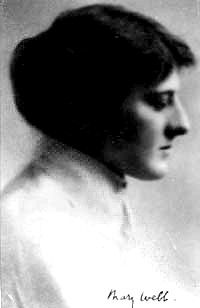
Mary_webb“Through a gradual awakening to natural beauty, she reached a perception of beauty peculiar to herself. She began to perceive analogies. Nature became for her, not a fortuitous assemblage of pretty things, but a harmony, a poem solemn and austere. It was for her no longer a flat painting on the wall of life. Beauty breathed there, light shone there that was not of the flower or the star. A tremor, mysterious and thrilling, seemed to run with the light through all matter, through a single open blossom of the wild gean tree and through the whispering forest.”*

In an earlier post – https://contemplativeinquiry.wordpress.com/2015/7/6/ – I introduced Nature Mystics: the Literary Gateway to Modern Paganism as a new and refreshing departure in Moon Books’ Pagan Portals series. This book, which I highly recommended, looks at literature seen to have nourished the culture and sensibility of modern Paganism. Rebecca Beattie, the author, has dedicated it “to all those Nature Mystics who have come before and continue to inspire us to a spiritual path with their words”.

This post is about a single book that I have read since reviewing Nature Mystics and would probably not have read otherwise. This is The House in Dormer Forest by Mary Webb. Unlike the better known Precious Bane and Gone to Earth, it is set at about the time of publication (1920) or perhaps a little earlier. I don’t think of it as a brilliant novel, but it does testify to a form of nature mysticism, one that brings together external nature, human consciousness, and the divine.

Running through the book is an assumption of the interdependence of humans with each other and with the rest of the natural world. Yet there is also a balancing emphasis on the personal, inner journey of individuation. The author makes this comment on two somewhat negatively portrayed matriarchal characters: “these two had been meant for individualists. This not being allowed, they became egoists, which always happens on the principle that if you deny a child sugar it will steal from the sugar-basin. The human mind, unless it is to remain nescient, must have itself, must develop and explore itself. The more vital, the more awake it is, the more it must turn inwards. For within, deep in the tenebrous recesses of sub-consciousness, man hopes to find God. Not in churches, not in his fellows, not in nature will he find God until he has found all these things mirrored in that opaque and fathomless pool, lying within his own being of which, as yet, we know nothing.”

If the inner journey has been made possible, the experience of creation is transformed. Human relationship can flourish and the human role of witness to external nature can become a mutual gift. I was brought up with an educated aversion to ‘purple passages’ and their perceived sentimentality. Yet now, I am happy to offer this one. “So it was with Michael and Amber. Arms were stretched forth in welcome. Flute notes fell from thickets. The eyes of bird and insect, the dewy gaze of a few late flowers, peered on them with new meanings. Along by the streams the willows, clad in silver-dusted feathers, meditated like stately birds. Willows are of all trees the most mysterious. It is said that they were the first of trees that before a bird sang or a bee quested for honey the world was full of willow forests. There the wind went in spring, a visible golden wave, deeply laden with yellow pollen. There, in the glistening air, with none but their own silver tongues to break the silence, the willows waited. They waited for the insects to come to their yellow aments; for the birds to flash in and out, making low music in the dusk. But they awaited also the perception which would complete their creation. The flowers that bloom unknown for a thousand years only exist when at last one flower blossoms under a perceptive eye. For that flower the pollen was launched spring after spring, the nectar gathered, the seed rounded. So the understanding of beauty is a priesthood. Amber and Michael gave to the forest almost as much as they gathered from it as they wandered in the warm and mellow harvest weather.”

*Mary Webb The House in Dormer Forest The Echo Library: Fairford, Gloucestershire, England, 2012

POEM: TALIESIN

Poem by Ross Nichols, who founded OBOD in 1964.  I like his seamless interweaving of naturalistic, mythic and theosophical themes – because for him they are one integrated experience. For me the poem reads like the work of someone who needed to live it in order to write it.

Here the Fish enters

The world of dark water

Pre-birth waters

Waterworld Elysium

Lake Tegid and the magic weir.

Much does he grow,

Many his transformations.

Warm are the waters,

The dark waters of Tegid,

And they swiftly flow

Downwards as he grows.

Talisin is found in the weir:

Elphin finds him

In a bag of leather

Where the waterworld dams,

Where the womb-waters

Are falling terribly

At the weir of birth.

The entering fish

Was the spirit of Taliesin:

His transformations

Were the many souls and bodies of Taliesin:

Leading him gently, drifting him slowly

Into the bodily definition of Taliesin,

His bag of leather,

His separated skin.

And Taliesin, after his separated life,

His songs and his wonders. His challenges and his fame,

Shall enter again as a Fish,

Shall know again sufferings and transfigurations

And the waters of Tegid.

For Taliesin was ever upon earth,

Knew all things, suffered all things.

And Taliesin shall be

In many wonderful shapes,

A grain of wheat and a hare

Sown and running

While there are fields, and the spirit of men,

Leaping alive at a harvest,

Or silver in the waters of time.

This poem can be found in the collection Prophet Priest and King: the Poetry of Ross Nichols edited and introduced by Jay Ramsay Lewes: Oak Tree Press, 2001.

CONTEMPLATIVE DRUIDRY: MEME OR MOVEMENT?

On 3 October Contemplative Druid Events (CDE) – see http://contemplativedruidevents.tumblr.com – will hold its last planned event for 2015. This will be a Contemplative Day, in Stroud, Gloucestershire, England. The facilitators will be James Nichol, Elaine Knight and Nimue Brown. Our programme is designed for a group of up to 15 people, and 12 are already committed. With just over a month to go we have a comfortable size of group, with room for a few more.

CDE offerings are built around insights from the book Contemplative Druidry: People Practice and Potential about the kinds of contemplative work that most seemed to resonate for the present generation of Druids. We offer sitting meditations of based both on a bare attention and on active imagination. We have outdoor walking meditations and opportunities simply to be, with awareness, in natural settings. We use methods that draw on creative arts. We have developed ‘Awen space’ as a group opening to, in and as Spirit. We build our repertoire as we gain in experience.

Is CDE spearheading Contemplative Druidry as a movement? I don’t see it that way. CDE was created as a minimal level of organisation for a single purpose. This is to offer a particular kind of event to small groups of Druids and fellow-travellers willing to join us. In doing this, we also promote the contemplative Druid meme, which now seems to be well recognised in modern Druid culture. But the CDE brand does not exhaust the possibilities of contemplative Druidry and we wouldn’t want it to. Modern Druidry, which is in some senses a postmodern Druidry, has a strong commitment to free exploration and diversity. The contemplative meme will find its place within that wider cultural framework. For better or for worse, we will never, as a collective, be organised around a Druid ‘four noble truths’. Contemplative Druidry will mean different things, and inspire different journeys, for different Druids.

POEM: PRIMARY CHIEF BARD

Gnostic Bardistry from The Book of Taliesin? These are just five of the verses, selected by me from one poem. What interests me is not so much working out what to us seems like a set of puzzles, but how something new and dialogical is created by interweaving indigenous material and biblical references. I say a few words in italics after each verse.

Primary Chief Bard

Primary Chief Bard

Am I to Elffin

And my native country

Is the region of the summer stars.


The first statement is a statement of identity. It begins with a local (though important) role, and goes on to the cosmic and transcendent. This taps into a sense of belonging somewhere else (whether perceived as a place or state). It makes me think that statements like ‘being here now, in the present’ and ‘my native country is the region of the summer stars’ only seem contradictory: meaning depends so much on context and the work that words are doing. If the two statements are separated and polarised, they diminish into limiting slogans. Taken together, they can lead us to a different quality of experience.

I was full nine months

In the womb of the hag Ceridwen.

Before that I was Gwion

But now I am Taliesin.

Taliesin’s current personal identity is explained in terms of a second birth, in this life, triggered by the actions of Ceridwen. This second birth fits him to be a Bard and take the Bardic name ‘Radiant Brow’, one that bespeaks major shifts in energy and consciousness. It also allows the sense of the summer stars as his ‘native country’ to be real within him. It orients him to his true home.

I was patriarch

To Elijah and Enoch.

I was there at the crucifixion

Of the merciful Mabon.

Elijah and Enoch ascended to heaven without dying. They have deep roles in Jewish mysticism. They are in the tradition of so-called ‘ascended Masters’. If we treat these metaphors (insofar as they are metaphors) as concerned with enlightenment, then – as their ‘Patriarch’ – Taliesin is claiming primacy over them. He is in some sense a Christ figure and so can be present at the crucifixion of another Christ figure, referred to here by the name of the magical child of British tradition ‘the Mabon’.


I was at the cross

With Mary Magdalene.

I received the Awen

From Ceridwen’s cauldron.

The poem presented here is a product of the later Middle Ages, likely as late as the fourteenth century. Traditions giving Mary Magdalene the role of major teacher and possibly spouse of Jesus were deep underground, but everyone in Christendom Knew of her witnessing role at both the crucifixion and the resurrection, and so as privileged in some way. She also shares her name with Mary the mother. The two couplets together bring the idea of Christ’s transformation through death on the cross with Taliesin’s transformation from Ceridwen’s cauldron, and the critical role of a feminine power in each.

I was in the larder

In the land of the Trinity

And no one knows whether my body

Is flesh or fish.

Despite all the above, Taliesin remains an enigma – a shape shifter and trickster. He defies definition and description and won’t fit into any box that attracts unwanted piety. Other readers may understand this verse much better than I do, but I see it as very tough minded and unwilling to let me parcel up this poem and tie it with a neat bow. To the extent that I get a sense of medieval Welsh literature, this seems very characteristic. However, in the most obvious ‘Land of the Trinity’ (Western Christendom) people want to know where everyone stands. The accepted narrative is that we’re with Jesus the avatar of Pisces and through the sign of the fish we know him. And yet the old Celtic world has many trinities and many fish, including the salmon of wisdom. And Taliesin’s body might be flesh after all. So we are thrown back on our resources, with riddling words and ambiguous images to reflect them.


The complete poem can be found in Taliesin: Shamanism and the Bardic Mysteries in Britain and Ireland by John Matthews London: The Aquarian Press, 1991.

POEM: ARTHUR

Behind storm-fretted bastions gray and bare

Flame-crested warriors of Cunedda’s line

Feast in a gold ring, – their targes shine

Along the wall and clang to gusts of air;

And in the shadow, torches blown aflare

Reveal a chief, half human, half divine,

With brooding head, starred by the Dragon Sign,

Hung motionless in some undreamed despair.

But when he starts, three torques of twisted gold

Writhe on his breast, for voices all men fear

Wail forth the battle-doom dead kings have borne;

And as the mead-hall fills with sudden cold,

Above the wind-tossed sea his heart can hear

The strange gods calling through their mystic horn.

Arthur is one of Six Celtic Sonnets written by Thomas Samuel Jones and included in From the Isles of Dream: Visionary Stories and Poems of the Celtic Renaissance, selected by John Matthews and with a foreword by Robin Williamson (Floris Books, 1993).

Thomas Samuel Jones (1882-1932) came from Welsh and Irish stock and was born in Oneida County, New York State, near the Adirondack Mountains. Each of the six sonnets reflects a facet of Celtic tradition. They were originally published in 1930 as part of the collection Aknahton and Other Sonnets. For those of us who resonate with Druid and Celtic spirituality, they are part of our modern cultural ancestry.

Earth Eclectic

music that celebrates Earth and speaks to the heart

Sarah Fuhro Star-Flower Alchemy

Follow the Moon's Cycle

Muddy Feet

Meeting nature on nature's terms

Rosher.Net

A little bit of Mark Rosher in South Gloucestershire, England

Becoming Part of the Land

A monastic polytheist's and animist’s journal

selkiewife

Selkie Writing…

Charlotte Rodgers

Images and words set against a backdrop of outsider art.

Prof Jem Bendell

living with metacrisis and collapse

Towint

The pagan path. The Old Ways In New Times

The Druids Garden

Spiritual journeys in tending the living earth, permaculture, and nature-inspired arts

The Blog of Baphomet

a magickal dialogue between nature and culture

This Simple Life

The gentle art of living with less

Musings of a Scottish Hearth Druid and Heathen

Thoughts about living, loving and worshiping as an autistic Hearth Druid and Heathen. One woman's journey.

Wheel of the Year Blog

An place to read and share stories about the celtic seasonal festivals

Walking the Druid Path

Just another WordPress.com site

anima monday

Exploring our connection to the wider world

Grounded Space Focusing

Become more grounded and spacious with yourself and others, through your own body’s wisdom

The Earthbound Report

Good lives on our one planet

Hopeless Vendetta

News for the residents of Hopeless, Maine