Contemplative Inquiry

This blog is about contemplative inquiry

Tag: Druidry

INQUIRY: A 19 YEAR CYCLE

On 1 September 2002 I began a journal, which I have kept up ever since. I was inspired by some advice on the spiritual dimension of life. The gist of it was: stay in contact with supportive companions; live mindfully; meditate; develop a spirit of inquiry; be willing to take risks; find time for supportive reading. My journal was primarily an inquiry tool, and spiritual inquiry has been a leading theme of my life ever since.

My Druid training was, in part, an inquiry. My contemplative exploration has been, in part, an inquiry. My book Contemplative Druidry (1) had an inquiry flavour, offering readers a democratic, multi-vocal, and open approach to the subject. I named this blog Contemplative Inquiry because my personal inquiry has included engagement with other movements and traditions.

Now, 19 years on, inquiry is losing momentum as a guiding principle. It is beginning to feel obsolete. I notice that 19 years is the length of a Metonic cycle (2), roughly the time it takes for the phases of the moon to recur at the same time of year. 19 years also once marked the completion of a formal Druid training. May be there is something in the ancient interest in this lunisolar relationship. Perhaps it has had a subtle influence on me: as above, so below.

I cannot imagine a satisfying life without both contemplation and inquiry, and all of the learning from my dedicated inquiry years stands behind me. But now is a time for an informal harvesting, a process that feels quite different, not a project but a more natural grounding and deepening, and less self-conscious in the conceptual realm. I will continue the blog, and see how it develops and changes in the coming months.

(1) James Nichol , Contemplative Druidry: People, Practice and Potential, Amazon/Kindle, 2014.  https://www.amazon.co.uk/contemplative-druidry-people-practice-potential/dp/1500807206/

(2) The Metonic cycle is named after after the ancient Greek philosopher Meton, who used a 6940-day period as the basis for his lunisolar calendar. Such calendars appear in many cultures, and may have informed the construction of our ancient sacred sites.

INTIMATIONS OF RENEWAL

I took this picture on the North Somerset coast (UK) last September. It is an autumnal and sunset picture, which paradoxically offers me a vision of renewal. The location is Weston-super-Mare, at the Brean Down end and facing the Island of Steep Holm. It is a place that draws me, and I wrote about it at the time (1).

Elaine and I will be spending time there in September this year, investigating a possible move. We both have reasons for wanting this, and it has been in our minds for awhile. But the uncertainties of Covid-19, its wayward management in England, and our own separate health problems have slowed us down.

I have become unused to moving. On my return to the UK in 2003, I lived in Bristol before coming to Stroud at the end of 2008. By that time I was already familiar with this old Cotswold mill town, more recently the birthplace of Extinction Rebellion.. For many years I was essentially living a Stroud/Bristol life. It hardly felt like moving.

In the new plan, Bristol will still be our city. But I’m a different person now, and the move feels like a major operation. Almost daunting. I feel stable and secure in my current home, and a part of me is tempted to cleave to the apparent stability and security of a familiar property and community.

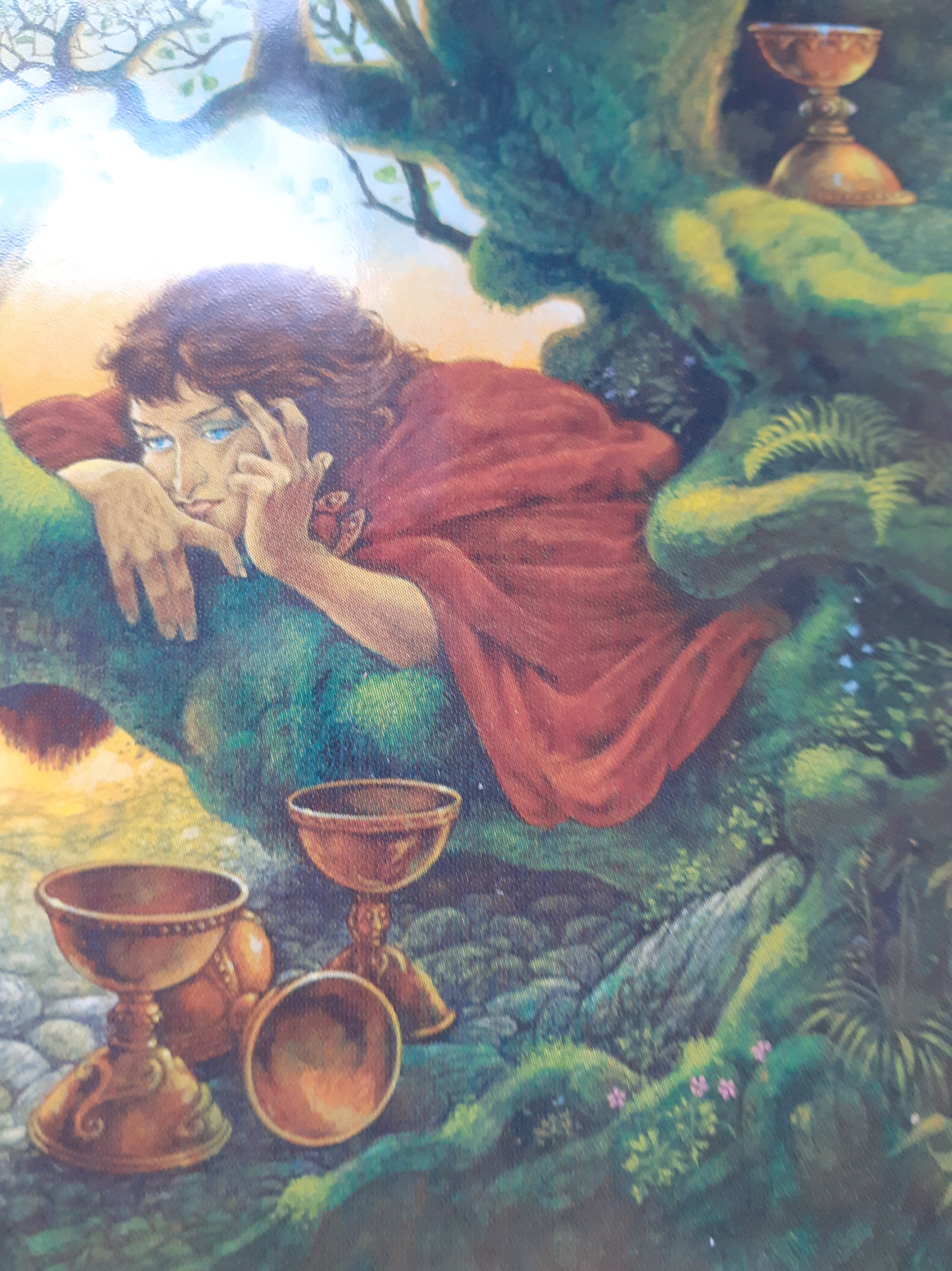
Another part is concerned with the energetic costs of stagnation. Yesterday I drew the 4 of Cups card from The Duidcraft Tarot (2). I am using the pack as a simple psychic mirror, rather than for classical divination. I draw a card when I feel a need to check-in with the oracle. In this instance, I found myself faced with a jaded youth. I am neither jaded nor a youth, But I do feel as if I have been in Stroud for long enough. I catch myself at times in moods of lassitude and an undefined discontent. I am looking for a different experience, and knowing this helps me to raise my energy levels and recover a willingness to take risks. Writing about it is an energiser.

The risks themselves are modest. Weston is familiar to us and the distance not great. There are shared pragmatic reasons for the choice. Beyond these, we both look forward to open ourselves to the local energy of earth, sea and sky in the liminal space where they meet. I also like the notion of living in the English west country, where I was born, and having the opportunity to re-connect with the psychogeography of the region and in particular its coasts, more deeply.

I vividly remember seeing this solitary crow on last year’s visit. It was busy, head down, making a living on the muddy, still estuarial beach. It was a peaceful moment, framed between sunlight and shade. I stepped into peace myself, better to capture the moment and to avoid disturbing the bird. I felt alive and receptive to the setting, which even then felt like a potential home.

Only time will tell.

(1) https://contemplativeinquiry.blog/2020/09/23/

(2) Philip and Stephanie Carr-Gomm The DruidCraft Tarot: Use the Magic of Wicca and Druidry to Guide Your Life London: Connections, 2004. Illustrated by Will Worthington.

TOWARDS THE SEASON OF HARVESTS: 2021

In the northern hemisphere we will soon be entering a quarter of harvests and waning light, starting with Lughnasadh/Lammas. In the south there will be the energy of rising light and growth. In the manner of the yin/yang symbol. a taste of that energy is present here too. As I approach Lughnasadh/Lammas this year, I am living largely day-at-a-time, and sense only the faintest outlines of what might be coming into my life. I intuit change, but not its nature, scale. or specific form.

So I look to harvesting possibilities that are within my power. I wrote recently that Druidry and the Eckhart Tolle Community are currently my key points spiritual reference. This invites a new synthesis and integration of spiritual practice and understanding. Druidry remains primary. It is the container. But there are two areas in which the Tolle work has strongly influenced me.

The first is through reframing my understanding of meditation. Instead of being a specialist activity, it has become the gateway to living from what Tolle calls ‘stillness’, ‘presence’ and the ‘Deep I’. These simple terms are pointers to a way of experiencing the world that cannot be accurately languaged but is easy to recognise if we are open to it. Meditation, here, is a state of openness and availability. It does not require extended time or any specific form.

I still value formal daily practice. It is a way of keeping fit in this domain. But while, in the past, I have seen meditation as a specific activity, I now see that anything can be a meditation if it is a gateway to stillness, presence, or the Deep I. Tolle tells a story about his early days as a teacher, when he would sometimes make presentations to the Theosophical Society in London. The first time he showed up with a set of notes virtually amounting to a script. His eyes were frequently on it and although he was received respectfully, many of his listeners’ eyes were glazing over. The next time he abandoned this approach, faced his listeners and simply waited, open and trusting, for the words to come. They did. He connected. Energy levels in the room were high, and the presentation was successful.

I’ve been taught versions of this lesson a number of times in my life, but I clearly needed to hear it again with a new and different language. For my second Tolle influence concerns ‘awen’. As a Druid I might want to use ‘awen’ in the context of Tolle’s story. But it doesn’t feel right. I love the awen chant and the awen symbol. I love the alchemy of the Hanes Taliesin and the way it points to possibilities of human transformation. But it belongs in a world that is not my own, that of Brythonic bardistry and seership. I feel more connected to my own experience when I use Eckhart Tolle’s language. It holds more possibilities for me. I do not count myself as among the awenyddion. But I can speak from stillness. I can speak from the Deep I.

A TAROT CONTEMPLATION

An attentive juggler keeps two coins in the air. As I contemplate the coins, they speak to me of well-being, health, and blessing, rather than every day money. They are coins of a different order, and they draw me into the card.

I was glad to pick the two of pentacles, from The Druidcraft Tarot (1), in my first use of cards for many months. I knew I wanted only one card in the moment of picking it up. The image, when I saw it, gave me the pleasure of recognition, of something about this feeling right for me. A relaxed juggling of no more than two coins seemed spacious and doable. I thought, ‘I can walk into the picture and be the figure on the shore-line. I can put myself into this flow of movement and attention with these coins’.

Now within the image, I notice that I have my back to the sea, and I assume a prior knowledge that the boats are friendly and capable of outrunning bad weather. I experience pentacles as having a protective resonance, so long as I am active in my own protection. I feel that, somehow, my juggling of the coins is a part of that protection, and protects the boats as well. I do not have a story about why this should be the case, but I trust that it is. That is all I need to do.

Bringing myself back into my normal state, I feel trust in my current direction, even though I cannot fully articulate it. I feel trust in my existing resources, of which the Tarot and my ease with it are two. I think about moving between different states of attention, in ways that are spacious and not overloaded. My contemplative inquiry is not now about asking fundamental questions or exploring new avenues. It seems more to be about balance and flow and living from an underlying stillness.

(1) Philip and Stephanie Carr-Gomm The DruidCraft Tarot: Use the Magic of Wicca and Druidry to Guide Your Life London: Connections, 2004. Illustrated by Will Worthington.

HIGH SUMMER 2021

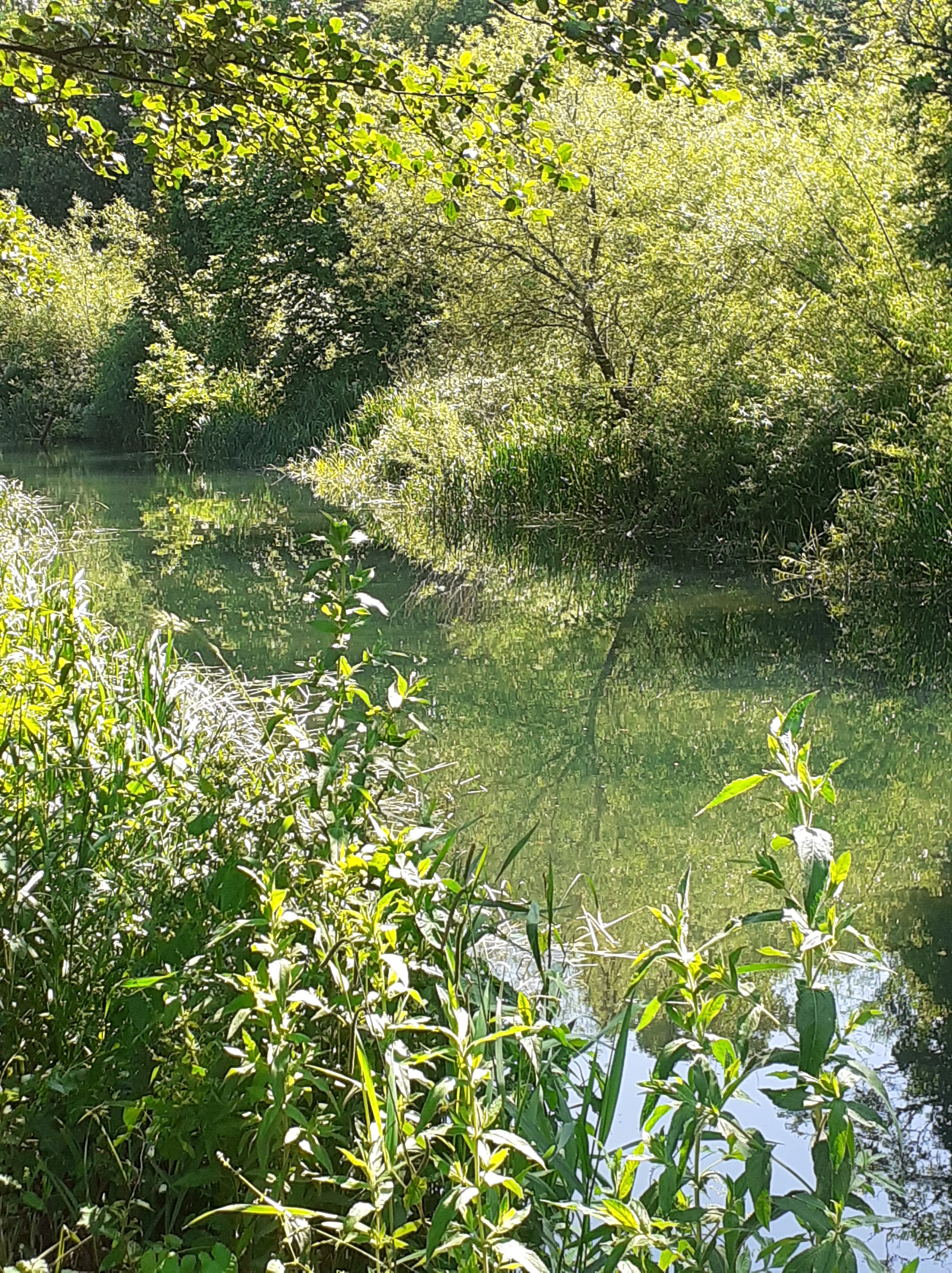
It is some time since the solstice. Where I live, the time between sunrise and sunset has shortened by about 20 minutes. Though the change is still slow, it is noticeable now. But I do not yet feel a pull towards Lughnasadh/Lammas. I took these pictures on 11 July, and this is its own time, a time of abundance and ripening. They give me the sense of a summer that has kept its promise and is managing to mature despite a year of patchy weather.

At this stage, the willows below, early to leaf, remain majestic in their abundance – whilst hinting at a tiredness that will manifest in late summer, when energy starts to withdraw, and turn inwards.

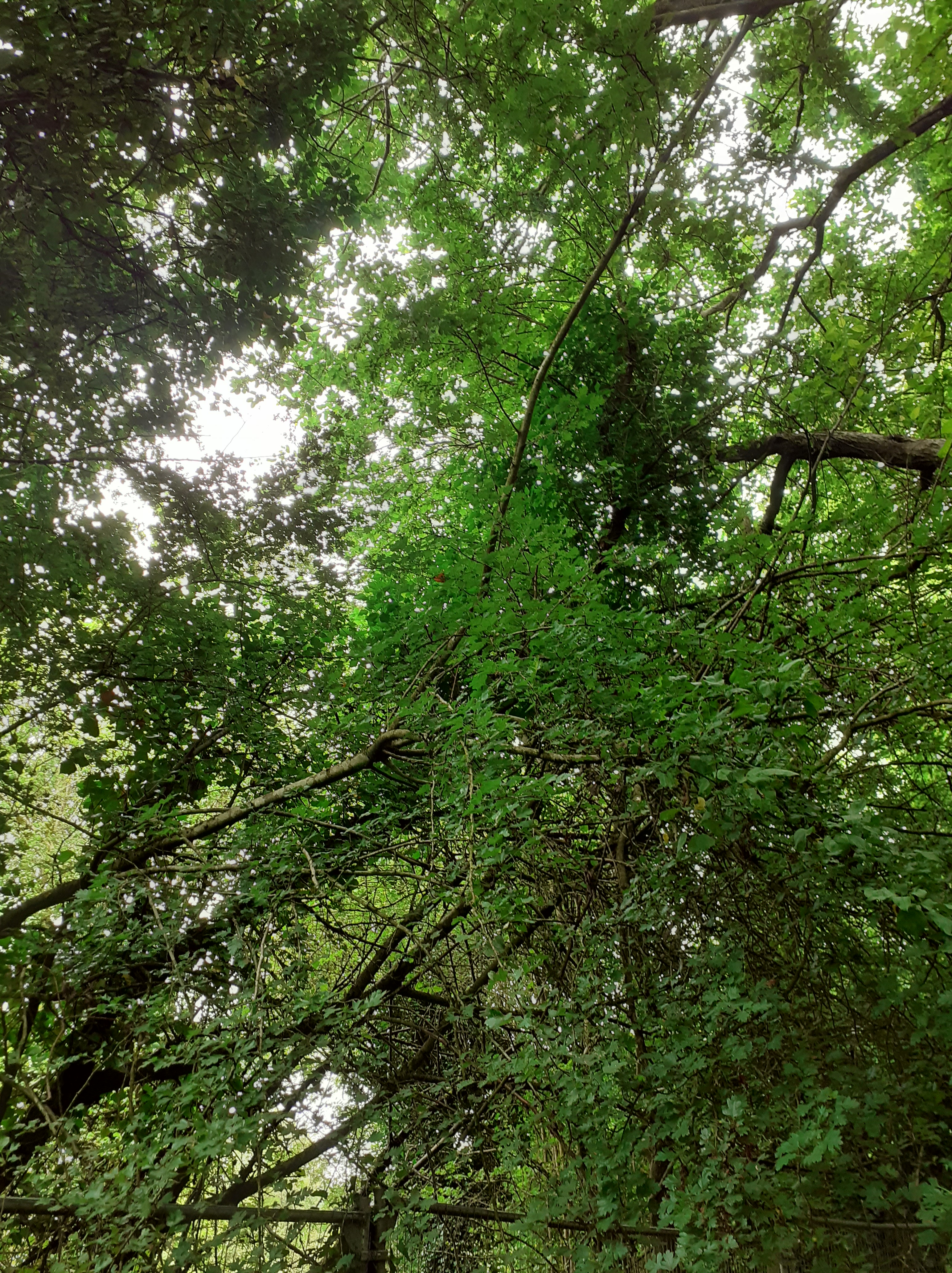
But this isn’t the case with the treescape as a whole. In the woods I continue to find the fresh green of a vigorous life energy. It is the time when I get the strongest sense of a canopy, even in a relatively small and modestly wooded space. It hints at the glories of old forest, even though it isn’t one.

Whilst there is a sense of flora moving into new stages of their cycle, the process is gradual. There is time and leisure for slow change. There is no sense of having to be perfectly one thing and then, immediately, perfectly another.

Above all. I notice subtle differences in shape and colour within a setting of predominantly green growth. My gaze is drawn by intricacies of variation, contrast and patterning within this always astonishing display of life, and its natural will to be and become.

In mid-July, life rests in its moment, with harvesting some way off.

TREE MANDALA: GORSE

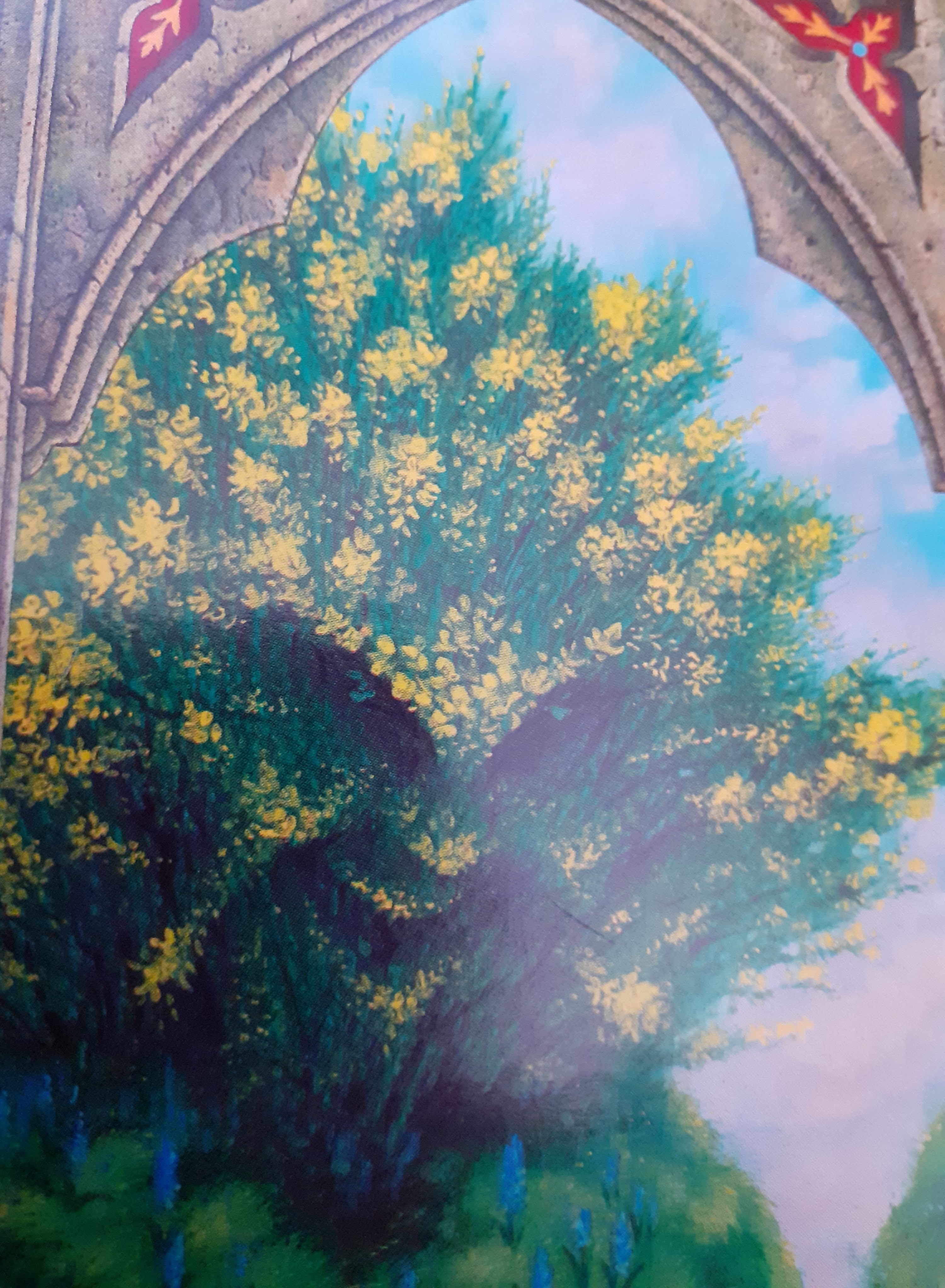
In my wheel of the year tree mandala (1), gorse covers the period from 9-31 July. It is the last tree of the summer quarter, handing over to apple at Lughnasadh/Lammas on 1 August. The illustration is from The Green Man Tree Oracle (2).

I know from my childhood that gorse can make a tame, gently sloping hill seem wild and edgy. Navigating through gorse requires an eye to self-care. Flowering gorse is not confined to summer, but for me it is anchored to summer in memory. Seen from afar, gorse was a vivid harbinger of the summer holidays with days of warmth (rising to heat) and freedom to roam. It carried a hint of adventure and disinhibition. Sometimes the promise was fulfilled. Sometimes there was a hot heavy dullness broken by only storms, and a degree of frustration. July days were unpredictable.

Gorse (ogham name Onn) was sacred to the Irish god Lugh, and thus to light, to all manner of skills, and to the fire in the head of ecstatic creativity. Lugh has a trickster aspect, and can be seen in certain lights as more a god of lightning than of the sun. He has a cousinship with the Brythonic Lleu Llaw Gyffes, the warrior magician of the fourth branch of the Mabinogi. He has also been linked to the Norse Loki, for tricksterism is an aspect of the smouldering fertile mind.

Gorse makes good fuel and so has an obvious role in fire festivals. In Brittany, 1 August was marked by the Festival of the Golden Gorse and gorse has has strong associations with the faery folk. It is a plant of power. We cannot make assumptions about how we stand with it. A wary respect might be wise.

NOTE: This post brings to an end a year in which I have featured the sixteen trees in this mandala. I began on 16 July 2020 with an out-of-sequence Rowan (3), because I had had a vivid encounter with a rowan tree in the woods. (Its time in the mandala is 9-31 October.). Then I moved on to apple (4) and blackberry (5). From the Autumn Equinox (1) the enterprise became more systematic. As a blogger, I won’t be repeating the cycle in the same way in the coming year. Once for the record feels enough.

(1) This mandala is based on my personal experience of trees in the neighbourhood as well as traditional lore. Moving around the summer quarter from Beltane, 1 May, the positions and dates of the four trees are: Hawthorn, south-east, 1-23 May; Beech & Bluebell, south-south-east, 24 May – 15 June; Oak, south, 16 June – 8 July; Gorse, south-south-west, 9 – 31 July. The autumn quarter then starts with Apple at Lughnasadh/Lammas. For a complete list of the sixteen trees, see https://contemplativeinquiry.blog/2020/autumn-equinox-2020-hazel-salmon-awen/

(2) John Matthews & Will Worthington The Green Man Tree Oracle London: Connections, 2003

(3) https://contemplativeinquiry.blog/2020/rowan/

(4) https://contemplativeinquiry.blog/2020/three-trees/

(5) https://contemplativeinquiry.blog/2020/mr-bramble/

BOOK REVIEW: A STORY WAITING TO PIERCE YOU

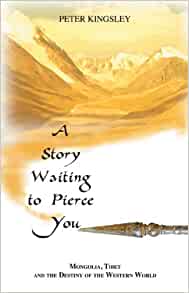
Peter Kingsley is a scholar of early Greek philosophy, and A Story Waiting to Pierce You (1) links Pythagoras (ca 590-470 BCE) with central Asian shamanism. Pythagoras got most of his own education outside of the Greek cultural sphere, and Kingsley focuses here on his relationship with Abaris the Hyperborean*, using ancient texts to guide him.

Abaris is not a personal name. It places its bearer as an Avar. The Avars are one of the peoples ancestral to modern Mongols. They still and still live under their older name in Dagestan, a Russian republic in the northern Caucasus. Kingsley’s Abaris walked, or in some sense flew, from his homeland to meet Pythagoras. He carried a golden arrow in his hand, though in a way it carried him. For Abaris was a wind walker, and on a mission.

Kingsley explains, using evidence from pre-Buddhist Tibet (where the practice has survived within Buddhism) as well as Mongolia: “Wind walkers could go anywhere; cover enormous distances with apparently effortless ease; find their way over every conceivable obstacle and straight past the most impassable landscapes … in one unbroken trance, holding their god inside them. That single-pointed focus, just like the intense attention required of an arrow maker or demanded of someone shooting arrows at their mark, had to be totally undisturbed”.

Abaris had been shown by the god within him that in Pythagoras he would find a living incarnation of the same god. Greek texts name the god as Apollo –  understood here primarily as a god of healing, trance and prophecy. Abaris gave his arrow, as planned, to Pythagoras, in recognition of his true nature. Through Pythagoras, he hoped, the Greek world would be healed and purified.

Pythagoras had considerable success. He attracted an enthusiastic following, and coined the term philosopher (lover of wisdom) to describe his work. He taught kindness to humans and animals and championed an honest and simple life. He believed in metempsychosis (transmission of the soul after death into a new body, human or animal), and in the explanatory power of number. But he was one teacher among others, and even his enthusiastic followers played down the influence of Abaris and his culture. It did not suit the self-image of the Greeks to recognise nomadic barbarians as possible teachers. They were not alone in this. A similar view prevailed in China.

Why does this matter to us? Because we have kept on making the same mistakes. The early stigmatisation of Hyperborean culture in the ancient world has been repeated in the stigmatisation of the cognate cultures of First Nations people in North America. The Chinese version survives in their current governance of Tibet and Xinjiang. In the spiritual domain, we still maintain a disparaging distinction between shamanism and ‘higher’ traditions. By contrast, Kingsley describes shamanism as “constantly engaged with practising respect and consideration towards all forms of life in an overall framework of concern for both visible and invisible worlds” He adds, “the fact that a transcendent realm beyond the senses happens, in the hands of most true elders and shamans, to be seamlessly interwoven with this world to the point where the two become one is a sign not of inferiority but of a far greater capacity for integration.”

A Story Waiting to Pierce You is not Peter Kingsley’s most recent book, but for me it is the most accessible, in both price and presentation. The first half is written in a simple, spacious, almost mythic style that goes straight to the heart. The second half, comprising notes, offers more than a set of references, looking at scholarly arguments and matters of interpretation. I find this arrangement a satisfying way of handling the material overall. I strongly recommend this book for people interested in the cultural history of spirituality and the issues it raises.

(1) Peter Kingsley A Story Waiting to Pierce You: Mongolia, Tibet, and the Destiny of the Western World Point Reyes, CA: The Golden Sufi Center, 2010

*Hyperborean = from Hyperborea, beyond the north wind.

PERCEIVING NATURE

“When you perceive nature only through the mind, through thinking, you cannot sense its aliveness, its beingness. You see the form only and you are unaware of the life within the form – the sacred mystery. Thought reduces nature to a commodity to be used in the pursuit of profit or knowledge or some other utilitarian purpose. The ancient forest becomes timber, the bird a research project, the mountain something to be mined or conquered” (1)

Since the beginning of March I have had a connection with Eckhart Tolle’s community (2). Over the next couple of months I will decide whether to make an ongoing commitment. Part of the process is to identify the points of compatibility with my Druidry so that both may support an integrated spiritual life. The view of nature is one point of compatibility, and there is a link to my sense of contemplative Druidry when Eckhart Tolle says: “When you perceive nature, let there be spaces for no-thought, no mind. When you approach nature, it will respond to you, and participate in the evolution of a human and planetary consciousness.” (1)

(1) Eckhart Tolle Stillness Speaks: Whispers of Now London: Hodder & Stoughton, 2003

(2) https://eckharttolle.com/

MIDSUMMER STASIS 2021: A CELEBRATION

A blue sky frames quiet branches. It is the midsummer standstill in my neighbourhood – a period extending over several days. I took the picture on 23 June, in the early afternoon, a time of soft warmth and sunshine, with me able to meet it. I had been prepared to miss it this year, and was delighted when the opportunity came.

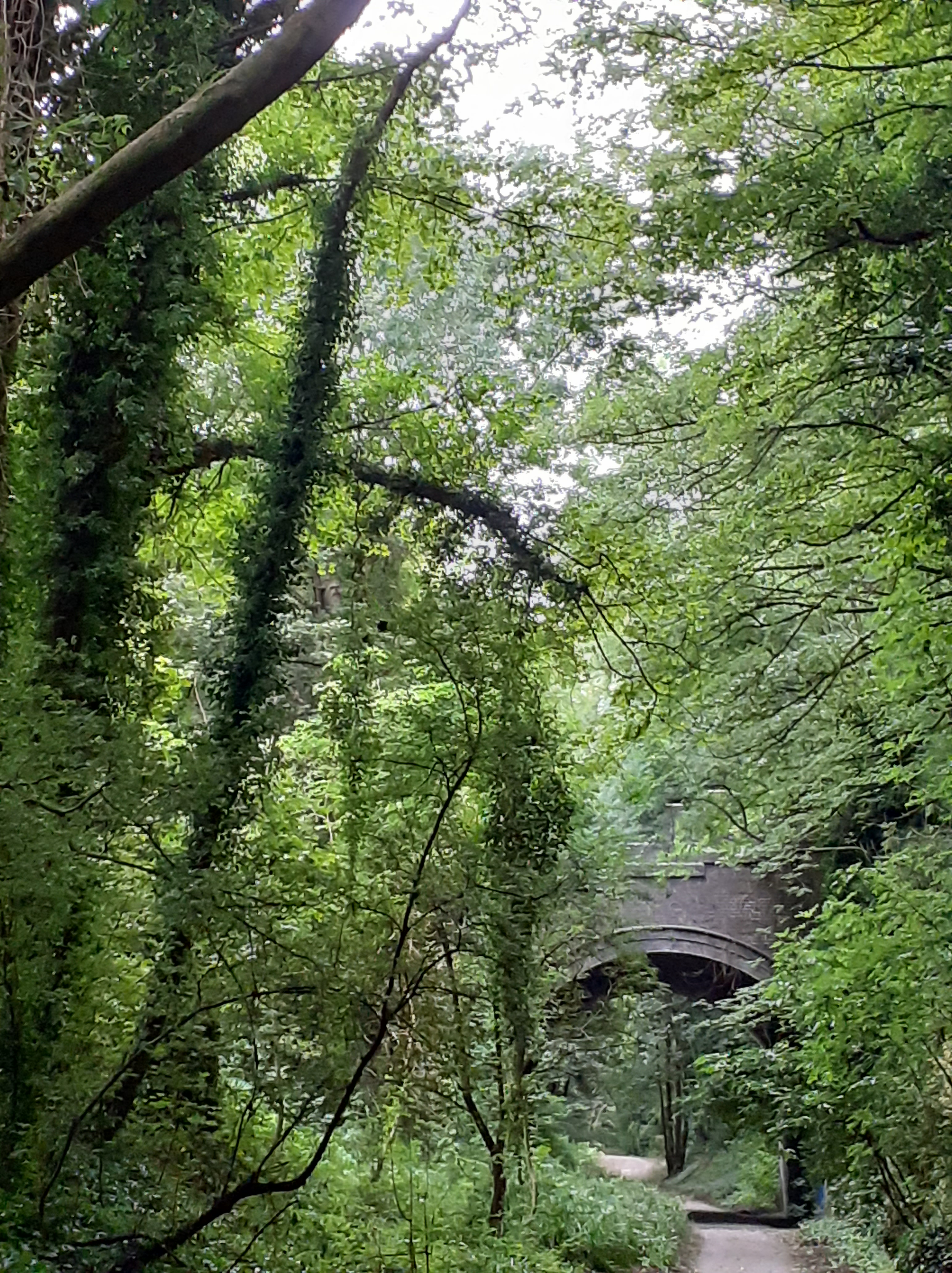
The picture below shows the play of afternoon light and shade in a semi-sheltered spot, where a footbridge crosses a stream.

The next picture makes it clear that there is substantial built environment too here – one of the things I like about this landscape – in the form of weathered railway arches visible behind the foreground green.

The nearby canal looks sleepier than the stream, as if dreaming in the lushness of the moment.

Below, water margin nettles stand out as part of the richness and fecundity of this space, calling for my attention. Clearly capable of being an irritant and seen largely as a nuisance today, the nettle was highly valued by our ancestors for food, fibre and medicine. The Druid Plant Oracle (1) describes it as “a storehouse of goodness” bearing hidden gifts. Nettle tea is widely thought of as health promoting, and modern research confirms that it is rich in antioxidants and vitamins. It is suggested that its polyphenols are helpful in managing chronic illnesses that involve inflammation. I am taking it up as a drink.

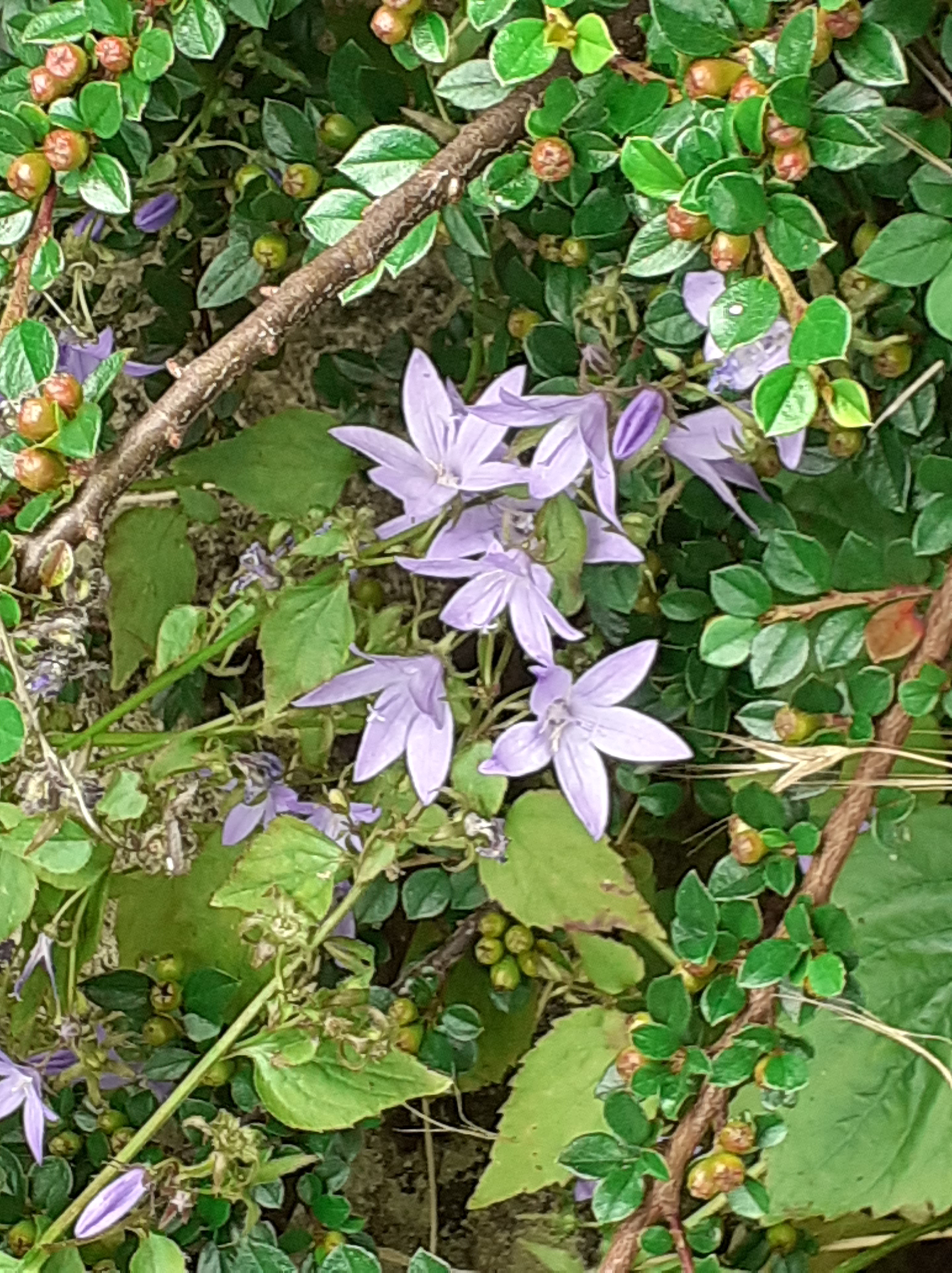
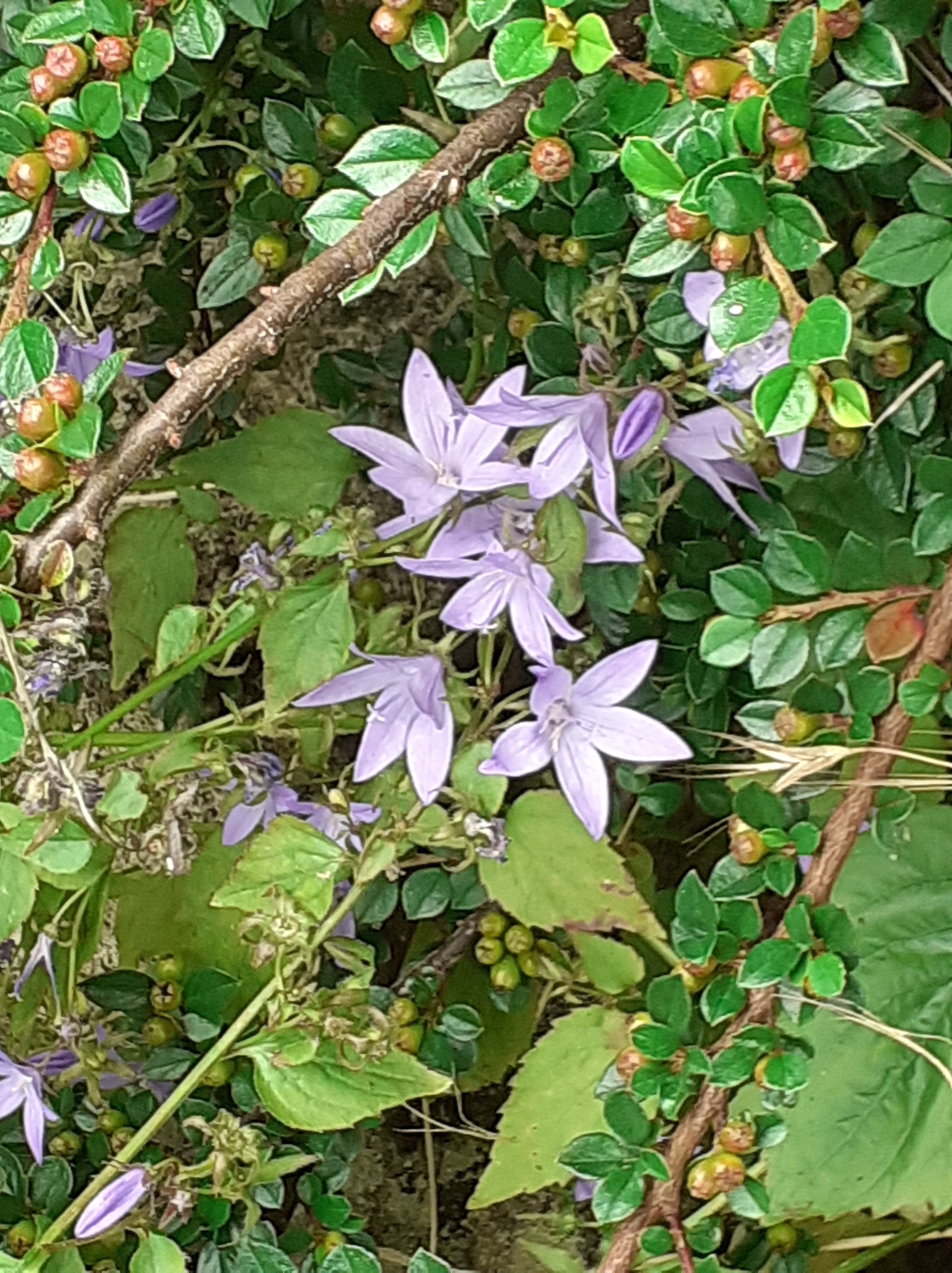
There are other, varied riches beside the path, easy to ignore, but also easy to notice and enjoy for their beauty and vitality alone.

I went for this walk without any intention of taking photographs and I travelled quite a way before I began. I felt as though the landscape was persuading me to record the day, and thus bear witness to the midsummer stasis. Yes, it happened in 2021, as it happens every year. Here is the evidence. I am glad I showed up to be part of it,

(1) Philip and Stephanie Carr-Gomm The Druid Plant Oracle: Working with the Magical Flora of the Druid Tradition London: Connections, 2007 (Illustrated by Will Worthington)

GARDEN VARIETY MINDFULNESS

I’m coming out of an extended period of laboured breathing, loss of voice, and bouts of coughing that didn’t want to stop. I cannot tell whether this represents a recovery or a respite. Medical tests so far have been reassuring, but there are others to come. I do know that the experience, whilst at one level a drain on my energy and attention, has been a teacher of what I am calling garden variety mindfulness.

I have been nudged into taking mindfulness off the meditation stool and into acts of daily living. I am thinking of breathing for the purpose of staying alive: staying present and awake whilst struggling; eating (what, when, how much and how fast or slow); the re-arranging, with negotiation, of living space and how it works; slowing down and paying better attention in all departments. This mindfulness has been the agent of significant practical change.

It does help to keep a formal meditation practice going as well, and for this I am tending to use models from Eckhart Tolle Now (https://eckharttolle.com/), since I am working with them. I am also entering meditational states in emergencies. On occasions when my breathing seemed very compromised, I would experience a raw fear that felt like a healthy body-mind response, but which I also wanted to put space around. Staying with the fear, and keeping it company, the loving awareness of of the Deep-I would wrap itself around the fear and hold it. As loving awareness I would allow the fear its run whilst also showing that I am not defined by any passing event or response to it.

I have also compassionately intervened with distress-laden narratives of helplessness and anticipated doom – constructing ‘my future’ in later life as having an inevitable downhill trajectory. This is an understandable story in the circumstances – and also a limiting and distorted one. I realise that I am more concerned about incapacity than I am about death itself. Death is something I need to face into and make room for.

I have developed a healing visualisation for my scratchy throat. First I pay attend to the felt-sense of scratchiness and become familiar with it. Then I see a cavern like space dotted around with luminous grit. This is gently washed by a liquid light energy that acts to dissolve the grit. I make sure that this liquid covers the grit on the cavern floor but doesn’t fill the cavern space as a whole. The visualisation has had a perceptible effect on the sensations in my throat, as well as contradicting any story of helplessness and being an effective way of paying attention to parts of me that are asking for it.. The whole story of this period, really, is about paying attention.

Earth Eclectic

music that celebrates Earth and speaks to the heart

Sarah Fuhro Star-Flower Alchemy

Follow the Moon's Cycle

Muddy Feet

Meeting nature on nature's terms

Rosher.Net

A little bit of Mark Rosher in South Gloucestershire, England

Becoming Part of the Land

A monastic polytheist's and animist’s journal

selkiewife

Selkie Writing…

Charlotte Rodgers

Images and words set against a backdrop of outsider art.

Prof Jem Bendell

living with metacrisis and collapse

Towint

The pagan path. The Old Ways In New Times

The Druids Garden

Spiritual journeys in tending the living earth, permaculture, and nature-inspired arts

The Blog of Baphomet

a magickal dialogue between nature and culture

This Simple Life

The gentle art of living with less

Musings of a Scottish Hearth Druid and Heathen

Thoughts about living, loving and worshiping as an autistic Hearth Druid and Heathen. One woman's journey.

Wheel of the Year Blog

An place to read and share stories about the celtic seasonal festivals

Walking the Druid Path

Just another WordPress.com site

anima monday

Exploring our connection to the wider world

Grounded Space Focusing

Become more grounded and spacious with yourself and others, through your own body’s wisdom

The Earthbound Report

Good lives on our one planet

Hopeless Vendetta

News for the residents of Hopeless, Maine