Contemplative Inquiry

This blog is about contemplative inquiry

Tag: Culture

HOMING LANDMARKS

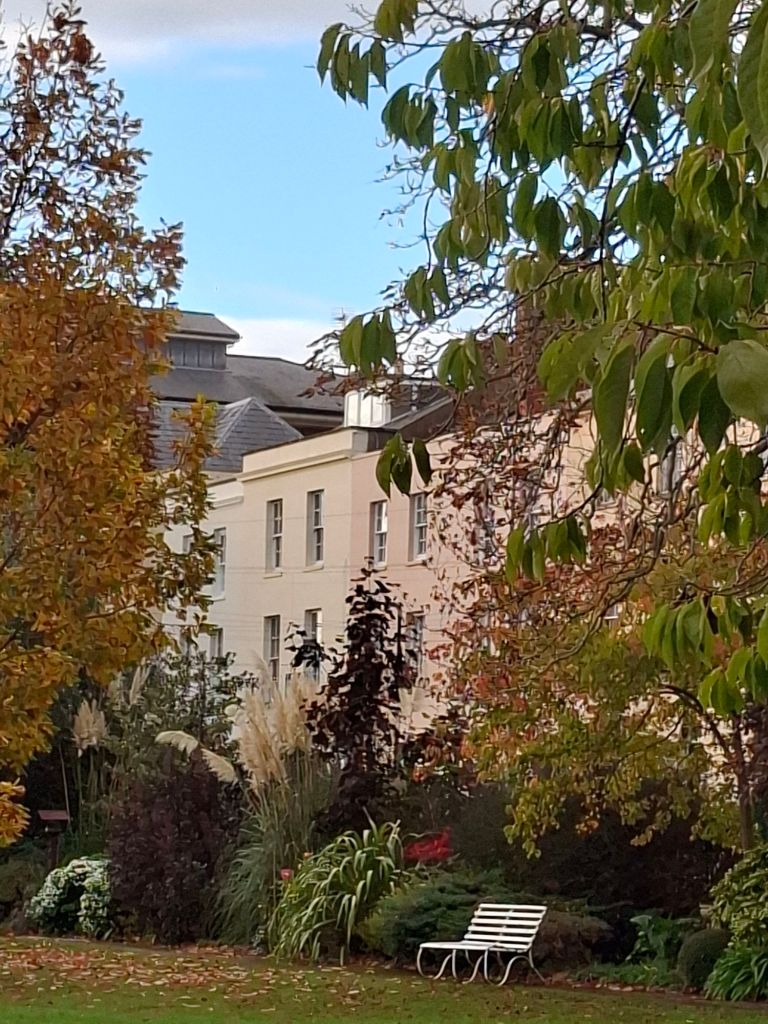
I have now lived in Gloucester long enough to have a territorial sense of the city. When walking from a southerly direction, an elegant square and its garden signal my nearness to home. This signal is physical, emotional and psychic. My cognitive knowledge is secondary.

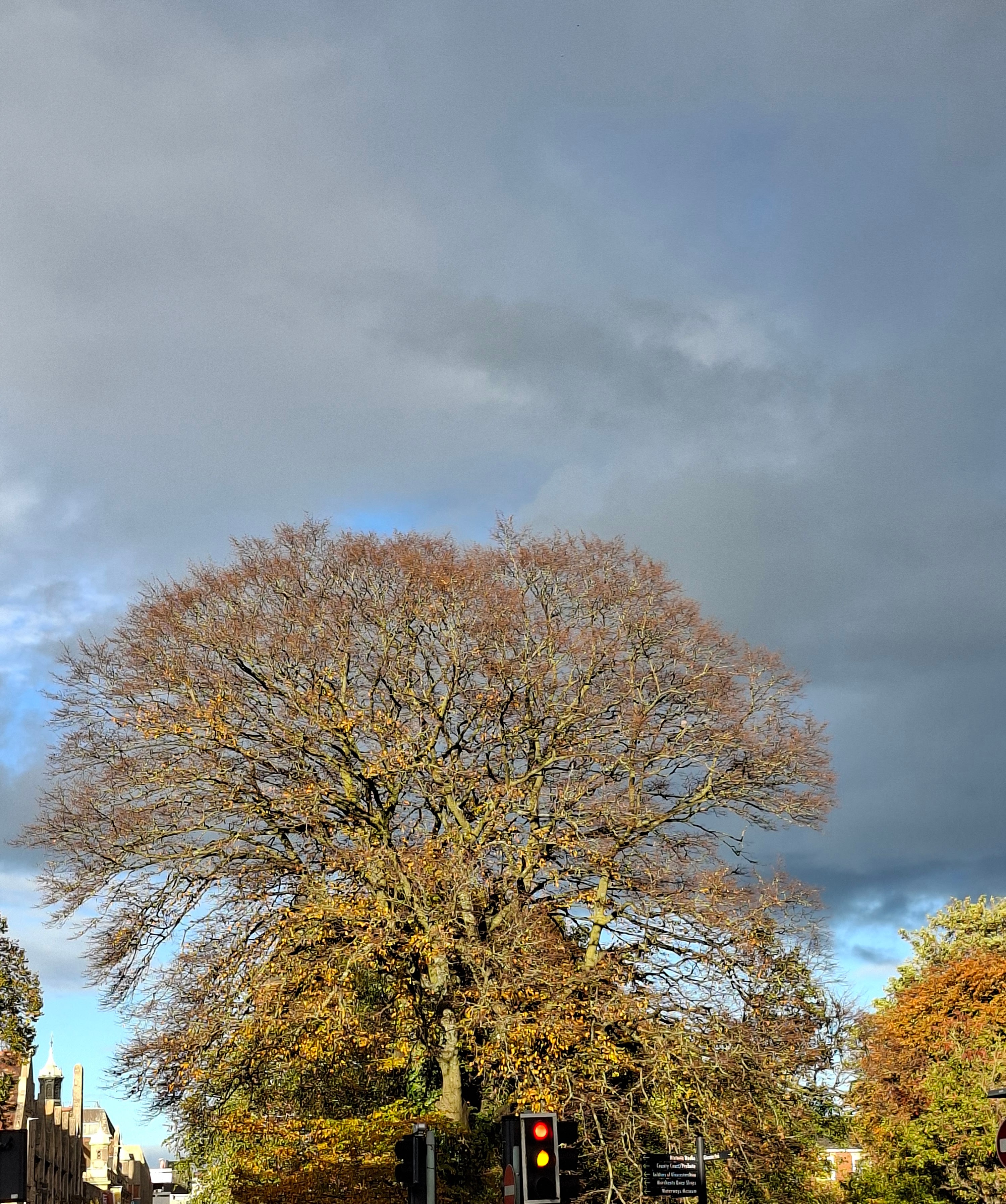
This signal is soon followed up by another, stronger one, closer to our apartment. Under looming grey clouds stands a tall, mature hornbeam. Once indoors, I will be able to look at it through our balcony windows – majestic even as it sheds its leaves.

The hornbeam is an iconic (I might almost say totemic) marker of ‘home’. Elaine and I do not individually own this tree and nor would we want to. But our city council does, with obligations towards it. That’s probably why it’s still there.

This sense of home and blessing: where does it come from? We are not migratory birds. But we used to be a bit more like them. Nomadic, but often within defined territories, however large, which we could get to know and love without the need for exclusive possession. There are people in the world who still try to live in this way but it is becoming increasingly difficult.

I speculate that part of my  bodymind finds this arrangement natural, even though culture here is (mostly) very different. The feeling tone of my walking varies dramatically with different levels of newness and familiarity. In the approach to home, signalled not only by distance but also by landmarks, this is particularly strong. Perhaps this is the residue of a long lost pattern of life.

BOOK REVIEW: STOLEN FOCUS

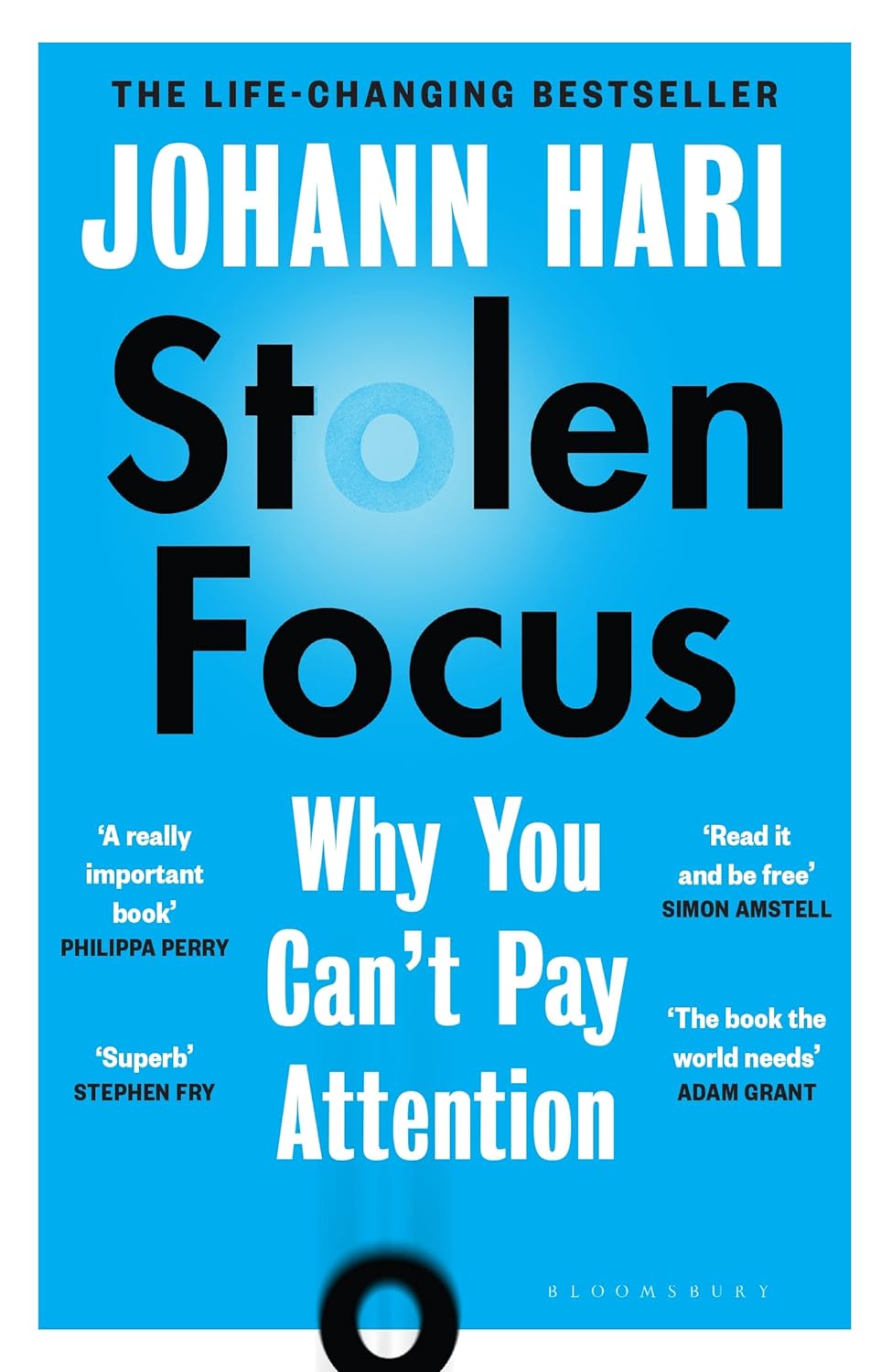
Highly recommended to anyone interested in states of attention, how culture shapes them, and the implications of this shaping. Johann Hari’s Stolen Focus: How You Can’t Pay Attention (1) shows that our diminished capacity to focus is a collective cultural issue and not just a matter of individual willpower. In this book, Hari identifies 12 causes of ‘stolen focus’, developing these themes partly through telling his personal story and partly through conversations with experts in the relevant areas of knowledge. The causes are:

1: Increase in Speed, Switching and Filtering. If we go too fast, and switch between tasks to rapidly, we overload our abilities, and they degrade.

2: Crippling of Flow States Fragmented focus interrupts flow. “Fragmentation makes you … shallower, angrier”, whereas “Flow makes you deeper … calmer”.

3: Rise in Physical and Mental Exhaustion The average amount of time a person sleeps is reducing, damaging our focus. If we stay awake for 19 hours straight we become as cognitively impaired as if drunk.

4: Collapse of Sustained Reading Fewer people are reading books, especially novels. Yet they train focus and encourage empathy. “Very few things worth saying can be explained in 280 characters.”

5: Disruption of Mind-Wandering, seen here not as a form of distraction but as a way of slowly making sense of the world that supports creativity and long-term decisions. Distractions undermine this process.

6: Tec That Can Trap and Manipulate You Big Tec’s business model depends on ‘engagement’ (eyes on screen) to facilitate exposure to advertising and the harvesting of personal data, to be used by the Tec companies themselves and also sold on to other would-be persuaders. Internet services are designed specifically to serve ‘engagement’ in this sense. Traffic is more readily stimulated by exposure to angry rather than calm content. Hence ‘surveillance capitalism’ engineers reactivity, anger and division.

7: Rise of ‘Cruel Optimism‘, a term for offering, in upbeat language, simplistic individual solutions to major social problems – like obesity and addiction. Internet addiction agitation and associated cognitive decline are looked at in the same way.

8: Surge in Stress and Triggering of Vigilance Research shows the top causes of stress for the working population of the USA to be “a lack of health insurance, the constant threat of lay-offs, lack of discretion and autonomy in decision-making, long working hours, low levels of organisational justice and unrealistic demands”. A cause of stolen focus is again linked to powerful external conditions..

9: Deteriorating Diets A widespread switch to supermarket bought processed foods has been “bad for our waistlines and our hearts” and is also “stealing large parts of our ability to pay attention”.

10 Rising Pollution We know that air pollution causes asthma and other breathing problems. There is also “growing evidence to suggest that this pollution is seriously damaging our ability to focus”.

11 ADHD and Our Response to It There has been a huge rise in diagnosed ADHD in school students in the last 30 years. It has been treated largely as a biological disorder, though this is now contested. Personal experiences and environmental conditions are being considered more seriously.

12 Confinement of Children – Physical and Psychological In the western world, children no longer roam free in their own world. Play is indoors and either supervised by adults or located on screens. Schools are largely concerned with preparing and drilling children for tests. This has serious consequences for both learning and focus.

In exploring ‘stolen focus’ and its causes, Johann Hari casts his net wide. In his conclusion, he talks about four levels of now-weakening attention: spotlight, when we focus on immediate actions; starlight, when we focus on projects and longer-term goals; daylight, which makes it possible to know what our longer-term goals are in the first place; and stadium lights, that let us see each other, hear each other, and work together to formulate and fight for common goals. Hari sees all of these lights being dimmed by stolen focus.

Hari advocates for an ‘attention rebellion’ in the manner of XR. Its three main demands would be: to ban surveillance capitalism, because people being “hacked and hooked” can’t focus’; to introduce a four-day week, because people who are chronically exhausted can’t pay attention; rebuild childhood around “letting kids play freely – in their neighbourhoods and at school” to promote a healthy ability to pay attention. He understands that this will be uphill work – the logic of economic growth demands more and more of our time devoted to producing and purchasing. Yet given the crises facing us, especially the climate crisis, we cannot afford the destruction of our attention and ability to think clearly.

This book is not just about big tec and social media. I like the range and quality of the information that Stolen Focus brings to the description and analysis of stolen focus. Hari is clear that self-help solutions – though they may help some people – are not enough. I believe that communities informed by deep ecology, spiritual and therapeutic insights can be oases of sanity and contribute to solutions. But without their being able to influence the mainstream, their impact is bound to be limited. Stolen Focus raises awareness very effectively. Whether or not an ‘attention rebellion’ is the right way forward,, Hari’s recommendations deserve to be taken seriously.

(1) Johann Hari Stolen Focus: Why You Can’t Pay Attention London: Bloomsbury Publishing, 2022 (Kindle edition 2023)

See also: https://contemplativeinquiry.blog/2024/06/13/stolen-focus-speed-switching-and-filtering/

STOLEN FOCUS: SPEED, SWITCHING AND FILTERING

“I went to see the Mona Lisa in Paris, only to find that she is now permanently hidden behind a rugby scrum of people from everywhere on earth, all jostling their way to the front, only for them to immediately turn their backs on her, snap a selfie, and fight their way out again. On the day I was there, I watched the crowd from the side for more than an hour. Nobody – not one person – looked at the Mona Lisa for more than a few seconds.”

Johann Hari’s Stolen Focus: Why You Can’t Pay Attention (1) explores states of attention, how culture shapes them, and the implications of this shaping. I like Hari’s insistence that this is a collective issue and not just a matter of individual willpower. In this book, Hari identifies 12 causes of ‘stolen focus’. I plan to write a review of Stolen Focus soon. This post is about the first cause, which he describes as an increase in speed, switching and filtering.

Speed

According to Hari, modern culture overvalues speed. “People talk significantly faster now than they did in the 1950’s, and in just 20 years, people have started to walk 20% faster in cities” and “the original Blackberry advertising slogan was ‘anything worth doing is worth doing faster'”. But, argues Hari, “if you go too fast, you overload your abilities, and they degrade”. He reminds us that if we engage in deliberately slow practices, like yoga, or tai chi, or meditation … they improve our ability to pay attention by a significant amount.

Switching

Cognitive speeding has been made worse by the myth of multitasking, a term taken from 1960’s computing, when machines began to have more than one processor and could literally do two or more things at once. The human brain doesn’t have that capacity. It is naturally single-minded and isn’t going to change. So when we ‘multitask’, we are actually switching between different tasks, though we may not notice our switching.

The cost of switching is a degradation of our ability to focus, and a decline in our performance. Hewlett- Packard looked at the IQ of some of their workers in two situations. At first they tested their IQ when they were not being distracted or interrupted. Then they tested their IQ when they were receiving emails and phone calls. “The study found that ‘technological distraction’ – just getting email and calls – caused a drop in the workers’ IQ by an average of 10 points … twice the knock to your IQ that you get when you smoke cannabis”. Overall, if you spend your time switching a lot, the evidence suggests “you’ll be slower, you’ll make more mistakes, you’ll be less creative, and you’ll remember less of what you do”.

Filtering

“Think of your brain as a nightclub where, standing at the front of that club, there’s a bouncer. The bouncer’s job is to filter out most of the stimuli that are hitting you at any given moment – the traffic noise, the couple having an argument across the street, the cellphone ringing in the pocket of the person next to you – so that you can think coherently about one thing at a time.” The bouncer in our brain is the pre-frontal cortex, and it is becoming overwhelmed. There are too many stimuli and in many environments noise pollution in particular is interfering more insistently with the flow of our thoughts.

The crisis in attention that Hari outlines is a threat to our quality of life. It weakens our ability to think creatively or deeply. It tends to make us agitated as well as distracted. This is not a good place from which to build healthy relationships or solve complex problems at either the personal or the public level. I experience my contemplative inquiry as a valuable antidote to ‘stolen focus’. But it doesn’t get me everywhere, because loss of focus is a pervasive cultural problem. Beyond writing a review of the whole book, I intend to delve more deeply into the questions that Stolen Focus raises from a personal and a collective point of view.

(1) Johann Hari Stolen Focus: Why You Can’t Pay Attention London: Bloomsbury Publishing, 2022 (Kindle edition 2023)

See also https://contemplativeinquiry.blog/2024/06/17/book-review-stolen-focus/

A DIRECTION FOR 2023

I am writing on the last day of 2022. My very best wishes for 2023 to all readers. Many blessings for the year ahead!

The picture above was taken on 26 December (in England called Boxing Day/St. Stephen’s Day) – this year a chilly day of bright blue sky. The truncated spire* of St. Nicholas Church, Gloucester, reaches up towards the vivid sky, despite its history of damage. For me, this image of spire against sky is one of clarity, definition and spaciousness. It is a breath of fresh air.

I don’t know what 2023 will bring. I do want to bring clarity, definition and spaciousness to whatever unfolds. As my contemplative inquiry continues, I find that it subtly modifies its purpose. Discovering and re-discovering the purpose involves an element of divination, since my thinking personality is not exactly in charge.

It is as if authentic clarity and definition come out of the spaciousness itself, not out of cognitive review or ‘brain-storming’. These may be aids, but I have also to wait for signs. When I began this blog, I surprised myself by calling it ‘contemplative inquiry’ rather the ‘contemplative Druidry’. I see now that contemplative inquiry is the root description for my path.

For me, contemplation is a yin quality, an open and receptive engagement with experiences – most especially, with forms of relationship. Inquiry is a yang quality, actively deepening knowledge, refining understanding and seeking meaning. Together they support my path. Druidry is a vehicle that supports spiritual self-direction, and also challenges disastrous social norms concerning both nature and culture. Today I have revised the ABOUT section of this blog, on the eve of 2023, and my key statements are below:

“My contemplative inquiry began in 2012. It is grounded in modern Druidry, though not wholly defined by it. I acknowledge the influence of other sources, especially the wider turn towards an eco-spirituality that meets our historical moment. The inquiry process itself is my core practice, from which others radiate out.

“Over my inquiry years, I have found an underlying peace and at-homeness at the heart of experience. Here, it is as if I am resourced by a timeless, unboundaried dimension from which I am not separate. I find myself guided towards a spirit of openness, an ethic of interdependence and a life of abundant simplicity.”

*NOTE ON ST. NICHOLAS’ SPIRE: the church was first built in 1190 and added to over the centuries. A 200 ft. spire was built in the fifteenth century, but received a direct hit from cannon fire in 1643, during the English Civil War. The final repair waited until 1783, when the spire was reduced in height and capped.

THE ALBION SAILS ON COURSE (NOVEMBER 2016)

“The Albion sails on course. Black script on white wall. The spill-zone around Corbridge Crescent, the painted devil heads and hybrid monsters, the bare-breasted pin-ups from naughtier times mouthing Situationist slogans, are captured and made fit for purpose by film crews and television set-dressers, lighting technicians and catering caravans, responding to dissent as exploitable edge.

“LOADED WITH/ MEMORIES/ I WAS NOT AFRAID/TO SET OFF/ AN ADVENTURE/ ANY MORE.

“14 November 2016: the words I copied into my notebook yesterday are painted over with white undercoat, so that professionals can create rebellion suitable for television. For example, a Worholist head of Che Guevara – CHE GAY – inflated to cover an entire wall, with fake yelps about eating the rich to replace the groundwork of RIP and the Secret Society of Super Villains and Artists. NO PIGS ….

“The outlaw in his shack on the ledge by the canal sleeps through the entire fuss. He learnt his lesson after the first Immigration Enforcement raid. Now his shelter looks like the detritus of a lumberyard. ….

“A young boy cycles uncertainly to school, in the wake of his mother, wearing a silver skull mask. Welcome to the comic world, Hackney. At the base of the image swamp we find the sinister clown: child-catcher, grinning molester. The public joke, the big-haired politician who dissolves into the Joker of DC Comics.

“Extinguish fire with petrol. One of the latest Andrews Road defacements is a poster: SILENT BILL MUSE WANTED. Silence against the noise of imagery? The meditation of a hooded man sitting all day on a bench? Or another who dreams the fading city through all the hours in an Arsenal-branded sleeping bag? ‘Be silent in that solitude,’ said Edgar Allan Poe. ‘Let them come. The restless spirits of the dead are in death around thee’.” (1)

Iain Sinclair has a reputation as a leading figure in the practice of psychogeography, though he has now somewhat distanced himself from the word itself. He is quoted as saying (2) that “I buy into a union of writing and walking” and identifying with “the kind of writers who very definitely have, within their writing, this rhythm of journeys and walks and pilgrimages and quests”.

Sinclair’s work often celebrates London’s neglected and overlooked spaces, and draws on a visionary tradition of London writers from William Blake to Arthur Machen as well as the French situationists who developed psychogeography as a concept. His early reputation rests on the prose poem Lud Heat (1975) which was also influenced by Alfred Watkins and the earth mysteries school that followed in his wake. This work describes lines of force between Hawksmoor’s London churches to reveal the hidden relationship between the city’s financial, political and religious institutions. Peter Ackroyd drew on these themes for his later Hawksmoor (1985).

Last London (2017) is grittier and more concerned with a November 2016 witnessing of social breakdown in Hackney, a London borough that is being simultaneously gentrified. In the UK, it is also the year of the Brexit referendum (the Albion sails on course?) and in the US the month, November, of Donald Trump’s election as president (“at the base of the image swamp we find the sinister clown”).

Why am I drawn to this work? I lived in London for 17 years, from the late 1970s to the mid 1990s: there’s an element of nostalgia, and also of grief. Beyond that, my contemplative inquiry has led me in recent years to a practice of walking and writing. Are there lessons for me in Sinclair’s tradition?

My contemplative inquiry is not just about resting in the eternal moment – it also concerns life in place, time and culture. I’ve always liked walking meditation, mobile and open-eyed. Ideally, the still point and the moving line are both present, together as one. Often I stumble around between them, but that’s part of the journey: learning to be present in a field of living presence. I have a lot to learn.

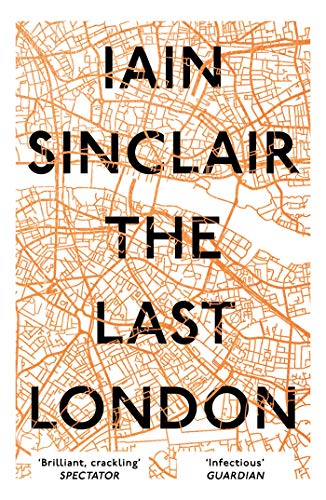
(1) Iain Sinclair The Last London: True Fictions from an Unreal City London: OneWorld Publications, 2017

(2) Merlin Coverley Psychogeography Harpenden: Oldcastle Books Ltd, 2018 (first edition 2006) In his last chapter, Psychogeography Today, the author devotes a section to Iain Sinclair and the Re-branding of Psychogeography.

ATLANTIC ANCESTORS

I am beginning to feel the pull of Samhain. It is not here yet, but its themes are drawing my attention. One of these is the remembrance of ancestors.

A recent post by poet and awenydd Lorna Smithers (1) has prompted me to look again at Barry Cunliffe’s work, and the book I have to hand is Facing the Ocean (2). It is about early human history in Atlantic maritime Europe. including Britain and Ireland. One of its threads concerns living with the ocean. Another, related to the first, looks at communication by sea at a time when land travel was difficult. I will follow up these threads in future posts. In the meantime, Cunliffe’s sense of the interaction between nature and culture is shown in the extract below.

“To stand on a sea-washed promontory looking westwards at sunset over the Atlantic is to share a timeless human experience. We are in awe of the unchanging and unchangeable as all have been before us and all will be. Wonder is tempered with reassurance: it is an end, but we are content that the cycle will reproduce itself the sun will reappear. The sea below creates different, more conflicting, emotions. True, there is the comfortable inevitability of the tides, but there is also an unpredictability of mood, the sea constantly changing, sometimes erupting in crescendos of brute force destroying and remoulding the land and claiming human life. The sea is a balance of opposites. It gives and takes. It can destroy quickly and build new; it sustains life and it can kill. Small wonder that through time communities have sought to explain these forces in terms of myth and have attempted to gain some puny influence over them through propitiation.

“Nowhere is this relationship more apparent than in the legends and folk traditions of Brittany. In the howl of the wind can be heard the screams and laments of those drowned at sea, and much of human life – birth and the gender of the newborn and death – was believed to be conditioned by the tides. Below a thin veneer of Christianity lie beliefs deeply rooted in time. A century ago, in the parish of Ploulec’h on the north Breton coast, the first Sunday in May saw the people in procession climb to La Croix du Salut – an isolated landmark that could be seen from far out to sea offering assurance of the approach to a safe haven. Here the sailing community gave thanks for their safe returns before descending to the chapel of Notre-Dame across the bay on the headland of Le Yaudet. In the church today, fine model sailing ships hanging from the roof beams are among the more evocative offerings made to the Virgin by grateful mariners. The deep underlying awe of the ocean is poignantly expressed by the Breton poem

War vor peb ankenn

War vor peb peden

(Sur la mer toute angoisse, sur mer toute priere

At sea all is anguish, all is prayer).”

(1) https://lornasmithers.wordpress.com/2020/10/04/britain-begins-debunking-the-myth-of-celtic-invasions/

(2) Barry Cunliffe Facing the Ocean: The *Atlantic and Its Peoples 8000 BC-AD 1500 Oxford: the University Press, 2001

*NOTE: I wish the subtitle had specified ‘eastern Atlantic’, since every corner of the Americas has been populated for periods ranging from 12,000-24,000 years. The western Atlantic coastal people amongst them are not my focus, but in a post about ancestors I don’t want them to be implicitly erased.

Earth Eclectic

music that celebrates Earth and speaks to the heart

Sarah Fuhro Star-Flower Alchemy

Follow the Moon's Cycle

Muddy Feet

Meeting nature on nature's terms

Rosher.Net

A little bit of Mark Rosher in South Gloucestershire, England

Becoming Part of the Land

A monastic polytheist's and animist’s journal

selkiewife

Selkie Writing…

Charlotte Rodgers

Images and words set against a backdrop of outsider art.

Prof Jem Bendell

living with metacrisis and collapse

Towint

The pagan path. The Old Ways In New Times

The Druids Garden

Spiritual journeys in tending the living earth, permaculture, and nature-inspired arts

The Blog of Baphomet

a magickal dialogue between nature and culture

This Simple Life

The gentle art of living with less

Musings of a Scottish Hearth Druid and Heathen

Thoughts about living, loving and worshiping as an autistic Hearth Druid and Heathen. One woman's journey.

Wheel of the Year Blog

An place to read and share stories about the celtic seasonal festivals

Walking the Druid Path

Just another WordPress.com site

anima monday

Exploring our connection to the wider world

Grounded Space Focusing

Become more grounded and spacious with yourself and others, through your own body’s wisdom

The Earthbound Report

Good lives on our one planet

Hopeless Vendetta

News for the residents of Hopeless, Maine