Contemplative Inquiry

This blog is about contemplative inquiry

Tag: contemplative spirituality

THE PEACE OF SOPHIA REVISITED

The peace of Sophia, given a chance, heals the violence within. This violence can be obvious and crying out to be worked with. It can also be hidden, unawarely latent, insidiously shaping both words and actions. In Thomas Keating’s language, such violence “reduces and can even cancel the effectiveness of the external works of mercy, justice and peace” (1). It is an argument he uses for promoting contemplative practice within the Catholic Church and Christian communities more widely.

In my exploration of contemplative traditions, Cynthia Bourgeault is the Christian writer to whom I have paid the most attention. An Episcopalian priest based in the USA, she is a long-term associate of Father Keating in the development and teaching of centering prayer. This is a modern contemplative practice modelled partly on Theravadin Buddhist insight meditation, and partly on the contemplative approach recommended in The Cloud of Unknowing, an English text from the later fourteenth century. “For heaven ghostly is as nigh down as up, and up as down: behind as before, before as behind, on one side as other. Insomuch that whoso had a true desire for to be at heaven, then that same time he were in heaven ghostly. For the high and the next way thither is run by desires and not by paces of feet” (2).

I think of Bourgeault as a Sophian teacher working within a Christian framework. I get this sense through a reading of three of her books: The Meaning of Mary Magdalene, The Wisdom Jesus and Centering Prayer and Inner Awakening. She has incorporated ‘Gnostic’ Nag Hammadi texts into her recommended sacred literature, especially The Gospel of Thomas, The Gospel of Philip and The Gospel of Mary Magdalene. In her references to what Christians call ‘The Old Testament’ I see a leaning towards The Psalms, The Book of Proverbs and The Song of Solomon. I am neither qualified nor inclined to discuss her theology. But I do get the flavour of a Sophian sensibility that seems to me to inform her view and practice of (to use my language) meditation.

Bourgeault speaks of “a warm practice, a bit sloppier and dreamier than the classic methods of attention and awareness practices. You lose some time in day-dreaming, at least at the start, and that vibrant tingling sense of ‘I am here’ prized in so many meditation practices is not really a goal in Centering Prayer” (2). The key word is intention rather than attention, and the specific intention is to be deeply available – Bourgeault would say to God, I would say to a deeper nature. This means “available at the depths of being, deeper than words, memories, emotions, sensations, deeper even than your felt sense of ‘I am here’”.

Bourgeault counsels against the aim of making ourselves empty or still, saying that it is “like trying not to think of an elephant” and pretty much assures a constant, non-stop stream of thoughts. Instead, once the intent is established, it is a surrender method, “not working with mind at all, but going straight to the heart”. She says that “for most people, a typical Centering Prayer period looks like a sine wave: lots of ups and downs. There are moments when the mind is more restless and jumpy and thoughts come one on top of another. There are also moments of stillness, sometimes very deep stillness. You won’t be able to retrieve these moments of stillness directly, of course, because as soon as you start thinking about them they’re gone. But you will ‘remember’ them through a certain quiet gathered-ness that accompanies you as you get up and move about your day. Through the cumulative energy of this gathered stillness, Centering Prayer gradually imprints itself upon the heart”.

I’ve been drawn back to Cynthia Bourgeault’s work because of my inner promptings about peace, and the peace of Sophia. I will continue my exploration of her work. Whilst engaging I will of course be conscious of her theistic and Christocentric framework and the knowledge that I do not share it. This I think will make the experience all the richer, because it will include the challenge of fully accepting difference, and fully accepting the gift within it.

References:

  1. Cynthia Bourgeault Centering Prayer and Inner Awakening Lanham, MD, USA: Cowley Publications, 2004 (from the Foreword by Thomas Keating)
  2. A Book of Contemplation the which is called The Cloud of Unknowing, in which the Soul is Oned with God Anonymous (edited from the British Museum MS. Harl. 674 with an introduction by Evelyn Underhill) London: John M. Watkins, 1922
  3. Cynthia Bourgeault Wisdom Jesus: Transforming Heart and Mind – a New Perspective on Christ and His message Shambhala: Boston & London, 2011
ANAM CARA

This post is about the anam cara, or spiritual friend in Gaelic tradition, and about the use of language. Recently I wrote about allowing more space and using fewer words. This wasn’t a renunciate view of language, which I value highly. My hope was that “more space” would allow “something new to emerge”, and that my words, though fewer, would be better chosen.

I am starting to see some fruits from this strategy. I’ve also recently said that I experienced Sophia “as a psychopomp or inner guru”. Now I would say, “anam cara”. This term is known from the early days of Christian monasticism in Ireland and is in current use within the Scottish-based Celie De – see http://www.ceilede.co.uk/

It is a mentoring relationship, not a peer one, but it includes the sense of a real personal connection, not just a role. People speculate about whether it is an inheritance from indigenous Druidry. Subjectively, my relation with Sophia feels like this: much more than psychopomp or inner guru. In my understanding ‘anam cara’ is gentler, subtler and less formal.

The Sophia I experience is not a rhetorical device (personification) or a glove puppet arbitrarily selected by me. She is also not – in my sense of things – a mind independent celestial being. Rather she is the felt presence, the voice, and at times the image of a deeper nature – and my inner link with the Oran Mor (the song of what is). From a personality perspective, this deeper nature is ‘not me’ and not owned and controlled by ‘me’, so I have to work at relationship.

From the perspective of deeper nature, the separation doesn’t exist. At times Sophia can point beyond herself and then I may enter the subjectivity of deeper nature and experience the world differently. The little ‘I’ and the anam cara are as one, beyond separation and immersed in the song. But most of the time that’s not how it is in my subjective life world, and a link to that fuller reality is provided by Sophia and her nudgings and promptings.

I don’t make any fundamental distinction between nature and spirit. All, for me, is contained in the word nature (or terms like the Oran Mor).  Nothing is lost. Cosmos, relationship and practice remain the same. But the use of a nature language is truer to my experience.

TOWARDS A CONTEMPLATIVE NOTE: REFLECTIONS ON 3 OCTOBER

I sense that we are finding a contemplative note in Druidry. To an extent we have had it for a while, but it’s becoming more assured. Last Saturday we had an open contemplative day in Stroud for Druids and fellow travellers willing to join us. I worked with Elaine Knight and Nimue Brown as co-facilitators. Some of the participants travelled a considerable distance for the event. Many of those present were new to each other. Some were new to this kind of event.

Yet the day felt very cohesive. For me, the group note resonated strongly though also softly. The vibration was a subtle one, interwoven with silence and stillness, whilst also clear and distinct. Building community together, and working together, we were more than the sum of our parts. We created a group identity, and sounded our note. I understand this as our small contribution and offering to the Oran Mor, the great song of what is.

I’ve been reflecting on how this happened, and on lessons to take forward. The main single factor has to be that everyone in the group understood the offer, was open to the experience, and wanted it to work. This is such an obvious aspect of a success that it can go unrecognised, like the so-called ‘placebo’ effect in healing: people engage their good will, almost unconsciously, and it has a strong positive effect.

On the facilitator side, there are several things we got right and that I want to remember. Having a record will help that.

We made a good choice of venue for the occasion, and this was supplemented by the blessing of a golden autumn day. The programme relied on activities, which someone at another of our events named as “simple but profound”. This choice is definitely part of our note. The building of our ritual container, whist still ‘lean’, was just a little bit more elaborate than in our local group. It clearly marked our sacred space and our expectations about how we would work in it.

I also found myself casting our circle in ‘the contemplative grove of druids’. This time I was careful to avoid the term ‘grove of contemplative druids’.  I have found naming ‘contemplative druidry’ to be a useful way of classifying a sub-set of interests within druidry. But I now believe that to think of people themselves as ‘contemplative druids’, a separate species within larger druid genus, is potentially divisive and doesn’t allow individuals to have inconveniently multiple interests. At the same time, when we join together in a contemplative event, we are indeed being intentional about contemplative practice. I have come to think of Contemplative Druid Events as a vehicle for a latent grove, a grove which constellates during our events and therefore deserves to be named. This grove provides space for our emerging note.

The note was considerably enriched when Nimue led a session that involved us in finding simple personal sounds and vocalising them over an extended period of time. After a while we could sense those diverse and discordant seeming sounds (our individual notes) come together as a collective sound where people spontaneously worked together. So the group note was worked for, discovered and explored in an absolutely literal way – and one which changed the atmosphere of the room. Later in the day, Elaine took the group through a version of an energy body exercise that went on to identify and reinforce the energetic connections between people, linking us as a group at subtle levels before moving into an animistic exercise. In my experience as a participant, these sections of the day were simple, profound and powerful too.

We made sure that we varied the pace of the day. Some of the work was relatively intense, but we had more leisurely and relaxed spaces as well, enjoyed time outside and made sure of an abundant supply of refreshments. For me, 3 October 2015 was a step forward in the evolution of our work. My heartfelt thanks to everyone involved.

MORE SPACE, FEWER WORDS

Just recently I’ve noticed a reluctance to write very much. I feel curious about this shift in my attention, and intuitively positive. My contemplative inquiry continues and my aims are the same. Yet the level of reading and writing that has shaped recent years no longer makes sense. It’s as though a phase has ended and a certain kind of job completed as far as it needs to be. I’m happy with what I’ve done, and I’m ready for a change in focus and expression. More space, fewer words: a reduction in apparent productivity, and an opportunity for something new to emerge if I’m willing to allow it.

In the meantime, I continue my contemplative practice in Druidry both solo and within my local group. I feel refreshed and sustained by these – so nothing’s changed there. More widely, Contemplative Druid Events is offering a contemplative day in Stroud on 3 October, a Dark on the Moon workshop in London on 7 February, and a weekend retreat near Malvern from 15-17 April. I’m enjoying this cautious expansion of outreach. Anyone interested in this work can follow its progress on:

http://contemplativedruidevents.tumblr.com


USEFULNESS AND EMPTINESS

A re-blogged post about valuing stillness and emptiness within the balance of our lives.

CONTEMPLATIVE DRUIDRY: MEME OR MOVEMENT?

On 3 October Contemplative Druid Events (CDE) – see http://contemplativedruidevents.tumblr.com – will hold its last planned event for 2015. This will be a Contemplative Day, in Stroud, Gloucestershire, England. The facilitators will be James Nichol, Elaine Knight and Nimue Brown. Our programme is designed for a group of up to 15 people, and 12 are already committed. With just over a month to go we have a comfortable size of group, with room for a few more.

CDE offerings are built around insights from the book Contemplative Druidry: People Practice and Potential about the kinds of contemplative work that most seemed to resonate for the present generation of Druids. We offer sitting meditations of based both on a bare attention and on active imagination. We have outdoor walking meditations and opportunities simply to be, with awareness, in natural settings. We use methods that draw on creative arts. We have developed ‘Awen space’ as a group opening to, in and as Spirit. We build our repertoire as we gain in experience.

Is CDE spearheading Contemplative Druidry as a movement? I don’t see it that way. CDE was created as a minimal level of organisation for a single purpose. This is to offer a particular kind of event to small groups of Druids and fellow-travellers willing to join us. In doing this, we also promote the contemplative Druid meme, which now seems to be well recognised in modern Druid culture. But the CDE brand does not exhaust the possibilities of contemplative Druidry and we wouldn’t want it to. Modern Druidry, which is in some senses a postmodern Druidry, has a strong commitment to free exploration and diversity. The contemplative meme will find its place within that wider cultural framework. For better or for worse, we will never, as a collective, be organised around a Druid ‘four noble truths’. Contemplative Druidry will mean different things, and inspire different journeys, for different Druids.

GRACE

Words, single words, can have a tremendous power in me whether I want them to or not. They have a hinterland of feeling, imagery an atmosphere. They are linked to memories and associations – indeed their use comes to have a memory trail, and the triggering effects that go with that. Sometimes this seems independent of their plain meaning or general use.

Grace is like that. It’s the theological, redemptive meaning that has stuck. Yet it is independent of the received theology, or almost so. I notice that when President Obama spoke the eulogy for the late Rev. Clementa Pinckney in Charleston recently, he made use of the popular hymn Amazing Grace. It was written by the Englishman John Newton, an 18th century slave ship captain who eventually became a clergyman and prominent campaigner for the abolition of the slave trade. As such it suited Obama’s point about how a shocking terrorist assassination can open up possibilities for learning and doing better. The first verse runs:

Amazing Grace (how sweet the sound!)

That saved a wretch like me.

I once was lost, but now I’m found,

Was blind but now I see.

Now this is a very simple and classically evangelical verse. The very simplicity of language and thought is part of its power. As it happens, I am not aligned to the specific religious narrative that stands behind it. I understand it very clearly – and I’m not aligned.

And yet … that’s not the whole story of what happens for me when I hear this verse, especially sung to the tune it acquired in the USA in the 1830’s. I cannot help being moved by ‘Grace’, and when I’m told that it makes a sweet sound, I’m completely with the hymn. In a certain mood I have no problem in thinking of myself as wretched. It isn’t exactly a moral terms, more about being alienated and out of reach to self and others. Modern English (British English anyway, in its polite form) is a softened, evasive language which generally doesn’t run to terms like ‘wretch’ – too strident and extreme; almost comical. But I know experiences that fit.

It’s also true that in the verse, an experience, described in the sweet sounding word ‘Grace’ has become available. Free and regardless of merit, it seems to have the power to change the quality and direction of a life. So the verse ends: ‘I once was lost, but now I’m found, was blind but now I see’. The brief four line verse frames the experience of Grace as a single turn-around moment, a very specific reference experience of spiritual rebirth. Life is a bit different. John Newton’s life changed in slow and gradual steps. But it changed, and eventually it changed radically.

Just as I have personal reference experiences for ‘wretch’, I also have personal reference experiences for ‘Grace’. The Cosmos includes Grace. In my universe of meaning I don’t know how to account for Grace – what it is, how it works, what it means. As an experience it begins as a powerful feeling/sensation in the belly and heart centres, more emotional than physical, that extends through and beyond my whole body. I have known it come within a formal practice, or through another trigger, but most likely it comes out of the blue. I’m clear that it isn’t ‘just’ a feeling, though it contains a strong feeling element. It’s more like an energetic, emotional and spiritual cleansing. It creates a spaciousness, and an expanded sense of being though not of personality. I’m left in a heightened state in which a lightness and clarity emerge. The world looks and feels different. I feel more compassionate towards myself and others. I am less interested in problems and events, and more resilient. There’s an element of drama and energetic arousal that gradually dies down and I find myself calm and at peace – in communion with what is. I do not have any sense of personal deity or energetic emanation from a higher realm, or of benefitting from a cosmically warranted plan of salvation or enlightenment. What I experience is a re-arrangement of my life as is, my place within it and my relationship with the whole. I am connected to the other dictionary meanings of ‘grace’ – smoothness and elegance of movement, courteous goodwill in speech, a ‘grace’ period given before favours are called in or debts have to be repaid. There’s a spirit of ease and generosity in the air.

The effects aren’t permanent. I can go down again – stiffen up, contract. But I notice that the downs and diminutions are not what they were before I became aware of Grace, or began to remember its possibility a bit more consistently. ‘Grace’ is indeed mysterious. I have not incorporated it into a coherent world view. I simply know that it’s a powerful word, matched with a powerful experience, and I’m grateful for it. My instinct is simply to stay open and to let it be.

DRUID CAMP, STROUD CONTEMPLATIVE DAY, SMALL GROUPS

I’ve just had a couple of lazy summer days and I feel all the better for them. They’ve been interwoven with a relaxed stocktaking about contemplative Druidry and my part in it. I notice that my main focus is on small groups.

As I write, I’m at peace with my personal life and practice. At the collective level, I’ve had recent good news. My friend and colleague JJ Howell has let me know the specific roles that my partner Elaine Knight and I will be playing at Druid Camp in four weeks’ time. Druid Camp – www.druidcamp.org.uk  – is a large group (200-300 people), but we’ll be working with small groups, offering contemplative sessions from the repertoire built up by our local group over the last year. Meanwhile I also know that an open contemplative day in Stroud, organised by our own outreach arm Contemplative Druid Events –   http://contemplativedruidevents.tumblr.com  – is now viable and will go ahead on 3 October. We have seven people fully booked and three more with strong expressions of interest, with 15 being our max.

The overall position is that we have a flourishing local group, now three years old; a book largely though not exclusively based on the thoughts of its members; and an outreach arm able to offer an annual residential retreat (The Birchwood Retreat) every April and an open contemplative day in October 2015, which might become annual too. In all cases the events concerned will have no more than 15 participants. We could do a little bit more – providing small group sessions at other larger events, or offering more contemplative days either locally or elsewhere. But my sense is that we need to respect limitations in our capacity, stick to the small group approach, and make sure that all our work is experiential and not simply discursive. People need to taste it.

For me perhaps the greatest value of the small group is the opportunity for all participants to introduce ourselves and be heard. For that to work fully, we need a quality of listening which itself becomes a practice and part of our culture, and whose intention is to ensure that no one is either misrecognised or ignored. This in itself is counter to mainstream communication, including ours, and needs conscious practice. It will include mis-steps from time to time within our own groups. So it’s not about ‘getting it right’ all the time: the point is to be conscious. In a contemplative context, we can hope to go further: establishing a level of trust that opens the door to deeper I-Thou recognition and communion. It’s a different opportunity to those provided when large numbers of people become immersed together in prayer, song, ritual or formal meditation. It’s more personal, in the best sense of that term. I find it both more challenging and rewarding, whilst believing that all of these approaches have their honoured place.

Small groups have other advantages too. It is easier to be flexible on programming within the event. It is easier to offer activities which demand time for reflection and debriefing. It is easier to become aware of other people as spiritual companions, even if we have not met them before or do not know them well. I think, too, that it’s easier to learn, not least when in a facilitative role, because the style of the event can be person centred rather than goal centred. Activities are designed to support us in our human, and therefore spiritual, flourishing. They are not Everests to be climbed so we can say that we ‘knocked the bastard off’.

I think this is why we have not oriented our contemplative Druidry around long meditations or meditation training. It was one way to go, and in some ways the obvious one. It would certainly be the most traditional one and my solo practice is very much tilted that way. But the group context changes things. Pragmatically, our local group is about evenly divided between people who gain from long meditations and those who don’t. We would lose people by taking this approach. More importantly, the group is co-creating a culture in which the blessing of space and silence is received differently – through short meditations, attunement to the seasonal moment, silent walks, or activities like ‘Awen space’ in which we sit with each other, open to spirit, and can speak, chant or sing into the silence when so moved. We can also explore co-creation from silence into sound and story, or find different ways of awakening to the fields of energy and presence within us, between us, and around us. It’s a subtle and sensitive kind of work. It needs times of stillness and silence. It also needs times of movement, sound and speech. It needs times of reflection and relaxation.

In my view, we are still at an early stage of this exploration. We have a name – Contemplative Druidry – to hold us. We have literature – Contemplative Druidry and also Nimue Brown’s Druidry and Meditation – to support us. We have a dedicated group and an outreach arm. The small group approach has evolved quite naturally and I see it as a critically important aspect of how we work.

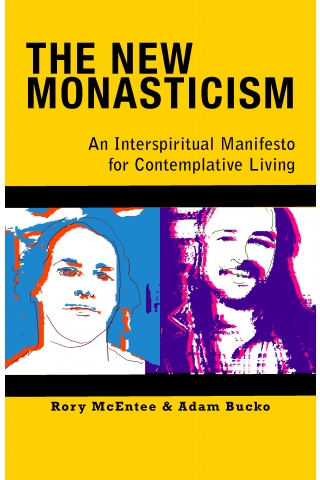
BOOK REVIEW: THE NEW MONASTICISM

New_MonasticismHighly recommended. I knew I would be in business with this book as soon as I got wind of it, and it will take further contemplation and inward digestion before I fully understand my relationship with it. I believe that this is the kind of effect that what The New Monasticism: an Interspiritual Manifesto for Contemplative Living intends to create.

‘Monasticism’ is refreshingly used here “simply to denote a level of commitment to a spiritual life”. It is not about specific beliefs or a specific lifestyle. It asks us to free ourselves from our cultural conditioning and an unquestioning and un-questing life. Avoiding identification with material success, living in the midst of a contemporary society that does not support such a calling, we may enter a space of “radical profundity and divine transformative energy”. We seek simplicity not through renunciation but through ‘integration’.  We do need retreat space, so some people will indeed be called as specialists to hold the “containers of silence”. But most will pursue vocation in the world, in a life made up of contemplative practice, heartfelt conversation and sacred activism.

Authors Rory McEntee and Adam Bucko are situated within the Roman Catholic tradition, in an emancipatory strand which is reaching out to others and hoping to transcend itself. The term ‘interspirituality’ was coined by Brother Wayne Teasdale, an ordained Christian Sannyasin who  presided over an ashram in India. The authors see interspirituality as “humbly placing itself in partnership and collaborative discernment with our time-honoured religious traditions”.  In the last decade we have also seen the linking of Father Thomas Keating (who developed ‘centering prayer’ as a Christian answer to Buddhist-style meditation) with Ken Wilber’s Integral Life project, which is itself increasingly seeking alliance with like-minded Christian communities. Indeed a lot of the philosophy, psychology and social science in this book comes straight from Ken Wilber and the stance of the Integral movement. The authors come from a collectively confident and mature spiritual base, and there are advantages in that. The book is rich with specific suggestions about life and practice in the new monasticism, drawing for its core inspiration on an ‘Interspiritual Manifesto for Contemplative Life in the 21st. Century’ following a week long dialogue with Father Thomas Keating at his monastery in Colorado in 2012.

McEntee and Bucko are both “under 40” and feel a connection with the younger generation now coming into adulthood. Bucko works with young homeless men in New York City. They see a potentially emergent spiritual culture that is: “spiritual not religious”; this worldly and concerned with nature and the fate of the earth; has (post) modern commitments to personal ‘authenticity’; and finds the sacred in the secular. They believe that these values can be championed within a further development of their own tradition, transforming the tradition itself. For them the path is as much about the life and health of the earth as it is with an individual communion with the Divine: indeed, it is false to separate the two. Realisation is less a “gnostic quest for truths beyond the world” than “a reflection on certain processes taking place within the world”. Interspirituality wants to be the midwife of this, and in doing so become attractive to people, especially young people, who would not be drawn to more traditional approaches.

The New Monasticism is a valuable contribution to the re-visioning of spirituality and concomitant life practices. Given its provenance, it is not surprising that the reaching out to other traditions is quite selective. Beyond Christianity, the traditions being engaged with are neo-Vedanta, Tibetan Buddhism and to a lesser extent Zen, modern Sufism and to some degree the Hasidic movement in Judaism and Martin Buber. ‘Indigenous religions’ are mentioned in two inclusivity lists, without definition or description. Shamanism is mentioned as a particular model of spiritual service. There is nothing specific from the Western Way outside Christianity.  Within Christianity, much is drawn from the contemplative strand in Orthodoxy, including an understanding of theosis (or divinisation) and the role of Sophia as guide. This is accompanied by an intent to “claim the wisdom dimension of all traditions and let the wisdom guide you” – a view which they attribute to Matthew Fox. Ethics is seen as “the call to active co-operation with the sophianic transfiguration of the world”. Quaker processes also get a mention because of their democratic and dialogical way of bringing people into Presence with each other. Since I am personally positioned in modern Druidry, Paganism and Earth Spirituality I have to express some disappointment here. However I don’t feel deliberately excluded. It’s just that these authors have their attention focused elsewhere.

I do have a worry, all the same, an area where I think that Earth and Goddess traditions could do with being heard. This is when McEntee and Bucko talk about ‘axial ages’, a view of spiritual/religious history once again taken from Ken Wilber. It depends on an evolutionary view of human culture as an aspect of a Divine awakening. In this view, the first axial age, from 800 BCE – 200 CE was a time of radical transformation marked by the appearance of great teachers who catalysed major literatures: Lao-Tzu, Confucius, Buddha, Mahavir (of the Jains), Zoroaster, the Jewish prophets and Greek philosophy, as well as Jesus and the gospels. These people could stand apart from the tribe, question the worldview they had been given, and think for themselves. They could also wake up from the trance of complete immersion in nature and objectify it – seen here as a positive step, albeit one with a shadow side. They represented the coming of reflexive subjectivity and the technology (writing) that made it sustainable. Admittedly, the narrative goes, this tended to take world denying, sex denying, misogynist and more generally oppressive forms. But overall it is read as a cultural gain. Now we are seen to be in a second axial age where the perceived challenge is to transcend the limitations of the first whilst preserving the gains, and thus renew our overall movement onward. “We need both our individuality … and an understanding of our intrinsic belonging within a vast Kosmos”. I’ve been aware of Wilber’s position on this since he wrote Up from Eden in the mid 1980’s. It has always read to me as a one-eyed narrative, the mirror image of the primitive matriarchy still espoused by many Pagans.  One of its effects has been to offer a language of canny and limited concession by hitherto dominant traditions as they respond to an unstoppable shift in culture. Here is where the Earth traditions could have a role in the dialogue, to support a view of individuality and inter-connectedness, indeed, but which is less masculinist in language (I’m thinking about how the book suggests “dialogical sophiology” as the way of meeting with the divine feminine), more open, and more widely informed than this.

I am glad to be living in a time of spiritual ferment. It breathes life and hope in an otherwise darkening time. I acknowledge and celebrate the achievement of The New Monasticism and am already involved in exploring contemplative life in Druidry. I notice that I, and others who I have been linked with, have in some ways come to similar conclusions about life and practice, if not entirely of view. This book, although from a very different background, has stimulated and encouraged me. I hope it has this role for many other readers.

ORPHIC HYMN TO NEMESIS

This Orphic hymn to the goddess Nemesis comes from a collection likely to have been compiled in the third century CE, and offers a glimpse of Greek-inspired pagan religion in what turned out to be its last phase.

ORPHIC HYMN TO NEMESIS

Nemesis, I call upon you,

O goddess, O great queen,

Your all-seeing eye looks upon

The lives of man’s many races.

Eternal and revered,

You alone rejoice in the just,

You change and vary,

You shift your word.

All who bear the yoke

Of mortality fear you,

You care about the thoughts of all;

The arrogant soul,

The reckless one,

Finds no escape.

You see all, you hear all,

You arbitrate all.

O sublime deity,

In whom dwells justice for men,

Come, blessed and pure one,

Ever helpful to the initiates,

Grant nobility of mind,

Put an end to repulsive thoughts,

Thoughts unholy,

Fickle and haughty.

From The Orphic Hymns: translation, introduction and notes by Apostolos N. Athanasskis and Benjamin M. Wolkow Baltimore: Maryland, USA: The John Hopkins Press, 2013.

In his introduction to this collection, Apostolos Athanassakis talks about Orphic hymns as instances of a devotional mysticism that uses “the power of clustering epithets” for the creation of “an emotional and spiritual crescendo that might raise our human spirit and help approach the divine”. They remind him of Vedic hymns, Rumi’s verses within the Islamic Sufi world, and aspects of his own Christian Orthodox upbringing. The hymns are beautiful to read – though it is worth remembering that they are designed for group practice in a charged, incense laded atmosphere, with repetition upon repetition, perhaps accompanied by swaying, movement or dance of various kinds.

In the ancient Greek and Greek-influenced world, Nemesis was primarily seen as the goddess of retribution against hubris, arrogance before the gods. She was also called Adrasteia (the inescapable) and at times attracted the epithet Erinys (implacable). In early times she was thought of as the distributor of fortune, and Aphrodite was sometimes called Aphrodite Nemesis. Later she appears as a maiden goddess of proportion and avenger of crime, equipped with measuring rod, bridle, scales, sword and scourge.

The Orphic hymns probably date from the third century CE, a time of philosophical and religious change in the Roman Empire. They were popular for as long as it was possible to maintain a syncretistic religion forged of traditional pagan elements in those parts of the world (chiefly the Eastern Roman sphere) where it was practised. The hymns name specific pagan deities, yet appeal to universal spiritual powers. In this instance Nemesis seems to be seen as a goddess, or personification, of something akin to karma. Devotees are not praying directly for a change in their fate, but in their own thoughts and feelings, in the hope that the energy of the goddess may assist them.

Earth Eclectic

music that celebrates Earth and speaks to the heart

Sarah Fuhro Star-Flower Alchemy

Follow the Moon's Cycle

Muddy Feet

Meeting nature on nature's terms

Rosher.Net

A little bit of Mark Rosher in South Gloucestershire, England

Becoming Part of the Land

A monastic polytheist's and animist’s journal

selkiewife

Selkie Writing…

Charlotte Rodgers

Images and words set against a backdrop of outsider art.

Prof Jem Bendell

living with metacrisis and collapse

Towint

The pagan path. The Old Ways In New Times

The Druids Garden

Spiritual journeys in tending the living earth, permaculture, and nature-inspired arts

The Blog of Baphomet

a magickal dialogue between nature and culture

This Simple Life

The gentle art of living with less

Musings of a Scottish Hearth Druid and Heathen

Thoughts about living, loving and worshiping as an autistic Hearth Druid and Heathen. One woman's journey.

Wheel of the Year Blog

An place to read and share stories about the celtic seasonal festivals

Walking the Druid Path

Just another WordPress.com site

anima monday

Exploring our connection to the wider world

Grounded Space Focusing

Become more grounded and spacious with yourself and others, through your own body’s wisdom

The Earthbound Report

Good lives on our one planet

Hopeless Vendetta

News for the residents of Hopeless, Maine