Contemplative Inquiry

This blog is about contemplative inquiry

Tag: contemplative spirituality

SPRING, GRATITUDE AND COVID-19
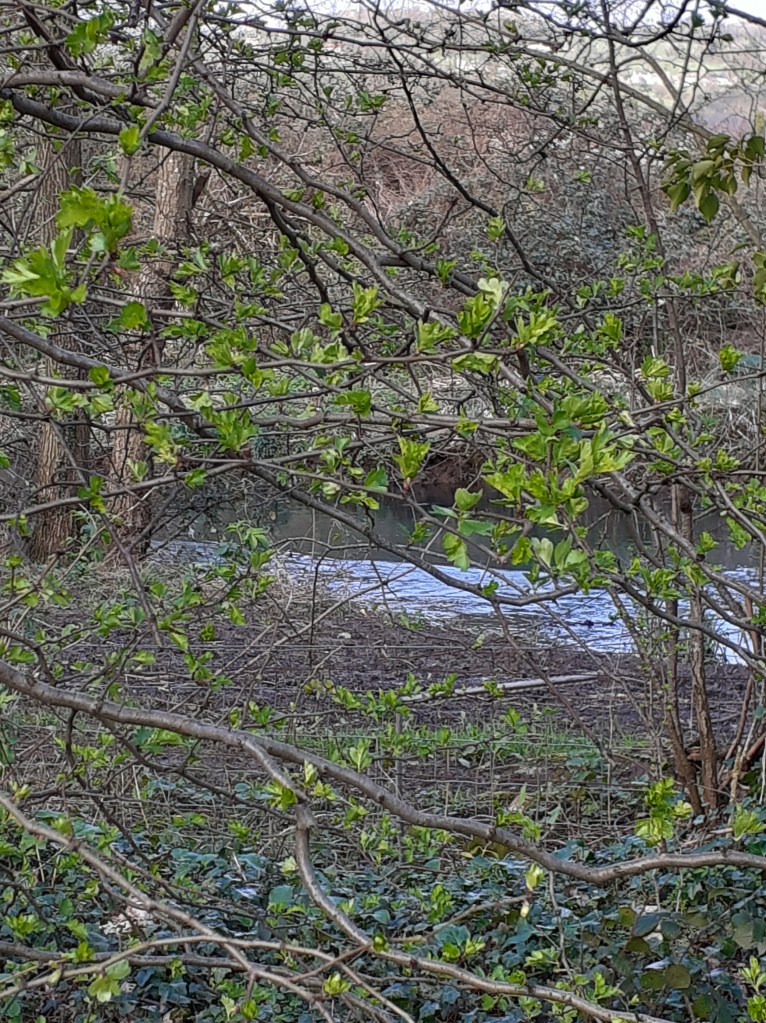
On Friday 13 March I tasted spring in its fullness. I was flooded with gratitude. Yet ‘gratitude’, especially in religious settings, was for a long time a tainted term in my life.

Growing up, I faced demands to be grateful whether I felt it or not. Over time I came to link this idea to formal performance and competitive public piety: being seen to be ‘good’. It also left my natural feelings of gratitude, when they came up, unrecognised and untended. In this stunted state I developed a cynicism about how language is used, rather than finding ways about how, authentically, to identify and cultivate my own sense of gratitude.

I am sad about this, because, even from a self-referential perspective, the capacity for gratitude is linked to wellbeing, happiness, self-acceptance and a sense of purpose in life. Psychological studies (1) show that gratitude is an active agent and not simply the result of already existing wellbeing. Exercises in gratitude work for many people, for much of the time. There are now considerable academic and self-help literatures on the subject.

Most spiritual traditions recommend gratitude, and for many of them this is linked to a sense of the divine, or some other ultimate point of reference. But this isn’t necessary. Gratitude is named as the third of thirteen principles in Atheopaganism (2), which is based on an entirely naturalistic, science-based cosmology. Here too, gratitude is seen as a habit that has to be learned and practised. The practice can alter both our internal dialogue and our behaviour. “It is good for ourselves, our relationships, our society and our world”.

I came late to gratitude, in the sense being discussed. But I’m a convert now. Being older has somehow helped. There was a decisive moment just under fifteen years ago, when I was 56 years. I was diagnosed with a cancer that might have killed me and I started to ask myself how I was going to maintain my quality of life remaining if I found myself on a downward slope.

I concluded that I would need to do what I could to count my blessings whilst I still lived. I recovered – with the insight still in place. I have built on that with greater awareness over the years, especially since beginning my contemplative inquiry. Now I’m nudged by the coronavirus and the same principles apply. I’m enjoying the experience of spring, usefully aware of my mortality, and grateful to be here, now.

(1) Rupert Sheldrake Science and Spiritual Practices Coronet, 2017

(2) Mark A. Green Atheopaganism: an Earth-Honoring Path Rooted in Science Green Daragon Publishing, 2019 (Foreword by John Halstead)

RESILIENCE AND REGENERATION

In my world, early March is a pre-equinoctial period of its own. In the emergence from winter, it manifests both resilience and regeneration. This year I have experienced an elephant’s ears plant (bergenia cordifolia) as an marker for resilience. This evergreen lives close to our back garden gate. It has been flowering, and it leaves have kept shiny, for most of 2020 so far. It has given me a lift every time I have walked past it, in all manner of weather. I feel grateful to it just for being there.

Why have I noticed it this year in particular? In the past I’ve taken this plant for granted. I’ve walked past without seeing it. I’ve only paid attention when the leaves need pruning, having strayed onto a path. Yet now this plant feels like a friend and nourishes me with its presence. It doesn’t just demonstrate its own resilience. It supports mine. I’ve been experiencing 2020 as tough and likely to stay that way, so I suppose that something in me has been looking for ways of feeling resilient. As a result, I’ve been able to notice something that’s been there all along, though largely neglected.

As well a resilience, I’ve been having a sense of regeneration, though the dynamics are a little different. One difference is that I expect to be leaning into regeneration at this time because it’s part of my wheel of the year narrative. I also expect it to be linked to the presence of willow trees (see picture below) because I befriended one many years ago. I have stayed in touch even after moving to a different town. The early re-greening of willow trees is part of my direct experience, and also part of my myth. It feels as if I am being taken by the hand and led towards the equinox.

I don’t want to get there prematurely. A patient, attentive journey emphasises the freshness and novelty of each year. I took the photograph below a couple of days ago on impulse, and it felt like a nudge into a process of renewal that I don’t want to undertake too quickly and don’t want to make assumptions about. Regeneration happens. Although I’m starting to feel my age, I’m still part of it. Let’s see how it goes in 2020.

REBLOG: FIRST LEAVES — DRUID LIFE

Reblog of a recent Druid Life post, about the turning of the Wheel in the Stroud district of the English Cotswolds, and the way it is being influenced by the climate crisis. “It feels too early. I’d expect the fruit trees to start flowering around now, but there are leaves unfurling on a number of trees as well – most notably the elders in the more sheltered spots. I can remember springs when there were very few leaves until April and one year, May. Spring did not […]

First leaves — Druid Life

POEM: FIELD

They will not mesh, the very small and the large.

They will not converge.

On that side of the mirror, flickering fringes –

Superposition, quantum probabilities,

Shimmering light and dark; on this,

Nature has made its choice.

Time, space –

They will not bend both ways at once.

When the little ideas slip into bodies like clothes

They step through the mirror, enter

An irreducible level of noise –

Gravitational decoherence, dependent on mass.

Worlds, how sad we are to leave our dreaming behind.

So lovely we were then, so light, so playful.

But how compelling to have a body. In fact,

Irresistible.

From: Katrina Porteous Edge Hexham, Northumberland: Bloodaxe Books, 2019

Blurb note: “Edge contains three poem sequences, Field, Sun and the title sequence, which extend Porteous’s previous work on nature, place and time beyond the human scale. They take the reader from the micro quantum worlds underlying the whole Universe, to the macro workings of our local star, the potential for primitive life elsewhere in the solar system on moons such as Enceladus, and finally to the development of complex consciousness on our own planet. As scientific inquiry reveals the beauty and poetry of the Universe, Edge celebrates the almost-miraculous local circumstances which enable us to begin to understand it. All thre pieces were commissioned for performance in Life Science Centre Planetarium, Newcastle, between 2013 and 2016, with electronic music by Peter Zinovieff.”

SIGNS OF BLOSSOM

In my neighbourhood, there is a distinct mid-February period. Blossom, particularly cherry blossom, is developing. Whatever the weather I feel confidence in the coming of spring.

Humanly, I enjoy a shared experience of extended Valentine. When my partner Elaine and I decided to marry after a decade together, we chose 17 February (three days after Valentine) as our wedding date. So now a four day moment in the year celebrates ever-renewing relationship.

I imagine that most people who consciously live the wheel of the year include dates where a private significance flavours, extends, or indeed reframes a natural or tribal one. Mid February is such a time for me.

WOODLAND HAIKU

This lone shape

emerging from under-wood:

Who am I?

LIGHT ON TREES

Bright light as a valley experience. Sunlight on trees. February 6, the day I took this picture, provided my first experience of intense sunlight this year. It got through to me even in a shady place. My eyes were dazzled and my head struck by an unexpected warmth.

I noticed mixed feelings. Yes, I celebrated the return of the light. Yes, it was a reference experience for the spring aspect of Imbolc in my part of the world. More visceral than snowdrops, the sun truly reached me and not just my nature-observant sensibilities. It was almost shocking.

Looking out, after that first moment, my world filled up with light on trees. I wondered if they too had any resistance to waking up and being visible and called upon to grow and change and open to the light more fully. I don’t know what it’s like to be a tree. Not really. Withdrawing my projections, I am turned back to my own responses. Parts of me have reservations about immersion in the light. Perhaps they have a wisdom of their own.

RUMI: THE MORNING WIND

The morning wind spreads its fresh smell.

We must get up and take that in,

that wind that lets us live.

Breathe, before it’s gone.

From the collection Unseen Rain: Quatrains of Rumi translated by John Moyne and Coleman Barks Putney, VT: Threshold Books, 1986

BIOCENTRISM

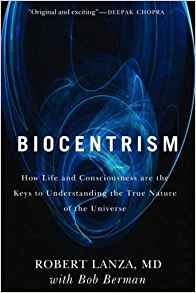
Biocentrism (1) and the follow-up Beyond Biocentrism (2) are science-referenced explorations of cosmos and consciousness. Unusually, they present a ‘consciousness first’ view. In the first book authors Robert Lanza and Bob Berman work through the evidence and identify seven principles of biocentrism.

“If one removes space and time as actual entities rather than subjective, relative and observer-created phenomena, it pulls the rug from the notion that an external world exists within its own independent skeleton. Where is this external objective existence if it has neither time nor space? we can, at this point formulate seven principles:

“First Principle of Biocentrism: What we perceive as reality is a process that involves our consciousness. An ‘external’ reality if it existed, would – by definition – have to exist in space. But this is meaningless, because space and time are not absolute realities but rather tools of the human and animal mind.

“Second Principle of Biocentrism: Our external and internal perceptions are inextricably intertwined. They are different sides of the same coin and cannot be divorced from one another.

“Third Principle of Biocentrism: The behaviour of subatomic particles – indeed all particles and objects – is inextricably linked to the presence of an observer. Without the presence of a conscious observer, they at best exist in an undetermined state of probability waves.

“Fourth Principle of Biocentrism: without consciousness, ‘matter’ dwells in an undetermined state of probability. Any universe that could have preceded consciousness only existed in a probability state.

“Fifth Principle of Biocentrism: the structure of the universe is explainable only through biocentrism. The universe is fine-tuned for life, which makes perfect sense as life creates the universe, not the other way around. The ‘universe’ is simply the complete spatio-temporal logic of the self.

“Sixth Principle of Biocentrism: Time does not have a real existence outside of animal-sense perception. It is the process by which we perceive changes in the universe.

“Seventh Principle of Biocentrism: Space, like time, is not an object or a thing. Space is another form of our animal understanding and does not have an independent reality. We carry space and time around with us like turtles with shells. Thus, there is no absolute self-existing matrix in which physical events occur independent of life.”

Beyond Biocentrism summarises and extends Biocentrism. It does not repeat the principles, but elegantly summarises the perspective of biocentrism and takes the argument into new territory. An appendix to the book lists its major topics as: the exploration of time; the unreality of death; the nonreality of space; the nature of consciousness; science proofs of biocentrism; asking about awareness in machines (probably no) and plants (certainly yes).

When I contemplate biocentric thinking, I feel engaged and intrigued – without taking a stance on its truth claims. I can see how the universe of the space/time continuum, and within it the earth that I love, may be but a bubble of local, provisional reality. In the light of this narrative, simply experiencing life, being part of it, feels vividly magical. The effect is to ground me even more in my earth spirituality, gratefully celebrating the experienced here and now.

(1) Robert Lanza, MD, with Bob Berman Biocentrism: How Life and Consciousness are the Keys to Understanding the True Nature of the Universe Dallas, TX: Benbella Books, 2009

(2) Robert Lanza, MD, with Bob Berman Beyond Biocentrism: Rethinking Time, Space, Consciousness, and the Illusion of Death Dallas, TX: Benbella Books, 2016

IMBOLC 2020

Spaces ‘between’ can be numinous. They feed the soul. Imbolc for me is like a pre-dawn light. I am not yet out of winter, but something else is happening, and palpably growing in strength.

The hierophant of the Wildwood Tarot – the Ancestor – is placed as a power of Imbolc. An antlered figure clothed in reindeer skins and evergreen leaves, she has a resonance of Elen of the Ways, the reindeer goddess who stands for the sovereignty of the land. She calls to us from a deep past where Ice Age hunters followed reindeer through ancient forest, “following the deer trods” (1,2) responsive to the herds and attuned to the landscape. They lived with little personal property and without long hours of alienating work. The Ancestor invites us to wonder what these early ancestors  might have to teach us under our very different conditions.

On the card, the Ancestor is sounding a drum and calling us into another consciousness – one more open and aware of our place within the web of life. In her world, deer and people are kin. She herself is ambiguous – she might be wearing a mask, or she might be a truly theriomorphic figure. I respond to her call by sinking deeply into my felt sense – the embodied life of sensation, feelings and belly wisdom. The call of the Ancestor  is a pathway to greater wholeness and connection, both personally and collectively. As the year wakes up, it is a good call to hear.

(1) Elen Sentier Elen of the Ways: British Shamanism – Following the Deer Trods Arlesford, Hants: Moon Books, 2013 (Shaman Pathways series)

(2) Elen Sentier Following the Deer Trods: A Practical Guide to Working with Elen of the Ways Arlesford, Hants: Moon Books, 2014 (Shaman Pathways series)

See also book review at: https://contemplativeinquiry.blog/2014/06/22/

Earth Eclectic

music that celebrates Earth and speaks to the heart

Sarah Fuhro Star-Flower Alchemy

Follow the Moon's Cycle

Muddy Feet

Meeting nature on nature's terms

Rosher.Net

A little bit of Mark Rosher in South Gloucestershire, England

Becoming Part of the Land

A monastic polytheist's and animist’s journal

selkiewife

Selkie Writing…

Charlotte Rodgers

Images and words set against a backdrop of outsider art.

Prof Jem Bendell

living with metacrisis and collapse

Towint

The pagan path. The Old Ways In New Times

The Druids Garden

Spiritual journeys in tending the living earth, permaculture, and nature-inspired arts

The Blog of Baphomet

a magickal dialogue between nature and culture

This Simple Life

The gentle art of living with less

Musings of a Scottish Hearth Druid and Heathen

Thoughts about living, loving and worshiping as an autistic Hearth Druid and Heathen. One woman's journey.

Wheel of the Year Blog

An place to read and share stories about the celtic seasonal festivals

Walking the Druid Path

Just another WordPress.com site

anima monday

Exploring our connection to the wider world

Grounded Space Focusing

Become more grounded and spacious with yourself and others, through your own body’s wisdom

The Earthbound Report

Good lives on our one planet

Hopeless Vendetta

News for the residents of Hopeless, Maine