Contemplative Inquiry

This blog is about contemplative inquiry

Tag: contemplative practice

GNOSIS AND LOVE

This post looks at two sentences from the Gospel of Thomas and concludes a series of three posts about this text and how I read it.

“Yeshua said: When you bring forth that within you, then it will save you. If you do not, then that will kill you”. (From saying 70)

What is ‘that’? I could jump in and say the experience of ‘living presence’, in contact with the ‘bubbling source’ discussed in earlier posts on this theme, and this feels right to me. But I also find my understanding extended by translator and commentator Jean-Yves LeLoup, who offers two meanings for that, gnosis and love. Although he doesn’t fully spell it out, the sense I get from him is that they are co-arising and belong together. LeLoup understands gnosis, as Yeshua uses this term, to be “a consciousness that arises directly from knowledge of ourselves, of the ‘Living One’ within us”. He also describes it as “a transparency with regard to the ‘One who Is’ in total innocence and simplicity”. He adds: “this is why the qualities of the gnostic are said to be unconditioned, to resemble those of ‘an infant seven days old'”. Without gnosis, “the universe remains radically alien and incomprehensible”. With gnosis, love is free to flourish. LeLoup describes those who live in gnosis and love as “able to marvel at the vast richness in the tiniest manifestation of being”, graced with what seems like “unreasonable abundance”. In the absence of gnosis and love, we are vulnerable to experiencing life as stale, depleted and desolate. Yeshua is uncompromising on this point. This is the core of his teaching.

When encountering the Yeshua of this text, I have tried to let go of all other associations with the names Yeshua or Jesus. I have striven for a pristine response, as if I had not heard of this teacher before and knew nothing of the points of view claimed for him by the Thomas writer vast numbers of other people over the centuries. I haven’t found this easy. When I succeed, at least relatively, and respond to this text alone, I experience a fiercely and impatiently compassionate teacher who wants to shock people into an awakening to that – gnosis and love, in the sense understood in this text.

Yeshua’s compassion lies in his deep appreciation of the benefits of being awake, and the wish that others would share them. The impatience, perhaps a slightly wounded and bewildered one, comes from the way in which most people seem to be finding endless ways of not joining Yeshua in the sweet place where he dwells. So he uses a hyperbolic language in which that will either save you if you take it on or kill you if you don’t. Commentators say that, as a man of his place and time, Yeshua drew both on his Jewish inheritance and a Greek tradition of radical Stoicism, known as Cynicism (the modern definition is misleading) (2). Both had elements of exasperation with the public and lack of deference to the ruling class. People could be wiser and better than they are. So, why aren’t they? – and what can be done?

Hence the gospel of gnosis and love is not all about the inner life. Saying 3 of Thomas says; “the Kingdom is inside you, and it is outside you”. Jean-Yves LeLoup salutes this as “the wisdom of non-dualist language”: ‘inside’ alone “would give one-sided privilege to inner experiences and meditations. This would encourage us to flee the world, to disregard what is going on around us”. But ‘outside’ alone would encourage us to transform the world and convert others at all costs, “and it would be selfishness to sit in silence and listen to the song of the Living One in our heart”. We are asked to work with both dimensions, in this teaching, for gnosis and love to flourish.

(1) The Gospel of Thomas: the Gnostic Wisdom of Jesus (Translation from the Coptic, introduction and commentary by Jean-Yves LeLoup. English translation by Joseph Rowe. Foreword by Jacob Needleman) Rochester, VT: Inner Traditions, 2005

(2) The Gospel of Thomas: the Hidden Sayings of Jesus (New translation with introduction and notes by Marvin Meyer. Interpretation by Harold Bloom). San Francisco, CA: HarperSanFrancisco, 1992. “The Cynics emerged from the philosophical tradition of Socrates as social critics and popular philosophers who lived a simple life and employed sharp, witty sayings in order to make people raise questions about their own lives. The influence of the Cynics and other Hellenistic thinkers is evident in the Galilee of the first century; Jewish wisdom literature itself bears the marks of Hellenistic concerns.”

NOTE: This post continues a discussion begun at https://contemplativeinquiry.blog/2020/3/28/living-presence/ and continued at https://contemplativeinquiry.blog/2020/4/02/wisdom-writing/ and https://contemplativeinquiry.blog/2020/4/04/the-bubbling-source/

PUBLISHED: April 4, 2020

THE BUBBLING SOURCE

“I am no longer your Master, because you have drunk, and become drunken, from the same bubbling source from which I spring.” From Saying 13, Gospel of Thomas (1).

In the Gospel of Thomas, Yeshua begins to treat Thomas as his peer. Asked by Yeshua “to what would you compare me?”, Thomas has replied, “Master, my mouth could never utter what you are like”. This reply contrasts sharply with Peter’s “you are like a righteous angel” and Matthew’s “you are like a wise philosopher”. Thomas has understood. He has dropped all his presuppositions and expectations. He has been able to meet Yeshua in living presence, at source. Whoever wrote this text is asking us to emulate Thomas, and therefore his teacher Yeshua. We all come from the same bubbling source, and are invited both to recognise this and live from the place of recognition. Peter and Matthew may remain constrained by limiting traditional narratives, but Thomas has understood, and two other disciples, Salome and Mary, are portrayed as being on the way.

Recently re-reading this story, I was moved by the force of the words ‘bubbling source from which I spring’. I am grateful to Jean-Yves LeLoup’s translation for this, because the standard academic translation speaks of the “bubbling spring that I have tended” (2), which for me lacks power in comparison. ‘Bubbling source from which I spring’ exactly describes my felt sense of ‘living presence’, recognising it in myself. In my formal practice, I work within a circle framework and I quickly grasped that it should be recognised as the power at the centre. Liturgically, I now greet it is ‘the bubbling source from which I spring and heart of living presence’. This feels right and good. It helps that ‘bubbling source’ is not specifically a water image in this translation. I am free to experience it internally, through my act of recognition, as a shift in energy and attention.

I feel as if I have integrated, or perhaps re-integrated, a depth dimension into the practice, and it feels richer. Since the Winter Solstice I have been closely following the wheel of the year. It represents the inheritance and continuing life of my Druidry. In many ways this is a naturalistic undertaking. But I am now powerfully reminded that my existing commitment to the flowing moment as my true home, and out of which these recent insights came, is not simply about living a slowed down time in a conventionally naturalistic sense. It is that – but it also allows the taste of timelessness and the sense of a primordial nature. The Thomas text reminds me of it. That I can recognise it is also partly thanks to my work in recent years with the practices of the Headless Way (3), the Direct Path (4,5), and Jeff Foster’s community (6). Ultimately this primordial nature is no-thing, but as no-thing it becomes everything, I discover a ‘bubbling source’. I seem to have reached a point where I can both integrate this learning and keep simple. Indeed the one seems to lead to the other. I am grateful that it is so.

(1) The Gospel of Thomas: the Gnostic Wisdom of Jesus (Translation from the Coptic, introduction and commentary by Jean-Yves LeLoup. English translation by Joseph Rowe. Foreword by Jacob Needleman). Rochester, VT: Inner Traditions, 2005

(2) The Gospel of Thomas: the Hidden Sayings of Jesus (New translation with introduction and notes by Marvin Meyer. Interpretation by Harold Bloom). San Francisco, CA: HarperSanFrancisco, 1992

(3) http://www.headless.org

(4) http://www.rupertspira.com

(5) http://www.greg-goode.com/

(6) http://www.lifewithoutacentre.com/

NOTE: This post continues a discussion begun at https://contemplativeinquiry.blog/2020/3/28/living-presence/ and continued at https://contemplativeinquiry.blog/2020/4/02/wisdom-writing/

WISDOM WRITING

At this strange moment in my life, I want to make my contemplative work more focused and integrated. Communing with the image above led to a deepening, related to the experience of ‘living presence’, and reported in a recent post (1). The process of writing that post has prompted further developments. One of them is a renewal of engagement with ancient wisdom writing.

My favourite books in this genre are the Tao Te Ching (2) and the Gospel of Thomas (3). My work with them has two aspects. One is to understand their cultural contexts, assisted by editors and commentators and further reading. The other is my direct response to the sayings. I am currently focusing on Thomas because some it its sayings influence my practice. Below I summarise contextual information. Each of my next two posts will cover a specific saying.

As a text, Thomas has more resemblance to ancient Jewish Wisdom literature (Proverbs, Ecclesiastes/Sirach) than either the canonical gospels or most Gnostic literature. Numbers of the sayings do also appear in Matthew, Mark and Luke, and Jesus/Yeshua defends Mary Magdalene against Peter – a common Gnostic trope. So there is some relationship with the canonical and Gnostic literatures. But there is no biographical information and no presentation of the teacher as a saviour from a super-celestial realm. There is no sense of the material world as a fallen or evil creation whether undermined by a cosmic adversary or ruled by a false god. Indeed there is no sense of the ‘kingdom of heaven’ being somewhere else at all: rather, it is “spread out over the whole earth, and people do not see it” – Saying 113 (1). Thomas can be seen as Gnostic in its sense of self-knowledge (gnosis) as transformational and because the individual is asked to identify with Jesus rather than ‘believe in’ him (4). The text is about self-transformation through a wisdom teaching that points us to our true nature. This makes it very different in cosmology and emphasis from the Gnostic movement that coalesced in the decades after Thomas was written.

Thomas was probably written in Edessa (now Urfa, a city of two million people in south east Turkey, close to the Syrian border), with the Coptic Nag Hammadi version (our only complete copy) a translation from a Greek or possibly Aramaic original (4). At the time of writing, thought to be the middle of the second century C.E., it was the capital of a Roman satellite state, not counted as within the borders of the empire. It rivalled Alexandria as a centre for book production, but had a different cultural feel – ascetic, contemplative and devotional, less concerned with creative myth-making. Christianities influenced by a Thomas tradition (though not necessarily this text) looked east and for many centuries flourished in the Middle East, Central Asia, China and India. In contrast to Europe, they were not religions of power and had to negotiate with other faiths – leading to significant cross-pollination in ways unimaginable in Constantinople or Rome. For example, they are said to have been an influence on Islamic Sufism, and as late as the thirteenth century, Rumi enjoyed good relations with a local Nestorian monastery (5). These eastern churches have stood by a view of theosis, full participation in the life of God. This is understood to have three stages: first, the purgative way, purification, katharsis; second, illumination, the illuminative way, the contemplative vision of God, theoria; and third, sainthood, the unitive way, theosis.

Essentially, this is a gradual path non-dualism. The Gospel of Thomas itself reads to me like a direct path non-dualism, as it does to other people at the present time – like Douglas Harding (6) and Francis Lucille. However I wouldn’t want to go too far in appropriating this ancient text for the purposes of a modern movement. It should be met, as far as possible, as what it is. I am concerned to respect and respond to it. I don’t need to agree with it or (worse) to make it agree with me.

The saying I want to look at in my next post is:

“I am no longer your Master, because you have drunk, and become drunken, from the same bubbling source from which I spring.” (from Saying 13)

In the following post, I will turn to:

“Yeshua said: when you bring forth that within you, then that will save you; if you do not, then that will kill you.” (Saying 70)

(1) https://contemplativeinquiry.blog/2020/03/28/living-presence/

(2) Lao Tzu Tao Te Ching: A Book about the Way and the Power of the Way (A new English version by Ursual K. Le Guin with the collaboration of J. P. Seaton, Professor of Chinese, University of North Carolina, Chapel Hill) Boston & London: Shambhala, 1998

(3) The Gospel of Thomas: the Gnostic Wisdom of Jesus (Translation from the Coptic, introduction and commentary by Jean-Yves LeLoup. English translation by Joseph Rowe. Foreword by Jacob Needleman) Rochester, VT: Inner Traditions, 2005

(4) Nicola Denzey Lewis Introduction to ‘Gnosticism’: Ancient Voices, Christian Worlds New York & Oxford: OUP, 2013

(5) Philip Jenkins The Lost History of Christianity: The Thousand-Year Golden Age of the Church in the Middle East, Africa and Asia – and How It Died HarperCollins e-books, 2008

(6) Douglas Harding A Jesus for Our Time. Chapter 14 in Look for Yourself: the Science and Art of Self-Realisation London: The Shollond Trust 2015 (first published the The Head Exchange in 1996)

LIVING PRESENCE

In my part of the world, we have begun the greening of the year. But I can’t go out to meet it, or if so, only a little. I can’t go out, so I have to go in. In the greening of my contemplative life, a sense of ‘living presence’ has been the key.

My bespoke liturgy speaks to me and at times asks for change. A section of my morning practice, an affirmation of ‘at-homeness in the present moment’, wants to expand into a ‘celebration of living presence’. At-homeness stood for a place of safety and regeneration. ‘Living presence’ includes that and points to more. In the celebration, I affirm myself as ‘living presence in a field of living presence: here, now and home’. I’ve added a period of walking meditation (20 minutes or so), mindful to breath and footfall and also including liv-ing pres-ence as a mantra over two full breaths.

The Phrase ‘living presence’ came up spontaneously but realising that I didn’t actually make it up, I checked up on where I first came across it. It comes from the Sufi teacher Kabir Edmund Helminski (1). “Presence signifies the quality of consciously being here … the way in which we occupy space. Presence shapes our self-image and emotional tone. Presence determines the degree of our alertness, openness and warmth. Presence decides whether we leak and scatter our energy or embody and direct it”.

For Helminski, presence is also our link to the divine. since in the bigger picture it is “the presence of Absolute Being reflected through the human being. We can learn to activate this presence at will. Once activated, we can find this presence both within and without. Because we find it extending beyond the boundaries of what we thought was ourselves, we are freed from separation, from duality. We can then speak of being in this presence”.

My picture of leaves in light against a darker background is, for me, an image of living presence. It wasn’t intended to look like this, but I’m glad that it does. It said ‘living presence’ to me as soon as I saw it. Each leaf grows out of the tree and is extended by the light of the sun. All are enabled and nourished by ‘interbeing’, the Buddhist teacher Thich Nhat Hanh’s (2) reframe of ‘dependent origination’. But the elements of darkness and shade, whilst delineating the tree trunk, also suggest the mystery of a primordial nature, no-thing in itself yet making everything possible. The picture seems to be saying that the potential for greening is everywhere, outside and within.

(1) Kabir Edmund Helminski Living Presence: A Sufi Way to Mindfulness & the Essential Self New York, NY: Jeremy P. Tarcher/Putnam, 1992

(2) Thich Nhat Hanh The Other Shore: A New translation of the Heart Sutra with Commentaries Berkeley, CA: Palm Leaves Press, 2017

SCIENCE AND SPIRITUAL PRACTICE

As part of my contemplative inquiry, I have been looking at recent work by Rupert Sheldrake (1, 2). He identifies himself as “not a guru but an explorer”. I like that notion of ‘explorer’, with its sense that there is always space for new learning and development.

Sheldrake’s affirms that spiritual practice and research are “entirely consistent with the scientific method, which involves the formation of hypotheses – guesses about the way the world works – and then testing them experimentally. The ultimate arbiter is experience, not theory. In French, the word experience means both ‘experience’ and ‘experiment’. The Greek word for experience is empeiria, the root of our English word ‘empirical’. The exploration of consciousness through consciousness itself is literally empirical, based on experience. Spiritual practices provide ways in which consciousness can be explored empirically.”

In recent years, Sheldrake (1,2) has written two books based on this approach. Each discusses seven different practices that have been investigated empirically, both by the practitioners themselves and by scientists studying the effects of those practices. Every practice gets a chapter. The first book, Science and Spiritual Practices, offers:

  1. Meditation and the Nature of Minds
  2. The Flow of Gratitude
  3. Reconnecting with the More-Than-Human World
  4. Relating to Plants
  5. Rituals and the Presence of the Past
  6. Singing, Chanting and the Power of Music
  7. Pilgrimages and Holy Places

The second Book, Ways To Go Beyond, covers:

  1. The Spiritual Side of Sports
  2. Learning from Animals
  3. Fasting
  4. Cannabis, Psychedelics and Spiritual Openings
  5. Powers of Prayer
  6. Holy Days and Festivals
  7. Cultivating Good Habits, Avoiding Bad Habits, and Being Kind

Sheldrake’s choices are all practices he has taken part in, which have also been studied scientifically. He looks at both the ‘subjective’ experience and the ‘objective’ evidence and discusses the ways in which the practices seem to work. He also offers guidance to readers about engaging with the practices. He is very clear that the two books “do not constitute a comprehensive survey of all spiritual practices, emphasising his point by listing others that have been left out: “yoga, service to others, tai chi, chi gong, devotional worship or bhakti, tantric sex, caring for dying people, dream yoga, and the practices of the arts”. He makes it clear that “some practices are better at some times of life than others, and all religious traditions  have their own combinations”. I have already discussed Sheldrake’s work on gratitude at www.contemplativeinquiry.blog/2020/03/14/ and will discuss others in future posts.

Sheldrake’s overall purpose is “to show that there is a wide variety of ways to connect to greater conscious realities, however we conceive of them, and that the effects of these practices can be investigated empirically”. Sheldrake is an optimist about the possibilities of science and spirituality working together in the service of human flourishing. “We are on the threshold of a new era of the exploration of consciousness, both through a revival of spiritual practices and also through the scientific study of them. After several generations in which science and spirituality seemed to be in opposition, they are becoming complementary. Together they are contributing to an unprecedented phase of spiritual evolution, beginning now.”

(1) Rupert Sheldrake Science and Spiritual Practice: Reconnecting Through Direct Experience Coronet, 2017

(2) Rupert Sheldrake Ways to Go Beyond, and Why They Work Coronet, 2019

NOTE: Rupert Sheldrake is a biologist and author of more than eighty technical papers and ten books, including A New Science of Life. He was a Fellow of Clare College, Cambridge, where he was Director of Studies in cell biology, and was also a Research Fellow of the Royal Society.

Sheldrake resigned his position at Clare and went to work on the physiology of tropical crops in Hyderabad, India, as principal plant physiologist at the International Crops Research Institute for the Semi-Arid Tropics (ICRISAT) from 1974 to 1978. There he published on crop physiology] and co-authored a book on the anatomy of the pigeonpea. Sheldrake left ICRISAT to focus on writing A New Science of Life, during which time he spent a year and a half in the Saccidananda Ashram of Bede Griffiths, a Benedictine monk.

From 2005-2010 he was the Director of the Perrott-Warwick Project for research on unexplained human abilities, funded from Trinity College, Cambridge. He is currently a Fellow of the Institute of Noetic Sciences in California, and a Visiting Professor at the Graduate Institute in Connecticut.

His website is www.sheldrake.org/

THE FIRST QUARTER

I began closely following the wheel of the year – not only the festivals – just before the winter solstice. I wrote then that “my current warm up process is already changing the way I think and feel about contemplative inquiry and will re-shape how I do it”*. How has the first quarter been?

I’ve been outside, taking pictures, concerned with visual images and the stories they tell. There’s been some tension between communing with nature and being a self-conscious observer, actively selecting images. But on the whole it works. Taking pictures slows down my walks, opening up opportunities for stillness and mindful micro movement. Special moments come by themselves – or not. In sharing my experience, the process offers the opportunity to show as well as tell.

The quarter has been very wet – the picture above, taken on 15 March – shows a continuing abundance – to the point of excess – of water. It is beautiful and entirely natural, but for me also part of a story of times out of joint, and the increasing impact of the climate crisis. The picture below, also taken on 15 March, adds to this story in two ways. One is the suggestion of dank fecundity in the abundance of moss on a branch. The second is the indication of a lost branch from the same tree. High winds have caused considerable destruction in the woods in my neighbourhood. In both pictures, there are cues for appreciation and tranquillity, whilst also an indication that significant other things are going on. My current approach to contemplative inquiry has helped me to notice this and pay greater attention to it than I might otherwise have done.

The second quarter of the year will be different. I have self-isolated in response to Covid-19 though I am still going out on walks. I am likely to double down on contemplative practice and inquiry at home. I strongly believe in contemplative practice as, among other things, a resiliency factor in personal wellbeing, enhancing my experienced quality of life. I will talk more about this in future posts.

WORKING WITH TAROT IMAGES

One of my inquiry intentions this year is to live the wheel of the year with heightened attention. For the Innerworld aspect of this journey, I am working with the Wildwood Tarot (1). I like its strong wheel of the year orientation, its choice of imagery and its focus on resiliency.

Tarot images are often described as archetypes. The word is derived ultimately from Plato’s eidos – the ideal forms that he saw as building blocks of the universe. They can be abstract – Justice, Wisdom, Beauty – or concrete – Horse, Wheel, Tree. Without these ideal forms in the mind of a Creator, their worldly approximations could not exist. They are “the absolute changeless objects of knowledge.” (2)

In the early 20th. Century, C.G Jung brought the archetypes into the realm of human history and psychology. June Singer explains how, for Jung, “the term archetype indicates the presence of … a universal and collective image that has existed since the remotest times. Archetypes give rise to images in … tribal lore, in myths and fairy tales, and in contemporary media. They are, by definition, unconscious, and their presence can only be intuited in the powerful motifs and symbols that give definite form to psychic contents.” (3)

The shift from ‘archetype’ to ‘archetypal image’ is a helpful one for me and can be taken further. James Hillman, a modern Platonist, pupil of Jung’s, and founder of an Archetypal Psychology, asks what makes an image archetypal, and concludes that: “any image can be considered archetypal … by attaching archetypal to an image, we ennoble or empower the image with the widest, richest and deepest possible significance.” (4) ‘Archetypal’ is a word that gives value, influencing our own response to an image and the way we treat it, contemplating it carefully, taking it into our hearts, and letting it work with our senses, feelings, intuitions and thoughts arising from it. With this approach, the descent from heaven to earth is complete. We are free to understand archetypal images as products of human consciousness that have the power to move and change us. Extending our imaginations, they extend our realities.

This is how I am going to work with The Wildwood Tarot. I am aware that the images can be mapped onto the Western Mystery tradition’s version of the Kabbalist Tree of Life, a highly conscious and artful meta-archetype, or blueprint for the cosmos. The greater trumps are archetypal images; the classical elements are archetypal images; each number is an archetypal image; key figures in patriarchal royal courts are archetypal images. All are linked together in an elaborate web of archetypal imagery. The architecture and arrangement of the Wildwood Tarot are fairly conventional, if I take the Rider Waite Tarot, understood as the effective origin of the modern form, as my point of comparison. But the concern with the wheel of the year, aspects of the narrative, and much of the imagery point in a somewhat different direction. I feel able to engage in a fresh way that both honours tradition and feels empowered to enter new and unexpected spaces. This process has already begun, and forms part of my inquiry.

(1) Mark Ryan & John Matthews The Wildwood Tarot Wherein Wisdom Resides London: Connections, 2011. Illustrations by Will Worthington

(2) Thomas Mautner The Penguin Dictionary of Philosophy London: Penguin, 1996

(3) June Singer Androgyny: Towards A New Theory of Sexuality London: Routledge & Kegan Paul 1977

(4) The Essential James Hillman: A Blue Fire introduced and edited by Thomas Moore London: Routledge, 1990

THE FLOW OF INQUIRY

There’s a saying that we never see the same stream twice. It’s true, from a certain perspective. The water is always different. In this recent picture there’s more of it than is usual. The flow is faster and more energised. But in another sense, it is clearly the same stream. There’s a pattern and a placing that make it the same. Not forever. But enough to give it an identity of its own. Enough for us to recognise it, and to be in relationship with it over time.

I think of my inquiry in the same way. It is clearly a process of inquiring, not a thing. It has changed a lot over the years. But I notice, looking back, that it does also have characteristic points of reference and recurring themes. It has its own kind of flow. I see for example that whilst taking up practices of self-inquiry linked to non-dualist movements, I have not embraced the movements. I have gone to them for insight, not belonging. Instead, I have naturalised the insight and reframed it in my own terms – such as stilling into presence, or finding home in the flowing moment. The central focus on Sophia, and the naming of a Sophian Way, has helped here. In my world, contemplative inquiry is a core Sophian practice.

I have also kept a least half a foot in the cultural matrix of modern Druidry, Paganism, animism and eco-spirituality. These movements are closer to my heart and imagination, and feel more like my cultural home. For me, emptiness only has meaning as a home to fullness and and an exuberant multiplicity of forms. The Sophia card (Major Arcana II) in the Byzantine Tarot has a vision of Sophia as present in all of creation and the natural world, and also “watching over the steps of the Holy Fool on his journey and guiding those who seek her blessing to find their own path through the world”*. I am not at all sure about the word ‘holy’, but I see Sophia in the stream, and sense the guidance there.

*John Matthews and Cilla Conway The Byzantine Tarot: Wisdom of an Ancient Empire London: Connections, 2015

REBLOG: ATHEOPAGANISM FOR SOLITARIES

We’re a subgroup of a subculture. Of a couple of them, actually: atheism and Paganism. So it’s not a surprise that though there are many of us collectively, we are spread thinly and may live far away from anyone else who identifies as practicing the path of Atheopaganism. Thus, this post, about practicing as a […]

Atheopaganism for Solitaries — Atheopaganism

NON-DUALITY AND YOGA NIDRA

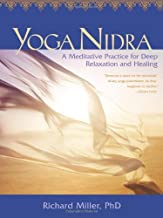
This post is built around Dr. Richard Miller’s approach to Yoga Nidra (1) and my response to it. The resource I am working with – a book and a CD – was published in 2005. My concern in writing is with how a “meditative practice for deep relaxation and healing” can also be what one reviewer (2) described as the “perfect tool” for the author’s non-dual teachings. For the recommended practices “require only presence, and as such represent both the path and the goal of non-dual practice.”

The word non-dual is a translation of the Sanskrit advaita, literally ‘not two’. I remember a podcast in which Peter Russell (3), a long-term practitioner and writer in this field, cautioned against a tendency to equate ‘not two’ with ‘one’. He then told an ancient Indian story about the making of clay pots. A potter takes a lump of clay and makes two pots. One clay; two pots. In the Indian tradition, this is a ‘consciousness first’ understanding, and modern versions draw on terms like presence, awareness, ground of being, or true nature to point to our ultimate identity as this consciousness. ‘God’ is also used in this way. The understanding is that we are never separate from this identity, though we may feel separate from it, or forget it, or ‘not believe’ in it. After all, most of our attention is on our individual life in the world with all its pulls, stresses and demands.

Early in his book, Richard Miller describes his first experience of Yoga Nidra:

“Our instructor led us through Shavasana, the traditional yogic pose for inducing deep relaxation while lying completely still on the floor. The instructor expertly guided us into being conscious of sensations throughout our body, as well as to opposing experiences, such as warmth-coolness, agitation-calmness, fear-equanimity, sorrow-joy, and separation-oneness. I was invited to rotate may attention through the sensations elicited by pairs of opposites until I was able to embody these opposing experiences with neither attachment or aversion to what I was experiencing.

“I drove home that evening feeling totally relaxed and expansively present. For the first time in years, I felt free of all conflict, radiantly joyful, and attuned wit the entire universe. I experienced life as being perfect just as it was and felt myself to be a spacious nonlocalized presence. Instead of my usual experience of being in the world, I was having a nonmental experience of the world being within me, similar to experiences I had known as a child”.

Miller’s motivation to continue was “a longing in me to consciously awaken into and fully abide as this sense of presence”. As well as becoming a yoga teacher and psychotherapist he has worked with Direct Path teachings as a student of Jean Klein. He describes the very term Yoga Nidra as a paradox, a play on the words ‘sleep’ and ‘awake’ as it means ‘the sleep of the Yogi’. The implication is that the normal person is asleep to their true nature through all states of consciousness – waking, dreaming and deep sleep – while the Yogi is one who is awake and knows his or her true nature across all states, including sleep. The practice therefore involves both deep relaxation and deep inquiry.

A full practice on Miller’s CD begins with two commitments – one to a form of mindfulness at the edge of sleep where, for the reasons pointed to above, it is OK to ‘fall asleep’ since there is a trust that the process will continue to run at other levels. The second is described as a ‘heartfelt prayer’, articulated as though it has already been fulfilled – for in the absolute, there is only now: Miller gives the example ‘my friend is whole, healed and healthy’. Then the meditation moves through seven stages, the first six of which address specific forms of awareness: body and sensation; breath and energy; feelings and emotions; thoughts, beliefs and images; desire, pleasure and joy; and witness/ego-I. The final stage (sahaj) is our natural state, ‘the awareness of changeless Being’. Each stage provides an opportunity to identify conventionally positive and conventionally negative experiences, and to hold both in a wider embrace. The sixth stage inquires into the very nature of the ‘I’ that believes itself to be a separate witness, enabling the simple being of the final stage. The whole practice lasts about 35 minutes.

I’ve been looking for an evening practice to complement my morning one. After only a week, it has the right feel, the right format and the right length for me at this point in my life. Over the last three or four years non-duality has become my common sense. During this period I have worked a good deal with the ‘Seeing’ experiments of Douglas Harding’s Headless Way (4) and also with substantial resources from Direct Path teachers Greg Goode (5) and Rupert Spira (6). A non-dual view, as a working assumption, is now both cognitively and experientially well installed.

I don’t have a deep interest in non-dualist metaphysics for its own sake. I am deeply committed to this world and my human life. What I find is that a non-dual model of reality adds to my experience of human life in the world, and cannot be separated from it. I find myself leaning in to this nourishing and illuminating possibility, and committed to commit to living by it. Roger Miller’s Yoga Nidra has met me where I am. I am very grateful for this gentle, life-affirming, and subtle practice, which helps to maintain me on this path.

(1) Richard Miller Yoga Nidra: A Meditative Practice for Deep Relaxation and Holding Boulder, CO: Sounds True, 2005

(2) Stephen Cope, author of Yoga and the Quest for the True Self and The Wisdom Of Yoga

(3) https://www.peterrussell.com/

(4) http://www.headless.org/

(5) Greg Goode The Direct Path: A User Guide Non-Duality Press, 2012 (UK edition)

(6) Rupert Spira Transparent Body: Luminous World: the Tantric Yoga of Sensation and Perception Oxford: Sahaja Publications, 2016

Earth Eclectic

music that celebrates Earth and speaks to the heart

Sarah Fuhro Star-Flower Alchemy

Follow the Moon's Cycle

Muddy Feet

Meeting nature on nature's terms

Rosher.Net

A little bit of Mark Rosher in South Gloucestershire, England

Becoming Part of the Land

A monastic polytheist's and animist’s journal

selkiewife

Selkie Writing…

Charlotte Rodgers

Images and words set against a backdrop of outsider art.

Prof Jem Bendell

living with metacrisis and collapse

Towint

The pagan path. The Old Ways In New Times

The Druids Garden

Spiritual journeys in tending the living earth, permaculture, and nature-inspired arts

The Blog of Baphomet

a magickal dialogue between nature and culture

This Simple Life

The gentle art of living with less

Musings of a Scottish Hearth Druid and Heathen

Thoughts about living, loving and worshiping as an autistic Hearth Druid and Heathen. One woman's journey.

Wheel of the Year Blog

An place to read and share stories about the celtic seasonal festivals

Walking the Druid Path

Just another WordPress.com site

anima monday

Exploring our connection to the wider world

Grounded Space Focusing

Become more grounded and spacious with yourself and others, through your own body’s wisdom

The Earthbound Report

Good lives on our one planet

Hopeless Vendetta

News for the residents of Hopeless, Maine