Contemplative Inquiry

This blog is about contemplative inquiry

Tag: Contemplative poetry

POEM: THE OLD PEONY STALK

Seeming old dry stick

and yet …

a whole ecology

of

moist earth

tiny insects

a little live stem

whiskers and bones

whiskers and bones

dying back to the earth

without fuss

and not too fast

enough life left to feel/hear its

resonance

… a  subtle one.

Stillness allowing movement

permitting earth, moisture, fragmentation

in slow process

easy not to notice

yet, in softened, mutated from –

Part of the Song.

One of the cultural values of the Druid path is that those of us who are not dedicated, specialised poets and artists are encouraged to write poetry and to practise in the arts. I wrote this yesterday after participating in a ‘Lectio Divina from the Book of Nature’ practice with my partner Elaine. This practice was first introduced to us by our colleague Julie Bond and Elaine has adapted it. She will be offering it at our Contemplative Druid Retreat this weekend (17-19 April). I enjoyed rehearsing the practice with her very much, and am glad to have this record of its fruits.

POEM: SUDDEN FOG

Setting out at dawn, I gaze at the distant mountains;

I can count the peaks in the clear air.

But the budding hope in my heart

arouses the jealousy of the Mountain Spirit.

Swiftly he exhibits his divine powers

in a startling display of transformation.

He fills the air with cotton clouds

then tears them into sheds of silken mist.

They enfold the earth from everywhere

and hide the sky from view.

The sun, like a plate of rose quartz,

hangs at a height beyond calculation –

it shines down through the haze, red beams penetrating the white fog.

In the fog are human forms

coming and going in great confusion.

Each of them is holding some implement

but I cannot see clearly what they are.

Next, as if this weren’t strange enough,

there appear even stranger sights:

a roadway lined with pearl-studded banners;

mountains covered with trees of jasper.

A golden bridge arching across the sky;

a jade pagoda surging up from the earth.

But while I stare in astonishment

everything is suddenly swept away.

Amazed, I rub my eyes,

and finding myself standing on the same old mountain road.

Who can say if this was fantasy or reality,

whether I was dreaming of awake?

Once I travelled to Mountain Omei in my imagination

And laughed at Buddha for deceiving the ignorant.

Laugh at deception and be deceived –

Then Buddha will have the last laugh.

From Yang Wan-li Heaven my Blanket: Earth my Pillow: Poems from Sung Dynasty China New York & Tokyo: Weatherhill, 1975 (Translated and introduced by Jonathan Chaves)

According to our reckoning Yang Wan-li lived from 1127-1206. Mount Omei in the western province of Szechwan was a holy place for Buddhist devotees, particularly associated with the bodhisattva P’u-hsien, or Samantabhadra, to give his Sanskrit name.

Of this poem the translator says: “Yang may have been influenced by Ch’an Buddhism” (i.e. a purist, philosophical kind, parent of Japanese Zen) “in his discussion of poetry and his perception of the world, but ‘Sudden Fog’ refers to a different kind of Buddhism, a popular, devotional religion in which the devotee can hope to experience visions of his favourite Buddha or bodhisattva. Certain mountains in China were associated with these apparitions, and Buddhists would make pilgrimages to them seeking visions or mystical experiences.

KABIR: WATER IN THE HOLY POOLS

There is nothing but water in the holy pools.

I know, I have been swimming in them.

All the gods sculpted of wood and ivory can’t say a word.

I know, I have been crying out to them.

The Sacred Books of the East are nothing but words.

I looked through their covers one day sideways.

What Kabir talks of is only what he has lived through.

If you have not lived through something, it is not true.

Kabir Ecstatic poems Boston, MA: Beacon Press, 1992 (The English translations are free enough for Robert Bly to call them ‘versions by Robert Bly’. There is an earlier set of translations published by MacMillan in New York in 1915 by Rabindranath Tagore assisted by Evelyn Underhill under the title Songs of Kabir. Whilst I don’t follow Bly in calling the English of the earlier work “useless”, I do find that Bly’s interpretation has more passion and power. The Bly work includes an insightful afterword Kabir and the transcendental Bly by John Stratton Hawley).

POEM: THE RAILWAY CHILDREN

When we climbed the slopes of the cutting

We were eye-level with the white cups

Of the telegraph poles and the sizzling wires.

Like lovely freehand they curved for miles

East and miles west beyond us, sagging

Under their burden of swallows.

We were small and thought we knew nothing

Worth knowing. We thought words travelled the wires

In the shiny pouches of raindrops,

Each one seeded full with the light

Of the sky, the gleam of the lines, and ourselves

So infinitesimally scaled

We could stream through the eye of a needle.

From Seamus Heaney, Station Island London & Boston: Faber & Faber, 1984

POEM: A POSTCARD FROM ICELAND

As I dipped to test the stream some yards away

From a hot spring, I could hear nothing

But the whole mud-slick muttering and boiling.

And then my guide behind me saying,

‘Lukewarm. And I think you’d want to know

That luk was an old Icelandic word for hand.’

And you would want to know (but you know already)

How usual that waft and pressure felt

When the inner palm of water found my palm.

In Seamus Heaney, The Haw Lantern London: Faber & Faber, 1987

HAIKU BY SHIKI

Without my journey

And without the spring

I would have missed this dawn.

Zen Haiku, selected and translated by Jonathan Clements

London: Frances Lincoln, 2000

FUINN II: THE POETRY OF PRACTICE

I’m a Pagan Druid, happily placed in a tradition that values poetry and seership over dogma and system building. I experience my practice as a sort of poetry. In this poetry of practice, I am held in a compelling myth of origin, an ever-now origin, and I have found a new way of working with it.

My new collection of Fuinn (Ceile De chants in Scottish Gaelic) includes a very simple one which goes A Hu Thi (ah – hoo – hee) repeated over and over again. The Ceile De interpretation, a Celtic Christian one, is that this chant “represents the three stages of the unfolding of creation … A– the Great Mystery draws in its breath … Hu – that breath is breathed out, and creation is born from out of the Mystery … God becomes matter … Thi – the Divine nature, beingness and intention acts within the field of intention … Some Ceile De would say that this final stage represents Christ Consciousness.”

It’s a bit different for me. I’ve been working with this Fonn daily for a couple of weeks now.  I don’t chant. I use slow deep breathing with a silent awareness of the sounds. I find that for me, the A sets up a sense of latency, a subtle pulse and vibration on the brink of becoming. I feel it in the quality of my inbreath, as a kinaesthetic song. Hu the outbreath feels more vigorous and intentional; there’s a real sense of movement, expressed as exhalation – the breath moves out from my body, through my nostrils. Thi breathed in feels like the delighted expression of a new reality, one that I share in, distinct yet inseparable as a sentient being. This generally brings up feelings exhileration, gratitude and joy. It leads me on to the use of another Fonn as a contemplative and devotional prayer, which I wrote myself using my collection of Fuinn as a model.

A Brighde, A Brighde, solus an domhain; A Brighde, A Brigdhe, Brighde mo chridhe

A Vree-jah, A Vree-jah, solus an dowan; A Vree-jah, A Vree-jah, Bree-jah mo cree

Brighde, Brighde, light of the world; Brighde, Brighde, Brighde my heart

Brighde is the breath, the practice and the Fuinn. When writing my Fonn I wanted to build a felt sense of Brighde as cosmic birther, initiator into being, with a seat in my heart.  Her name evokes power and the prayer invokes relationship – identified as She is with primal generativity and the deep powers of life and land, and also One who inspires skill and accomplishment in those She supports and fosters. Through my experience of relationship and connection, deep levels of feeling and intuition are satisfied, in some way met. I feel empowered, with a sense of having more resources available to me. Why would this be? I don’t really know. What I do know is the value of practice as poetry, and the magic it holds.

The Ceile De can be found on http://www.ceilede.co.uk

POEM: PASSING SHAOLIN HERMITAGE

PASSING SHAOLIN HERMITAGE – TO FRIENDS IN THE CAPITAL

I reined in my horse below a pine ridge

and hiked to the lookout on top

the trail appeared impassable as I started out

but once I arrived I wished it were longer

from the summit I heard a chorus of winds

in the woods I bathed in a secluded stream

the sound of a bell roused me on the Way

the evening chime cleared the clouds and mist

though my visit was brief

I finally saw what caused my troubles

but when I thought about building a hut

I knew it would have to wait for old age.


From In Such Hard Times: the Poetry of Wei Ying-Wu translated by Red Pine, Port Townsend: WA, USA: Copper Canyon Press, 2009

Wei Ying-wu was a poet of the later 8th century CE, as we count time. It was a period when the later-remembered-as-glorious T’ang dynasty had begun to unravel. Translator Red Pine says that “Wei lived his life wondering what went wrong”, giving a melancholy tinge to many of his poems. He was distantly related to the Imperial family, a scholar in both the Buddhist and Confucian traditions who spent many years as a state official without much enjoying it.

This poem was written in 771. (In Britain, that’s 22 years before the Viking sack of the Christian monastery at Lindisfarne.) Shaolin Temple was built in the fifth century for a monk from India in a high mountain basin at the foot of Sungshan’s Shaoshih Peak. The trail from the temple to the top went right by the cave where Bodhidharma, the founder of Chan (Japanese Zen) Buddhism spent nine years in meditation.

The chime to which Wei refers was used in Chan monasteries to mark the end of a meditation period. The use of the term ‘the Way’ (Tao) wasn’t confined to Taoists – ‘Tao’ was also used by Confucians, and by Buddhists as a translation of Sanskrit ‘Dharma’. The last two lines of the poem show a tension between Wei’s Buddhist and Confucian trainings – whether to let go of worldly attachments, or whether to stay in his post and “wait for old age” before building his hut.

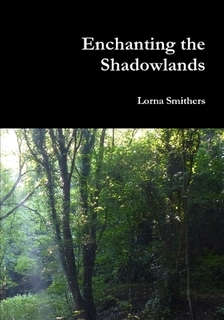
BOOK REVIEW: ENCHANTING THE SHADOWLANDS

product_thumbnailIn formal terms, this is a five star review of Enchanting the Shadowlands, a book of numinous poems and short stories by Lorna Smithers. She describes it as “gathered from my local landscape in response to an imperative from a Brythonic god called Gwyn ap Nudd”. If you have any interest in the lingering subtle resonance of the old Celtic and pre-Celtic world in parts of England like the poet’s native northwest, you will appreciate this volume. If you have any interest in ‘awen’ as an inspirational force or creative current, and what it is to be ‘awenydd’, you will appreciate this volume. If you have any interest in poetry and landscape, or what is now called psycho-geography, you are likely to appreciate this volume. I strongly recommend this book.

More deeply, I am hoping in a small way to share something of the magic of the work as I have experienced it. I find that the best way in is to say that, for me, the resonance of the project, its feeling-tone, can be found in the first two verses of ‘A Journeying Song’, one of the later poems in the collection.

1: Horse and Hound

She will carry me

down invisible horse paths.

He will lead us

to invisible lands.

She will carry me

beyond the stolen skyline.

He will lead us

to where horizons end.

2: The Dreaming Land

The dream is not a dream

it is the life force of the land.

A living memory,

it is the dawn. It is the damned.

The dream is not a sleep.

It is a wakefulness

of past people and their dreams.

It is mistakes and shining laughter.

When I read these lines, I can feel myself riding the mare who will “carry me down invisible horse paths”, led (in my mind’s eye) by a large and shaggy hound. I can easily accept that, surrendering to the instinctive wisdom of these animal powers, I might find myself beyond a “broken skyline” at a place where “horizons end”.  I can settle into the felt apprehension of a Dreaming Land where the dream is not a dream, but “the life force of the land, a living memory” and a “wakefulness of past people and their dreams”. The words are a portal to the living reality of the experience itself. In that sense, these two brief verses stand as a microcosm of the whole book.

Peneverdant/Penwortham, the locality described, is a watery place. Its first human inhabitants are called “The Dwellers in the Water Country”, drawn by the obvious attractions of auroch and deer and also by destiny and “the dream of a bard”.

They came with the splash of oars

and the steady splash of feet

drawn by auroch, deer and destiny,

the dream of a bard

who saw the green hill rising

from a wilderness of carr and marsh.

The awenydd poet’s own seership, her own process of inspired and connected reaching back, is caught in her ‘Prayer for Netholme’.

I write this prayer for the White One

Who loaned to me a mare of mist,

Led me across the marsh of time

And granted me the seer’s gift.

For later periods, the poetry is sometimes dialogical with older texts – such as the Domesday Survey of 1086, or James Flockhart’s ‘De Mowbray:A legend of Penwortham’. The latter is referenced in in ‘St. Mary’s Well, Twilight’ – a poem that also includes finely wrought observation of nature and the meaning it makes for the observer/the observer makes for it.

The setting sun is casting his vast aura

With a majesty I never dreamt him capable of

Enflaming clouds in luminescent orange and red,

Purple like mountains behind the trees.

The birds are singing as if it is their last dusk song.

I enlist bold robin, blackbird and little wren …

As if this is the evening of all evenings

And will be their last so better make it their best.

It is hard to write freshly about sunsets, though I do think this is well-managed even in the first four lines, especially through bringing in a delighted shift in the observer’s perception, and then going on to dare purple poetry. But what makes this section of the poem for me is the succeeding lines, which create a foreground for the majestic sunset background through the activity of the birds and their commitment to Being while it lasts.

Throughout the book we are aware of the interweaving of two worlds. This is done particularly well in the stories, which are every bit as inspired as the poetry. I was especially moved by the last, called ‘The Brown-Eared Hound: Rivington, October 31st. 1917’. It concerns sudden, shocking bereavement and also a direct experience of Gwyn’s wild hunt. I could almost see a novel, or at any rate novella, in this story – bringing together the world of Wilfrid Owen, D.H Lawrence and Virginia Wolf with that of living Brythonic myth. At the same time the piece as written did everything it needed to.

I don’t think it is possible to do this volume justice in a single review. It’s hard, with poetry. So I’m suggesting that readers also have a look at Crychydd’s review in https://barddos.wordpress.com/2015/02/04 and the author’s own discussions about her work and its continuing development at: http://lornasmithers.wordpress.com/

Lorna Smithers Enchanting the Shadowlands Lulu, 2015

POEM: BRIEF REFLECTION ON MAPS

Albert Szent-Gyorgyi, who knew a thing about maps,

by which life moves somewhere or other

used to tell this story from the war,

through which history moves somewhere or other.

From a small Hungarian unit in the Alps a young lieutenant

sent out a scouting party into the icy wastes.

At once

it began to snow, it snowed for two days and the party

did not return. The lieutenant was in distress: he had sent

his men to their deaths.

On the third day, however, the scouting party was back.

Where had they been? How had they managed to find their way?

Yes, the men explained, we certainly thought we were

lost and awaited our end. When suddenly one of our lot

found a map in his pocket. We felt reassured.

We made a bivouac, waited for the snow to stop, and then

with the map

found the right direction.

And here we are.

The lieutenant asked to see that remarkable map in order to

study it. It wasn’t a map of the Alps

but the Pyranees.

Goodbye.

From On the Contrary and Other Poems by Miroslav Holub (Newcastle-on-Tyne: Bloodaxe Books, 1984 – translated from Czech by Ewald Osers)

Earth Eclectic

music that celebrates Earth and speaks to the heart

Sarah Fuhro Star-Flower Alchemy

Follow the Moon's Cycle

Muddy Feet

Meeting nature on nature's terms

Rosher.Net

A little bit of Mark Rosher in South Gloucestershire, England

Becoming Part of the Land

A monastic polytheist's and animist’s journal

selkiewife

Selkie Writing…

Charlotte Rodgers

Images and words set against a backdrop of outsider art.

Prof Jem Bendell

living with metacrisis and collapse

Towint

The pagan path. The Old Ways In New Times

The Druids Garden

Spiritual journeys in tending the living earth, permaculture, and nature-inspired arts

The Blog of Baphomet

a magickal dialogue between nature and culture

This Simple Life

The gentle art of living with less

Musings of a Scottish Hearth Druid and Heathen

Thoughts about living, loving and worshiping as an autistic Hearth Druid and Heathen. One woman's journey.

Wheel of the Year Blog

An place to read and share stories about the celtic seasonal festivals

Walking the Druid Path

Just another WordPress.com site

anima monday

Exploring our connection to the wider world

Grounded Space Focusing

Become more grounded and spacious with yourself and others, through your own body’s wisdom

The Earthbound Report

Good lives on our one planet

Hopeless Vendetta

News for the residents of Hopeless, Maine