Contemplative Inquiry

This blog is about contemplative inquiry

Tag: Contemplative Druidry

POEM: THE BREATH OF NATURE

When great Nature sighs, we hear the winds

Which, noiseless in themselves,

Awaken voices from other beings,

Blowing on them.

From every opening

Loud voices sound. Have you not heard

This rush of tones?

There stands the overhanging wood

On the steep mountain:

Oak trees with holes and cracks

Like snouts maws and ears,

Like beam-sockets, like goblets,

Grooves in the wood, hollows full of water.

You hear mooing and roaring, whistling,

Shouts of command, grumblings,

Deep drones, sad flutes.

One call awakens another in dialogue.

Gentle winds sing timidly,

Strong ones blast on without restraint.

Then the wind dies down. The openings

Empty out their last sound.

Have you not observed how all then trembles and subsides?

Yu replied: I understand:

The music of earth sings through a thousand holes.

The music of man is made on flutes and instruments.

What makes the music of heaven?

Master Ki said:

Something is blowing on a thousand different holes.

Some power stands behind all this and makes the sounds die down.

What is this power?

From:  Thomas Merton The Way of Chuang Tzu Boston & London: Shambhala, 2004

Chuang Tzu, one of the great figures of early Taoism, lived around 300 BCE. The frontispiece of this edition says: “He used parables and anecdotes, allegory and paradox, to illustrate that real happiness and freedom are found only in understanding Tao or Way of nature, and dwelling in its unity. The respected Trappist monk Thomas Merton spent several years reading and reflecting on four different translations of the Chinese classic that bears Chuang Tzu’s name. The result is this collection of poetic renderings of the great sage’s work.

WITHIN, BETWEEN, BEYOND

In a recent post I wrote of John Heron’s proposed ‘4th wave humanism’, a humanism open to the numinous and welcoming of Mystery. This naming allows Heron say that two out of three previous humanist waves in Western culture (Greek classical and Italian renaissance) have already been like that, with the current post Enlightenment wave a bit of a cultural oddity.

One of the things I like about the approach is the idea that we may find the extra dimension – the one we vaguely, almost helplessly, call ‘spiritual’ – in three places: within, between and beyond.  I’m relating this to practice, and how in my experience works for each domain.

I can speak of ‘within’ with the most confidence. I have a solo practice that works firstly as a therapeutic process: it supports and affirms personal wellbeing. It offers healing and deep peace. But these, although desirable as outcomes, and appreciated as rewards, are not the ultimate aims.  Such states enable a sense of awarely being and loving, in gratitude for the gift of human life and also feeling held within a larger context. This doesn’t happen without times of self-alienation and their call to shadow work. But the tendency of practice is in the direction of opening up and opening out.  The reflections that come from this are about integrity with self, others and the wider world, and how to live my active and relational life.

For the ‘between’ I can speak from the body of experience I’ve had, especially in the last couple of years, in groups working in contemplative Druidry. The groups are quite small and have a form of intimacy that comes from that. But the practices are not designed to create close personal relationships or an orchestrated group mind. We each have our own space in a setting where we also have a concern for each other and opportunities for personal sharing.  The connection is a ‘between’ one, neither frozen by distance nor drowned in euphoria. It owes something to each person’s within, and to the growth of personal connection, but it’s at least as much present in the group atmosphere, the subtle presence of a ‘more-than’. This aspect of the group work has become clearer to me than it was during the writing of Contemplative Druidry.

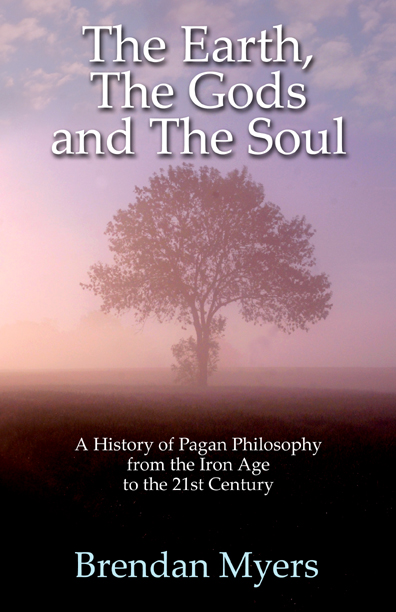
So it’s my view that ‘within’ and ‘between’ can be cultivated quite effectively – not without ups and downs, but effectively all the same. My sense of the ‘beyond’ is a little different. Beyond is beyond and needs to stay wild. It is true that the Ceile De fonn ‘Sireadh Thall’ (Seek Beyond) names the search, the voyage towards an ever-receding horizon, as in-built in us – for some, a sign of our awakening divinity. But we also need to avoid the colonisation of the numinous and any compulsive holding on to visionary experiences. They are gifts – inspiring, nurturing and transient. Brendan Myers, in his The Earth, the Gods and the Soul, includes a telling paragraph from A. E.’s The Candle of Vision.

“Such is human nature that I still felt vanity as if the vision was mine, and I acted like one who comes across the treasure house of a king and spends the treasure as if it were their own. We may indeed have a personal wisdom, but spiritual vision is not to speak of as ours any more than we can say at the rising of the sun, ‘this glory is mine’. By the subtle uprising of such vanities in the midst of vison I was often outcast, and found myself in an instant like those warriors of Irish legend, who had come upon a lordly house and feasted there and slept, and when they awoke they were on the brown hill-side.”

BOOK REVIEW: THE EARTH, THE GODS AND THE SOUL

jhp51efa580a1aafThe Earth, the Gods and the Soul: a History of Pagan Philosophy, from the Iron Age to the 21st Century by Brendan Myers fully justifies the ambition of its title. I see it as a must-read for anyone with an interest in pagan ideas and culture – past and present. Part of the author’s  mission is to demonstrate that “a pagan culture can be artistically vibrant, environmentally conscious, intellectually stimulating, and socially just”.

Myers provides useful working definitions of both ‘pagan’ and ‘philosophy’, whilst also showing the complexities involved in each term. He limits ‘pagan’ to people in the nations of the west and their predecessor societies in Europe and the Mediterranean, whose religion is non-Abrahamic (not Judaism, Christianity and Islam). This may now be complicated by patterns of migration and the Western impact of dharmic religions, but it works well enough if you are looking for a specific pagan tradition and its origins. Modern paganism, according to Myers, is informed by three families of ideas – pantheism, neo-Platonism, and humanism: these address the “immensities”, respectively, of Earth, Gods and Soul.

‘Philosophy’, for Myers, is an intellectual discipline that seeks answers to the ultimate questions about ‘life, the universe and everything’ using reason rather than the authority of dogma or an intuited divine source. He usefully lists 7 branches of this discipline: logic, ethics, epistemology, metaphysics, phenomenology, aesthetics and the history of ideas. Western philosophy’s origins are in Greece, and linked to the ‘know yourself’ injunction outside the temple of the Delphic Oracle. Myers sees this as a basic ethical demand for an honestly examined life, especially when wishing to enter the presence of a god. It leads to a wider view that self-knowledge heals, enlightens and empowers, though it may also at times judge and condemn.

The book is arranged as if musically, in an overture and six movements. The people chosen for inclusion are in many cases neither philosophers not pagans, and in many others only one of the two. But they have helped to define modern pagan ideas, culture and sensibility. Each movement covers a different historical period:

  1. A look at the old northern (‘barbarian’) world includes the Anglo-Saxon poem The Wanderer, Iceland’s Elder Edda, early writings about Druids, Irish wisdom texts and the Pelagian heresy (an early Christian heresy popular in the Celtic lands). There is no direct voice from a pagan culture in north west Europe, so Christians with half a foot in the old pagan world, or (in the case of the Druids) Greek and Roman authors are cited.
  2. A substantial collection of pagan Greek or Greek influenced philosophers from the early pre-Socratic period to the pagan martyr Hypatia of Alexandria. Also included are the Irish Christian neo-Platonist John Scotus Eriugena, and a section on the much later Italian renaissance. The people in this section, up to and including Hypatia, are both pagans (as we use that word today)and philosophers (in the ancient Greek understanding of that term).
  3. This movement is called ‘Pantheism in the Age of Reason’ and includes 18th century figures like John Toland, Edward Williams (aka Iolo Morganwg) and the Platonist and translator Thomas Taylor – as well as the more famous Jean-Jacques Rousseau. For the nineteenth century, we have Emerson, Thoreau, Whitman, Schopenhauer and Nietzsche.
  4. A movement on pagan ‘resurgence, reinvention and rebirth’ begins with Helena Blavatsky and the launch of 19th century Theosophy, going on to include J.G. Fraser of The Golden Bough, Robert Graves of The White Goddess, George William (A.E.) Russell of A Vision and Aleister Crowley. It goes on to look at the background to Gerard Gardner’s work and the Book of Shadows, then at the appearance of American Feminist Witchcraft and also at the separate stream of Eco-Spirituality and Deep Ecology.
  5. The fifth movement comprises ‘living voices’, so Stewart Farrar and Isaac Bonewits are placed at the end of the fourth, whereas Janet Farrar and Gavin Bone appear here. So too do Starhawk, Emma Restall-Orr, John Michael Greer, Vivianne Crowley, Michael York and Gus diZerega. There is also a section on ‘the critique of monotheism’. Myers praises Emma Restall-Orr for her work on ethics, its spirit of critical inquiry and her formal use of philosophical sources.
  6. Here we find Brendan Myers’ personal commentary. He talks about a hoped-for development of a critical tradition on paganism, and the value of ‘institutions’ in maintaining such a tradition. (He acknowledges that this may go somewhat against the grain of paganism as a dissident culture). He talks about modern to paganism’s history of ‘faulty ideas’, and promotes the development of better ideas for the future.  He also celebrates the health of a ‘will to live in an enchanted world’. Myers has ‘no special teachings’ of his own. A declared pagan philosopher, he builds his personal inquiry around four questions: how shall I dwell upon the earth? How shall I converse with all people? How shall I emerge from my loneliness? How shall I face my mortality? He then goes on to discuss what these questions bring up for him.

Myers ends his book by saying: “the best music is made with humanity, integrity and wonder – everyone has instruments to hand … When I hear music I share it … when I make music I share it too … I hope that my people will celebrate with me and play along … when I make dissonant or offending sounds, I trust my people will warm me, so I can make amends … nothing more, perhaps, could be asked of anyone. And, perhaps, nothing less”.

The Earth, the Gods and the Soul is a well-informed and simply written history of pagan ideas, which tells modern pagans a lot about the shoulders we sit on. It is a great reference book. But what it did mostly for me was to get me thinking about my own relationship to philosophy and its working methods. I call my own journey a contemplative inquiry. How could I use tools from philosophy’s  toolkit to improve my own inquiry in service of a pagan critical tradition? That’s where there’s an inspiration for me – because I sense an invitation there, from a professional philosopher, to make use of this toolkit. Myers’ forward includes a reference to Clear and Present Thinking, written by him with support from a number of University colleagues for a general audience, and freely downloadable. It’s another good job, and very useful to have.

BOOK REVIEW: STALKING THE GODDESS

jhp4ec2908d688eb_9781780991733_Stalking%20The%20Goddess_72Stalking the Goddess by Mark Carter was published by Moon Books in 2012 and is a critical examination of Robert Graves’ iconic The White Goddess. Carter has done a thorough job and I strongly recommend the book to anyone interested in the subject specifically, or in modern Druid and Pagan culture more widely.  He painstakingly examines Graves’ sources of inspiration, sources of information, working methods and conclusions. He also looks at the extraordinary impact of The White Goddess over the period since its publication in 1948, especially on the growing neo-pagan community – much of it surprising to Graves himself. Stalking the Goddess (a title I have to say I don’t much care for) is of course dependent on The White Goddess for its interest and very existence, so I find I can’t talk about the one without the other.

What was Graves doing in The White Goddess that mattered so much?

Firstly, he took up suggestions from 19th and earlier 20th century literature (The Golden Bough being the single major source) about a primal religion based on sacrificial kingship. He linked it to ideas of an early political matriarchy that pre-dated human knowledge of paternity and began to weaken thereafter. In bronze and iron age times, Graves saw Europe from Bulgaria to Ireland subject to struggles and migrations in which increasingly patriarchal warrior peoples put a steadily intensifying pressure on opponents who, whilst themselves less and less likely to have matriarchal political systems, nonetheless preserved conservative features like strong Goddess traditions, matrilineal succession, and a view of the feminine as representing sovereignty over the land.  He also followed writers like Charles Leland and Margaret Murray in understanding medieval witchcraft as an underground pagan tradition in conscious struggle with the fully Romanised Christian church as aggressively representative of a wholly comprehensive expression of patriarchy in both religion and politics.

Graves also suggested that, in Celtic lands, there was a second dissident group that survived well into the medieval period and indeed beyond.  These were the Bards, descendants of the Pagan Druids, preserving their secrets within often obscure poetry based on a little known or understood set of mythic references, and a magical system of writing, the ogham (itself with early origins in South East Europe). The ogham was not just a script, it was also a hand signalling system – and had its own set of magical correspondences, of which those with a group of sacred trees were the most potent.  The Bards as poets were in service to The White Goddess of the title. Graves believed that all true poets are in such service, whether they know it or not – citing more recent poets like Keats as an example. Graves placed himself in such a line, and used the inspired technique of ‘analeptic memory’ to extend his understanding when his sources didn’t give him all the answers he needed. He wanted to show that he was up with the relevant scholarship and that he could make a logical and evidence based case. But in the last analysis he wasn’t bound by these. He was (although he didn’t use this term) one of the awenydd, the inspired ones, not a philosopher or academic.

Carter’s contribution, in Stalking the Goddess, is the rigorous application to The White Goddess and some of Graves’ other work (for example The Greek Myths and King Jesus), of a critique which is itself now quite well known. Based on more recent (though not necessarily much more recent) scholarship than that available to Graves, it tells us that neither the approach of The Golden Bough, nor the view of matriarchy and its purported link to early Goddess worship, nor its overthrow, are supported by good evidence. Especially when dealing with pre-history (history before written records) modern scholars are tentative about what we can say that we know. There’s just not enough there for a powerful unifying story, partly at least because the evidence basis just isn’t suited to providing such a story, and partly perhaps because the actual stories may be much more diverse. In the case of medieval witchcraft, the available records concerning victims don’t fit the profile of Pagan Goddess devotees. In the case of Celtic Bards, the evidence shows ogham as an exclusively Irish writing system, created for the carving of simple messages, in use for a fairly short period in the 4th and 5th centuries CE. It may be that it was used, in a spirit of self-conscious antiquarianism, as a largely mnemonic device for the Bards of later centuries.  In terms of Graves’ reading of key works in the Welsh tradition – the Hanes Taliesin and Cad Goddeu in particular – Carter suggests that Graves “bent them to support his views”.

I am sure that this critique is essentially correct, simply because it is based on better information than the alternatives and argued plainly. I can’t of course vouch for every detail because I haven’t done any individual work. But I do have to recognise that Graves’ own approach involves a considerable element of dogmatic intuitionism and interpretative high-handedness. For me, in a context of advocacy, the latter characteristics weaken a case rather than strengthening it.

And yet … true criticality like this, using effective and ethical working methods, is its own kind of homage. Stalking the Goddess will not, and should not, demolish The White Goddess. It will help to keep it alive and rightly so.  When T.S. Eliot decided to accept The White Goddess for publication by Faber & Faber after several rejections from other publishers, he described it as “a prodigious, monstrous, stupefying, indescribable book”. Yet he published it all the same. I for one am glad that he did. With that health warning from the original Faber catalogue, alerted to not taking The White Goddess entirely on its own terms, I am free to let it into my spiritual imagination. I can walk to my favourite spot at Woodchester (the old churchyard). I can stand in the avenue of yews, knowing that most of the ogham trees are in easy distance, and that Orpheus lies underground nearby, in the form of an early fourth century Romano-British mosaic. It was custom made for the villa on that site by a specialist mosaic workshop in Cirencester (Corinium) notable for its work on Orphic themes. Orpheus was from the Rhodope Mountains in Thrace (once thought of as ‘Mount Haemus’). Graves thought that the ogham first came from Thrace, believing Orpheus’ dance of trees to be a “dance of letters”.  So here, now and in Woodchester is the lyricist who could charm animals, cause trees to circle dance, animate a new ship for a deep sea voyage, descend to the underworld and return, be torn to pieces by maenads and continue on as a talking head, uttering prophecies for Apollo. Rich themes for Romano-British people, perhaps also seeing resonances with their own native stories. Inspired and inspiring myth can survive any attempt to explain it, explain it away, or package it in overdetermined forms.

THE GARDEN AND THE GODDESS

I was sitting in meditation this morning, a simple attention-to-the-breath practice. I found myself flooded with a specific stream of imagery, and recognised three options. The first was to pull my attention back to the breath and keep it there. The second was to surf it awarely, with my attention focused on holding an observer position. The third was to surrender to it, also awarely – and to follow the images, the spontaneous stream of consciousness, and enter into them.

In the context I found the first choice a bit blinkered and almost aggressive and the second not quite satisfying. The third was the way to go. So I found myself in a garden, a walled garden, with the Song of the World, audible, expressing itself as the song of the sea not very far away. I recognised the place I was in. The garden was connected to a ruined temple, or chapel. I couldn’t determine what kind of people had built it, or worshipped there. It didn’t matter. The garden itself was the nemeton: tended not manicured, balancing cultivation and wildness.

At the centre of the garden was a fountain, surrounded by beds of roses, white and red. The rest of the garden was dedicated to fruit trees – apple, pear, peach, and also cherry – going so far indeed as to include fig and pomegranate and vines trained up the walls. There, too, was a white dove, moving between the trees. A magical place.

I knew this garden. It had changed somewhat, but I knew it. It was connected with the final version of the visualisation based meditations I used to do, in fact a modified version of the Sacred Grove meditation we do in OBOD. It’s my sacred space in the heart, an imaginal space in a realm of greater depth and interiority than the energetic heart centre, an Innerworld gateway to an intimated Otherworld.

When left to itself and not being edited by me for the purposes of Druidry, the feeling-tone is culturally at least as much Hellenistic and Levantine as indigenous and Celtic, and there are suggestions of places further away. At heart I am spiritually syncretistic and eclectic. When I first opted for Druidry as a community I chose OBOD because it provides a home for Druids of this ilk.

The garden has also, traditionally, been a place of the Goddess, a place for meeting and communion with Her.  When I used to do this practice, and named her, I called her Sophia – the Lady Wisdom.  But she has many names and took many forms. She was the fountain, the roses and the trees. She was garden itself, and the neighbouring sea. She was the dove. She could also be a serpent or an owl, especially at night in moonlight. But usually the garden was a day space, a solar space. I could feel her, more personally, as an invisible presence in the atmosphere of place. Very occasionally she appeared as a human woman – sometimes in the garden and focused on it, not engaging directly with me; more rarely still holding extended eye contact (‘soul-gazing’); once or twice standing behind me, Her hands on my shoulders. Today, in the vision of the garden, She returned to me, as deep recollection and as living presence.

Yet only a short time ago I wrote:

“The sense of the Goddess (under different names) as both cosmic birther and mentoring intermediary, which I have had throughout the whole period of my association with Druidry and Paganism, has died. This is not a matter of ultimate belief, where I have always had a form of non-dual view, but rather in a sense of a shift in archetypal poetics and psychology, of imaginal perception. It gives me a sense both of mourning and of release, of loss and of spaciousness”.

What do I make of this now? The dissolution of Goddess into Oran Mor (and of Oran Mor into latency, or Void, at some ultimate level) is a real experience.  The Goddess in the Garden is also a real experience – the experience of a numinous and compelling image. As I look at my previous words, ‘cosmic birther and mentoring intermediary’, I find them a little formulaic, a bit concrete and literal, and therefore a kind of subtle idolatry, by which I mean an unconscious manipulation of numinous imagery: re-making the Goddess in my image, rather than simply accepting the gift. It suggests an instrumental kind of relationship, with me covertly in charge whatever level of reverence or devotion I might proclaim: not quite authentic and not quite healthy. No wonder the Goddess dissolved. She had to, for a while.

The return feels different, because I’m allowing an image, giving space to it. An image is an image. The Goddess image has tremendous power, for me. It doesn’t ask for explanation or belief. It is just there, offering itself for connection. In the meditation of the garden, I let the image be. I don’t have a script. I don’t run a narrative. Of course the pattern of imagery builds an Innerworld presence of some consistency, as well as changing over time. Essentially, though, I let it be. I don’t go to the garden asking questions, asking for help, or entering into bargains, discussions and exchanges. They aren’t the point. The point is connection and deep communion. I used to think that breath meditation was passive and Innerworld work active. Now I think of it as almost the other way round.

CELEBRATIONS: THE SONG IN THE HEART IN THE SONG OF THE WORLD

Within my contemplative practice, I use a process called ‘celebrations’.

It is not a meditation as I use that term, because it includes discursive thinking and reflection.

It is not prayer: no being or presence or energy is addressed or born in mind as an auditor.

It is not lectio: it is based on a text I wrote myself, which I revise in the light of continuing inquiry and experience.

It is not simple ‘affirmation’ – because it works with an edge and can bring up ‘negative’ feelings and experiences of alienation, as well as being pleasurable and affirming.

The sequence, which can take variable amounts of time to work through, goes like this:

Celebrating body and senses.

Celebrating life energy.

Celebrating feelings, thoughts and images.

Celebrating the space inside the breath, and the healing in that space.

Celebrating the song in the heart in the song of the world:

Living presence, in a field of living presence,

Always enough; always at home.

I don’t say ‘I celebrate my …’. In this practice I use the gerund ‘celebrating’ and leave out ‘my’ so as to keep the focus processual and thereby avoid turning it in to a ‘who am I?’ practice. Such practices are widely available and are designed to disidentify practitioners from the body, senses, life energy, feelings, thoughts, images, ‘I-ness’ (or ego), finally to rest in an observer position, which, despite the residual dualism in the whole notion of observation, is often seen as the threshold of an enlightenment or theosis. In this practice I want to stay immersed in the process, and leave the ‘I’ question out.

I owe ‘celebrating’ to my background in humanistic psychology and co-counselling in particular. In a therapeutic context a phrase like ‘celebrating body’ could easily provide an ample agenda for a weekend workshop, given the level of negative body image and negative body experience that people find themselves dealing with  – but also given the joy and liberation that come with healing. For the invitation to ‘celebrate’ paradoxically evokes distress, where the way of ‘celebration’ at best seems artificial and a worst a cruel mockery. The work is to stay with the notion of celebration, to give the distress its due and then let it go, and find a place where there is something authentically to celebrate. In the therapeutic context, a number of methods may be used to assist this process. In the contemplative context, aware contemplation itself can have a transmuting effect.  When I turn my attention to my body and run through what’s going on throughout my body and five senses, I generally find myself noticing the strains, anxieties and discomforts of the moment and then moving to a celebration of embodiment itself, the sheer gift of being in this world, in this way, at this time and with this experience. The same is true of life energy, feelings, thoughts and images.

At the fourth line, ‘Celebrating the space inside the breath, and the healing in that space’ I find a change in feeling tone, since the practice tends to become naturally celebratory – though this is not always the case, since I may feel cut off from the power of contemplative practice itself. For this is an affirmation of meditative states in their therapeutic aspect, and I tend to drop in to a fully meditative state during this phase, letting go for a while of the words and celebration, indeed of the exercise itself for a period.

At the fifth line, I move to my sense of the Oran Mor (the song in the heart in the song of the world), which celebrates my sense of the numinous, of my connection to or involvement in Mystery. The last two lines introduce no new celebration. They are an elaboration of ‘celebrating the song in the heart in the song of the world’.  I said in a recent post that I experienced the Goddess dissolving into the Oran Mor. In this practice I may likewise almost experience the ‘song in the heart’ dissolve into ‘the song of the world’. I can certainly visualise and intuit this. Terms like ‘song in the heart’, Goddess, Oran Mor, become porous and hard to distinguish. Yet here too, in this section of the practice, I can also experience dis-connection and alienation. If I find myself needing to accept this as my actual state, then the celebration is of the words themselves and the recognition that I wrote them myself, with integrity, at an earlier time: it is me who is reminding myself of what becomes available in a state of openness and celebration.

“THE WORSHIP OF THE GODS IS NOT WHAT MATTERS” BY BRENDAN MYERS

I’ve been writing this week about the possibilities of a non-theistic approach to contemplative druidry, and potential synergies between druidry and forms of humanism. So I’ve enjoyed coming across ventures into similar territory by Brendan Myers, the Canadian philosopher, pagan and druid.

NaturalisticPaganism's avatarNaturalistic Paganism

“The sacred, I shall say, is that which acts as your partner in the search for the highest and deepest things: the real, the true, the good, and the beautiful.” —Circles of Meaning, Labyrinths of Fear

I don’t normally see omens or other messages from the gods in the way many other pagans say they do. I’m not especially interested in ritual or magic or spellcraft. I do not sense auras, I do not feel the energies, I do not read tarot cards or cast the runes. In fact, around ten years ago or so, I hit upon one of the most liberating and life-changing propositions ever to have entered my mind, which is that the worship of the gods is not what matters. What, then, am I still doing in the pagan community? And if the worship of the gods isn’t what matters, then what does?

People…

View original post 1,003 more words

JOHN HERON AND ‘FOURTH WAVE’ HUMANISM

Western Humanism, in John Heron’s view, comes in waves. The first began in 5th century BC Greece, when the Sophists and Socrates “called philosophy down from heaven to earth” by introducing social, political and moral questions. The second began in the Italian Renaissance, which affirmed the worth and dignity of human achievement over against the Christian pre-occupation with sin. The third began with the Enlightenment of the 18th century and became the rational scientific, secular and atheistic humanism of modern times. For Heron, there has also been a fourth wave, distinct in many respects from the third, which began in the domain of humanistic psychology.

The two primary protagonists of humanistic psychology, which emerged in the USA in 1961, were Abraham Maslow and Carl Rogers. At that time they were clearly aligned to the humanism of the third wave. Maslow was concerned to demonstrate that “spiritual values have naturalistic meaning; that they are not the exclusive possession of organized churches; that they do not need supernatural concepts to justify them; that they are well within the jurisdiction of a suitably enlarged science.” Rogers had a more experiential and phenomenological approach: “It is to experience that I must return again and again; to discover a closer approximation to truth as it is in the process of becoming in me. Neither the Bible nor the prophets – neither Freud nor research – neither the revelations of God nor man – can take precedence over my direct experience.”

Over time, both Maslow and Rogers shifted their views. Maslow and other colleagues like Stanislav Grof, became increasingly concerned that they had left out a ‘spiritual’ element within the human psyche and wanted a psychology “that would honour the entire spectrum of human experience, including various non-ordinary states of consciousness”. So they invented a new discipline of ‘transpersonal psychology’ that over time came to be supported by existing, in some ways more traditional, psychological movements with a spiritual dimension – such as the successors of Carl Jung (including the archetypal psychology of James Hillman) and the psychosynthesis tradition initiated by Roberto Assagioli. Carl Rogers was slower to embrace spirituality within psychology and didn’t involve himself in the transpersonal movement. But towards the end of his life he spoke increasingly of presence, inner spirit and self-transcending relationship. “I find that when I am closest to my inner intuitive self, when I am somehow in touch with the unknown in me then whatever I do seems full of healing. Then simply my presence is releasing and helpful to the other. When I can be relaxed and close to the transcendental core of me it seems that my inner spirit has reached out and touched the inner spirit of the other. Our relationship transcends itself and becomes part of something larger”.

John Heron draws on Rogers for his understanding of a fourth humanist wave. The core precept of fourth wave humanism concerns animation through reaching out and connection: an animism of process rather than ideology. It differs from the doctrinally naturalist view of the third wave by suggesting that our reality exists within a field of what might be called divine potential, or becoming: “the self-determining capacity of humans … presupposes a dynamic context of spiritual animation/inspiration [NB reminiscent of imbhas/awen in Druid tradition] in which persons can actively participate”. In Carl Rogers’ terms, inner spirit reaches out, touches the inner spirit of the other, thereby transcending itself and becoming part of something larger. In Heron’s language, spirit exists within us, between us (named by someone in one in one of his groups as “the band of golden silence”) and beyond us, where an ‘I am’ statement can bring us to a threshold “where personal consciousness is open to consciousness that is anywhere and everywhere”.

Fourth wave humanism, though grounded in human experience, moves on from the exclusivist human centric stance of the third wave. Spiritual animation occurs between people, between people and place and other kinds of beings in that place, or between other kinds of beings independently of humans – the “deep resonance” between trees in the forest is one obvious example. Indeed, like the second wave humanism of the Renaissance, fourth wave humanism makes provision for (but does not insist on) an Otherworld within an extended view of nature/spirit/reality – one with denizens who may be available for animating connection. It is understood that different people – indeed beings – are gifted with different bandwidths of perception, which they will then give an account of in different ways in the light of both personal and cultural factors.

Fourth wave humanism has a strong view of personhood, but one with an alert sense of the tension between the individual and universal. “The spiritual animation between people appears to have a basic polarity, a radical and dynamic complementarity: there is the impulse to realize the individual distinctiveness of being and the impulse to realize interactive unity within wider fields of being … it is a subtle balance: too much individualism leads to egocentric narcissism; too much universalism leads to spiritual fascism, authoritarianism and oppression.” Sometimes, as an alternative to fourth wave humanism, Heron uses the term ‘participatory spirituality’ or a ‘participatory paradigm’ as his world view. This is supported by various co-operative endeavours involving a delicate dance of hierarchy, peer co-operation and personal autonomy and by the discipline of spiritual inquiry.

There is much more to be said, and Humanism: the fourth wave, can be found in full on http://www.human-inquiry.com/hum4.htm I spent many years teaching co-counselling, the peer and reciprocal support system at the heart of John Heron’s work, and also (against my career interests) undertook both Masters and Doctoral degrees using co-operative inquiry, his other major working method, as my methodology. So in a sense this kind of understanding is an embodied part of me – inevitably not in quite the way presented by John Heron himself. I don’t now use either co-counselling or co-operative inquiry as working practices. But I do see my current direction as one of synthesising the best of ‘fourth wave humanism’ with the best of modern Druidry: I discern fruitful synergies between them. My view and practice of Contemplative Druidry (both personal and group based) have already incorporated aspects of this approach. This can be taken further.  For me, embodied and lived ideas inform our stand in life and influence its effectiveness. They have consequences in the wider world.

CONTEMPLATIVE INQUIRY, THE ORAN MOR, AND FARE-WELLING DEITY

I want to say three in things in this post. The first is to clarify what I mean by contemplative inquiry, the name of this blog, and outline the implications of calling it contemplative inquiry rather than contemplative Druidry. The second is to describe my recent contemplations on the Oran Mor, or Great Song, the metaphor which has become central in how I experience my world. The third is to explain my decisive shift to a non-theistic spirituality.

Contemplative inquiry, for me, is a living process and the heart of my spiritual identity. My Druidry itself is subject to the inquiry, and in consequence my contemplative life doesn’t work through marinating me in a received tradition and leading me into experiences that are declared to be the appropriate fruits of the practice. That’s why I’m glad to be in a young tradition, where the jelly still hasn’t set. I work with feelings, thoughts, insights and intuitions arising from my practice and reflection. I’ve abandoned the high language of ‘gnosis’ because it suggests pre-mapped attainments, privileged cosmic knowledge already somehow present and waiting to be discovered in the experience of the practitioner. That’s not what happens for me: everything is tentative and provisional and the aim, if it is an aim, is to sit within an expanded story of being, one that has integrity and can frame abundant life.

How does this apply to the Oran Mor, an auditory metaphor which takes in all my senses and synaesthetically extends them? I can enjoy the sound of a sunrise, the felt resonance of trees, and the lingering note of a caress.  All are encompassed in the Oran Mor. My experience of the Oran Mor confirms for me the felt sense of not being separate or alone. Behind the Oran Mor, and interweaving it, is a silence – not a cold silence, but a warm silence of fecund latency. The Oran Mor points beyond itself as a sensory experience to that underlying substrate of energy, that pulse and vibration of the cosmos, whose fruits include the privilege of our time-bound 3D being. I am the Oran Mor, currently a distinct though passing note within the greater pattern of the Song. So are you. Many forms of communion are available within the Oran Mor.

The invitation to us is to sing our own note within the Song. For all that we are interconnected and interdependent, the way in which we sing the note involves something distinct and individual, a personal existential choice: this at least is the human experience. It works best if we are awake to the rest the Song, as manifested in other notes, in the greater patterns, and the silence. This is why I’ve started to use the word ‘attunement’, despite its hackneyed New Age ring: it’s an accurate description of something I want to do.

As I’ve deepened into this sense of the Oran Mor and how it shapes me, there are certain words that are becoming more pertinent and powerful. In my morning practice I have for some years used the words known either as St. Patrick’s prayer or the cry of the deer:

‘I arise today through the strength of heaven, light of sun, radiance of moon, splendour of fire, speed of lightning, swiftness of wind, depth of sea, stability of earth and firmness of rock.’

I experience this as a summarising the Oran Mor – that which is – in a way that has a contemplative and prayerful aspect, makes good liturgy, and is not a petitionary prayer. I do not pray to the Oran Mor. I do not think of the Oran Mor as our Celtic ancestors did, as a name for God. I do not use it a translation of what is often meant by ‘Spirit’. The ‘I’ who arises is as much included in the Oran Mor as the sun, moon, fire, lightning, wind, sea, earth and rock. In the experience of the Oran Mor, there is no distinction between ‘Spirit’ and ‘Nature’. There’s a sense in which, despite their pragmatic value in everyday use, both terms become redundant.

I’m also continuing to work with the Ceile De fonn A Hu Thi (ah – hoo – hee), using simple breath and silent sounding, first described in an earlier post at https://contemplativeinquiry.wordpress.com/2015/3/6/. For me this continues to describe and enact the eternally-co-creative aspect of the Oran Mor. I find in my world that the A sets up a sense of latency, a subtle pulse and vibration on the brink of becoming. I feel it in the quality of my inbreath, as a kinaesthetic song. Hu the outbreath feels more vigorous and intentional; there’s a real sense of movement, expressed as exhalation – the breath moves out from my body, through my nostrils. Thi breathed in feels like the delighted expression of a new reality, the world born again in every moment.

The last effect of my continuing engagement with the Oran Mor concerns Brighde as Goddess and it is very recent. Essentially, the Goddess dissolves into the Oran Mor and I find myself fare-welling deity in my poetry of practice. The sense of the Goddess (under different names) as both cosmic birther and mentoring intermediary, which I have had throughout the whole period of my association with Druidry and Paganism, has died. This is not a matter of ultimate belief, where I have always had a form of non-dual view, but rather in a sense of a shift in archetypal poetics and psychology, of imaginal perception. It gives me a sense both of mourning and of release, of loss and of spaciousness.

I am aware of talking about language and imagery, about subjective experience. I do not presume to make statements about the cosmos or recommend ‘beliefs’ to others on the strength of my work or its evolution, or to use it either to question or to validate anyone else’s path. I’m in the throes of letting go a profoundly significant image and concept, one that has had a defining role in my spirituality, and I find it a very considerable attachment to let go of. I did not expect this. It will take a bit of getting used to, actually a lot of getting used to. It is a very significant change. Yet it is the fruit of honest inquiry – of meditative and contemplative practice, and reflection thereon. My trackless path, it seems, is wholly non-theistic.

ANIMISTIC HERMETICS

Following my last post I have received requests to describe ‘Animistic Hermetics’.

Animistic Hermetics involves going out into nature and carefully selecting something to work with. This might be something obviously alive, like a leaf or plant. It might be something conventionality regarded as inanimate, like earth or stone.

Once this is done, we go back into a group setting where the facilitator takes us through a 7 step process:

  1. An attunement to energetic self-awareness
  2. if granted permission, attunement to the chosen form (e.g. leaf, stone) in all senses
  3. a full meeting, approaching, merging, identification with the chosen form
  4. a withdrawal from the identification, and a parting with thanks
  5.  re-connection with energetic self-awareness
  6. writing/drawing
  7. sharing if appropriate

Elaine Knight, who has developed this practice in the form presented, adds:

“The steps 1 to 5 involve an energetic level of activation, attunement and sensing, meeting and communion, separation and return. Be respectful, ask permission and give thanks. Be receptive and open to what arises. Ground yourself well on your return. I recommend that the practice be guided by someone experienced and that plenty of time is allowed for each stage.

“I would like to thank Julie Bond for sharing her Lectio Divina reading from the book of nature as it inspired me to use my own energy work and hermetic practice in a completely different way.

“The attunement I use involves activating the light body and becoming aware of one’s core star. My hermetic journeying practice was originally concerned with the inner world  This practice however involves an open encounter and communion with a object co-existing in the apparent world.  An “I – Thou” experience rather than an “I – it” experience to quote Graham Harvey.  To date the experiences reported by those participating have been overwhelmingly animistic and often bardic and poetic. Animism and Hermetics I believe sit well together and I look forward to further encounters and explorations using the practice of Animistic Hermetics.”

Earth Eclectic

music that celebrates Earth and speaks to the heart

Sarah Fuhro Star-Flower Alchemy

Follow the Moon's Cycle

Muddy Feet

Meeting nature on nature's terms

Rosher.Net

A little bit of Mark Rosher in South Gloucestershire, England

Becoming Part of the Land

A monastic polytheist's and animist’s journal

selkiewife

Selkie Writing…

Charlotte Rodgers

Images and words set against a backdrop of outsider art.

Prof Jem Bendell

living with metacrisis and collapse

Towint

The pagan path. The Old Ways In New Times

The Druids Garden

Spiritual journeys in tending the living earth, permaculture, and nature-inspired arts

The Blog of Baphomet

a magickal dialogue between nature and culture

This Simple Life

The gentle art of living with less

Musings of a Scottish Hearth Druid and Heathen

Thoughts about living, loving and worshiping as an autistic Hearth Druid and Heathen. One woman's journey.

Wheel of the Year Blog

An place to read and share stories about the celtic seasonal festivals

Walking the Druid Path

Just another WordPress.com site

anima monday

Exploring our connection to the wider world

Grounded Space Focusing

Become more grounded and spacious with yourself and others, through your own body’s wisdom

The Earthbound Report

Good lives on our one planet

Hopeless Vendetta

News for the residents of Hopeless, Maine