Contemplative Inquiry

This blog is about contemplative inquiry

Tag: contemplative Druidry book

AUTHENTICITY IN MODERN DRUIDRY

“Contemporary Druidry is a flourishing creative spirituality that is inspiring people the world over. Is it a closed system that was only open to new inputs several thousand years ago? Or is it an open system that allows for development and evolution?” Philip Carr-Gomm, Chosen Chief of OBOD (1) explores these questions in his foreword to ‘Contemplative Druidry’ (2) adding, “Scratch the surface of any religion and you find that it is made up of a number of influences and elements. Examine a ritual text or liturgy and you can see the bricolage at work.” Moving deeper into the world of Celtic spirituality, he goes on to say:

“Mgr. Mael, the founder of the Celtic Orthodox Church in Brittany … received a series of meditative physical exercises in a vision and taught these as a system of ‘Celtic Yoga’. Are such attempts valid? … And are they not ‘fake’, having been so recently invented, while the Eastern systems are clearly genuine having been around for centuries? As regards validity, a method that is valid is one that works, however young or old it is. As regards inauthenticity, if a method is pretending to be one thing, while in reality being another, then that is indeed inauthentic. If Mgr. Mael had pretended his system of Celtic Yoga was practiced by the ancient Druids, this would have been inauthentic. But since he clearly stated he had received the exercises in a series of dreams, his system is what he authentically stated it to be: a method received in an altered state of consciousness. A false claim to an ancient lineage made for a system that has only been recently created renders it inauthentic, but if no such claim is made, can we use the term Druid to describe it?

“… Modern Druidry has been growing and evolving for the last three hundred years and if we were to throw out any additions to its body of teachings and ritual practice made during this time, we would be left with a small and unworkable set of conjectures. If we didn’t allow ourselves to call something Druidic that has only recently been created, we would have no Druidry to practice. But this shouldn’t mean that we can simply call anything Druidic. Druidry has specific features which help to define what it has become and how it is evolving. … Druidry has developed into a spiritual and philosophical approach that embraces embodiment and does not deny the gifts of the physical world and the body. In addition, it cultivates both inwardness and outwardness – an appreciation of the inner and outer worlds that fosters an engagement with the Earth and with community as much as it encourages an exploration of the depths of the soul and merging with the Divine. The evidence of the centrality of this approach can be found in Druidry’s love of Nature, its reverence for the Earth, and its cornerstone ritual observance: the Eightfold Wheel of the Year. These characteristics define Druidry and they also tell us what it is not.”

Specifically on contemplative Druidry he suggests:

“When it comes to the subject of this book, contemplation and meditation within Druidry, it seems perfectly reasonable to me to talk in terms of ‘Druid meditation’ or to describe techniques and approaches as Druidic, if they fall within the ethos of Druidry, because that ethos is specific: it does not try to subjugate, transcend or deny they body. There is no emphasis on the illusory nature of the physical world. The goal in Druidry, and hence in meditation for Druids, is to enhance our engagement with our embodies life, not to distance or separate ourselves from it.”

  • Order of Bards Ovates and Druids druidry.org/
  • James Nichol Contemplative Druidry: People, Practice and Potential Amazon/CreateSpace, 2014 (Foreword Deep Peace of the Quiet Earth: The Nature Mysticism of Druidry by Philip Carr-Gomm)
CONTEMPLATIVE DRUIDRY REVISITED

I experience this season as one of endings, fruitions and threads of continuity. I’m looking back at Contemplative Druidry (1), self-published on 9 October 2014, and currently with sales of just under 1200 – mostly through Kindle.

For me, the book feels true to its moment, a time when the ‘contemplative’ meme was still relatively unfamiliar in Druidry, but where we had already had two years to explore and develop it. The book drew on the experience of a local group in Stroud, Gloucestershire, England and the thoughts of the Contemplative Druidry Facebook Group in its formative period. Much of it was about people and their feelings, thoughts, identifications and values in the process of development.

The book offered no teachings or collective community line about contemplative Druidry. But it did offer a picture of who was involved, where they stood and what they did. I identified a tentative consensus that Druid contemplative practice happened in three main ways: formal sitting meditations (both ‘pathworking’ and ‘mindful’); being in nature and walking the land; and the contemplative use of creative arts. Practice could be solo or in groups, and the book itself helped to develop templates for group sessions and day retreats.

To balance this anarchic approach to spiritual development, I was lucky enough to have a foreword by Philip Carr-Gomm, who leads the Order of Bards, Ovates and Druids (OBOD), to which I belong. Instead of the expected few words, he sent me his beautiful and inspirational essay Deep Peace of the Quiet Earth: The Nature Mysticism of Druidry. A treasure in itself, it has a deepening effect on the book as a whole.

Although the contemplative project, as a project, is finished, I am glad to know that the notion of a contemplative aspect in Druidry is no longer controversial. Within a few hours of launching the Contemplative Druidry Facebook group in 2012, I was challenged by two influential people in the Druid world. Now it has over 2,000 members and no-one turns a hair. The contemplative meme is there to stay, for its time, until it fades out again. The third anniversary of Contemplative Druidry finds me content.

(1) James Nichol Contemplative Druidry: People, Practice and Potential Amazon/KDP, 2014

ANOTHER SHORE?


My sacred space at home has undergone a complete makeover. I am effectively in a different place. It happened this way. On 7 May, I ordered a statue of Guanyin, partly as a birthday present to myself and partly with reference to ‘the true thought of the heart’. Perhaps the true thought of the heart is the real gift. In a blog post I wrote on that day (1), I described Guanyin as sitting on a crescent moon, playful and androgynous. I said: “it is the note that I am looking for”.

When the statue arrived from China, it was much bigger than I expected. It was over two metres high and quite broad, because Guanyin is sitting on a crescent moon, which takes up space. Caught up in the elegance of the design, I had completely misread the dimensions. No room in my room for the true thought of the heart?

Making room involved a complete clearing and cleaning of the place, and a considerable re-arranging of furniture. During an afternoon, I reshaped the space entirely with Guanyin as the predominant focus. Other imagery is still there. The Western Way is still well represented. A Green Man represents our oneness with the Earth, and our apparent separation from it and need for healing stories. A somewhat Marian (both of them) Sophia is there, imaging sacred fertility, sacramental relationship and the challenge to awaken. So are other familiar objects – a dragon sitting on an egg, an abstract and geometrical mandala picture, a tiny wooden Buddha, (not new) contained and serene. (A hopefully only slightly larger and more expansive laughing one is on his way.) Around the walls I find a C17th map of Somerset, my native county; pictures of Glastonbury Tor and the Eildon Hills; a small painting of a crane; and a painting I commissioned in the early 1990s of the Pictish Dancing Sea Horses from the Aberlemno Stone in Angus.

Yet the defining presence is now Guanyin. It happened as if by itself. The rest of the room is familiar and understood. She by contrast is numinous, dynamic and unknown, as well as large. The relationship is not yet established. Close-up, she is indeed playful and androgynous, but she is much more than that. As Guanyin, s/he hears the cries of the world. In her male aspect, s/he is Avolokitesvara, who shared the wisdom gained from deep practice in The Prajnaparamita Heart Sutra. S/he opens the way to the whole tradition of Mahayana Buddhism and its Vajrayana or Tantric variants. Thich Nhat Hanh reminds us of the seeming riddle of this path. “The Prajnaparamita Sutra says, ‘The Bodhisattva helps row living beings to the other shore but in fact no living beings are being helped to the other shore’ (2). Inevitably, it seems, I am drawn by this proposition. Necessarily, it seems, I am gathering Buddhist resources and accessing Buddhist networks, now attracted to the path as well as the Bodhisattva. I did not anticipate this.

This transcends contemplative inquiry, whilst emphatically including it. The Guanyin Oracle (3) tells me that I am under a God’s protection, and gives me a verse called After the Rain.

“After a long rain, we joyously watch the heavens clear.

The sun and moon grow slowly brighter.

The gloomy days are over, so be happy and joyous.

You will bound through the Dragon Door in one leap.

I am reminded of Penny Billington’s use of the term ‘egrigore’ in Contemplative Druidry (4). In Chapter 4 Druid Identity and Values, she says that spiritual movements have an egrigore, “an inner reality made up not only of the ideas of the members, but also the invisible influences from the other realms that resonate with that ‘flavour’ of spiritual thought; and as Druids we are dedicated to making connections not only in the natural world but on the other planes as well, other states of consciousness.” I certainly find that images and their associations can have a tremendous power if I am open to them, and for me, now, the Guanyin image is one of those. It is focusing my energy and attention, and making a Buddhist inspired matrix of references, aspirations, values, traditions and practices vividly present to me. This kind of process works much faster than ordinary thinking. Assembling a new Chinese statue out of three separate parts, cleansing and reordering a room, took me into a new space, and here I still am.

  • https://contemplativeinquiry.wordpress.com/2017/05/07/sophia-and-guanyin/
  • Thich Nhat Hanh The miracle of mindfulness: a manual on meditation London: Rider, 1991
  • Stephen Karcher The Kuan Yin Oracle: the voice of the Goddess of compassion London: Piatkus, 2009
  • James Nichol Contemplative Druidry: people practice and potential Amazon/KDP, 2014 (Foreword by Philip Carr-Gomm)

AWEN AND CONTEMPLATIVE DRUIDRY

A Contemplative Druidry (1) reader has asked me to say more about Awen, which had a chapter in the book. Introducing interview extracts in my Awen chapter, I wrote, “Awen is classically seen in Druidry as the power of inspiration, and in particular the creative force for poetry and prophecy. It is what transformed the boy Gwion – though not before further trials and transformations – into Taliesin, the radiant browed Bard. Many of the participants in this work uphold this tradition in its conventional form. Others seek to extend the traditional meaning better to express their own experiences and aspirations. Some don’t connect with Awen experientially and treat it as a convention – mainly as a shared chant, which brings Druids together”.

My self-criticism here is that the chant is itself an experience, frequently state-altering for both the chanters and in a sense for the space. I might have done better to say, ‘some don’t connect with it conceptually’. I see from my interview questions appendix that the Awen question was about meaning. If I did this work again, I would start with the sound, the feeling, and senses of occasion, and work out from those.

Pondering Awen afresh, I find myself drawn to deep human ancestry, and especially the early emergence of speech and music. These brought a new kind of identity: new experiences, new awareness, new feelings, new understanding, new forms of connection and solidarity – new worlds. Unsurprisingly, many cultures have subsequently developed creation stories linking origin with sound. In India, the phrase Nada Brahma tells us that God is sound/the world is made of sound. OM is the primordial sound form, the vibratory essence from which the universe emanates – and the universe needs to emanate only the smallest step (if any) to get to us. Kabir said, “if you want the truth, I’ll tell you the truth. Listen to the secret sound, the real sound, which is inside you” (2). A major philosophical school, Kashmir Shaivism, is referred to as ‘the doctrine of vibration’ (3). It talks of ‘spanda’ as “the primordial vibration at the root of all manifestation, a form of Shakti” (a term equally meaning ‘power’ or ‘goddess’).

Welsh Bardistry gives us Awen and the Taliesin story, which can be read as working with related themes, whilst diverting our main attention to the Bard as trickster/hero. In the old Gaelic world, we have the term Imbhas, equivalent to Awen, and a more touching story about the eating of the salmon of wisdom, in which the old Bard (as I read it) sets himself up to pass on the true nourishment to a promising youth. We also have the notion of the Oran Mor (Song of the World). Frank MacEowan (4) writes: “a conscious knowing of the ancient ‘music behind the world’ has always been woven into the daily awareness of the adherents of various Celtic traditions. In the words of Stuart Harris-Logan, a Gaelic healer, scholar, and author of Singing with Blackbirds, ‘out on the Isle of Barra, the people have long spoken of the Oran Mor as one of the old names of God. The Oran Mor is the Great Song from which all things have arisen’”.

Jason Kirkey (5), an associate of Frank MacEowan, treats ‘Oran Mor’ and ‘Divine Ground’ as synonymous both with each other and with David Bohm’s ‘implicate order’, in which the world of space, time and individual particles are enfolded into an undifferentiated wholeness that provides the holographic pattern (each part contains the pattern of the whole) by which reality unfolds. In Ireland, a sense of the Oran Mor could legitimately continue into Christian times. St. John’s Gospel begins, “In the beginning was the Word, and the Word was with God and the Word was God.” (6) This greatly moved John Scotus Eriugena, the great Irish philosopher/theologian of the ninth century – the time of Viking invasions in north west Europe. In his commentary on the Gospel he says, “John, the theologian – ascends beyond all visible and invisible creation, passes through all thought and intellect, and deified, enters into God who deifies him … John, the observer of the inmost truth, in the paradise of paradises, in the very cause of all, heard the one Word through which all things are made … Therefore, most confidently he cried out, ‘in the beginning was the Word.” (7) True knowledge and experience of the primal Word are divinizing – a remarkable statement for a western Christian of the day. John Scotus had learned Greek at a monastic school in his native Ireland (then not an available option elsewhere in western Europe) and was familiar with neo-Platonist thought. Perhaps that and his indigenous culture together allowed an understanding that the Word calls us to recognize our own divinity.

Modern Druidry was Universalist before it was Pagan, and retains a willingness to learn from other traditions. I believe that we can use the wider cultural history I’ve identified to inform our sense of what we are invoking when we chant the Awen. This chanting is something which Druid contemplative practitioners share with other Druids. Our unique practice is the ‘Awen space’ that follows the chant. Like other Druids, we do not require people to gather together under the umbrella of a common cosmology. It is OK to have different understandings, and it is OK for us to change and develop our personal understandings over time. That said, I end this piece with a reflection about the broad intentions behind our inherited Celtic spirituality, to provide a cultural context for Awen/Imbhas and where they might fit. It’s from Frank MacEowan (8): “The ancient Celts … were … ever yearning to connect with divine inspiration (imbhas), and ever longing to live a life of beauty imbued with connection and spirit. We are also on this path, and the fulfillment of our collective task as a human community lies in the process of actualizing a deeper communion with these same life-affirming powers. Celtic spirituality is an ongoing initiation into a life of beauty and a mindful preparation for the passage of death. The ancient spirituality of the Celtic peoples has always been a dynamic orientation to the ebb and flow of the seasons, daily practices that foster an awareness of the passage of our lives and of thanatology (a vision and study of our death and dying). This vision is of a life ending in a wondrous death journey to a home we have all been away from. When death is really an experience of going home, what is there to fear?”.

(1) James Nichol Contemplative Druidry: people, practice and potential Amazon/KDP, 2014 (Foreword by Philip Carr-Gomm)

(2) Sally Kempton Meditation for the love of it: enjoying your own deepest experience Boulder, CO: Sounds True, 2011 (Foreword by Elizabeth Gilbert)

(3) Mark S.G. Dyczkowski The Doctrine of vibration: an analysis of the doctrines and practices of Kashmir Shaivism Delhi, India: Divine Books, 1987

(4)Frank MacEowan The Celtic way of seeing: meditations on the spirit wheel Novato, CA: New World Library, 2007 (Foreword by Tom Cowan)

(5) Jason Kirkey The Salmon in the spring: the ecology of Celtic spirituality San Francisco, CA: Hiraeth Press, 2009 (Foreword by Frank MacEowan)

(6) Holy Bible (authorized version)

(7) The voice of the eagle: John Scotus Eriugena’s homily on the prologue to the gospel of St. John Great Barrington, MA: Lindisfarne Books, 2000 ed. (Translated by Christopher Bamford, foreword by Thomas Moore)

(8) Frank MacEowan The mist-filled path: Celtic wisdom for exiles, wanderers and seekers Novato, CA: New World Library, 2002 (Foreword by Tom Cowan)

GLASTONBURY REMEMBERED

I am five or six years old, the year 1954/1955. I live in Yeovil, Somerset. My mother wants me to have proper shoes. When my feet are measured up in the local Clark’s shop, we find that I need a broad fitting (E) and they don’t have quite the right shoe for me in stock. After talking to the manager, who makes a phone call, my mother decides we are going to the factory shop in Street.

A day or two later, we walk to the Yeovil Town railway station and board a train for Glastonbury & Street. We are going to make a half day of it. So leaving the train  we first take a short bus ride from the station to Street and get the shoes. Then we take a longer bus ride to Glastonbury and I get my first glimpses of the Tor and Abbey. Somewhere in town, we stop for tea and cake, possibly ice cream. Then a brief bus ride back to the station and the journey home. I remember liking the visit. It was a bit special, but I don’t remember it being particularly magical or numinous.

Two years ago I gave a talk in the Glastonbury Assembly Rooms to the OBOD Winter Gathering about contemplative Druidry and my book of that name. Later in that day I found myself in the car park in town. I remembered childhood visits to the town and, looking up, I saw the railway station roof. And I thought, ‘how did that get here?’ (I have since discovered that it was moved there as a means of conservation).  I  felt a pang of loss for industrial age Glastonbury, with its good railway connections and neighbouring Street with its solid manufacturing base. (Yeovil Town was closed in 1962. Glastonbury & Street went in 1966.) Clarks shoes were a highly respected local employer, with a national and indeed international name. They are still around, still respected, but no longer a local (or national) manufacturer.

It’s happened before of course. For many centuries, the Abbey, as landowner and pilgrim destination, was the economic centre of the town as well as the spiritual one. Henry VIII’s re-arrangement of his own and the nation’s life ended that at a stroke. But the Abbey will always be remembered. Glastonbury is a pilgrim’s town again, though after another fashion. I just wonder if the culture of my childhood, of easy local train rides and proud local shoe making, will be remembered in quite the same way. At least the station roof is something.

DRUID CONTEMPLATIVE DAYS


On 1 October Elaine Knight and I will be holding our tenth Druid contemplative retreat day since we began in July 2012. Over the years we have also offered shorter sessions and a weekend retreat (in April 2015). Yet by and large we find that day retreats are the best format for our offer to the community.

Shorter monthly sessions work fine for our local ongoing group, in a context of experience and continuity. But when new people are coming in and meeting each other, we want the spaciousness of a day. A day is enough to build the kind of experience we are aiming at. We are not offering complex teaching that needs extended time to unfold, and we don’t need the dynamics of residential community for our focused and limited purpose.

It looks as though we will have 10-12 people on 1 October and we have reached the point at which we know the day will pay for itself. This is within the ideal range for our kind of day – two or three more or less is also fine. Elaine and I will be co-facilitating this event with Nimue and Tom Brown.

I look back and see ‘contemplative Druidry’ as a project. Retrospectively, I find project a better word than ‘inquiry’, though an inquiry element has been present. I began the project by testing the word ‘contemplative’ itself. Was it going to be resonant or even meaningful in Druidry? I wrote articles in the OBOD membership publication Touchstone asking for people to contact me with their views and, subsequently, describing our early ventures. I created the Contemplative Druidry Facebook Group in August 2012. This is still going strong with nearly 1700 members (as at 12 September 2016), though I have not been involved in moderating it for over three years. Over time it became clear that the term does mean something. Although it caused some confusion and questioning at first, it has been taken up. As we developed our practical work, it became easier to explain and discuss.

With the help of a considerable number of other people I was able to publish the book Contemplative Druidry in October 2014. It is still selling and still witnesses the life experience of real people exploring Druidry (frequently among other traditions) and explaining why a contemplative thread matters to them. As time has gone on one of the outstanding questions has been whether there is a particular group of people who can be marked out as ‘contemplative Druids’. I think at this distance the answer is a qualified ‘no’, qualified, because some are clearly contemplative in emphasis. But Druidry is such an extensive field, or interlocking set of fields, that only a few people cover everything. In the end I decided for myself that ‘Contemplative Druid’, as a description of particular people, was a splitting and otherising kind of term (potentially in both directions) and so best avoided. This is why we now talk of ‘Druid contemplative days’ rather than ‘Contemplative Druid days’.

My sense of project is coming to an end. My personal contemplative inquiry, which has always had a degree of separation from the project, is continuing with a different emphasis. But we have a group, and we have the days. Our capacity to provide days is proportionate to the demand for them: no problem there. So I expect this work to continue. For me, it will be my one active role in Druidry. It doesn’t contradict anything else I am doing or likely to be doing. So I look forward to this day, and the continuing life of the group.

Further information on the days can be found at http://contemplativedruidevents.tumblr.com/

James Nichol (2014) Contemplative Druidry people, practice and potential Amazon/Kindle (Foreword by Philip Carr-Gomm

https://www.amazon.co.uk/Contemplative-Druidry-People-Practice-Potential-ebook/dp/B00OBJAOES/ref=dp_kinw_strp_1


GROUNDED

Where do I stand with contemplative Druidry, this Lammas-tide?

My recent Headless Way (1) experience has had the force of a conversion, and I have to re-draw my internal maps.  Interestingly, I now find myself grounded with tendonitis in my left heel. I probably haven’t experienced an actual rupture, and so I am likely to be grounded for “weeks rather than months”. Still, ample space for managing transformation.

One of the things I am doing is to look back at key steps on the way. For instance, in my introduction to Contemplative Druidry (2), I talked of “practices that support a fuller presence within the stream of passing experience … contemplation in its fullest sense enables a transfigured here-and-now, and the dissolving of subject/object distinctions within it”. I mentioned how the contemplation of a wild rose on the banks of the Tweed had triggered such a dissolving, and how this had morphed into a blissful peak experience lasting for some weeks. But I was also clear that such an experience should be framed as an occasional grace, pointing beyond self as commonly understood, and not accessible at will.

This perfectly illustrates why Douglas Harding’s style of Headless Seeing has been a game changer for me. The core experience is readily accessible – i can recognise my true nature, the greater I, at will, through simple Seeing. I am no longer a seeker. In a form of brief contemplative practice,  I see clear awake space and capacity for the world. Since there is no doubt or issue about what I see, the open questions concern capacity for the world. In my human life, in place and time, what capacity do I manifest? Where do I put my energy?

Here I stand, spiritually committed to a contemporary iteration of the Sophia perennis known as the Headless Way.  In terms of ancient wisdom, I’ve understood that there are two continuing lines of tradition that relevantly sustain me. Their pull is largely intuitive and emotional rather than via actual doctrines. One is Christian Gnosticism, theist and often dualist though it may be. The other is the interweaving of Taoist and Chan Buddhist culture in China. There are people and writings in other traditions that I also value, but those are ones I look at with most care.

I do not, now, expect to be in business with any kind of Shamanism, or to have a practitioner relationship with the British/Irish ‘indigenous’ spirituality of any ethnic group or from any pre-Christian period. Of course I continue to be blessed by a level of knowledge and appreciation; they are part of me, in that sense. But that’s as far as it goes. I have let go of my role as a mentor on the OBOD distance learning course (3). I could continue to understand and support people, very congruently, but for me the difference between their practitioner lives and mine has grown too great over the last six months or so. I couldn’t carry on. It didn’t seem right.

On the other hand, what we do in contemplative Druidry is different. Following our learning from Contemplative Druidry our practices support a modern (romantic? post-modern?) ‘nature mysticism’ revolving around forms of lean ritual, group meditation, being/walking in nature and creative arts. I’m entirely up for this, whether it continues under the name of Druidry or not. This is something to work through with my companions in that arena.

The time to leave an activity is when I am no longer learning or contributing. But I want to be accurate in my assessments, and to avoid errors stemming from the force of change, especially letting go of things that I would do better to keep and re-integrate into a new whole.  A time of joy and breakthrough, needing careful navigation.

(1)  Headless Way http://www.headless.org

(2) James Nichol (2014) Contemplative Druidry: people, practice and potential Amazon/KDP (Foreword by Philip Carr-Gomm Deep peace of the quiet Earth: the nature mysticism of Druidry)

(3) Order of Bards, Ovates and Druids (OBOD) http://www.druidry.org/


NATURALLY INQUIRING

Recently I reviewed Godless Pagans: Voices of Non-Theistic Pagans (1) which I enjoyed very much. There’s a growing community of Pagans clearly identified as ‘humanistic’ and/or ‘naturalistic’ – see https://humanisticpaganism.com – and I am wondering about how I sit with this approach.

I am dedicated to contemplative inquiry. I see it as naturalistic. But I am also aware of the way in which terms like ‘empiricism’, ‘science’ and even ‘humanism’ can be mobilized for a certain type of fighting talk. This says that valid knowledge can be based only on third-person, objectifying inquiry conducted on a hypothesis-experiment-results model. I am engaged in a first person inquiry, which also extends to community and culture, as in my Contemplative Druidry book (2), so for me this is a potential problem.

In response I pick up a book off my shelves, and dust it off. The title says Qualitative Research in Counselling and Therapy (3). A half-remembered store of magic words is laid out before me in the accessible form of chapter headings: qualitative inquiry, hermeneutics, phenomenology, ethnographic approaches, grounded theory, conversation, narrative and discourse analysis, bricolage. I used to work in the field of public health and health research, with sexual health, mental health and ageing as my main focus at different times: all areas where lived experience and issues of culture, meaning and value are of great importance.  So I’ve long had a concern with an extended epistemology, which takes these areas into account.

There have been many attempts to bring different pathways to knowledge together and identify what the togetherness might look like. One of the most recent is Ken Wilber’s Quadrants model (4), which sits as the Q in a larger system called AQAL. The quadrants look like this:


INTERIOR/INDIVIDUAL: ‘I SPACE’


The subjective life world – thoughts, feelings, meanings, meditative states

Explored in the domains of literature, arts, therapy and spirituality


An exemplary text would be: In Search of Lost Time, Marcel Proust


EXTERIOR/INDIVIDUAL: ‘IT SPACE’


Atoms, brains, bodies, behaviours, organism

Explored in natural science, scientific medicine, philosophy of science


An exemplary text would be: Consciousness Explained, Daniel C. Dennett


INTERIOR/COLLECTIVE; ‘WE SPACE’


Shared meanings, relationships, mutual understanding, the influence of culture, media, community

Explored in the domains of literature, arts, therapy and spirituality; also philosophy and ‘qualitative’ social science


An exemplary text would be: The History of Sexuality, Michel Foucault

EXTERIOR/COLLECTIVE; ‘ITS’ SPACE


Systems, environments, technology, cosmology

Explored in the domains of natural science, philosophy of science and ‘quantitative’ social science


An exemplary text would be: A Universe from Nothing, Lawrence M. Krauss


The basic outline above is Wilber’s. I have added the bits that suggest subject domains and key texts which I know well enough to put in the boxes – in both of the multi-volume works on the left, the first volume makes to point on its own. I value all the quadrants, whilst having a clear bias towards the left hand. My contemplative inquiry is in the upper left quadrant, though my beliefs in no separate self and interdependence push me out, especially towards the lower left hand but to an extent over to the right as well. In this perilous Anthropocene era, how could they not?

Contemplative inquiry in the narrower sense is about consciousness and conscious being. Here I follow James Hillman in suggesting “suggesting a poetic basis of mind and a psychology that starts neither in the physiology of the brain, the structure of language, the organization of society, nor the analysis of behaviour, but in the processes of imagination” (5). Hillman places himself in a western lineage going back from Jung, “through Freud, Dilthey, Coleridge, Schelling, Vico, Ficino, Plotinus and Plato to Heraclitus”. All I can say is that from a subjective lifeworld perspective this makes complete sense to me, though in my reading I’d emphasize the term ‘starts from’ – the third person perspective also matters and all the other factors mentioned clearly have their role.

In taking this stand I have recently gained comfort from an unexpected source, the neuroscientist and consciousness researcher Sam Harris. A friend and associate of the philosopher Daniel Dennett, Harris is not persuaded that Dennett’s Consciousness Explained (6) albeit a brilliant and fascinating book, has fully lived up to its title, or could be expected to. Harris says (7):

“We know of course that human minds are the product of human brains. There is simply no question that your ability to decode and understand this sentence depends on neurophysiological events taking place inside your head at this moment. But most of this mental work occurs entirely in the dark, and it is a mystery why part of this process should be attended by consciousness. Nothing about a brain, when surveyed as a physical system, suggests that it is a locus of experience. Were we not already brimming with consciousness ourselves, we would find no evidence for it in the universe – nor would we have any notion of the many physical states it gives rise to. The only proof that it is like something to be you at this moment is the fact (obvious only to you) that it is like something to be you.”

Harris is well versed in both contemplative practice and scientific investigation, and so is at ease both with the exterior and interior approaches to consciousness. He has experience of the self-less state and is also clear about describing selflessness as “not a ‘deep’ feature of consciousness, but right on the surface. And yet people can meditate for years without recognizing it”: no need to invoke divinity-as-subject or traditionally mystical views of ‘enlightenment’ as heroic attainment. I for my part experience Headlessness, very available in the Douglas Harding method -see website at headless.org  – as perfectly containing the poetry of mind. It’s ‘only’ natural. How miraculous nature is!

(1) Halstead, J. (ed.) (2016) Godless Paganism: voices of non-theistic Pagans com (Foreword by Mark Green)

(2) Nichol, J. (2014) Contemplative Druidry: people, practice and potential Amazon/KDP (Foreword by Philip Carr-Gomm)

(3) McLeod, J. (2001) Qualitative research in counselling and psychotherapy London: Sage

(4) Wilber, K. (et al) (2008) Integral Life Practice: a 21st century blueprint for physical health, emotional balance, mental clarity, and spiritual awakening Boston & London: Integral Books

(5) Hillman, J. (1990) The essential James Hillman: A blue fire London: Routledge. (Introduced and edited by Thomas Moore)

(6) Dennett, D. (1990) Consciousness explained London: Penguin

(7) Harris, S. (2014) Waking up: searching for spirituality without religion London: Transworld Publishers


RE-DEDICATION

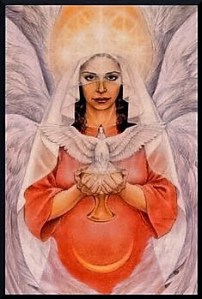
bcf2c26ec7720ed734fccc2b13534310Early this morning, I re-dedicated my contemplative inquiry. Yesterday was my 67th birthday. It seems like a good moment for re-visioning and renewal.  I recently received my Sophia icon from Hrana Janto* and finally understood that my contemplative inquiry is itself my Way of Sophia. I don’t see this as a project – more as an ongoing life practice. My contemplative Druid work and exploration of the Headless Way are aspects of inquiry, and this re-dedication is an integrating move.

The original dedication was at Samhain 2011. It assumed a Druid and specifically OBOD context, and I did see it as a project. I didn’t give it a timescale, but later I thought in terms of 5 years. The re-dedication comes a few months short of that, at a time when – amidst many continuities – there has been a clear shift in focus.

Today I made use of the icon, entered into a reflective space, before deepening into an Innerworld journey. Working with imagery puts me in a realm of what James Hillman (1) understands by ‘soul’ work. For him, soul (or psyche, or anima) is “a perspective, rather than a substance, a view point towards things rather than a thing in itself … by soul, I mean the imaginative possibility in our natures, the experiencing through reflective speculation, dream, image and fantasy – that mode which recognizes all meanings as primarily symbolic or metaphorical”. For Hillman, soul makes meaning possible and turns events into experiences. It is communicated in love, and characteristically has a religious concern.

In my morning ritual, I open my heart to the wisdom of Sophia and gaze at my icon.  I remember and appreciate the initial inquiry – writing articles for OBOD’s member journal Touchstone; gradually bringing people together, holding the first events, launching the Contemplative Druidry Facebook Group, connecting with people in other Druid bodies (The Druid Network and Order of the Sacred Nemeton in particular); developing a monthly meeting cycle for the home group; writing the Contemplative Druidry book, offering contemplative Druid events to the wider Druid and fellow-travelling public, including both day retreats and a residential. This feels good to recall, because sometimes I think that the project hasn’t spread very far or been widely understood, mostly through my own limitations and relative reclusiveness. Here I can focus on what has been achieved, and allow myself to recognize that there is something to appreciate.

Completing this period of reflection, I close my eyes and slip into Sophia’s Innerworld nemeton, which takes the form of a walled garden. At the centre is a fountain surrounded by four rose beds separated by run-offs. Two of the beds hold white roses, and two hold red. There are seats around the fountain, big enough for two people, on all four sides. The rest of the garden is more of an orchard with many kinds of fruit tree, including some trained up the garden walls. These walls are brick, and have an eighteenth century feel.  The orchard isn’t over-manicured. It might indeed be described as slightly unkempt, though not with any sense of neglect. When I visit this garden, the Sophia of the icon may sit opposite or beside me. But she may also take different forms – a dove, a rose, a tree, the fountain itself. She may be another bird or creature that turns up in the space. She may be sunlight in a drop of water. I may also experience her as all of it, so that goddess and nemeton are one. She is always a friend and guide.

This time she is in her icon form, though the dove is in a tree and the chalice by her side as she sits opposite me, in the late May dawn, east facing west. I go into my headless state and know that the same is true of her. But the context (the Innerworld, in this garden, with Sophia) changes the state, making it more intimate, relational and local. I like it. In my heart, I have more care about the particularities, indeed vagaries, of the writing than the pristine emptiness of the paper that holds them, though both perspectives matter and they do belong together. If form is nothing but emptiness, and emptiness nothing but form, then what we always have is paper being written on, and it is the story writing itself that mostly draws a storying monkey like me.

As this thought, within my living dream of the garden, passes through, Sophia comes to sit beside me. We are simply companionable, watching the fountain, as the clear fresh water bubbles up. It is from an inexhaustible spring. In this archetypal garden setting, Sophia renews an eternal pledge – that wisdom’s commitment is to extend and transmute knowledge, and not to repress it. And in this moment the garden, the fountain and Sophia begin to fade …

I came away from my ritual of re-dedication feeling encouraged and refreshed, and a new cycle begins from here.


*http://Hrana.Janto.com

(1) Hillman, James The essential James Hillman: A blue fire London: Routledge, 1990. (Introduced and edited by Thomas Moore)


WESTERN WAYS II: MOVING TOWARDS SOPHIA

In my earlier Western Ways post I talked about a distinction between a ‘Native’ Tradition and a ‘Hermetic’ one, acting as “complementary opposites”. The first was said to be concerned with “ancestral earth-wisdom”, whilst the second was described as a “path of evolving consciousness”. (1)

I am influenced by this idea and the distinction that is being drawn. But I have a different sense of the detail, and a different experience of how these themes have played out in my life. My original choice to ground myself in Native tradition resulted from an experience in the Orkney’s. I was allowed to hold an ancient eagle claw necklace and an extraordinary energy shot through me – ancestral power, certainly, and a lesson in taking the heritage of land and ancestors seriously. However my current  of Druid doesn’t directly follow on from this experience, but is, rather, a contemplative nature mysticism. This is spacious and gentle and from my perspective generally works well in both its personal and collective versions. I feel satisfied with what I am doing and, in a good way, my inquiry energy for it is waning, even as my practitioner energy is present and available..

For me, now, the call of Sophia is more dynamic. It is a call from the other half of the Western Way – though not strictly Hermetic, because not concerned with the Greek-Egyptian figure Hermes Trismegistos. So I have decided to make my Way of Sophia the focus of a new  personal inquiry cycle. It is not like starting something new. It is more about making this aspect of my spirituality more focused and specific.

In my private sacred space I will establish a Temple of Sophia and this will be separate from from my involvement in Druidry. Ultimately there will be an integration and unity, but I’m aiming to craft a coherent overall Way. I’m not happy to treat pick’n’mix eclecticism and pluralism as more than a staging post. I want to give the Goddess her due and discover for myself how these apparently diverse approaches fit together. I hope that this may be of interest to other Druids, since many of us have a simultaneous engagement with other traditions.

I will report developments in this blog, and I will also continue to write posts outside the inquiry, including book reviews, poems, Druid contemplative developments, and other news and events.

  • Caitlin & John Matthews (1986) The Western Way: A Practical Guide to the Western Mystery Tradition: Volume 2 – the Hermetic Tradition London: Arkana
Earth Eclectic

music that celebrates Earth and speaks to the heart

Sarah Fuhro Star-Flower Alchemy

Follow the Moon's Cycle

Muddy Feet

Meeting nature on nature's terms

Rosher.Net

A little bit of Mark Rosher in South Gloucestershire, England

Becoming Part of the Land

A monastic polytheist's and animist’s journal

selkiewife

Selkie Writing…

Charlotte Rodgers

Images and words set against a backdrop of outsider art.

Prof Jem Bendell

living with metacrisis and collapse

Towint

The pagan path. The Old Ways In New Times

The Druids Garden

Spiritual journeys in tending the living earth, permaculture, and nature-inspired arts

The Blog of Baphomet

a magickal dialogue between nature and culture

This Simple Life

The gentle art of living with less

Musings of a Scottish Hearth Druid and Heathen

Thoughts about living, loving and worshiping as an autistic Hearth Druid and Heathen. One woman's journey.

Wheel of the Year Blog

An place to read and share stories about the celtic seasonal festivals

Walking the Druid Path

Just another WordPress.com site

anima monday

Exploring our connection to the wider world

Grounded Space Focusing

Become more grounded and spacious with yourself and others, through your own body’s wisdom

The Earthbound Report

Good lives on our one planet

Hopeless Vendetta

News for the residents of Hopeless, Maine