Contemplative Inquiry

This blog is about contemplative inquiry

Tag: contemplation

POEM: ARTHUR

Behind storm-fretted bastions gray and bare

Flame-crested warriors of Cunedda’s line

Feast in a gold ring, – their targes shine

Along the wall and clang to gusts of air;

And in the shadow, torches blown aflare

Reveal a chief, half human, half divine,

With brooding head, starred by the Dragon Sign,

Hung motionless in some undreamed despair.

But when he starts, three torques of twisted gold

Writhe on his breast, for voices all men fear

Wail forth the battle-doom dead kings have borne;

And as the mead-hall fills with sudden cold,

Above the wind-tossed sea his heart can hear

The strange gods calling through their mystic horn.

Arthur is one of Six Celtic Sonnets written by Thomas Samuel Jones and included in From the Isles of Dream: Visionary Stories and Poems of the Celtic Renaissance, selected by John Matthews and with a foreword by Robin Williamson (Floris Books, 1993).

Thomas Samuel Jones (1882-1932) came from Welsh and Irish stock and was born in Oneida County, New York State, near the Adirondack Mountains. Each of the six sonnets reflects a facet of Celtic tradition. They were originally published in 1930 as part of the collection Aknahton and Other Sonnets. For those of us who resonate with Druid and Celtic spirituality, they are part of our modern cultural ancestry.

CONTEMPLATIVE TASTER AS PROMISED

In my last post I promised to share my Rainbow Druid Camp 2105 taster session. Its aim was to interweave elements of mindfulness, extended sensory perception and celebration, and also to show how silent meditation and group sharing can act together to raise contemplative awareness.

This session was tightly timed to fit with its placement in a larger event – the timing was handled through the use of bells. In a different environment this practice could be run more spaciously, with longer periods devoted to each section of the meditation and space for writing and drawing or indeed simple time out between the sections. It’s a highly malleable programme.


START Welcomes and check-in round of names, including why we are here, how we feel right now, and any expectations we have.

Overview. The purpose of the session is to introduce Contemplative Druid Events and to share some of its working methods. This session aims to interweave aspects of mindfulness, extended sensory perception and celebration.

Entry into sacred space through lean ritual Facilitator leads, saying “we are here today in the strength of heaven, light of sun, radiance of moon, splendour of fire, speed of lightning, swiftness of wind, depth of sea, stability of earth and firmness of rock.   May there be peace in the 7 directions – east, west, north, south, below, above, within; may the spirits of place flourish here; may we be present in this space”.

Meditation in 5 three minute stages:

  • Becoming aware of our body and senses, scanning and finding something specific we appreciate or through which we feel blest
  • Becoming aware of our feelings, thoughts and images, scanning and finding something specific we appreciate or through which we feel blest
  • Becoming aware of the space around us, including each other, scanning and finding something specific we appreciate or through which we feel blest
  • Becoming aware of any other levels of presence or being, scanning and finding something specific we appreciate or through which we feel blest; alternatively extending and intensifying the previous section if nothing specific to this section emerges
  • Resting in awareness of everything that has come up in this meditation so far.


Sharing of experience – In groups of three, each person speaks in turn for three minutes each, with aware, supportive listening in silence, without dialogue or interaction. When everyone has had their turn, there is an opportunity for six minutes conversation in the group. On return to the main group, each person briefly reports back to the whole group.

Exit from sacred space through lean ritual. The facilitator says: “May the 7 directions be thanked for their blessings. May the spirits of place flourish here.  May this work inspire our lives.  We stand today in the strength of heaven, light of sun, radiance of moon, splendour of fire, speed of lightning, swiftness of wind, depth of sea, stability of earth and firmness of rock.”

Any questions? Anything left unsaid? END

CONTEMPLATING OUR NEXT ADVENTURE

Druid Camp starts tomorrow. There will be more than 200 people there, perhaps many more since it’s an open event with the option for day tickets. Quite a few people from my local contemplative group will be there.  The site is close to where many of us live, across the River Severn at a point where it is still not quite estuarial. I will be there with my partner Elaine, specifically holding the banner for Contemplative Druid Events (CDE). We have been given the opportunity to offer two sessions, to demonstrate the kind of work we are developing.  Our challenge is to create a contemplative small group atmosphere within a bustling, dynamic environment.

We are going to be focused and experiential. People can fluff around words like ‘contemplative’ and Druidry’ almost endlessly, and ‘Contemplative Druidry’ could have many legitimate iterations. We are there to give a strong taste of ours. Both sessions will be built around specific practices held within a formalised sacred space. We will provide  minimal context, clear practice instructions and leadership in lean ritual. In each session one of us will present the practice, while the other will be in readiness to attend to the process and needs of the group.

I’ll be offering a semi-structured meditation in stages concerned with aspects of the here-and-now, with a maximum of 20 participants. Elaine will be offering Animist Hermetics, a more intense process, with a maximum of 12. We will offer the practices in an experimental way, and participants will have opportunities to talk about their experiences in a mix of smaller groups and the large one.  By the end of these sessions the participants should have a pretty good idea of what these practices have to offer and how we come to be presenting them as ‘Contemplative Druidry’. We are both looking forward to this opportunity to present our work.

POEM: A DRUID TOWN

A sunless maze of tangled lanes enfold

The magic dwellings of the forest race,

Whose hidden shapes are flames that leave no trace

At mid-moon when the Druid’s dream is told;

The shadows of enchanted orchards hold

Red thatch of wings and woad-stained doors that face

The wandering stars, and guard the sacred place

Where faery women thread their warps with gold

The dragon knight shall lose his strength of hand

Nor ever raise his long leaf-shapen shield,

If he but follow where the white deer roam;

And never will the mariner reach land

When harps ring seaward as the dawn fires yield

The golden caer upon the ninth wave’s foam.

A Druid Town is one of Six Celtic Sonnets written by Thomas Samuel Jones and included in From the Isles of Dream: Visionary Stories and Poems of the Celtic Renaissance, selected by John Matthews and with a foreword by Robin Williamson (Floris Books, 1993).

Thomas Samuel Jones (1882-1932) came from Welsh and Irish stock and was born in Oneida County, New York State, near the Adirondack Mountains. Each of the six sonnets reflects a facet of Celtic tradition. They were originally published in 1930 as part of the collection Aknahton and Other Sonnets. For those of us who resonate with Druid and Celtic spirituality, they are part of our modern cultural ancestry.

I AND YOU

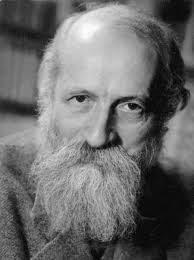
MBI and Thou was written by the Jewish scholar and theologian Martin Buber in the 1920’s and first translated into English in 1937. I’ve used a 1970 translation by Walter Kaufmann*, who prefers the term ‘I and You’ since ‘I and Thou’ sounds formal and churchy in modern English. The subject is ‘I-ness’ and the way it comes into existence only through alterity, though linkage to the other: for Buber this means other humans, other life in nature, and spiritual beings. Buber distinguishes two forms of such linkage: ‘I-It’ and ‘I-You’. The second demands more of us – and it brings “the breath of eternal life” into the world. Buber makes this distinction very clearly in the passage below.

“The I of the basic word I-You is different from the basic word I-It.

“The I of the basic word I-It appears as an ego and becomes conscious of itself as a subject (of experience and use).

“The I of the basic word I-You appears as a person and becomes conscious of itself as subjectivity (without any dependent genitive).

“Egos appear by setting themselves apart from other egos.

“Persons appear by entering into relation with other persons.

“One is the spiritual form of natural differentiation, the other that of natural association.

“The purpose of setting oneself apart is to experience and use, and the purpose of that is ‘living’ – which means dying one human life long.

“The purpose of relation is the relation itself – touching the You. For as soon as we touch a You, we are touched by the breath of eternal life.

“Whoever stands in relation, participates in an actuality, that is, in a being that is neither merely a part of him nor merely outside him. All actuality is an actuality in which I participate without being able to appropriate it. Where there is no participation, there is no actuality. Where there is self-appropriation, there is no actuality. The more directly the You is touched, the more perfect is the participation.

“The I is actual through its participation in actuality. The more perfect the participation is, the more actual the I becomes.”

Buber has been described as a ‘religious existentialist’, though he personally didn’t like the term. Whilst willing to share with all, He was not a Universalist and always saw himself as speaking specifically out of his ancestral tradition. He also wrote Tales of the Hasidim about the intensely devotional form of mystical Judaism that first developed in Central and Eastern Europe and then found new homes elsewhere, especially in North America and the Holy Land itself.

*Martin Buber, I and Thou Charles Scribner’s Sons: New York City, NY, USA, 1970 (A translation with a Prologue I and You and notes, by William Kaufmann)

HAIKU BY BUSON

A Summer Haiku by the 18th century Japanese poet Buson from the collection Zen Haiku, selected and translated by Jonathan Clements. London: Frances Lincoln, 2000

Across the summer stream

With such joy

My sandals in my hand

GRACE

Words, single words, can have a tremendous power in me whether I want them to or not. They have a hinterland of feeling, imagery an atmosphere. They are linked to memories and associations – indeed their use comes to have a memory trail, and the triggering effects that go with that. Sometimes this seems independent of their plain meaning or general use.

Grace is like that. It’s the theological, redemptive meaning that has stuck. Yet it is independent of the received theology, or almost so. I notice that when President Obama spoke the eulogy for the late Rev. Clementa Pinckney in Charleston recently, he made use of the popular hymn Amazing Grace. It was written by the Englishman John Newton, an 18th century slave ship captain who eventually became a clergyman and prominent campaigner for the abolition of the slave trade. As such it suited Obama’s point about how a shocking terrorist assassination can open up possibilities for learning and doing better. The first verse runs:

Amazing Grace (how sweet the sound!)

That saved a wretch like me.

I once was lost, but now I’m found,

Was blind but now I see.

Now this is a very simple and classically evangelical verse. The very simplicity of language and thought is part of its power. As it happens, I am not aligned to the specific religious narrative that stands behind it. I understand it very clearly – and I’m not aligned.

And yet … that’s not the whole story of what happens for me when I hear this verse, especially sung to the tune it acquired in the USA in the 1830’s. I cannot help being moved by ‘Grace’, and when I’m told that it makes a sweet sound, I’m completely with the hymn. In a certain mood I have no problem in thinking of myself as wretched. It isn’t exactly a moral terms, more about being alienated and out of reach to self and others. Modern English (British English anyway, in its polite form) is a softened, evasive language which generally doesn’t run to terms like ‘wretch’ – too strident and extreme; almost comical. But I know experiences that fit.

It’s also true that in the verse, an experience, described in the sweet sounding word ‘Grace’ has become available. Free and regardless of merit, it seems to have the power to change the quality and direction of a life. So the verse ends: ‘I once was lost, but now I’m found, was blind but now I see’. The brief four line verse frames the experience of Grace as a single turn-around moment, a very specific reference experience of spiritual rebirth. Life is a bit different. John Newton’s life changed in slow and gradual steps. But it changed, and eventually it changed radically.

Just as I have personal reference experiences for ‘wretch’, I also have personal reference experiences for ‘Grace’. The Cosmos includes Grace. In my universe of meaning I don’t know how to account for Grace – what it is, how it works, what it means. As an experience it begins as a powerful feeling/sensation in the belly and heart centres, more emotional than physical, that extends through and beyond my whole body. I have known it come within a formal practice, or through another trigger, but most likely it comes out of the blue. I’m clear that it isn’t ‘just’ a feeling, though it contains a strong feeling element. It’s more like an energetic, emotional and spiritual cleansing. It creates a spaciousness, and an expanded sense of being though not of personality. I’m left in a heightened state in which a lightness and clarity emerge. The world looks and feels different. I feel more compassionate towards myself and others. I am less interested in problems and events, and more resilient. There’s an element of drama and energetic arousal that gradually dies down and I find myself calm and at peace – in communion with what is. I do not have any sense of personal deity or energetic emanation from a higher realm, or of benefitting from a cosmically warranted plan of salvation or enlightenment. What I experience is a re-arrangement of my life as is, my place within it and my relationship with the whole. I am connected to the other dictionary meanings of ‘grace’ – smoothness and elegance of movement, courteous goodwill in speech, a ‘grace’ period given before favours are called in or debts have to be repaid. There’s a spirit of ease and generosity in the air.

The effects aren’t permanent. I can go down again – stiffen up, contract. But I notice that the downs and diminutions are not what they were before I became aware of Grace, or began to remember its possibility a bit more consistently. ‘Grace’ is indeed mysterious. I have not incorporated it into a coherent world view. I simply know that it’s a powerful word, matched with a powerful experience, and I’m grateful for it. My instinct is simply to stay open and to let it be.

ETHICS AND THE ENDLESS KNOT

Exploring ethics through contemplative trance and active imagination

In Clear and Present Thinking (1) a book about logic, Brendan Myers includes a Chapter on Moral Reasoning. In this chapter he talks about Virtue Theory as one “where the weight of moral concern is on the character and identity of the person who acts and chooses, as well as the habits he or she develops and discharges through her actions and their consequences”.

Some days after reading this, I found myself in my inner sacred space, a heart space, the garden of the Goddess. I was not doing any formal practice. I was just there. When the garden first emerged, it was specifically as Sophia’s garden. And so it was this time.

There was a banner hanging from a tree branch, hawthorn I think. It was red, with a gold pentangle inscribed on it. I recognised it as the heraldic emblem from Gawain’s shield in Sir Gawain and the Green Knight (2). In this 14th century English poem the pentangle is introduced as a token of fidelity first devised by King Solomon. It is unbroken anywhere, and known in England as the ‘endless knot’. The poem involves an interrogation of ‘virtue’ as understood both in King Arthur’s Camelot and in the older world of the Green Knight far to the north. Gawain will have to navigate both physical perils and moral ambiguities.

Why did I find this device, as a spontaneously emerging image, in Sophia’s Garden? Firstly, I had been thinking about virtue ethics as described by Brendan Myers. Secondly, the pentangle in this form has been a significant image for me ever since I encountered the poem in my late teens. I’ve revisited it from time to time ever since, and this includes the reading of John Matthews’ Sir Gawain: Knight of the Goddess (3) which makes the link with Sophia. “In the Gnostic system, Sophia, the divine emanation of the Godhead, would not permit anyone to enter her Realm of Light, unless they were in complete balance, and bore the sign of the pentangle upon them”.

The offered meaning, as I see it, is that when addressing virtue ethics, I can’t rely on reason alone. Virtue ethics is up close and personal, more than an abstract principle or set of rules. I need to mobilise more of myself. In Sophia’s Garden I’m in a deepened form of awareness, and can contemplate the imagery using heart and intuition as well as rationality. They all work together.

Allowing the vision, I entered a light trance, with the image firmly in mind. I lay down with pen and paper near. I fell asleep for a short period – not part of the plan, but cleansing and useful. On waking I had words: Love/Wisdom. Sophia is Goddess of Love/Wisdom. The love is the greater quality, and it is an Eros fuelled love, for Sophia is the emanation of the Divine who ‘fell’ and then recovered (4). There must an opening up and movement towards someone or something, however slight and tentative, for it to be ‘love’. Whereas I owe justice and a pre-supposition of basic good will towards sentient beings, love is in my experience beyond command and does not result from a conscious act of will – though I can certainly work at expanding my potential to be a conduit. Wisdom is connected to this love, acting as a detector of distortions – empty or ungrounded sentiment, unaware compulsion, possessive attachment, ‘spiritual’ love as world rejecting flight, or driven and reckless forms of generosity lacking in self-care.

But love modifies wisdom too. Wisdom here is too energised to be altogether prudential. Counting the cost may make sense, but it’s not the only criterion. Wisdom uses the head yet is lodged in the heart. At the same time, wisdom also knows that ‘Love’ and ‘Wisdom’ as words can begin to solidify into things, always a problem with ‘nouning’. They can become wooden idealisations devoid of context and process, accessories to self-image, identity performance and external reputation. They can become alienated and commodified. They can even turn and be turned against us. So wisdom guards herself and love by guarding against too much reference to ‘Wisdom’ and ‘Love’.

At this stage I’m thinking again of the pentangle and wanting to use it to bring the virtues into relationship with each other rather than separating them out. I’m feeling happy about using this traditional framework so long as I can be playful with it. For I understand this to be the Sophian Way – with solemnity seen as having a stupefying effect, anaesthetising awareness. So in this ethics of the endless knot, I place love at the apex of the pentangle as I look at the banner, I move down to the base on my right, igniting the love/wisdom link.

Then, moving diagonally up left from the base I come to justice, for love and wisdom need justice in the world for the sake of their own flourishing: injustice inhibits the free flow of love and wisdom. I’ve already named justice, and fairness, as something I owe to all on a personal level, based on a presupposition of basic good will. I’m also clear about the need to work for justice in the wider world. On this, my vision is of a justice is careful of its methods, or it risks licensing revenge, both in power and opposition. Care about language and imagery are themselves a work for justice. Injustice wants to constrain and police these great resources. It seeks to close down their emancipatory magic. Working for justice is rational activity in service to love and wisdom. Sophia has always cried out against injustice, false justice and no justice. She has an ambivalent relationship with the law.

The classical virtue following on from justice, as I move in a straight line from left to right, is courage. What kind of courage am I looking at? For me it’s not about ‘warriorship’, with its theatricality and somewhat militaristic associations, however reframed for current values and conditions. (Perhaps that’s why my pentangle is inscribed on a banner rather than a shield.) Rather, it combines resilience with witnessing. Early Taoism captures the resilience aspect: “true goodness is like water … it goes right down to the low loathsome places, and so finds the way” and “the hard sword fails, the stiff tree’s felled. The hard and great go under. The soft and weak stay up” (5). I understand witnessing in a ‘truth to power’ sense and link it to my notion of care about emancipatory, life and world-expanding language and imagery and the need to guard them. This witnessing courage, to be honourable, may involve the willing loss of recognised honour and standing in a world that is formally virtuous. So it depends on a strong inner authority and a willingness to go against tribal custom. This is the courage I would tie in with love, wisdom and justice.

Moving down diagonally from courage, we come to the base of the golden pentangle on the left hand side, where I place temperance. In the course of its long history, ‘temperance’ has tended to shift from ideas of moderation to ideas of abstinence, as culture and religion have changed. Here and now, I have a resonance of ‘treading lightly on the earth’, in two senses. One is about limiting demands on material resources for the health and flourishing of the earth and its inhabitants. The other is about an ultimate non-attachment to material goods, contents of consciousness and the self-image they create. For me, there is a balance here which is why the word temperance comes in. I can love my possessions, my ideas and visions, my loved ones, my neighbours and my sense of who I am. But I am not fundamentally identified, not wholly immersed, in them. For these forms of love, if they are to flourish, demand some space around them, and there is a sense in which I am alone even within these nourishing interconnections. In another sense I am not. For I can go back to the simplicity of aware being and loving, timelessly arising from the fertile latency of the void. In this way I complete the endless knot.

This vision and reflection are only a beginning. I intend to continue engaging with this ethical approach, integrating it into my contemplative inquiry.

References

  1. Brendan Myers, Charlotte Elsby, Kimberly Baltzer-Jaray & Nola Semczyszyn Clear and Present Thinking: a Handbook in Logic and Rationality, Version 1.1 (21st May 2013) Available via brendanmyers.net or Amazon/Kindle
  2. Licensed under the Creative Commons Attribution-NoDerivs 3.0 Unported License – see creativecommons.org/licenses/by-nd/3.0/
  3. Sir Gawain and the Green Knight edited with an introduction, prose translation and notes by W. R. J. Barron. (Revised edition) Manchester, England: Manchester University Press, 1998
  4. John Matthews Sir Gawain Knight of the Goddess (Revised edition) Rochester, Vermont: Inner Traditions, 1998
  5. Pistis Sophia: a Gnostic Gospel translated into English with an introduction and annotated bibliography by G. R. S. Mead. Blauvelt, New York: Spiritual Science Library, 1984 (New Foreword for American Edition by Richard K. Russell
  6. Lao Tzu Tao Te Ching: a Book about the Way and the Power of the Way Shambhala: Boston & London, 1998 (A new English version by Ursula K. LeGuin)

POEM: THE BREATH OF NATURE

When great Nature sighs, we hear the winds

Which, noiseless in themselves,

Awaken voices from other beings,

Blowing on them.

From every opening

Loud voices sound. Have you not heard

This rush of tones?

There stands the overhanging wood

On the steep mountain:

Oak trees with holes and cracks

Like snouts maws and ears,

Like beam-sockets, like goblets,

Grooves in the wood, hollows full of water.

You hear mooing and roaring, whistling,

Shouts of command, grumblings,

Deep drones, sad flutes.

One call awakens another in dialogue.

Gentle winds sing timidly,

Strong ones blast on without restraint.

Then the wind dies down. The openings

Empty out their last sound.

Have you not observed how all then trembles and subsides?

Yu replied: I understand:

The music of earth sings through a thousand holes.

The music of man is made on flutes and instruments.

What makes the music of heaven?

Master Ki said:

Something is blowing on a thousand different holes.

Some power stands behind all this and makes the sounds die down.

What is this power?

From:  Thomas Merton The Way of Chuang Tzu Boston & London: Shambhala, 2004

Chuang Tzu, one of the great figures of early Taoism, lived around 300 BCE. The frontispiece of this edition says: “He used parables and anecdotes, allegory and paradox, to illustrate that real happiness and freedom are found only in understanding Tao or Way of nature, and dwelling in its unity. The respected Trappist monk Thomas Merton spent several years reading and reflecting on four different translations of the Chinese classic that bears Chuang Tzu’s name. The result is this collection of poetic renderings of the great sage’s work.

ORPHIC HYMN TO NEMESIS

This Orphic hymn to the goddess Nemesis comes from a collection likely to have been compiled in the third century CE, and offers a glimpse of Greek-inspired pagan religion in what turned out to be its last phase.

ORPHIC HYMN TO NEMESIS

Nemesis, I call upon you,

O goddess, O great queen,

Your all-seeing eye looks upon

The lives of man’s many races.

Eternal and revered,

You alone rejoice in the just,

You change and vary,

You shift your word.

All who bear the yoke

Of mortality fear you,

You care about the thoughts of all;

The arrogant soul,

The reckless one,

Finds no escape.

You see all, you hear all,

You arbitrate all.

O sublime deity,

In whom dwells justice for men,

Come, blessed and pure one,

Ever helpful to the initiates,

Grant nobility of mind,

Put an end to repulsive thoughts,

Thoughts unholy,

Fickle and haughty.

From The Orphic Hymns: translation, introduction and notes by Apostolos N. Athanasskis and Benjamin M. Wolkow Baltimore: Maryland, USA: The John Hopkins Press, 2013.

In his introduction to this collection, Apostolos Athanassakis talks about Orphic hymns as instances of a devotional mysticism that uses “the power of clustering epithets” for the creation of “an emotional and spiritual crescendo that might raise our human spirit and help approach the divine”. They remind him of Vedic hymns, Rumi’s verses within the Islamic Sufi world, and aspects of his own Christian Orthodox upbringing. The hymns are beautiful to read – though it is worth remembering that they are designed for group practice in a charged, incense laded atmosphere, with repetition upon repetition, perhaps accompanied by swaying, movement or dance of various kinds.

In the ancient Greek and Greek-influenced world, Nemesis was primarily seen as the goddess of retribution against hubris, arrogance before the gods. She was also called Adrasteia (the inescapable) and at times attracted the epithet Erinys (implacable). In early times she was thought of as the distributor of fortune, and Aphrodite was sometimes called Aphrodite Nemesis. Later she appears as a maiden goddess of proportion and avenger of crime, equipped with measuring rod, bridle, scales, sword and scourge.

The Orphic hymns probably date from the third century CE, a time of philosophical and religious change in the Roman Empire. They were popular for as long as it was possible to maintain a syncretistic religion forged of traditional pagan elements in those parts of the world (chiefly the Eastern Roman sphere) where it was practised. The hymns name specific pagan deities, yet appeal to universal spiritual powers. In this instance Nemesis seems to be seen as a goddess, or personification, of something akin to karma. Devotees are not praying directly for a change in their fate, but in their own thoughts and feelings, in the hope that the energy of the goddess may assist them.

Earth Eclectic

music that celebrates Earth and speaks to the heart

Sarah Fuhro Star-Flower Alchemy

Follow the Moon's Cycle

Muddy Feet

Meeting nature on nature's terms

Rosher.Net

A little bit of Mark Rosher in South Gloucestershire, England

Becoming Part of the Land

A monastic polytheist's and animist’s journal

selkiewife

Selkie Writing…

Charlotte Rodgers

Images and words set against a backdrop of outsider art.

Prof Jem Bendell

living with metacrisis and collapse

Towint

The pagan path. The Old Ways In New Times

The Druids Garden

Spiritual journeys in tending the living earth, permaculture, and nature-inspired arts

The Blog of Baphomet

a magickal dialogue between nature and culture

This Simple Life

The gentle art of living with less

Musings of a Scottish Hearth Druid and Heathen

Thoughts about living, loving and worshiping as an autistic Hearth Druid and Heathen. One woman's journey.

Wheel of the Year Blog

An place to read and share stories about the celtic seasonal festivals

Walking the Druid Path

Just another WordPress.com site

anima monday

Exploring our connection to the wider world

Grounded Space Focusing

Become more grounded and spacious with yourself and others, through your own body’s wisdom

The Earthbound Report

Good lives on our one planet

Hopeless Vendetta

News for the residents of Hopeless, Maine