On completing a breath exercise I sometimes say, ‘I am the movements of the breath and stillness in the breath; living presence in a field of living presence in a more than human world: here, now, home’. This is both my most parsimonious and most spacious sense of home in a world where nothing lasts forever or stays the same. I find my ultimate feeling of home in simple breath and awareness.
Yet my body and feelings, my heart and my imagination cannot thrive on breath and awareness alone. I need love, loyalty and connection inside the turbulence and uncertainty of the world. For me, the risk of getting hurt is an acceptable price to pay.
Thinking simply of ‘home’ spaces, I have lived at my current address for two and a half years. Not long, but enough to establish familiarity and loyalty. The picture above was taken very close to the building I live in. Our estate has planted lavender and let the grasses grow wild. I have come to love this. Our public library building, opened in 1896, is in a simplified and elegant form of 19th century Gothic in its last stage. I know it as a busy and widely loved place. I also know that it won’t be used for its present purpose much longer. Yet I continue to experience it as ‘home’.
Earlier in the year, I wrote about a small group of birch trees growing up beside our flat. Then, they had a bare look apart from a few catkins (1). Now, in the picture below, they are in full leaf. I love the way they are now and also the way they have changed. Without impermanence and mutability nothing can happen. These very characteristics enable ‘living presence in a field of living presence in a more than human world’. They too are a necessary part of ‘home’.
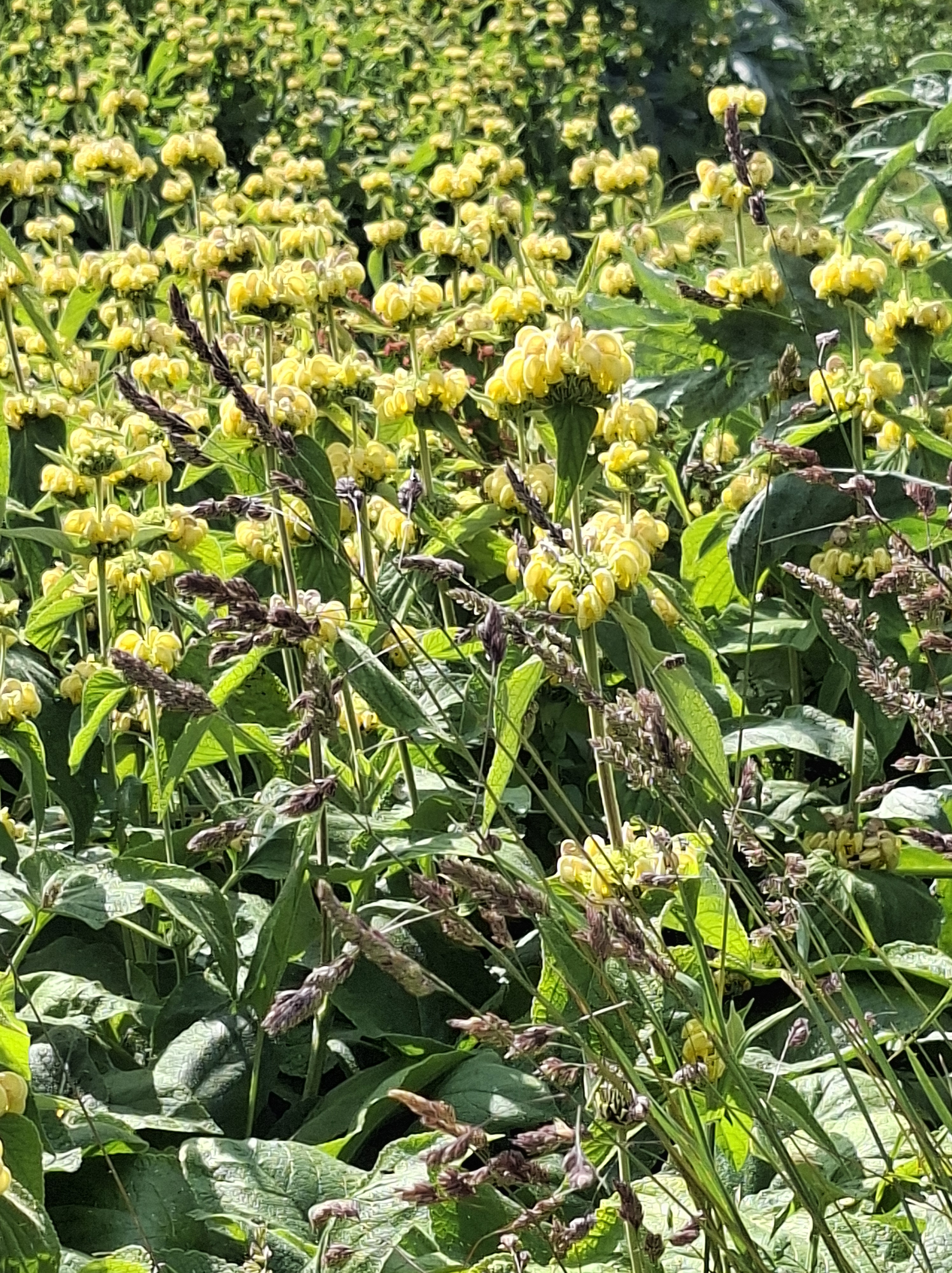
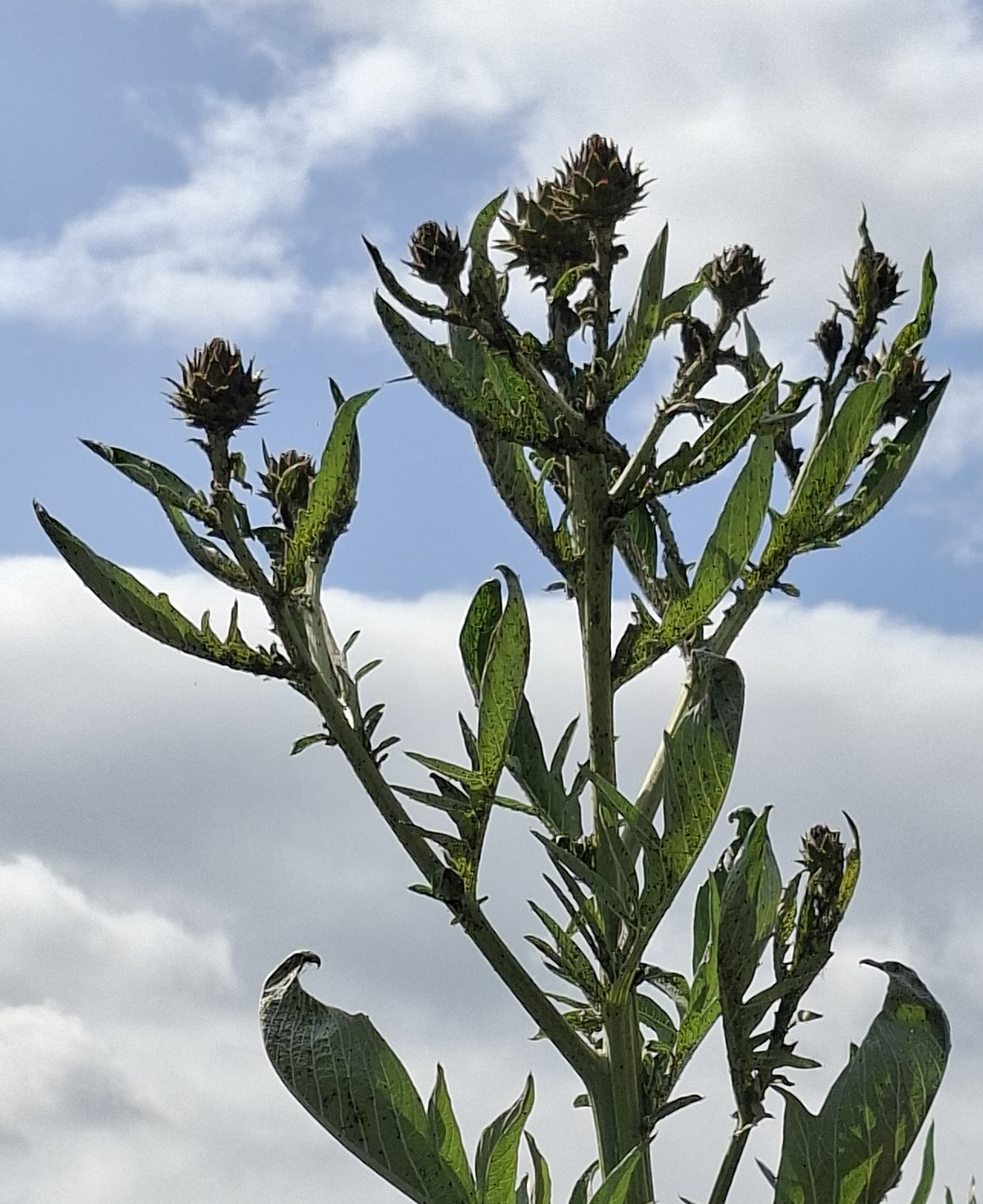
The garden in Gloucester Cathedral’s close is currently a magnificent riot. I was on a walk there with Elaine and we particularly noticed two powerful seeming plants that we couldn’t identify. We simply sat with them, unnamed, and bathed in their energy. It was a glorious 1 June, the first day of our official meteorological summer, and one to savour and enjoy. Only later did we do any research.
We are fairly sure that the plant above is yellow archangel and the plant below, looking like a giant thistle, is cardoon (canara cardunculus) aka prickly artichoke. Friendly feedback from readers on these identifications is welcome. If we are right both plants have long been recognised as sources of power and healing.
In our older traditions, yellow archangel was a symbol of harmony between flora and fauna. A custodian of wildlife, it fostered a bond that transcends mere survival. Herbalists still use this plant to relieve gout, sciatica and other pains of the joints and sinews. It has also been used to draw out splinters and thorns, clean and heal persistent sores, and to dissolve tumours. Yellow archangel can be used as food, in salads, soups and teas. In the wheel of our year, yellow archangel flowers fully after the bluebells die away.
Cardoon is also a plant of power. Traditionally associated with Mars, it has the virtues of strength, protection and abundance. It is has been credited with the power to ward off evil spirits. It is also connected to ideas of nourishment, the riches of nature and, latterly, sustainable gardening. The plant can grow to 2.5 metres in height. Its thick stalks are used as a vegetable. Its full flowering is in late summer and autumn, with thistle-like purple flowers.
These plants, in this garden, are a celebration of values as well as of nature and healing. I see our world through the lens of Modern Druidry and Paganism. The custodians of this space will have a Christian lens. I am happy to note that in this context they seem to be much the same. When in this space, I feel that I am in a beautiful and energising oasis in the city.
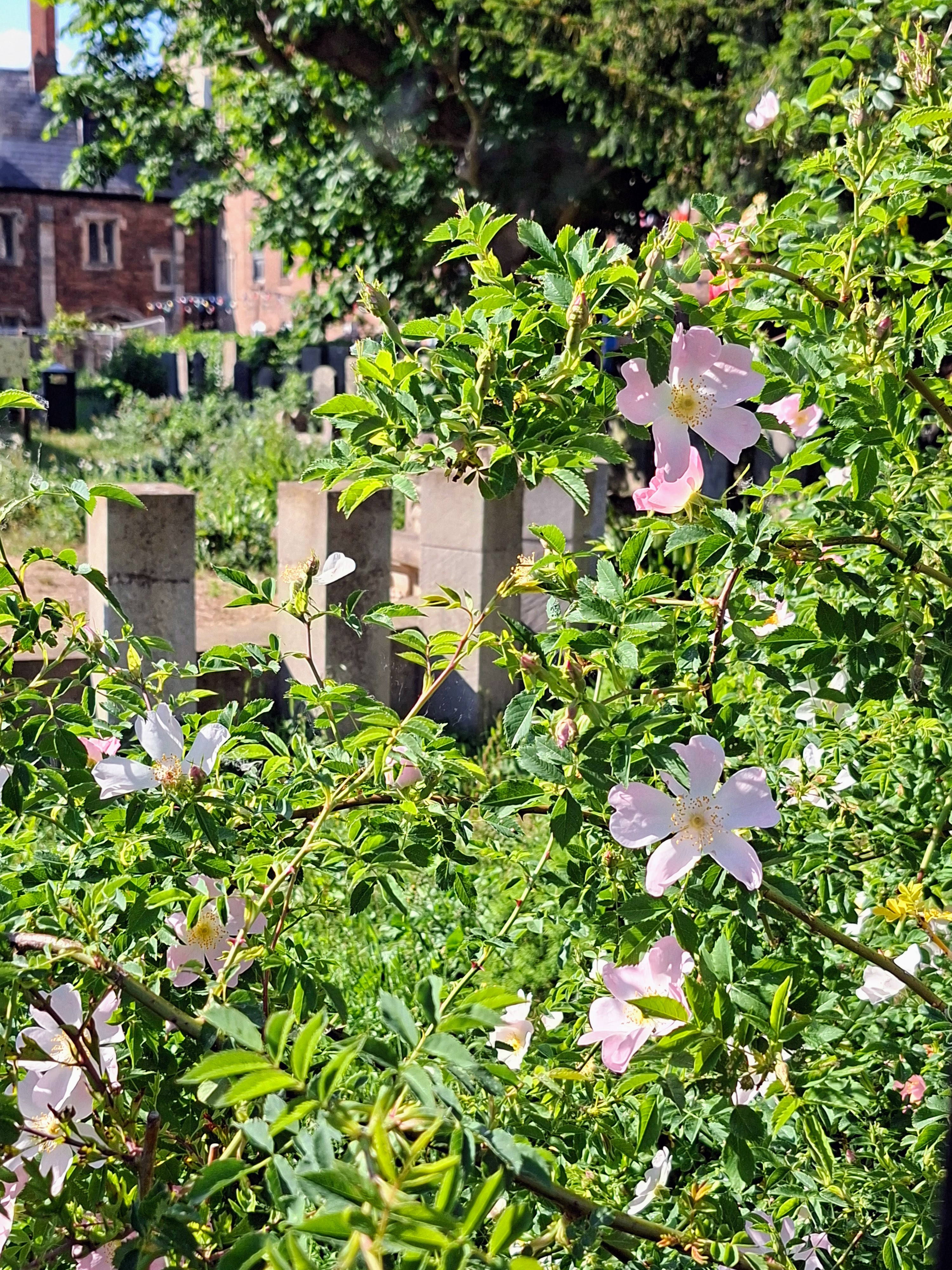
For me, mid May is the beginning of summer. All of the pictures in this post were taken between 16 and 24 May. It was a warm and sunny time that has now morphed into something else – cooler, wetter and windier.
It was a time of brightness and growth. The plant kingdom showed a tremendous will to live and flourish: above, on the canal path as it skirted adjacent apartment buildings; below, close to the Greyfriars ruins, looking out towards the old town.
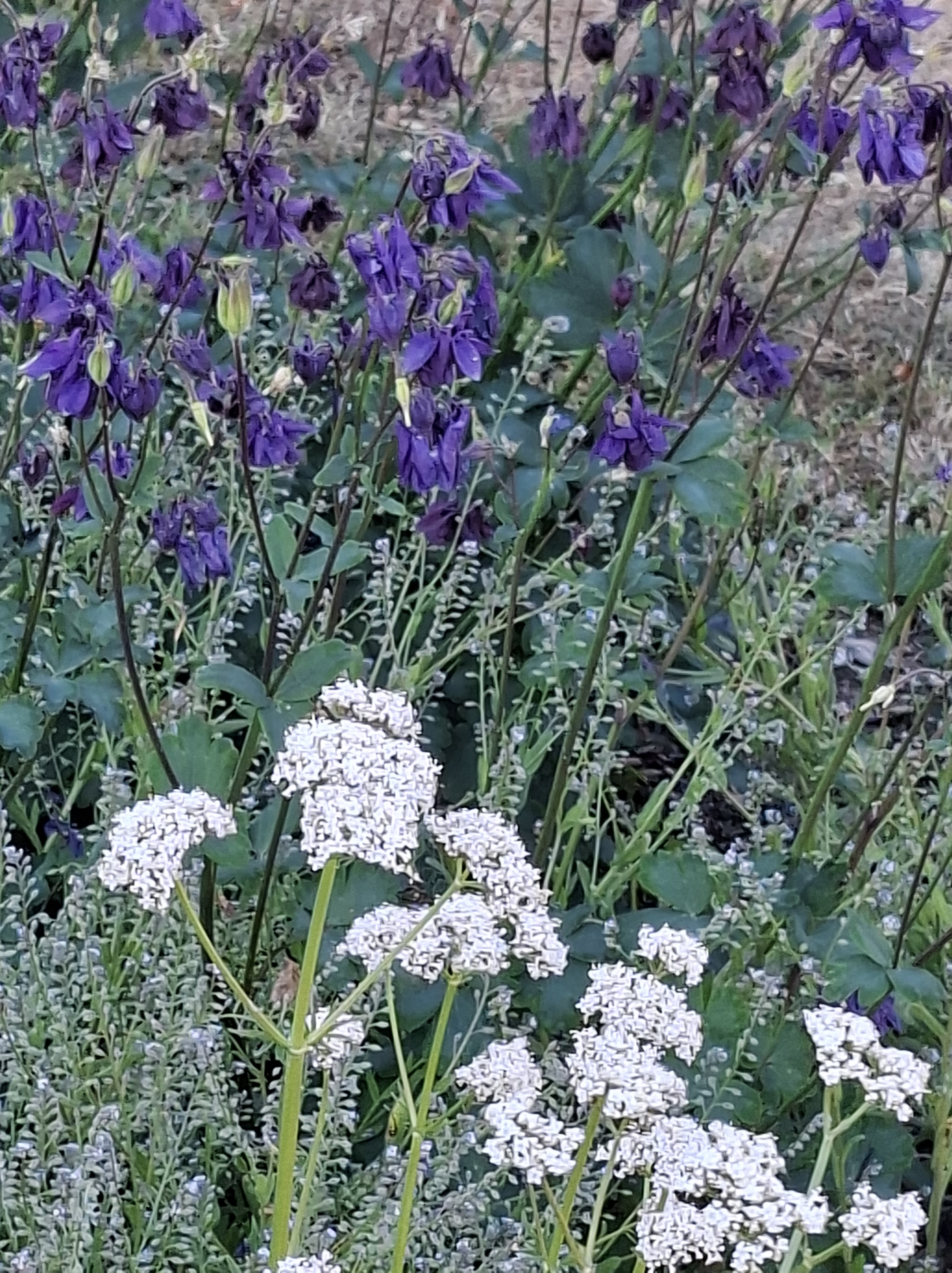
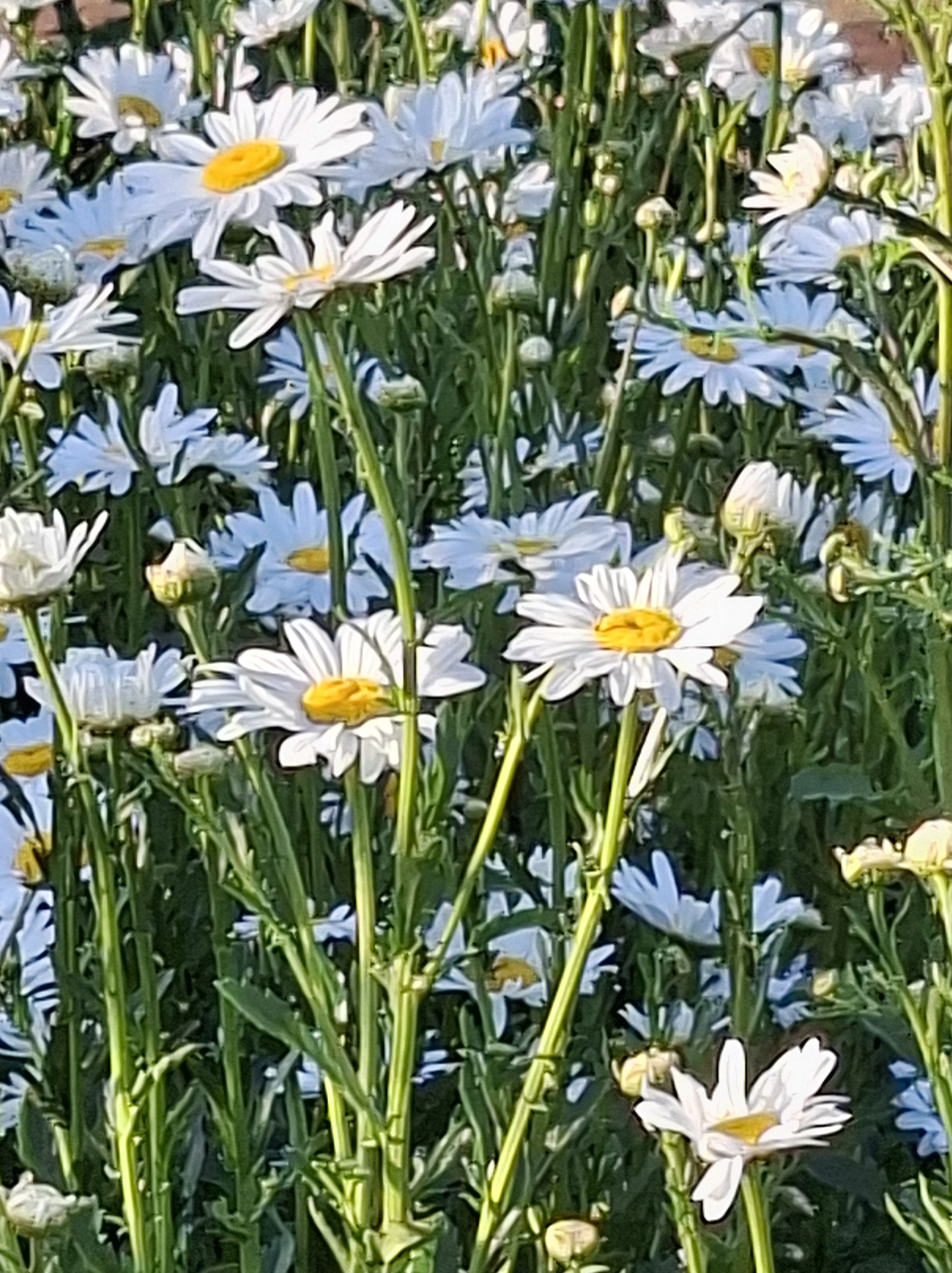
The following three pictures are all from Llanthony Priory, in what was once once the ‘physic garden’ of the monks. What moves me about all of them is the vitality, variety and colour they display. Such an affirmation of abundance.
The same benign and dynamic period saw a big step forward in my wife Elaine’s mobility. She can now leave and return to our flat, sit in pleasant public spaces, walk around town, attend local events and shop on her own. This is new and different for both of us, emancipatory yet still slightly unfamiliar. A new way of life is emerging for both of us.
On 25 May, about the time the weather broke, I celebrated my 76th birthday and entered my 77th year. As I wrote to one of my grandsons, ‘sounds terrible, feels OK’. In truth, it feels more than OK. I feel good.
It was also the anniversary of Elaine’s homecoming after her hip fracture in Gran Canaria, her hospitalisation for a month there, her repatriation and another 12 days in the Gloucester Royal Hospital. The year has been a tough one, especially after the strain on Elaine’s already vulnerable heart became fully manifest. But Elaine herself has been an inspiration with her own will to live and thrive. This feels like a good moment in my life and our lives together. Much gratitude for that.
I have been thinking of peace, at the personal level, as something other than an energy or state. I am learning to understand it as a virtue to be cultivated, in the sense described by modern Pagan philosopher Brendan Myers. ‘Virtue ethics’, first articulated by the ancient Greeks, is the branch of philosophy that investigates character and identity (1).
To live a fulfilling and happy life, according to Myers, we need to install ways of understanding and being in the world that support our aim: these are the virtues. He specifically talks about the virtues of wonder, such as open-mindedness, curiosity, creativity; the virtues of humanity, such as care, courage, respect and generosity; and the virtues of integrity, like reason, acknowledged vulnerability, forgiveness and the will to let go.
I like Brendan Myers’ approach to virtue ethics. I find it inspiring. I particularly appreciate his account of both the work and rewards of practising virtue ethics: “through the process of identifying and working with virtues, we reach towards the person we want to be and the world we want to live in”. He points to “the possibility of a greater depth of life experience that can appear when I am willing to let go of my illusions, willing to risk harm and despair, in pursuit of a more honest relationship with reality”.
Myers’ approach has influenced my practice, to the extent of creating, working with and revising my own list of personal commitments (2). This is a working document, not a set of commandments or protocols from elsewhere. The commitments are not coterminous with virtues, but virtues are identified and included in them. The first to be named in my list is peace. I say: “I will live from the peace of the centre”. This statement has primacy over the others and is formulated differently. “I will live from …” is different from the “I will cultivate” that begins my other statements. It is linked to my regular use of a (slightly modified) Druid peace prayer: “Deep within my innermost being I find peace; silently, in the stillness of this space, I cultivate peace; heartfully, within the wider web of life, may I stand in peace”. The commitment “I will live from the peace of the centre”, draws on the whole prayer.
I notice that peace, rather than love, is currently the foundation of connection with my innermost being, or the divine within me. Spiritually, heartful peace best describes the reality of my lived experience of non-separation from the divine. This is what I feel moved to take into the world as a form of action (living from). I find this more challenging than finding peace in my innermost being in meditative spaces. Turning outwards, I find often find the world distressed, deluded and difficult to navigate. I am part of this world and therefore obviously vulnerable to my own distress and delusion, and also to a certain ignorance about falling into the mire myself.
Finding and modelling peace are consequently at the top of my list and it is this peace practice that I frame in terms of virtue. The ultimate peace that I experience within is something else, an inspiring gift for which I feel grateful: it is not a personal possession or attainment. Nonetheless, it supports in the work of bringing peace into my daily life.
(1) Brendan Myers Reclaiming Civilization: A Case for Optimism for the Future of Humanity Winchester, UK & Washington, USA: Moon Books, 2017
(2) Personal Commitments (Revised May 2024):
I will live from the peace of the centre.
I will cultivate skilful will and strong will, always within the context of good will, towards self and others.
I will cultivate positive health and well-being, within whatever constraints that may apply.
I will cultivate discernment, creativity and wisdom, to the best of my understanding and capacity.
I will cultivate a life of abundance in simplicity, living lightly on the earth.
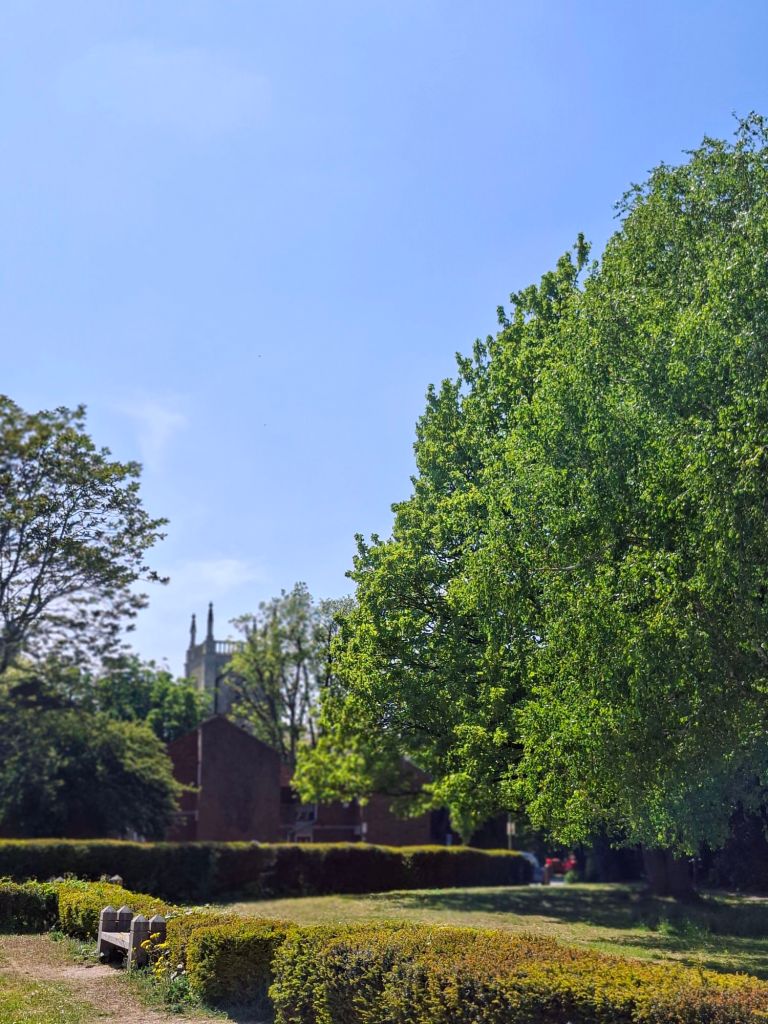
The church of St Mary de Lode, Gloucester, seems to sit among trees. The building salutes the sky without arrogantly trying to reach it. There is a bench towards the foreground of my picture. I am standing in a friendly urban space, a green space. It is one of many made possible by the Churches and Priories of the old city. This space is open to all.
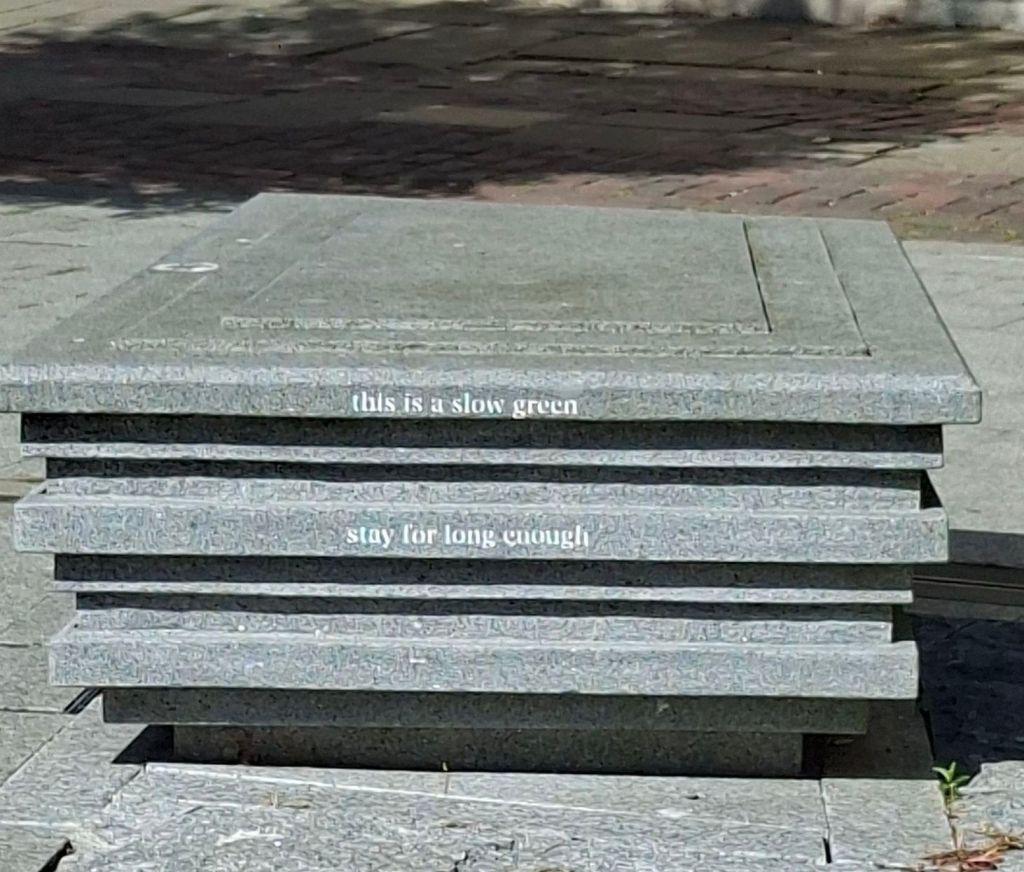
In another such space, on a granite seat close to my home, I recently noticed the words “this is a slow green, stay for long enough”. I have been savouring these words ever since.
They draw me into an easy receptively, not least when the month is May and the day is warm. The riddle of ‘a slow green’ invites immersion and reverie rather than effortful attention or strategies for problem solving. ‘Stay for long enough’ is probably the wisest counsel. Let’s take the time we need gently to befriend such nurturing spaces when we are blessed to find them.
Thursday 24 April was a landmark afternoon for my wife Elaine and me. We were able to walk, sit and have coffee in Gloucester Docks. Such ordinary and taken for granted pleasures – until April last year, when Elaine broke her hip. Later, as her bones slowly recovered, her underlying heart problems were triggered at the turn of the year, setting back her overall recovery.
We are in a different place now. Elaine’s physical recovery, and her recovery of agency, are creating a new reality. The picture above is generally tranquil, yet includes the energy of a seagull in flight. The sun is getting warmer. We can relax a little, and celebrate, enjoying the promise of a new season, in the run-up to Beltane 2025.
Now, contemplating the image of a still boat against the background of Alney Island in its spring abundance, I feel grateful for the moment and grateful for our lives.
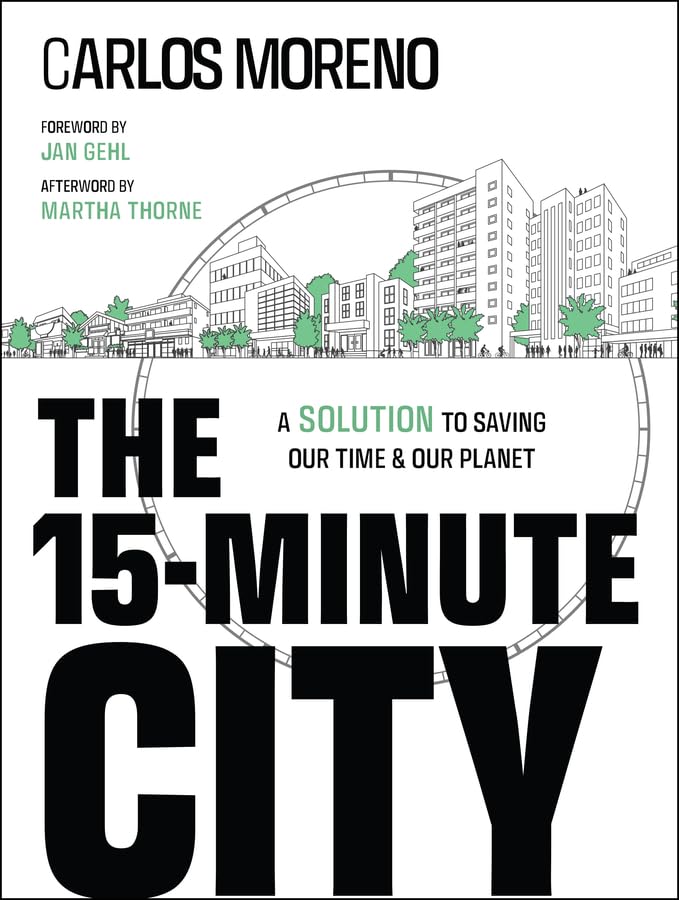
The 15-Minute City: A Solution for Saving Our Time and Our Planet (1) advocates that everyday destinations like schools, stores, and offices should only be a short walk or bike ride away from home. The intention is to make cars far less necessary for contemporary city-dwellers, and thereby “to reinvent our life-styles and rethink our relationship with space and time”. Its key values are proximity, interconnectedness and fulfilment.
This book is about how cities are run, who they are predominantly run for, and how they could be run more inclusively. It provides an inspiring store of information for people concerned with these issues, not least urban Druids. It has 21 chapters:
Chapter 1 is a call to action, emphasising “the urgency of reimagining urban ecosystems in the light of contemporary challenges”.
Chapters 2 to 4 discuss the ‘fragmentation’ of cities over time, especially due to city roads and zoning.
Chapter 5 is about learning lessons for “a more inclusive urban future”.
Chapters 6 & 7 look at changes beginning with the 1973 oil crisis and moving on to the “challenges and realisations of 2020”.
Chapters 8 to 11 focus on Paris, where the ’15-Minute City’ was invented.
Chapters 12 to 19 cover particular locations and their complex histories: Milan, Italy: Portland, Oregon, USA; Cleveland, Ohio, USA; Buenos Aires, Argentina; Sousse, Tunisia; Melbourne, Australia; Busan, South Korea.
Chapter 20 looks at the notion of the 20-Minute Territory as applied in Scotland and on the Ile de France.
Chapters 21 discusses the role of new technologies and summarises the book.
By 2050, 68% of the human population will be urban. Changes are needed in the ways that urban ecosystems work for people’s health and wellbeing, now more than ever because of the climate crisis. Author Carlos Moreno writes, “urban life is the heart of the problem, but it is also the solution if we enable it to be. Never in the history of humanity has survival been so compromised by lifestyle”.
Moreno also believes: “our journey through these cities is also an exploration of ourselves. By offering an urban setting that is conducive to conviviality and proximity, we can rediscover the value of mutual cooperation and sharing. We are nourished by authentic interaction and the solidarity of a reinvented urban life “
It may be that it is now too late to save the kind of civilisation in which we are living. From a seemingly uninvolved and above-the-battle standpoint we may even see advantages in its fall. But I have come to think that it is better to work from the opposite point of view – that there is something worth working for, despite the apparent odds. The work itself can be a spiritual discipline, taken on for its own sake. Carlos Moreno offers us one neighbourly way of addressing our apparent spiral into a dystopian world.
(1) Carlos Moreno The 15-Minute City: A Solution to Saving Our Time and Our Planet Wiley, 2024. Foreword by Jan Gehl. Afterword by Martha Thorne.
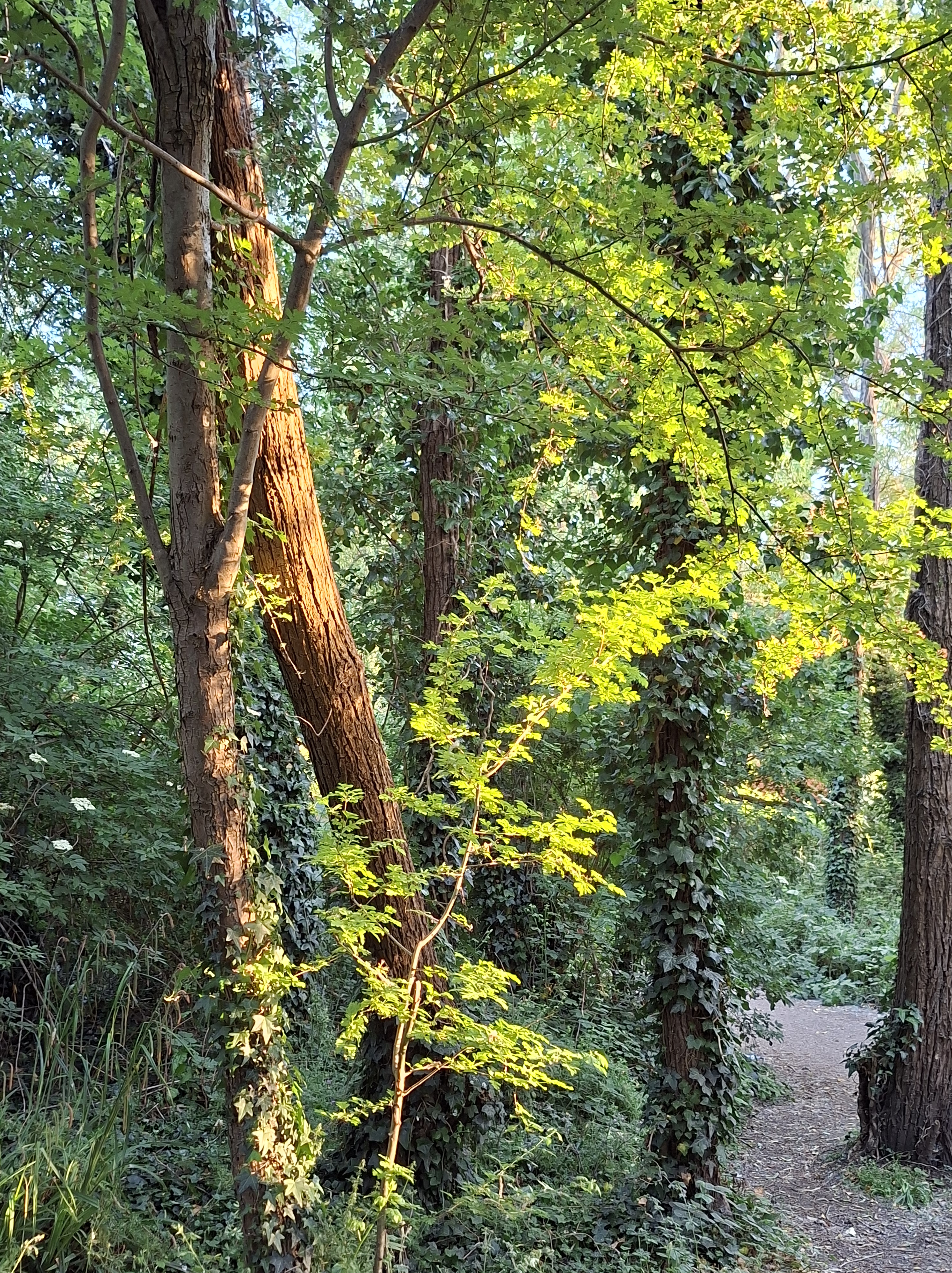
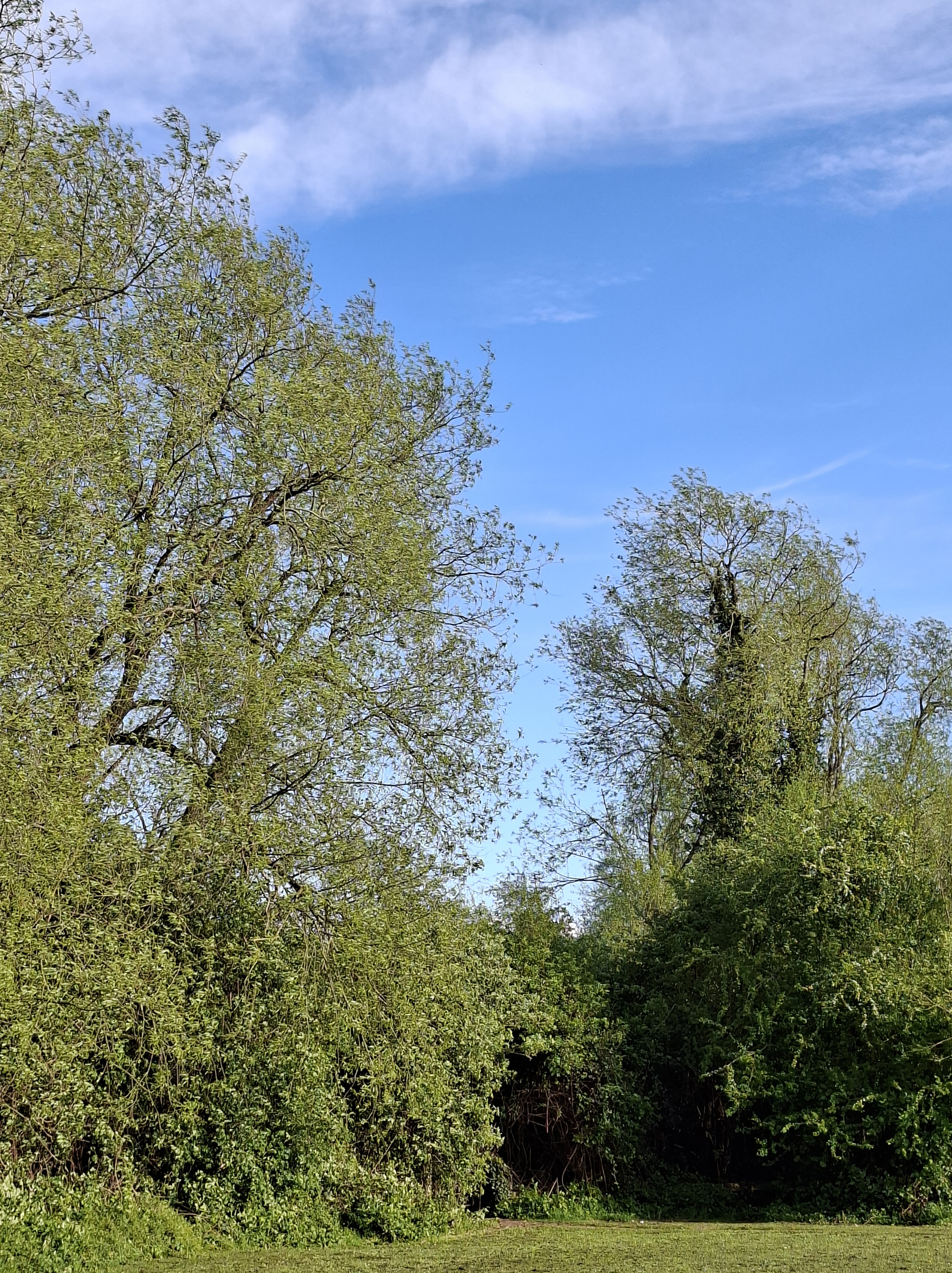
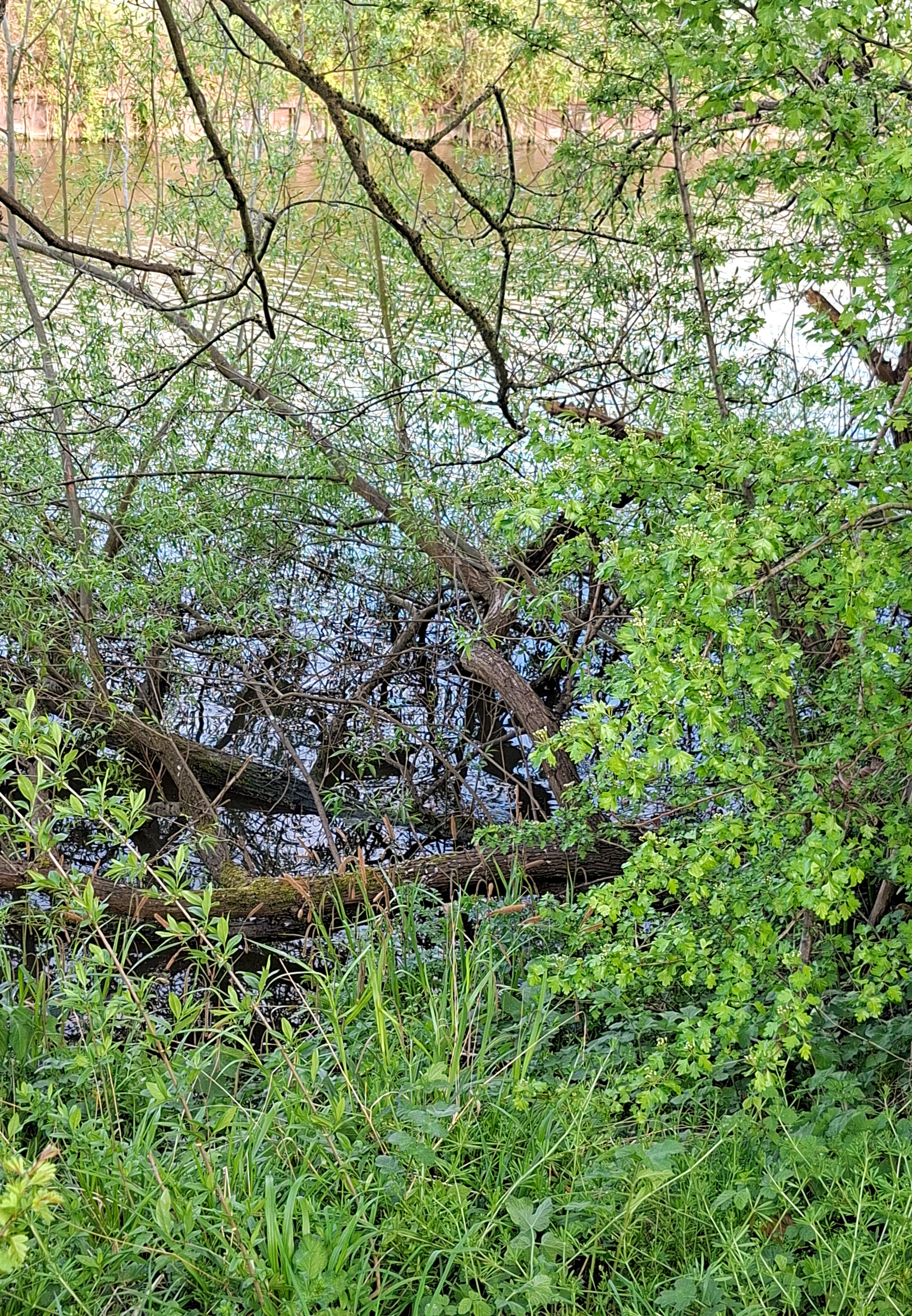
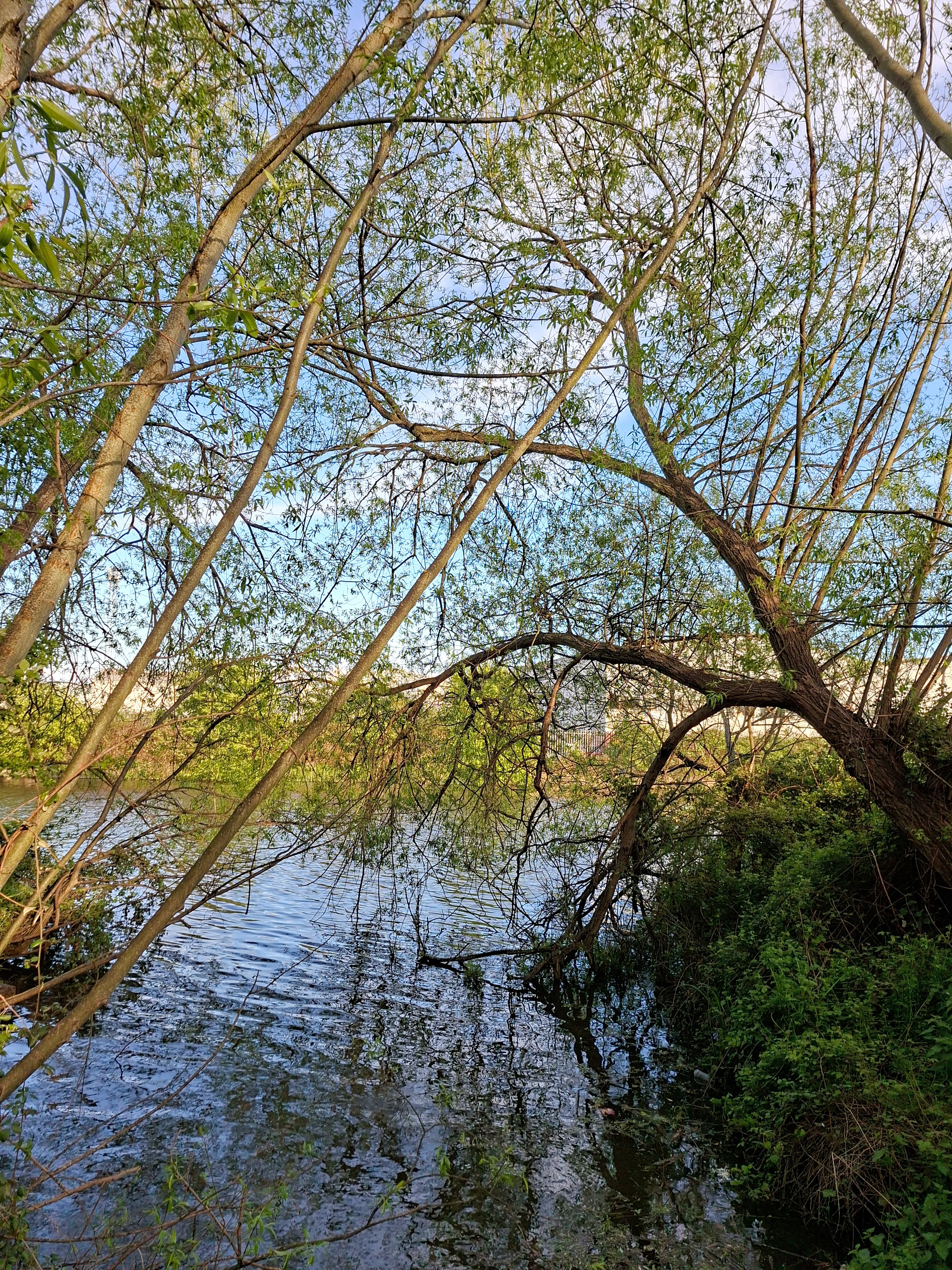
Yesterday I bought a new phone. I find this process stressful and have been putting it off for a long time. But now I have the phone, I can celebrate a new camera. These pictures were taken between 5.30 and 7 pm yesterday evening, when the sun didn’t set until after 8.
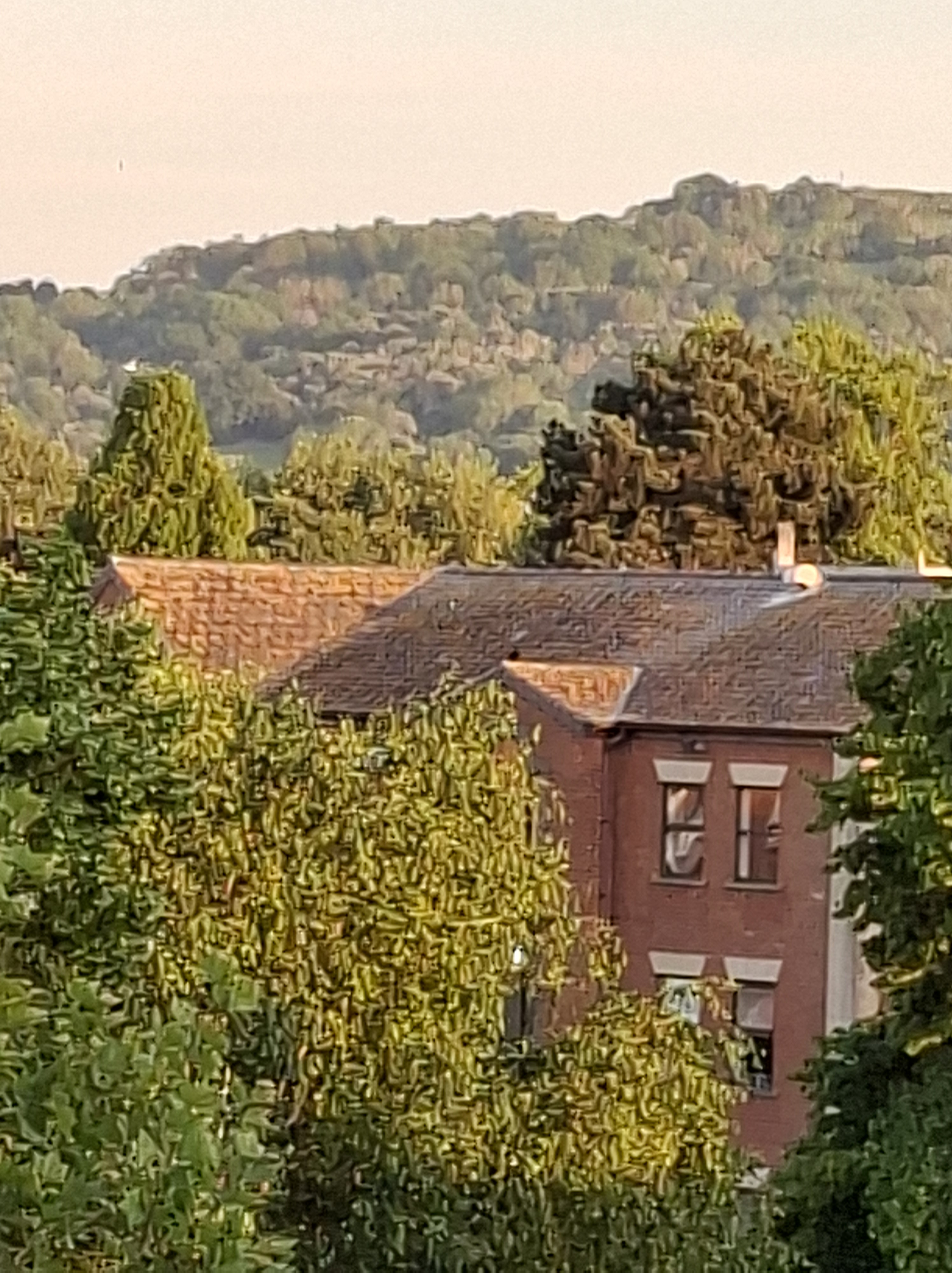
My celebration of the camera, here, was also a celebration of clear light and a more abundant greening. The spaces are familiar, but their specific manifestation and my specific experience were, as always, new. My feelings were those of simple gratitude, pleasure and appreciation.
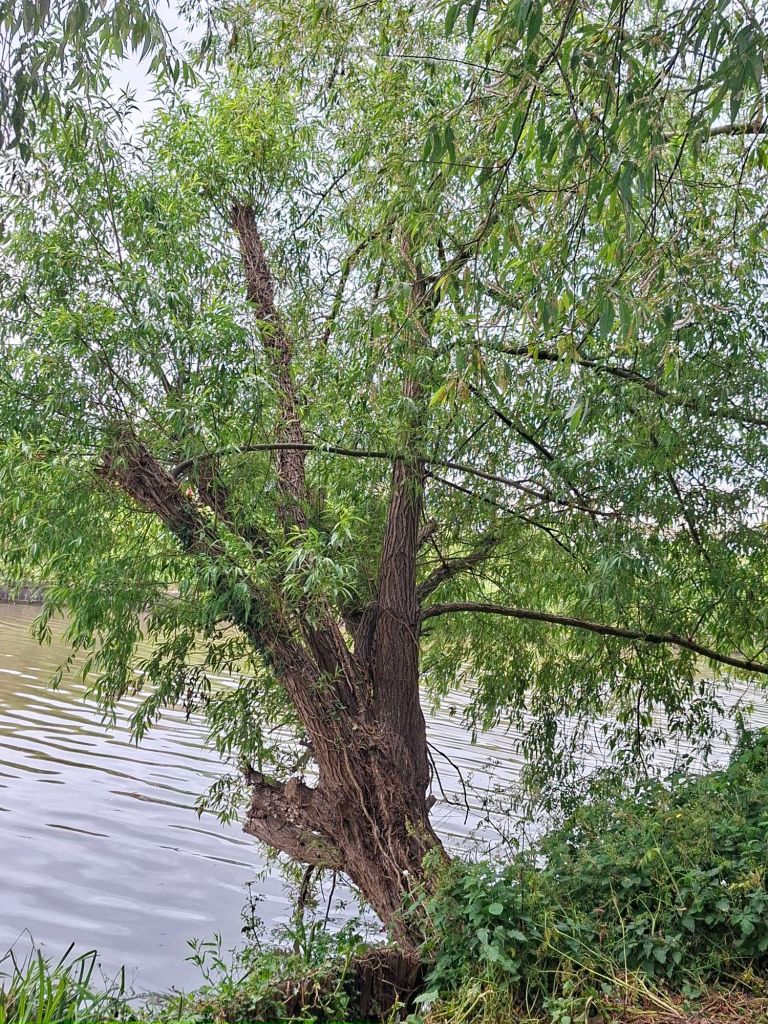
Above, I enjoyed the varied colours and forms of leaves, and the effects of sunlight on them. Below, I noticed the abundance of leaves and catkins on a birch tree.
Towards the water margin, I saw tangled green fecundity on the ground, and the freshness of full rich spring, at the same time utterly magical and yet so familiar, so taken-for-granted that it is easily passed without noticing.
Still closer to the water, and looking out over it, is another familiar scene, this time with contrasts of light and shade and emphasising the energy of rippling water.
Finally, big sky and the power of blue. I was especially drawn to the apparent division of the water. It looks like a tidal effect in the canal, but I am not sure of the cause. Within my contemplation, I am happy with the mystery.












 Contemplative Inquiry