Contemplative Inquiry

This blog is about contemplative inquiry

Tag: contemplation

REFLECTIONS IN A PRIORY GARDEN
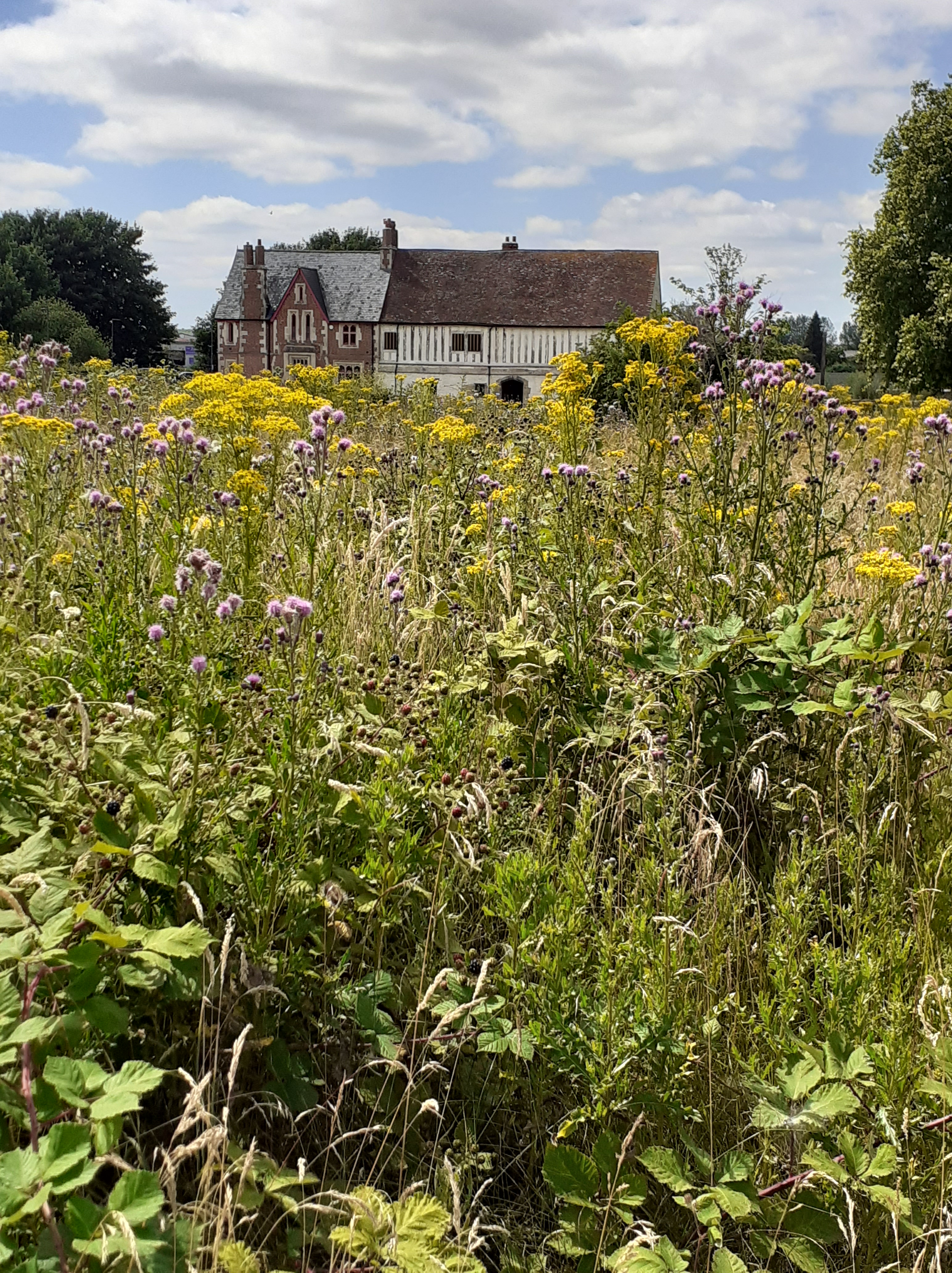
In my formative years, high summer presented me with a world of manicured green. Mown grass dominated both private and public spaces. Garden lawns, parks, tennis courts, cricket grounds, golf courses, bowling greens: all highly managed. Much water was lavished on their severely cropped verdure, given its enhanced tendency to dry up in hot weather.

This is still happening, but fashions have changed to a degree. The photos above and below show the grounds of the Llanthony Secunda priory in Gloucester. In line with new custom, space is now given to a limited urban rewilding. I am inspired by this small miracle of growth and abundance.

This is an odd summer for me. I am at ease in a congenial place. My wife Elaine and I have moved house successfully. I have stabilised after a period of illness. But this is a transitional period. We are not at our destination, and anticipate more upheaval in the second half of the year. I am divided between here-and-now enjoyment of my surroundings, and concern over possible futures, strategising next steps and feeling the tensions of uncertainty.

In the ABOUT section of this blog, I write of “an underlying peace and at-homeness in the present moment, which, when experienced clearly and spaciously, nourishes and illuminates my life”. That statement is a fruit of my inquiry – it wasn’t there at the beginning. That is the nature of contemplative inquiry: my understanding changes over time, in line with deepening experience.

I am finding that my peace and at-homeness have room for both my day-to-day contentment and my anxiety about possible futures, personal and collective. I don’t strip out my ‘future’-based concerns (themselves part of my present time experience) to tidy up my mental and emotional states. That seems like a superficial understanding of here-and-now acceptance. I find, rather, an invitation to embrace the turbulence too, as part of what is given. The peace arising from innermost being makes room for turbulence, for such peace is not just another passing state. In some hard-to-understand way, it has the capacity to be infinitely spacious, and present in the flux of time and events. All I have to do is trust this peace and let it in.

I do not think of myself as a person of faith. I am more of a ‘philosophical’ Druid rather than a religious one, though I don’t believe that we have to choose between the two. But trusting the peace of innermost being is certainly, in part, a matter of faith, where ‘faith’ involves harmonising with my deepest intuition rather than signing up to statements of belief.

OBOD liturgy includes the words: “deep within my innermost being may I find peace”. This resonates powerfully with me, but I have recently let go of the word ‘my’, because ‘innermost being’ no longer feels exactly personal – it seems, experientially, to be more like being resourced from a timeless, unboundaried dimension from which I am not separate. This realisation, if it is a realisation, is now at the core of my spirituality. I am reluctant to make metaphysical truth claims about it, but it is firmly implanted in my experience. The opportunity, now, is to give it the freedom to grow, within my inquiry and my life.

MIDSUMMER CELEBRATION 2022

The place is called Lower Parting, though it is actually a joining. The parting is 3km (just under two miles) up river. There, the River Severn divides into two channels, east and west, to flow around Alney Island. When taking the picture above, I was standing near the point where the channels meet again. It was around 9 a.m. on 22 June. I had not been there before.

Although every time and place is ultimately sacred, some times and places are easier for me to honour. In my experience this is partly a property of the times and places, partly down to culture and tradition, and partly to do with my own inner and outer availability.

On this occasion, I was within a midsummer period which for me lasts from a day or so before the solstice until around 25 June. I like to acknowledge the stasis (standstill) element within the solstice experience. It is not just about a point of time. Like its midwinter opposite and twin, my midsummer allows an extended pause before the wheel of the year turns. My walk on 22 June was an intentional celebration of the midsummer stasis, something between an outdoor walking meditation and a miniature festival pilgrimage. It was built around my first encounter with an intuited special place, now that I am fit enough once more to walk the required distance.

I can easily understand why people in many parts of the world have seen water, especially flowing water, as sacred. I am on a quiet part of a quiet island in the middle of Gloucester city. The wetland here is blissfully unfit for development, and now a nature reserve. I was able to stand here and look out at the joining of the waters, under a blue sky, and surrender to a benign spirit of place. I didn’t have to attend to my attention. In this extended, flowing, moment, nature was doing that for me. I found, here, a generous horizon, and a living peace that invites participation. I am glad and grateful to have discovered this place on this day.

In my tradition, at every seasonal festival, we are asked to think not only of the time we are celebrating, but also of its opposite. Walking back from Lower Parting, I see features in the landscape that help me. My pictures below do not evoke winter, but they do show light and shade within a single image. On planet Earth, the time of my summer is the time of someone else’s winter. These are both ways in which opposites complement each other in an interconnected world.

BOOK REVIEW: BEYOND SUSTAINABILITY

Highly recommended. Beyond Sustainability – Authentic Living at a Time of Climate Crisis – offers an insightful exploration of the changes we need to make at the personal and collective levels. It is part of Moon Books’ Earth Spirit series, and will be released on 28 April 2023.

Author Nimue Brown says that, “as a Druid, I’ve spent my adult life trying to live lightly. There is a great deal to learn about what is possible, and what’s effective, and this is always a work in progress and never as good as I want it to be. I feel very strongly about the need for real change and quietly rage about greenwashing and the ridiculousness of ‘offsetting’. Harm cannot be offset”.

The book is economical with words and rich in content. Its introduction reflects that “humans are increasingly a miserable species, caught in ways of behaving that give us very little and will cost us the earth”. Brown argues that it doesn’t have to be this way and in seven chapters she sketches out pathways to an alternative.

Chapter 1 – What Makes an Authentic Life?- advocates ‘conscious living’, in which we resist the pressure to “to construct our identities out of consuming products”. Instead, we are challenged to discover what inspires and uplifts us, and to build meaningful relationships, with creative and productive communities emancipated from the trance of consumerism.

Chapter 2 – Authenticity and the Unsustainable – explores the narratives that limit and distract us, the stresses of high speed living, the hunger for possessions and ‘experiences’, and the rise of debt culture.

Chapter 3 – Slow Life Sustainability – suggests that ‘life in the slow lane is gentler’. It includes sections on slow fashion, slow transport, slow food, and slow shopping.

Chapter 4 – Wealth in Relationships – looks at ways in which we can support and appreciate each other, and has specific sections on spiritual community, community action, privilege/prejudice and the power of sharing.

Chapter 5 – Creativity for All – emphasises that “being able to imagine is an essential skill for moving towards more sustainable ways of life”. We are nourished by our own creativity and each others.

Chapter 6 – Privilege, Poverty, Inclusion – looks at bigger picture political change, starting with the thought that “sustainability cannot be just a middle class hobby”. There are a lot of things you can’t do if you are poor; shaming and blaming poor people is cruel and useless. Redistribution of wealth is therefore an essential step towards greener living.

Chapter 7 – Political Changes – discusses specific measures such as right of repair, universal basic income, a four day working week, radical changes to agriculture, reducing waste, ‘stop making money out of money’, and not relying simply on changes in technology.

Beyond Sustainability is an informed and distinctive contribution to an increasingly important conversation. It deserves to be widely read and discussed. I suggest that readers of this blog make a note or add it to their lists.

(1) Nimue Brown Beyond Sustainability: Authentic Living at a Time of Climate Crisis Winchester, UK & Washington, USA, 2023 (Part of the Earth Spirit series)

SURFACE AND DEPTH

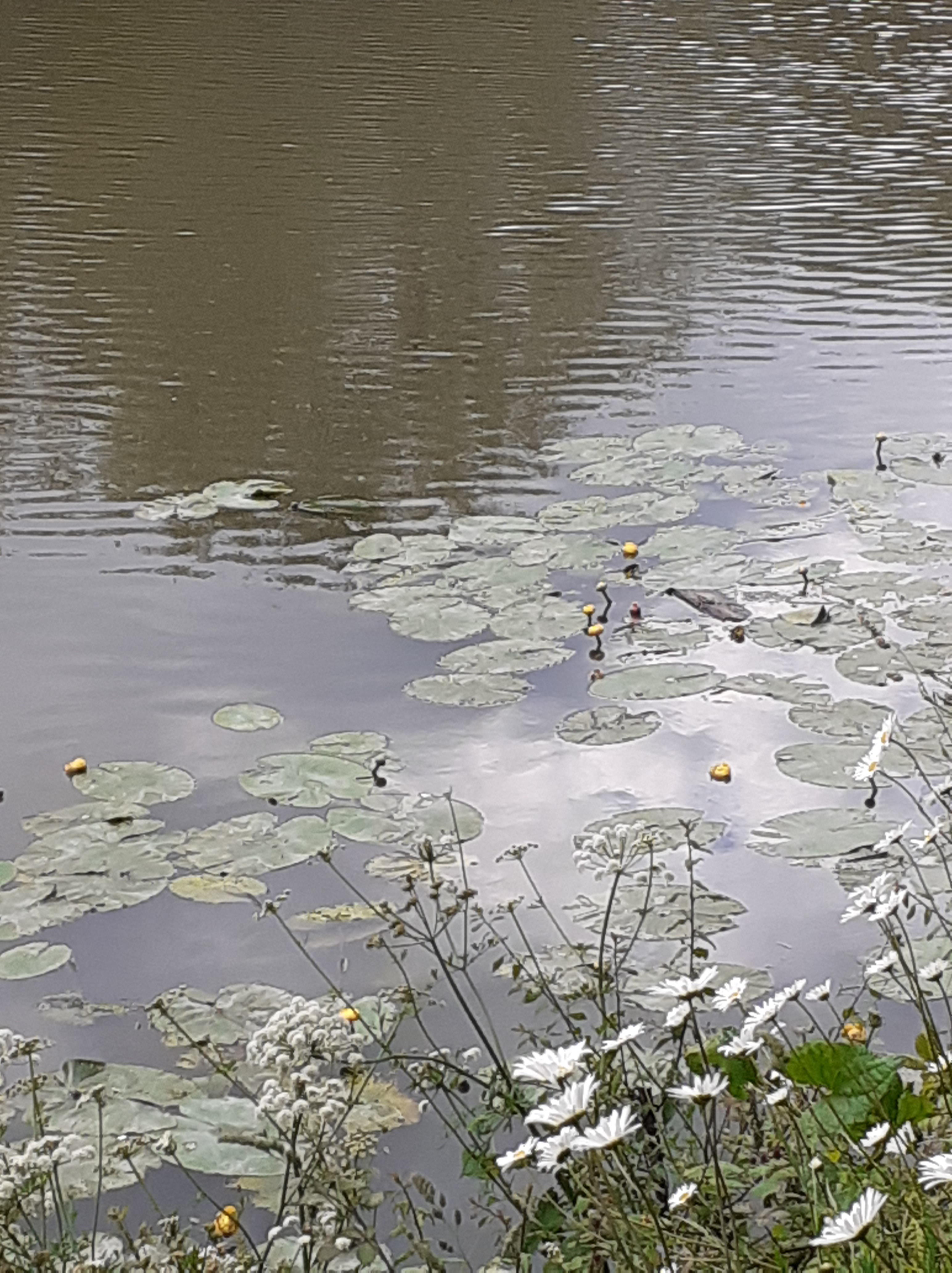
I took this picture some time ago and kept it as an image of tranquillity. Now, when I contemplate it for any length of time, the ripples on the water seem to be alive and moving. The vegetation, also alive, is still.

Although the scene presented here contains both stillness and movement, I identify strongly with the moving ripples in the background. Despite all my contemplative inquiring, movement continues to be my default setting, albeit now less agitated and turbulent than in the past. The phrase ‘stream of consciousness’ comes to mind. The natural flow of this stream includes spaces freed up from cogitation and narrative. But the stream flows on.

I am glad of this. Some traditional teachings, when emphasising the non-separation of ‘ocean and wave’, lean towards invalidating the individuality of the waves even whilst their brief distinctive identities last. But for me, the purpose of being human is to live a human life, knowingly embedded within a rich natural and cultural history. This is why I have stayed with modern Druidry as my main point of spiritual reference.

I have also found a liberating expansion of my human life in realising my non-separation from the living presence of the cosmos. It has busted me out of a certain kind of prison, one of neediness and dependency on surface satisfactions. Just as well, in an age of – increasingly surreal – ‘capitalist realism’ (1). Eckhardt Tolle has offered me the most convincing strategies for standing in the larger life – in particular through his recognition that ultimate satisfaction is inseparable from the present moment, and his account of what is really meant by that much abused term (2). He is currently a second point of reference in my spiritual work.

My photograph continues to offer an image of tranquillity. It is just that, at least for me, tranquillity isn’t as straightforward as it may look.

(1) Mark Fisher Capitalist Realism: Is There No Alternative? Winchester, UK & Washington. USA: O Books, 2009

(2) Eckhardt Tolle A New Earth: Create A Better Life London: Penguin Books, 2016 (Rev. ed. First edition 2005)

TOWARDS ALBAN HEFIN: EVENING LIGHT, FLOWERING PLANTS

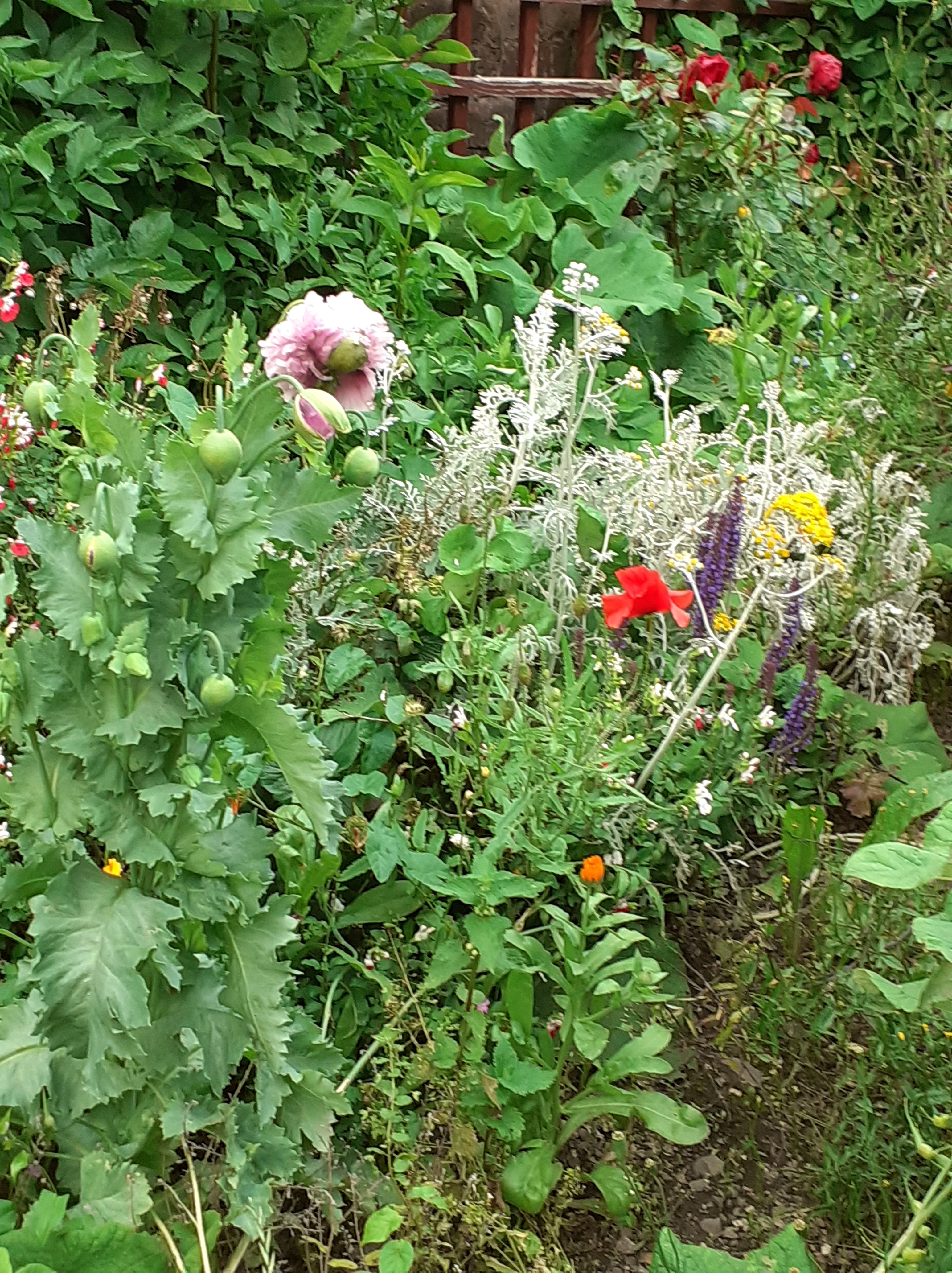
An evening walk on 10 June, around 7pm. We are approaching the summer solstice, Alban Hefin in OBOD Druidry. It is a late moment in the rising year. We are in a now familiar Georgian neighbourhood, where I often focus on sky and buildings. But here my attention is on the earth, and patches of green growth a little recessed from the kerbside. What draws me is a strong sense of light enabling life, relatively late in the day, touching the plants to ensure their thriving.

Flowering plants appeared quite late in this history of our planet, less than a hundred million years ago. Over time they helped to shape the habitat in which we have appeared and made our home. Seemingly fragile, they have, over time, exerted a tremendous collective power. It seems only right to honour them and recognise what they have done for us. May we preserve the habitat on which they and we depend.

JOURNEY AND GOAL

“You’re the journey and the goal –

Exile in the desert

The years of mirage and lightning

And the ecstatic returning to your own house.

You’re the house”

Kabir Engoldenment: A Year with Kabir – 366 Timeless Poems Seattle, WA: KDP Publishing, 2021 (Translated and compiled by Andrew Harvey)

In his introduction, Andrew Harvey writes:

“Kabir is India’s greatest mystic poet and, with Rumi, one of humanity’s two universal prophet poets. He was born to a poor Muslim family of weavers in Benares (now Varanasi) probably around 1440 and died in 1518. Although Kabir refused to belong to any religion, preferring (and championing) a naked direct connection to the Divine, Kabir is revered by Hindus and Muslims alike and 300 of his works were incorporated into the Sikh scriptures. In Varanasi, the holy city where he lived, his songs are still sung by weavers and rickshaw drivers, cigarette sellers, beggars, sadhus and the ‘doms’ that supervise the burning of the dead.

“I asked an old boatman once who was ferrying me on the Ganges and singing Kabir why they loved him. He said, ‘He was one of us. He sang in Hindi, the language of the streets, not Sanskrit. Whoever you are, whatever religion, whatever religion you belong to, he is speaking to you directly.”

See also: https://contemplativeinquiry.blog/2021/01/30/turn-me-to-gold/

WILD ROSES ON ALNEY ISLAND

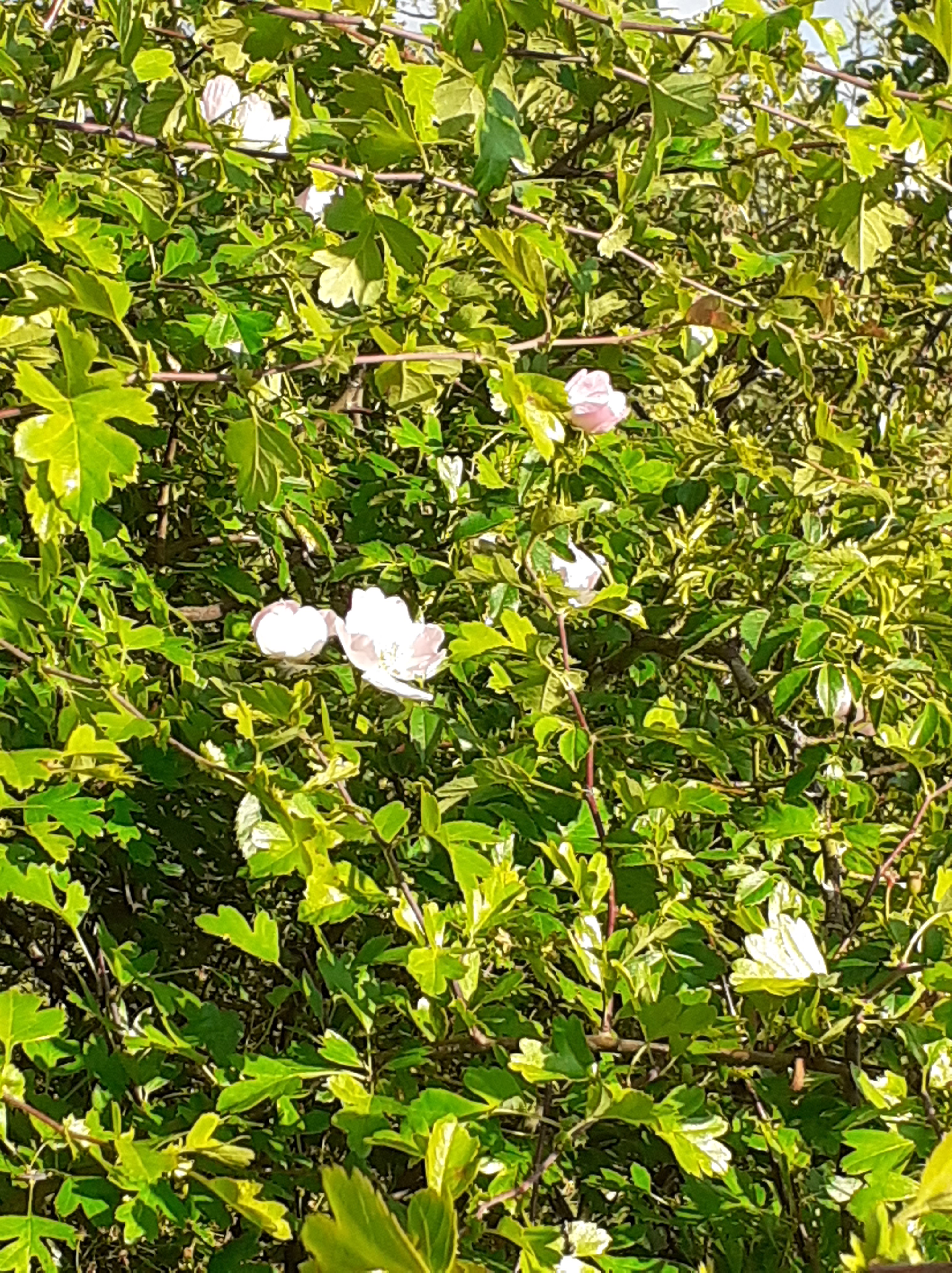
Alney Island is now established as a place where I come up for air. Yesterday evening I went there with my wife Elaine, feeling on good form. It was a relatively cool evening, easy to walk in. This picture, which looks back from the island to Gloucester Docks, records the appearance of wild roses. I associate them with midsummer, but there they are, a little early this year. They may seem fragile, but they have established a position in this riot of green.

Two weeks ago I had a spirometry test which showed that my core health problem was asthma, not COPD, though I have a mild COPD as well. This has led to a change in medication as well as understanding, and thereby increased my confidence. This walk was freed to be all pleasure, companionship and celebration. Namaste to Elaine.

Wild roses have had a special meaning for me since an encounter with them on the banks of the Tweed near Melrose Abbey in the Scottish border country many years ago. In my Contemplative Druidry (1) I describe how I walked into “A wholly unexpected and not at all dramatic epiphany” triggered by simple observing a wild rose on the river bank. Subject/object distinctions dissolved, busting me out of the limited experience (prison?) of ‘self’, as that term is generally used and understood. The direct experience was brief. The after effects were longer lasting, and the consequence was a reframe of my Druidry.

Yesterday I was surprised by wild roses again, and I feel blessed.

(1) James Nichol , Contemplative Druidry: People, Practice and Potential, Amazon/Kindle, 2014.  https://www.amazon.co.uk/contemplative-druidry-people-practice-potential/dp/1500807206/

A TAKE ON ‘GENEROSITY’

“Generosity begins in welcome: a hospitality that offers whatever the host has that would meet the need of a guest. The welcome of opening the doors of one’s home signifies the opening of the self to others, including guests who may disrupt and demand. To guests who suffer, the host’s welcome is an initial promise of consolation. If the cosmic creation of life is the founding act of generosity, the human gift of consolation has at least one analogous quality: no reciprocity is required, for indeed none may be possible.

“When the giving of consolation is taken to be the paradigm of generosity, our imagination of what might be a generous relationship moves beyond material gifts and the economy of exchange that material gifts instigate. Generosity transcends any expectation of what the gift may bring back in reciprocity. Generosity implies the host’s trust in the renewable capacity to give; the generous person feels no need to measure what is given against what is received. Generosity does not plan for the giver’s own future. It responds to the guest’s need.

“Yet because what is offered can never meet the guest’s need completely, the welcome that generosity offers contains a plea for forgiveness. The biblical story of Job’s three friends, who arrive to console him and stay to accuse him, reminds us that consolation will always go wrong to some degree, and generosity always falls short.

“Generosity accepts our ultimate human failure to be generous. What counts is continuing to reopen the door of hospitality, welcoming the guest who needs consolation.” (1)

(1) Arthur W. Frank The Renewal of Generosity: Illness, Medicine, and How to Live Chicago & London: University of Chicago Press, 2004 (In the context of the book, Frank advocates a generosity of spirit both to the givers and receivers of care, in systems that tend to be technocratic and subject to resource constraints.)

PEONIES IN LATE MAY

As I look at these peonies, I delight in their lushness. But the word ‘poignant’ also comes to mind. Delight is mixed with sadness, and a sense of time slipping away. These are probably the last pictures of these peonies that I will take. They are in the back garden of our old home on the day it was emptied of our remaining possessions. Historically they have ushered in the first fullness of summer. They have confirmed a warm sense of home, year after year, as the wheel turns.

But now I am leaving a place Elaine and I called home for many years, at a time when the future remains uncertain on many levels. The stability of the wheel itself, or at least of its local manifestations, is palpably in question. You have to work perversely hard, now, to maintain an ignorance and denial of the climate crisis. Even here, in a cool temperate island.

I cannot dwell in sadness alone, potentially drawn down into a stuck and demobilised distress. The health and viriditas in my bodymind won’t allow it. I find myself staying open to a delight in what is given, here, in these seasonal images. The invitation to celebrate the bounty of nature in an everyday modest setting is very strong, and I respond. The nudge to make a record is likewise strong. Records and memory matter. They change any living moment to which they are invited. The opportunity to contemplate this image of peonies, knowing the context of the picture-taking, is a resource for future times.

BOOK REVIEW: THE GREATEST ACHIEVEMENT IN LIFE (REVISED AND UPDATED EDITION)

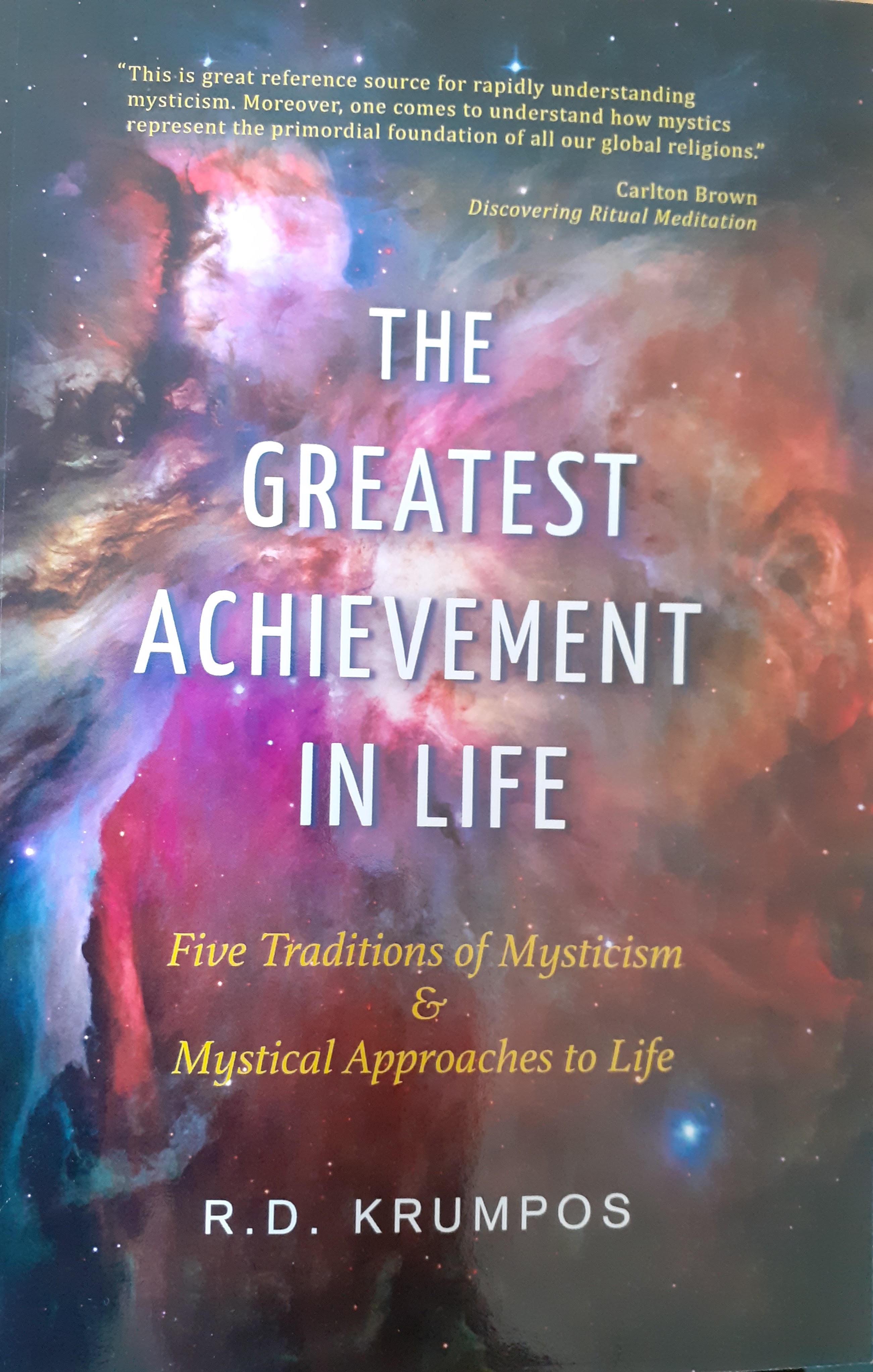
Highly recommended for anyone drawn to contemplative and mystical traditions. R. D. Krumpos’ The Greatest Achievement in Life: Five Traditions of Mysticism & Mystical Approaches to Life (1) is now available in print, in a new revised edition. I like having it now as an old-fashioned physical book that I can leaf through easily both for reference and for inspiration.

The book explores the mystical traditions embedded within Hinduism (Vedanta, Tantra), Buddhism (Zen, Vajrayana), Judaism (Hasidism, Kabbalah), Christianity (Gnostic and Contemplative currents) and Islam (Sufism). Krumpos shows how, underneath their manifold differences, they share an understanding of mysticism as the direct intuition or experience of God, or of an ultimate Reality not conceived as God.

Mystics are described as people whose spiritual lives are grounded “not merely on an accepted belief and practice, but on what they regard as first-hand knowledge”. Krumpos spells out the uncompromising idealism of this project. “Mysticism is the great quest for the ultimate ground of existence, the absolute nature of being itself. True mystics transcend apparent manifestations of the theatrical production called ‘this life’. Theirs is not simply a search for meaning, but discovery of what is i,e, the Real underlying the seeming realities. Their objective is not heaven, gardens, paradise or other celestial places. It is not being where the divine lives, but to be what the divine essence is here and now”.

The book is divided into two main sections: Five Traditions of Mysticism and Mystical Approaches to Life. Within these sections there is a further division into short essays, which can be read either in sequence or independently of the whole. The essays are based both on conversations with mystics and engagement with mystical literatures. Krumpos draws directly on the words of well-known mystics themselves, with 120 quotations interspersed with the essays. He also offers his own commentary and reflections. The book can either be seen as a source and reference book, or as a practitioner aide. It includes sentences and paragraphs that can themselves be used as a basis for formal contemplation. It is not just an ‘about’ book, though it serves that purpose well.

The traditions presented are seen as having much in common at the core, and The Great Achievement bears witness to that commonality. Yet there is enough interior diversity to make it clear that mystics in these traditions are not all the same, or saying the same thing, in the way that is sometimes lazily claimed. Overall Ron Krumpos’ sense of ‘direct experience’ and his definition of gnosis describe a gold standard for what ‘the greatest achievement’ is, based on the accounts of the mystics cited and discussed. In the second half of this book, the focus valuably shifts from the nature of mystical experience itself, to a consideration of its implications for how to live and serve.

For me, the cultural moment in which The Great Achievement has been offered is significant one. Perennialism’s ideas have been popularised and repackaged over the period since World War II at an ever increasing rate. There is now an extraordinary global spiritual hunger at least partly influenced by the spiritual paths that it includes – some, indeed, speak of a ‘spiritual market place’. This is a promising development, yet one with its downside. Krumpos’ work reminds us what these older traditions are and where they stand. For readers in new (or new-old) spiritual traditions with a different approach, the book offers opportunities for comparing and contrasting the fruits of the five traditions with those of their own chosen paths. Krumpos does acknowledge the value of shamanic and indigenous traditions, and practitioners within these traditions, reading this book, might be inspired to develop this conversation further.

(1) R. D. Krumpos The Greatest Achievement in Life: Five Traditions of Mysticism & Mystical Approaches to Life Tucson, AZ: Palomar Print Design, 2022. (Originally a free e-book available from http://www.suprarational.org/ as a printable pdf, published in 2012).

NB This review is a revision of my review of the original edition. See:

https://contemplativeinquiry.blog/2021/03/06/

Earth Eclectic

music that celebrates Earth and speaks to the heart

Sarah Fuhro Star-Flower Alchemy

Follow the Moon's Cycle

Muddy Feet

Meeting nature on nature's terms

Rosher.Net

A little bit of Mark Rosher in South Gloucestershire, England

Becoming Part of the Land

A monastic polytheist's and animist’s journal

selkiewife

Selkie Writing…

Charlotte Rodgers

Images and words set against a backdrop of outsider art.

Prof Jem Bendell

living with metacrisis and collapse

Towint

The pagan path. The Old Ways In New Times

The Druids Garden

Spiritual journeys in tending the living earth, permaculture, and nature-inspired arts

The Blog of Baphomet

a magickal dialogue between nature and culture

This Simple Life

The gentle art of living with less

Musings of a Scottish Hearth Druid and Heathen

Thoughts about living, loving and worshiping as an autistic Hearth Druid and Heathen. One woman's journey.

Wheel of the Year Blog

An place to read and share stories about the celtic seasonal festivals

Walking the Druid Path

Just another WordPress.com site

anima monday

Exploring our connection to the wider world

Grounded Space Focusing

Become more grounded and spacious with yourself and others, through your own body’s wisdom

The Earthbound Report

Good lives on our one planet

Hopeless Vendetta

News for the residents of Hopeless, Maine