Change is coming as the days lengthen and temperatures begin to rise. I too have begun to feel spring-like – more energised and available to the world.
Stepping out, I am in harmony with the life and growth around me. I become aware, again, of the resilience and potential of the plant kingdom.
I celebrate the life force within and without, both through movement as I walk and in stillness when I pause.
I learn again that a familiar space can be ordinary and extraordinary at the same time.
I open myself to spring 2026, the new season, as the Wheel continues to turn.
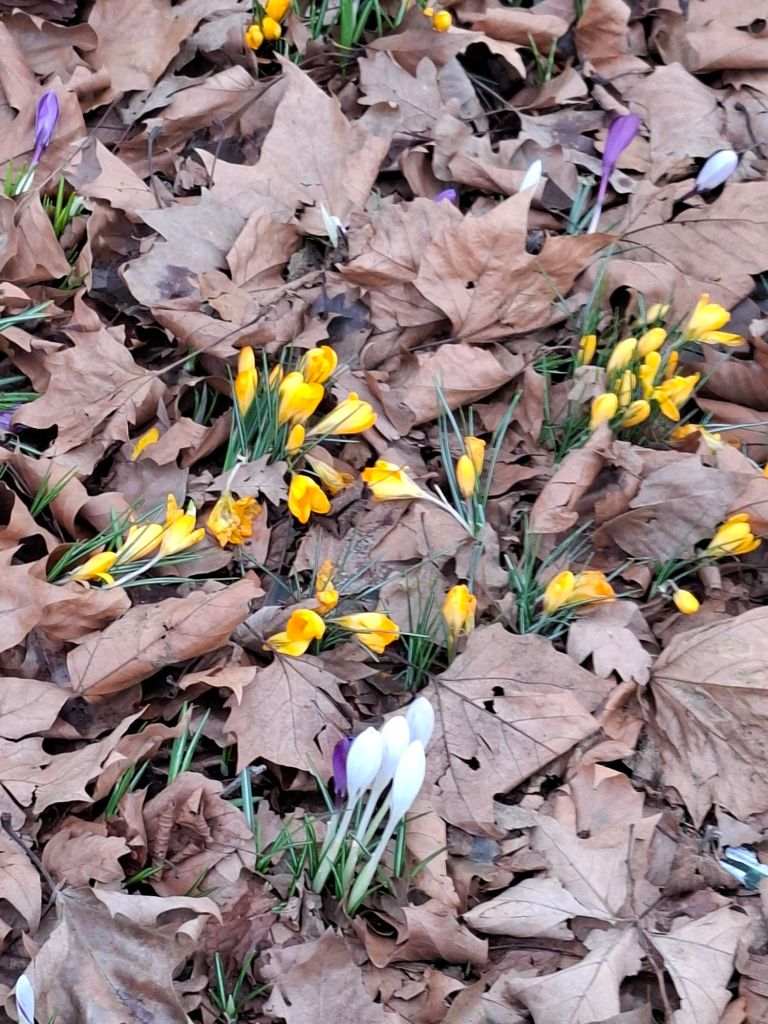
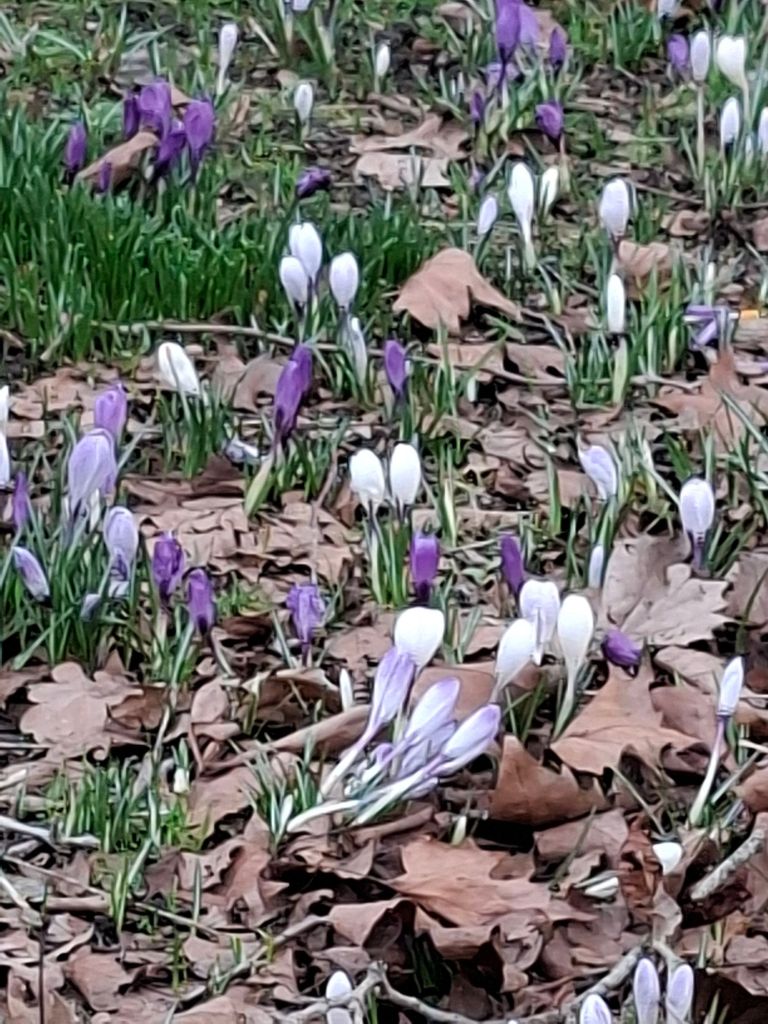
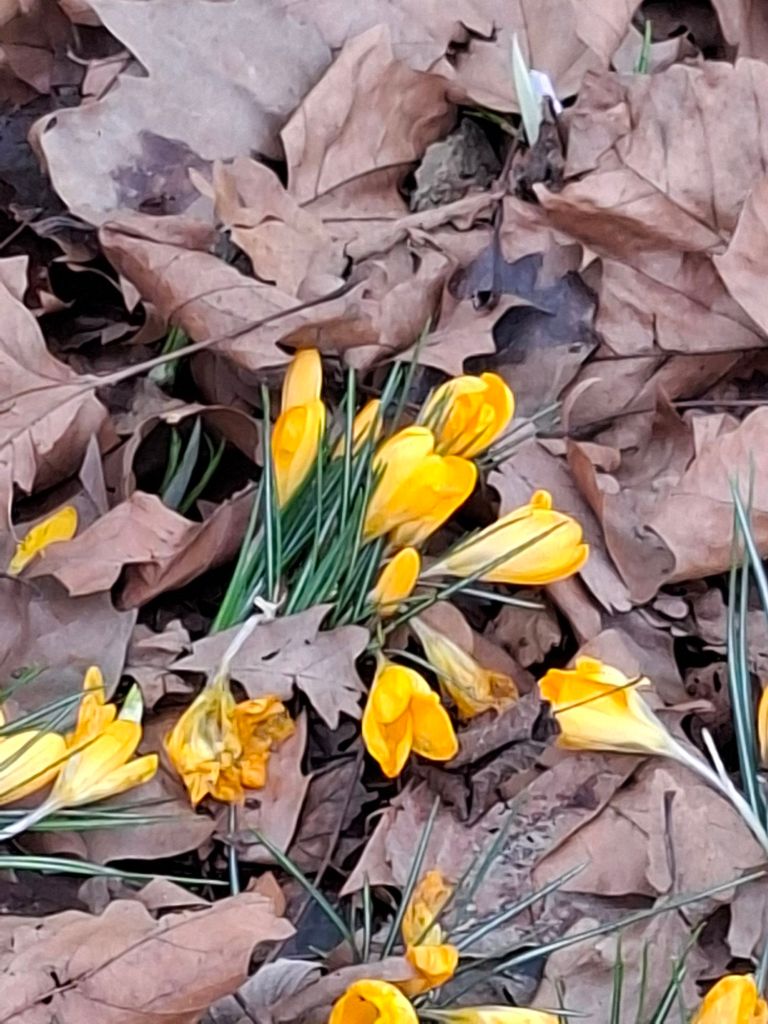
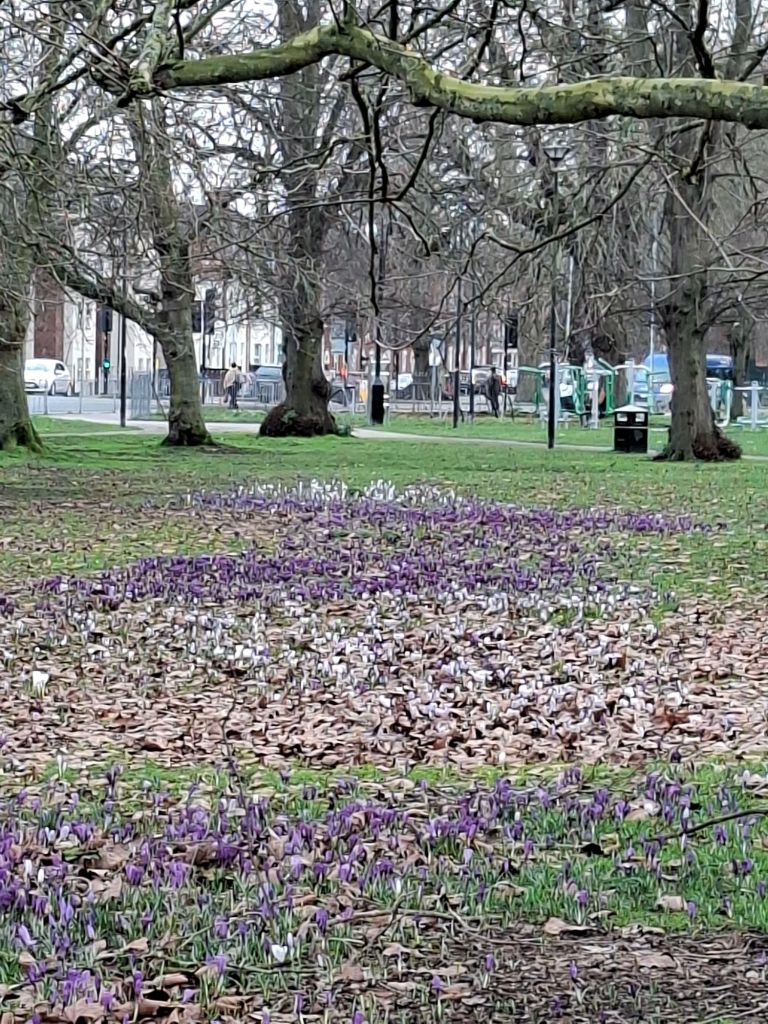
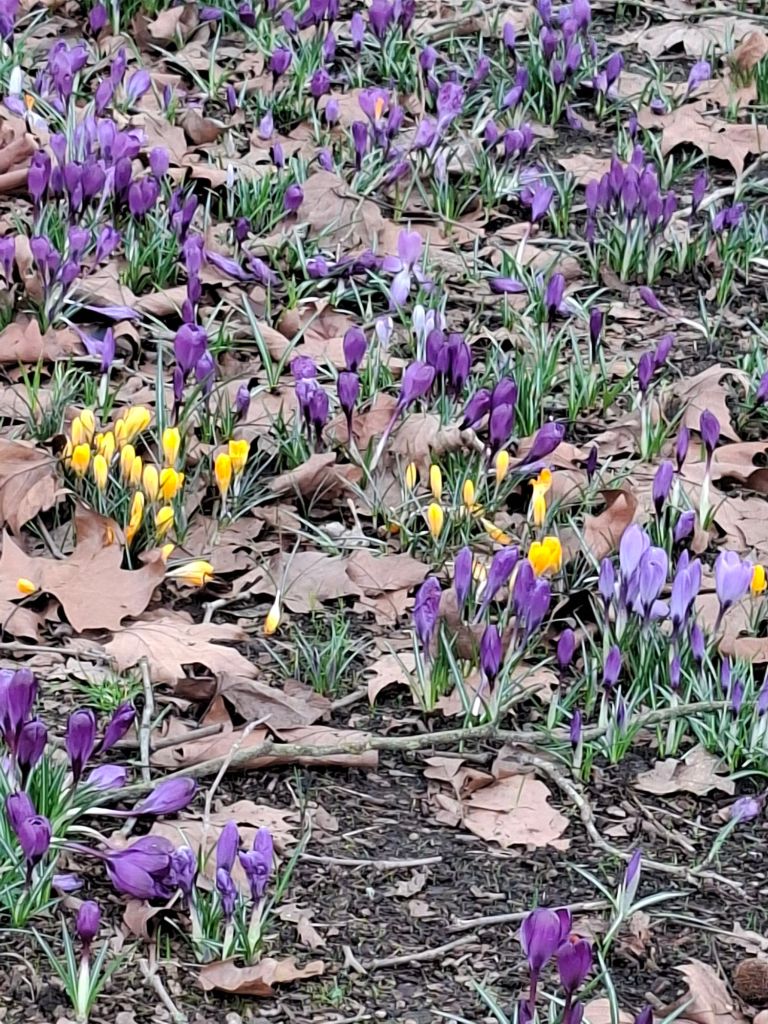
4pm, 9 February, Gloucester Park. I notice the ground in front of my feet. New life is emerging, pushing through last year’s fallen leaves. Crocuses – yellow, white, mauve – are making themselves known. Recent rain gives the blades of new green grass a fresh vitality. Feeling curious and energised, I enjoy an extended moment of contemplation on this small patch of land.
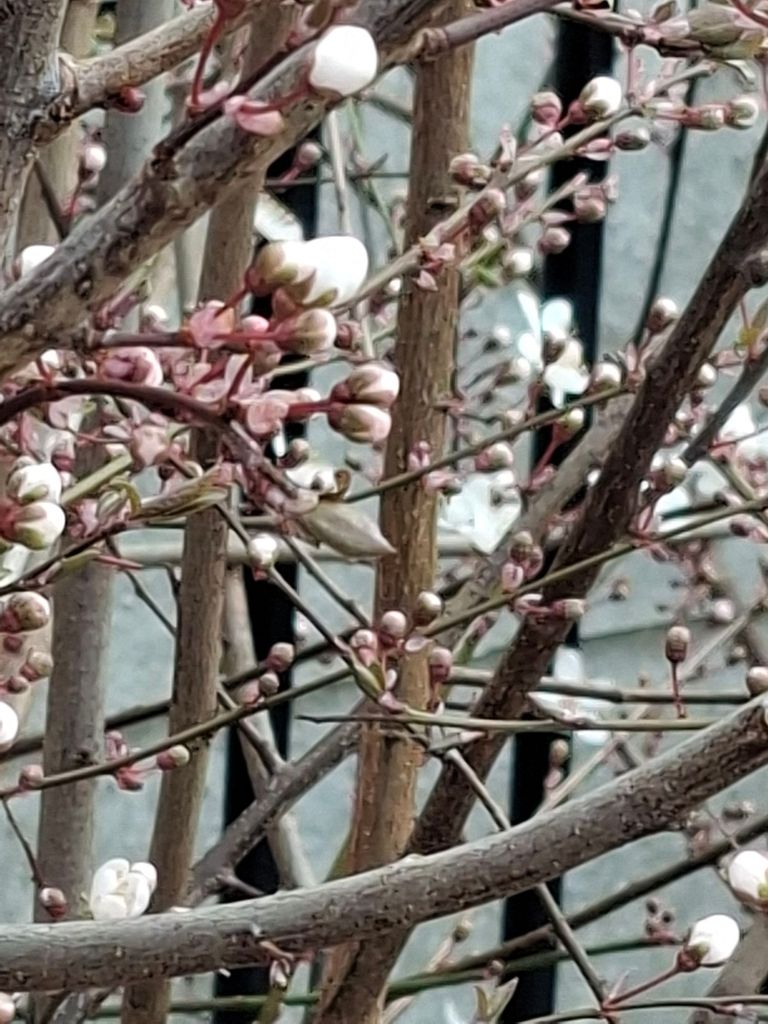
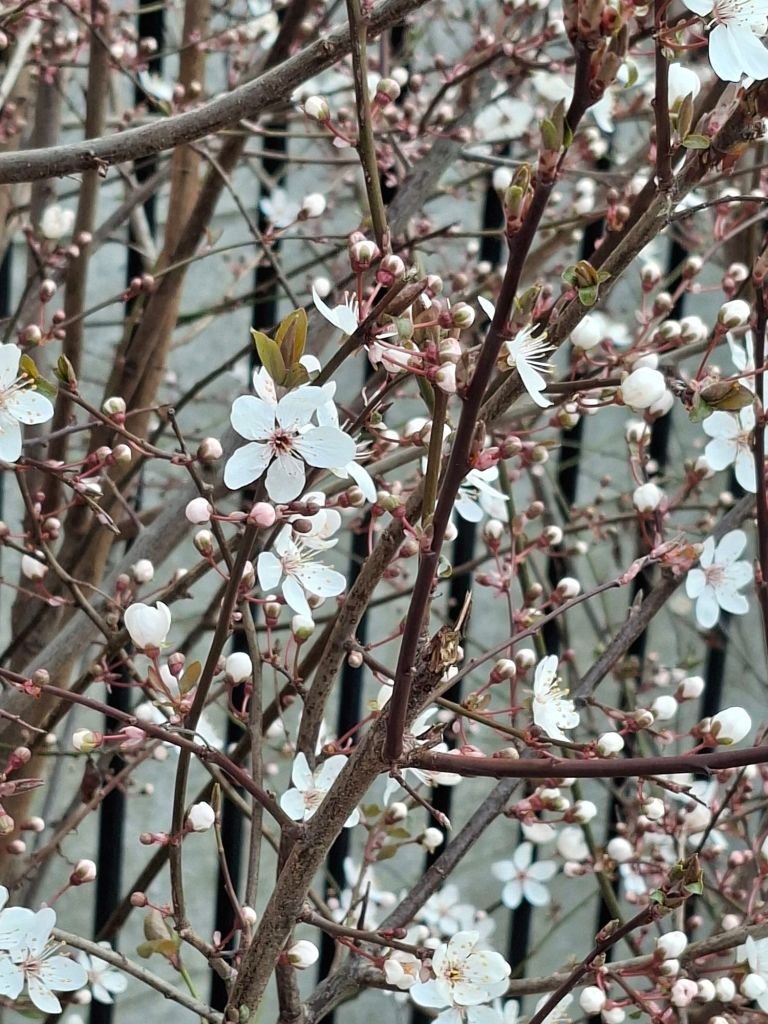
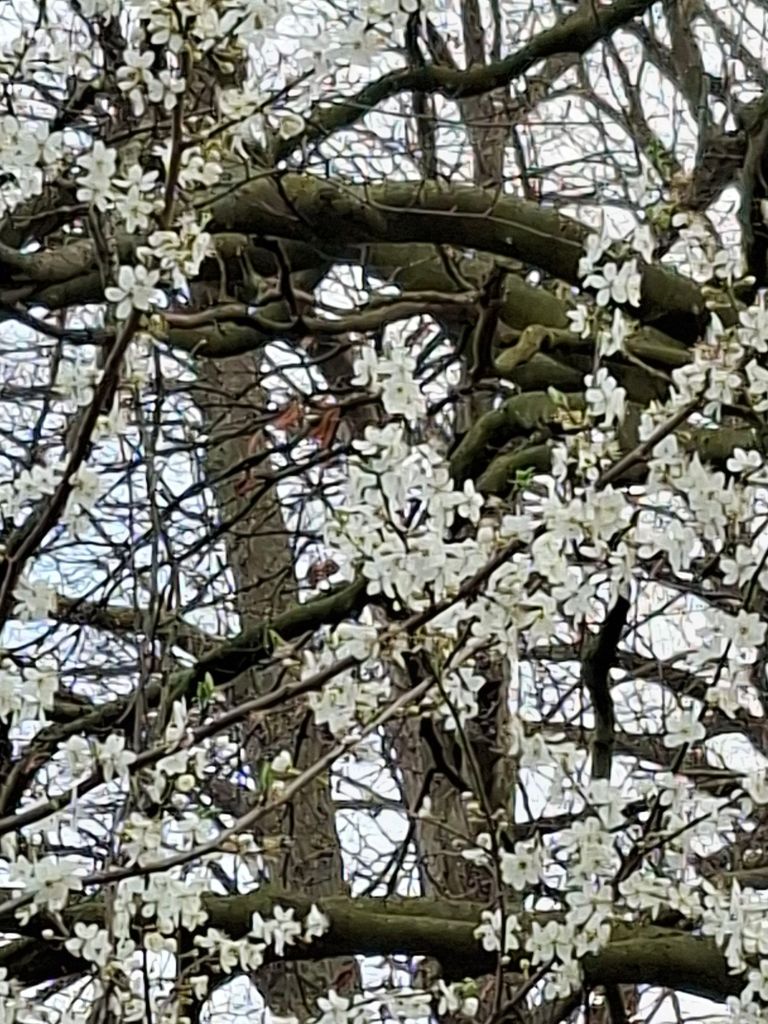
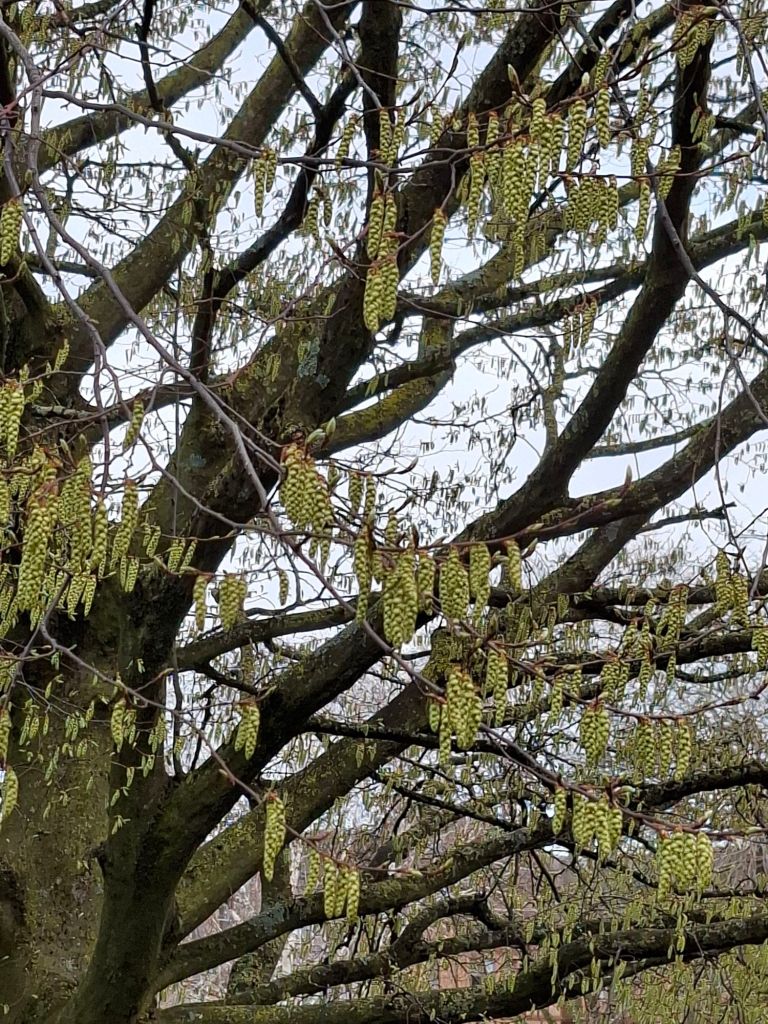
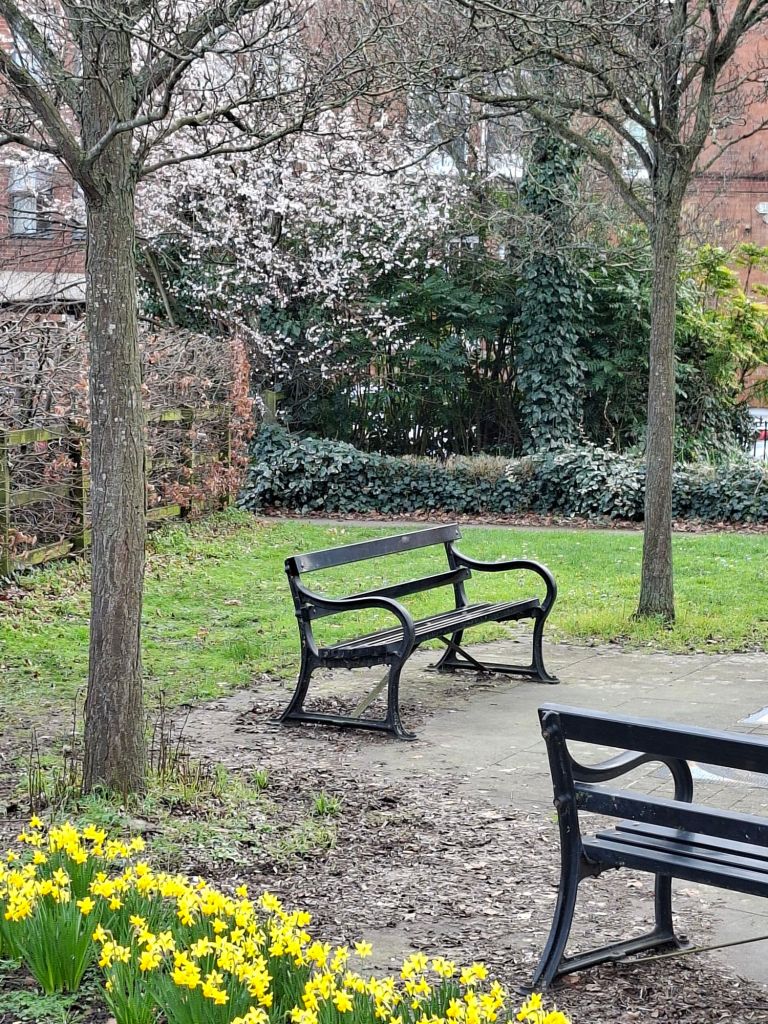
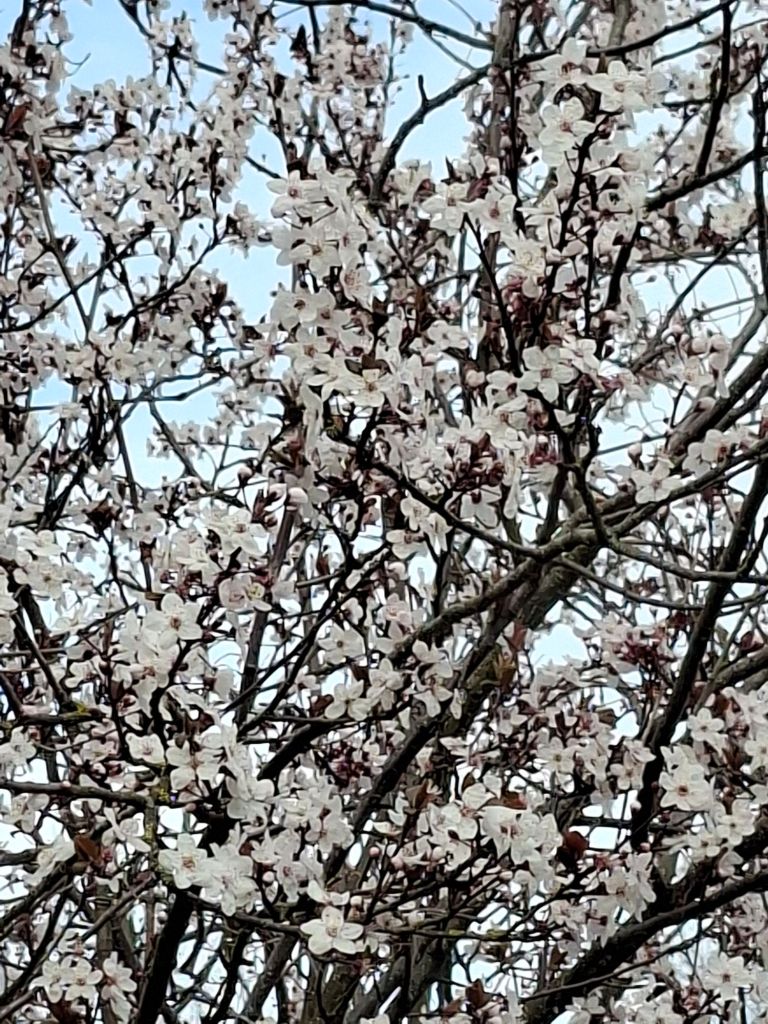
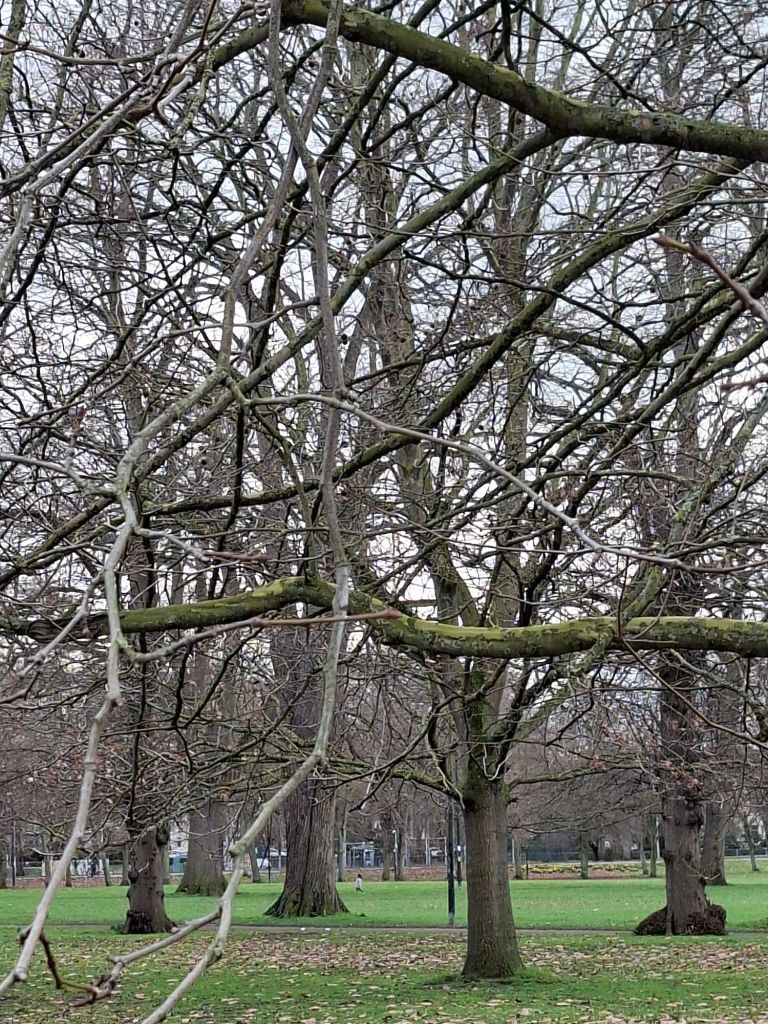
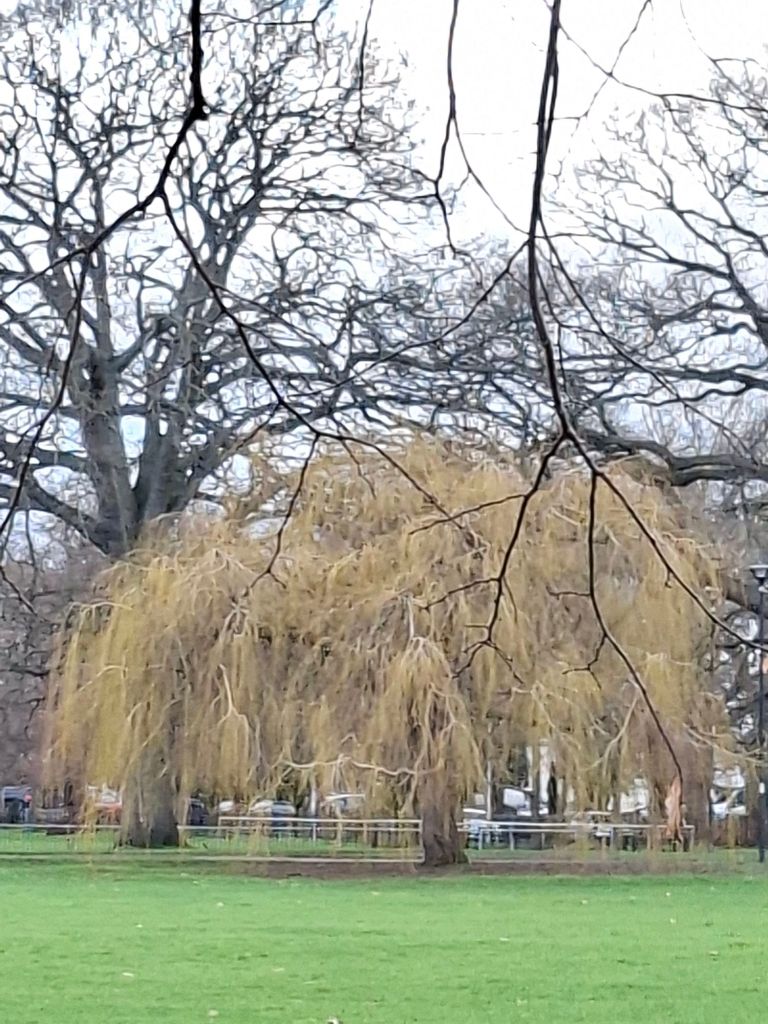
Then, looking around me, I find a contrast between the ground – active, emergent, blooming – and the trees, with their skeletal branches and latent potential. The exceptions are the willows, already moving towards spring.
I reflect on my different states of attention. If I walk briskly through the park, the flowers in particular are easy to miss. They are small and not immediately arresting. To appreciate them, I have to decide to stop and look, emptying my mind of other concerns. Then I can become truly present to the world in front of me, a living world that wants to survive and thrive. Contemplating these flowers, I feel a strong sense of kinship and belonging. The same world is their home and mine: I feel grateful for being born into it. May the abundance of our world be protected and preserved in the days and years ahead.
The year has moved on from its midwinter moment. I am just beginning to feel the pull of Imbolc (Candlemas in the Christian year). This feast marks the returning light and early signs of spring. I recently saw a local picture showing a newborn lamb.
In the Gaelic traditions Imbolc/Candlemas (1 February) is dedicated to Brigid/Bride. The lines below are from the Scottish Highlands and Islands. They seek protection and are not specifially seasonal.
“The genealogy of the holy maiden Bride
Radiant flame of gold, noble foster- mother of Christ.
Bride the daughter of Dugall the brown,
Son of Aodh, son of Art, son of Conn,
Son of Crearar, son of Cis, son of Carmac, son of Carruin.
Every day and every night
That I say the genealogy of Bride,
I shall not be killed, I shall not be harried,
I shall not be put in a cell, I shall not be wounded,
Neither shall Christ leave me in forgetfulness.
No fire, nor sun, nor moon shall burn me,
No lake, no water nor sea shall drown me,
No arrow of fay nor dart of fairy shall wound me,
And I under the protection of my Holy Mary,
And my gentle foster-mother is my beloved Bride.”
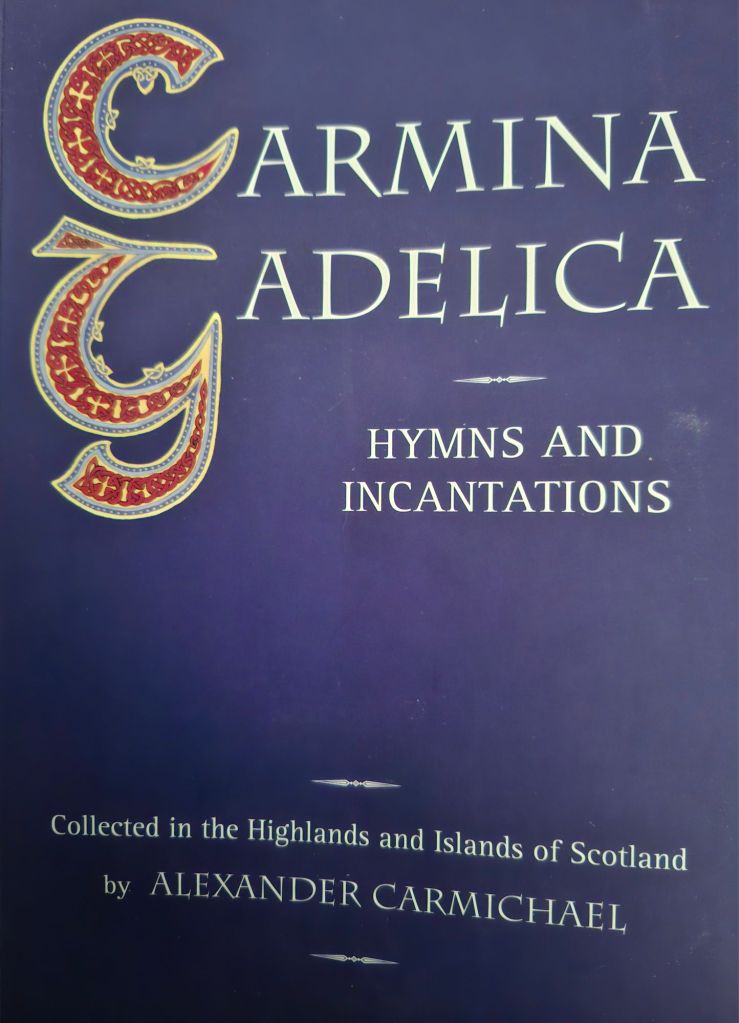
Carmina Gadelica: Hymns and Incantations collected by Alexander Carmichael. 1994 edition by Floris Books, Edinburgh, edited by C. J Moore.
The work is an anthology of poems and prayers from the Gaelic oral tradition in Scotland. They come from all over the Scottish Highlands and Islands. Alexander Carmichael compiled the collection in the second half of the nineteenth century, thereby creating a lasting record of a culture and way of life which has now largely disappeared.
Yesterday, 5 January, I walked in Hillfield Gardens, Gloucester, in the early afternoon. Overall it was bright and sunny, despite being cold. But in shady spaces there were residues of frost.
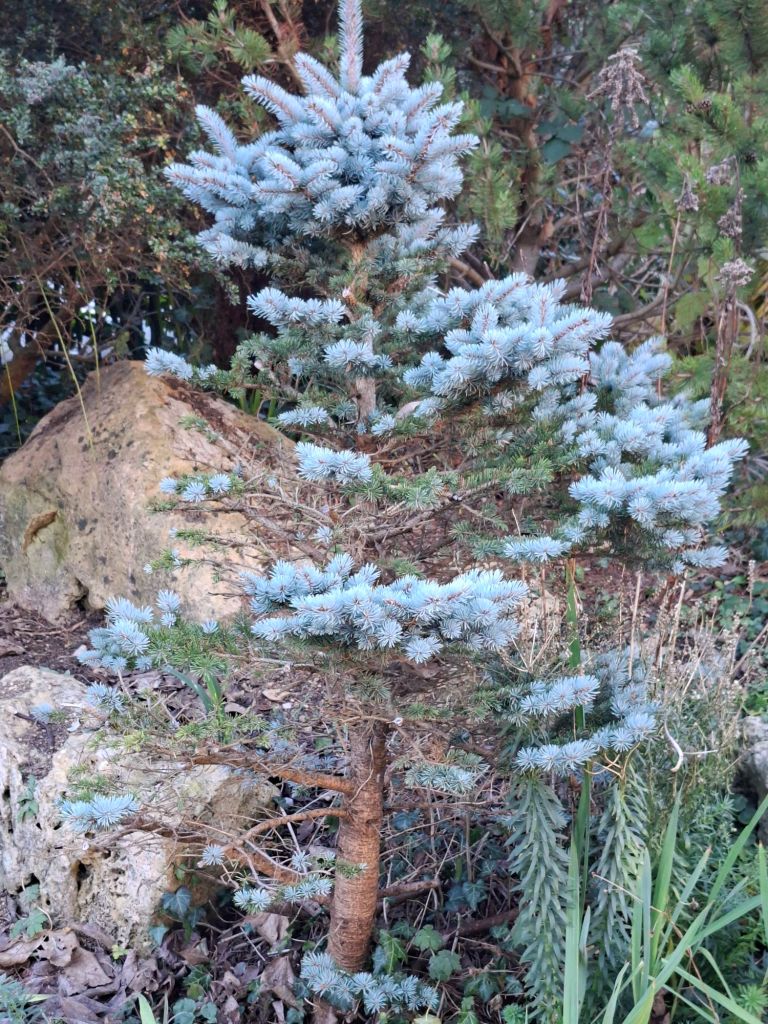
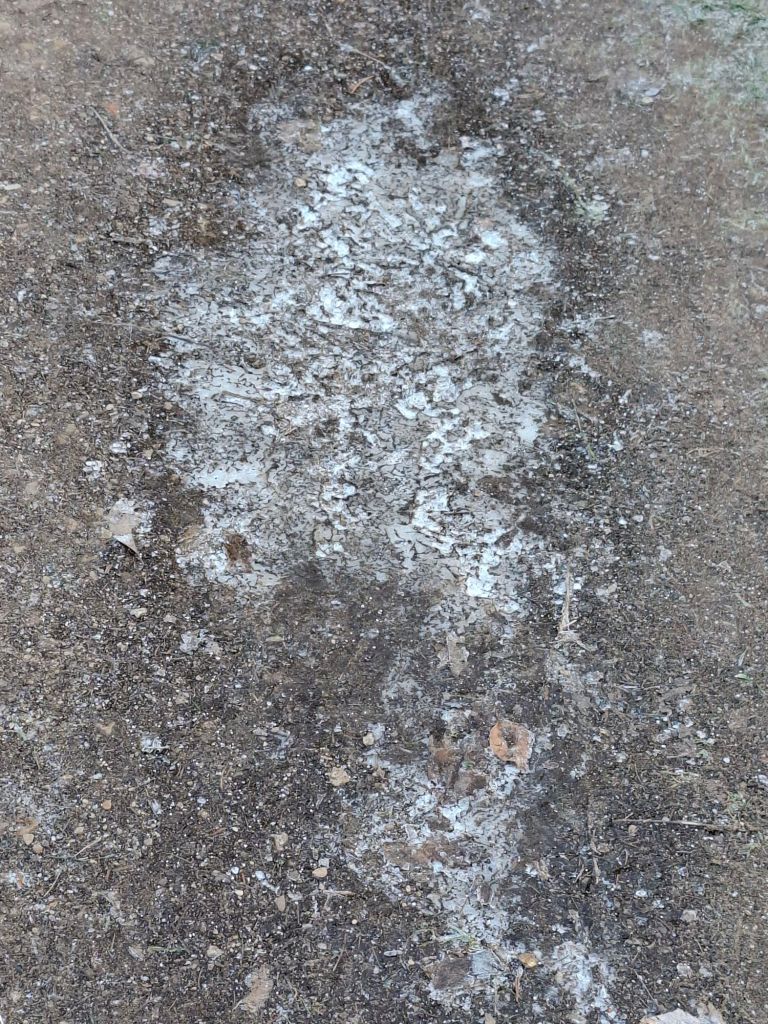
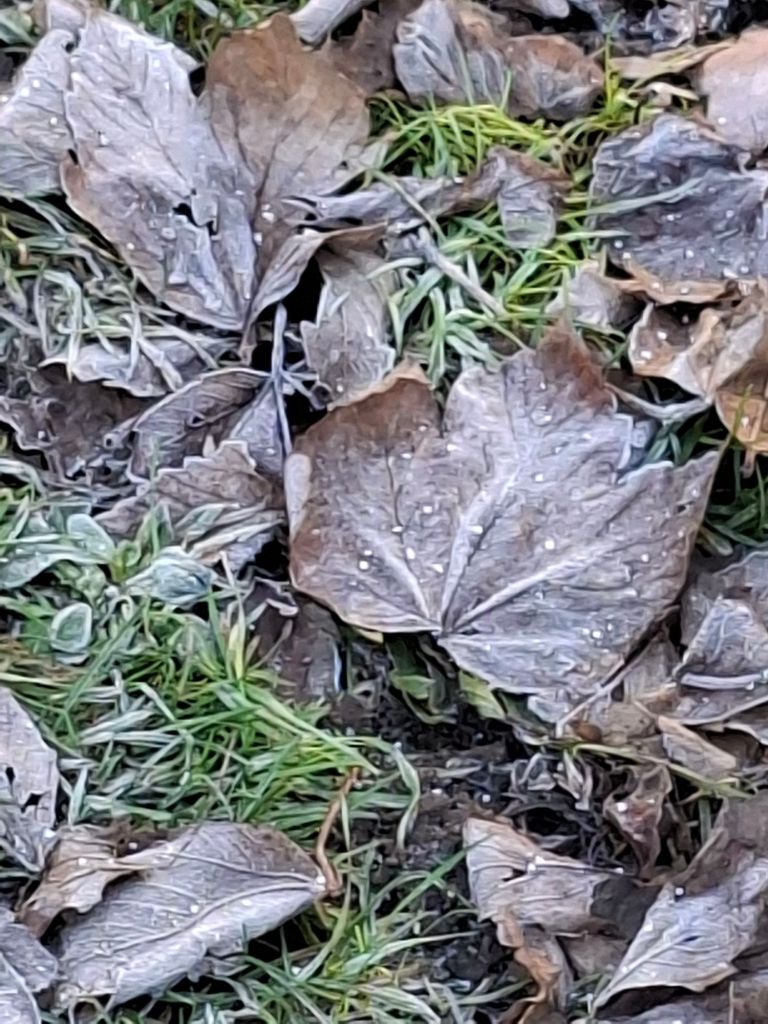
I noticed how they changed the look and feel of these spaces for me. They became quietly exotic, as if differently blessed than the green grass in the sunlit areas. A light dusting was enough to make a difference. The three pictures below show the effects of the frost’s magic dust on a small tree, an old puddle on the path and fallen leaves on grass. All very ordinary. But the touch of frost had made them special to me in that moment. They held my attention, and enriched my day. It was an instance of re-enchantment.
I have lived in Gloucester since January 2022. Specific locations in the city affect me in different ways.
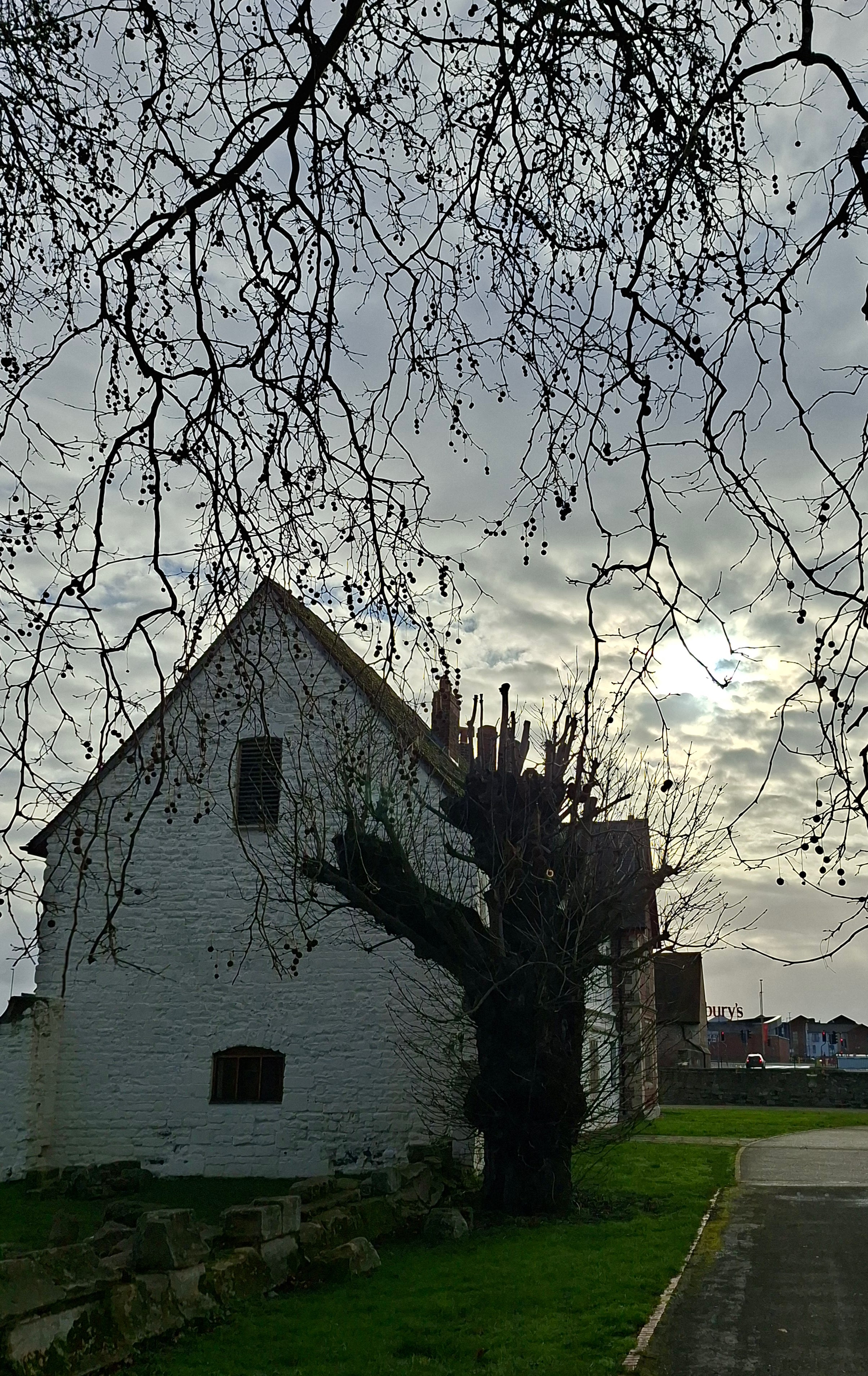
The physic garden at Llanthony Secunda Priory is one of them. It feels both open and tranquil. Earth and sky are strongly present and jointly nurturing. It is a good space for unpressured reflection.
I was in the garden yesterday afternoon, feeling my way into 2026. It was a bright moment in the day, about an hour before the still early sunset. It was cold but not freezing. I was feeling good in myself. I wondered how my life with Elaine will unfold now that we are both a little more mobile. I reflected on the dance of loving and being loved.
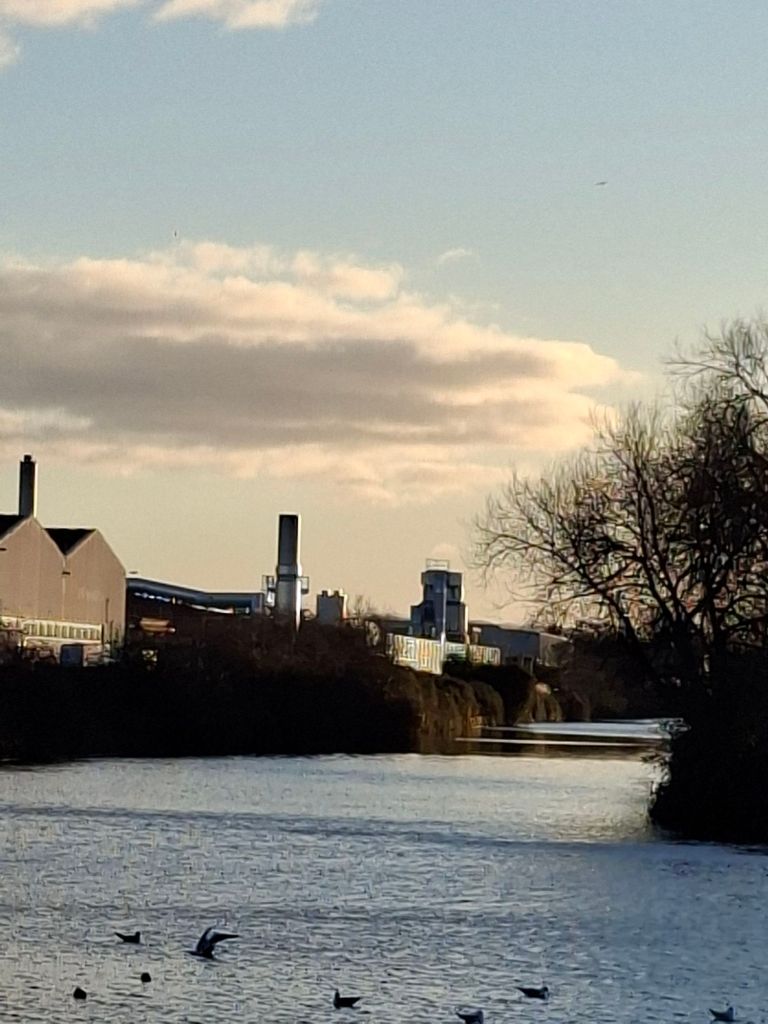
As I left the garden, I acknowledged my fears about the wider world. I walked to another favourite place, very close to Llanthony, where the Gloucester canal begins its journey out of the city. There is irrepressible bird life in the foreground and a (to me) liberating expanse of water beyond. My picture doesn’t tell me what’s around the corner and I am reminded to live with unknowing. I didn’t walk any further out on this occasion.
Returning home, I learned the news from Venezuela – in particular the kidnapping, as I would name it, of the President. I fear this may become yet another running sore in the life of the world. Modern Druidry, my spiritual anchor, has a strong commitment to justice and peace, where each is understood as compromised by the absence of the other.
Druidry isn’t an ‘above the battle’ path. Whilst not mandating any specific partisanship, this path does assert political values and points to a willingness to engage. So, in 2026, I’m asking myself more specifically where to put my now somewhat limited energies, and how justice and peace work meshes with my contemplative inquiry. Indeed, this is where my inquiry has now arrived.
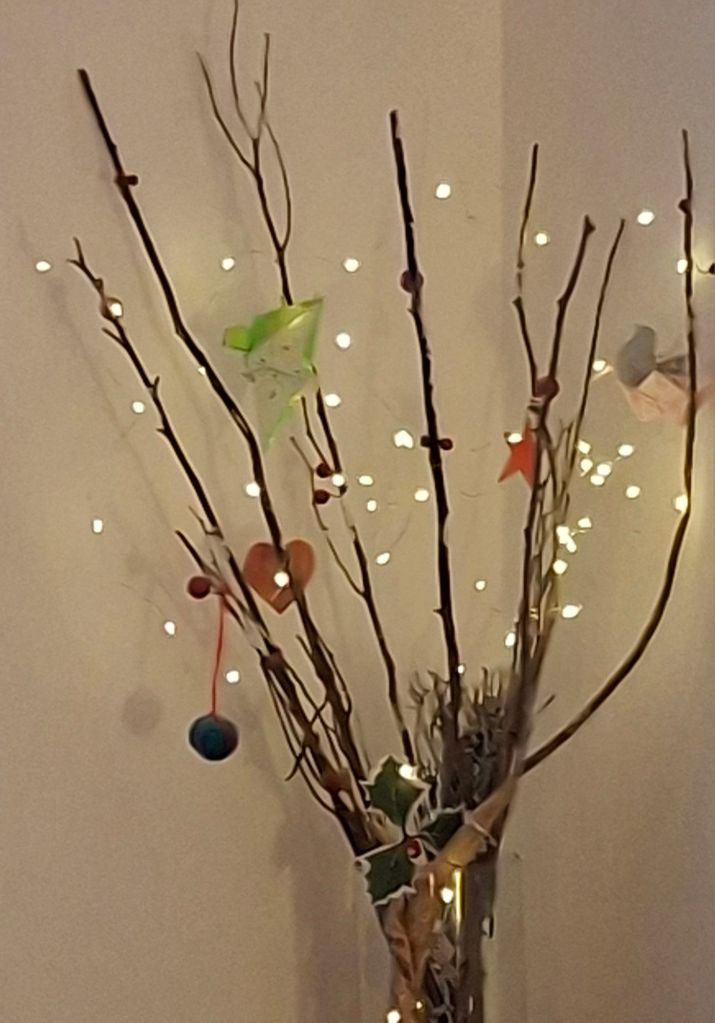
Monday 29th December. It is a normal working day here, in this period between the Christmas holiday and the new year. It is still dark outside, at 6.30 am, and likely to remain grey after sunrise at 8.15. Indoors, our minimalist decorations still proclaim a festive season. For us, this lasts from the Winter Solstice on 21 December until the Christian Epiphany on 6 January.
I’ve been experiencing an energy of latency throughout this period. I live in a place of winter gestation. In the natural world, birth doesn’t come quite yet. In this quiet in-between moment of a conceivably nondescript day, I can’t see 2026. I do not discern its likely shape or character.
That’s OK. I find that I don’t do want to strain at foreknowledge or resort to divination. A day-at-a-time approach, being alert and ready for anything, seems best. I know I want to be more open to the pleasure in simple things. I want to look for spontaneous festive moments that don’t depend on custom or calendar. They are part of my resilience. They make it easier for me, alone or with others, to face the challenges that come. In good heart, I am bracing for 2026.
Reblog of a post by Jeremy Williams of The Earthbound Report. From my perspective, the book offers another valuable insight on the (among other evils) anti-contemplative tendencies prominent on the Internet.
There is rain on the window pane, and bleakness beyond: the closing in of early winter, with more closing in to come. It is not yet the festive season.
But the geraniums are heralds of change. Leaves may turn brown. Petals may be shed. But the insistent continuity of these flowers is a bright blessing in a grey moment, a vivid affirmation of the life force itself.
Contemplating these geraniums marks for me a distinctive point in the wheel of time, and the timeless Now that holds it.
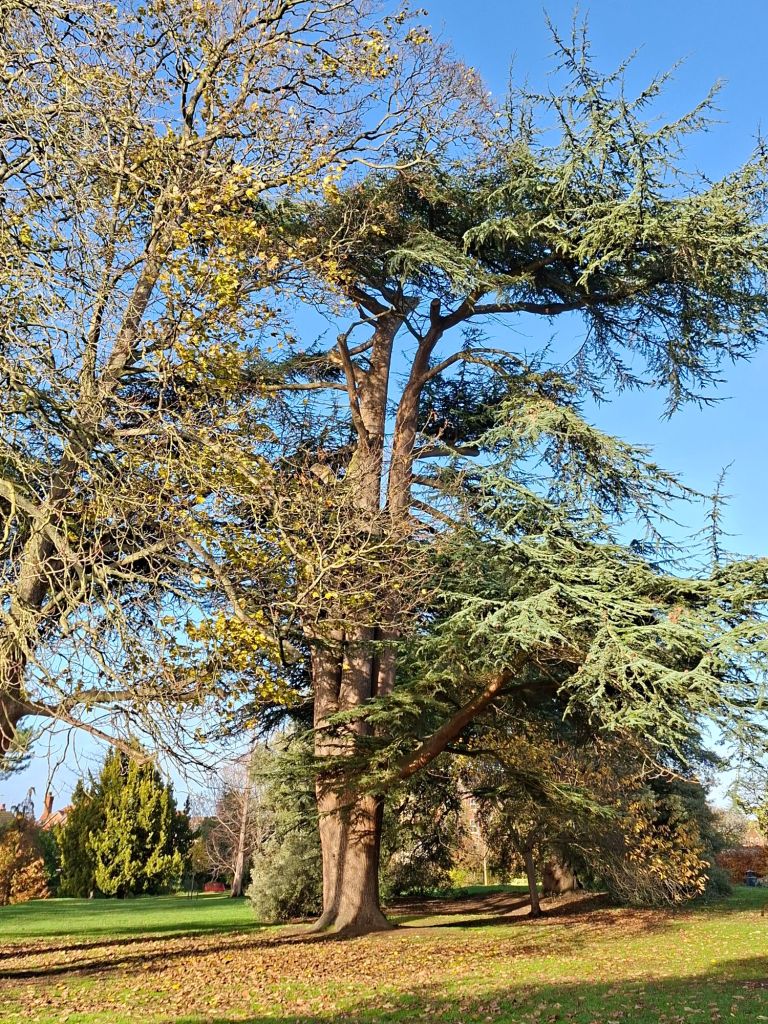
A Scots pine in Hillfield Gardens (1), 28 November, 10.32 am. It stands out both as a tall tree and an evergreen. It asks me to look up and pay attention to it, and beyond it, almost losing sight of its deciduous neighbour. For me, this representative of the ‘eternal green’ has a commanding presence.
The Scots pine is one of the oldest trees native to Britain. It is also one of the trees associated with ogham lore (2), where the Scots pine is linked to the wisdom of overview. According to The Green Man Tree Oracle, ancient shamans of many traditions would literally climb to the top of a central tent pole or tree and “from this vantage point they could see clearly into the spirits’ inner world and come back with knowledge for the tribe or family they served” (2).
For me as for many people, the end of the calendar year is a time for reflection and taking stock. New year resolutions are a possible modern version of this process, but mine never really worked. They were overprescriptive and a way of setting myself up to fail.
‘Overview’ asks for a less driven and more contemplative approach, one more connected with Spirit. This is a good reminder as I start to wonder about how I am going to navigate 2026: divining what my contributions and satisfactions might look like as the Wheel continues to turn.


 Contemplative Inquiry