Contemplative Inquiry

This blog is about contemplative inquiry

Tag: Buddhism

THOUGHT FOR THE DAY: STEPHEN BATCHELOR

Stephen Batchelor offers some thoughts on immediate experience and concepts of mind, soul and reincarnation.


“I had noticed that when listening to the song of a bird, it was impossible to differentiate the cooing of the wood pigeon, on the one hand, and the hearing of it, on the other.  Conceptually the two were different, but, in immediate experience, I could not have one without the other, I could not draw a line between them, I could not say where the bird song stopped and my hearing of it began.  There was just a single, primary, undifferentiated me-hearing-the-birdsong.

“Being-in-the-world means that I am inextricably linked into the fabric of this fluid, indivisible, and contingent reality I share with others.  There is no room for a disembodied mind or soul, however subtle, to float free of this condition, to contemplate it from a hypothetical Archimedean point outside.  Without such a mind or soul, it is hard to conceive of anything that will go into another life once this one comes to an end”.

Stephen Batchelor, 2011, Confession of a Buddhist atheist New York: Spiegel & Grau

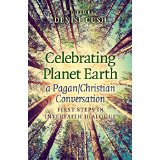
BOOK REVIEW: CELEBRATING PLANET EARTH A PAGAN/CHRISTIAN CONVERSATION

61CwdX9mE3L__AA160_Highly recommended and available for pre-order via Amazon.  This blog is an enthusiastic early alert concerning Celebrating Planet Earth, edited by Denise Cush The book comes out of a weekend ‘conversation’ held at the Ammerdown Centre near Radstock, Somerset, England, from 31 January-2 February. Originally devised as a Druid/Christian event, it was widened to include other Pagans and was intended to generate “dialogue, reconciliation and renewal”. The hope was that the participants could explore their prejudices and preconceptions, learn more about each other, and find common ground in ‘Celebrating Planet Earth’, as the event was called. The book’s contributors were all involved in the conversation.

The book is aimed at Pagans and Christians interested in making connections; academics and undergraduate students in Study of Religions taking courses on inter-faith dialogue, Paganism and Christianity; and anyone with an interest in inter-faith activities. Some of the contributors are academics in the field, but as well as academic input, there is a practical emphasis on personal spirituality and ritual practice.

I’m part of the core audience. Whereas I experience the spiritual path as ultimately beyond names and forms, I stand in the world as a Pagan Druid. I had a Christian upbringing and in recent years I have learned from the Buddhist tradition, as well as Christian-based movements such as Sophian Gnosticism and the Ceile De. All of these have supported me in my own practice and in my personal concern with developing a stronger contemplative current within Druidry. So I’m at ease with what Philip Carr-Gomm, Chosen Chief of the Order of Bards, Ovates and Druids (OBOD), calls “fusion paths” in his chapter in this book.

From where I stand the ‘Celebrating Planet Earth’ more than meets its aims. It’s a feast. I felt that each contributor had thoroughly earned their place in it. It is divided into three parts, before moving on to editor’s reflections and conclusions. I want to say something about one chapter that spoke to me particularly strongly from each of the parts, as the best way in a short space of honouring the collection as a whole.

The first part is about ‘Addressing Our Fears and Prejudices’ and for this I pick out Graham Harvey’s chapter, ‘Fears and prejudices: a Pagan view’. For me, he has a very helpful analysis of what the task is and how to accomplish it. He makes it clear that “not everyone thinks alike” or should be expected to and that diversity has room for healthy opposition – properly handled, this can be a real gift. He makes the subtle point that the negotiation of difference is not just about fear and prejudice. It is also about avoiding the presupposition that “others are like us but not quite … that other people mean what we would mean when we say or do things”. Hence we need a refined quality of listening to avoid “talking past each other”.  On the question of fear and prejudice specifically, he suggests that the two things to remember are that we should indeed “resist and challenge the small visions and petty fantasies that are imposed on others” and that “when we talk about what people do, rather than what systems are alleged to do, we will keep diversity in clear view”. He usefully writes down polarised lists of what ‘Christians’ and ‘Pagans’ are contrastingly stereotyped as standing for – and invites us to make a reality check on the items in the list. It’s a very useful way of opening the reader up to the actual experiences of individuals and groups in later chapters.

The second part is about ‘Possibilities for Co-operation’ and for this I pick out Tess Ward’s chapter, ‘Better together: transformation through encounter’. Early in her life as an ordained priest, Tess Ward went into her own version of Dante’s ‘dark wood’, a wilderness in which she needed to die to one life so as to be born into another. She lost her existing theological frameworks and says of that time: “in that wilderness, what sustained me was not theology, but poetry, silence and nature”. Without leaving her Church, she found pointers in Buddhist ideas (Anthony Gormley, Pema Chodron), Earth paths and feminist spirituality. She quotes Carol Christ as saying: “awakening suggests that the self needs to notice what is already there … the ability to know is within the self, once the sleeping draft is refused … for women, awakening is not so much a giving up as a gaining … a grounding of selfhood … rather than a surrender of self”. She also quotes Kenneth White’s poem ‘Labrador’ – “I was loathe to name it too soon – simply content to use my senses – feeling my way – step by step – into the new reality”. As, renewed, she moves back into the world and her role, she knows that interventions in the world only have value when they come from personal experience. She shares with Matthew Fox the view that the result of such a crisis is not to abandon one’s own tradition “but to demand more of it”. She now leads celebrations of the Celtic Wheel of the Year as an affirmation of her transmutation of faith within a Christian framework. Partly this is an enhanced appreciation of being grounded in the natural world and its cycles. Partly it is an appreciation of the place that resources outside her traditional faith have had in deepening her journey.

The third part is about ‘The role of ritual practice, myth, music and for poetry in each tradition and in inter-faith encounter’. For this I pick out Alison Eve-Cudby’s chapter: ‘Woven together: can Christians and Pagans engage in shared ritual?’ The author has a leading role in the Ancient Arden Forest Church in a burgeoning movement of Forest Churches. She describes this movement as “a small and growing number of Christians responding to the Call of the Earth”. Ancient Arden has an emphasis on ritual and her formal answer to the question she poses is a carefully contextualised ‘yes’. She says: “if we take earth celebration, care and connection as our basis for doing ritual together, to contribute towards re-enchanting the land in this time of ecological crisis then I think that shared ritual is possible”. She offers a fresh and energised discussion of ritual and its purpose. She describes ritual as an embodied event, and a process of framing in which dramaturgy, rather than theology, is the organising principle. Whereas logocentric approaches assume that the symbolic system expressed in ritual must be coherent, performance as an unfolding event lays out symbols in a way that reveals their inconsistencies and contradictions. The work therefore involves negotiating and holding these within the ritual container. We fashion rituals that enable liveable, regenerated worlds. Ritual is a transformative process, “the pattern of actions is designed to synchronise the awareness of the different participants – human, non-human and other than human”.

The book’s conclusions suggest that meeting itself was of great benefit, and make it clear that the people involved want to continue their work in some way (topic based subgroups are mentioned). I would simply add that this book is a gift to us all, and that I am grateful for it.

POEM: PASSING SHAOLIN HERMITAGE

PASSING SHAOLIN HERMITAGE – TO FRIENDS IN THE CAPITAL

I reined in my horse below a pine ridge

and hiked to the lookout on top

the trail appeared impassable as I started out

but once I arrived I wished it were longer

from the summit I heard a chorus of winds

in the woods I bathed in a secluded stream

the sound of a bell roused me on the Way

the evening chime cleared the clouds and mist

though my visit was brief

I finally saw what caused my troubles

but when I thought about building a hut

I knew it would have to wait for old age.


From In Such Hard Times: the Poetry of Wei Ying-Wu translated by Red Pine, Port Townsend: WA, USA: Copper Canyon Press, 2009

Wei Ying-wu was a poet of the later 8th century CE, as we count time. It was a period when the later-remembered-as-glorious T’ang dynasty had begun to unravel. Translator Red Pine says that “Wei lived his life wondering what went wrong”, giving a melancholy tinge to many of his poems. He was distantly related to the Imperial family, a scholar in both the Buddhist and Confucian traditions who spent many years as a state official without much enjoying it.

This poem was written in 771. (In Britain, that’s 22 years before the Viking sack of the Christian monastery at Lindisfarne.) Shaolin Temple was built in the fifth century for a monk from India in a high mountain basin at the foot of Sungshan’s Shaoshih Peak. The trail from the temple to the top went right by the cave where Bodhidharma, the founder of Chan (Japanese Zen) Buddhism spent nine years in meditation.

The chime to which Wei refers was used in Chan monasteries to mark the end of a meditation period. The use of the term ‘the Way’ (Tao) wasn’t confined to Taoists – ‘Tao’ was also used by Confucians, and by Buddhists as a translation of Sanskrit ‘Dharma’. The last two lines of the poem show a tension between Wei’s Buddhist and Confucian trainings – whether to let go of worldly attachments, or whether to stay in his post and “wait for old age” before building his hut.

MIND AND LIFE INSTITUTE IN EUROPE

In a previous post on https://contemplativeinquiry.wordpress.com/2015/1/02 I wrote about the Mind and Life Institute which can be found on http://www.mindandlife.org/. Founded in 1987 it was largely the inspiration of the current Dalai Lama. Its aim is to bring together contemplative practitioners and the academic community to investigate contemplative states and their value. Although it has a largely Buddhist orientation, it is not confined to Buddhists.

This post is to draw attention to a Mind and Life European Summer Research Institute on Contemplative Practice, Science and Society from 28 August to 3 September 2015 at the Abtei Fraueninsel Chiemsee, Germany.

This will explore the influence of contemplative practices on mind, behaviour, brain function and health, but are also fostering the development of new fields of research known as Contemplative Neuroscience, Contemplative Clinical Science, Contemplative Studies, and Contemplative Education (see www.mindandlife-europe.org for more details, or check out www.mindandlife.org if you wish to learn more about previous SRIs in the USA).


MIND AND LIFE INSTITUTE: INQUIRING INTO FEAR AND TRUST IN SELF AND SOCIETY

The Mind and Life Institute can be found on http://www.mindandlife.org/

Founded in 1987 it was largely the inspiration of the current Dalai Lama. Its aim is to bring together contemplative practitioners and the academic community to investigate contemplative states and their value. Although it has a largely Buddhist orientation, it is not confined to Buddhists.

One of their current offerings is the 2015 Mind and Life Summer Research Institute (MLSRI) to be held from 13-19 June 2015 at the Garrison Institute, Garrison NY. The topic is ‘Fear and Trust in Self and Society’. (For anyone interested, the application deadline is 18 February,) The Institute says:

“This is is a week-long program to advance collaborative research among scientists, contemplative scholars, other humanities scholars, and contemplative practitioners, based on a process of inquiry and dialogue. With this unique program, we are not only nurturing a new generation of scientists interested in exploring the influence of contemplative practice and meditation on the mind, but are also fostering the development of new fields of research collectively referred to as the ‘contemplative sciences.’ This year’s institute will be held June 13-19, 2015 and will be located at the Garrison Institute in Garrison, New York, 50 miles north of New York City in the Hudson River Valley.

“The 2015 MLSRI will be devoted to examining fear, trust, and social relationships. Presentations and discussions will draw on research in both the sciences and the humanities, including neuroscience, psychology, anthropology, religion, and contemplative studies. Over the week, we will explore biological and experiential aspects of fear, its influence on our cognition and emotion, and its expression in both healthy states and clinical disorders. Critically, we’ll also be examining the role of trust and interpersonal connection as a counterpoint to fear, so we will also address the protective functions of secure attachment and compassion. Finally, we will ask how contemplative practices might be used to help us work with fear and cultivate social bonds.

“We encourage interested scholars to apply as either a Research Fellow or Senior Investigator:

  • Research Fellow candidates include students in contemplative traditions, as well as undergraduate students, graduate students, and postdoctoral fellows in relevant academic fields.
  • Senior Investigator candidates are established researchers, faculty, teachers, scholars, or practitioners in a relevant field.

“We are now accepting applications online. Applications close on February 18, and applicants will be notified of selection by April 3. There is a $45 application fee. The all-inclusive program cost is $525 for Research Fellows and $775 for Senior Investigators. For more information, please visit our event website: MLSRI 2015.”

Although I sometimes worry about topics like this becoming over-academic, I like the way in which contemplative inquiry is being given increasing attention through initiatives such as  the Mind and Life Institute.

CONSIDERING KARMA

I’ve been wondering about the traditional doctrine of karma and rebirth, and what place it now has. Both Paganism and the New Age inherit a nineteenth century Theosophical version of this doctrine, positing a personal soul journey, a movement through time in successive incarnations, depending on track record and learning needs. It is somewhat different from the Buddhist view (and also the one attributed by classical writers to the ancient Druids) but my sense is that it still has considerable authority. It was treated as a given by my mentors at the London Centre of Transpersonal Psychology, when I studied with them in the late 80s and early 90s.

But it’s never been universal and as part of my own inquiry I present two other perspectives from within the Asian traditions themselves. One is from the late Tantric Master Osho and the other from the Buddhist scholar Stephen Batchelor. I particularly like Steven Batchelor’s statement that “shifting concern away from a future life and back to the present … demands an ethics of empathy rather than a metaphysics of fear and hope.” This to him is more important than the truth or otherwise of the doctrine itself. However I start with Osho, in an iconoclastic mood.

OSHO

“You live encapsulated inside your buffers, philosophies, consolations. Life ends one day – you can console yourself. … You can start believing in the theory of reincarnation: that you will be reborn and the soul is eternal … Or you can think that it is only the body that dies. And what is a body? Nothing but bones, marrow, flesh, blood; it is nothing of worth, it is useless, a dirty bag – so let it die. But your pure soul is going to be forever and ever – a buffer is created. These buffers don’t allow you to see what reality is; they are the way to console yourself.

“Yes. There is misery, but one can protect oneself from misery by creating conceptions, rationalizations. … For example in the East … they say … if you are miserable, you must have done something wrong in the previous life. Something has gone wrong in your past, you have done some wrong karma; hence you are miserable. Now things are explained, so no one has to suffer. … The whole philosophy of karma is that you have sown already, now you are reaping; you have done, so it is a natural consequence. It consoles you. So nobody is doing anything unjust to you. God is not unjust, fate is not unjust, the world is not unjust, the society is not unjust, it is your own karma.

So what to do? One has to pass through it, and one has to keep one’s equanimity, one’s equilibrium. And don’t do such a thing again, otherwise in the next life you will suffer again. So that is the only thing that can be done: you cannot change the past, but you can still manage the future … a beautiful consolation”.

Osho (1990) Tao: the pathless path New York: St. Martin’s Griffin


STEPHEN BATCHELOR

“It is often claimed that you cannot be a Buddhist if you do not accept the doctrine of rebirth. From a traditional point of view, it is indeed problematic to suspend belief in the idea of rebirth, since many basic notions then have to be rethought. But if we follow the Buddha’s injunction not to accept things blindly, then orthodoxy should not stand in the way of forming an understanding.

“A difficulty that has beset Buddhism from the beginning is the question of what it is to be reborn. Religions that posit an eternal self distinct from the body-mind complex escape this dilemma – the body and mind may die but the self continues. A central Buddhist idea, however, is that no such intrinsic self can be found through analysis or realized in meditation. Such a deep-seated sense of personal identity is a fiction, a tragic habit that lies at the root of craving and anguish. How do we square this with rebirth, which necessarily entails the existence of something that not only survives the death of the body and brain but somehow traverses the space between a corpse and a fertilized ovum?

“Different Buddhist schools have come up with different answers to this question, which in itself suggests their views are based on speculation. Some claim that the force of habit-driven craving immediately reappears in another form of life; others posit various kinds of non-physically based mental consciousness that may spend several weeks before locating a suitable womb.

“The idea of rebirth is meaningful in religious Buddhism only insofar as it provides a vehicle for the key Indian metaphysical doctrine of actions and their results known as ‘karma’. While the Buddha accepted the idea of karma as he accepted the idea of rebirth, when questioned on the issue he tended to emphasize its psychological rather than its cosmological implications. “Karma”, he often said, “is intention” i.e. a movement of the mind that occurs each time we think, speak or act. By being mindful of the process, we come to understand how intentions lead to habitual patterns of behaviour, which in turn affects the quality of our experience. In contrast to the view often taught by religious Buddhists, he denied that karma alone was sufficient to explain the origin of individual experience.

“Where does this leave us? It may seem that there are two options: either to believe in rebirth or not. But there is a third alternative: to acknowledge in all honesty that I do not know. … Regardless of what we believe, our actions will reverberate beyond our deaths. Irrespective of our personal survival, the legacy of our thoughts, words and deeds will continue through the impressions we leave behind in the lives of those we have influenced or touched in any way.

“If our actions in the world are to stem from what is central in life, they must be unclouded by either dogma or prevarication. Agnosticism is no excuse for indecision. If anything, it is a catalyst for action; for in shifting concern away from a future life and back to the present, it demands an ethics of empathy rather than a metaphysics of fear and hope.”

Stephen Batchelor (1997) Buddhism without beliefs: a contemporary guide to awakening London: Bloomsbury



NATURE LANGUAGE

Philip Carr-Gomm wrote an essay, Deep Peace of the Quiet Earth: the Nature Mysticism of Druidry, as his foreword to Contemplative Druidry (1). Emma Restall Orr talked about her own nature mysticism in a recent radio interview, published on Joanna Vander Hoeven’s Down the Forest Path blog (2). Last year Thich Nhat Hanh, the Vietnamese Buddhist scholar and teacher who leads the ‘Community of Interbeing’ (and is now perhaps near the end of his journey) wrote a deceptively simple-seeming work called Love Letter to the Earth (3), with chapter headings like: We are the Earth, Practices for Falling in Love with the Earth and Ten Love Letters to the Earth.

These prompts have led me to reflect more deeply on how I use Nature language and what, specifically, I mean by it. Thich Nhat Hanh’s starting point (3) is a helpful one: “at this very moment the Earth is above you, below you, all around you, and even inside you. The Earth is everywhere. … The Earth is not just the environment we live in. We are the Earth and we are always carrying her within us. Realizing this, we can see that the Earth is truly alive … we can begin to transform our relationship to the Earth.”  The overall point, familiar enough yet made here with fresh elegance and clarity, is one with which Druids and Buddhists alike can find a ready resonance. But its main effect on me this time round was to get me wondering about the language of Nature.

What do I understand by Nature? For me, the key word is Nature rather than Earth. The Earth is a subset of Nature, larger than you and me who are indeed contained within it, but still a subset. In my understanding, Nature is simply what there is. And ‘what there is’ seems to us, in this culture at this time, to have exploded out of a remarkably fertile emptiness, into the 3D and time-bound reality that our perceptions somewhat mesh with, and of course a great deal more outside our normal range and beyond our range entirely. We humans are wholly natural with all our known and realised potentials – and others too that are but dimly intuited and largely untapped.

We cannot individually encompass the whole of Nature. We must choose, at whatever levels of relative awareness, where to put our efforts and attention. Thich Nhat Hanh is pretty clear about his: he has a strong intent, which involves a mutually sustaining balance of contemplation and action. My key ‘contemplative’ choice, not feeling very accomplished, is to enter more fully into the Heart identity I spoke in my Heart Language post. This seems like a good thing for me, and likely to improve my relationships and connections, particularly with my local world – the Earth and its inhabitants. I could call it extending the human side of human nature, a natural thing for a human to do.

(1) Nichol, James (2014) Contemplative Druidry: People, Practice and Potential Amazon CreateSpace and Kindle Direct Publishing

(2) http://downtheforestpath.wordpress.com/2014/11/07/interview-with-emma-restall-orr/

(3) Thich Nhat Hanh (2013) Love Letter to the Earth Berkeley, California: Parallax Press

DRUID CONTEMPLATION AS PAGAN RELIGION?

Up until recently I’ve practised Druidry as a ‘spiritual path’ rather than religion, and I’ve not strongly identified as Pagan. On launching my contemplative inquiry at the end of 2011, I assumed that this stance would be reinforced through the adoption of practices more widely associated with other spiritual families.

Now I’m taking stock. I begin to see my contemplative work as a Pagan religious practice. Three developments in the past year have made a difference. One is the consolidation of the Gloucestershire contemplative group within a regular and more committed meeting cycle. The second is the work of gathering contributions for the ‘Contemplative Druidry’ book due to appear later this year, which I will talk about in later posts. The third is my personal contemplative practice, my main focus in this one. Overall I’m finding a specific Pagan Druid note and seeing it mirrored in others.

Practices change their meaning according to the tradition in which they are located. Meaning-making is as much cultural as personal, though cultures – and particularly sub-cultures – are also influenced by persons.  When a group of contemplative Christians adopted a version of vipassana (insight or mindfulness) meditation from Theravadin Buddhism in the 1970’s, they looked deeply into their own tradition and called the practice ‘centering prayer’.  This was not just a re-branding, but a re-framing. Christian contemplative prayer is a “blind intent stretching to God” according to the English 14th Century ‘Cloud of Unknowing’ (1), a favourite text of centering prayer practitioners. It is a devotional theism, a focused synthesis of love and will. By contrast the Insight Meditation Society, from whom Father Thomas Keating got the practice, talks about “fundamental techniques for sharpening your awareness and releasing painful mental habits” (2), and thereby loosening the hold of pervasive underlying unease (dukka).

The procedure is much the same for both traditions– silent sitting whilst the restless surface mind is asked to attend to the breath and so undergoes an attentional training. But the larger aims are not the same. Christian contemplatives indeed sharpen awareness and release painful habits on the way to more directly encountering the Divine: they call it divine therapy. Buddhist meditators may enter the state of ‘bodhicitta’, the awakened heart – a space that becomes available when enough of this work has been done. Yet at a more fundamental level one tradition holds Deity as central and the other is not concerned with it. Theravadins are strict about this. They do not share the view of ‘Buddha nature’ or ‘original face’ found in Mahayana and Tantric traditions.

So what about me working specifically as a Druid, and not just someone with a background in Druidry who also meditates?  I prefer to talk of meditation rather than prayer, though I like the sense of dedicating the meditation (and myself) as an offering. In my Pagan Druid universe, where logos and mythos work together, the offering is to the Goddess, as the generativity, energy and consciousness of the cosmos.

I like ‘centering’ as an idea – establishing a centre, drawing myself into the still point, almost a vanishing point, at the centre, and radiating out again into 3D reality, bringing some of the stillness with me. For me the still point at the centre is within the heart, making a link to heart awakening (bodhicitta) and heart wisdom, a term used by some champions of centering prayer (3). The heart sits between the belly and sexual/sacral centres below, and the head, the place of reflexivity and self-awareness, above. Heart wisdom draws both into itself, validating and balancing them. For it is a wisdom of organic life in nature, as lived by a human – the life of extended sensory perception and reflective consciousness, always responsively in relationship of some kind, both without and within. In doing this, drawing energy and attention to the centre, heart wisdom contradicts archaic transcendentalist notions of a stairway to heaven.

I think that’s enough to give my practice a distinctive Pagan Druid note, though it’s still a work in progress. I share the work of attentional training, sharpening awareness and releasing painful habits that gets done, within the process, whoever does it. But it’s in the context of a specific and developing view, or meta-narrative.

That being the case, why not call it part of a religion? The core meaning of religion, like yoga, is about being tied or yoked to a discipline: connection to theistic beliefs is secondary. Religion has a tougher and more intentional ring than ‘spirituality’, and now sounds appropriate to me.  So I now call my contemplative practices – solo meditation included – both religious and Pagan. I will continue to learn from any source I value. But my personal inquiry is focused on deepening within my chosen path – deepening in experience and deepening in understanding.

1: Anonymous (late 14th century) A book of contemplation which is called the Cloud of Unknowing, in the which a soul is oned with God. (Edited from the British Museum MS. Harl. 674 with an introduction by Evelyn Underhill) London: John M. Watkins, 1924

2: Salzberg, Sharon & Goldstein, Joseph (1996) Insight Meditation: an in-depth correspondence course Boulder, CO: Sounds True

3: Bourgeault, Cynthia (2011) The Wisdom Jesus: transforming heart and mind – a new perspective on Christ and his message Boston & London: Shambhala

CONTEMPLATION AND SHAMANISM

The early Taoist classic Inward Training (1) says:

 By concentrating your vital breath as if numinous, the myriad things will all be contained within you.

The word translated as ‘numinous’ is ‘shen’. And it shows the contemplative Taoist’s debt to China’s long tradition of shamanism. For shen can also refer to the external spirits or numina of mountains, rivers or ancestors, “the powers that descended into early Chinese shamans and shamanesses during their ritualized trances”.

Harold Roth (the translator of Inward Training into English) also points out that this text does not use a word for ‘emptiness’. Instead, it uses a metaphor – ‘cleaning out the lodging place of the numinous’. This is suggestive of either an external temple being cleansed in preparation for the descent of a divinity or the purification of a shaman in preparation for serving as a medium. Roth quotes A. C. Graham (2) as suggesting “that the meditation practised privately and recommended to rulers as an Arcanum of government descends directly from the trance of the professional shaman”.

The Indian story is somewhat similar, according to Mircea Eliade (3): most Indian spiritual practice inherits the structure of early shamanistic culture. He reminds us that the shamanic tree has seven, nine or sixteen steps, each symbolising a heaven, and climbing it is the equivalent of ascending the cosmic tree or pillar. Then he goes on to say, “The Brahmanic sacrificer mounts to heaven by ritually climbing a ladder; the Buddha ascends the cosmos by symbolically traversing the seven heavens; the Buddhist yogin, through meditation, realizes an ascent whose nature is completely spiritual. Typologically, all these acts share the same structure: each on its own plane indicates a particular way of transcending the profane world and attaining to the world of the gods, or Being or the Absolute. The one great difference between them and the shamanic experience of ascent to heaven lies in the intensity of the latter: … the shamanic experience includes ecstasy and trance”.

It seems to me that early images of an antlered sitter – on a seal from Mohenjodaro, the ancient city state of India, and on the Gundestrop cauldron (4) – are equally appropriate to vatic trance, walking-between-the-worlds and contemplative meditation. Indeed is perhaps anachronistic to make such distinctions, for we know little about actual practices in their cultures of origin.  What we can say is that contemplative and shamanistic traditions share the same roots and that modern practitioners – like Druids! – may stand to gain from exploring both at the same time.  The Tibetan Bon tradition has adopted this approach for many centuries, as Tenzin Wangal Rinpoche shows when looking as the five elements in Tibetan Shamanism, Tantra and Dzogchen (the contemplative aspect), brought together as a unified developmental system within the Bon path.

References:

 1: Roth, Harold D. (1999) Original Tao: ‘Inward Training’ and the foundations of Taoist mysticism New York, NY: Columbia University Press


PAIDIREAN (PAHJ-URINN) II

I started wearing my Paidirean – the Ceile De prayer beads – for my morning practice on 19 December.  In the Ceile De Order they are used in conjunction with what in this tradition is called the Heart Prayer:

 A Thighearna … Solus an domhain … Chriost mo chridhe … dean trocair oirnn

 Ah hee-earn-ah … Solus on dowain … Chree-ost mo chree … Jaun trok-ir orn

O Lord … Light of the world … Christ my heart … show mercy/compassion/grace

I don’t follow the practice as prescribed, but I notice that I soon started saying this prayer aloud (having listened carefully to the Ceile De CD) when doing walking meditation – initially drawn in by the sound of the old language.  In walking meditation I am mindful to each footfall and so in working the Heart Prayer I have become mindful to each footfall and a syllable of the Heart Prayer as well (except of course when I am not).  As time has gone on I have increased the use of the prayer, sometimes said aloud, sometimes not.  I intersperse this with times of complete silence within as well as without to make the practice more spacious. Likewise in sitting meditation, essentially a plain breath meditation, I have introduced the key phrase “Chriost mo chridhe”, as an intermittent mantra within the practice.  These words in particular anchor in my sense that ‘Christ’ stands for an interior awakening rather than an external or historical being.

Why has this prayer become resonant to me?  I am reminded again of the summer of 2007.  At midsummer I went to Melrose and had the experiences I described in my previous blog post.  On a weekend late in July I was scheduled to go to a conference with my partner Elaine. The plan involved getting from Bristol, where I lived, to Stroud, where she lived.  But we were cut off from each other by floods: roads closed, railway in chaos.  So we both stayed put.  I was following the OBOD Ovate course at the time and decided to have a day of ritual derived from the course followed by a day of reflection and recovery.  The main result of all this, the one image that fully imprinted itself and which I took away, was that of a dove feather falling gently down beside me  It felt initiatic and it gave me my felt sense of connection with Sophia the Holy Wisdom.  It changed the course of my work.  My centre of gravity had shifted and I realised that I had quite a bit of work to do to make this breakthrough good.  How was I going to use the altered state of the ritual experience to create a more lasting change?  Although not fully recognized at the time, this was the beginning of my ‘contemplative’ turn.

Sophia brings a gnostic understanding to Christ consciousness, awakening the practitioner to a non-dual awareness where knower, known and knowledge, lover, love and beloved, are one.   Except that this last sentence is also a formula of sorts and formulas – even if authentic messages from those who have gone before us – are necessarily suspect.  This, at least, is what I take away from the gnostic Gospel of Thomas:

“Jesus said to his followers, ‘compare me to something and tell me what I am like. Simon Peter said to him, ‘you are like a just messenger’. Matthew said to him, ‘you are like a wise philosopher’. Thomas said to him, ‘Teacher my mouth is utterly unable to say what you are like’. Jesus said, ‘I am not your TeacherBecause you have drunk, you have been intoxicated from the bubbling spring that I have measured out.’  Two followers have personal and cultural presuppositions so strong that their availability for direct experience is compromised.  Only one is sufficiently open and unknowing to make the connection and the shift that goes with it.

Thich Nhat Hanh puts it another way.  “In Buddhist circles, we are careful to avoid getting stuck in concepts, even concepts like ‘Buddhism’ and ‘Buddha’.  If you think of the Buddha as someone separate from the rest of the world, you will never recognize a Buddha even if you see him on the street.  That is why one Zen Master said to his student, ‘When you meet the Buddha, kill him’.  He meant that the student should kill the Buddha-concept in order for him to experience the real Buddha directly.”  (From Living Buddha, Living Christ.)

Following my experience in late July 2007, I wrote a blackberry Lughnasadh verse for my wheel of the year tree poem.

 I am Blackberry

The bramble and the fruit and the wine

And the spirit.

Intoxication as from a bubbling spring,

Freely measured out.

It alluded to the words in St. Thomas and reflected my realization, such as it was. It was not particularly mature or fully integrated, but it did push me into seeking and developing a more rigorous and systematic personal practice.  My hope is that the new shift inspired by the paidirean will deepen and extend it.

Earth Eclectic

music that celebrates Earth and speaks to the heart

Sarah Fuhro Star-Flower Alchemy

Follow the Moon's Cycle

Muddy Feet

Meeting nature on nature's terms

Rosher.Net

A little bit of Mark Rosher in South Gloucestershire, England

Becoming Part of the Land

A monastic polytheist's and animist’s journal

selkiewife

Selkie Writing…

Charlotte Rodgers

Images and words set against a backdrop of outsider art.

Prof Jem Bendell

living with metacrisis and collapse

Towint

The pagan path. The Old Ways In New Times

The Druids Garden

Spiritual journeys in tending the living earth, permaculture, and nature-inspired arts

The Blog of Baphomet

a magickal dialogue between nature and culture

This Simple Life

The gentle art of living with less

Musings of a Scottish Hearth Druid and Heathen

Thoughts about living, loving and worshiping as an autistic Hearth Druid and Heathen. One woman's journey.

Wheel of the Year Blog

An place to read and share stories about the celtic seasonal festivals

Walking the Druid Path

Just another WordPress.com site

anima monday

Exploring our connection to the wider world

Grounded Space Focusing

Become more grounded and spacious with yourself and others, through your own body’s wisdom

The Earthbound Report

Good lives on our one planet

Hopeless Vendetta

News for the residents of Hopeless, Maine