Contemplative Inquiry

This blog is about contemplative inquiry

Tag: Book of Taliesin

TALIESIN THE SHAPE SHIFTER
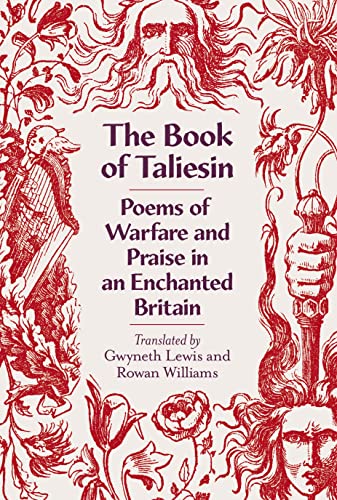
This is my third in a series of posts drawing on Gwyneth Lewis’ and Rowan Williams’ modern English version of The Book of Taliesin (1), an anthology of bardic poetry from medieval Wales. My first post introduced the book and offered extracts from A Song of the Wind (2). The second looked at the importance of ‘The Old North’ (territories in north-west England and southern Scotland that shared the same history, language and culture as the people of Wales) (3). This, final, post looks at the development of the Taliesin figure in the later middle ages. In particular, I focus on the anthology’s section entitled Legendary Poems and on the translators’ understandings of bardic poetry, shapeshifting and awen. I also look at their reasons for interpreting the Taliesin of these poems as “a kind of Christian shaman”.

In these poems, the use of shapeshifting language is presented as being a feature of competition between rival bards. “The Taliesin figure demonstrates his superiority … by spelling out at triumphant length the questions he can answer about which his rivals are ignorant, and by listing the various embodiments he has experienced”. The translators give an example of this in the opening of The Battle of the Trees.

“I was in many forms

Before my release:

I was a slim enchanted sword,

I believe in its play.

I was a drop in air,

The sparkling of stars,

A word inscribed,

A book in a priest’s hands,

A lantern shining

For a year and a half.

A bridge in crossing

Over threescore abers (= estuaries).

I was path, I was eagle,

I was a coracle at sea.

I was bubbles in beer,

I was a raindrop in a shower.

I was a sword in the hand;

I was a shield in battle.

I was a harp string,

Enchanted nine years

In water, foaming.

I was tinder in fire,

I was a forest ablaze”.

The editors comment: “these extraordinary poems reflect a sophisticated and complex understanding of poetic composition in which the concept of awen is central. It would be misleading to translate this idea of inspiration as ‘Muse’: it is better thought of as a state of altered consciousness in which the poet receives knowledge of matters beyond what can routinely be learned. According to Gerald of Wales’ description of the awenyddion, or inspired soothsayers, of the 12th century CE, the gift of awen produces the same kinds of extreme behaviour as are associated with spirit possession: loud shouting, trance and catalepsy, disconnected but also very elaborate speech, narrated experiences of supernatural encounters which trigger the exercise of this gift, and a subsequent inability to remember what was said under its influence”.

Poems like The Battle of the Trees may be “an attempt to reflect the style or register of such ecstatic states of consciousness”. However, the poems themselves may not be “transcriptions of specific compositions originating in altered states”. In cultures that have a “routine ritual space” for “ecstatic phenomena”, the irruption of the supernatural will follow a familiar pattern. “There will be expectations about both the actual expression and the transmission of what has been delivered”. If poetry is to be recognised as the authentic voice of ecstatic perception, “it must follow certain classical, normative exemplars of poetic ecstasy”. The Taliesin of these poems is a composite figure modelling how to speak as an awenydd. He demonstrates a particular way of being a poet and sounding like a poet of this kind.

Religious tensions appear in The Spoils of Annwfn. The bard rails against the ignorance of monks.

“And the monks herd together, a pack of dogs,

In the contest with those

Who have mastered the lore –

Whether wind takes one path,

Whether the sea is one water,

Whether fire’s unstoppable force is one spark.

The monks herd together, a pack of wolves,

In the contest with those who have mastered the lore –

They don’t know how darkness is severed from light,

They don’t know the course of the wind in its rushing,

Where the wind will lay waste, what land it strikes,

How many saints in the sky’s vault, and how many shrines.

I will praise the Prince, the Lord, the Great One.

Let me not be sad: Christ will repay me.”

The translators point out that the shapeshifter Taliesin of the 12th century CE, is “multifaceted” compared to the court bard of the 6th-9th centuries. The later literature links Taliesin “especially with stories involving the figure of the sorcerer Gwydion and the ‘children of Don'”. His status as dewin (sage or sorcerer) or occasionally derwyd (druid) is “so equal in importance to his standing as a poet that the two might more accurately be said to become inseparable”. But he is also shown, as in the extract above, dutifully commending his work to God and as “being familiar with theological questions, most notably those relating to the Incarnation, and with apocryphal traditions surrounding the biblical narratives”.

Lewis and Williams conclude that “this later Taliesin becomes a bridge figure between traditional Welsh lore and the cosmopolitan world of early medieval ecclesiastical learning”. The extract above reflects “a resentment of the new monastic foundations after the Norman Conquest, the Benedictine houses that sprang up in proximity to the new castles and settlements in the Welsh Marches (English/Welsh border counties). Monks from continental Europe are unlikely by this date to have been familiar with or sympathetic to the rather older style of clerical learning represented by the riddling and legendary elaborations of the Christian story found in the Irish or Anglo-Saxon texts of the early Middle Ages; Taliesin thus becomes a mouthpiece for this archaic Christian lore as well as the archetypal bard and seer”. This is why the translators characterise Taliesin in his shape-shifting period as a “Christian shaman”.

(1) Gwyneth Lewis and Rowan Williams The Book of Taliesin: Poems of Warfare and Praise in an Enchanted Britain Penguin Random House UK, 2020 (First published in hardback in Penguin Classics and 2019) Gwyneth Lewis was National Poet in Wales, 2005-6 and teaches at Middlebury College Vermont. Rowan Williams is a former Archbishop of Canterbury, subsequently Master of Magdalene College, Cambridge.

(2) https://contemplativeinquiry.blog/2023/08/07/

(3) https://contemplativeinquiry.blog/2023/08/10/

‘THE OLD NORTH’ IN THE BOOK OF TALIESIN

This is my second post about The Book of Taliesin: Poems of Warfare and Praise in an Enchanted Britain (1). The previous one introduced the book and included extracts from the poem A Song of the Wind. I am not qualified to judge the work of the translators Gwyneth Lewis and Rowan Williams. All I can say is that I find their their modern English version highly readable. I am also grateful for its detailed introduction, which has prompted me to write further posts drawing on it. This one shines a light on the ‘Old North’ (Hen Ogledd), a key location for this bardic tradition, and on poetry referencing the ‘heroic age’ of the 6th century CE (100 – 200 years after the Romans withdrew from Britain).

Llyvyr Taliessin is a 14th century manuscript bringing together “compositions ranging in date from the 9th century CE – possibly even the 6th – to the 13th century CE”. As such “it brings vividly into focus the history and culture of more than one unfamiliar world. It gathers together the kind of songs that might have been sung in the Northern British courts of the 6th century with the poems of Taliesin’s various anonymous successors in an ongoing bardic tradition, which transformed him into a North Welsh prophet, a kind of Christian shaman, and, eventually, an honorary laureate of Llewelyn the Great, the first medieval ruler to control practically the whole of an independent Wales” (1).

The oldest group of poems in the anthology, here grouped together as Heroic Poems, is linked to a Taliesin mentioned in chronicles of the early middle ages, a court bard of the 6th century ‘heroic age’. Here we find an “individual writer who appears in the chronicles and other early texts … celebrating the material and military exploits of a number of patrons, and enjoying the rich rewards of his work.” He is named in the early 9th century History of the Britons, composed in North Wales but showing considerable retrospective interest in in the struggles of various British rulers, some apparently from Cumbria and the Pennine regions, against the Angles of the territories that would by the later 7th century become the Kingdom of Northumbria.

The History of the Britons includes a list of five notable Bards said to have worked in that earlier period. These are Taliesin; Talhaearn, called ‘father of awen; Neirin (aka Aneirin); Blwchfardd; and Cian Guenith Guaut (Cian, wheat-harvest of song). Neirin is credited with the authorship of the Gododdin which laments the failure of a British King from Edinburgh, in or around the last decade of the 6th century, to defend or recapture territories from Northumbria. Taliesin is briefly mentioned in this poem as a contemporary. He is identified primarily as the court bard of King Urien of Rheged. Rheged was (probably, at least at times) an extensive territory including much of what is now north-west England and south-west Scotland. This Taliesin was concerned with warfare and praise rather than with enchantment.

The map below shows the heartlands of the culture that birthed this literature. Its northern border runs from modern Edinburgh to Dumbarton, along the Roman Antonine Wall. The people who lived between the two walls (Antonine in the north; Hadrian’s in the south) were not generally part of the Roman Empire but they were influenced by it. They identified as Britons, not Picts, who lived to the north of both walls and had always kept their independence. On the map everything to the east of the dotted line belongs to the Anglo-Saxons. The Britons hold the west, as far as the Mor Hafren/Bristol Channel. What isn’t shown on the map is the south-west peninsula, also mostly British at this time, but cut off by the fall of three crucial towns – Gloucester, Cirencester and Bath. The people who the West Saxons named as the West Welsh, and who remember their old identity in Cornwall to this day, seem to have no role in the literature that uses the name of Taliesin. Even within Wales, this literature has a northern orientation.

The role of court bard could be materially rewarding, as this extract from the poem Here At My Rest:

“Here at my rest

With the men of Rheged

Respect and welcome

And mead for me!

Mead for me

To mark his triumph,

Gifts of fine land

To win me wealth,

Wealth in plenty

Of glittering gold,

Golden good times

And high esteem.”

This is not just a personal boast. One way to make a patron look good was by pointing to his generosity. But the best way to show Urien to advantage was to describe his prowess as a warrior and war leader, as in the poem All Through One Year:

“Son, go to the door.

Listen to the noise.

What’s the commotion?

Is the earth shaking?

The sea rushing in?

Approaching, a tide

Of foot soldiers cry:

‘Foe on the hill,

Urien kills.

Foe in the vale,

Urien impales.

Foe on the mountain,

Urien smites him.

Foe on the slope,

Urien will slice him.

Foe on the ditch,

Urien will fright him.'”

Each of the poems extracted above has the same ending:

When I’m old, out breath,

Commanded by death,

I will feel delight

Praising Urien aright.”

This is formulaic completion of work in a very formal genre, though I find this translation fluid and lively. I have no idea of what it was like to be the person who wrote it, or even his real opinion of Urien. But that is not the point of these poems. The Brythonic Old North was situated within a world of warrior aristocracies and their ‘heroic’ values, in which the Britons were relentlessly harried by Angles, Saxons, Picts, Gaels and, to an extent, each other. In the context of time and place, the propagandist role of the court bards, and its importance to their warrior patrons, is very clear. What intrigues me more is the later transformation, where Taliesin morphs into the mythic shape-shifting figure described by Rowan Williams as a ‘Christian shaman’. I will write about this in a later post.

(1) Gwyneth Lewis and Rowan Williams The Book of Taliesin: Poems of Warfare and Praise in an Enchanted Britain Penguin Random House UK, 2020 (First published in hardback Penguin Classics in 2019)

For the two other posts about this translation, see: https://contemplativeinquiry.blog/2023/08/07 and:

https://contemplativeinquiry.blog/2023/08/12

THE BOOK OF TALIESIN: A SONG OF THE WIND

The Book of Taliesin: Poems of Warfare and Praise in an Enchanted Britain (1) is a modern English translation, first published in 2019, of the medieval Welsh collection brought together under the name The Book of Taliesin. It is translated and introduced by Gwyneth Lewis, National Poet of Wales 2005-6, who teaches at Middlebury College in Vermont, and Rowan Williams, formerly Archbishop of Canterbury and later Master of Magdalene College, Cambridge. Both are native Welsh speakers. I highly recommend this version to anyone who wants a translation tailored to a 21st century readership, and to improve their knowledge of the history and culture from which these poems spring.

The Song of the Wind, from which I present extracts, is an example of the Dyfalu (guessing) mode: the poet creates a sequence of riddles, metaphors and fanciful tropes in order to describe an object. When – as here – the answer is given by the title, the result is a performance of inventive paraphrase, designed to display the poet’s virtuosity. The evocation of the wind is connected to the part of Taliesin’s story in which Elffin, his patron, is imprisoned by Maelgwn Gwynedd in Deganwy Castle. Taleisin’s poetry conjures up a gale that demolishes the castle and frees Elffin. Evidently a capable bard could do that, back in the day.

“Guess who it is:

Made before the Flood,

A mighty creature,

No flesh, no bone,

No veins, no blood,

No head and no feet.

No older, no younger

Than he was before.

He’s not turned aside

By fear, nor by death.

He doesn’t experience

The needs of creatures.

…..

“He’s in fields, in woods,

With no hand, no foot;

Feels no age, isn’t struck

By pain or bad luck.

“And he wasn’t born,

So he can’t be seen.

He’s at sea and on land;

He’s unseeing and unseen.

“He’s brave, he’s bold

As he crosses the land.

He’s mute, he’s loud.

He’s full of sorrow,

He’s the noisiest one

On the face of the earth.

“He’s evil, he’s good,

He’s here, he’s there,

Creates a mess,

Makes no redress.

He makes no amends,

Because he’s blameless.

He’s wet, he’s dry;

He often comes by.”

(1) Gwyneth Lewis and Rowan Williams The Book of Taliesin: Poems of Warfare and Praise in an Enchanted Britain Penguin Random House UK, 2020 (First published in hardback Penguin Classics in 2019)

For the two other posts about this translation please see: https://contemplativeinquiry.blog/2023/08/10 and:

https://contemplativeinquiry.blog/2023/08/12

FINDING LOST GODS IN WALES

Professor Ronald Hutton’s fifth lecture in the Gresham College series on early Pagan history in Britain (1) is called Finding Lost Gods in Wales. Hutton’s main focus is on medieval Welsh literature. The language used is a 5th/6th century CE mutation of the Brythonic speech once used throughout Britain, further developed for literary purposes by court bards in the 6/7th century. Hutton describes it as “made for poetry” because of the concentration of meaning in the words. He gives as an example in a literal English translation:

‘Colour light waves spread boiling billows

‘Flood-tide river mouth on sea where nothing waits.’

He contrasts this with an English translation for English ears, demanding more words whilst sacrificing impact and immediacy.

‘Bright as the light that falls on the waves, where the boiling billows spread

That flashes a moment from the meeting of river flood and sea.’

This language was the public voice of a consciously dispossessed people, creating a new sense of Welsh Celtic nationhood in the 9th and 10th centuries, when the English, Scottish Gaels and Vikings had reduced their territory to less that 10% of Britain. It led to a flowering of Bardic culture throughout the medieval period.

Taliesin was celebrated as Wales’ greatest Bard. There is no certainty that he existed, though poems surviving from the 6th century have been attributed to him. There are no recorded statements of his pre-eminence before the 10th century. Later poets inspired by him continued to write in his name for a further 300 years. His link with Awen as the source of inspiration reveals the mystical roots of the whole Bardic tradition. But for instances or echoes of specifically Pagan motifs we are largely reliant on a small group of texts from the 11th -13th centuries: The Black Book of Carmarthen, The White Book of Rhydderch, the Red Book of Hergest, the Book of Taliesin and the Mabinogion, a collection of prose stories. (The full prose Hanes Taliesin is from a much later date.)

In contrast to Irish medieval literature, we do not find Goddesses, Gods or explicitly Pagan characters in these Welsh texts, even in the four branches of the Mabinogi, though these do seem to be set in Pagan times. Several characters have superhuman abilities, without being presented as Gods. However, we do have Annwn, an otherworldly realm of human-like beings who interact with ordinary humans. We also find shape-shifting abilities – people change into animal forms and back again; humans change their appearance; objects change their form.

There is certainly magic and magical poetry, as in the Preiddeu Annwn (The Lute of the Otherworld). This poem, though hostile to monks and their pretensions to scholarship, is overtly Christian. According to Hutton, poems of this kind delight in being difficult, allusive and packed with metaphor, references and wordplay. No one now can say with any certainty what they were originally intended to mean. But this, suggests Hutton, is a gift and invitation to the poets, story tellers and artists of later generations including our own.

On the specific question of deity, Hutton discusses Rhiannon, Cerridwen, Gwyn ap Nudd, and Arianrhod. None is described in this literature as divine and, according to Hutton, we do not find them in that role in Celtic antiquity.

Rhiannon is superhuman and comes from an enchanted world to find a husband of her own choosing. She stays the course despite horrible experiences. She has been thought of as a horse goddess, but this is not suggested in the Mabinogion and there is no indication of a horse Goddess in the archaeology of Iron Age Britain or in Romano-British inscriptions. She has also been seen as a Goddess of Sovereignty, but she does not confer sovereignty on either of her husbands, and there is no record of any sovereignty Goddess in Europe outside Ireland.

Cerridwen begins as a mother skilled in sorcery trying to empower her son but actually empowering a lowly servant boy instead. By the 13th century she has, through her association with Awen, become the muse of the Bards, giver of power and the laws of poetry. In 1809 the scholar Edward Davies made her the great Goddess of ancient Britain and many people have Iolo seen her in that light ever since.

In 11th and 12th century texts Gwyn ap Nudd was one of King Arthur’s warriors, imbued with a degree of magic power. By the 14th century, poets are making him a mighty power of darkness, enchantment and deception. In the 1880’s the scholar Sir John Rhys made him the Celtic God of the dead and leader of the Wild Hunt. This is largely how he is seen today.

In the fourth branch of the Mabinogi, Arianrhod is a powerful, beautiful and selfish enchantress with the capacity to make unbreakable curses. By the 13th and 14th centuries her magical powers are much increased. She can cast a rainbow about a court, and the Corona Borealis is called the Fortress or Arianrhod. In the 20th century she began to be seen as a Star Goddess.

Professor Hutton’s lecture includes a discussion of the Welsh Bardic revival at the end of the eighteenth century, inspired largely by Iolo Morgannwg, here presented as a mixed blessing given his willingness to forge ‘ancient’ documents to advance his cause. Hutton ends with a section on the legend placing Glastonbury as the site of King Arthur’s final refuge and eventual burial, and also the place in which the Holy Grail was buried. Both of these were concocted by the later medieval monks of Glastonbury Abbey as a potential source of patronage and a pilgrimage income. At the same time, post holes linked to a neolithic structure have recently been found near Chalice Well – which may well be a numinous site of great antiquity. Artefacts have also been recently found in the area, including the Abbey itself, from the early post-Roman period in which Arthur’s career has been set. We weave our stories from a mixture of fact, fiction, speculation and deep intuition. Being conscious of this circumstance may make them all the richer.

(1) https://www.youtube.com/watch?v=NTmIEE91D-k

See also: https://contemplativeinquiry.blog/2021/03/26/ for my review of Cerridwen Celtic Goddess of Inspiration by Kristoffer Hughes as an in-depth account of the Goddess and her evolution. He also discusses the Welsh Bardic tradition and the later work of Iolo Morgannwg

IOLO MORGANWG: 3 RAYS OF AWEN

According to Kristoffer Hughes, the three ray symbol for Awen, as it appears today: “is mostly inspired by the efforts of one individual, a Welsh bard of the late eighteenth and early nineteenth centuries called Edward Williams, who took the bardic name of Iolo Morganwg*”.

Hughes goes on to tell us something of Iolo’s story: “I touch briefly on the Awen-filled story of this remarkable individual, for it sings loudly of the power of Awen to transform, not just an individual, but the future. His symbol for the Awen has become directly associated in Neopaganism with Cerridwen, making an exploration of his influence a valuable exercise in our understanding of Awen in the modern world.

“Iolo Morganwg was a stonemason from South Wales, an imaginative, poetic genius who made elaborate claims of ancient documents and wisdom that he had discovered and preserved for the world to see. Blighted by ill health, he was addicted to the narcotic laudanum for over fifty years of his life, spending most of his days in a drug-induced state, and yet poems in their thousands fell from his frenzied mind onto scraps of parchment. He composed elaborate poetry, inspired prose, but falsely claimed that some of the poems were written by ancient bards. … And yet through all of the accusations of forgery and deception, Iolo dreamed something into being that those in the different streams of Celtic spirituality today, both monotheistic and polytheistic, are descendants of. He dreamed a new mythology into being and planted seeds that would gestate a profound wisdom in the future.

“In a time of great social crisis, he dreamed an identity for the Welsh that took as its foundation that the bardic tradition of Wales was a direct line to the ancient Druids of Britain, who he perceived as the true ancestors of the Welsh. He longed for his people to connect to the might and power that the Romantic movement imagined the Druids to express. And, in doing so, he deliciously imagined a new identity that the Welsh could be proud of: he blended fact with fiction, legend with history, myth with reality. His bewildering array of notes and journals continue to baffle modern academics who strive to make sense of this enigmatic figure.”

Reflecting on Iolo’s story, Hughes concludes that, “in a profoundly logocentric world where new thoughts and ideas were expected to be substantiated by manuscripts, Iolo simply invented a past that we, as the Welsh, could be proud of . … He carried the seeds of Awen and profoundly influenced a future he could not have imagined. In the twenty-first century, those drawn to the Cerridwen and Taliesenic mysteries (2) who may artistically express, understand, or wear the symbol of the Awen all carry the dream of Iolo Morganwg. He is testament to the Awen’s consistent stream and how it too changed its countenance to meet the needs of different people at different times. The period he occupied was a cauldron of new ideas, with the new era of bardic tradition in its infancy and occult fascination among the learned of the time increasing in popularity”.

(1) Kristoffer Hughes Cerridwen: Celtic Goddess of Inspiration Woodbury, MN: Llewellyn Publications, 2021. See also my review at: https://contemplativeinquiry.blog/2021/03/26/book-review-cerridwen-celtic-goddess-of-inspiration/

(2) See also: John Matthews Taliesin: Shamanism and the Bardic Mysteries in Britain and Ireland London: Aquarian Press, 1991. It includes a complete English translation of the Hanes Taliesin (Story of Taliesin) and English translations of the major poems of Taliesin Pen Beirdd from The Book of Taliesin as well as other medieval Welsh and Irish material. In the Taliesin story, the three rays of Awen become three drops from the brew in Cerridwen’s cauldron).

*NOTE: Iolo Morganwg (=Ned of Glamorgan, his native county). In his own words, the Awen sign /|\ is “a symbol of God’s name from the beginning”. He goes on to say: “from the quality of this symbol proceed every form and sign of voice, and sound, and name, and condition”. It is when God pronounced his Name that “all the universe leapt together into existence of life, with the triumph of a song of joy. The same song was the first poem that was ever heard, and the sound of the song travelled as far as God and His existence are, and the way in which every other existence, springing in unity with Him, has travelled for ever and ever. And it sprang from inopportune nothing; that is to say, so sweetly and melodiously did God declare his name, that life vibrated through all existence, and through every existing materiality”. J. William Ab Ithel (editor) The Bardas of Iolo Morganwg: A Collection of Original Documents, Illustrative of the Theology, Wisdom, and Usages of the Bardo-Druidic System of the Isle of Britain Forgotten Books, 2007 http://www.forgottenbooks.org (First published 1862, from notes and journals left by Iolo on his death at 79 years of age in 1826).

PRIMARY MATERIALS


“There are seven primary materials of the world: the Blue Bard of the Chair has said it.

“The first, earth, from which are every corporeity and hardness, and every firm foundation;

“The second, water, from which are every humour and freshness;

“The third, air, from which are all respiration and motion;

“The fourth, sun, from which are all heat and light;

“The fifth, nwyfre, from which are all feeling, affection, and wantonness;

“The sixth, the Holy Ghost, from Whom are all understanding, reason, awen, and sciences;

“The seventh, God, from Whom are all life, strength, and support, for ever and ever.

“And from these seven primary materials are every existence and animation; and may the whole be under God’s regulation. Amen.” (1)

The Barddas of Iolo Morganwg,  by J. Williams Ab Ithel, was published in 1862. It was presented as the lore of traditional Welsh Bardistry going back to Druid times, based on the earlier work of Iolo Morganwg (Edward Williams – 1747-1826). Iolo had organised the first Gorsedd of Bards for several hundred years at Primrose Hill, London, on 21 June 1792, thereby initiating the modern Welsh Eisteddfod movement. He was a personal friend of Tom Paine and George Washington subscribed to his first volume of poetry. He is said to have influenced William Blake’s poetry and Robert Graves’ The White Goddess.

Iolo described himself as a Unitarian Quaker in religion, and a revolutionary Welsh nationalist in politics. In the later 1790’s the Glamorgan magistrates sent the yeomanry (a volunteer cavalry force drawn from the property-owning classes) to break up an open-air Gorsedd led by Iolo in that county. The reason given was that it was being conducted in the Welsh language and allegedly included a toast for Napoleon – then admired by radicals as defender of the French revolution. This is also a time of revolt in Ireland and the birth of Irish republicanism.

Culturally, Iolo was, as well as a poet in his own right, “a first-rate forger of literary Welsh; some have commented that his forgeries were as good or better than the real thing. Furthermore, he wrote much of the Barddas under the influence of laudanum (an opium-based medicine which he took for asthma)” (1). In consequence he has been widely dismissed as an embarrassing fraud. My response is more complicated. There is something poignant for me about ‘forgeries’ that are “as good or better than the real thing”. On the forgery question, I am sad that Iolo could not openly be a catalyst for the creation of new culture inspired by an old one, rather than having to pretend, even to himself, that he was recovering an old one as it had been (in his own mind perhaps through psychic means). As for medicinal laudanum, I wonder why this should be stigmatised in Iolo whilst accepted in his contemporary S. T. Coleridge. It may be is because Coleridge’s work was unambiguously original, and therefore seen differently. The issue of new culture creation in Druidry is a significant one to this day and is well discussed in Philip Carr-Gomm’s preface to Contemplative Druidry (2) where the voices of a number of open culture creators are included.

Going back to The Seven Primary Materials of the World, I feel friendly to this text despite its patriarchal language and its statement of a world view significantly different from my own. In my reading, it suggests a seven-step ladder from matter to the divine, with four material elements that point also to non-material qualities, where the the fourth and highest is not on the Earth. Then there are two subtle elements (though the first finds room for ‘wantonness’) and an ultimate ascent to the divine. It is the kind of evolutionary spiritual scheme that many transcendentalists down the ages have related to. Written at the turn of the eighteenth and nineteenth centuries, and edited in mid Victorian times, it seems to me congruent with the outlook of medieval Welsh Bardistry as expressed in The Book of Taliesin (3), and the theology of the ninth century Irish scholar and contemplative mystic John Scotus Eriugena (4). It is a Christian referenced path that is not sin and fear based, and I am sure that many people involved in Druidry and Celtic Spirituality today would be in essential sympathy with it. Made up by Iolo or not, it reads as a clear and simple expression of a universalist and transcendentalist stance within a specific cultural setting. I find nothing fraudulent about it. It is what I would expect from place, time and person.

Indeed, key concepts remain relevant to my own Druid practice. I work with the wheel of the year and with the four classical elements, including fire. I am concerned with the Earth’s relationship to sun and moon. I work with my body and my sense of energy and think of nwyfre as synonymous with prana or chi, now well-known thanks to the popularity of yoga and Chinese energy arts.

At this stage in my personal journey, I am in renewed inquiry with awen. For the Barddas, it is a distinct higher mental faculty, close to the divine source like Coleridge’s primary imagination. In my own work I get a sense of energised and articulated insight. I do not think of awen as a substance in itself, but rather a quality of how we express ourselves when at our most enlivened and ‘on song’. But this inquiry is far from concluded.

Where the Barddas speaks of God, I speak of nature. I think of the web of life, and of our interbeing within it. I also think of the mysteries of quantum events, dimensions that we cannot perceive directly, galaxies flying apart and the possibility of multiple universes. But to me nature’s most extraordinary phenomenon is the gift of aware experiencing, with all the joy and suffering it brings, in the apparent here and now. To this I add the capacity to bear witness to this miracle through words, non-verbal media, silence, celebration and action. Here, I find myself still using most of the key terms from The Seven Primary Materials of the World. In this sense,  I am happy to have The Barddas of Iolo Morganwg as part of my spiritual ancestry.

  1. J. Williams Ab Ithel The Barddas of Ilo Morganwyg, Vol I & II: A Collection of Original Documents, Illustrative of Theology, Wisdom, and Usages of the Bardo-Druidic System of the Isle of Britain Forgotten Books, 2007 www.forgottenbooks.org (First published 1862)
  2. James Nichol Contemplative Druidry: People, Practice and Potential Amazon/Create Space, 2014 (Foreword by Philip Carr-Gomm)
  3. William F. Skene The Four Ancient Books of Wales Forgotten Books, 2007 www.forgottenbooks.org (First published 1868)
  4. https://contemplativeinquiry.blog/2014/07/12/the-eye-of-contemplation/ 

BOOK REVIEW: Y DAROGAN ANNWN

The image above is the cover for Lorna Smithers’ new collection of poems, Y Darogan Annwn, and it illustrates the themes of the collection. Lorna Smithers explains: “Daronwy, the Brythonic World Tree, is falling. Beneath its boughs appears Y Darogan Annwn, a child-prophet, who prophecies the end of the Age of Man. She must find the source of the poison, outwit the scientists of Gwydion, and release the destructive fury of the spirits of Annwn. Her ultimate decision will be whether to become one with her prophecy.”

Prophecy, like poetry, is a gift of awen, the inspirational energy of Brythonic culture. To be awenydd, open and dedicated to this gift, is to accept its demands. Y Darogan is a child of the gods and a daughter of dragons. She is a shape-shifter who can move through multiple identities, the most poignant of which is that of a little girl. She will never grow up. Her individual life will last for less than a year.

The collection contains 50 poems in all. Two are introductory and the others are arranged in seven sections providing a narrative structure: Lock and Key; The Forest of Daronwy; The Fisher King; The Golden Ring; Doomsday; The End of Days; and The Hereafter. Together they present a wasteland story for our times, drawing on British Celtic and Arthurian themes whilst subverting the patriarchal assumptions of the old texts. The individual poems are each relatively short, and likely to have most impact on people who have some familiarity with the Mabinogion and the Brythonic mythos in which it is embedded. However the wasteland confronted is that of our own times: its military industrial complexes based on a perverted science, and the current slide into climate catastrophe.

For her self-introduction in the first verse, the infant Y Darogan uses pithy lines of power, reminiscent of The Book of Taliesin*, though with updated cultural references.

I have been a fallen star

and a tear in a river of tears

flowing through Annwn.

I have been hydrogen,

oxygen, carbon, nitrogen,

helium burning in the sun.

****

I have been dark matter

I have not been found by

the scientists of Gwydion.

By contrast, Doronwy, the Brythonic World Tree, is introduced in a prose poem, one of the longer individual pieces in the book. Together, these introductory pieces provide a point of departure for the story that builds over the seven main sections. Y Darogan’s mission of cleansing is itself a path of destruction, and “no Champion’s Light stands out on her forehead, just the darkness of the black hole”. Only at the very end is there a regenerative (rather than ‘redemptive’) note. The material demands verbal resilience in the face of multiple and unavoidable stresses, and even at its bleakest, there is power and magic in Lorna Smithers’ writing.

Oh Breath of the Wind

don’t leave me leave me please!”

She does not know how long

she has been wandering Pennant Gofid,

the Valley of Grief through ghosts and mist,

only that she found the treasure, became

the answer, and it’s harder to bear

than the weight of the crow.

The howling of wolves loudens.

The sky blackens with ghost-wings.”

Overall, I believe that Y Dorogan Annwn is a significant contribution to the re-visioning of the world’s great stories as we confront unprecedented challenges on our collective journey. I am grateful for the opportunity to read and review it.

Lorna Smithers’ blogs at https://lornasmithers.wordpress.com/ using the title At Peneverdant. Her About section describes her calling as an awenydd and devotee of Gwyn ap Nudd, God of the Brythonic underworld Annwn, of the dead, and of the Wild Hunt. The Y Darogan Annwn collection is now for sale as a PDF, see link:

https://lornasmithers.wordpress.com/2019/10/12/y-darogan-annwn/

  • The Book of Taliesin in The Four Ancient Books of Wales Forgotten Books, 2007 (Originally published in 1868, when the original material was translated and edited by William F. Skene)

TEMPLE OF SOPHIA

My ‘Temple of Sophia’ recollects the active imagination work I did when practising Druidry and the Way of Sophia as a fusion path. The Temple keeps the work alive for me, though its presentation lacks the dynamism of the original set of practices when I was working them. The Temple structure owes something to the ‘art of memory’ of the ancient Greeks This was a system of impressing ‘places’ and ‘images’ on the mind, which continued into the dawn of modernity. Late practitioners included Giordano Bruno and the English alchemist Robert Fludd (1).

Here is how the visualisation goes.

“[I am] …on the water of a lake, in a rowing boat … mooring on the western shore … walking eastwards on a path between carved stones … on the left hand a Pictish ‘dancing seahorse’ … on the right hand, a Levantine image (a pomegranate tree, serpent coiled around the base, dove at the top) … moving up to the western door of the Temple of Sophia, a domed stone building, half hidden in extensive tree cover … basically round but with arms extended in each of the 4 cardinal directions to create an equal armed cruciform shape.

“I enter the temple through a porch at the western end, over which are written two lines from Primary Chief Bard, in the Book of Taliesin (2): I stood at the cross with Mary Magdalene; I received the Awen from Ceridwen’s cauldron. I find myself facing the eastern wing. Its most striking feature is a rose window at the back. It also has an altar whose white cloth is embroidered with a golden gnostic cross, and strewn with white and red rose petals. At the centre stands a chalice, white candles on either side. Looking around me I see steps spiraling downwards to a crypt, left (northern extension) and steps spiraling upwards to an upper room, right (southern extension).

“The main body of the temple is lit by chandeliers hanging from the ceiling as well as natural light from the windows. On the floor is a large mosaic given definition by the golden outline of a circle, crossed at the cardinal points by golden lines which merge at the centre within a fully golden circle, which includes 3 white seed pearls in a triangular cluster at the centre.

“Just outside the outer circle, around the wheel of the year, are depictions of 16 trees: yew, north-west; elder, north-north-west; holly, north; alder, north-north-east; birch, north-east; ash & ivy, east-north-east; willow, east; blackthorn, east-south-east; hawthorn, south-east; beech & bluebell, south-south-east; oak, south; gorse, south-south-west; apple, south-west; blackberry & vine, west-south-west; hazel, west; rowan, west-north-west. Each representation of a tree on the mosaic offers a portal for further communication with the tree. If I visualize myself standing on the image, then I may enter another imaginal landscape for a fuller experience – whether through sensing or communicating with the tree in question, or indeed becoming it.

“Moving in to the delineated quarters of the main circle, I find: north, a seated white hart in a yellow square; east, an eagle with wings outstretched, in a blue circle; south, a mottled brownish adder in a red triangle; west, a silver salmon over a silver crescent moon. These positions, too, are potential portals into an Innerworld landscape. If I visualize myself standing on an image, it has the power to take me to another imaginal landscape, and to forms of engagement – whether simply connecting, communicating or indeed journeying there. At the golden centre of the circle, the cluster of three white pearls recollects the three drops of inspiration distilled from Ceridwen’s cauldron and the visionary power of Awen. There are also other trinities – the triple goddess; the orthodox Christian trinity; or the divine mother, father and child; or the singularity of Tao becoming the two, three and 10,000 things. This is more a place for simple contemplation.

“Spiraling again out of the circle, and exiting north, I descend into the crypt. Here I find an empty sarcophagus dimly lit by candles. Two or three steps below the sarcophagus is a small, warm pool, lit by night lights – a ‘birthing pool’, perchance a re-birthing pool. There is an image of a coiled serpent at the bottom of the pool and a red ankh painted at the centre of the ceiling. I can spend time lying within the sarcophagus, contemplating change, death and dissolution. I can also move on to the birthing pool, and taste the experience there.

“Leaving the crypt and moving across the temple, I climb the steps to the upper room, which has a meditation chair at its centre, with a chalice, or grail, on a small table in front of it. There is a white dove painted on the ceiling; otherwise the room is plain. If I centre myself and drink from the chalice, saying, my heart is home to Sophia, I may find myself in a Garden. It has a fountain at the centre, surrounded by four flower beds of alternating red and white roses. There are fruit trees, apple, pear and plum, trained around the walls. Sometimes, full bright sunlight shines on the scene and strikes the dazzling water of the fountain, warming an illuminating each drop as it falls. At other times, I am in moonlit or starlit night, and I hear as much as see the fountain. Either way, I open myself to the experience of the Garden. Sophia herself as psychopomp may or may not appear. Indeed, there is no ultimate distinction between Sophia, the Garden and me.

“On coming back from the vision of the garden, I sit and rest for a while. Eventually I leave the upper room, and, descending into the main body of the temple. I walk to the south point of the circle and from there move, spiralling, into the centre. I face the altar at the east, bowing and giving thanks before I leave the temple.”

(1) Frances A. Yates The Art of Memory London: Pimlico, 1966

(2) John Matthews Taliesin: Shamanism and the Bardic Mysteries in Britain and Ireland London: The Aquarian Press, 1991

WESTERN WAYS: DRUIDRY AND SOPHIA

In my world, Druidry and the Way of Sophia are linked, though not the same. In The Western Way (1,2) authors Caitlin and John Matthews made a distinction between a ‘Native’ Tradition and a ‘Hermetic’ one, which act as “complementary opposites”. The Native Tradition is “the inward spiral of a maze which leads into the heart of ancestral earth-wisdom”. The Hermetic Tradition is the outward spiral of the same maze: a path of evolving consciousness which is informed by the inner resources of our ancestral roots, “augmented in a macrocosmic way” (2).

My original interest in a ‘Celtic’ spiritual thread, developing from the 1980s, wasn’t specifically Druid or Pagan. It came mostly through Celtic and Celtic influenced literature. Although a long tradition in its own right, it post-dates the demise of institutional Druidry and Paganism in Celtic speaking regions. Most of it has been written with at least an element of Christian reference and influence. So we get verses like this from the medieval Welsh Book of Taliesin:

I was at the cross

With Mary Magdalene.

I received the Awen

From Ceridwen’s cauldron. (3)


What I intuitively liked about this was the sense of a culture working to integrate diverse influences rather than attempting to be ‘pure’. Pure culture (or the attempt at it) narrows horizons and banishes possible resources, becoming limited and inflexible in my view. Sophia is both an image of the divine and expresses a blending of Jewish and Greek wisdom traditions. She came to prominence in Alexandria, the largest city of Roman Egypt. She is cosmopolitan. In the verse above Mary Magdalene (an incarnation of Sophia in some gnostic traditions) and Ceridwen (not a traditional Celtic goddess from Pagan times) both have Sophian roles in relation to male figures seen in different ways as light bringers.

Some of the Celtic-derived stories from the medieval period are clearly breaking new cultural ground whilst using resources from the Celtic past. They belong to a realm of creative mythology, as Joseph Campbell called it, whose purpose is “the opening … of one’s own truth and depth to the depth and truth of another in such a way as to establish an authentic community of existence” (4). Twelfth century Western Europe sought to renew itself by drawing on its classical heritage (native in Italy) and Geoffrey of Monmouth drew on it in his Mystic Life of Merlin (5), for example by dedicating a contemplative ‘Observatory’ to the owl deity Minerva, Roman Goddess of Wisdom. It also drew on Celto-Germanic heritage, with the Arthurian mythos – the matter of Britain – taking a prominent place. This mythos does not name Sophia. But it does have the image of the grail and the story of the grail quest. For me the grail represents the presence and energy of Sophia, and Caitlin Matthews has described it as “a prime symbol of Sophia” (6).  Perceval, the grail winner, has to encounter the divine in a new way for himself. At one level his role is to honour and heal the land, renewing its tantric energy. But the Grail Goddess, whilst enabling that traditional collective healing, adds a new and more individuated depth of wisdom and compassion. So although I have always been moved by the scenes and images of the more archaically oriented Peredur (7), I have found a more compelling narrative in Parzival (8). It is the innovative aspect of the story that engages me and the grail image that nourishes me.

In the Gnostic Gospel of Thomas, (9) Jesus of Nazareth asks three leading followers to say what they think he is like. Peter, traditionally Jewish, says “you are like a just messenger” (or righteous angel in other translations). Matthew, familiar with Graeco-Roman ways, says “you are like a wise philosopher”. Thomas says, “my mouth is utterly unable to say what you are like”. The teacher responds, ‘I am not your TeacherBecause you have drunk, you have been intoxicated from the bubbling spring that I have tended’.  As I read this text, it is a confirmation that a lived spirituality is beyond packaging.

In this sense, terms like Druidry, Way of Sophia or Western Way have only a limited use. Joseph Campbell said “the best things cannot be told; the second best are misunderstood; after that comes civilised conversation”. The problem is real yet I believe he overstates his case. I think it is worth the effort of finding words, making distinctions and enabling affiliations in full awareness of the difficulties. Civilised conversation with moments of … something more … feels like an honourable pursuit.

  1. Caitlin & John Matthews (1985) The Western Way: A Practical Guide to the Western Mystery Tradition: Volume 1 – the Native Tradition London: Arkana
  2. Caitlin & John Matthews (1986) The Western Way: A Practical Guide to the Western Mystery Tradition: Volume 2 – the Hermetic Tradition London: Arkana
  3. John Matthews (1991) Taliesin: Shamanism and the Bardic Mysteries in Britain and Ireland London: The Aquarian Press (with additional material by Caitlin Matthews)
  4. Joseph Campbell (1976) The Masks of God: Creative Mythology Harmondsworth: Penguin
  5. R. J. Stewart (1986) The Mystic life of Merlin London: Arkana 
  6. Caitlin Matthews (1986) Sophia Goddess of Wisdom, Bride of God Wheaton, IL: Quest Books
  7. The Mabinogion (1976) Harmondsworth: Penguin (translated with an introduction by Geoffrey Gantz)
  8. Wolfram von Eschenbach, W. (1980) Parzival Harmondsworth: Penguin (translated by A. T. Hatto)
  9. The Gospel of Thomas: the Hidden Sayings of Jesus (1992) San Francisco, CA, USA: Harper San Francisco (translation with introduction, critical edition of the Coptic text and notes by Marvin Meyer; with an interpretation by Harold Bloom)

POEM: PRIMARY CHIEF BARD

Gnostic Bardistry from The Book of Taliesin? These are just five of the verses, selected by me from one poem. What interests me is not so much working out what to us seems like a set of puzzles, but how something new and dialogical is created by interweaving indigenous material and biblical references. I say a few words in italics after each verse.

Primary Chief Bard

Primary Chief Bard

Am I to Elffin

And my native country

Is the region of the summer stars.


The first statement is a statement of identity. It begins with a local (though important) role, and goes on to the cosmic and transcendent. This taps into a sense of belonging somewhere else (whether perceived as a place or state). It makes me think that statements like ‘being here now, in the present’ and ‘my native country is the region of the summer stars’ only seem contradictory: meaning depends so much on context and the work that words are doing. If the two statements are separated and polarised, they diminish into limiting slogans. Taken together, they can lead us to a different quality of experience.

I was full nine months

In the womb of the hag Ceridwen.

Before that I was Gwion

But now I am Taliesin.

Taliesin’s current personal identity is explained in terms of a second birth, in this life, triggered by the actions of Ceridwen. This second birth fits him to be a Bard and take the Bardic name ‘Radiant Brow’, one that bespeaks major shifts in energy and consciousness. It also allows the sense of the summer stars as his ‘native country’ to be real within him. It orients him to his true home.

I was patriarch

To Elijah and Enoch.

I was there at the crucifixion

Of the merciful Mabon.

Elijah and Enoch ascended to heaven without dying. They have deep roles in Jewish mysticism. They are in the tradition of so-called ‘ascended Masters’. If we treat these metaphors (insofar as they are metaphors) as concerned with enlightenment, then – as their ‘Patriarch’ – Taliesin is claiming primacy over them. He is in some sense a Christ figure and so can be present at the crucifixion of another Christ figure, referred to here by the name of the magical child of British tradition ‘the Mabon’.


I was at the cross

With Mary Magdalene.

I received the Awen

From Ceridwen’s cauldron.

The poem presented here is a product of the later Middle Ages, likely as late as the fourteenth century. Traditions giving Mary Magdalene the role of major teacher and possibly spouse of Jesus were deep underground, but everyone in Christendom Knew of her witnessing role at both the crucifixion and the resurrection, and so as privileged in some way. She also shares her name with Mary the mother. The two couplets together bring the idea of Christ’s transformation through death on the cross with Taliesin’s transformation from Ceridwen’s cauldron, and the critical role of a feminine power in each.

I was in the larder

In the land of the Trinity

And no one knows whether my body

Is flesh or fish.

Despite all the above, Taliesin remains an enigma – a shape shifter and trickster. He defies definition and description and won’t fit into any box that attracts unwanted piety. Other readers may understand this verse much better than I do, but I see it as very tough minded and unwilling to let me parcel up this poem and tie it with a neat bow. To the extent that I get a sense of medieval Welsh literature, this seems very characteristic. However, in the most obvious ‘Land of the Trinity’ (Western Christendom) people want to know where everyone stands. The accepted narrative is that we’re with Jesus the avatar of Pisces and through the sign of the fish we know him. And yet the old Celtic world has many trinities and many fish, including the salmon of wisdom. And Taliesin’s body might be flesh after all. So we are thrown back on our resources, with riddling words and ambiguous images to reflect them.


The complete poem can be found in Taliesin: Shamanism and the Bardic Mysteries in Britain and Ireland by John Matthews London: The Aquarian Press, 1991.

Earth Eclectic

music that celebrates Earth and speaks to the heart

Sarah Fuhro Star-Flower Alchemy

Follow the Moon's Cycle

Muddy Feet

Meeting nature on nature's terms

Rosher.Net

A little bit of Mark Rosher in South Gloucestershire, England

Becoming Part of the Land

A monastic polytheist's and animist’s journal

selkiewife

Selkie Writing…

Charlotte Rodgers

Images and words set against a backdrop of outsider art.

Prof Jem Bendell

living with metacrisis and collapse

Towint

The pagan path. The Old Ways In New Times

The Druids Garden

Spiritual journeys in tending the living earth, permaculture, and nature-inspired arts

The Blog of Baphomet

a magickal dialogue between nature and culture

This Simple Life

The gentle art of living with less

Musings of a Scottish Hearth Druid and Heathen

Thoughts about living, loving and worshiping as an autistic Hearth Druid and Heathen. One woman's journey.

Wheel of the Year Blog

An place to read and share stories about the celtic seasonal festivals

Walking the Druid Path

Just another WordPress.com site

anima monday

Exploring our connection to the wider world

Grounded Space Focusing

Become more grounded and spacious with yourself and others, through your own body’s wisdom

The Earthbound Report

Good lives on our one planet

Hopeless Vendetta

News for the residents of Hopeless, Maine