Contemplative Inquiry

This blog is about contemplative inquiry

Tag: Birch

THE FEELING OF HOME

On completing a breath exercise I sometimes say, ‘I am the movements of the breath and stillness in the breath; living presence in a field of living presence in a more than human world: here, now, home’. This is both my most parsimonious and most spacious sense of home in a world where nothing lasts forever or stays the same. I find my ultimate feeling of home in simple breath and awareness.

Yet my body and feelings, my heart and my imagination cannot thrive on breath and awareness alone. I need love, loyalty and connection inside the turbulence and uncertainty of the world. For me, the risk of getting hurt is an acceptable price to pay.

Thinking simply of ‘home’ spaces, I have lived at my current address for two and a half years. Not long, but enough to establish familiarity and loyalty. The picture above was taken very close to the building I live in. Our estate has planted lavender and let the grasses grow wild. I have come to love this. Our public library building, opened in 1896, is in a  simplified and elegant form of 19th century Gothic in its last stage. I know it as a busy and widely loved place. I also know that it won’t be used for its present purpose much longer. Yet I continue to experience it as ‘home’.

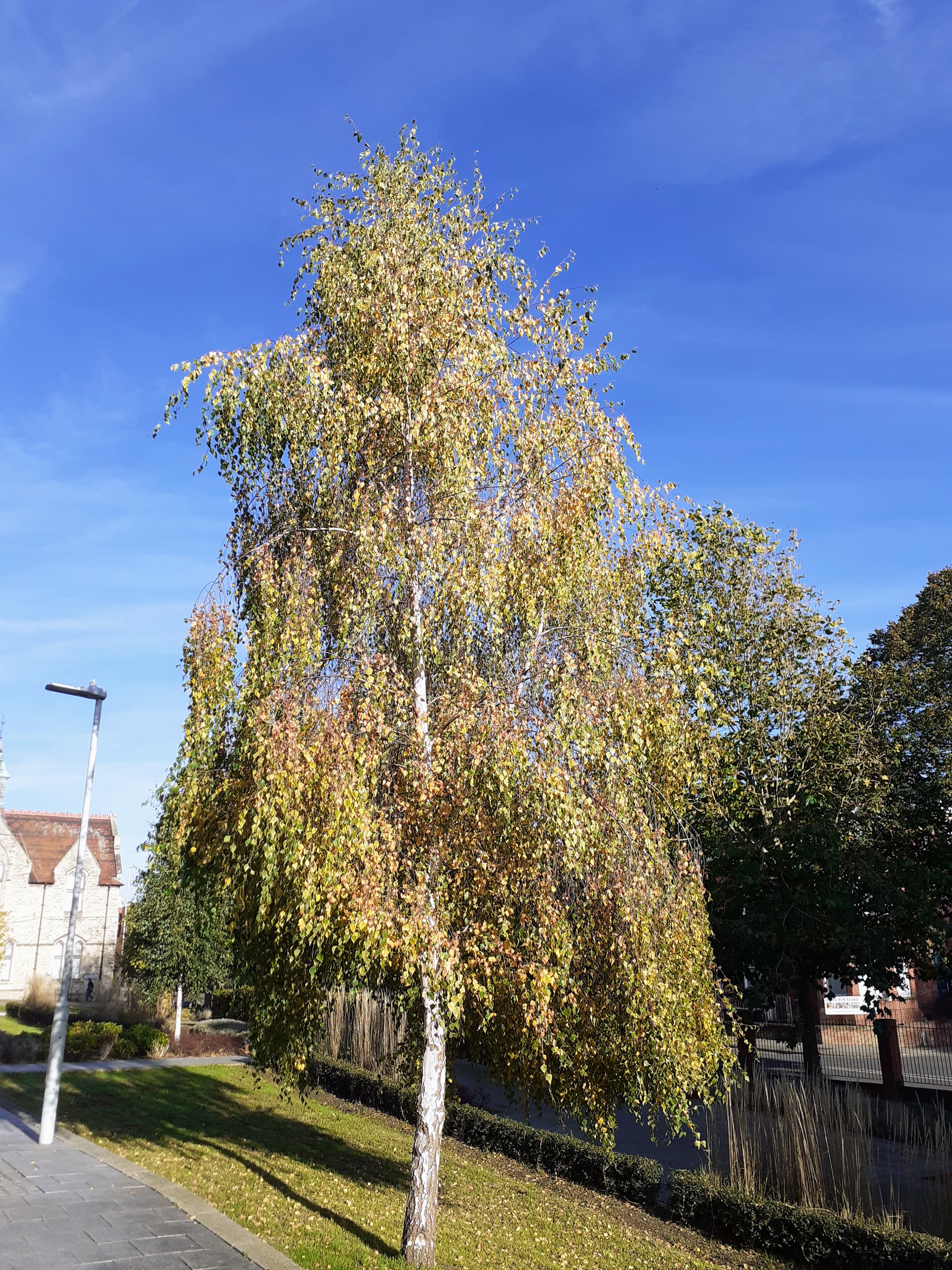
Earlier in the year, I wrote about a small group of birch trees growing up beside our flat. Then, they had a  bare  look apart from a few catkins (1). Now, in the picture below, they are in full leaf. I love the way they are now and also the way they have changed. Without impermanence and mutability nothing can happen. These very characteristics enable ‘living presence in a field of living presence in a more than human world’. They too are a necessary part of ‘home’.

(1) https://contemplativeinquiry.blog/2025/01/18/late-winter-regeneration/

LATE WINTER: REGENERATION

In the picture above, birch catkins are gaining strength. It is a bleak and cold early afternoon. The tree trunks sit in quiet latency. But new life is stirring all the same.

In the wheel of the year, winter is the season both of dying and regeneration. Late winter my be the coldest time of year, but the turn has been made and the days are already lengthening. Imbolc, which once marked the first lambing season of the year for our ancestors, is on its way.

Four years ago (1) I wrote a post in which I described the place of Birch (Beith) in the Irish Ogham alphabet, and its link with new beginnings and the need for careful preparation in any new endeavour. In Northern runic tradition Birch (Beorc, Berkana) is identified with the young Goddess, sexuality and birth, as well as beauty and creativity in general. At the time of writing I was working with a mandala of 16 trees in which Birch was my tree from 1-22 February. It continues to be an important tree in my life.

Now, my emphasis is different. I started by reflecting on a group of birch trees planted just outside our building. I can see them now  out of a balcony widow. There are five in this space, somewhat sheltered between two buildings. They are the nearest thing to a grove in this urban setting. They are still young and have only recently reached the second floor level where we live. They seem vulnerable, shallow-rooted. When we have high winds, I expect them to blow down. They bend a long way. But they haven’t broken or fallen yet.

They are our neighbours. Elaine and I walk among them often. They are a good place for her when she re-learns walking after her accident and its complications. She first noticed the catkins and pointed them out to me weeks ago, when they were tiny. The picture above, which I took today, shows how much they have managed to grow in these apparently unpromising winter weeks.

(1) https://contemplativeinquiry.blog/2021/02/01/birch-new-beginning/

BIRCH BARK HAIKU

Birch bark beauty

Between earth and sky,

Greeting another winter.

RE-ENCHANTMENT WHEN GROWING OLD

“Contrary to the current genetic determinism that sees increased longevity as a wasted aberrance created by civilisation, The Force of Character presents an explosive new thesis: the changes of old age, even the debilitating ones, have purposes and values ordained by the psyche. The older we become, the more our true natures emerge. Thus the final years have a very important purpose: the fulfilment and confirmation of character.” (1)

I have known and walked with James Hillman’s book for a number of years, but only recently have I felt it coming into its own in my life. Hillman, originally a pupil of Carl Jung, went on to found his own school of Archetypal Psychology – a psychology which remembers that ‘psyche’ first meant ‘soul’. He describes his own journey as about challenging what he sees as limiting beliefs that “clamp the mind and heart” (1) into positivistic science, bottom-line capitalism and religious fundamentalism.

I am growing old and experiencing frailties together with a beloved partner in the same position. What is happening in the depths of my psyche? I notice that I do not perceive a single entity here, but multiple aspects, including a dialogue between youth and age. Both have always been present. But their roles have changed. I now find myself seeking them out, engaging with them and listening to them.

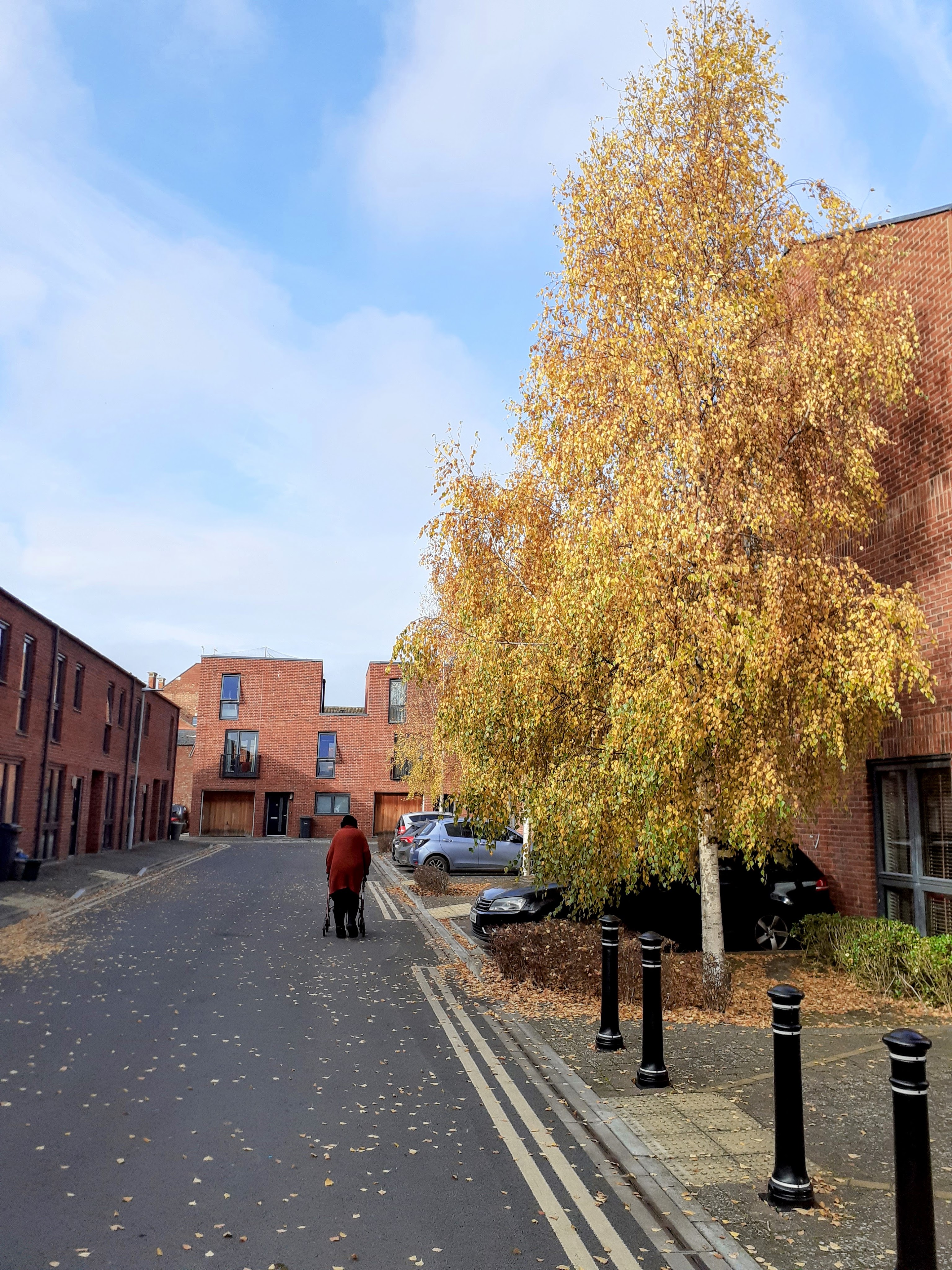
How do I recognise re-enchantment in my everyday life? Simply being open and alert to experiences as they come. On the morning of 10 November there was blue sky for a limited period. We walked around our Greyfriars Estate (once the site of a Franciscan Priory). There was a good-natured Remembrance Parade close-by: a custom beginning in 1919 after Word War I, when people hoped they had been through the war to end all wars. I am not very military minded but I’m glad we have this occasion all the same. I’ve made it to 75. A lot of the people we think about at this time didn’t make to 20 and they shouldn’t be forgotten. Honour was being paid to the dead, and an intentional act like that always changes the space.

Elaine and I however were at some distance from the event so that she could practice her walking. Whilst I was looking at some young birch trees with vigour still in their end-of-autumn leaves, Elaine carried on walking on her own. She didn’t need me hovering around her. It was the first time she’d walked outside on her own since her accident in Gran Canaria six months ago. I had witnessed a wonderful emancipation and, more than that, a fulfilment and confirmation of character.

(1) James Hillman The Force of Character and the Lasting Life Milsons Point, NSW: Random House Australia, 1999. First quote from back of cover blurb, second from main text.

COUNTER CURRENTS IN A DECLINING YEAR

The November around me is grey and gloomy, though not especially cold. I notice this year that I am not entering the seasonal zeitgeist, not going with the flow of time as I normally do. Instead, I am marshalling my resources. I am pushing back. I am not all contemplative and I find myself more concerned with agency than with surrender to what is.

The Ace of Wands card in The Druidcraft Tarot (1) says, in the language of the mundus imaginalis (2): “Here the wand is offered to us from the heart of the sun – the source of creative fire, initiative and energy”. The card fell out of the pack when I believed I was looking for something else. I thought. ‘yes, I as an individual person am not dead. I am not ready to fade away into another realm or be dispersed into universe of interbeing. I’m here, now, home and not done yet. I have life, love and work yet to cherish and enjoy. I can still make things happen, should I so choose”.

I am inspired by my walks with my wife Elaine outside our flats as she relearns to walk with big new boots and a rollator. Such determination. The wand in the card is a birch wand, The wood is alive and leaves are falling from it. Elaine and I walk amongst at least two varieties of birch. One has finished shedding its leaves. The other hasn’t. For Druids, the birch is connected through the ogham alphabet with ideas of birth and new beginnings. Unseasonal or not, this is an energising place to be.

(1) Philip and Stephanie Carr-Gomm The Druidcraft Tarot: Use the Magic of Wicca and Druidry to Guide Your Life London: Connections, 2004 (Illustrated by Will Worthington)

(2) “Mundus Imaginalis or the Imaginal was a term coined by Henry Corbin, a friend and colleague of C. G. Jung. This concept captures the fundamental key to working with symbols and the creative imagination, allowing the psyche to move beyond the limiting constraints and one-sided attitude of the ego.” See; https://appliedjung.com/mundus-imaginalis/

(3) See; https://contemplativeinquiry.blog/2021/02/01/birch-new-beginnings/

THE ROOKERY: MAGIC IN A FORMAL GARDEN

Streatham’s Rookery (1) is a formal garden within Streatham Common, one of south London’s many remarkable green spaces. I made a connection with it in 1992 when living close by.

About a year before I discovered OBOD Druidry, I was working with R. J. Stewart’s The Way of Merlin (2). This taught me, first of all, about sacred space. “Sacred space is space enlivened by consciousness. Let us be in no doubt that all space is sacred, all being. Yet if humans dedicate a zone, a location, something remarkable happens within that defined sphere of consciousness and energy. The space talks back”.

I was an urban seeker and used what the city gave me. From an early age I had been fed by imagery of secret and magical gardens. The Rookery, built in the then Spa village of Streatham (1) became my sacred space. Towards its centre, a wishing well testified to the power of healing waters. It was a good place to begin my journey. The space became more alive, and I, included within the gestalt, became more alive with it.

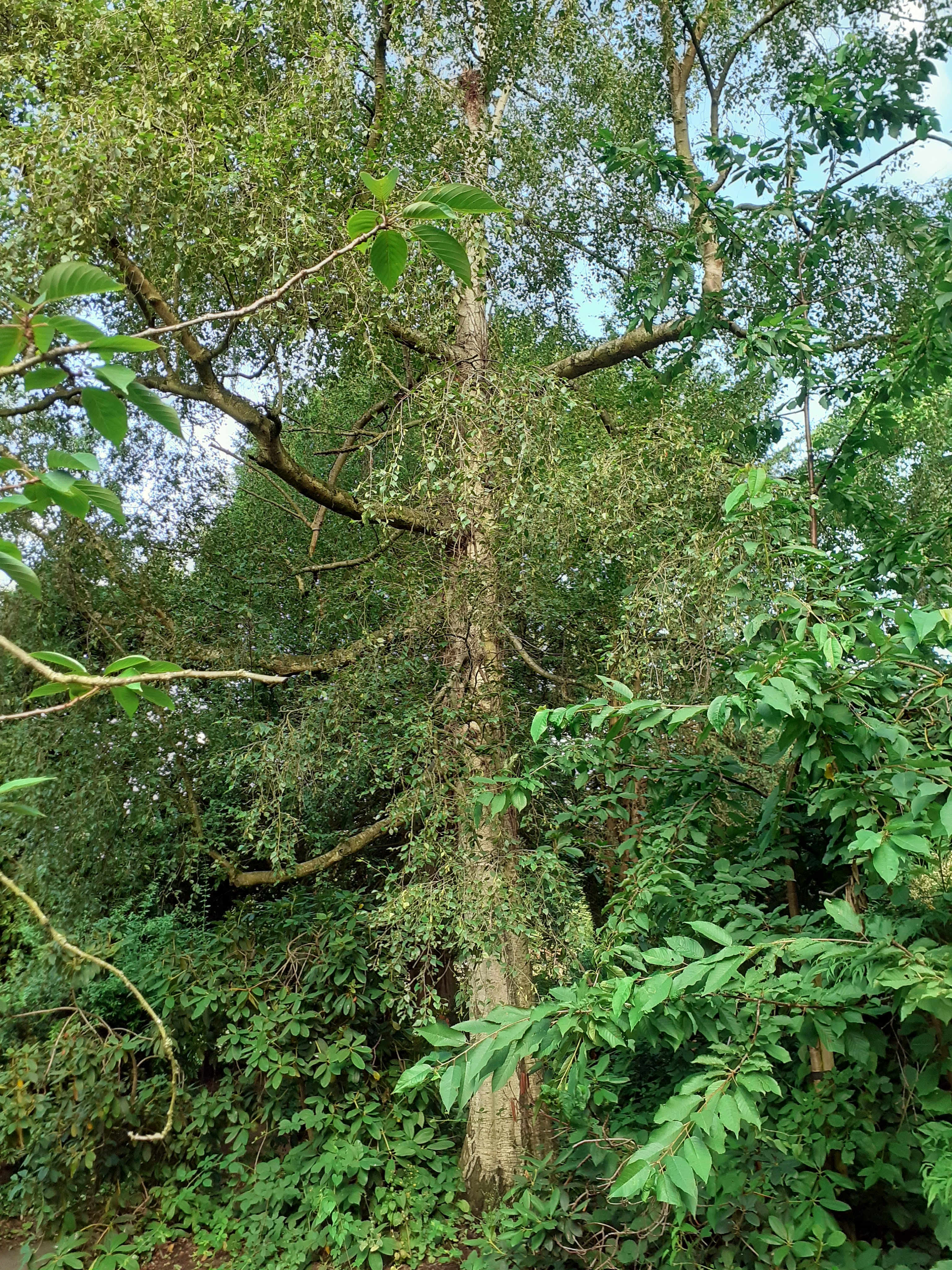
After establishing a sacred space, I was asked to begin a relationship with a spring and a tree. Stewart said: “we need to relate to such locations. This is a physical relationship first and foremost … we are one with the land, and trees, springs and caves are power points that tap into the energies of the land, and then reach into other dimensions altogether”. I found my spring quite easily (above). But there were almost too many trees to choose from, and I recall hesitating about my choice, to the point even of changing trees on my second or third visit. On my recent re-visit – woven into a rare family weekend in London – I found it easy to find the spring again but harder to remember my tree. I settled on the mature birch below, a good choice for a new, Goddess related undertaking (2). But I cannot vouch for it as my choice in 1992.

Sacred space (“the land talks back”), and befriending a spring and a tree: for me, these were the most powerful lessons from R. J. Stewart’s work. They were a helpful preparation for my later Druid training. I was very pleased to revisit this space in July 2023 and share it with family members.

(1) Streatham was in Surrey before becoming part of the County of London in 1889, and then Greater London in 1965. It began as a settlement around the old Roman road (Street Ham) from London to the south coast at Portslade, Brighton, the site a Roman port long lost to erosion. It appears in the Domesday Book of 1086 as Estreham. The village remained largely unchanged until the 18th century, when its natural springs, known as Streatham Wells, were first celebrated for their health-giving properties. The reputation of the spa, and improved turnpike roads, attracted wealthy city of London merchants to build their country residences in Streatham.

The Rookery began as a large private house with its own landscaped gardens. Much later, when the house and gardens were threatened with disposal and redevelopment, it was bought by public subscription and laid out as a formal open space, first opening to the general public in 1913. The Rookery is now one of the London Borough of Lambeth’s Green Flag Award-winning parks, directly managed by Streatham Common Cooperative (SCCoop), a local community-led enterprise.

(2) R. J. Stewart The Way of Merlin: The Prophet, The Goddess and the Land London: The Aquarian Press, 1991

BIRCH: NEW BEGINNINGS

Within my mandala of the year (1) Birch – Beith in the Irish ogham alphabet (2) – is the first tree for the spring quarter beginning at Imbolc. The overall theme of this quarter, in my world, is one of early growth. Birch presides from 1-22 February and will become one of the first trees to flower in spring, from March onwards. It is also one of the first trees to colonise new ground.

In ogham lore Birch is understood to support new beginnings and to encourage careful preparation, a skilful laying of the ground on which we will build. “In making your spiritual journey with this tree as your guide, remember to concentrate your mind on the uplifting slender whiteness of the tree, a whiteness that stands out clearly from the tangled undergrowth and confusion of shrubs and thorny bushes that cover the floor and, hence, may inhibit an easy journey” (3). The Green Man’s wisdom (1) is that a good beginning leads to a good conclusion.

In runic tradition (4), where Birch (Beorc, Berkana) is also linked to new beginnings, there is specific reference to the young Goddess, sexuality and birth, as well as beauty and creativity more generally. Birch may signal a laying aside of old patterns, whether merely redundant or positively toxic, and a willingness to welcome new, more energising and nourishing ways of being.

For me, this is a welcome shift from the necessary defensiveness and protectiveness of alder. This year, it comes just at the moment where such a shift is possible – as my wife Elaine continues her recovery from major illness and we begin to dream and think our way forward, into a new cycle of life. The wheel turns, and there is a promise of positive change in the air.

(1) The image is from: John Matthews & Will Worthington The Green Man Oracle London: Connections, 2003.

(2) This mandala is based on my personal experience of trees in the neighbourhood as well as traditional lore. Moving around the spring quarter from 1 February, the positions and dates of the four trees are: Birch, north-east, 1-22 February; Ash & Ivy, east-north-east, 23 February – 16 March; Willow, east, 17 March – 7 April; Blackthorn, east-south-east, 8 – 30 April. The summer quarter then starts with Hawthorn at Beltane. For a complete list of the sixteen trees, see https://contemplativeinquiry.blog/2020/autumn-equinox-2020-hazel-salmon-awen/

(3) Liz and Colin Murray The Celtic Tree Oracle: A System of Divination London: Eddison-Sadd, 1988 (Illustrated by Vanessa Card)

(4) Sweyn Plowright The Rune Primer: a Down to Earth Guide to the Runes Rune-Net, 2006

Earth Eclectic

music that celebrates Earth and speaks to the heart

Sarah Fuhro Star-Flower Alchemy

Follow the Moon's Cycle

Muddy Feet

Meeting nature on nature's terms

Rosher.Net

A little bit of Mark Rosher in South Gloucestershire, England

Becoming Part of the Land

A monastic polytheist's and animist’s journal

selkiewife

Selkie Writing…

Charlotte Rodgers

Images and words set against a backdrop of outsider art.

Prof Jem Bendell

living with metacrisis and collapse

Towint

The pagan path. The Old Ways In New Times

The Druids Garden

Spiritual journeys in tending the living earth, permaculture, and nature-inspired arts

The Blog of Baphomet

a magickal dialogue between nature and culture

This Simple Life

The gentle art of living with less

Musings of a Scottish Hearth Druid and Heathen

Thoughts about living, loving and worshiping as an autistic Hearth Druid and Heathen. One woman's journey.

Wheel of the Year Blog

An place to read and share stories about the celtic seasonal festivals

Walking the Druid Path

Just another WordPress.com site

anima monday

Exploring our connection to the wider world

Grounded Space Focusing

Become more grounded and spacious with yourself and others, through your own body’s wisdom

The Earthbound Report

Good lives on our one planet

Hopeless Vendetta

News for the residents of Hopeless, Maine