Contemplative Inquiry

This blog is about contemplative inquiry

Tag: Bardism

POEM: TALIESIN

An unfamiliar (at least to me) image of Taliesin. One of ‘Six Celtic Sonnets’ by Thomas Samuel Jones, first published in 1930. Taken from the ‘Isles of Dream’, an anthology of work from the ‘Celtic Renaissance ‘.

On lonely shores where dreams are drifted sand

He follows to the end a star’s bright course,

A ghostly hunter without hound or horse,

The warrior-bard, last of the Druid band;

But still his wizard harp rings in his hand

Beside the Stream of Sorrow’s hidden source,

Still from a breaking heart his wild songs force

Their way into the god’s mysterious land.

Dauntless he sings, and sees the drear woods turn

To golden orchards by the river bed

Where healing waters of the rainbow run;

And past the valley near great peaks that burn

With beaconing fire the hero-bard is led

Up toward the Dragon City of the Sun.

Taliesin is one of Six Celtic Sonnets written by Thomas Samuel Jones and included in From the Isles of Dream: Visionary Stories and Poems of the Celtic Renaissance, selected by John Matthews and with a foreword by Robin Williamson (Floris Books, 1993).

Thomas Samuel Jones (1882-1932) came from Welsh and Irish stock and was born in Oneida County, New York State, near the Adirondack Mountains. Each of the six sonnets reflects a facet of Celtic tradition. They were originally published in 1930 as part of the collection Aknahton and Other Sonnets. For those of us who resonate with Druid and Celtic spirituality, they are part of our modern cultural ancestry.

BOOK REVIEW: STALKING THE GODDESS

jhp4ec2908d688eb_9781780991733_Stalking%20The%20Goddess_72Stalking the Goddess by Mark Carter was published by Moon Books in 2012 and is a critical examination of Robert Graves’ iconic The White Goddess. Carter has done a thorough job and I strongly recommend the book to anyone interested in the subject specifically, or in modern Druid and Pagan culture more widely.  He painstakingly examines Graves’ sources of inspiration, sources of information, working methods and conclusions. He also looks at the extraordinary impact of The White Goddess over the period since its publication in 1948, especially on the growing neo-pagan community – much of it surprising to Graves himself. Stalking the Goddess (a title I have to say I don’t much care for) is of course dependent on The White Goddess for its interest and very existence, so I find I can’t talk about the one without the other.

What was Graves doing in The White Goddess that mattered so much?

Firstly, he took up suggestions from 19th and earlier 20th century literature (The Golden Bough being the single major source) about a primal religion based on sacrificial kingship. He linked it to ideas of an early political matriarchy that pre-dated human knowledge of paternity and began to weaken thereafter. In bronze and iron age times, Graves saw Europe from Bulgaria to Ireland subject to struggles and migrations in which increasingly patriarchal warrior peoples put a steadily intensifying pressure on opponents who, whilst themselves less and less likely to have matriarchal political systems, nonetheless preserved conservative features like strong Goddess traditions, matrilineal succession, and a view of the feminine as representing sovereignty over the land.  He also followed writers like Charles Leland and Margaret Murray in understanding medieval witchcraft as an underground pagan tradition in conscious struggle with the fully Romanised Christian church as aggressively representative of a wholly comprehensive expression of patriarchy in both religion and politics.

Graves also suggested that, in Celtic lands, there was a second dissident group that survived well into the medieval period and indeed beyond.  These were the Bards, descendants of the Pagan Druids, preserving their secrets within often obscure poetry based on a little known or understood set of mythic references, and a magical system of writing, the ogham (itself with early origins in South East Europe). The ogham was not just a script, it was also a hand signalling system – and had its own set of magical correspondences, of which those with a group of sacred trees were the most potent.  The Bards as poets were in service to The White Goddess of the title. Graves believed that all true poets are in such service, whether they know it or not – citing more recent poets like Keats as an example. Graves placed himself in such a line, and used the inspired technique of ‘analeptic memory’ to extend his understanding when his sources didn’t give him all the answers he needed. He wanted to show that he was up with the relevant scholarship and that he could make a logical and evidence based case. But in the last analysis he wasn’t bound by these. He was (although he didn’t use this term) one of the awenydd, the inspired ones, not a philosopher or academic.

Carter’s contribution, in Stalking the Goddess, is the rigorous application to The White Goddess and some of Graves’ other work (for example The Greek Myths and King Jesus), of a critique which is itself now quite well known. Based on more recent (though not necessarily much more recent) scholarship than that available to Graves, it tells us that neither the approach of The Golden Bough, nor the view of matriarchy and its purported link to early Goddess worship, nor its overthrow, are supported by good evidence. Especially when dealing with pre-history (history before written records) modern scholars are tentative about what we can say that we know. There’s just not enough there for a powerful unifying story, partly at least because the evidence basis just isn’t suited to providing such a story, and partly perhaps because the actual stories may be much more diverse. In the case of medieval witchcraft, the available records concerning victims don’t fit the profile of Pagan Goddess devotees. In the case of Celtic Bards, the evidence shows ogham as an exclusively Irish writing system, created for the carving of simple messages, in use for a fairly short period in the 4th and 5th centuries CE. It may be that it was used, in a spirit of self-conscious antiquarianism, as a largely mnemonic device for the Bards of later centuries.  In terms of Graves’ reading of key works in the Welsh tradition – the Hanes Taliesin and Cad Goddeu in particular – Carter suggests that Graves “bent them to support his views”.

I am sure that this critique is essentially correct, simply because it is based on better information than the alternatives and argued plainly. I can’t of course vouch for every detail because I haven’t done any individual work. But I do have to recognise that Graves’ own approach involves a considerable element of dogmatic intuitionism and interpretative high-handedness. For me, in a context of advocacy, the latter characteristics weaken a case rather than strengthening it.

And yet … true criticality like this, using effective and ethical working methods, is its own kind of homage. Stalking the Goddess will not, and should not, demolish The White Goddess. It will help to keep it alive and rightly so.  When T.S. Eliot decided to accept The White Goddess for publication by Faber & Faber after several rejections from other publishers, he described it as “a prodigious, monstrous, stupefying, indescribable book”. Yet he published it all the same. I for one am glad that he did. With that health warning from the original Faber catalogue, alerted to not taking The White Goddess entirely on its own terms, I am free to let it into my spiritual imagination. I can walk to my favourite spot at Woodchester (the old churchyard). I can stand in the avenue of yews, knowing that most of the ogham trees are in easy distance, and that Orpheus lies underground nearby, in the form of an early fourth century Romano-British mosaic. It was custom made for the villa on that site by a specialist mosaic workshop in Cirencester (Corinium) notable for its work on Orphic themes. Orpheus was from the Rhodope Mountains in Thrace (once thought of as ‘Mount Haemus’). Graves thought that the ogham first came from Thrace, believing Orpheus’ dance of trees to be a “dance of letters”.  So here, now and in Woodchester is the lyricist who could charm animals, cause trees to circle dance, animate a new ship for a deep sea voyage, descend to the underworld and return, be torn to pieces by maenads and continue on as a talking head, uttering prophecies for Apollo. Rich themes for Romano-British people, perhaps also seeing resonances with their own native stories. Inspired and inspiring myth can survive any attempt to explain it, explain it away, or package it in overdetermined forms.

BOOK REVIEW: ENCHANTING THE SHADOWLANDS

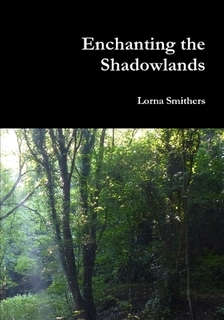
product_thumbnailIn formal terms, this is a five star review of Enchanting the Shadowlands, a book of numinous poems and short stories by Lorna Smithers. She describes it as “gathered from my local landscape in response to an imperative from a Brythonic god called Gwyn ap Nudd”. If you have any interest in the lingering subtle resonance of the old Celtic and pre-Celtic world in parts of England like the poet’s native northwest, you will appreciate this volume. If you have any interest in ‘awen’ as an inspirational force or creative current, and what it is to be ‘awenydd’, you will appreciate this volume. If you have any interest in poetry and landscape, or what is now called psycho-geography, you are likely to appreciate this volume. I strongly recommend this book.

More deeply, I am hoping in a small way to share something of the magic of the work as I have experienced it. I find that the best way in is to say that, for me, the resonance of the project, its feeling-tone, can be found in the first two verses of ‘A Journeying Song’, one of the later poems in the collection.

1: Horse and Hound

She will carry me

down invisible horse paths.

He will lead us

to invisible lands.

She will carry me

beyond the stolen skyline.

He will lead us

to where horizons end.

2: The Dreaming Land

The dream is not a dream

it is the life force of the land.

A living memory,

it is the dawn. It is the damned.

The dream is not a sleep.

It is a wakefulness

of past people and their dreams.

It is mistakes and shining laughter.

When I read these lines, I can feel myself riding the mare who will “carry me down invisible horse paths”, led (in my mind’s eye) by a large and shaggy hound. I can easily accept that, surrendering to the instinctive wisdom of these animal powers, I might find myself beyond a “broken skyline” at a place where “horizons end”.  I can settle into the felt apprehension of a Dreaming Land where the dream is not a dream, but “the life force of the land, a living memory” and a “wakefulness of past people and their dreams”. The words are a portal to the living reality of the experience itself. In that sense, these two brief verses stand as a microcosm of the whole book.

Peneverdant/Penwortham, the locality described, is a watery place. Its first human inhabitants are called “The Dwellers in the Water Country”, drawn by the obvious attractions of auroch and deer and also by destiny and “the dream of a bard”.

They came with the splash of oars

and the steady splash of feet

drawn by auroch, deer and destiny,

the dream of a bard

who saw the green hill rising

from a wilderness of carr and marsh.

The awenydd poet’s own seership, her own process of inspired and connected reaching back, is caught in her ‘Prayer for Netholme’.

I write this prayer for the White One

Who loaned to me a mare of mist,

Led me across the marsh of time

And granted me the seer’s gift.

For later periods, the poetry is sometimes dialogical with older texts – such as the Domesday Survey of 1086, or James Flockhart’s ‘De Mowbray:A legend of Penwortham’. The latter is referenced in in ‘St. Mary’s Well, Twilight’ – a poem that also includes finely wrought observation of nature and the meaning it makes for the observer/the observer makes for it.

The setting sun is casting his vast aura

With a majesty I never dreamt him capable of

Enflaming clouds in luminescent orange and red,

Purple like mountains behind the trees.

The birds are singing as if it is their last dusk song.

I enlist bold robin, blackbird and little wren …

As if this is the evening of all evenings

And will be their last so better make it their best.

It is hard to write freshly about sunsets, though I do think this is well-managed even in the first four lines, especially through bringing in a delighted shift in the observer’s perception, and then going on to dare purple poetry. But what makes this section of the poem for me is the succeeding lines, which create a foreground for the majestic sunset background through the activity of the birds and their commitment to Being while it lasts.

Throughout the book we are aware of the interweaving of two worlds. This is done particularly well in the stories, which are every bit as inspired as the poetry. I was especially moved by the last, called ‘The Brown-Eared Hound: Rivington, October 31st. 1917’. It concerns sudden, shocking bereavement and also a direct experience of Gwyn’s wild hunt. I could almost see a novel, or at any rate novella, in this story – bringing together the world of Wilfrid Owen, D.H Lawrence and Virginia Wolf with that of living Brythonic myth. At the same time the piece as written did everything it needed to.

I don’t think it is possible to do this volume justice in a single review. It’s hard, with poetry. So I’m suggesting that readers also have a look at Crychydd’s review in https://barddos.wordpress.com/2015/02/04 and the author’s own discussions about her work and its continuing development at: http://lornasmithers.wordpress.com/

Lorna Smithers Enchanting the Shadowlands Lulu, 2015

HANES TALIESIN (THE CAULDRON OF CERIDWEN)

The Sage Ceridwen was the wife

Of Tegid Voel, of Pemble Mere:

Two children blessed their wedded life,

Morvran and Creirwy, fair and dear;

Morvran, a son of peerless worth,

And Creirway, lovely nymph of earth:

But one more son Ceridwen bare,

As foul as they before were fair.

She strove to make Avagddu wise;

She knew he never could be fair:

And, studying magic mysteries,

She gathered plants of virtue rare:

She placed the gifted plants to steep

Within the magic cauldron deep,

Where they a year and day must boil,

‘Till three drops crown the matrons toil.

Nine damsels raised the mystic flame;

Gwion the Little near it stood:

The while for simples roved the dame

Through tangles dell and pathless wood.

And when the year and day had passed,

The dame within the cauldron cast

The consummating chaplet wild,

While Gwion held the hideous child.

But from the cauldron rose a smoke

That filled with darkness all the air:

When through its folds the torchlight broke,

Nor Gwion, nor the boy, was there.

The fire was dead, the cauldron cold,

And in it lay, in sleep uprolled,

Fair as the morning-star, a child,

That woke and stretched its arms and smiled.

What chanced her labours to destroy;

She never knew, and sought in vain

If ‘twere her own misshapen boy,

Or little Gwion, born again:

And vexed with doubt, the babe she rolled,

In cloth of purple and of gold,

And in a coracle consigned

Its fortunes to the sea and wind.

The summer night was still and bright,

The summer moon was large and clear,

The frail bark, on the springtide’s height,

Was floated into Elphin’s weir:

The baby in his arms he raised:

His lovely spouse stood by, and gazed,

And, blessing it with gentle vow,

Cried “TALIESIN!” “Radiant brow!”

And I am he, and well I know

Ceridwen’s power protects me still:

And hence o’er hill and vale I go,

And sing, unharmed, what’er I will.

She has for me Time’s veil withdrawn:

The images of things long gone,

The shadows of the coming days,

Are present to my visioned gaze.

And I have heard the words of power,

By Ceiron’s solitary lake,

That bid, at midnight’s thrilling hour,

Eyri’s hundred echoes wake.

I to Diganwy’s towers have sped,

And now Caer Lleon’s halls I tread,

Demanding justice, now as then,

From Maelgon, most unjust of men.

This poem comes from The Misfortunes of Elphin written by Thomas Love Peacock in 1829. It is (very loosely) based on the last part of the Hanes Taliesin, in which the Bard Taliesin he has to free his patron Prince Elphin from imprisonment by Maelgon, the ruler of North Wales. Taliesin has to win a Bardic contest at the court of the High King, Arthur and thus be able to ask for Arthur’s support. Elphin is indeed liberated, through Arthur’s arrangement of a prisoner exchange. The poem above is presented as the Taliesin’s winning entry and concerns his mysterious birth. It differs somewhat from the version presented 20 years later by Lady Charlotte Guest, whilst being a recognisable if variant presentation of the same tale. The audience “shouted with delight” at this song, which wins the contest for Taliesin and entitles him to a boon from Arthur.

Thomas Love Peacock was a slightly older contemporary of the Romantic poet Shelley and a close friend from 1812 until the latter’s departure for Italy in 1816. Indeed they continued to correspond, in letters that have been preserved, giving us valuable information about Shelley’s life in Italy. Peacock too wrote poetry and within The Misfortunes of Elphin he offers a characteristically Romantic view of Awen as “the rapturous and abstracted state of poetical inspiration”, and also recommends the triad: “the three dignities of poetry: the union of the true and the wonderful; the union of the beautiful and the wise; the union of art and of nature”. Peacock travelled in Wales and lived in Maentwrog in Merionethshire for a time. I have used Peacock’s spellings of proper names throughout.
POEM: AVALLENNAU MYRDDIN (MERLIN’S APPLE TREES)

Fair gift to Merlin given

Apple trees seven score and seven;

Equal all in age and size;

On a green hill-slope, that lies

Basking in the southern sun

Where bright waters murmuring run.

Just beneath the pure stream flows;

High above the forest grows;

Not again on earth is found

Such a slope of orchard ground:

Song of birds, and hum of bees,

Ever haunt the apple trees.

Lovely green their leaves in spring;

Lovely bright their blossoming:

Sweet the shelter and the shade

By their summer foliage made:

Sweet the fruit their ripe boughs hold,

Fruit delicious, tinged with gold.

Gloyad, nymph with tresses bright,

Teeth of pearl, and eyes of light,

Guards these gifts of Ceido’s son,

Gwendol, the lamented one,

Him, whose keen-edged, sword no more

Flashes ‘mid the battle’s roar.

War has raged on vale and hill:

That fair grove was peaceful still.

There have chiefs and princes sought

Solitude and tranquil thought:

There have kings, from courts and throngs,

Turned to Merlin’s wild-wood songs.

Now from echoing woods I hear

Hostile axes sounding near:

On the sunny slope reclined,

Feverish grief disturbs my mind,

Lest the wasting edge consume

My fair spot of fruit and bloom.

Lovely trees, that long alone

In the sylvan vale have grown,

Bare, your sacred plot around,

Grows the once wood-waving ground:

Fervent valour guards ye still;

Yet my soul presages ill.

Well I know, when years have flown,

Briars shall grow where ye have grown:

Them in turn shall power uproot;

Then again shall flowers and fruit

Flourish in the sunny breeze,

On my new-born apple trees.

This is my second poem drawn from The Misfortunes of Elphin written by Thomas Love Peacock in 1829 and based (very loosely) based on the last part of the Hanes Taliesin. The Bard Taliesin has to free his patron Prince Elphin from imprisonment by Maelgon, the ruler of North Wales by winning a Bardic contest at the court of the High King, Arthur. Victory entitles him to ask for Arthur’s support. Elphin is indeed liberated, through Arthur’s arrangement of a prisoner exchange. The poem above is presented as the work of Merlin, also a contestant. The audience response is described thus: “this song was heard with much pleasure, especially by those of the audience who could see, in the imagery of the apple trees, a mystical type of the doctrines and fortunes of Druidism, to which Merlin was suspected of being secretly attached, even under the very nose of St. David”. In a future post I will also present Taliesin’s winning entry.

Thomas Love Peacock was a slightly older contemporary of the Romantic poet Shelley and a close friend from 1812 until the latter’s departure for Italy in 1816. Indeed they continued to correspond, in letters that have been preserved, giving us valuable information about Shelley’s life in Italy. Peacock too wrote poetry and within The Misfortunes of Elphin he offers a characteristically Romantic view of Awen as “the rapturous and abstracted state of poetical inspiration”, and also recommends the triad: “the three dignities of poetry: the union of the true and the wonderful; the union of the beautiful and the wise; the union of art and of nature”. Peacock travelled in Wales and lived in Maentwrog in Merionethshire for a time. I have used Peacock’s spellings of proper names throughout.
POEM: GORWYNION GAUAV (THE BRILLIANCES OF WINTER)

Last of flowers, in tufts around

Shines the gorse’s golden bloom:

Milk white lichens clothe the ground

‘Mid the flowerless heath and broom:

Bright are holly-berries, seen

Red, through leaves of glossy green.

Brightly, as on rocks they leap,

Shine on sea-waves, white with spray:

Brightly in the dingles deep,

Gleams the river’s foaming way;

Brightly through the distance show

Mountain summits clothed with snow.

Brightly where the torrents bound,

Shines the frozen colonnade,

Which the black rocks, dripping round,

And the flying spray have made:

Bright the ice drops on the ash

Leaning o’er the cataract’s dash.

Bright the hearth, where feast and song

Crown the warrior’s hour of peace,

While the snow storm drives along,

Bidding the war’s worst tempest cease:

Bright the hearth flame, flashing clear

On the up-hung shield and spear.

Bright the torchlight of the hall

When the wintry night winds blow;

Brightness when its splendours fall

On the mead-cup’s sparkling flow:

While the maiden’s smile of light

Makes the brightness trebly bright.

Close the portals; pile the hearth;

Strike the harp; the feast pursue;

Brim the horns; fire, music, mirth,

Mead and love, are winter’s due.

Spring to purple conflict calls

Swords that shine on winter’s walls.

This poem comes from The Misfortunes of Elphin written by Thomas Love Peacock in 1829.  The story is (very loosely) based on the last part of the Hanes Taliesin, in which the Bard Taliesin he has to free his patron Prince Elphin from imprisonment by Maelgon, the ruler of North Wales.  Taliesin has to win a Bardic contest at the court of the High King Arthur and thus be able to ask for Arthur’s support. Elphin is indeed liberated, through Arthur’s arrangement of a prisoner exchange. The poem above is presented as the work of Prince Llywarch, one of the contestants. It is well received: “Llywarch’s song was applauded, as representing a series of images with which all present were familiar, and which were all of them agreeable”.  It treats winter as, among other things, a period of respite from warfare. In future posts I will also present the entries of Merlin and the winner Taliesin.

Thomas Love Peacock was a slightly older contemporary of the Romantic poet Shelley and a close friend from 1812 until the latter’s departure for Italy in 1816. Indeed they continued to correspond, in letters that have been preserved, giving us valuable information about Shelley’s life in Italy.  Peacock too wrote poetry and within The Misfortunes of Elphin he offers a characteristically Romantic view of Awen as “the rapturous and abstracted state of poetical inspiration”, also recommending the triad: “the three dignities of poetry: the union of the true and the wonderful; the union of the beautiful and the wise; the union of art and of nature”. Peacock travelled in Wales and lived in Maentwrog, Merionethshire, for a time. I have used Peacock’s spellings of proper names throughout.

ELDERS AND MEMORY

A Guatemalan story illustrates the traditional role of elders. The Goddess of Water has been dismembered and her heart captured by the Lords and Ladies of Death. Her (non-divine) partner collects her bones together and descends into the infernal realm to recover her heart. He succeeds at a price, returning to the earth’s surface with only a toe bone and a tooth to go with the recovered heart of the Goddess, himself do badly wounded that he dies.

Four elders – Grandmother Growth, the Father of the Mountain, the Old Woman and the Old Man – now intervene. Covering the body of the man and the toe bone, tooth and heart of the Goddess with a blanket, they sing their wisdom. ‘The world wept and whimpered in the ground while the two gods and two old humans sang the ancient life-giving songs’ (1). After the old ones have nearly exhausted their repertoire of 200 songs, the blanket is lifted. Man and Goddess (now a mortal woman) have revived and are whole. The elders comment, ‘it’s the same every year’.

The story contrasts the distinctive roles of the younger and older generations. For the former the action presents a vivid and dramatic trial. The old ones participate through their knowledge of the ‘ancient live-giving songs’ and with the relative detachment of those who’ve seen it all before. They have not ‘retired’ but they have progressed to a different and more reflective way of making an impact on their world, using their resources as culture bearers.

Martin Pretchel, who recorded this story, spent his life ‘married to the meaning’ of such stories. In the Guatemalan Highlands of the 1980’s the indigenous Mayan community was under enormous pressure and threat. Martin, a mixed ancestry outsider from New Mexico, joined several hundred old Mayan men and women and ‘like a friar I became another of their wool-blanket-wearing order, dedicated to remembering back to life She who had been dismembered and therefore do what we could to keep Holy Nature dancing’.

The story telling activities of the elders are not simply forms of reminiscence. They can a front-line in the defence of land, life and culture. (Martin Pretchel eventually took refuge from threatened assassination in an unfriendly US embassy and was promptly deported.) It seems that deep Bardistry, maintaining the long cycles of cultural memory, and current political witness go hand in hand.

  1. Martin Pretchel The toe bone and the tooth London: Thorsons, 2002
Earth Eclectic

music that celebrates Earth and speaks to the heart

Sarah Fuhro Star-Flower Alchemy

Follow the Moon's Cycle

Muddy Feet

Meeting nature on nature's terms

Rosher.Net

A little bit of Mark Rosher in South Gloucestershire, England

Becoming Part of the Land

A monastic polytheist's and animist’s journal

selkiewife

Selkie Writing…

Charlotte Rodgers

Images and words set against a backdrop of outsider art.

Prof Jem Bendell

living with metacrisis and collapse

Towint

The pagan path. The Old Ways In New Times

The Druids Garden

Spiritual journeys in tending the living earth, permaculture, and nature-inspired arts

The Blog of Baphomet

a magickal dialogue between nature and culture

This Simple Life

The gentle art of living with less

Musings of a Scottish Hearth Druid and Heathen

Thoughts about living, loving and worshiping as an autistic Hearth Druid and Heathen. One woman's journey.

Wheel of the Year Blog

An place to read and share stories about the celtic seasonal festivals

Walking the Druid Path

Just another WordPress.com site

anima monday

Exploring our connection to the wider world

Grounded Space Focusing

Become more grounded and spacious with yourself and others, through your own body’s wisdom

The Earthbound Report

Good lives on our one planet

Hopeless Vendetta

News for the residents of Hopeless, Maine