BEYOND THE EQUINOX

these dark mobile clouds
racing through the autumn sky
as the soft light fades
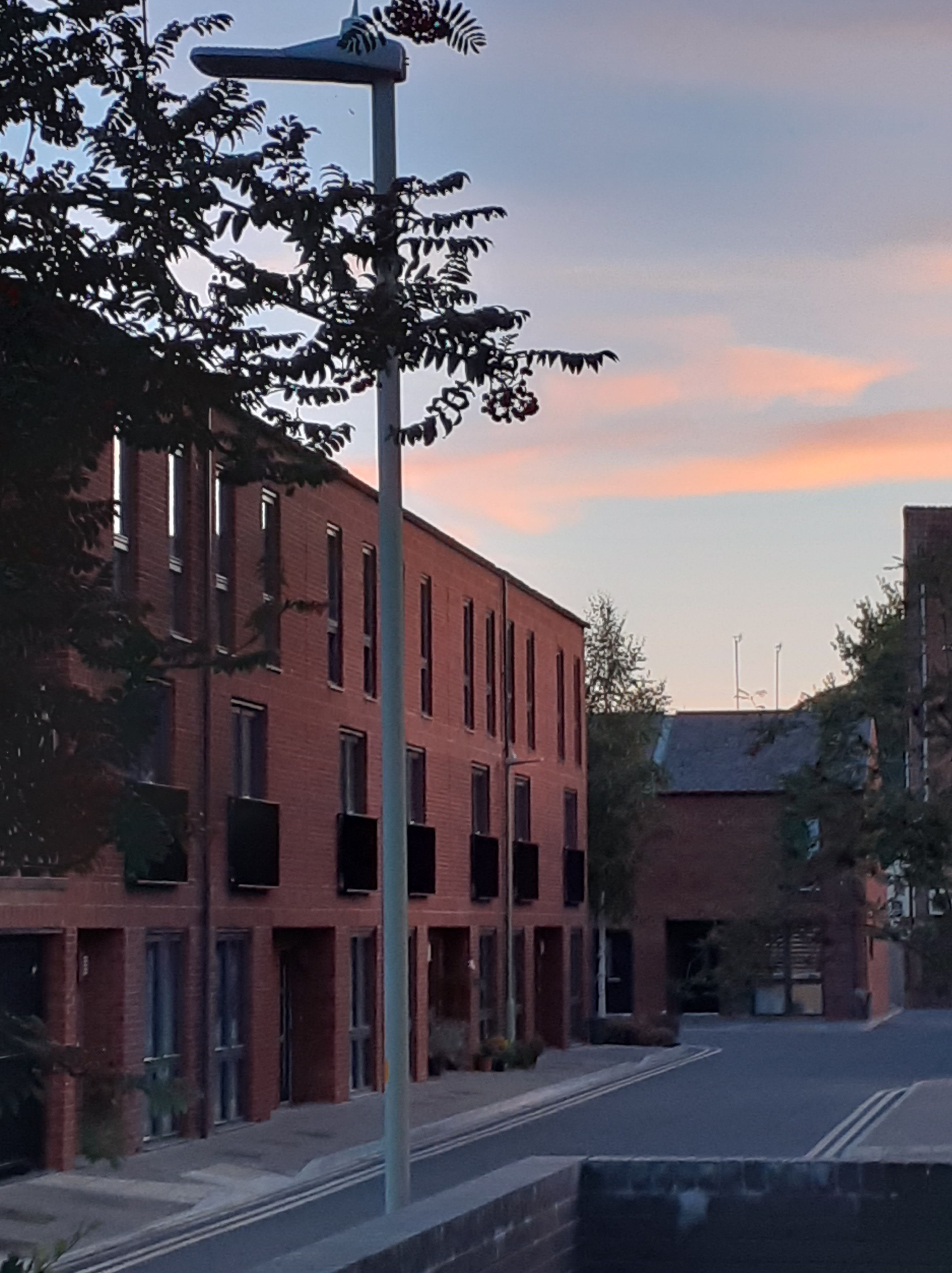
Picture taken, 6.55 pm, 27 September, sunset in Gloucester, England.

these dark mobile clouds
racing through the autumn sky
as the soft light fades
Picture taken, 6.55 pm, 27 September, sunset in Gloucester, England.
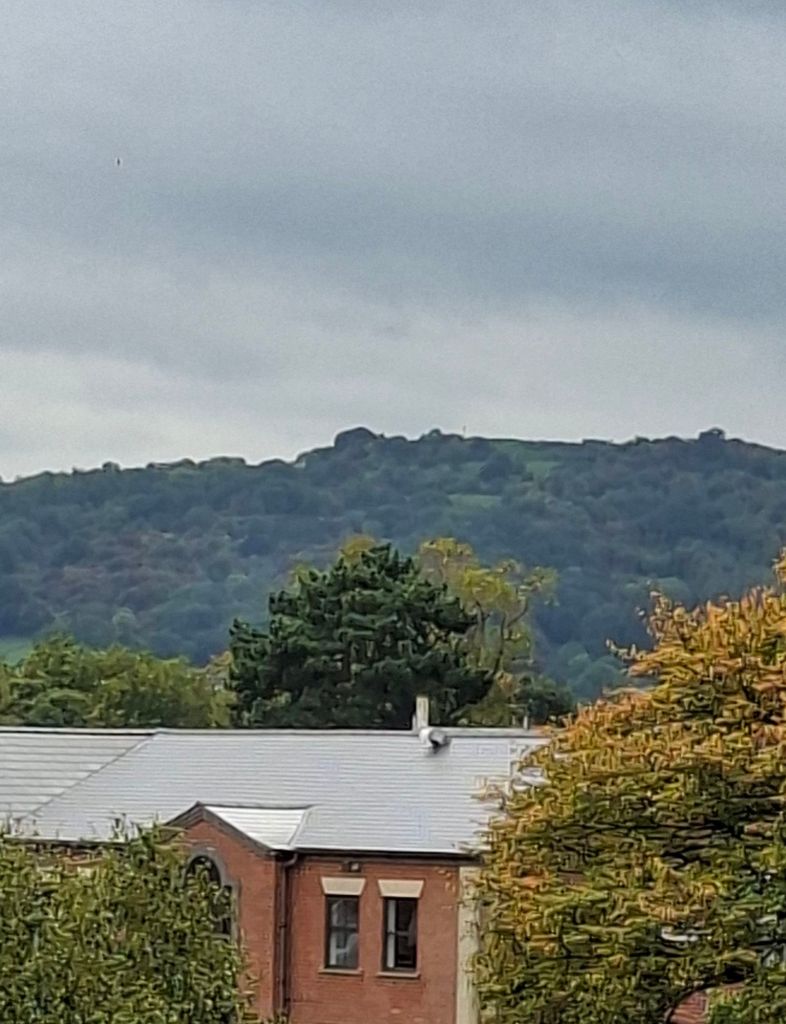
A familiar scene, in its equinoctial clothing. My experience of it is made different by a recent fall, in which I fractured my left humerus bone near the shoulder. I am left-handed, so it’s the ‘wrong’ side for a break. Happily my wrist and fingers remain flexible, and I don’t need surgery for the fracture. It could have been much worse.
Nonetheless Elaine, still depending on a rollator for walking, and I have to be resourceful and strategic in leaving and re-entering our apartment. Essentially I specialise in legs and she specialises in arms, though we each have some capacity in the other’s domain. We’re a team, after all. We work together. But we aren’t getting out much for the time being.
I look out a little wistfully and write a bit ouchilly. I feel limited and constrained. I also feel loved and supported. I’m a little foggy in my thinking, but I don’t see an episode like this as time off from my contemplative inquiry. All experiences are there to be acknowledged, moment by moment, day by day. Otherwise the practice becomes an alienated exercise, or performance, separated from the ups and downs of life. In reality, it sits ever-present within them.
I look within myself. I look across at Elaine. I also look out of window to connect with the world outside and its changes over the year. The grey sky is typical for this September, but blue sky is too. Variation is the overall story. It’s an inherently changeful and unsettled time. I’m intrigued by the way in which Robinswood Hill retains its green cover, when the town trees are in an advanced stage of turning. I’m alive.

It is evening and for me autumnal. The sky offers the water a soft light, seemingly pink and grey. The water reflects this back, adding its own hint of mist. It is a tranquil scene.
For the first time this year, I feel a tug towards the Equinox, just under a month away. These canal waters are gentle, but they are drawn from the River Severn, site of the Severn Bore (1). Perhaps the waters are nudging something – maybe the water – in me.
A little later, facing into the declining sun (below) I see the sunset and its effects. I notice the concentrated power of the orb as it appears to reach the earth, and the way in which this energy disperses into the sky. The colour coding shifts from intense white to yellow to red-orange to an orange becoming increasingly grey. I live at latitude 52 north, and the sunset is getting earlier every day, now 8.15pm. Another autumnal feature.

Autumn is also the season of the fruit harvest. This year, many people are commenting that the fruit harvest is arriving early. Below, against the background of a clear blue daytime sky, an apple tree is fruiting. The tree is close to Gloucester Cathedral and may belong to it. Medieval Gloucester was a place of churches and priories. It was also a place of orchards, many of them cultivated by monks and friars. The picture points to natural and cultural continuity, though the fruit are early this year. I am no longer at a point tension between seasons. I am already settled in autumn.

(1) The Severn Bore is a natural tide phenomenon occurring in the River Severn in England, where a large wave surges upstream. It’s caused by the Atlantic tide pushing into the Bristol Channel and funneling it into the narrowing Severn Estuary, creating a more powerful wave that can be up to two meters high and a speed of up to 21 km/h. The Bore travels up the Severn Estuary, from Awre to Gloucester, a distance of 25 miles. It is strongest in the equinoxes (especially spring) and a popular challenge for surfers, kayakers and paddleboarders.

Last Friday afternoon we were at the centre of a big storm. Lightning flashed dramatically just outside our windows. It was scary in the delicious way that can happen when linked to a subjective sense of safety. But we learned later in the day that one of the buildings in our estate had suffered a direct hit which the lightning conductors were unable to hold. There was a leak in the roof and water ran down the stair wells. I understand that the damage is not as severe as it might have been. But is certainly compromises any sense of immunity. It could have been worse and it could have been us.
Now it is Sunday 22 September, generally marked as the Autumn Equinox in these parts. I am in a familiar space (1) but experiencing it in another way. The current clock time is about 7.45 am (an hour after sunrise) and I’m looking out on a distinctly misty morning. The background wooded hills are very sketchy. True, there is clear light and shade in the foreground and I feel calm after a time of storm and rain. But they will likely be back soon. The mist and murk in the east suggest that anything could emerge from the most benign of spaces: the world reveals itself as volatile and shifting.
This is not an exclusively equinoctial phenomenon, but I have always linked the equinoxes – especially in autumn – with this kind of dynamic mutability. The Lightning Flash is a great archetypal symbol, not least for Druids. In antique theory, we are supposed to be able to summon them, though I’ve never tried it myself. I do know how to find the opportunity in disruptive change, though at this time of my life I have ceased to look for it. I much prefer the calm.
(1) See: https://contemplativeinquiry.blog/2024/09/17/poem-at-the-beginning-of-sunset

I am grateful to the Druid community for its varied ways of working with the 8-fold wheel of the year – especially when the festivals are placed in the context of the gradually turning wheel. Within that patterning of both nature and experience, I find the equinoctial periods and my response to them the least predictable of times.
The picture above shows a pre-equinoctial evening in Weymouth harbour, Dorset, England, round about 6 pm. I found this moment gentle and relaxing. The soft sunlight on the houses, boats and water seemed like a welcome home. I was born only 30 miles from Weymouth and it is part of my childhood landscape, my motherland. I took the picture on 18 September, the first day of my first visit for decades. I felt as if I was in a final afterglow of summer, content on familiar ground.
My wife Elaine and I spent only four days in Weymouth. Even over this brief period, we both had a strong sense of the advancing dark, in the mornings and the evenings alike, a shifting alternation of night and day that increasingly favoured night. One of our days was also dominated by high winds and driving rain, followed by a night in which we felt damp and chilled to the bone, unused as we now are to old buildings.
That night I had a rare experience of broken sleep and uncanny dreams. Eventually I woke up fully to a startling level of condensation on old window panes, obscuring an otherwise stunning view. For me this equinoctial period has, at least psychically, emphasised a shift towards the dark rather than a moment of poise and balance. Not a full dark, perhaps, but drained of colour, direction unknown.
The turning of the wheel never stops. On 23 September, the morning of the equinox, I felt the pleasure that can come from enjoying home after a break. I also noticed that the world beyond our many balcony doors was very clearly proclaiming a victory for the darker half of the year. This will be the setting for my journey for some time to come.
Whereas in the world I feel currently secure, I am conscious of uncertainties within. I do not quite see my critical-creative direction. In my 75th year, I wonder about ‘creative ageing’ (an old catch-phrase for me) and ‘critical wisdom’ (a new one). Hot air? Or genuine signposts? The Weymouth visit has stirred me up, but to what specific purpose I don’t yet know.

Blessings of the season! Where I live, the sun is descending but still has a certain power. We have entered the period of the Autumn Equinox, honoured by modern Druids in the festival of Alban Elfed. Traditionally, the emphasis has been on harvest, but Dana O’Driscoll (1) suggests ‘receptivity’ as a resonant theme, “because with receptivity, rather than cultivating an expectation of what we want and expect to come, we are open to what is and what comes our way”.
She relates her approach to the changes that the world is experiencing now. “It is a counter balance to the effort-reward cultural narrative that is tied to the Fall Equinox and themes of harvest. There is one enormous problem with the effort/reward theme on a larger cultural level. It belongs to a different age. It belongs to the Holocene, an 8,000-11,000 year period of stable climate that allowed humans to develop agriculture, allowed humans to have some predictability about their surroundings, and allowed us to develop symbolic understandings like those drawn upon for the modern wheel of the year. … But we are not in the Holocene any longer, both climate-wise and culturally; we’ve moved on to the Anthropocene … characterized by human-driven planetary changes which destabilize every aspect of our lives.”
I find the call to receptivity challenging. Part of me wants the late Holocene back, in a reformed version – socioeconomically, culturally, technologically. Part of me accepts that it has gone for good but doesn’t want to acknowledge the speed and severity of the transition. Currents of anger, fear and grief cry out for recognition. These are as much part of my life-world as are the climate crisis itself, initiatives for adaptation, and the forces undermining those initiatives. I somehow have to find a receptive space for all of the above, without being overwhelmed.
The good news is that my ‘receptivity’ seems to be sourced by a deep peace at the heart of experience, a peace that grows rather than diminishes with time. In my daily practice as a modern Druid I call for peace in the east, south, west, north, deep earth & underworld [below], and starry heavens [above]. Then I say: “I stand in the peace of the centre, the bubbling source from which I spring, and heart of living presence”. These words are vibrant with life for me however often I declaim them. I experience this deep peace as a fruit of my contemplative inquiry. Perhaps there is a harvest aspect here after all.
Certainly, to stand in such peace empowers my receptivity, linking it to other qualities like reverence, delight and awe. None of this changes the world. But it allows me to contemplate it with an underlying confidence, and to face its challenges in a more resourceful way. I am very happy to mark Alban Elfed as a feast of receptivity.
(1) https://thedruidsgarden.com/ – see Fall Equinox: a Spirit Walk and its internal reference to Equinox on Receptivity
NOTE: Pennsylvania-based Dana O’Driscoll is steeped in Druidry and the US homesteading movement. She is Grand Archdruid of the Ancient Order of Druids in America (AODA) and an OBOD Druid. She is a Mount Haemus scholar, lecturing on Channeling the Awen in 1912.
See also: https://contemplativeinquiry.blog/2021/06/09/book-review-sacred-actions/ )
For AODA, see: https://aoda.org/

This is the face of dawn outside my window, just after 6.30 a.m. I welcome the mid September day, appreciating this moment in the year. I like the infusion of pink into grey clouds, and the suggestion of warmth in the old church tower.
I have now grown used to getting up in the dark, and to beginning my morning practice with an awareness of darkness outside. The nurturing dark and enabling light are both part of my experience. A transient time of balance has begun. It feels numinous to me, and a time of great potential. I am energetically alert and alive.

Later, a little before 9 a.m., I am walking by the Gloucester-Sharpness canal. I notice light on leaves, and its influence on the gaps between trunks. The view, here, is over water. But it is the influence of sunlight that makes the greatest impression on me – captured in the picture as well as in real time.
By contrast, the spaces furthest away from the light source are able to show their earthiness, their woodiness and the depth of their green. The light is everywhere, but it is subtle and not over-bearing. It reveals its influence in different ways. Rather than radiating raw power, it allows possibilities in this small, fragile habitat. Contemplating autumnal states of light, as I approach the autumn equinox, I have been shown something about power and its manifestation.

After the equinox comes a deepening of autumn. Light, colour, texture – my sense of the world is different. Images of this moment in the year shape my sense of time as well as of place. I savour the turning of the wheel. All time is transitional, yet every time has its own uniqueness.
Contemplating images like this is for me a way of sustaining what modern Druids sometimes call a re-enchantment with and of the world. Simple attention to the living world is a renewing experience, and protects the heart from what can seem like the half-life of a Wasteland culture. Opening to a living cosmos, I plead guilty, with pride, to the charge of Romanticism.
It is after 9 a.m. on Sunday 26 September, Locally I enjoy orange as a colour of ripening, rich and shiny with life, as the season of bearing fruit moves on.

There are trees whose leaves have already turned, but will stay on their branches for awhile, giving these woods a more mixed, autumnal appearance.

But there is still a preponderance of green, some of it surprisingly fresh. Here it provides a canopy of green light and shade.
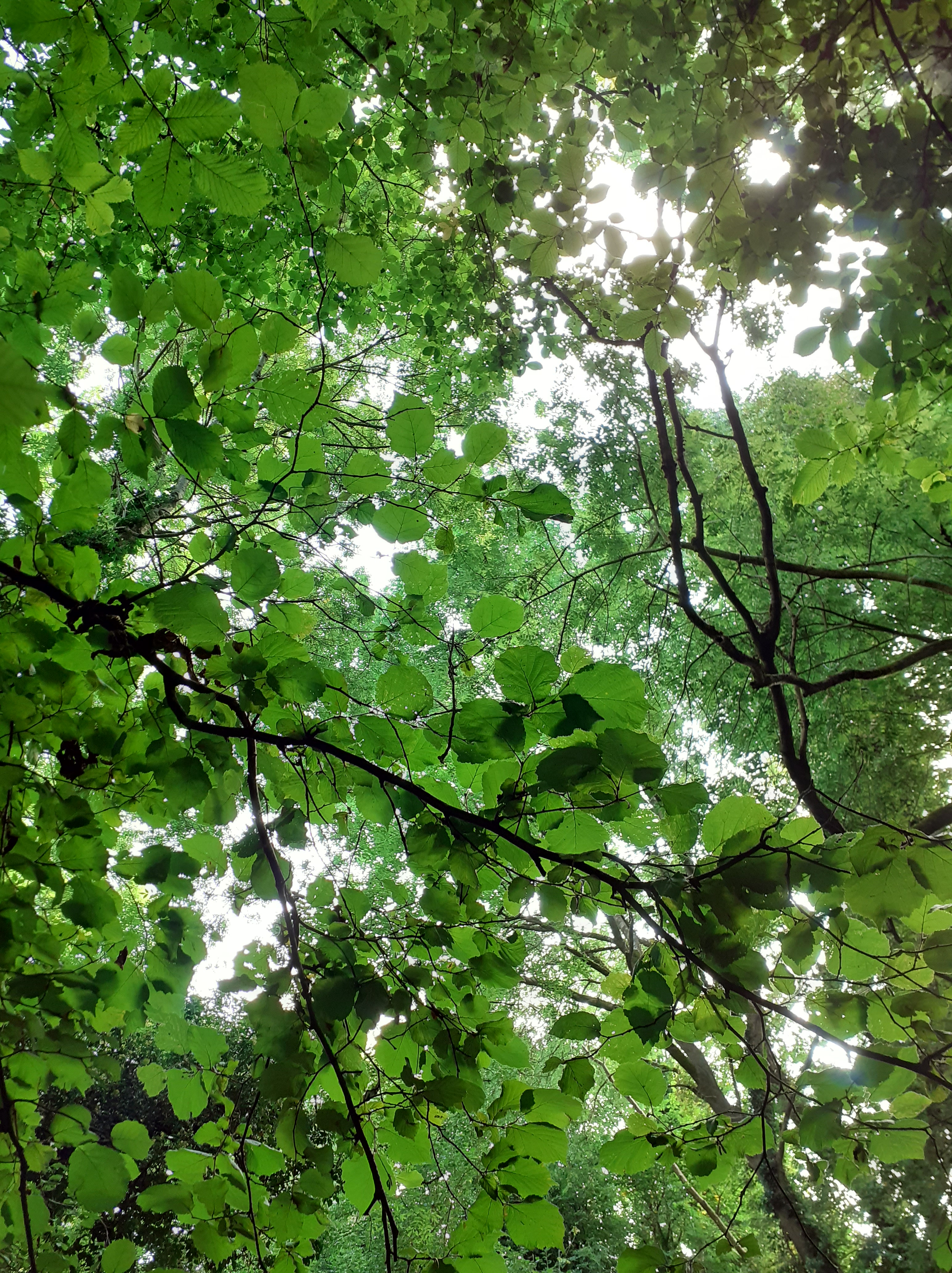
The season is also asserting a downward pull, towards the earth and dissolution – a process, however, still in its early stages. The broken fence seems almost to be sharing this, beginning a return to the land.

Then there is the undergrowth, with its mix of living and dead wood, living and dead leaves, and the soil that holds them. The evergreen leaves are defiantly vivid. Taking pictures, I celebrate the time of year.

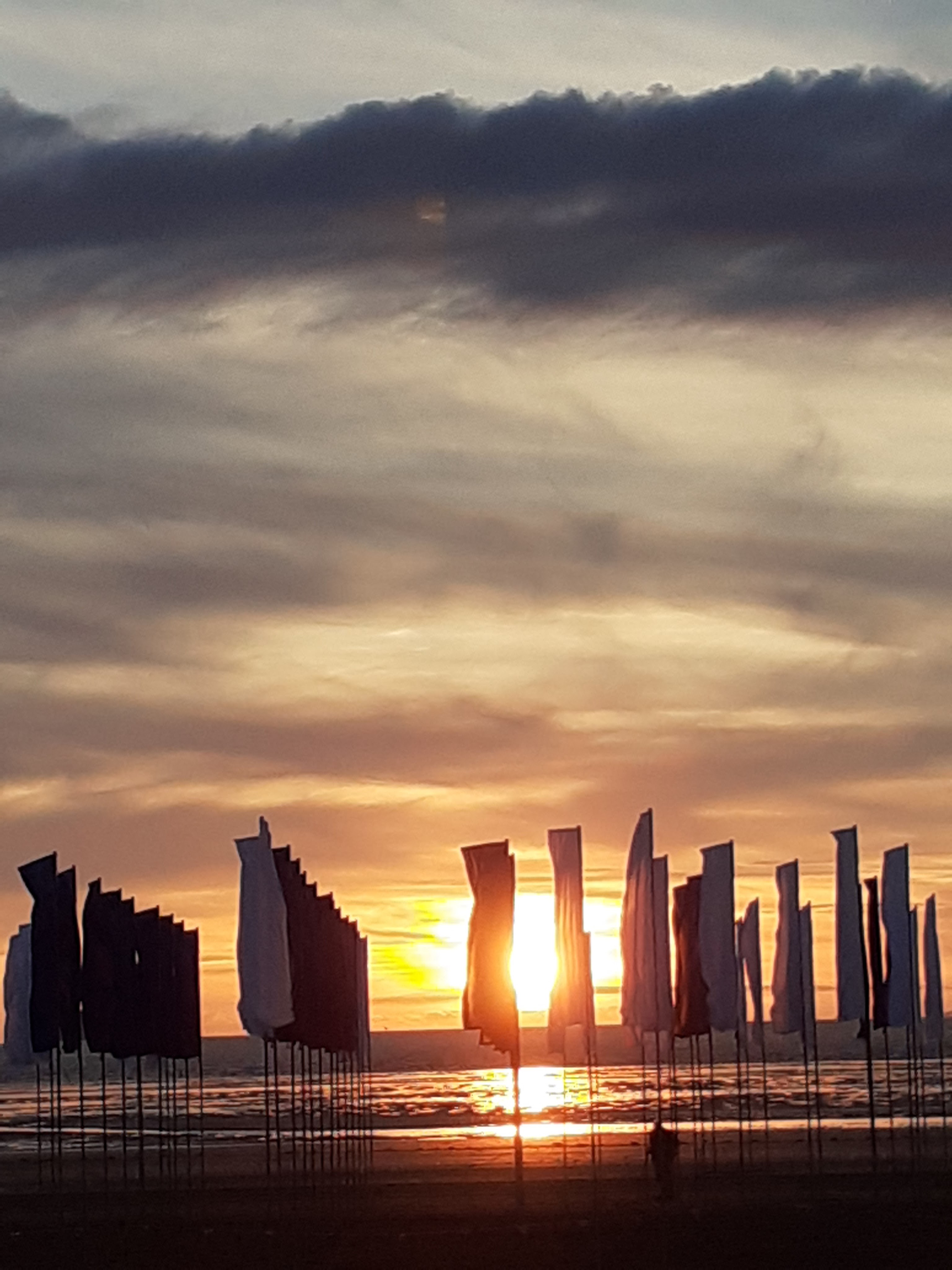
In Memoriam is a touring artwork by Bristol-based artist Luke Jerram. His installation, as shown on Weston beach on 16 September, is a temporary memorial for those lost to the COVID-19 pandemic, as well as a tribute to the NHS health and care workers who have been risking their lives during the crisis. I was in Weston with my wife Elaine at the time, and we explored the installation both separately and together.
The exhibition is made up of 100 flags, originally hospital bed sheets, planted in the sand. A bird’s eye view would show a blue cross against as white background. When I photographed the installation at sunset on 16 September, it felt numinous to me and slightly reminiscent, in its feeling-tone, of an ancient ritual site. I wonder if our distant ancestors had portable and perishable structures for enhancing ritual space as well as the great stone ones that remain part of our landscape. It seems likely.
Luke says of his work: “As we move towards the end of this pandemic in the UK, it feels like, as a nation, we need to come to terms with everything we’ve been through. With funerals limited in their capacity and places of worship closed, it’s been hard for many people to grieve properly. I hope this artwork will create a framed space and moment in time for personal and shared reflection”. http://www.memoriamartwork.com/about
The exhibition has been deliberately placed in the open air and in windy locations, inviting people to enter, contemplate and explore the artwork. The experience recorded above combined shape, colour, sound and movement – all at twilight, leaning in to the autumn equinox, in a meeting place of land sea and sky. For me, both the time and place made a difference, manifesting the power of liminal times and spaces wherever they are found.
My earlier, day-time experience of the installation had been different. Then, the scene felt defined and organised, with clear edges. A blue sky with light patches of cloud matched the flags. At the same time, the sense of a darker ground was evident, with shadows like freshly dug graves.
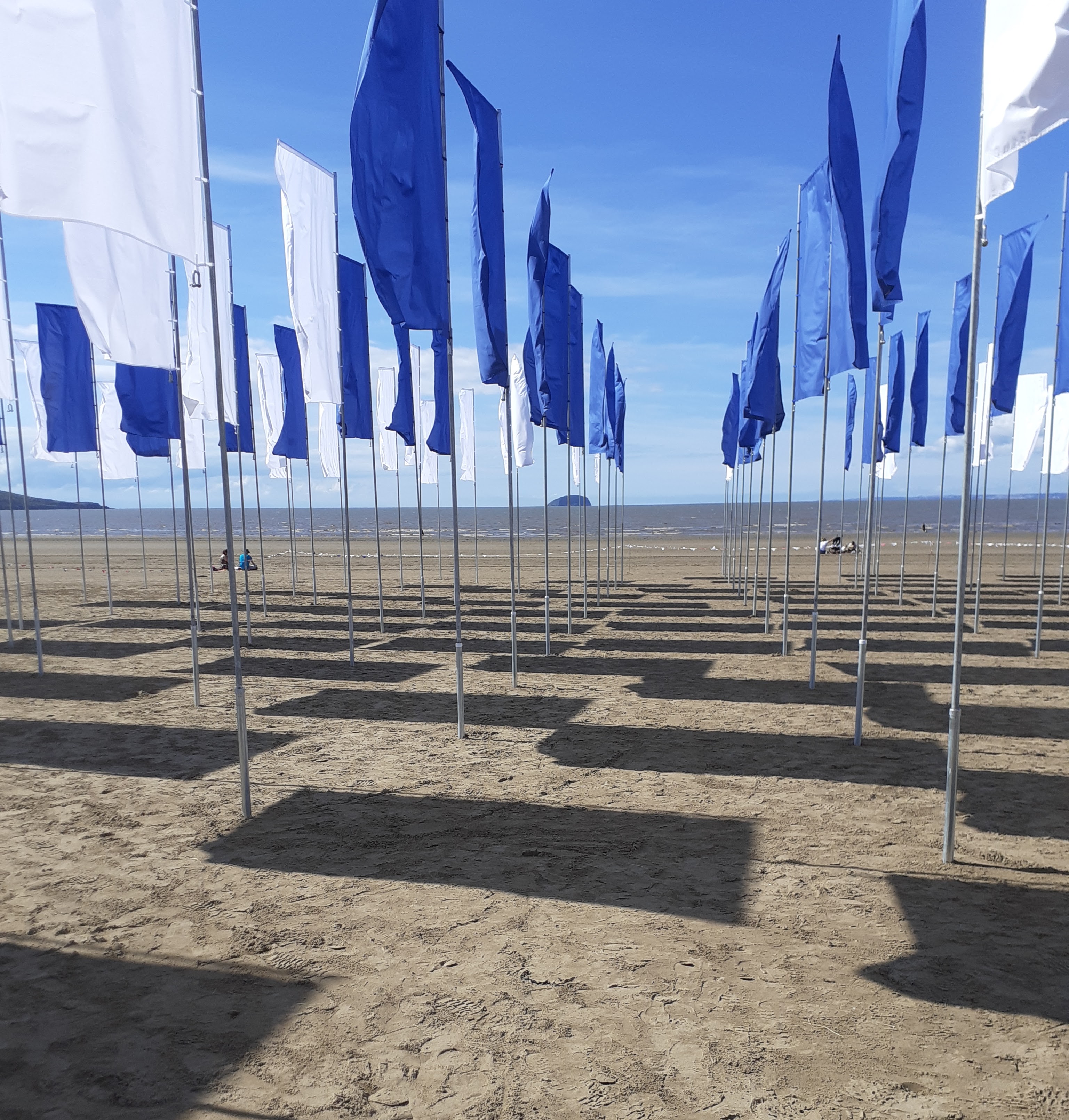
The flags installation has been touring the UK for about a year. It is due to move to Bristol on leaving Weston, where it forms part of a local health and arts festival. Weston and Bristol are its home, for it was commissioned by Culture Weston https://cultureweston.org.uk and the University Hospitals Bristol & Weston NHS Foundation Trust. It is also supported by the Without Walls street art consortium https://www.withoutwalls.uk.com and the Welcome Trust funded Weather Lives project based at the University of Durham.
music that celebrates Earth and speaks to the heart
Follow the Moon's Cycle
Meeting nature on nature's terms
A little bit of Mark Rosher in South Gloucestershire, England
A monastic polytheist's and animist’s journal
Selkie Writing…
Images and words set against a backdrop of outsider art.
living with metacrisis and collapse
The pagan path. The Old Ways In New Times
Spiritual journeys in tending the living earth, permaculture, and nature-inspired arts
a magickal dialogue between nature and culture
The gentle art of living with less
Thoughts about living, loving and worshiping as an autistic Hearth Druid and Heathen. One woman's journey.
An place to read and share stories about the celtic seasonal festivals
Just another WordPress.com site
Exploring our connection to the wider world
Become more grounded and spacious with yourself and others, through your own body’s wisdom
Good lives on our one planet
News for the residents of Hopeless, Maine
 Contemplative Inquiry