Contemplative Inquiry

This blog is about contemplative inquiry

Tag: ancestors

DEEP AUTUMN 2025

“All things ripen and rot that rose up at first,

And so the year runs away in yesterdays many,

And here winter wends again, as by the way of the world it ought,

Until the Michaelmas moon has winters boding brought.” (1)

Even today, deep autumn opens the door to winter. This was even more the case in the North Staffordshire and Derbyshire regions of 14th century England, where Sir Gawain and the Green Knight was written. Even in castles, people were less sheltered from the growing cold and damp than we are. So readers and listeners of the period are reminded that the coming of winter is both natually and divinely ordained.

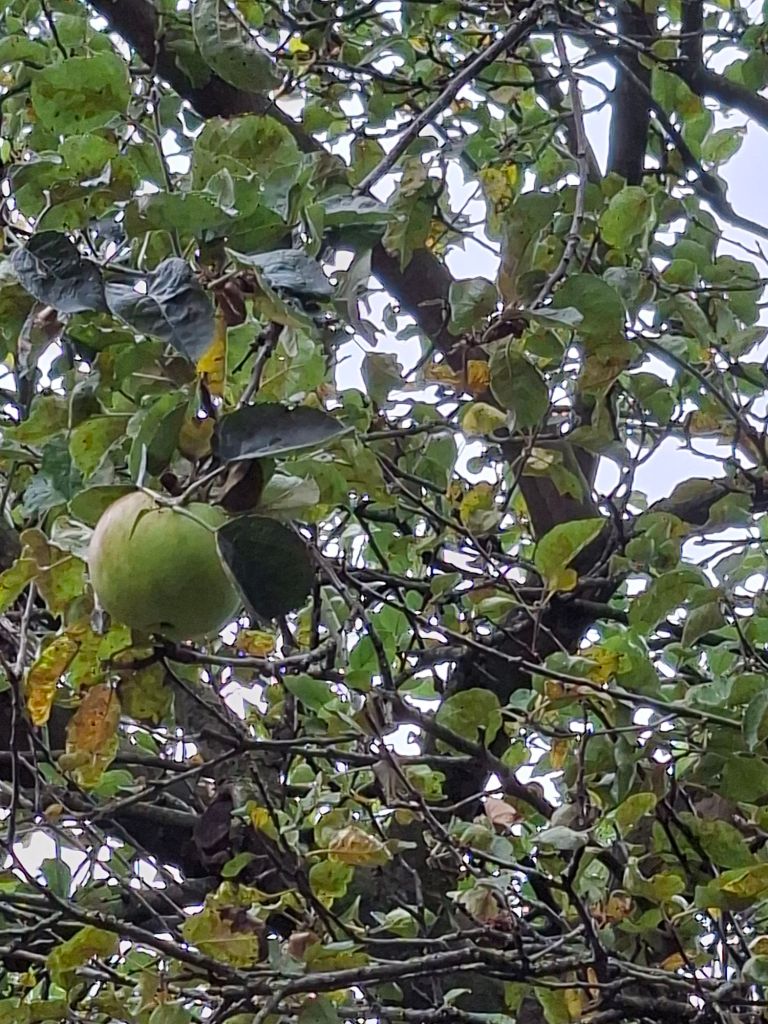
Here and now, the sight of the apple harvest in its later stages (pictured above) seems quite different than in the early ones (2) – less bright, less novel, less shiny. Rotting apples lie on the ground, now fallen outside the wall of  Gloucester Cathedral’s orchard. From Nature’s exuberant perspective, this is all part of the plan.  Waste is built in.

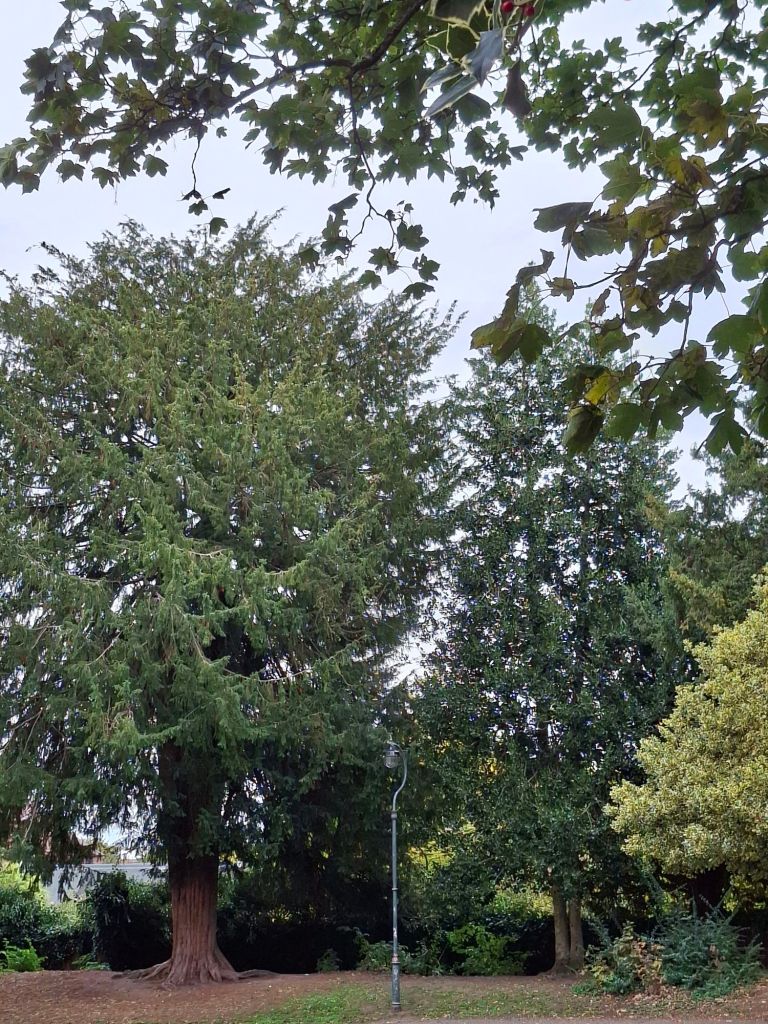
This time draws me further into the declining year. I am in the cathedral’s  grounds, now looking at a yew tree and its associations with death. I’m thinking of the approach of Samhain (aka Halloween/All Hallows) at the turn of the month. Once it marked the 3rd harvest of the year – the blood harvest, where animals were slaughtered in preparation for winter. Now it is more a time to remember our ancestors, and our dead more widely.

Yet the seasonal moment, and the yew, can also be linked to wisdom and transformative change in life. I launched my contemplative inquiry at Samhain 2011. Like many people, I find that this period can be a resonant and creative time.

Below the yew, I have included a section of the cathedral itself. I have old personal associations linking medieval Gothic architecture with the feeling-tone of the declining year. I am also aware that this building is linked to the trees I picture and discuss. Gloucester Cathedral was a monastery when Sir Gawain and the Green Knight was written but many of its features were already in place.
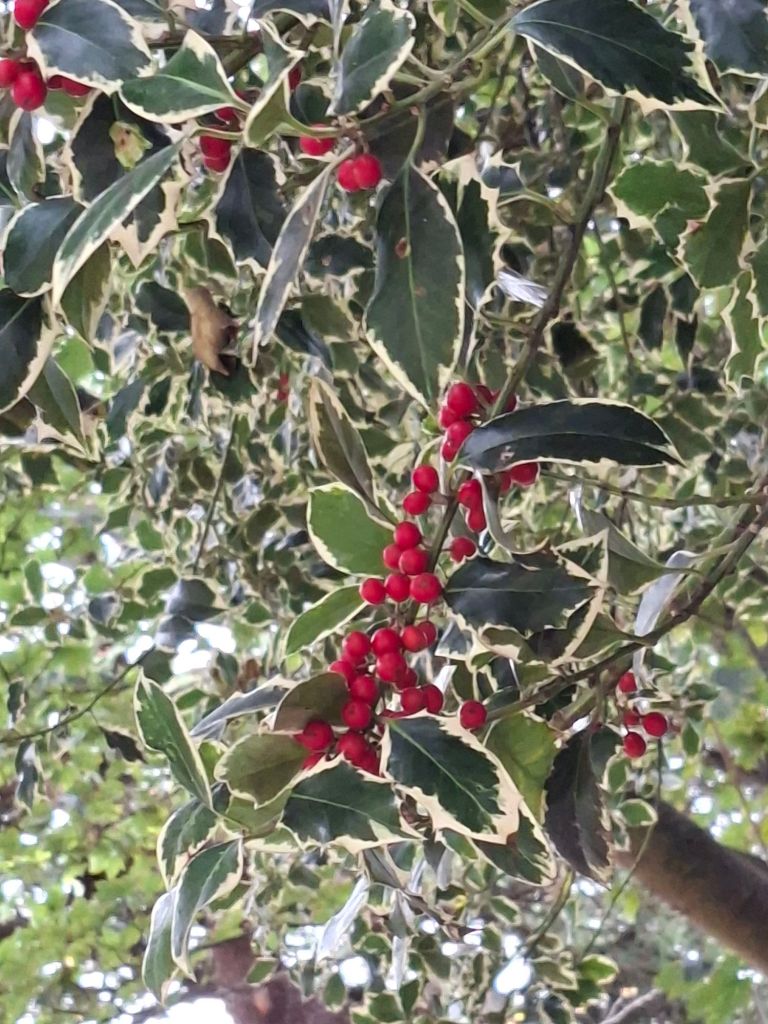
In the same space, I find both holly and ivy, with berries on the holly tree.  I immediately thought of the Christmas carol The Holly and the Ivy. It is an ancient folk carol, which interweaves Christian themes and others that belong with the land. The version which is now popular was collected by Cecil Sharp in 1909 in Gloucestershire from Mary  Clayton.

Many people think that the indigenous Pagan themes are the oldest, and that the central focus here is on the holly. The authors of The Green Man Tree Oracle say: “Holly’s connection with the Green Man is especially strong. In his guise as the Holly King – an ancient giant and symbol of fertility – the Green Man makes a notable appearance in the 14th century poem Gawain and d the Green Knight. Here he takes the form of a fearsome knight, who comes to King Arthur’s court to offer a midwinter challenge, carrying a club of holly and wearing a holly crown (as symbols of his true identity).” This challenge happens every year, where the Green Man/Holly King demands that we encounter him through our dealings with the natural world.

Elaine and I went to the Gloucester Cathedral Close and its surroundings on Saturday afternoon 18 October to outrun an  extended period of gloom, wind and rain. We are now in it, so the lessons of the trees in deep autumn, anticipating the coming of winter, are not lost on us. The dark of the year is on its way.
(1) J.R R. Tolkien (translation of anonymous texts) Sir Gawain and the Green Knight, Pearl, Sir Orfeo New York: Ballantine Books, 1980.

(2) https://contemplativeinquiry.blog/2025/08/22/ (3rd photo)

(3) John Matthews & Will Worthington The Green Man Tree Oracle: Ancient Wisdom from the Greenwood London: Connections, 2003

WALKING IN ARNOS VALE CEMETERY

Above, through the trees, we can see one of the chapels belonging to the Arnos Vale Cemetery in Bristol, England. It was built as a  garden cemetery extending over 45 acres in 1839, as the city’s old parish graveyards were becoming overcrowded and a health hazard. The new venture was designed to be spacious, with sunlight, fresh air, trees and shrubs.

It worked well for nearly 150 years. But in 1987 the owners announced their intention to clear a large section for ‘development’. An Association for the Preservation of Arnos Vale Cemetery swiftly sprang up. It fought successfully for a safe future for the site, gaining the support of the Bristol City Council, Bristol citizens and many people worldwide.

Now, as the Friends of Arnos vale, they continue to manage what they describe as “a hillside Victorian cemetery and conservation park, with heritage and wild life tours, plus a café”. It takes a lot of effort and activity to keep this precious space going, yet on my occasional visits I still find it tranquil and unspoilt.

For me it is a magical place, largely because the graves are being allowed to sink back into the land. There is something primal about the cross above, rough hewn, almost equal armed, and decorated with foliage. Still a cemetery, Arnos Vale has become something wilder than a garden. At this time of year, the paths become green tunnels, deftly concealing their destinations.

Yesterday I walked in Arnos Vale with a friend, and our direction of travel required a descent towards the main buildings. The steps we went down were not as overgrown as the ones below, but l found them challenging enough. The imagery and effortful activity of descent give me the feeling of a deep earth and underworld journey, and the sense of enchantment that goes with it.

Towards the bottom of the slope, my recognition of a re-enchanted space in a largely disenchanted world is further strengthened. A cross again. Evergreen ivy growing up it. Vivid summer blooms behind and in front. Tall wild grass. Trees in the background. Green abundance enhancing the gravestone rather than diminishing it. Life and death companioning each other without drama or fuss. Contemplating this natural harmony, I feel heartened and refreshed.

‘CONCRETE SCIENCE’ IN NEOLITHIC CULTURES

Extract from The Dawn of Everything: A New History of Humanity by David Graeber and David Wengrow (1), exploring the notion of ‘concrete science’. The idea comes from the anthropologist Claude Levi-Strauss, who is quoted as saying that “there are two distinct modes of scientific thought … two strategic levels at which nature is accessible to scientific enquiry: one roughly adapted to that of perception and imagination: the other at a remove from it”. ‘Concrete science’ is the first. The specific focus, in this part of the book, is on the development of Early Neolithic societies in lowland parts of the Fertile Crescent, especially along the valleys of the Jordan and Euphrates rivers.

Graeber and Wengrow write: “It’s important to recall that most of humanity’s greatest scientific discoveries – the invention of farming, pottery, weaving, metallurgy, systems of maritime navigation, monumental architecture, the classification and indeed domestication of plants and animals. and so on” come out of ‘concrete science’. But what does such a science actually look like, in the archaeological record? “The answer lies precisely in its ‘concreteness’. Invention in one domain finds echoes and analogies across a whole range of others, which might otherwise seem completely unrelated”.

“We can see this clearly in early Neolithic cereal cultivation. Recall that flood-retreat farming required people to establish durable settlements in mud-based environments, like swamps and lake margins. Doing so meant becoming intimate with the properties of soils and clays, carefully observing their fertility under different conditions, but also experimenting with them as tectonic materials, or even as vehicles of abstract thought. As well as supporting new forms of cultivation, soil and clay – mixed with wheat and chaff – became basic materials of construction: essential in building the first permanent houses; used to make ovens, furniture and insulation – almost everything, in fact, except pottery, a later invention in this part of the world.

“But clay was also used, in the same times and places, to (literally) model relationships of utterly different kinds, between men and women, people and animals. People started using its plastic qualities to figure out mental problems, making small geometric tokens that many see as direct precursors to later systems of mathematical notation. Archaeologists find these tiny numerical devices in direct association with figurines of herd animals and full-bodied women: the kind of miniatures that stimulate so much speculation about Neolithic spirituality, and which find later echoes in myths about the demiurgic, life-giving properties of clay. As we’ll soon see, earth and clay even come to redefine relationships between the living and the dead.

“Seen this way, the ‘origins of farming’ start to look less like and economic transition and more like a media revolution, which was also a social revolution, encompassing everything from horticulture to architecture, mathematics to thermodynamics, and from religion to the remodelling of gender roles. And while we can’t know who exactly was doing what in this brave new world, it’s abundantly clear that women’s work and knowledge were central to its creation; that the whole process was a fairly leisurely, even playful one, not forced by any environmental catastrophe or demographic tipping point and unmarked by major violent conflict. What’s more, it was all carried out in ways that made radical inequality an extremely unlikely outcome”.

(1) David Graeber and David Wengrow The Dawn of Everything: A New History of Humanity Penguin Books, 2022 (First published in Great Britain by Allen Lane in 2021)

NOTE ABOUT THE AUTHORS David Graeber was a professor of anthropology at the London School of Economics. He is the author of Debt: The First 5,000 Years. As an activist, he also helped to make Occupy Wall Street (2011) an era-defining moment. He died on 2 September 2020. David Wengrow is a professor of comparative archaeology at University College London. He conducts fieldwork in Africa and the Middle East and is the author of What Makes Civilisation? Following David Graeber’s death shortly after the text of The Dawn of Everything was completed, David Wengrow has overseen its publication.

LEARNING ABOUT OUR PAGAN ANCESTORS, AND LEARNING FROM THEM

Recently I watched Ronald Hutton’s first Gresham College lecture about Gods of Pagan Britain on youtube (1). It sets the scene for a series, raising questions about what we can know about the spiritual lives of our ancestors, what we can fruitfully imagine, and how to tell the difference.

Professor Hutton explores two specific topics. The first is our current archaeological understanding of the Stonehenge monument on Salisbury Plain, England, together with its legendary history and place in the public imagination. The second is the case of the Lindow Man, who was violently killed and thrown into a peat bog in Derbyshire, thus partly preserving his body for conceivably (but probably not) 2,000 years. He has been widely considered, including at times by archaeologists, to be the victim of a Druid sacrifice, though Hutton points out that there are good reasons to question this.

I was drawn to this lecture, both informative and entertaining, by my interest in learning from an ancestral culture without its own texts, as well as about it. This is part of my reason for following a modern Druidry that embraces indigenous themes long pre-dating the Druidry of the Celtic iron age. The people who built Stonehenge in the third millennium BCE bequeathed us the wheel of the year, with its circle and cycles, and its focus on the solstices and equinoxes. We can be inspired by this and honour the ancestors by embedding it in our own lives in ways that suit our time and culture.

For readers who have not yet seen and heard the lecture, I recommend that you take a look at the video.

(1) https://youtube.com/watch?v=QjC0lGr4h04&t=5s/

Ronald Hutton is Professor of History at the University of Bristol, a specialist in Pagan and Druid studies, and enjoys a very high reputation within both the academic and Pagan communities.

STOPPING FOR THE ANCESTORS

“I remember one morning contemplating a mountain in the early light of dawn. I saw very clearly that not only was I looking at the mountain, but all my ancestors in me were looking at the mountain as well.

“As dawn broke over the mountain peak we admired its beauty together. There was nowhere to go and nothing to do. We were free. We needed only to sit there and enjoy the sunrise. Or ancestors may never have had the chance to sit quietly, peacefully, and enjoy the sunrise like that.

“When we can stop the running, all our ancestors can stop at the same time. With the energy of mindfulness and awakening, we can stop on behalf of all our ancestors. It is not the stopping of a separate self alone, but of a whole lineage. As soon as there is stopping, there is happiness. There is peace.” (1)

When Thich Nhat Hanh tells this story, he shows us ‘mindfulness’ as an art of living. He stops, looks at a mountain at dawn. His contemplation becomes a relationship, and the relationship is extended to the ancestors. For him, mindfulness sits together with interbeing, his word for interconnectedness. It is not a personal accomplishment, but the portal to an expanded, more inclusive, experience of life.

Thich Nhat Hanh was a great advocate and teacher of formal sitting meditation. But he didn’t fetishise it. The Mahayana Buddhist world view, and particularly its ethics, mattered more. I once heard a senior Vietnamese follower (also a psychiatrist) say that she was cautious about teaching meditation in Vietnam. She said that even in the 21st century, decades after the Japanese, French, American and Chinese wars, with elements of civil war thrown in, many people in Vietnam are too traumatised to benefit from meditation. What works best is participation in the Buddhist community and its ceremonial life, in a spirit of generosity and compassion. Mindfulness is essentially a value, not a contemplative technique.

I stop for my own ancestors, of both blood and other inheritances. I become aware of holding them in my heart. I let them in as I let in the world around me, and I experience that world with them and for them. We share a brief period of deep peace, and then let it go. For me, it feels mindful, Druidic, and very natural. Something to return to, whenever the moment feels right.

(1) Thich Nhat Hanh The Art of Living London: Rider, 2017 (Rider is an imprint of Penguin Random House UK)

CONTEMPLATING FAMILY PHOTOGRAPHS

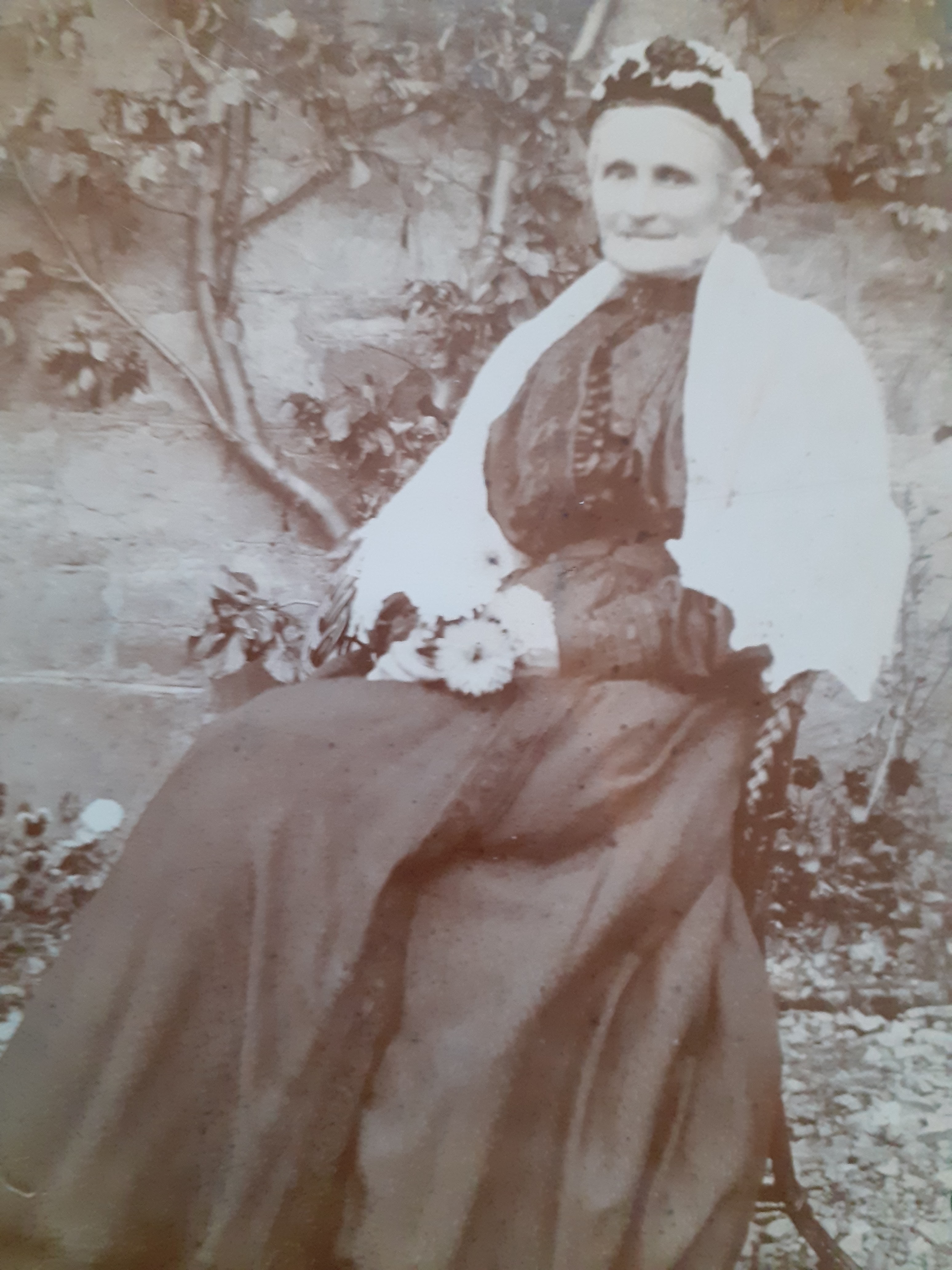
As we approach the turn of the year, I am thinking of recent ancestors and the visual records they have left. This photograph is of my paternal great grandmother was taken by a professional photographer in the first decade of the twentieth century. You can see that it has been carefully posed. This is before the era of family snaps, let alone selfies. Being photographed is an occasion.

At that time the family were tenant farmers in East Lothian, Scotland, and the photographer was based in Haddington, the county town. I am sad to say that I know very little about my great grandmother as an individual, of who she really was. In her picture I read both dignity and diffidence. A certain natural stillness, perhaps, and inner strength. In a sense she was the matriarch of an family group in which the tenancy was largely worked by two sons, one of whom had a family of his own, though I am not sure of how far she filled that role.

I feel frustrated by my lack of knowledge and understanding even as I write, and I’m trying not to default into writing about my great grand father instead. I do know a bit about him – strong traditional Presbyterian, Elder of the Kirk, political Unionist whose Unionism extended to the whole of Britain and Ireland. I do imagine my great grandmother as being in the slip stream of all this. She didn’t live long enough to be a voter; I don’t even know how she felt about this. She did live long enough to know my father and his sister as children and there is an indirect link through them, though they didn’t actually say much about her to me. The picture below is from 1909, with the two children looking dressed up and solemn.

I do not have to go far back in family history to find myself in an unfamiliar cultural landscape, and to appreciate that I am an outsider to my own family members. I was given little family information about these days when growing up, and the very aspects of pre-1914 history and culture that I have studied or engaged with were ones that didn’t enrol my great grandparents. They were the older generation, defined by both their immediate culture and the reign of Queen Victoria, only recently ended.

The world of these photographs was not to last. When my great grandfather, predeceased by my great grandmother, died in 1916, the tenancy ended and neither of his sons negotiated a new one. My grandfather, grandmother, father and aunt moved to Musselburgh, near Edinburgh, and became a corn merchant. His brother emigrated to Australia. The heavy duty politics and religion were ameliorated. A way of life had gone. My father, born in 1907, moved to England in 1929 and I was born in Somerset in 1949, much closer to my mother’s family who came from Exeter in Devon. The years have continued to roll on. 1949 was only forty years on from the picture of the two children. There have been seventy one years since, which is food for thought in itself. Looking at her portrait, I understand that whilst I do not know, and will never know, my great grandmother, I can appreciate her through the image that’s presented, without narrative information, and also without mythology or romance.

ATLANTIC ANCESTORS

I am beginning to feel the pull of Samhain. It is not here yet, but its themes are drawing my attention. One of these is the remembrance of ancestors.

A recent post by poet and awenydd Lorna Smithers (1) has prompted me to look again at Barry Cunliffe’s work, and the book I have to hand is Facing the Ocean (2). It is about early human history in Atlantic maritime Europe. including Britain and Ireland. One of its threads concerns living with the ocean. Another, related to the first, looks at communication by sea at a time when land travel was difficult. I will follow up these threads in future posts. In the meantime, Cunliffe’s sense of the interaction between nature and culture is shown in the extract below.

“To stand on a sea-washed promontory looking westwards at sunset over the Atlantic is to share a timeless human experience. We are in awe of the unchanging and unchangeable as all have been before us and all will be. Wonder is tempered with reassurance: it is an end, but we are content that the cycle will reproduce itself the sun will reappear. The sea below creates different, more conflicting, emotions. True, there is the comfortable inevitability of the tides, but there is also an unpredictability of mood, the sea constantly changing, sometimes erupting in crescendos of brute force destroying and remoulding the land and claiming human life. The sea is a balance of opposites. It gives and takes. It can destroy quickly and build new; it sustains life and it can kill. Small wonder that through time communities have sought to explain these forces in terms of myth and have attempted to gain some puny influence over them through propitiation.

“Nowhere is this relationship more apparent than in the legends and folk traditions of Brittany. In the howl of the wind can be heard the screams and laments of those drowned at sea, and much of human life – birth and the gender of the newborn and death – was believed to be conditioned by the tides. Below a thin veneer of Christianity lie beliefs deeply rooted in time. A century ago, in the parish of Ploulec’h on the north Breton coast, the first Sunday in May saw the people in procession climb to La Croix du Salut – an isolated landmark that could be seen from far out to sea offering assurance of the approach to a safe haven. Here the sailing community gave thanks for their safe returns before descending to the chapel of Notre-Dame across the bay on the headland of Le Yaudet. In the church today, fine model sailing ships hanging from the roof beams are among the more evocative offerings made to the Virgin by grateful mariners. The deep underlying awe of the ocean is poignantly expressed by the Breton poem

War vor peb ankenn

War vor peb peden

(Sur la mer toute angoisse, sur mer toute priere

At sea all is anguish, all is prayer).”

(1) https://lornasmithers.wordpress.com/2020/10/04/britain-begins-debunking-the-myth-of-celtic-invasions/

(2) Barry Cunliffe Facing the Ocean: The *Atlantic and Its Peoples 8000 BC-AD 1500 Oxford: the University Press, 2001

*NOTE: I wish the subtitle had specified ‘eastern Atlantic’, since every corner of the Americas has been populated for periods ranging from 12,000-24,000 years. The western Atlantic coastal people amongst them are not my focus, but in a post about ancestors I don’t want them to be implicitly erased.

HONOURING ‘THE WAY OF MERLIN’

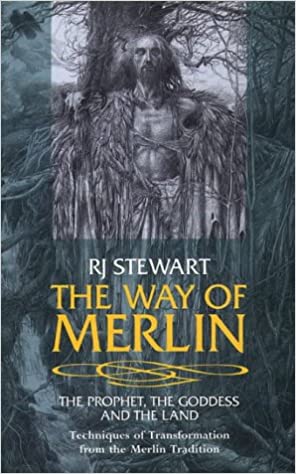
The Way of Merlin came into my hands at the right time. It seeded a number of key understandings, which nudged me onto a Druid path in October 1993. The first is that “sacred space is enlivened by consciousness. Let us be in doubt that all space is sacred, all being. Yet if human beings dedicate and define a zone, a location, something remarkable happens within that defined sphere of consciousness and energy. The space talks back”. Author R. J. Stewart backed this up with the further declaration that “The mystery of Merlin is a backyard mystery, for it declares the smallest, most local space to be sacred, to be alive, to be aware.” I was living in South London at the time and remember being challenged in this book to befriend a spring and a tree. At first, I thought, ‘what?’. Then I found them both, on the day I started looking, in a local park.

Such activities went with the view, “yourself and the land are one”, and that this apparently humble work has a larger context of “holism … identical to the deepest perennial magical and spiritual arts”. Magic is seen as a process of having intent and applying energy and imagery in service to it. Working within mythic frameworks asks for an enabling suspension of disbelief rather than a dogmatic literalism.

I did not work with the suggested programme of visualisations and rituals concerning Merlin, the weaver goddess Ariadne, and other scenes drawn largely from Geoffrey of Monmouth’s Life of Merlin. As practices they seemed too long and formal. But reading Stewart’s text was psychoactive in itself. The weaver goddess Ariadne is a key figure, and the vision of Ariadne reveals a cosmic mother at the threshold of Being and Unbeing. She draws us into the empty silence of the Void, out of which emerges the sound of breath – our own breath and at the same time the breath of all Being. Being breathes through us, “and we realise that we have a body that is the body of all Being. The stars are within us. We are formed of the weaving”.

The specific image of Ariadne never took root in my imagination. But I acknowledged the power of this Pagan Gnostic creation myth. Its sense of our reality emerging from empty potential at the behest of a cosmic mother has stayed with me. My work with Sophia earlier in this inquiry pointed in the same direction. So does my recent post about Dancing Seahorses and Modron (2). I am happiest with the Modron image, because it is less defined and anthropomorphised than those of Ariadne and Sophia. At at the threshold of being and unbeing, she shows us that we are not separate from the divine breath that forms us, or from the creation that is formed. The stars are indeed within us, whether we know it or not.

The Way of Merlin has something like an ancestral role in my spiritual life. R. J. Stewart and I were born in the same year, but he was doing this pioneering work in the 1980’s when I was busy with other things. He influenced me in the period immediately before I embarked on a Druid path, and I have revisited his work over the years. It still has riches to offer.

(1) R. J. Stewart The Way of Merlin: the Prophet, the Goddess and the Land London: The Aquarian Press, 1991

(2) https://contemplativeinquiry.blog/2020/06/25/dancing-seahorses/

IMBOLC 2020

Spaces ‘between’ can be numinous. They feed the soul. Imbolc for me is like a pre-dawn light. I am not yet out of winter, but something else is happening, and palpably growing in strength.

The hierophant of the Wildwood Tarot – the Ancestor – is placed as a power of Imbolc. An antlered figure clothed in reindeer skins and evergreen leaves, she has a resonance of Elen of the Ways, the reindeer goddess who stands for the sovereignty of the land. She calls to us from a deep past where Ice Age hunters followed reindeer through ancient forest, “following the deer trods” (1,2) responsive to the herds and attuned to the landscape. They lived with little personal property and without long hours of alienating work. The Ancestor invites us to wonder what these early ancestors  might have to teach us under our very different conditions.

On the card, the Ancestor is sounding a drum and calling us into another consciousness – one more open and aware of our place within the web of life. In her world, deer and people are kin. She herself is ambiguous – she might be wearing a mask, or she might be a truly theriomorphic figure. I respond to her call by sinking deeply into my felt sense – the embodied life of sensation, feelings and belly wisdom. The call of the Ancestor  is a pathway to greater wholeness and connection, both personally and collectively. As the year wakes up, it is a good call to hear.

(1) Elen Sentier Elen of the Ways: British Shamanism – Following the Deer Trods Arlesford, Hants: Moon Books, 2013 (Shaman Pathways series)

(2) Elen Sentier Following the Deer Trods: A Practical Guide to Working with Elen of the Ways Arlesford, Hants: Moon Books, 2014 (Shaman Pathways series)

See also book review at: https://contemplativeinquiry.blog/2014/06/22/

BEING IN TRANSIT

If I ask myself, ‘where is my spiritual centre?’ I do not find an answer within any named tribe. Spiritual friendships, communities of practice and generic webs of connection can all help, and I hope that I give something back. But my path is fundamentally solitary. Perhaps even the notion of having a centre is limiting.

I’ve learned a lot from Druidry. Partly thanks to Druid practice, I experience myself as more fully alive on a living Earth. I honour the wheel of the year as it turns in my locality. In Druidry, I’ve been enabled to explore a contemplative dimension within Earth spirituality. I have also connected with ancestral threads I might otherwise have neglected. But I’m not a polytheist Pagan and I have never felt attracted to Shamanism. I’ve learned from Buddhist tradition too. I’m a meditator. I have a deepened sense of interconnectedness and the call to kindness that goes with it. But I have not adopted the four noble truths as the basis of my path, and I do not seek refuge in Buddha, Dharma and Sangha. I am grateful for my connections to Druidry and Buddhism and will continue to take an interest in their literature. I also sense that, with certain understandings and practices now ingrained, their active roles in my life are over.

My creative edge has for some time been elsewhere. I have been working with the insight that perceptions, apparently of the world, do not establish the existence of a world, but only of perceiving (or awareness, or being). Sensations, apparently of a body, do not establish the existence of embodiment, but only of sensing (or awareness, or being). Thoughts, apparently of a mind, do not establish the existence of a mind, but only of thinking (or awareness, or being). This can seem destructively sceptical, even solipsistic. Yet for many people it signals the possibility of a ‘more than’ (or awareness, or being), rather than a dissociated ‘less than’. Mind, body and world can return enhanced rather than diminished by this kind of exercise, with a sense of a ‘not I not other than I’ connection with primordial awareness or being.

This is the basic stance of nondualist traditions, ancient and modern. In Indian culture, the stripping down and reduction to nothingness is sometimes identified as Vedantic, and the subsequent return and flowering in everything as Tantric. In the Gospel of St. Thomas, a Christian Gnostic text, Yeshua (Jesus) says: “I come from the One who is Openness” and the aspiration of disciples is to make themselves “the abode of Openness, a house that welcomes the breeze, a body that has become transparent, like a crystal flooded with light”. Here, a metaphor concerned with transparency emphasizes power and energy rather than vulnerability and exposure.

I am not a member of a nondualist group, or a Christian Gnostic. But I am moved by these spiritual currents. I am in dialogue with them. I think that ‘being in dialogue’ is a good place to be. For me, certainly now, it has more integrity than formal membership or adherence to a system.

(1) Jean-Yves Leloup The Gospel of Thomas: The Gnostic Wisdom of Jesus Rochester, VA: Inner Traditions, 2005 (English translation and notes by Joseph Rowe. Foreword by Jacob Needleman)

Earth Eclectic

music that celebrates Earth and speaks to the heart

Sarah Fuhro Star-Flower Alchemy

Follow the Moon's Cycle

Muddy Feet

Meeting nature on nature's terms

Rosher.Net

A little bit of Mark Rosher in South Gloucestershire, England

Becoming Part of the Land

A monastic polytheist's and animist’s journal

selkiewife

Selkie Writing…

Charlotte Rodgers

Images and words set against a backdrop of outsider art.

Prof Jem Bendell

living with metacrisis and collapse

Towint

The pagan path. The Old Ways In New Times

The Druids Garden

Spiritual journeys in tending the living earth, permaculture, and nature-inspired arts

The Blog of Baphomet

a magickal dialogue between nature and culture

This Simple Life

The gentle art of living with less

Musings of a Scottish Hearth Druid and Heathen

Thoughts about living, loving and worshiping as an autistic Hearth Druid and Heathen. One woman's journey.

Wheel of the Year Blog

An place to read and share stories about the celtic seasonal festivals

Walking the Druid Path

Just another WordPress.com site

anima monday

Exploring our connection to the wider world

Grounded Space Focusing

Become more grounded and spacious with yourself and others, through your own body’s wisdom

The Earthbound Report

Good lives on our one planet

Hopeless Vendetta

News for the residents of Hopeless, Maine