For the first time since I fractured my shoulder in a heavy fall, I have walked beside the Gloucester canal. The period between 2pm and 4.30 on 28 October was particularly auspicious. Cool but clear. Blue sky and sunshine.
On this occasion, as I tentatively walked the paths, I found myself in a living world dominated by yellow and green. A fall was happening, but was not very advanced. I noticed my confidence in walking becoming more consistent and reliable. I felt good. I was at ease in the woodland world.
The walk was part of my coming to terms with an advancing age, in which the possibility of a damaging fall is priced in. I felt a little nostalgic for a distant past. At a time when I was impatiently looking forward to my fourth birthday I fell down a flight of stairs and simply got up again. I was pleased to have a story to tell my parents, but couldn’t understand their alarm when I told it. 1953 is indeed another country.
However most of my attention, on this walk, was on the walk itself. Pragmatically, it needed to be, and I was also increasingly held by the spirit of place and time on this benign late October day. I had a strong sense of here, now and home.
I had a goal of reaching a newly refurbished bridge for pedestrians and cyclists only. This would give me time to turn around and get home before sunset (roughly 4.45 now that the clocks have changed). A slowish two and a half hours is as much as I can manage as yet. From a recovery perspective, I feel on track.
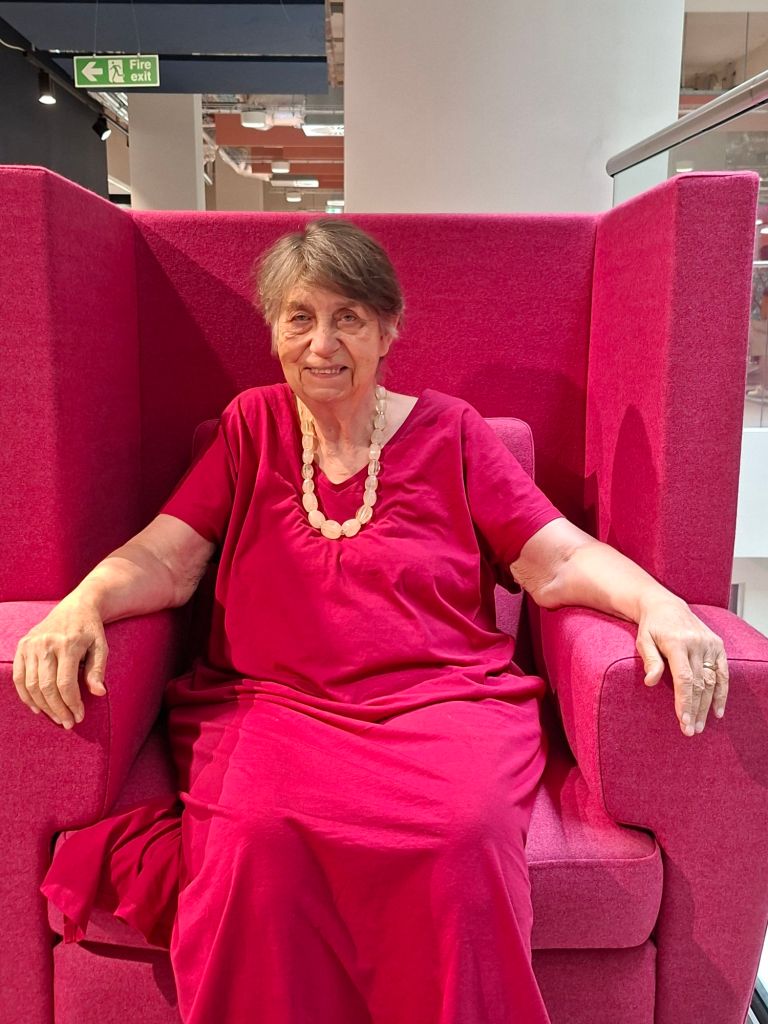
In the picture above, my wife Elaine sits at ease on a softly majestic chair. The occasion is the opening of a new University of Gloucestershire building refashioned from an empty Debenham’s department store. Primarily it is for the university’s faculties of education, psychology and social work.
It is also for the local community. The city’s public library is being amalgamated with the campus one. This will be on the bottom floor together with shared study spaces and meeting rooms.
Elaine has chosen one of the plusher available chairs to begin her ownership of a space that is likely to become important in our lives. I see her as showing that she is back in the world, 16 months after her accident in Gran Canaria and all the related health problems that manifested as a result of it.
The picture below is from early October last year, 6 months after the accident. Elaine is in transition from wheelchair to rollater, at least in our immediate neighbourhood. Being outdoors at all under her own steam is new. To me she looks tentative and inward. Looking at the picture now, Elaine says she looks marked by suffering. It is certainly a very different picture from the one at the top.
The two pictures together show healing in later life to be a long process making serious demands on the person who is healing. It is a joy for me to see Elaine’s transformation.
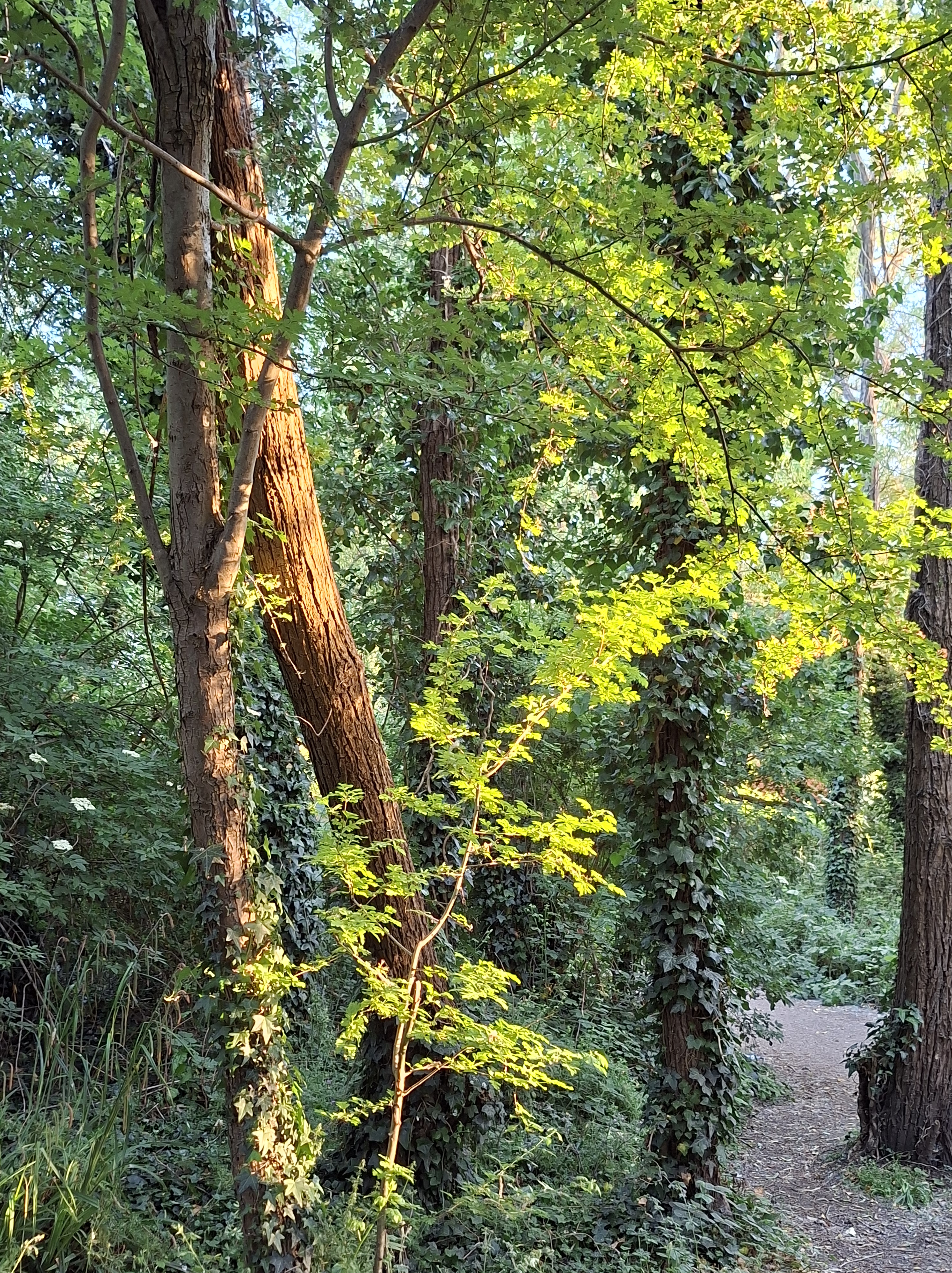
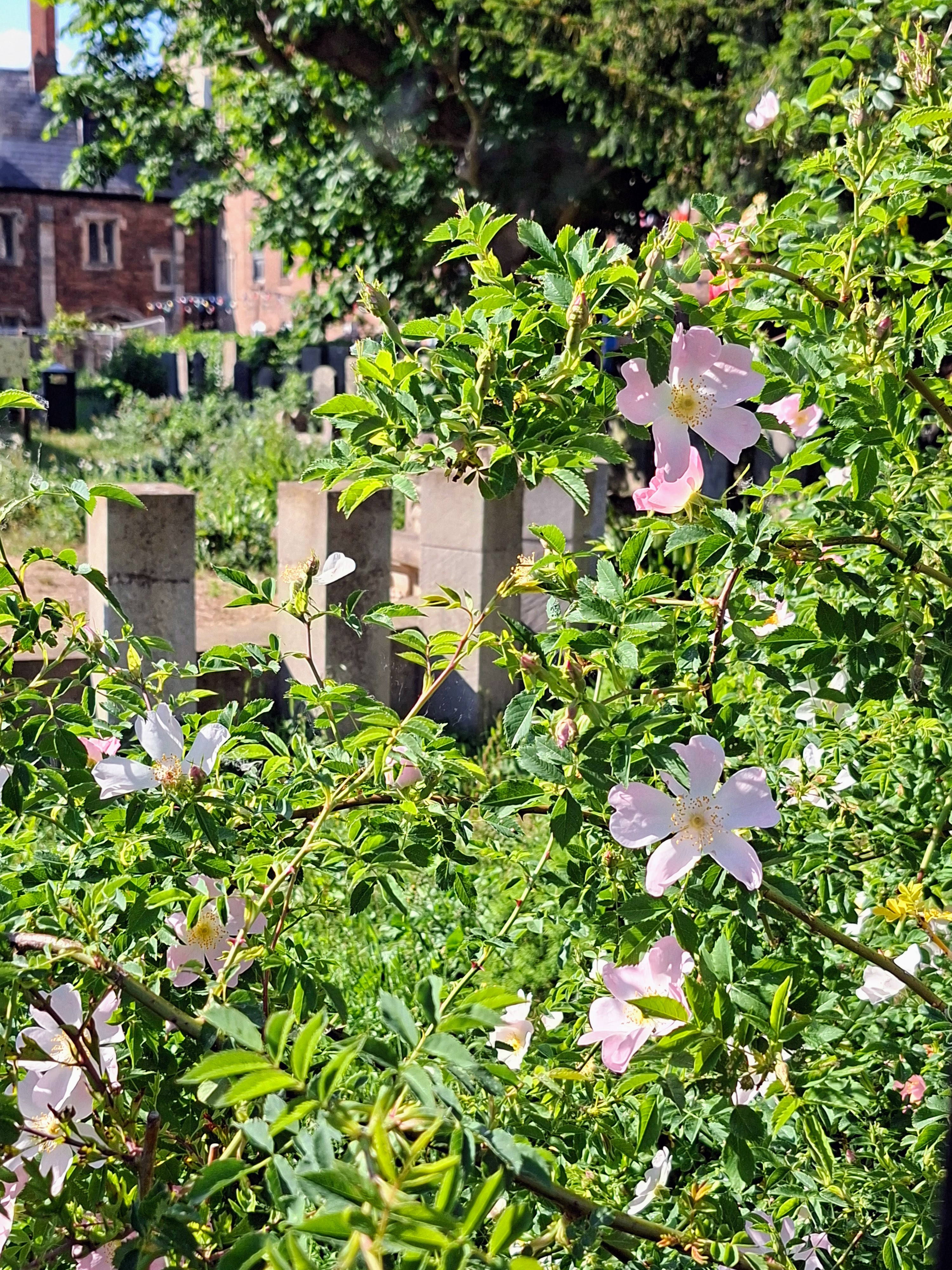
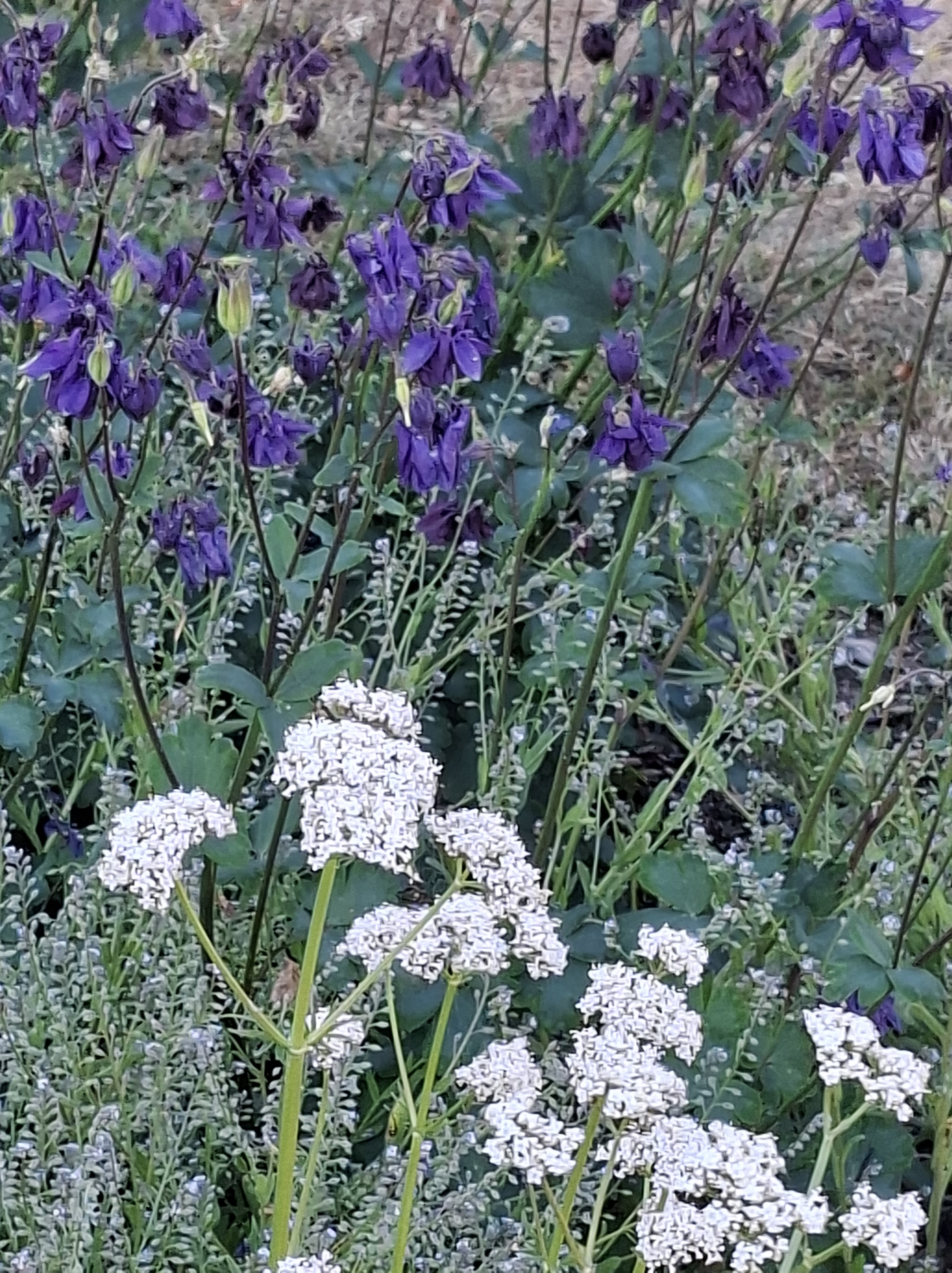
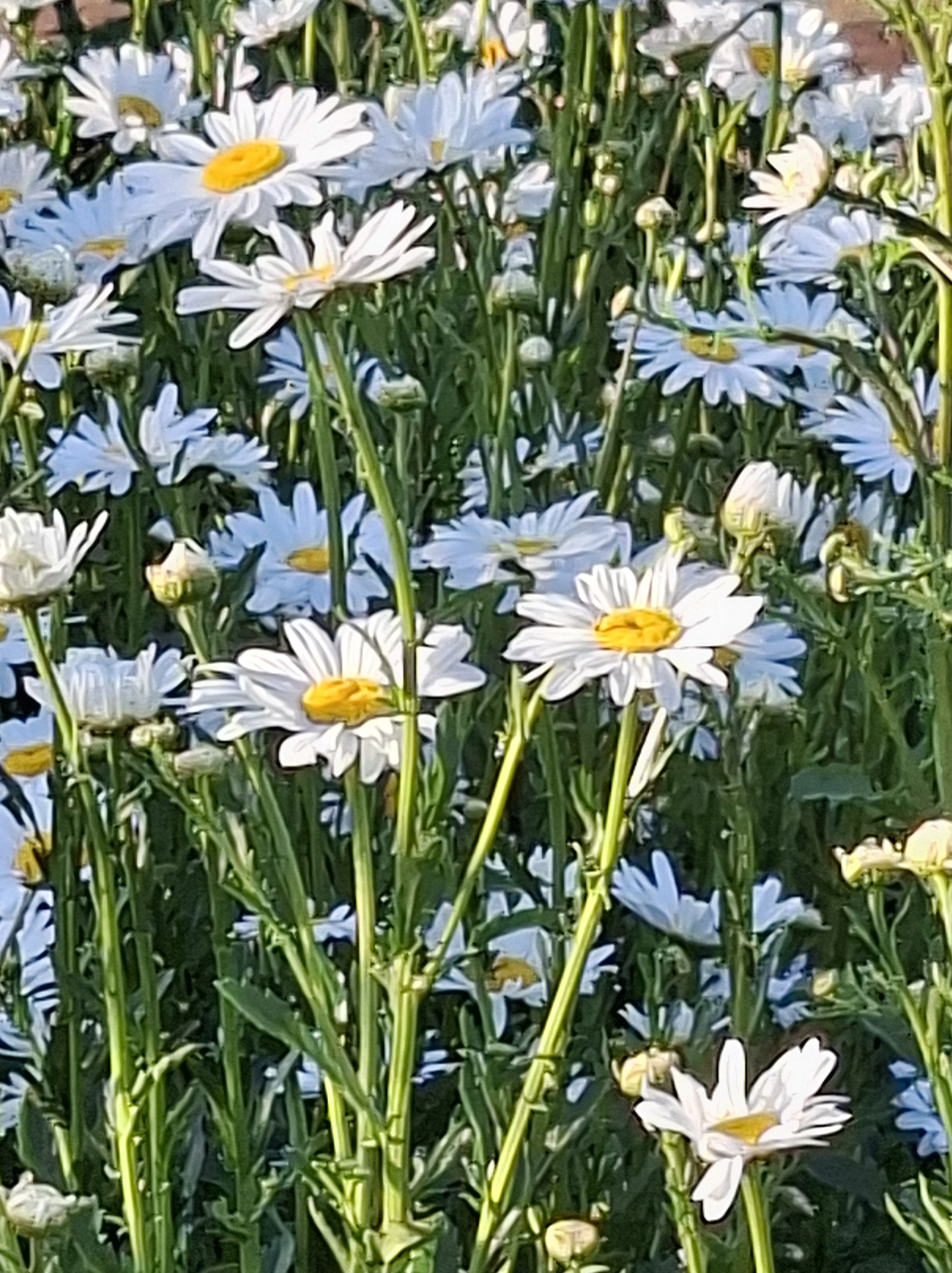
For me, mid May is the beginning of summer. All of the pictures in this post were taken between 16 and 24 May. It was a warm and sunny time that has now morphed into something else – cooler, wetter and windier.
It was a time of brightness and growth. The plant kingdom showed a tremendous will to live and flourish: above, on the canal path as it skirted adjacent apartment buildings; below, close to the Greyfriars ruins, looking out towards the old town.
The following three pictures are all from Llanthony Priory, in what was once once the ‘physic garden’ of the monks. What moves me about all of them is the vitality, variety and colour they display. Such an affirmation of abundance.
The same benign and dynamic period saw a big step forward in my wife Elaine’s mobility. She can now leave and return to our flat, sit in pleasant public spaces, walk around town, attend local events and shop on her own. This is new and different for both of us, emancipatory yet still slightly unfamiliar. A new way of life is emerging for both of us.
On 25 May, about the time the weather broke, I celebrated my 76th birthday and entered my 77th year. As I wrote to one of my grandsons, ‘sounds terrible, feels OK’. In truth, it feels more than OK. I feel good.
It was also the anniversary of Elaine’s homecoming after her hip fracture in Gran Canaria, her hospitalisation for a month there, her repatriation and another 12 days in the Gloucester Royal Hospital. The year has been a tough one, especially after the strain on Elaine’s already vulnerable heart became fully manifest. But Elaine herself has been an inspiration with her own will to live and thrive. This feels like a good moment in my life and our lives together. Much gratitude for that.
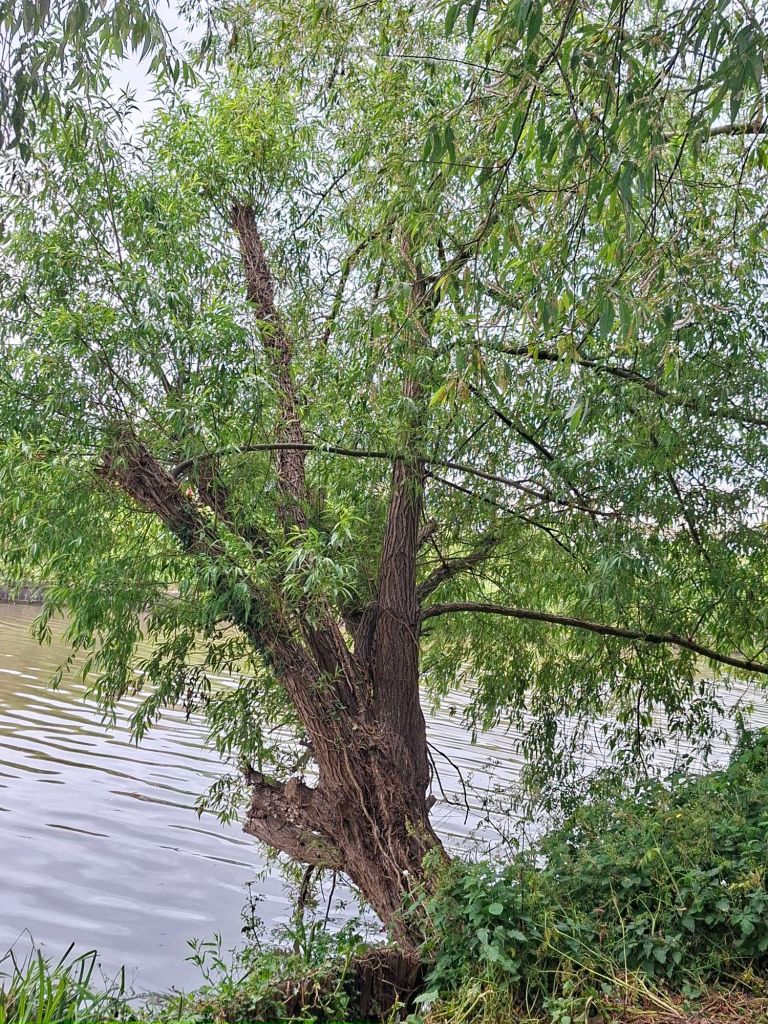
4.30 pm, 25 February 2025. Sunrays are caught in willow branches. The sun is a little stronger today than it was in full winter. The willows have begun a tentative greening. But there is much shadow in this picture. The day has begun its decline.
The world retains a winter feel for me. I aware of the change in my local park, but I do not altogether trust this spring. In the moment of taking this picture, I see a world in shadow, softly darkened. This is partly because of where I have chosen to stand. It is the image I seem to want.
In the brighter picture below, I show daffodils growing among dead leaves. Daffodils are iconic harbingers of spring, yet not my sole focus. Both pictures were taken intuitively and without any mentally registered intent. It seems as if something in me wanted to make a statement.
I know and accept that I am in the winter of my life. In the wheel of my own life, I can’t quite see how my winter will move into spring, certainly in any personal sense. Dissolving into interbeing is easier to imagine.
My customised Druid liturgy names winter as the season of dying and regeneration. It has associations with law and faith. I understand law in a karmic or ‘natural law’ sense. But it can also be an acknowledgement of the nature we see around us. Faith, in part, concerns the willingness to accept dying and regeneration without knowing what they are like. In my last post, I discussed (1) ‘being nobody’. My current reflections take this suggestion a step further. Evidently, I still have much to learn.
“Contrary to the current genetic determinism that sees increased longevity as a wasted aberrance created by civilisation, The Force of Character presents an explosive new thesis: the changes of old age, even the debilitating ones, have purposes and values ordained by the psyche. The older we become, the more our true natures emerge. Thus the final years have a very important purpose: the fulfilment and confirmation of character.” (1)
I have known and walked with James Hillman’s book for a number of years, but only recently have I felt it coming into its own in my life. Hillman, originally a pupil of Carl Jung, went on to found his own school of Archetypal Psychology – a psychology which remembers that ‘psyche’ first meant ‘soul’. He describes his own journey as about challenging what he sees as limiting beliefs that “clamp the mind and heart” (1) into positivistic science, bottom-line capitalism and religious fundamentalism.
I am growing old and experiencing frailties together with a beloved partner in the same position. What is happening in the depths of my psyche? I notice that I do not perceive a single entity here, but multiple aspects, including a dialogue between youth and age. Both have always been present. But their roles have changed. I now find myself seeking them out, engaging with them and listening to them.
How do I recognise re-enchantment in my everyday life? Simply being open and alert to experiences as they come. On the morning of 10 November there was blue sky for a limited period. We walked around our Greyfriars Estate (once the site of a Franciscan Priory). There was a good-natured Remembrance Parade close-by: a custom beginning in 1919 after Word War I, when people hoped they had been through the war to end all wars. I am not very military minded but I’m glad we have this occasion all the same. I’ve made it to 75. A lot of the people we think about at this time didn’t make to 20 and they shouldn’t be forgotten. Honour was being paid to the dead, and an intentional act like that always changes the space.
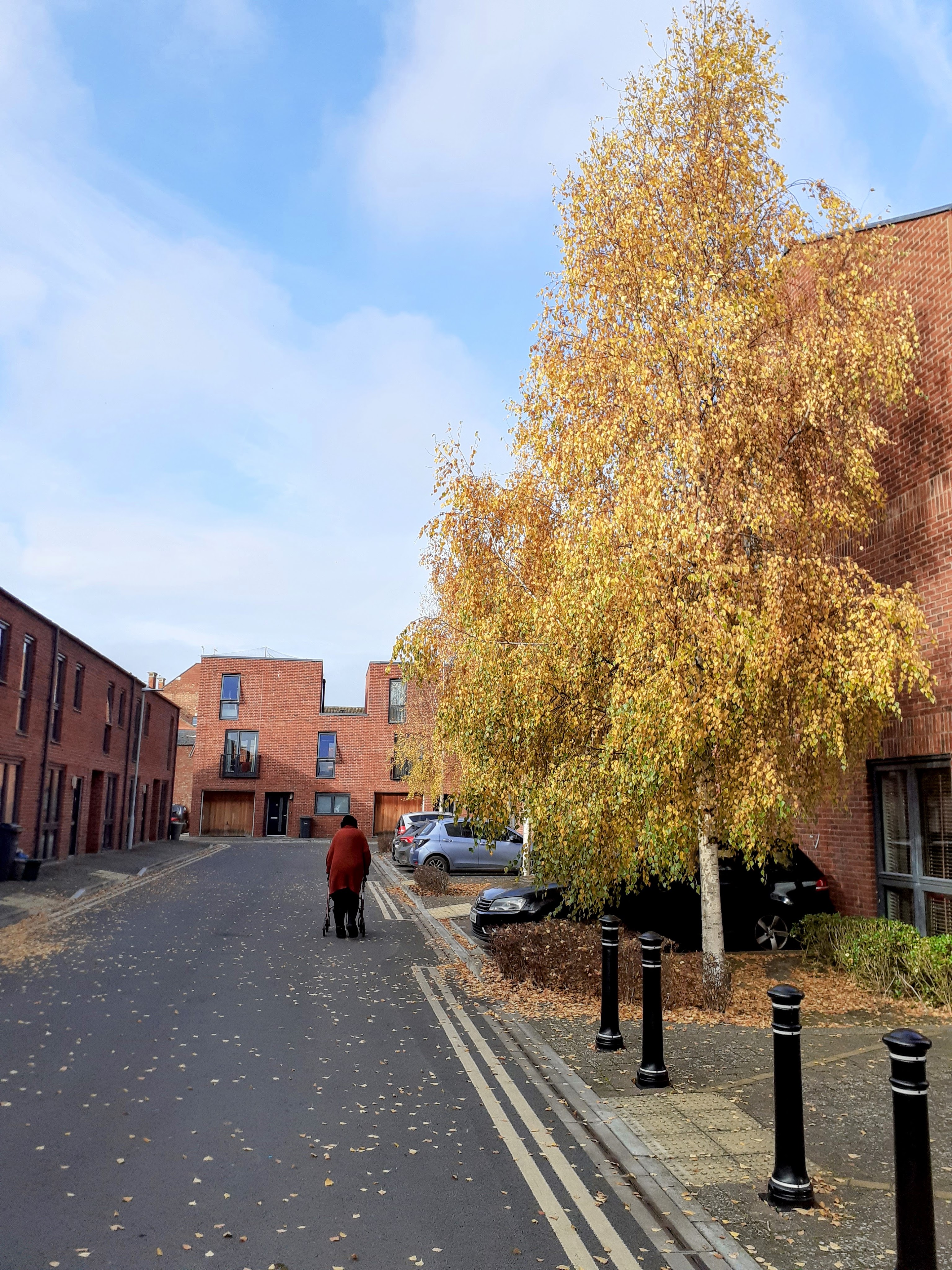
Elaine and I however were at some distance from the event so that she could practice her walking. Whilst I was looking at some young birch trees with vigour still in their end-of-autumn leaves, Elaine carried on walking on her own. She didn’t need me hovering around her. It was the first time she’d walked outside on her own since her accident in Gran Canaria six months ago. I had witnessed a wonderful emancipation and, more than that, a fulfilment and confirmation of character.
(1) James Hillman The Force of Character and the Lasting Life Milsons Point, NSW: Random House Australia, 1999. First quote from back of cover blurb, second from main text.
The picture* shows Waterstones in Gloucester, not far from where Elaine and I live. It’s a well-stocked bookshop on two levels. The upstairs includes a cafe. Before Elaine’s hip fracture in April (1,2,3) and its attendant complications, we were frequent visitors. The cafe offers good coffee. It is a pleasant place to be. It hosts both a writers’ group and a book group that we have attended.
Waterstones has been out of bounds to Elaine, and effectively me, since April. Elaine was completely house-bound until the middle of August. Even then, we worried about whether her wheelchair would fit the door of the lift giving access to the upper floor. Would the formal ‘accessibility’ option lead to actual access? I measured the breadth both of Elaine’s wheelchair and the lift doorway. The distances were bothersomely similar, and this had a slightly inhibiting, effect. We didn’t want drama or disappointment.
But on Saturday, 8 September, we lost our hesitation. We wheeled boldly into the shop and put the lift to the test. Lining the chair up carefully, we ascended to the top floor. It was indeed a tight fit, but doable, which is what matters. We reached the cafe, and had our first coffee out together for a long time, happy in the familiar atmosphere of a favourite haunt, knowing too that we would be able to attend its meetings and events. A sweet success!
I spend time inside looking out. The sky changes a lot. Its shifts are rapid and dramatic. The trees change too, but over longer periods of time. The high levels of rain this year have encouraged an exceptional verdancy and abundance. Looking out, I can almost forget that I am in a block of newish flats in an old urban area. The person walking on the pavement below seems dwarfed by the splendour of the leaves. The road is very quiet for a late morning. The wheel of the year turns, approaching its summer zenith in this part of the world.
I am settling in to a higher number for my official age. In social gerontology, there are (or have been) three kinds of ‘old’: young-old (50-64), middle-old (65-74) and old-old (75+). I am now old-old and statistically immune from premature death. These classifications don’t quite fit my lived experience, but they are a sort of landmark all the same.
Elaine and I have been together for nine days following her repatriation and subsequent stay in a local hospital. We are learning how to live a new phase of our relationship where she has high needs and is housebound, and I am in a ‘caring’ role in the institutional sense of that term. We are learning as we go along and doing our best to be conscious about our experience as well as practical in an ‘activities of daily living’ sense. I think we are doing OK. We are establishing new patterns of day to day life and Elaine’s capacity is increasing.
Mostly I leave the flat only for shopping and other practical tasks and, because we are so well situated, these don’t take long. On Saturday Elaine and I both felt comfortable and confident with me going out on a one hour recreational walk. I continue with a regular practice and journaling. I still practice within a Druid circle (grove) and I find this healing and re-energising. At the same time my work has been referenced more to five personal commitments rather than to tribal membership, religious devotion or spiritual metaphysics. Recently I have been contemplating my commitments and checking out whether they still work for me. These are:
1. I will work from the stillness of the centre.
2. I will cultivate good will towards self, others, and the wider web of being.
3. I will cultivate positive health and well-being, within whatever constraints may apply.
4. I will cultivate discernment, creativity and wisdom, to the best of my understanding and capacity.
5. I will cultivate a life of abundance in simplicity, living lightly on the earth.
I do see a danger in lists like these: they can become a frozen and pious – an internal rhetorical performance. For me, contemplative inquiry keeps my commitments alive, suggesting revisions if necessary. This is my direction, going forward, in the unfolding chapter of my life.
Seasonal Blessings to all readers, and my best wishes for 2024! I took these photos between 2.20 and 2.50 pm on 21 December, the last day before the Solstice, and a little more than an hour before sunset in Southern England.
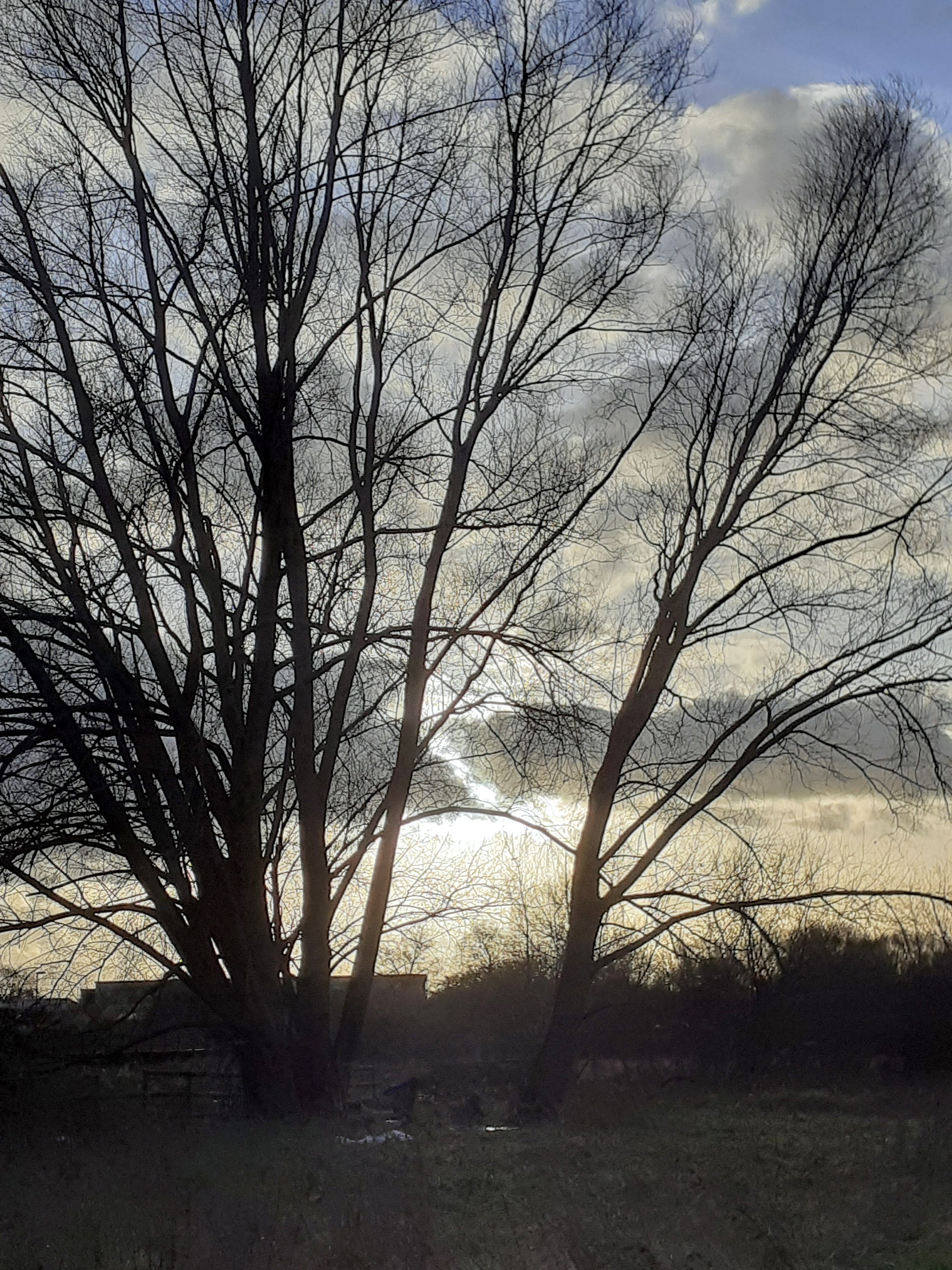
The location is Alney Island, Gloucester, which I had not been to for some time. I encountered a sun that was low in the sky, clearly sinking, but still having an obvious influence on the landscape. Above, you can see a powerful luminescence behind the starkness of the trees. Immediately below, you can see light effects on the river and the trees themselves.
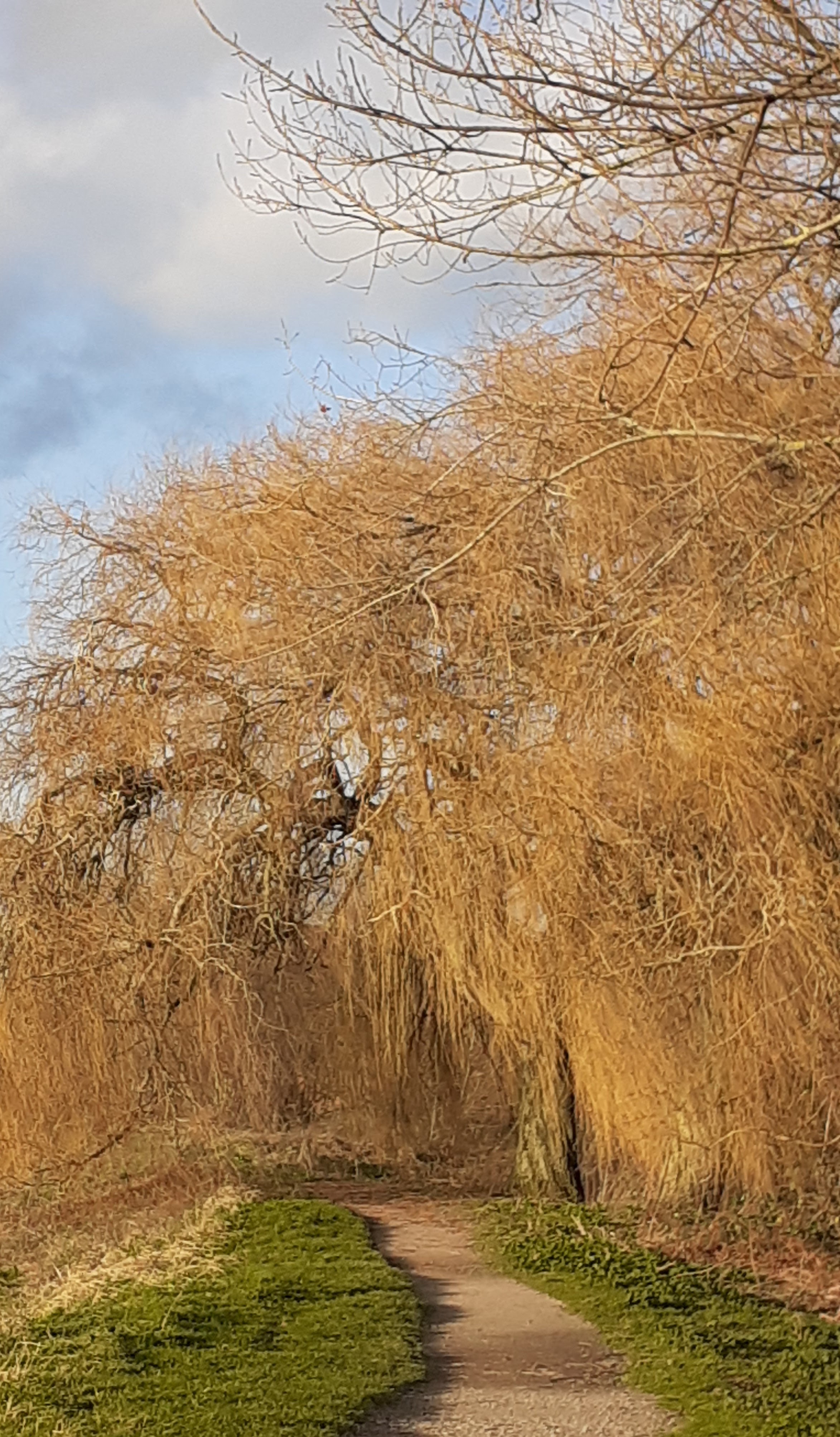
In the picture below, the midwinter sunshine is clearer and stronger. I love the way in which the willows show their vitality and abundance even when they have lost their leaves. The path is relatively dry, yet surrounded by green grass. There is a play of light and shade. There is blue as well as cloud in the sky.
On the ground, in the afternoon, and now in the evening as I write, I am thinking of light and dark, and of waxing and waning, as natural phenomena. I am not thinking in moral or metaphysical terms. These are different considerations, with a tendency moreover towards abstraction and absolutism. In my experience, nature tends to be nuanced. Different things are going on at the same time. Certainly where I live, there is always some balance of light and dark. The balance shifts, but both are always in play.
We treat tomorrow’s sunrise as the beginning of a turn. Here, in 2023, the afternoon before the change seems like a friendly one for an annual nadir of the light. This is also a bit how I am thinking about myself. Towards the end of November, when I last wrote a post of this type, I was celebrating a recovery from illness, and the opportunity of a good day. A good day was about what it was. Many people have pointed out in the last year or so that Covid-19 seems to have a long tail. I have been physically restricted beyond what I think of as normal.
I’m aware of a 75th birthday coming up next year, at which time our government will no longer consider my death as premature. Yet I am in good heart and feeling resilient. Without being presumptuous, I’m leaning in to longevity. I’m checking my capabilities and energy levels, anticipating some adjustments, and noticing the many rays of light which present themselves in my world.
An old man, left handed like me, pauses over his writing. He is held in his concentration, and somewhat lost to the world. He faces away from the sky and the crescent moon. He relies on an interior candle to light him. But the moon sees and influences him anyway. None of the seven swords is drawn for martial combat. He wields a quill instead: the metaphorical sword of discrimination is an essential feature of thinking and writing, and sometimes it can bite. The number seven suggests a level of experience and resource, perhaps also a creative pleasure in his task. He’s been around a bit, taken a few knocks, and had his epiphanies as well. He perseveres on the journey, come what may.
The image comes from the first of a three card Druidcraft Tarot (1) reading. I did it on 26 October, early in the run up to Samhain and before the October moon was full. I had just completed a ritual that ended my formal contemplative inquiry within and beyond Druidry. I am still a Druid. I am still temperamentally inclined to contemplation and inquiry, both separately and together. There will be a great of deal continuity in my practice. But the structure of a dedicated project has quietly disintegrated, now redundant, and this needed a formal recognition. The image above reveals a constellation of consciousness, energy and activity that is now in the background. There, it has a continuing presence and influence – as a kind of internal ancestry. In the foreground, something new has the freedom to emerge.
The card below indicates how I stand now. Whereas I found it easy to identify with the Seven of Swords image, the Prince of Pentacles came as a shock. But the teaching behind the Tarot is that time runs differently in the psychic realms and doesn’t exist in the causal. Child and youthful parts of me still live. The young adult depicted here is at home and confident in the material world. He is not a compulsive warrior like some of his brothers but will take a stand when needed, using skilful means. He is an Earth defender. Health, home and material security matter to him and in these domains he leans toward practicality and realism about the world he is living in. He turns towards this world, not away from it, and does not position himself as above the battle. He is a counterweight to some of the spiritual movements I have explored in my inquiry, which would think of him as ‘unevolved’. He has, however, been an active presence over my last couple of years of relocation and now steps forward to reclaim an acknowledged space in my life.
The third card of the triad is the Six of Wands, and traditionally indicates what may be emerging. The sixes are all auspicious, suggestive of balance, union, and integration. In the active energised fire element, it suggests success, through the image of a landowner and his servants returning home after a successful outing with his hawk. The card seems to ask me what I understand by success at this time in my life, and how much I value it. What motivates and energises me to be successful by my current criteria? What skills, resources and help might I need to achieve successful outcomes? What role might magic play?
I notice, here and now, an unfamiliarity with this way of approaching life. I have thought of myself as too old, with no worldly ambition and nothing I need to prove. This card may be challenging me to review those understandings. Have I lapsed into limiting self-caricature? Have I overdone retirement? Asking those questions I find that I do still have energy and resources, and that I am also concerned about overestimating them. Balance and proportion matter, and I do not want to be consumed or over-taxed by a new project. Nonetheless, this reading opens up space and potential for new active ventures in the world. This reading, overall, has facilitated a significant Samhain shift in my sense of possible futures. For this is a season of not only endings, but of beginnings too.
(1) Philip and Stephanie Carr-Gomm The Druidcraft Tarot: Use the Magic of Wicca and Druidry to Guide Your Life London: Connections, 2004 (Illustrated by Will Worthington)
I am grateful to the Druid community for its varied ways of working with the 8-fold wheel of the year – especially when the festivals are placed in the context of the gradually turning wheel. Within that patterning of both nature and experience, I find the equinoctial periods and my response to them the least predictable of times.
The picture above shows a pre-equinoctial evening in Weymouth harbour, Dorset, England, round about 6 pm. I found this moment gentle and relaxing. The soft sunlight on the houses, boats and water seemed like a welcome home. I was born only 30 miles from Weymouth and it is part of my childhood landscape, my motherland. I took the picture on 18 September, the first day of my first visit for decades. I felt as if I was in a final afterglow of summer, content on familiar ground.
My wife Elaine and I spent only four days in Weymouth. Even over this brief period, we both had a strong sense of the advancing dark, in the mornings and the evenings alike, a shifting alternation of night and day that increasingly favoured night. One of our days was also dominated by high winds and driving rain, followed by a night in which we felt damp and chilled to the bone, unused as we now are to old buildings.
That night I had a rare experience of broken sleep and uncanny dreams. Eventually I woke up fully to a startling level of condensation on old window panes, obscuring an otherwise stunning view. For me this equinoctial period has, at least psychically, emphasised a shift towards the dark rather than a moment of poise and balance. Not a full dark, perhaps, but drained of colour, direction unknown.
The turning of the wheel never stops. On 23 September, the morning of the equinox, I felt the pleasure that can come from enjoying home after a break. I also noticed that the world beyond our many balcony doors was very clearly proclaiming a victory for the darker half of the year. This will be the setting for my journey for some time to come.
Whereas in the world I feel currently secure, I am conscious of uncertainties within. I do not quite see my critical-creative direction. In my 75th year, I wonder about ‘creative ageing’ (an old catch-phrase for me) and ‘critical wisdom’ (a new one). Hot air? Or genuine signposts? The Weymouth visit has stirred me up, but to what specific purpose I don’t yet know.












 Contemplative Inquiry