Contemplative Inquiry

This blog is about contemplative inquiry

THE ROSE SANCTUARY

It is two years since the Stroud based Druid ‘contemplative’ group first met. On 7 July 2012 six Druids met for a day of meditation and personal sharing in sacred space and began a tradition in which 16 people are now involved. As reported in an earlier post (‘A Brief and Luminous Tea Time’, 15 January 2014) we currently have monthly meetings, mostly for two hours on the second Tuesday of the month. In two months – May and November – we meet for a whole day, so far always on a Saturday. We had 11 people on 10 May this year.

Today was one of our Tuesday meetings, held in a dedicated space called the Rose Sanctuary, a new environment for us. We sat there through a summer storm, seeing flashes of lightning through the windows, hearing the thunder rolling in the distance, and then listening to the rain falling on the roof – first hard, then soft. The scene outside, insofar as it was visible, was lush and glistening, albeit a little dusky for the time of day. Inside, the space was one of elegant simplicity, a natural container for contemplation and reflective sharing.

There were seven of us present, two from the original group and five others who have joined since. The group reconstitutes itself at each meeting, building its culture a little more each time, developing its sense of what a Druid contemplative group looks and feels like. This time we began with an extended check-in and a five minute shared silence for attunement, rather than a long meditation. Then we chanted together, finding our shared resonance and the resonance of the space, sensing the pulse and vibration of the Awen in this place and time. We entered a period of intermixed silence and creative sharing, which this time included song, chanting, and accounts of numinous experiences in both outer and inner worlds. Every meeting finds its own note.

For me, it felt like a good second anniversary.

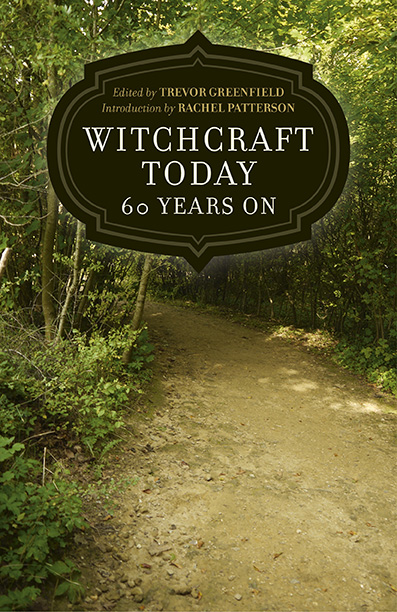
BOOK REVIEW: WITCHCRAFT TODAY – 60 YEARS ON

jhp530b85f08e66fThis is a timely addition to Pagan literature, highly recommended to anyone interested in the modern heritage of witchcraft, paganism and new (or new old) spiritual movements more generally. This book celebrates the 60 years since the publication of Gerald Gardner’s Witchcraft Today in 1954, affirming the confidence, dynamism and increasing openness of this growing tradition from a diverse range of insider perspectives.

The book is divided into two parts. The first, ‘Forms, Themes and Values’, begins with an account by Philip Heselton of how Gardner came to write Witchcraft Today. It goes on to look at ten specific forms of modern witchcraft that diverge from Gardner’s own, starting with Alex Sanders and going on to look at more radical departures like  Seax Wica and the feminist Dianic tradition. Some of the other paths described are less formal and ceremonial than the original models. Some are group based and others solitary.

Some can be distinguished from witchcraft altogether (the Egyptian Magical Tradition and Hekatean practice based on the approach of the Chaldean Oracles, to name two). The same issue arises at the end of the book, where a contributor talks about a journey through an Ovate Grade training in the Order of Bards, Ovates and Druids (OBOD).  In each case, it matters to the practitioner that they are practising these traditions as a form of witchcraft.  Their inclusion in the book affirms the value of self-identification in spirituality and adds to an overall feel of inclusiveness. Any question would be about the potential weakening of the term witchcraft itself, in a context of such porous boundaries.

Part 1 also includes a chapter on the male experience of witchcraft and ends with one on ‘Witchcraft Tomorrow’ by David Salisbury, which demonstrates optimism about future possibilities and explores the issues of community building and leadership. Common themes in Part 1 include tensions between ‘preservation’ and ‘invention’ in lineage development, and ways of reconciling them. Common values include an avoidance of evangelism and a commitment to the ultimate autonomy of the practitioner.

Part 2, ‘Journey on a Crooked Path’, presents ten personal journeys.  It is particularly good at describing the ways in which people sense unmet spiritual needs in early life and make the connections (through reading, significant life events or personal encounters) that lead them on to their chosen paths. Throughout the book, there’s the sense of person and path choosing each other. They know when it’s right – and often have to go to some trouble to find their home.  The finding is reflected in the enthusiasm and commitment of the many people who have contributed to this valuable book.

ELDERS AND MEMORY

A Guatemalan story illustrates the traditional role of elders. The Goddess of Water has been dismembered and her heart captured by the Lords and Ladies of Death. Her (non-divine) partner collects her bones together and descends into the infernal realm to recover her heart. He succeeds at a price, returning to the earth’s surface with only a toe bone and a tooth to go with the recovered heart of the Goddess, himself do badly wounded that he dies.

Four elders – Grandmother Growth, the Father of the Mountain, the Old Woman and the Old Man – now intervene. Covering the body of the man and the toe bone, tooth and heart of the Goddess with a blanket, they sing their wisdom. ‘The world wept and whimpered in the ground while the two gods and two old humans sang the ancient life-giving songs’ (1). After the old ones have nearly exhausted their repertoire of 200 songs, the blanket is lifted. Man and Goddess (now a mortal woman) have revived and are whole. The elders comment, ‘it’s the same every year’.

The story contrasts the distinctive roles of the younger and older generations. For the former the action presents a vivid and dramatic trial. The old ones participate through their knowledge of the ‘ancient live-giving songs’ and with the relative detachment of those who’ve seen it all before. They have not ‘retired’ but they have progressed to a different and more reflective way of making an impact on their world, using their resources as culture bearers.

Martin Pretchel, who recorded this story, spent his life ‘married to the meaning’ of such stories. In the Guatemalan Highlands of the 1980’s the indigenous Mayan community was under enormous pressure and threat. Martin, a mixed ancestry outsider from New Mexico, joined several hundred old Mayan men and women and ‘like a friar I became another of their wool-blanket-wearing order, dedicated to remembering back to life She who had been dismembered and therefore do what we could to keep Holy Nature dancing’.

The story telling activities of the elders are not simply forms of reminiscence. They can a front-line in the defence of land, life and culture. (Martin Pretchel eventually took refuge from threatened assassination in an unfriendly US embassy and was promptly deported.) It seems that deep Bardistry, maintaining the long cycles of cultural memory, and current political witness go hand in hand.

  1. Martin Pretchel The toe bone and the tooth London: Thorsons, 2002

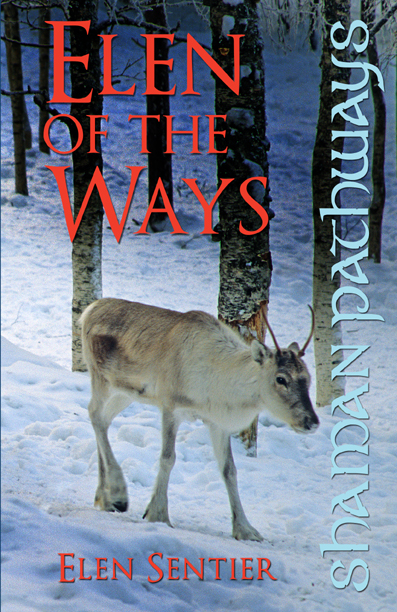
BOOK REVIEW: ELEN OF THE WAYS (SHAMAN PATHWAYS)

jhp5135021762fb1Highly recommended both to a core readership interested in British indigenous Shamanism and to anyone uneasy with a world where loss of connection with nature (and thus spirit) is so prevalent.  Author Elen Sentier describes herself as “awenydd, a spirit weaver and tale keeper from a long family lineage”. The word is from British Celtic tradition, but it is being used to name a quality of being extending back much further in time, and of universal application. “Walking the deer trods is to learn how close we are to nature … how we are connected to anything whether or not it appears inanimate and this is what the awenydd knows”. The presiding spirit of this path is the elusive deer goddess  Elen of the Ways, who the author encountered as a young adult, thereby entering a lifetime of service to her. This book is about both context and story of this service, an invitation to “open yourself to Elen’s complex, multiple and beautiful ways”.

Elen Sentier takes us back to an archaic northern world in which most people lived by following herds of reindeer on their migrations – following rather than leading or managing: the deer decided when and where to go. She evokes the culture and spirituality of this relationship, describing a hunter gatherer society that once lived well without private property or long hours of work. She talks about communities that understood reciprocity and interdependence and lived by a practice of gift-giving and receiving both in the everyday world and that of spirit – themselves seen as hardly separated from each other. She sees this as a culture of sensitivity to all life, including the interconnectedness of “what you eat and what eats you”, and alive to the energies of the land itself.

The book traces this history through iconography and myth – with the figure of the antlered reindeer goddess standing for the Sovereignty of the land. It also describes “journeying” as a here-and-now practice for being in natural settings, tuning in with respect, entering relationship, preferably with a minimal reliance on satnavs, compasses and maps. Here is nourishment for spirit, available if we are.

CONTEMPLATION AND ACTION

I’ve been thinking about action and contemplation – and their relationship. I think they belong together. Both modes are engaged. Neither is passive or indifferent.  I am coming to see them as qualities that arise together and remain interdependent, rather like the paired opposites described in the Tao Te Ching:

For being and non-being arise together

Hard and easy complete each other

Long and short shape each other

High and low depend on each other

Note and voice make the music together

In progressive Christian circles, this kind of relationship is demonstrated in organisations such as Richard Rohr’s Centre for Action and Contemplation. Andrew Harvey would be another example.  In my ‘contemplative Druidry’ home group, I’ve noticed that a high proportion of the members are politically and socially engaged (mostly in the kind of causes currently packaged as ‘Green’). And I’ve also noticed that these different commitments support each other, rather than getting in each other’s way. On the one side it’s something about self-care, time for refreshment and renewal , and remembering to pause a little, able to maintain a spacious rather than frantic or tunnel-visioned awareness. On the other side it’s about enacting our interconnectedness and service, our commitment to the life of the world.  Right now it’s nudging me in the direction of activity.

BOOK REVIEW: DANCING WITH NEMETONA

jhp52e769df7b29aThis is my Amazon book review for Joanna van der Hoeven’s latest book.

Highly recommended. With an ease and lightness of touch, this book reflects on the sacred in relation to physical and subtle space, relationships and boundaries, safety and risk, liminality and letting go. Sacred time too – I liked the author’s definition of ritual as “taking a moment, taking time out, to celebrate or honour a specific moment of time”.

A modern Druid, Joanna van der Hoeven uses her personal journey to illustrate her themes and suggests practices to explore them – within the home, within the forest and within the inner world. These practices, and the book as a whole, are accessible to beginners or non-aligned seekers as well as those already grounded in Druid and Pagan tradition. This is helped by the careful arrangement of the book in six chapters: Lady of Boundaries and Edges; Lady of Hearth and Home; Lady of the Sacred Grove; Lady of sanctuary; Lady of Ritual: Lady of Everything and Nothing.

The last chapter opens the way to reflections on personal identity and the no self/true self paradox of Zen and other non-dual traditions. To enter into “immersion into the entirety of being … to be at one with existence, to truly experience life”, there seems to be a necessary letting go of our customary self-sense and a finding of true self through being in the moment, returning to the core. In this way the book continues the journey of the author’s earlier and well-received Zen Druidry.

A BRIEF AND LUMINOUS TEA TIME

Last March I talked about a Druid contemplative day in Gloucestershire, England, and the way in which “our meeting grew out of the still simplicity of the space and our shared contemplative intent”. We now have a regular group, which meets for two hours in the afternoon on the second Tuesday of every month, except for May and November.  In those months we meet for a full Saturday, sometime after the festivals of Beltane and Samhain. These days offer an introduction to new members, and also attract people from outside our local catchment area.  Sixteen people are now at least provisionally involved, about half of whom attend our Tuesday sessions.

I feel very blessed to have a group of ‘like intent’ for contemplative practice.  It supports and extends my solo practice, without simply replicating it at a collective level.  I feel recognised and nurtured by the presence of fellow travellers and the strength of a commonly held intent.  I also feel more confident in my note and in the value of sounding it

Our Tuesday pm gatherings – which do include a slot for tea and cake as a very English soul food – have so far had a very simple structure.  We have a personal check in, make an unfussy entry into sacred space and sit in meditation together for about 20 minutes. After that (and this is the Druid bit) we tune into our individual and relational presence within awen. Traditionally awen has connotations of divine inspiration, especially in the fields of poetry, music and prophecy. For modern Druids awen can be also seen as the manifestation of the immanent divine, the breath of the Goddess (Shakti, Shekinah), the enlivening presence of spirit or more simply the way in which space can be palpably and numinously enlivened by people of like intent.

In terms of the practice, we discover ourselves, touched or inspired by awen, in an enlivened relational field with each other, as well as in the space and within ourselves.  Sometimes we share it in silence and sometimes we are moved to speak, finding an authentic here-and-now language for our felt sense of connection. I can see a possibility of moving on to other expressions of this connection – chanting, toning and movement as the group develops.  The practice is open-ended, but tends to go on for 35-40 minutes.

We then exit sacred space, celebrating and also grounding ourselves with tea and cake.   These meetings have prompted me into a greater intentionality about my wider inquiry, which includes sharing it through this blog.

CONTEMPLATIVE DAY

A small group in Gloucestershire, England, mostly with Druid backgrounds, held a contemplative day yesterday, on Saturday 16 March. Most of us were local, but we also had members from further afield including (for the first time) London.

Once gathered, we spent some of our time together indoors and part of it alone, walking in neighbouring woods and fields.  For this outside time we caught a beautiful sunlit spring interlude in the later morning.  We had periods of silence, periods of chanting, periods of talking and periods of eating.  (The day included a magical shared lunch).

I loved it when, early on, JJ talked of our connection as based on ‘like intent’ rather than ‘like mindedness’.  It felt to me very much as if our meeting grew out of the still simplicity of the space and our shared contemplative intent.

I think that this approach to a contemplative day, together with our previous one which had more focus on weaving our stories, are good ways to go in developing  these events.  I look forward to more of them.

WILLOW

Some systems of training – R.J. Stewart in ‘The Way of Merlin’ and the OBOD Ovate Course for example – ask us to develop a long term relationship with a specific tree.  In my case it was a willow.  At that time I had already made a willow wand from wood that had fallen off another tree, and though I don’t use wands or other tools much in circle casting, I do use this wand occasionally.  It’s a wood that I find it easy to connect with.

My willow stands on the banks of the Avon at Bristol, in sight of the Clifton suspension bridge and the gorge.  I was living within walking distance of it at the time.  In terms of ‘head knowledge’ I wasn’t quite sure whether it was technically a weeping willow or a hybrid and decided it didn’t matter.  Its branches certainly bowed to the flowing Avon water and to the ground.  Through dedicated tree hugging practice I discovered a strong Nwyfre  or life force, running up and down the tree.  This was about the time of the Spring Equinox in a prematurely warm and burgeoning year.  I had the pleasure of watching catkins and early leaves growing and of active bees.  So I created an energetic bond with the physical tree, at the edge of a public park, greeting it and fare-welling it at each encounter without developing a detailed botanical knowledge.

I also did inner work with the tree, through visualization.  Usually the visualization was an idealized version of the physical reality, prompting a slightly different set of feelings and reflections.  There was one major difference.  During a gale, the wind broke one of the major branches from the tree.  I was very distressed to see that branch partly on the ground and partly hanging on to the rest of the tree by thin strands of bark.  Then the branch got chopped off.  I was in mourning.  Yet my visualization didn’t change.  At that level, the tree was still there and whole.  And in fact the physical changed and grew new branches, not in quite the same place, to fill the gap of the big one that had gone.  I supplied the distress and mourning.  The tree simply adapted.  Throughout the physical process, I felt little difference in its energy.

In the back of my mind I was also aware of traditional knowledge, both specific to Ogam lore and the more diffuse inheritance of popular tradition.  I tended to hold this lightly, feeling imaginatively enriched whilst putting personal lived experience first.  I do know that leaning against the tree whilst looking across the water to the bridge and the gorge were (and are) good for refreshment, reverie and lazy, half conscious forms of reflection.  Out of this can come a creativity that doesn’t come from the willed marshaling of correspondences.  And to be fair, the traditional willow correspondences say as much, when they talk of openness and receptivity to Otherworld and the inspiration of the Goddess.  When I first knew the willow, it was at a time of fecundity – I’ve already mentioned the vibrancy of catkins and new leaves, the early appearance of bees.  So I’m not surprised that William Anderson’s green man poem says, for the period running from 13 April to 10 May:

 In and out of the yellowing wands of the willow

The pollen-bright bees are plundering the catkins;

‘I am honey of love’, says the Green Man

‘I am honey of love’, says he.

It doesn’t surprise me at all that in the Romanian Gypsy Festival of Green George (needless to say on 23 April)  a young and leafy willow, already felled, is erected and decorated with streamers and ribbons.  The community’s pregnant women gather around the tree, each laying out one piece of clothing.  If, overnight a leaf falls from the tree on to the clothing, it is said that the goddess of the tree promises both an easy delivery and a gifted child.”

Such associations are in the background of my relationship to Willow if not the foreground.  They touch my imagination, especially the parts that are nurtured by a sense of place and of history.  They amplify my direct here-and-now experience, adding emotional texture to sensory immediacy.  They extend what’s already there, in the tree, the setting, my presence, and our connection.

ENTERING SILENCE

Sometimes, as over the turn of the year, I feel like blogging fairly frequently.  At other times, like now, I don’t.  I’m still integrating my work with the Ceile De paidirean (beads) and fuinn (chants).  It takes a while.  I suspect that I’m entering a quiet period.

Yet as I do so I want to say a little bit about what contemplative practice means to me now. Centring in silence is the essence of the practice. In sitting meditation I enter silence with a contemplative intent. The process is one of self-emptying, but not in a self-wounding spirit of renunciation, of holy war on ‘ego’, of pushing away the immature self-sense like an unwanted child.

Self-emptying is simply the will to let things come and go without grabbing on, making room for something else to be.  Warmly spacious, it invites a more expansive way of being.  We do not let go in order to get something better.  The letting go is itself the something better, freeing us from our habitual self-protectiveness and contracted activities like taking, defending, hoarding, and clinging. For this reason Cynthia Bourgeault talks of ‘kenosis’ (self-emptying) as “primarily a visionary tool rather than a moral one; its primary purpose is to cleanse the lens of perception”*.

Having said that, I am finding that the contemplative shift into self-emptying does tend to open up states of acceptance (including self-acceptance), gratitude, peace, joy and love.  They come in and are present, just naturally there, not in any way willed or dutiful, some of the time. They come and go, while contemplation remains centred in stillness and silence, and “looks at the world through a single lens of wholeness”*.

* The meaning of Mary Magdalene: the woman at the heart of Christianity. Cynthia Bourgeault. Shambhala: Boston & London, 2010

Earth Eclectic

music that celebrates Earth and speaks to the heart

Sarah Fuhro Star-Flower Alchemy

Follow the Moon's Cycle

Muddy Feet

Meeting nature on nature's terms

Rosher.Net

A little bit of Mark Rosher in South Gloucestershire, England

Becoming Part of the Land

A monastic polytheist's and animist’s journal

selkiewife

Selkie Writing…

Charlotte Rodgers

Images and words set against a backdrop of outsider art.

Prof Jem Bendell

living with metacrisis and collapse

Towint

The pagan path. The Old Ways In New Times

The Druids Garden

Spiritual journeys in tending the living earth, permaculture, and nature-inspired arts

The Blog of Baphomet

a magickal dialogue between nature and culture

This Simple Life

The gentle art of living with less

Musings of a Scottish Hearth Druid and Heathen

Thoughts about living, loving and worshiping as an autistic Hearth Druid and Heathen. One woman's journey.

Wheel of the Year Blog

An place to read and share stories about the celtic seasonal festivals

Walking the Druid Path

Just another WordPress.com site

anima monday

Exploring our connection to the wider world

Grounded Space Focusing

Become more grounded and spacious with yourself and others, through your own body’s wisdom

The Earthbound Report

Good lives on our one planet

Hopeless Vendetta

News for the residents of Hopeless, Maine