
Contemplative Inquiry

This blog is about contemplative inquiry

BOOK REVIEW: CELEBRATING PLANET EARTH A PAGAN/CHRISTIAN CONVERSATION
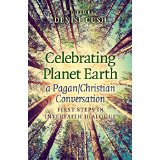
61CwdX9mE3L__AA160_Highly recommended and available for pre-order via Amazon.  This blog is an enthusiastic early alert concerning Celebrating Planet Earth, edited by Denise Cush The book comes out of a weekend ‘conversation’ held at the Ammerdown Centre near Radstock, Somerset, England, from 31 January-2 February. Originally devised as a Druid/Christian event, it was widened to include other Pagans and was intended to generate “dialogue, reconciliation and renewal”. The hope was that the participants could explore their prejudices and preconceptions, learn more about each other, and find common ground in ‘Celebrating Planet Earth’, as the event was called. The book’s contributors were all involved in the conversation.

The book is aimed at Pagans and Christians interested in making connections; academics and undergraduate students in Study of Religions taking courses on inter-faith dialogue, Paganism and Christianity; and anyone with an interest in inter-faith activities. Some of the contributors are academics in the field, but as well as academic input, there is a practical emphasis on personal spirituality and ritual practice.

I’m part of the core audience. Whereas I experience the spiritual path as ultimately beyond names and forms, I stand in the world as a Pagan Druid. I had a Christian upbringing and in recent years I have learned from the Buddhist tradition, as well as Christian-based movements such as Sophian Gnosticism and the Ceile De. All of these have supported me in my own practice and in my personal concern with developing a stronger contemplative current within Druidry. So I’m at ease with what Philip Carr-Gomm, Chosen Chief of the Order of Bards, Ovates and Druids (OBOD), calls “fusion paths” in his chapter in this book.

From where I stand the ‘Celebrating Planet Earth’ more than meets its aims. It’s a feast. I felt that each contributor had thoroughly earned their place in it. It is divided into three parts, before moving on to editor’s reflections and conclusions. I want to say something about one chapter that spoke to me particularly strongly from each of the parts, as the best way in a short space of honouring the collection as a whole.

The first part is about ‘Addressing Our Fears and Prejudices’ and for this I pick out Graham Harvey’s chapter, ‘Fears and prejudices: a Pagan view’. For me, he has a very helpful analysis of what the task is and how to accomplish it. He makes it clear that “not everyone thinks alike” or should be expected to and that diversity has room for healthy opposition – properly handled, this can be a real gift. He makes the subtle point that the negotiation of difference is not just about fear and prejudice. It is also about avoiding the presupposition that “others are like us but not quite … that other people mean what we would mean when we say or do things”. Hence we need a refined quality of listening to avoid “talking past each other”.  On the question of fear and prejudice specifically, he suggests that the two things to remember are that we should indeed “resist and challenge the small visions and petty fantasies that are imposed on others” and that “when we talk about what people do, rather than what systems are alleged to do, we will keep diversity in clear view”. He usefully writes down polarised lists of what ‘Christians’ and ‘Pagans’ are contrastingly stereotyped as standing for – and invites us to make a reality check on the items in the list. It’s a very useful way of opening the reader up to the actual experiences of individuals and groups in later chapters.

The second part is about ‘Possibilities for Co-operation’ and for this I pick out Tess Ward’s chapter, ‘Better together: transformation through encounter’. Early in her life as an ordained priest, Tess Ward went into her own version of Dante’s ‘dark wood’, a wilderness in which she needed to die to one life so as to be born into another. She lost her existing theological frameworks and says of that time: “in that wilderness, what sustained me was not theology, but poetry, silence and nature”. Without leaving her Church, she found pointers in Buddhist ideas (Anthony Gormley, Pema Chodron), Earth paths and feminist spirituality. She quotes Carol Christ as saying: “awakening suggests that the self needs to notice what is already there … the ability to know is within the self, once the sleeping draft is refused … for women, awakening is not so much a giving up as a gaining … a grounding of selfhood … rather than a surrender of self”. She also quotes Kenneth White’s poem ‘Labrador’ – “I was loathe to name it too soon – simply content to use my senses – feeling my way – step by step – into the new reality”. As, renewed, she moves back into the world and her role, she knows that interventions in the world only have value when they come from personal experience. She shares with Matthew Fox the view that the result of such a crisis is not to abandon one’s own tradition “but to demand more of it”. She now leads celebrations of the Celtic Wheel of the Year as an affirmation of her transmutation of faith within a Christian framework. Partly this is an enhanced appreciation of being grounded in the natural world and its cycles. Partly it is an appreciation of the place that resources outside her traditional faith have had in deepening her journey.

The third part is about ‘The role of ritual practice, myth, music and for poetry in each tradition and in inter-faith encounter’. For this I pick out Alison Eve-Cudby’s chapter: ‘Woven together: can Christians and Pagans engage in shared ritual?’ The author has a leading role in the Ancient Arden Forest Church in a burgeoning movement of Forest Churches. She describes this movement as “a small and growing number of Christians responding to the Call of the Earth”. Ancient Arden has an emphasis on ritual and her formal answer to the question she poses is a carefully contextualised ‘yes’. She says: “if we take earth celebration, care and connection as our basis for doing ritual together, to contribute towards re-enchanting the land in this time of ecological crisis then I think that shared ritual is possible”. She offers a fresh and energised discussion of ritual and its purpose. She describes ritual as an embodied event, and a process of framing in which dramaturgy, rather than theology, is the organising principle. Whereas logocentric approaches assume that the symbolic system expressed in ritual must be coherent, performance as an unfolding event lays out symbols in a way that reveals their inconsistencies and contradictions. The work therefore involves negotiating and holding these within the ritual container. We fashion rituals that enable liveable, regenerated worlds. Ritual is a transformative process, “the pattern of actions is designed to synchronise the awareness of the different participants – human, non-human and other than human”.

The book’s conclusions suggest that meeting itself was of great benefit, and make it clear that the people involved want to continue their work in some way (topic based subgroups are mentioned). I would simply add that this book is a gift to us all, and that I am grateful for it.
HAIKU BY SHIKI

Without my journey

And without the spring

I would have missed this dawn.

Zen Haiku, selected and translated by Jonathan Clements

London: Frances Lincoln, 2000

FUINN II: THE POETRY OF PRACTICE

I’m a Pagan Druid, happily placed in a tradition that values poetry and seership over dogma and system building. I experience my practice as a sort of poetry. In this poetry of practice, I am held in a compelling myth of origin, an ever-now origin, and I have found a new way of working with it.

My new collection of Fuinn (Ceile De chants in Scottish Gaelic) includes a very simple one which goes A Hu Thi (ah – hoo – hee) repeated over and over again. The Ceile De interpretation, a Celtic Christian one, is that this chant “represents the three stages of the unfolding of creation … A– the Great Mystery draws in its breath … Hu – that breath is breathed out, and creation is born from out of the Mystery … God becomes matter … Thi – the Divine nature, beingness and intention acts within the field of intention … Some Ceile De would say that this final stage represents Christ Consciousness.”

It’s a bit different for me. I’ve been working with this Fonn daily for a couple of weeks now.  I don’t chant. I use slow deep breathing with a silent awareness of the sounds. I find that for me, the A sets up a sense of latency, a subtle pulse and vibration on the brink of becoming. I feel it in the quality of my inbreath, as a kinaesthetic song. Hu the outbreath feels more vigorous and intentional; there’s a real sense of movement, expressed as exhalation – the breath moves out from my body, through my nostrils. Thi breathed in feels like the delighted expression of a new reality, one that I share in, distinct yet inseparable as a sentient being. This generally brings up feelings exhileration, gratitude and joy. It leads me on to the use of another Fonn as a contemplative and devotional prayer, which I wrote myself using my collection of Fuinn as a model.

A Brighde, A Brighde, solus an domhain; A Brighde, A Brigdhe, Brighde mo chridhe

A Vree-jah, A Vree-jah, solus an dowan; A Vree-jah, A Vree-jah, Bree-jah mo cree

Brighde, Brighde, light of the world; Brighde, Brighde, Brighde my heart

Brighde is the breath, the practice and the Fuinn. When writing my Fonn I wanted to build a felt sense of Brighde as cosmic birther, initiator into being, with a seat in my heart.  Her name evokes power and the prayer invokes relationship – identified as She is with primal generativity and the deep powers of life and land, and also One who inspires skill and accomplishment in those She supports and fosters. Through my experience of relationship and connection, deep levels of feeling and intuition are satisfied, in some way met. I feel empowered, with a sense of having more resources available to me. Why would this be? I don’t really know. What I do know is the value of practice as poetry, and the magic it holds.

The Ceile De can be found on http://www.ceilede.co.uk

LONDON, ANYBODYS BARN, DRUID CAMP

Elaine and I returned from London last week feeling pleased about our half-day introduction to Contemplative Druidry there. We were lucky (and grateful) for the colleagueship of Julie Bond and to be working with a supportive group. As people with different backgrounds and experiences, who generally didn’t know each other well, we worked together in an attentive and accepting atmosphere and were readily able to deepen into stillness. I for one was moved by this alone, as well as feeling confirmed in the belief that contemplative approaches have a role to play in Druidry and Paganism more widely.

Contemplative Druidry as we champion it doesn’t have a set of traditional teachings with which leaders nourish (or poison) their nestlings. We do talk about the book ‘Contemplative Druidry’ and the bones of what we do in our home group in Gloucestershire. But this is just to share the diverse perspectives of people who’ve been developing relevant ideas and practices in recent years. We describe our history and our practices not to impose them, but to seed possibilities, offer frameworks and then co-create new experiences with new people. I think that we managed this, in a promising way, in London.

I’ve recognised (or re-recognised) my personal preference for working in small, defined and intentional groups – however fleeting their life may be. It doesn’t take much to set the note for a small motivated group – culture-setting though the provision of some background, introductory sharing and a little lean ritual to provide definition and a safe container. In this work, I like an alternation between silence and speech. The process of deepening is supported by sharing and reflection. These define the context for our silence and stillness, as we gently move between narrative expression and simple being. Such a movement allows a group to co-create a collective moment in which all individuals can have a stake without surrendering their own existing understandings.  And for this I think that a small group (up to about a dozen or so) is best. Much beyond that, and the event has to be run a bit differently – tilting towards a more managerial approach or risking a relative loss of definition, or both.

We have two further ventures in the fairly near future. The first is our April retreat at Anybody’s Barn near Malvern. We have decided to reduce the numbers of available places both for the reasons above and to make the accommodation more spacious for those who attend. We already have enough bookings to go ahead, and at the time of writing have room for just 3 more people. I look forward to seeing how our way of working develops over a two day and two night period, and also to working with two other companions from our Gloucestershire home group (JJ Middleway and Karen Webb) as well as Elaine.

The second is Druid Camp 2015, which itself has a contemplative theme overall this year, including a dedicated working space co-ordinated by Nimue Brown, another member of the Gloucestershire group and also part of Contemplative Druid Events. Within this larger Druid Camp programme, Druid Contemplative Events will have a two hour session. Offering our session inside a bigger event (probably about 300 people) will be an opportunity to look at where ‘Contemplative Druidry’ may be going in the wider world (now that the meme is out there), and how our own approach fits in. Because the larger community will have already been created, we’ll be able to work with a larger than usual group in our session.

I see the Contemplative Druid Events journey as a continuous inquiry – a cycle of development, action and reflection followed by re-development, action, reflection … and so on, hoping thereby to improve Contemplative Druid Events’ ability to provide introductory sessions, workshops and retreats. These are still early days.

See http://contemplativedruidevents.tumblr.com for retreat information and http://anybodysbarn.co.uk/ for retreat accommodation. For Druid Camp information see www.druidcamp.org.uk and www.facebook.com/groups/druidcamp/

POEM: ABSOLUTE ZERO IN THE BRAIN

Penfield the great doctor did a lobotomy

on his own sister and recorded

pages of clinical observations

on her lack of initiative afterward.

Dullness, he wrote, is superseded

by euphoria at times. Slight hemi-

paresis with aphasia. The rebellious sister

died from the head down into the pages

of medical journals and Penfield founded

a new specialty. Intellectuals

sneer at moviegoers who confuse

Dr. Frankenstein with his monster.

They think Frankenstein is the monster.

Isn’t he?

From Marge Piercy, Stone, Paper, Knife London: Pandora Press, 1983

POEM: PASSING SHAOLIN HERMITAGE

PASSING SHAOLIN HERMITAGE – TO FRIENDS IN THE CAPITAL

I reined in my horse below a pine ridge

and hiked to the lookout on top

the trail appeared impassable as I started out

but once I arrived I wished it were longer

from the summit I heard a chorus of winds

in the woods I bathed in a secluded stream

the sound of a bell roused me on the Way

the evening chime cleared the clouds and mist

though my visit was brief

I finally saw what caused my troubles

but when I thought about building a hut

I knew it would have to wait for old age.


From In Such Hard Times: the Poetry of Wei Ying-Wu translated by Red Pine, Port Townsend: WA, USA: Copper Canyon Press, 2009

Wei Ying-wu was a poet of the later 8th century CE, as we count time. It was a period when the later-remembered-as-glorious T’ang dynasty had begun to unravel. Translator Red Pine says that “Wei lived his life wondering what went wrong”, giving a melancholy tinge to many of his poems. He was distantly related to the Imperial family, a scholar in both the Buddhist and Confucian traditions who spent many years as a state official without much enjoying it.

This poem was written in 771. (In Britain, that’s 22 years before the Viking sack of the Christian monastery at Lindisfarne.) Shaolin Temple was built in the fifth century for a monk from India in a high mountain basin at the foot of Sungshan’s Shaoshih Peak. The trail from the temple to the top went right by the cave where Bodhidharma, the founder of Chan (Japanese Zen) Buddhism spent nine years in meditation.

The chime to which Wei refers was used in Chan monasteries to mark the end of a meditation period. The use of the term ‘the Way’ (Tao) wasn’t confined to Taoists – ‘Tao’ was also used by Confucians, and by Buddhists as a translation of Sanskrit ‘Dharma’. The last two lines of the poem show a tension between Wei’s Buddhist and Confucian trainings – whether to let go of worldly attachments, or whether to stay in his post and “wait for old age” before building his hut.

FUINN

Elaine and I returned from London yesterday afternoon, feeling pleased about our London venture. I’ll say more about that in a later post. Suffice it to say here that we found a ready interest in the possibilities of Contemplative Druidry and hope to return to London later in the year.

We discovered that the fourth CD of the Ceile De Fonn series had been delivered through the mail in our absence. Fonn is a Gaelic word that simultaneously means song, state of mind and the Land. The Fuinn (plural) are sacred chants which “work on many different levels, they harmonise the three parts of us that relate to the three meanings of the word itself – the spiritual, the otherworldly and the physical”. Indeed the Ceile De tradition “uses the imagery of three worlds that, when healthy, blend harmoniously: … the soulful, the spiritual and the physical and are represented here by the Sea, the Sky and the Land. When we are at one with the One we see that these three worlds are also One; our perception has changed and we have discovered ‘the Kingdom of Heaven'”.

The fourth CD was recorded earlier this month, around the time of Imbolc, and has a strong Brighid theme. I bought it in response to my own strong sense of a Brighid current in my own life and practice during the same period – one that goes well beyond the simple acknowledgement that Imbolc is widely seen as Her time. My spiritual note isn’t quite that of the Ceile De, which currently stands as a form of Celtic Christianity in which Brighid is honoured beyond the level of her customary sainthood. But many of the Fuinn, or words from them, presented here can fully support my own Pagan path through chanting, mantra meditation and contemplative prayer. I have worked with Fuinn before, and also have a paidirean (pronounced pahj-urinn) – a set of rosewood prayer beads with (in my case) an equal-armed gnostic cross bound by a circle. Now, with these new chants, I am coming back to them.

For me, experientially, Brighid is the Goddess of inner alchemy and ruthless compassion, and not quite the figure evoked by the Ceile De, though I can respond to Her gentler manifestations as well. But I feel a strong attraction to Gaelic, and Scottish Gaelic in particular, as a sacred language. I like chanting and listening to chants. I like being reminded that ‘contemplation’ in my own practice interweaves meditative, devotional and energetic elements. During recent weeks I have felt a closer connection to Brighid and I will opening myself more systematically to this connection in the coming period.

The Ceile De can be found on http://www.ceilede.co.uk

CONTEMPLATIVE DRUIDRY IN LONDON

This afternoon my partner Elaine and I are travelling to London, and tomorrow we will be joined by our colleague Julie Bond at the Bonnington Centre in Vauxhall, the venue for our Introduction to Contemplative Druidry. It’s a landmark occasion for us, because it’s our first outing under the banner of ‘Contemplative Druid Events’. We are fortunate to have a maturing and deepening local group in Gloucestershire. We have given talks before, based around the book ‘Contemplative Druidry’. But this is the first time we have offered other people an opportunity to share our practice as well as our ideas. We are expecting ten participants as well as ourselves, a good number for us!

This is happening just as I’m experiencing significant shifts in my own spirituality, partly as a result of my personal work, and partly as a result of important moments with others in the course of this month, especially in Imbolc related activities.. I’m not yet sure where it’s going, in precise terms, but it feels rich and fecund. I find myself quite open and sensitive at this time, balancing this out with the demands of a presenter and facilitation role. The result is that I’m feeling a kind of nervous yet deep confidence about engaging with new people in this work.

Our next venture out will be our retreat from 17-19 April, described in http://contemplativedruidevents.tumblr.com/ and on the ‘Contemplative Druid Events’ Facebook page. That will be a further step up, and a focus in coming weeks.

Elaine and I are returning from London on Tuesday, so I won’t be posting again before Wednesday next week.


BOOK REVIEW: ENCHANTING THE SHADOWLANDS

product_thumbnailIn formal terms, this is a five star review of Enchanting the Shadowlands, a book of numinous poems and short stories by Lorna Smithers. She describes it as “gathered from my local landscape in response to an imperative from a Brythonic god called Gwyn ap Nudd”. If you have any interest in the lingering subtle resonance of the old Celtic and pre-Celtic world in parts of England like the poet’s native northwest, you will appreciate this volume. If you have any interest in ‘awen’ as an inspirational force or creative current, and what it is to be ‘awenydd’, you will appreciate this volume. If you have any interest in poetry and landscape, or what is now called psycho-geography, you are likely to appreciate this volume. I strongly recommend this book.

More deeply, I am hoping in a small way to share something of the magic of the work as I have experienced it. I find that the best way in is to say that, for me, the resonance of the project, its feeling-tone, can be found in the first two verses of ‘A Journeying Song’, one of the later poems in the collection.

1: Horse and Hound

She will carry me

down invisible horse paths.

He will lead us

to invisible lands.

She will carry me

beyond the stolen skyline.

He will lead us

to where horizons end.

2: The Dreaming Land

The dream is not a dream

it is the life force of the land.

A living memory,

it is the dawn. It is the damned.

The dream is not a sleep.

It is a wakefulness

of past people and their dreams.

It is mistakes and shining laughter.

When I read these lines, I can feel myself riding the mare who will “carry me down invisible horse paths”, led (in my mind’s eye) by a large and shaggy hound. I can easily accept that, surrendering to the instinctive wisdom of these animal powers, I might find myself beyond a “broken skyline” at a place where “horizons end”.  I can settle into the felt apprehension of a Dreaming Land where the dream is not a dream, but “the life force of the land, a living memory” and a “wakefulness of past people and their dreams”. The words are a portal to the living reality of the experience itself. In that sense, these two brief verses stand as a microcosm of the whole book.

Peneverdant/Penwortham, the locality described, is a watery place. Its first human inhabitants are called “The Dwellers in the Water Country”, drawn by the obvious attractions of auroch and deer and also by destiny and “the dream of a bard”.

They came with the splash of oars

and the steady splash of feet

drawn by auroch, deer and destiny,

the dream of a bard

who saw the green hill rising

from a wilderness of carr and marsh.

The awenydd poet’s own seership, her own process of inspired and connected reaching back, is caught in her ‘Prayer for Netholme’.

I write this prayer for the White One

Who loaned to me a mare of mist,

Led me across the marsh of time

And granted me the seer’s gift.

For later periods, the poetry is sometimes dialogical with older texts – such as the Domesday Survey of 1086, or James Flockhart’s ‘De Mowbray:A legend of Penwortham’. The latter is referenced in in ‘St. Mary’s Well, Twilight’ – a poem that also includes finely wrought observation of nature and the meaning it makes for the observer/the observer makes for it.

The setting sun is casting his vast aura

With a majesty I never dreamt him capable of

Enflaming clouds in luminescent orange and red,

Purple like mountains behind the trees.

The birds are singing as if it is their last dusk song.

I enlist bold robin, blackbird and little wren …

As if this is the evening of all evenings

And will be their last so better make it their best.

It is hard to write freshly about sunsets, though I do think this is well-managed even in the first four lines, especially through bringing in a delighted shift in the observer’s perception, and then going on to dare purple poetry. But what makes this section of the poem for me is the succeeding lines, which create a foreground for the majestic sunset background through the activity of the birds and their commitment to Being while it lasts.

Throughout the book we are aware of the interweaving of two worlds. This is done particularly well in the stories, which are every bit as inspired as the poetry. I was especially moved by the last, called ‘The Brown-Eared Hound: Rivington, October 31st. 1917’. It concerns sudden, shocking bereavement and also a direct experience of Gwyn’s wild hunt. I could almost see a novel, or at any rate novella, in this story – bringing together the world of Wilfrid Owen, D.H Lawrence and Virginia Wolf with that of living Brythonic myth. At the same time the piece as written did everything it needed to.

I don’t think it is possible to do this volume justice in a single review. It’s hard, with poetry. So I’m suggesting that readers also have a look at Crychydd’s review in https://barddos.wordpress.com/2015/02/04 and the author’s own discussions about her work and its continuing development at: http://lornasmithers.wordpress.com/

Lorna Smithers Enchanting the Shadowlands Lulu, 2015

THE PHILOSOPHER & THE GODDESS

A story told by Sally Kempton in Awakening Shakti: the transformative power of the Goddesses of Yoga Boulder, CO, USA: Sounds True, 2013. The philosopher in question is Shankara, regarded as the founder of advaita Vedanta, which has been highly influential in theosophy and the New Age, as well as in India. But not unchallenged, though the resolution described in the story is equivocal.

“It happened like this. One day, as Shankara wandered through South India, he found himself on the bank of a river in flood. Shankara was fearless – he had faced down tigers, he had seen through the world-illusion – so what was the problem with a flood? He waded into the river and soon found himself up to his chest in rushing water. Then a weird thing happened. His body stopped working. Standing on one leg in the middle of a swift-moving river, with the other leg lifted to find his next foothold, he froze. His strength gone, his will paralyzed, Shankara panicked. For the first time in his life, Shankara knew the terror of being completely powerless. He realized that if he didn’t get moving, he could drown.

“Then he heard a cackling laugh. An old forager woman, bent with the weight of her years of labour, stood on the opposite bank. Desperately, Shankara called to her, ‘Help! Get help!’

“The crone raised her head and looked fully into her eyes. She laughed again, her laughter foaming over until it reached the sky. Then she dove into the river and in a few swift strokes swam to where he floundered. She seized him around the chest and pulled him to shore.

“’Shankara’, she said, ‘you preach that women are a trap. You say that this world is an illusion. You won’t so much as look at a woman. But can’t you see that your strength comes from Shakti? What happens when you lose your Shakti? Without Shakti you couldn’t even move your limbs! So why do you insult Shakti? Why do you insult the Goddess? Don’t you know that I everything? Don’t you know that you can’t live without me?”

“At that moment, the story goes, Shankara realized that he had been denying the obvious. He had been insulting his own life-energy – without which he would not even exist! He bowed down to the Goddess – for indeed, the old woman was the Goddess herself.

“Moreover, he became a closet Shakta Tantrika – a lover of the sacred feminine power within the world. He kept his conversion more or less secret – after all, he was an official world-renouncer. But today in South India, many officials of his orders of Indian monks worship the Goddess.”

Earth Eclectic

music that celebrates Earth and speaks to the heart

Sarah Fuhro Star-Flower Alchemy

Follow the Moon's Cycle

Muddy Feet

Meeting nature on nature's terms

Rosher.Net

A little bit of Mark Rosher in South Gloucestershire, England

Becoming Part of the Land

A monastic polytheist's and animist’s journal

selkiewife

Selkie Writing…

Charlotte Rodgers

Images and words set against a backdrop of outsider art.

Prof Jem Bendell

living with metacrisis and collapse

Towint

The pagan path. The Old Ways In New Times

The Druids Garden

Spiritual journeys in tending the living earth, permaculture, and nature-inspired arts

The Blog of Baphomet

a magickal dialogue between nature and culture

This Simple Life

The gentle art of living with less

Musings of a Scottish Hearth Druid and Heathen

Thoughts about living, loving and worshiping as an autistic Hearth Druid and Heathen. One woman's journey.

Wheel of the Year Blog

An place to read and share stories about the celtic seasonal festivals

Walking the Druid Path

Just another WordPress.com site

anima monday

Exploring our connection to the wider world

Grounded Space Focusing

Become more grounded and spacious with yourself and others, through your own body’s wisdom

The Earthbound Report

Good lives on our one planet

Hopeless Vendetta

News for the residents of Hopeless, Maine