Contemplative Inquiry

This blog is about contemplative inquiry

RENUNCIATION AS ACCUMULATION?

For some time I have committed myself to cultivating “a life of abundance in simplicity, living lightly on the earth”. This has involved a certain amount of decluttering, paring down, and emptying out, which could go further. But ‘abundance’ is still a key term in my commitment, and I don’t see myself as in any way ‘renunciate’. Some people, I know, find themselves and flourish as renunciates, and that is good to know. But I retain reservations about traditional renunciation as a concept, along the lines of the extract below.

“That all the major world religions have a renunciative morality seems at first blush a bit odd since these religions all operate within cultures where accumulating wealth, power and prestige positions people higher on the hierarchy. Accumulating seems to be quite the opposite of renouncing. This seeming enigma is understandable if it is seen as separating the divine from the earthly: Accumulating was the activity that got one ahead in the secular domain; renouncing was the path that got one ahead in the spiritual. Once people’s general mode of thought and behavior became based on the accumulation model, this insidiously got applied to everything, including renunciation, whereby one could accumulate spiritual merit through sacrifice.

“Renunciation is the mirror image of accumulation, with inverted (opposite) values, but with the same structure (hierarchical) and process (striving), and the same measuring, ambitious mentality. The contents (sacrificing versus acquiring) may seem opposite, but this is only on the surface because the form and underlying structure are the same. Accumulation moralities set up standards of purity which serve to measure the quantity of impurity (self-centeredness). They measure how much sin or how much karma has been accumulated (demerits), and then give ways of accumulating merits through sacrifice. So, ironically, renunciate religions are all based on accruing and stockpiling spiritual merit and are accumulative to the core. This is but another example of how either/or frameworks create reactive oppositions that, in an unconscious way, bring about the very thing they are trying to do away with.”

Joel Kramer & Diana Alstad The Guru Papers: Masks of Authoritarian Power Berkeley, CA: Frog Ltd., 1993

A DANCE OF LIGHT AND SHADE

Sunday, 31 October. Hallowe’en. Greetings of the season! A chance for a ghost tree to move and dance?

Where I live, a change in clock time has made the morning a little lighter, wet and gloomy though it might be. The evening, of course, will be darker. It will launch an endarkening seven weeks for those open to the spiritual opportunities of this time.

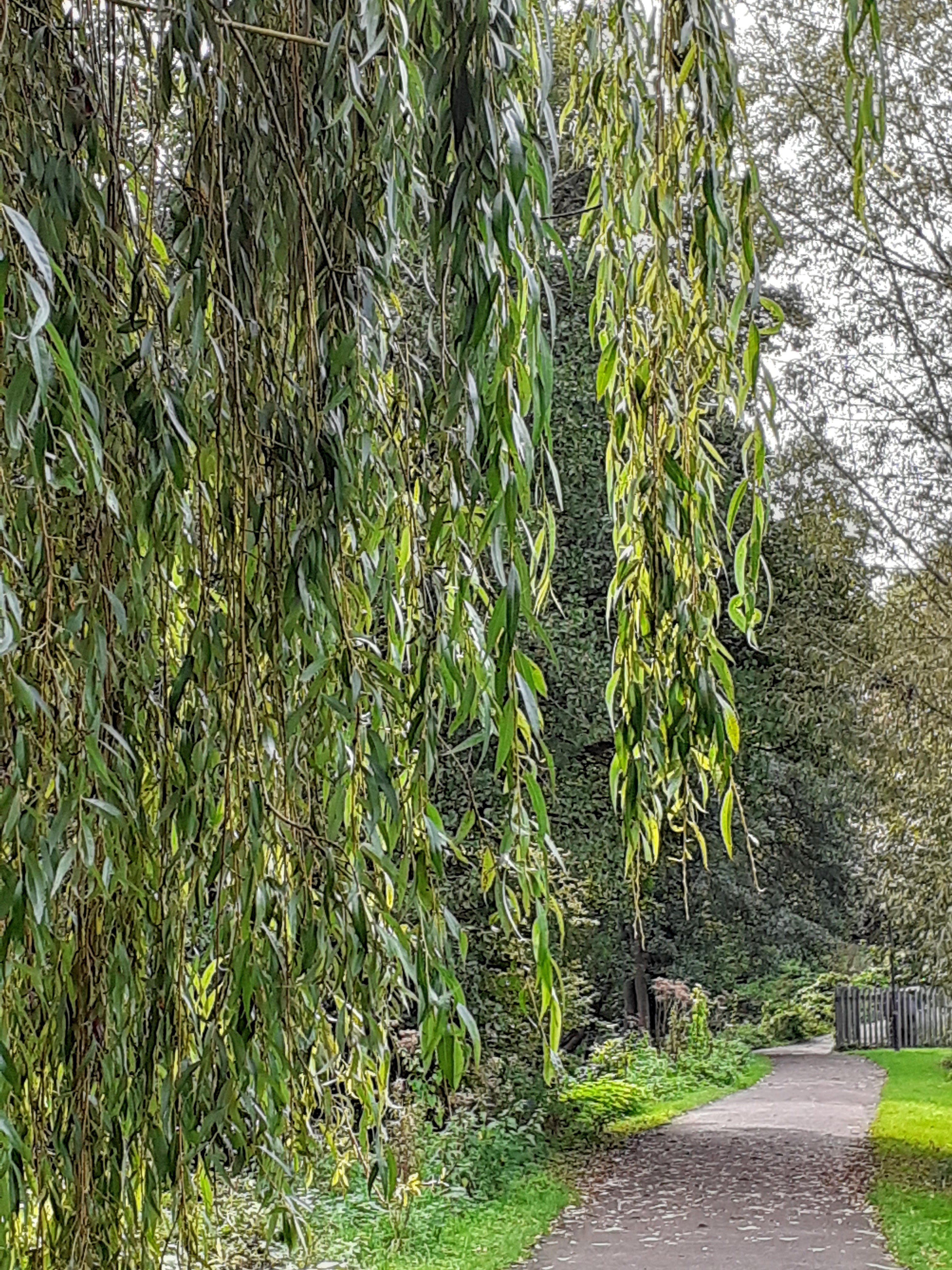
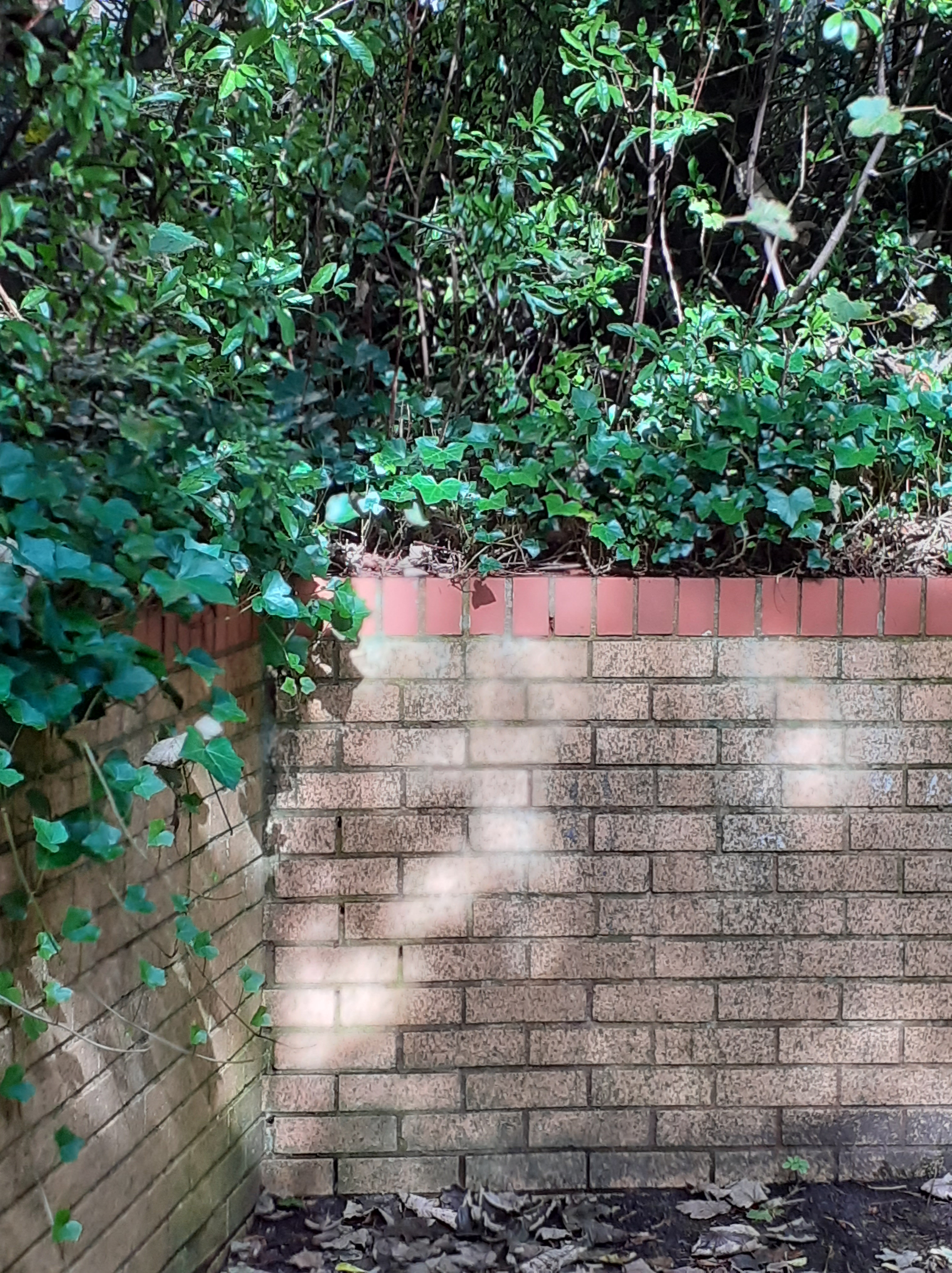
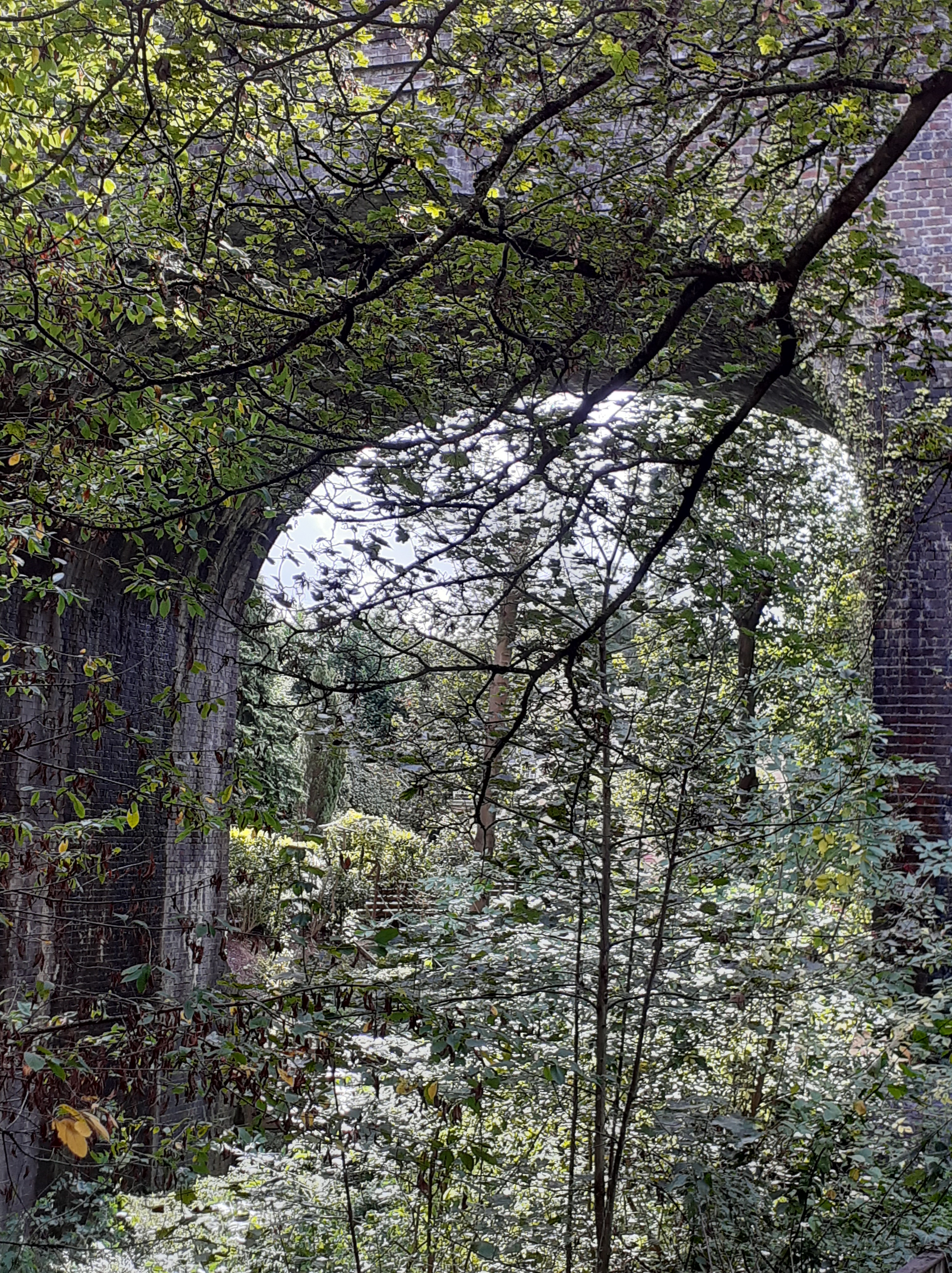
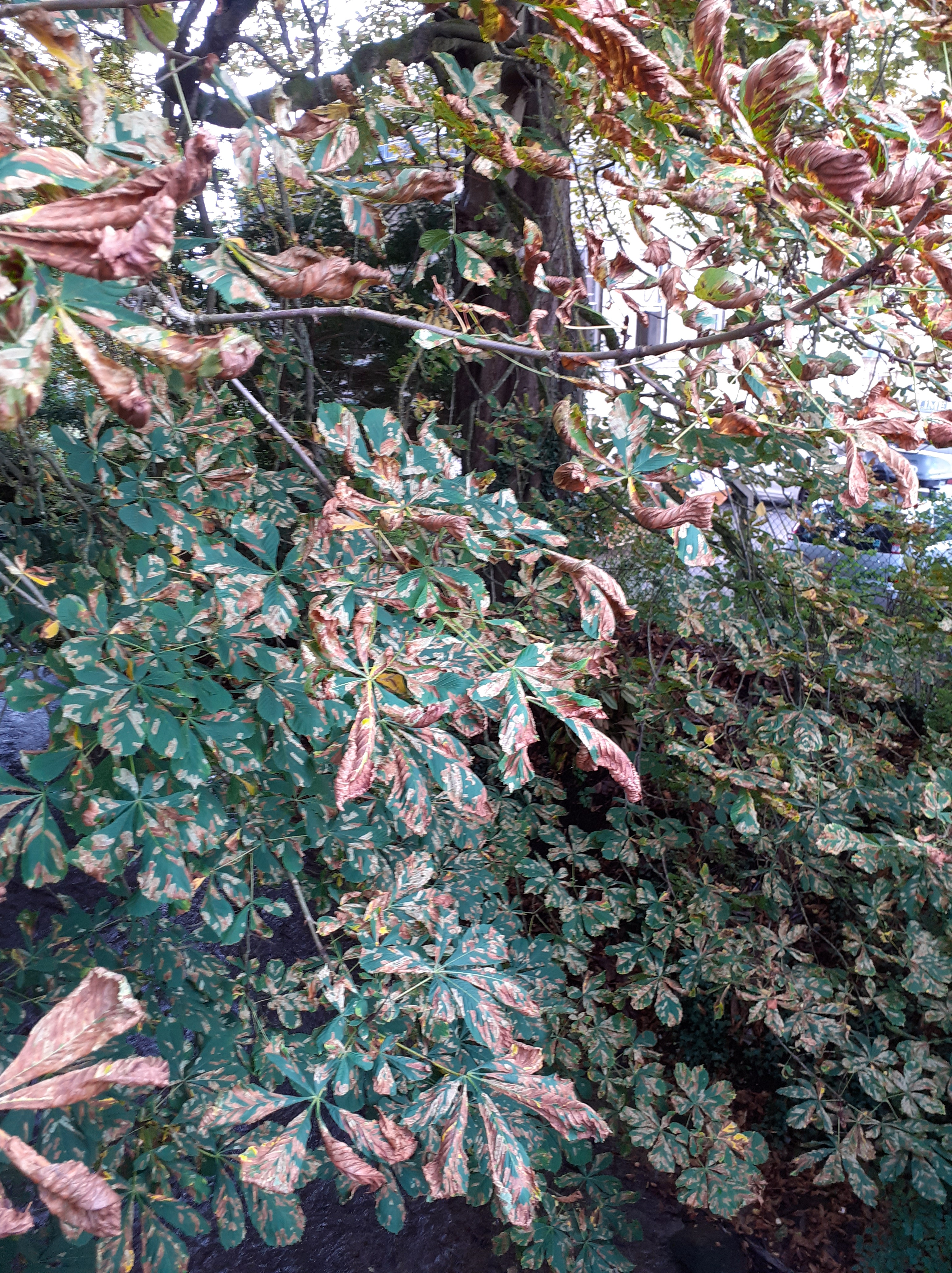
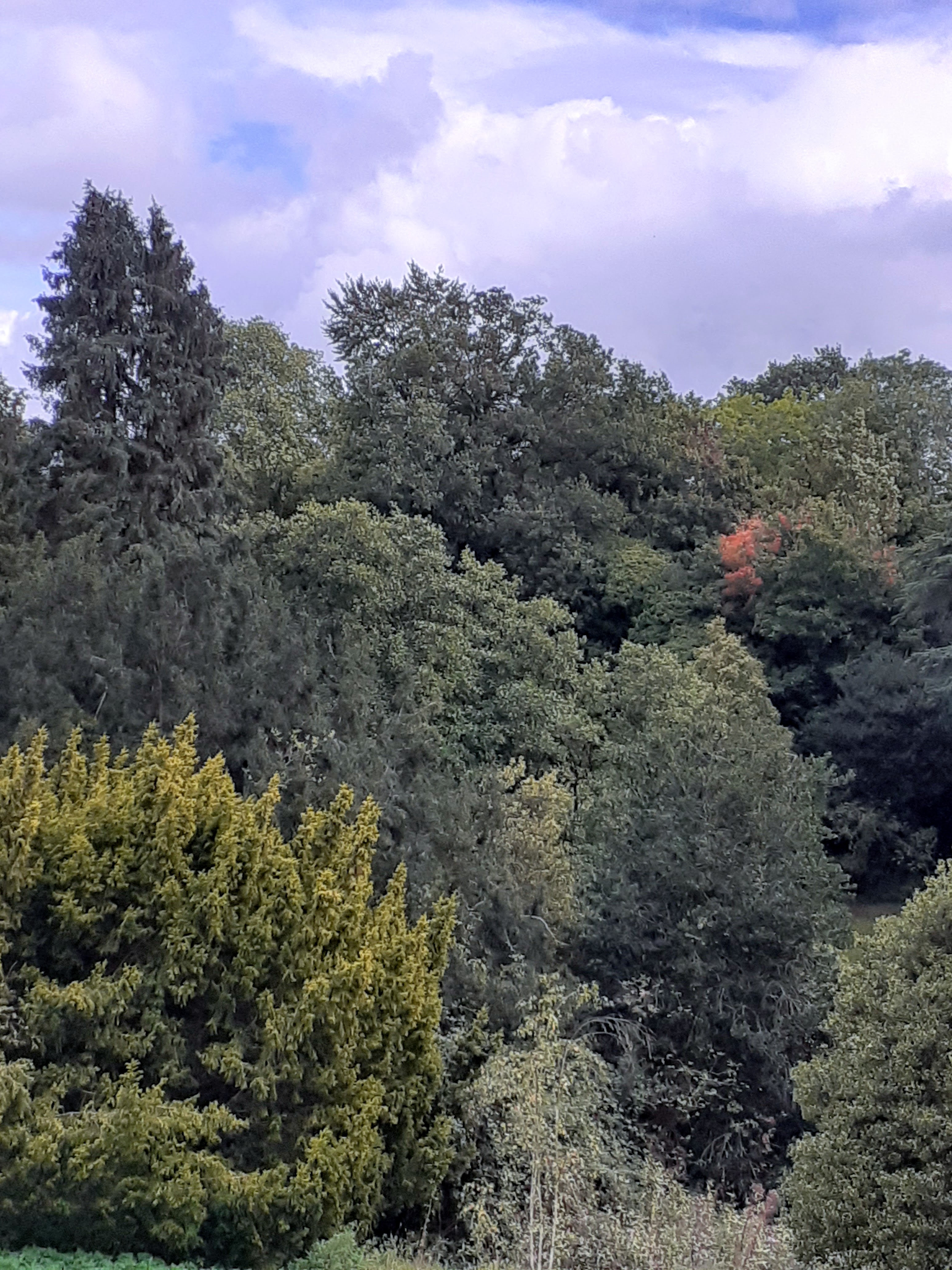
I am noticing a dance of light and shade, at moments not defined by heavy cloud and rain. In these recent pictures I sense a yin/yang contrast where clear shafts of light illuminate, but do not dominate, spaces inclined to be shady. For me there is a living balance here – one thing that still pictures do not show is that the detail is constantly changing.

I celebrate the miracle of existence – my ability, or life’s ability, to see a world and be immersed in it. To respond to it and to share it. Sometimes this seems enough, with no need for any framework to explain or contextualise this astonishing fact. Here, from identifying a dance of light and shade, I can notice how this dance has different effects in different settings, a small sample of the vast diversity in our living world. As we move without illusions into the Cop26 summit, may it be preserved and protected!

text

text

TOWARDS SAMHAIN 2021

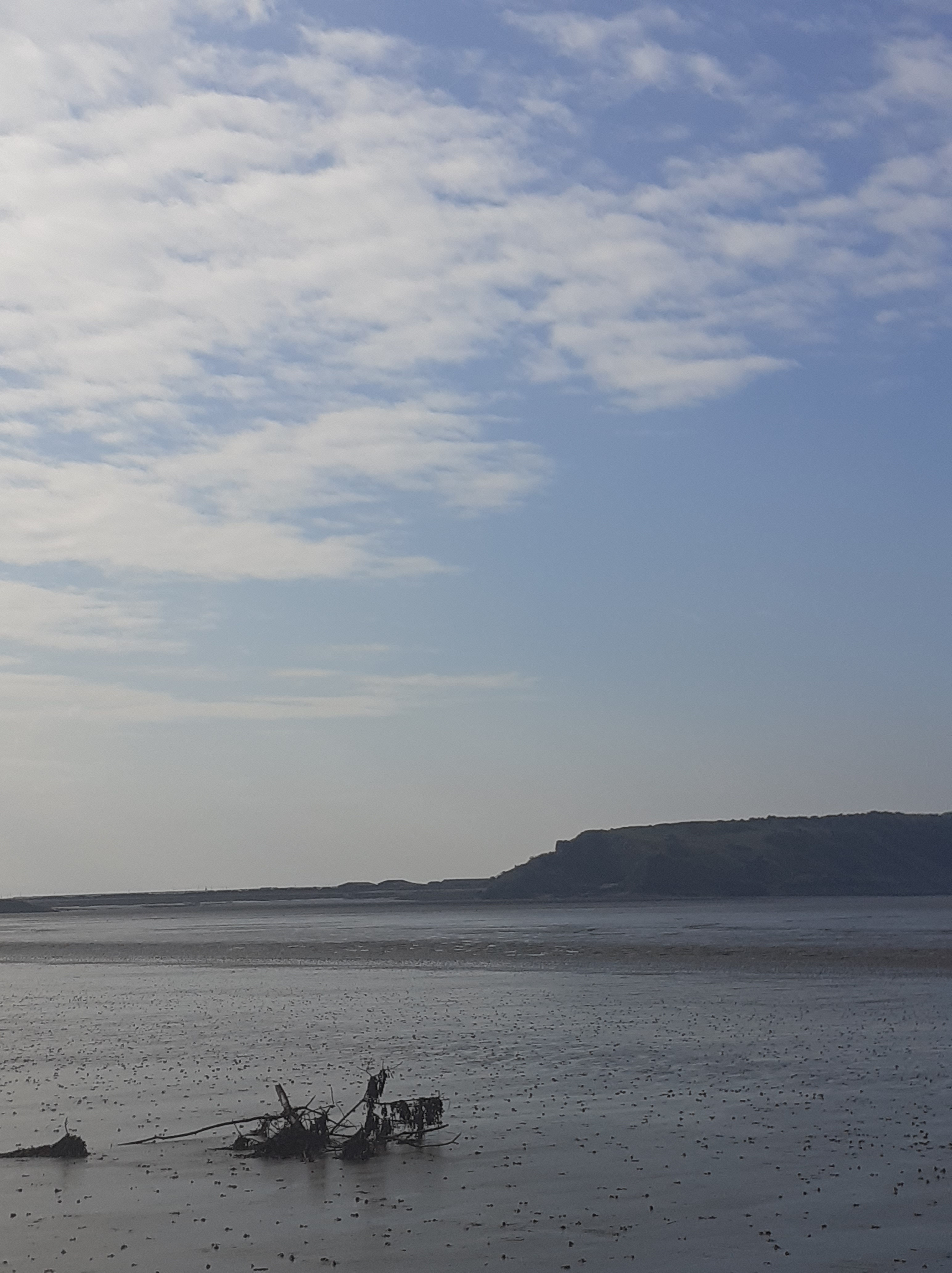
Approaching Samhain, I feel drawn to themes of paring down and letting go. Pictures from a recent visit to Weston beach reflect this minimalist mood. The tide was out, leaving an expanse of flat muddy beach, not easy to distinguish from the sea. Sea-wrack and bare wooden posts were prominent features here. I enjoyed the clarity and immediacy of this setting, and also a sense of a quiet latency, before the water returned.

Samhain initiates a time of endings and transitions. Where I live, the dying of the year is generally not dramatic, but there is nonetheless considerable change. This speaks to something in me. My notion of a ‘contemplative inquiry’ is morphing as it strips down to essentials, and dissolves into a gentle holding and observation of experience in flow. I will give this morphing process space, and see what emerges from the descent of the year. I expect to post less frequently for a period of time.

3 WATER MARGIN IMAGES

Three water margin images:

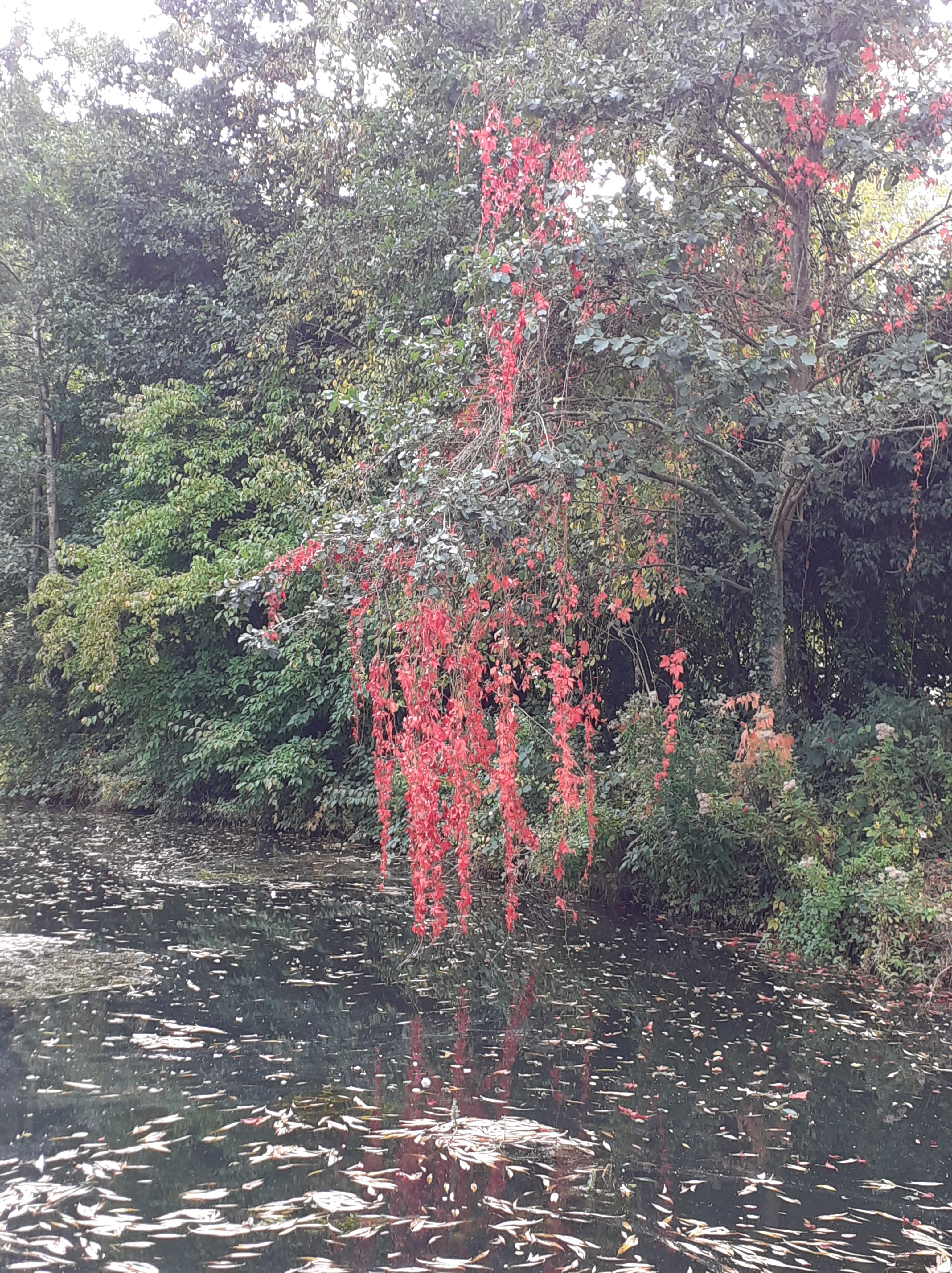
Above the surface: Vivid russet leaves, weeping into the water.

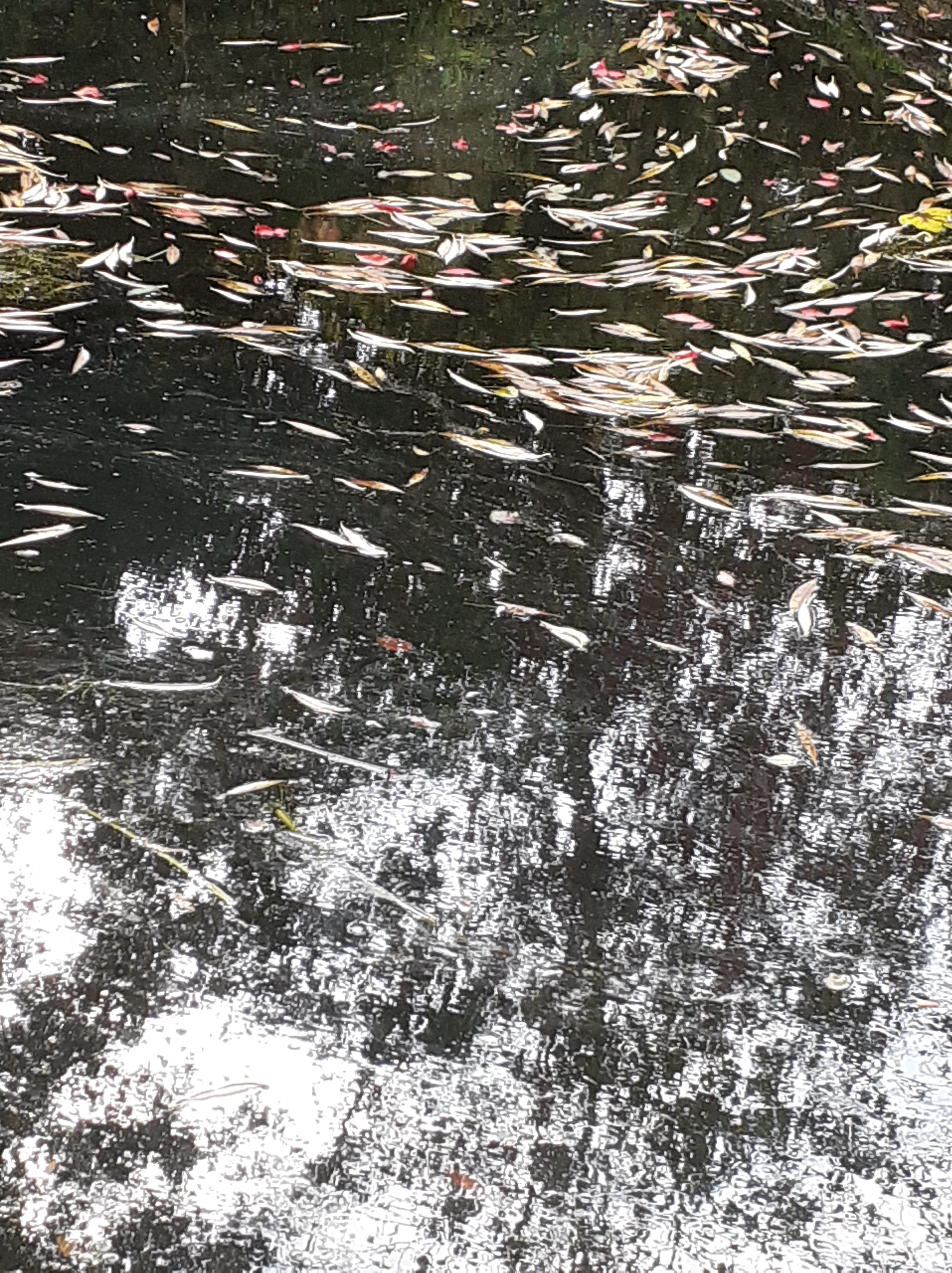
On the surface: Floating leaves, and indistinct reflections.

Below the surface? An inverted tree, suggesting another world.

BOOK REVIEW: THE BURNING HOUSE

A highly recommended illustration of spirituality in support of political action. In The Burning House: A Buddhist Response to the Climate and Ecological Emergency (1), author Shantigarbha affirms that ‘the ecological crisis is nothing if not a spiritual crisis, a crisis of meaning and direction for our civilisation’. Most Druids would say the same, and see value in his approach.

Shantigarbha (Seed or Womb of Peace) (2) is a teacher of Buddhism and Nonviolent Communication (NVC). He has also trained members of Extinction Rebellion (XR) in nonviolence and de-escalation skills. He believes that we cannot wait to change our lives before we change the world, or to change the world before we change our lives: we have to do the best we can with both, together, now. He sees the climate crisis as primarily one of ’empathy, connection and community’ and says that ‘when we use our energy to cultivate our own vitality, we naturally use the abundance we discover in the service of life’.

The book title The Burning House references a traditional Buddhist story about a father trying to get his children out of a burning house. There is no time to pick them up individually, so he simply commands them to leave. But they are busy playing with their toys and ignore him. He has to find a skilful means of getting them out. In his anguish (but also inspiration) he tells them that there are even more wonderful and exciting toys outside. In the parable the burning house stands for a life of samsara and unawareness. Outside there is the opportunity for awareness and the tools to develop it.

The book looks first at the climate crisis and ways it can be understood. There follow chapters on how Buddhist ethics support environmental ethics, and how compassionate action based on wisdom can enable the transformation we need. There are chapters on aspects of emotional intelligence. How to transform anger is the first – rather than acting out our anger or repressing it, we can identify and mobilise ‘the life in it’. Hatred, by contrast, is characterised as always toxic and self-harming. There are chapters on ecological grief and its potentially heavy weight – and also on gratitude for what we do still have. There is a beautiful quote from Francis Weller: ‘How much sorrow can I hold? That’s how much gratitude I can give. If I carry only grief, I’ll bend toward cynicism and despair. If I have only gratitude, I’ll become saccharine and won’t develop much compassion for other people’s suffering. Grief keeps the heart fluid and soft, which helps make compassion possible’ (3).

Later chapters focus more specifically on nonviolent social change, on being the change, and on the role of nonviolent disruption in the pursuit of climate justice. Practical examples draw on UK experience in 2019, mostly in London and Bristol. Whilst illuminating, they are limited in place and time. The last chapter, Final thoughts: the beauty and terror, summarises what we can do both individually and collectively. It sees some grounds for hope – if we treat the climate and ecological emergency as an emergency. Shantigarbha draws on Sraddha, ‘the Buddhist equivalent of hope’, better translated as confidence or trust. It is not faith or hope in the ordinary sense. ‘Sraddha represents a higher or broader perspective, our connection with vision. It signifies an emotional response to our ideals. In terms of the burning house it represents the father’s cry of inspiration’. We are invited to have the courage and confidence to do what we can, and let the effects ripple out. It is what we can do, and all we can do.

The Burning House offers valuable perspectives both on Buddhist political engagement and on climate action. Each chapter contains a link to a guided meditation, offered as a resource to readers.

(1) Shantigarbha The Burning House: A Buddhist Response to the Climate and Ecological Emergency Cambridge: Windhorse Publications, 2021 (https://www.windhorsepublications.com)

(2) See: https://www.SeedofPeace.org

(3) See: https://www.thesunmagazine.org/issues/478/the-geography-of-sorrow)

POEM: THIS STILL CENTRE

Here, indeed, is no ordinary spot:

no place on the map, in the cosmos,

is anything like it.

This still Centre is the one spot

where energy is actually discovered

welling up out of Nothing.

All the irresistible torrents

which swirl and roar through every other place

rise silently in this place,

never ruffling its perfect calm.

Douglas Harding Everyday Seeing: daily meditations on the One within. London: The Shollond Trust, 2019 (Quotations selected by Richard Lang)

POEM: ASTONISHED BY THE ORDINARY

A discarded flowerhead, wet mud and grass.

I am drawn down into seeing,

And,

Astonished by the ordinary,

I am opened up to awe.

THOMAS TRAHERNE DAY 2021

The image is of two modern stained glass panels in Hereford Cathedral, commissioned in honour and remembrance of the seventeenth century priest, poet and mystic Thomas Traherne. The Anglican Church has dedicated 10 October to his memory. Here is the first verse of Desire, one of his poems:

“For giving me Desire,

An Eager Thirst, a burning Ardent Fire,

A virgin Infant Flame,

A Love with which into this World I came,

An Inward Hidden Heavenly Love,

Which on my Soul did work and Move,

And ever, ever me Enflame,

With restless longing Heavenly Avarice,

That never could be satisfied,

That incessantly a Paradice

Unknown suggest, and som thing undescried

Discern, and bear me to it; be

Thy Name for ever praised by me.” (1)

(1) Denise Inge (ed.) Happiness and Holiness: Thomas Traherne and His Writings London: The Canterbury Press Norwich, 2008 (Canterbury Studies in Spiritual Theology)

NOTE: Thomas Traherne (1636-74) was the son of a prosperous Hereford shoemaker – big house, numerous resident apprentices.  He grew up during the civil war (1642-49) and England’s  republican experiment (1649-1660) in a naturally royalist area. He entered Brasenose College, Oxford, in 1652 (16 being a normal age at the time) under a strictly Puritan head, took  a BA in 1656 and was appointed minister at the Herefordshire Parish of Credenhill by the Commissioners for the Approbation of Public Preachers in 1657. As soon as Charles II returned to England Traherne arranged to be ordained as Credenhill’s Anglican vicar, developed strong links with the renewed life of Hereford Cathedral, and also found time to be Chaplain to Sir Orlando Bridgeman, Charles’ Lord Privy Seal. Denise Inge* describes Traherne as “distinguished from his seventeenth century peers by the fact that he is blissfully untroubled by the tensions, doubts, anxieties that (we are repeatedly told) mark the age in general”.

*Thomas Traherne Poetry and Prose London: Society for Promoting Christian Knowledge, 2002. (Selected and introduced by Denise Inge for the series The Golden Age of Spiritual Writing)

SEVEN IMAGES: LIGHT AND SHADE IN A GENTLY WANING YEAR

BENDIGEIDFRAN (BRAN THE BLESSED)

Bendigeidfran, Bran the Blessed, is a legendary King of the Britons. He is best known to us through the medieval Welsh text The Second Branch of the Mabinogi (1). The primary theme is hope betrayed, most chillingly by Efnysien, Bran’s “brother on his mother’s side”. A marriage feast ends in a series of disasters. But this is not the whole story.

The marriage is between Bran’s sister Branwen and Matholwch the King of Ireland, intended to bring the two kingdoms together in peace and amity. But Efnysien mutilates the Irish party’s horses at the celebration hosted by Bran. It is among the worst things he could do.

In one savage, impulsive act, Efnysien opens the space for an outpouring of resentment, suspicion and hostility – eventually, from both the Irish and the British people. Bran’s efforts to resolve the situation through explanation, consultation and negotiation end in failure. The level of compensation and apology he offers is too much for the British and too little for the Irish. The time comes when Branwen is seriously abused in Ireland. The absolute breakdown of trust between the two countries leads to a bitter, brutal war.

After the war, Bran returns from Ireland with seven surviving companions, his only victory being that he has got them home. Ireland is completely devastated. Bran has been wounded in the foot by a poisoned spear, probably a mortal wound. Bran makes a radical decision, leading to a period of healing and renewal for his companions and a new protective role for his country. “Bendigeidfran ordered his head to be cut off. ‘And take my head’, he said, ‘and carry it to the Gwynfryn in London (the White Mount, now the Tower of London) and bury it with its face towards France. And it will take you a long time; you will feast in Harlech for seven years, with the birds of Rhiannon singing to you. And you will find the head to be as good company as it ever was when it was on me. And you will stay for eighty years in Gwales in Penfro. And so long as you do not open the door to Aber Henfelin, facing Cornwall, you can remain there, and the head will not decay. But as soon as you open that door you can stay no longer. Make for London and bury the head. And now set off across the sea”.

Bran has never been an average human. Too big “to fit inside any house”, he wades across the sea to Ireland “carrying all the stringed instruments on his back”. Later, he bridges the River Liffey by lying down across the river: “hurdles were placed on him, and his men walked on top of him to the other side”. Bran is more than a physical giant. There is something numinous and otherworldly about him, built into his name Bendigeidfran, Bran the Blessed.

The term ‘blessed’ points to something other than it would in the life of a Celtic saint. Caitlin & John Matthews call Bran the Blessed a “titanic god of the Celts … a god of earth and mountain” (2). R. J. Stewart and Robin Williamson describe him as a “primal guardian deity” (3) enacting a role of sacred king traditionally concerned with music, poetry and bridging. In the narrative world of the The Second Branch, such roles are alluded to rather than fully described, but the world is full of magic and spiritually ambiguous, with formal religion little mentioned.

The decapitation of Bran is a magical act. It has two successive effects, both of them benign. The first is when the presence of the head enables an extended period of protected respite for Bran’s companions: the seven years when they feast and hear the birds of Rhiannon (4), and then eighty years as “the Assembly of the Noble Head”. During this time, they forget “all the sorrow they had themselves seen and suffered, [and] … any grief in the world”. Life is pleasurable and delightful and no one seems to age.

It has to end, for the story to continue. The western door is opened, by Heilyn son of Gwyn, driven by curiosity. Grief, loss and ageing return to the companions’ world. They hasten to London to complete their destined task. As long as the head remains buried, no enemy can conquer the kingdom. This is where The Second Branch story ends. Bran, through the agency of his buried head, is confirmed as enduring protector of the land.

There is a coda. It is said that King Arthur dug the head up in later days in the belief that no one but he should protect the country, and that subsequently the head was lost. In later days, the power of the head was transferred to the presence of resident ravens. Bran’s name means raven (also crow), which allows the ravens to take on his power. He is them. They are him. Ravens are kept in the Tower of London to this day, a practice insisted on by Charles II, concerned for the preservation of his country as a kingdom. During World War II the ravens fled after a bombing raid, and every effort was made to ensure that they were swiftly replaced. Seven ravens, the responsibility of Ravenmaster Chris Skaife, live in the Tower now. (5).

(1) The Mabinogion Oxford: the University Press, 2007. (Translated with an introduction by Sioned Davies)

(2) Caitlin & John Matthews The Western Way: A Practical Guide to the Western Mystery Tradition London: Arkana, 1985 (Foreword by Gareth Knight)

(3) R. J. Stewart & Robin Williamson Celtic Bards, Celtic Druids London: Blandford/Cassell plc, 1996 (Colour illustrations by Chris Down)

(4) https://contemplativeinquiry.blog/2017/8/4/a-bird-of-rhiannon

(5) https://www.hrp.org.uk/tower-of-london/whats-on/the-ravens
Earth Eclectic

music that celebrates Earth and speaks to the heart

Sarah Fuhro Star-Flower Alchemy

Follow the Moon's Cycle

Muddy Feet

Meeting nature on nature's terms

Rosher.Net

A little bit of Mark Rosher in South Gloucestershire, England

Becoming Part of the Land

A monastic polytheist's and animist’s journal

selkiewife

Selkie Writing…

Charlotte Rodgers

Images and words set against a backdrop of outsider art.

Prof Jem Bendell

living with metacrisis and collapse

Towint

The pagan path. The Old Ways In New Times

The Druids Garden

Spiritual journeys in tending the living earth, permaculture, and nature-inspired arts

The Blog of Baphomet

a magickal dialogue between nature and culture

This Simple Life

The gentle art of living with less

Musings of a Scottish Hearth Druid and Heathen

Thoughts about living, loving and worshiping as an autistic Hearth Druid and Heathen. One woman's journey.

Wheel of the Year Blog

An place to read and share stories about the celtic seasonal festivals

Walking the Druid Path

Just another WordPress.com site

anima monday

Exploring our connection to the wider world

Grounded Space Focusing

Become more grounded and spacious with yourself and others, through your own body’s wisdom

The Earthbound Report

Good lives on our one planet

Hopeless Vendetta

News for the residents of Hopeless, Maine