Change is coming as the days lengthen and temperatures begin to rise. I too have begun to feel spring-like – more energised and available to the world.
Stepping out, I am in harmony with the life and growth around me. I become aware, again, of the resilience and potential of the plant kingdom.
I celebrate the life force within and without, both through movement as I walk and in stillness when I pause.
I learn again that a familiar space can be ordinary and extraordinary at the same time.
I open myself to spring 2026, the new season, as the Wheel continues to turn.
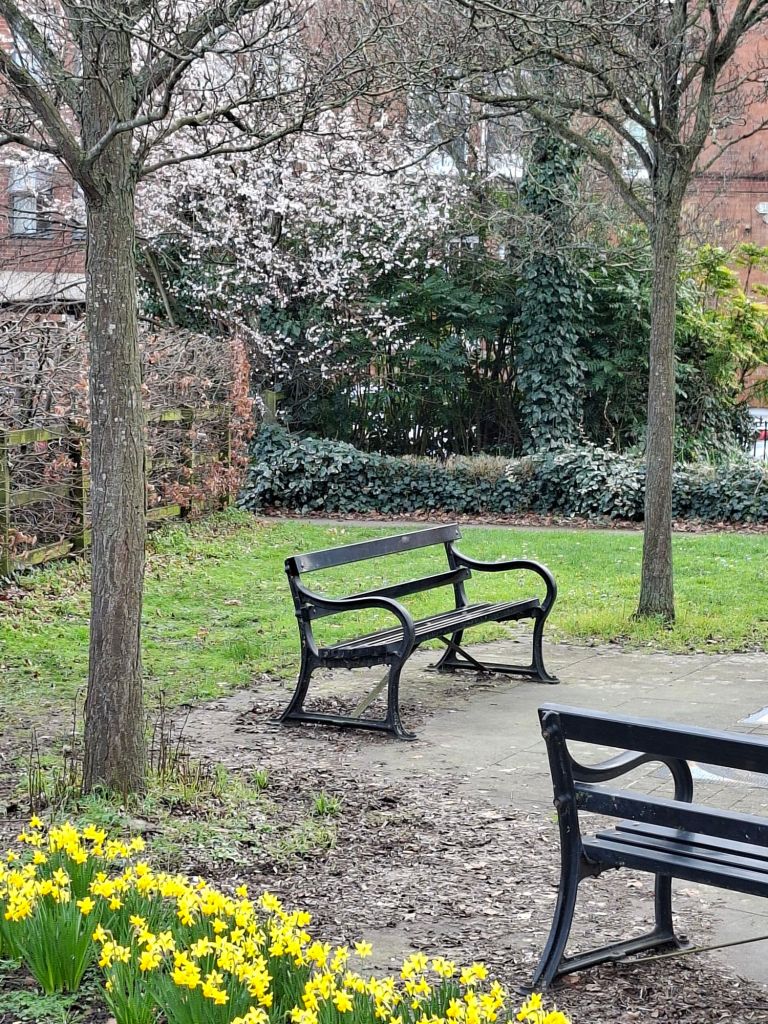
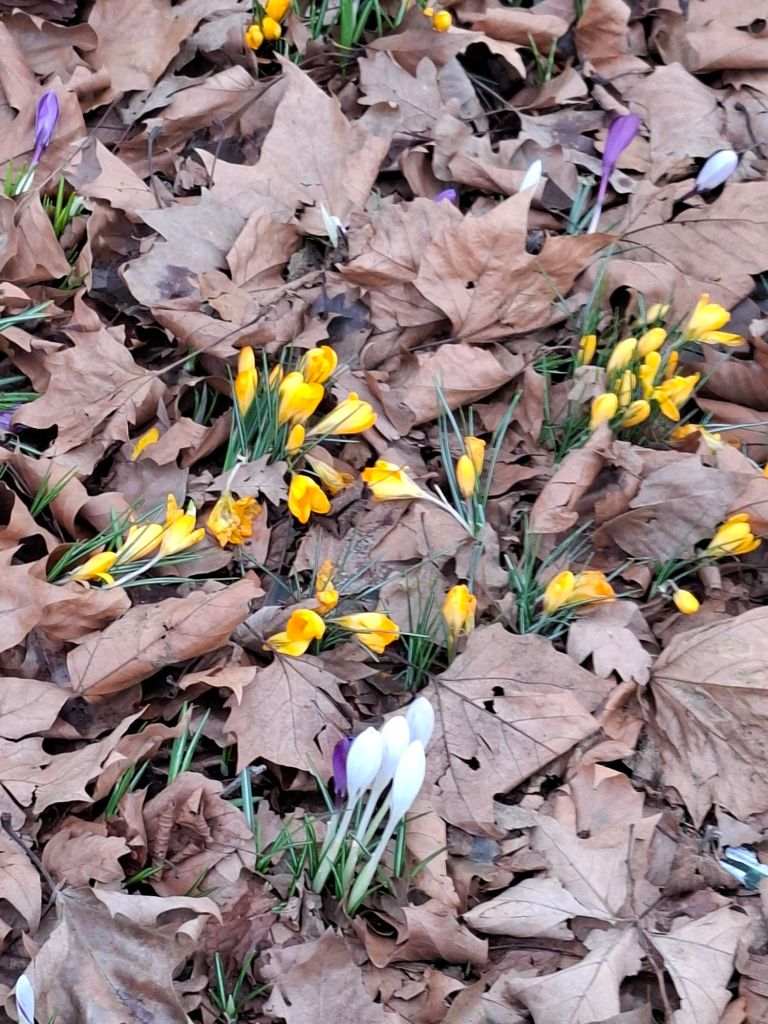
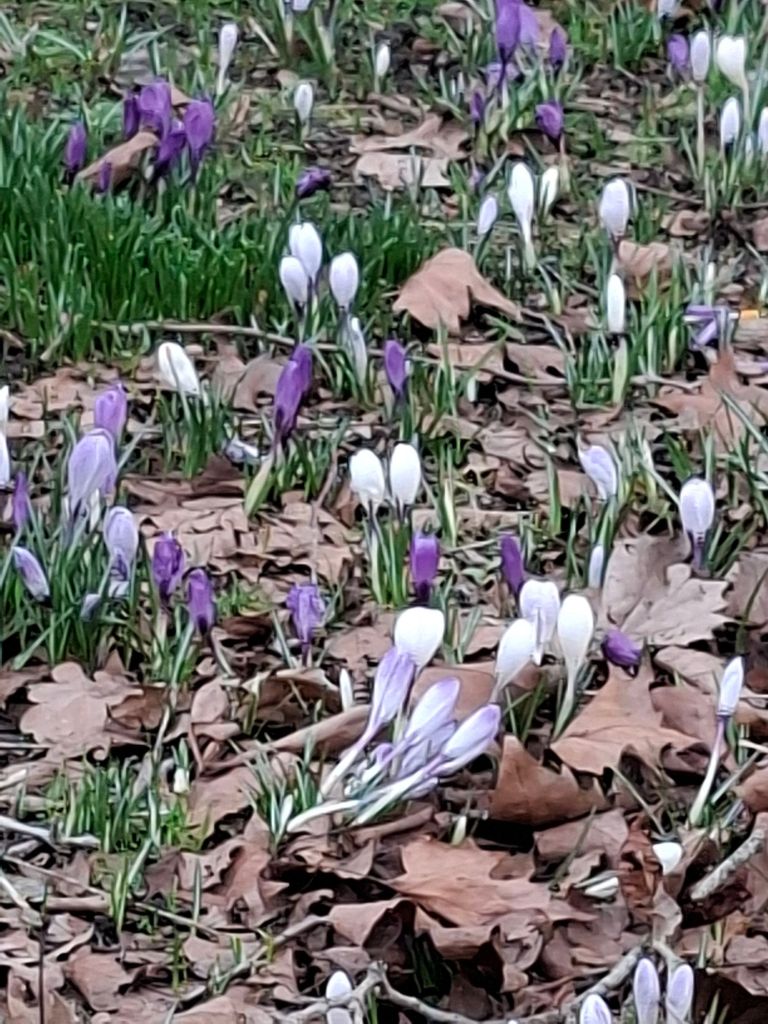
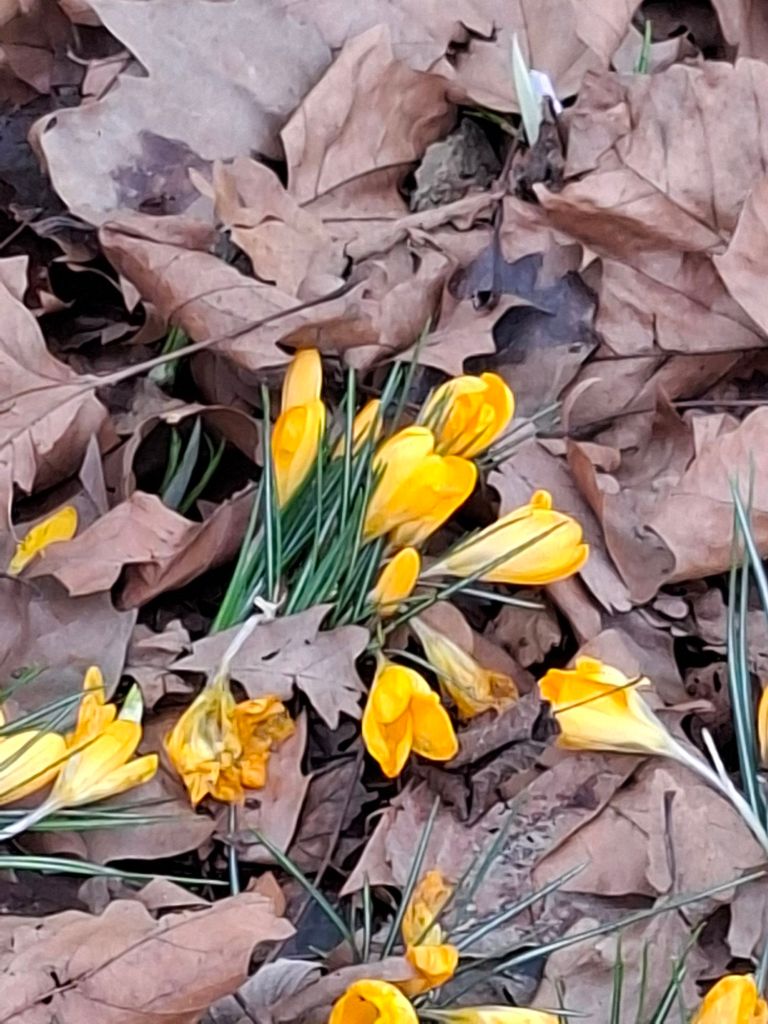
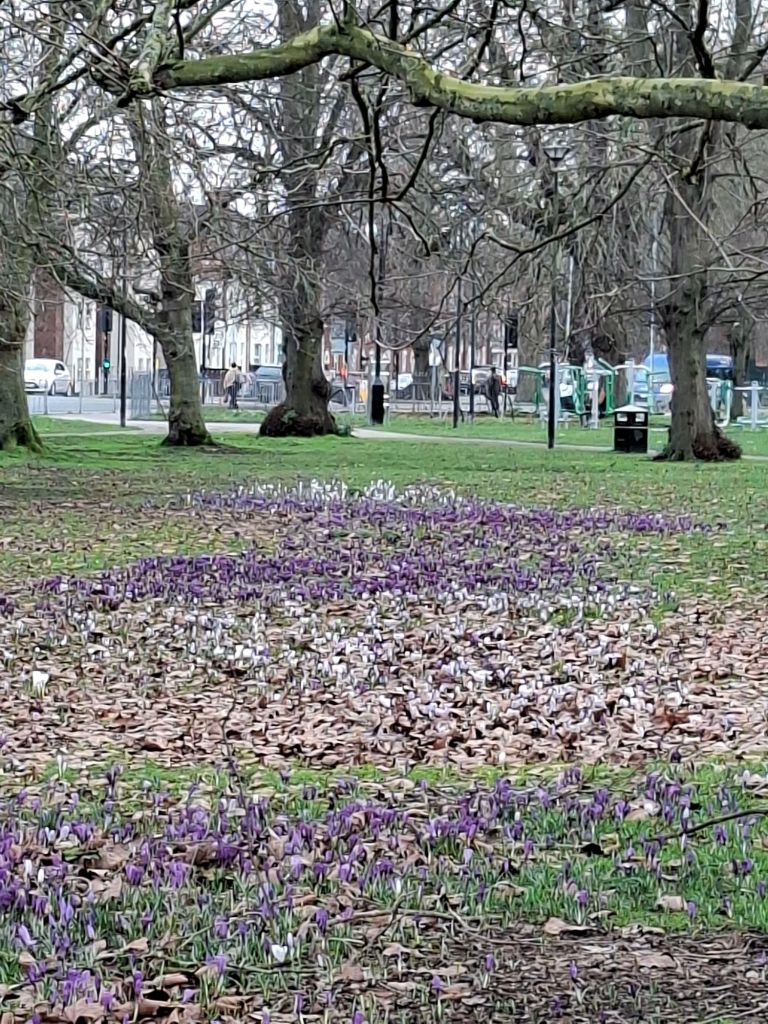
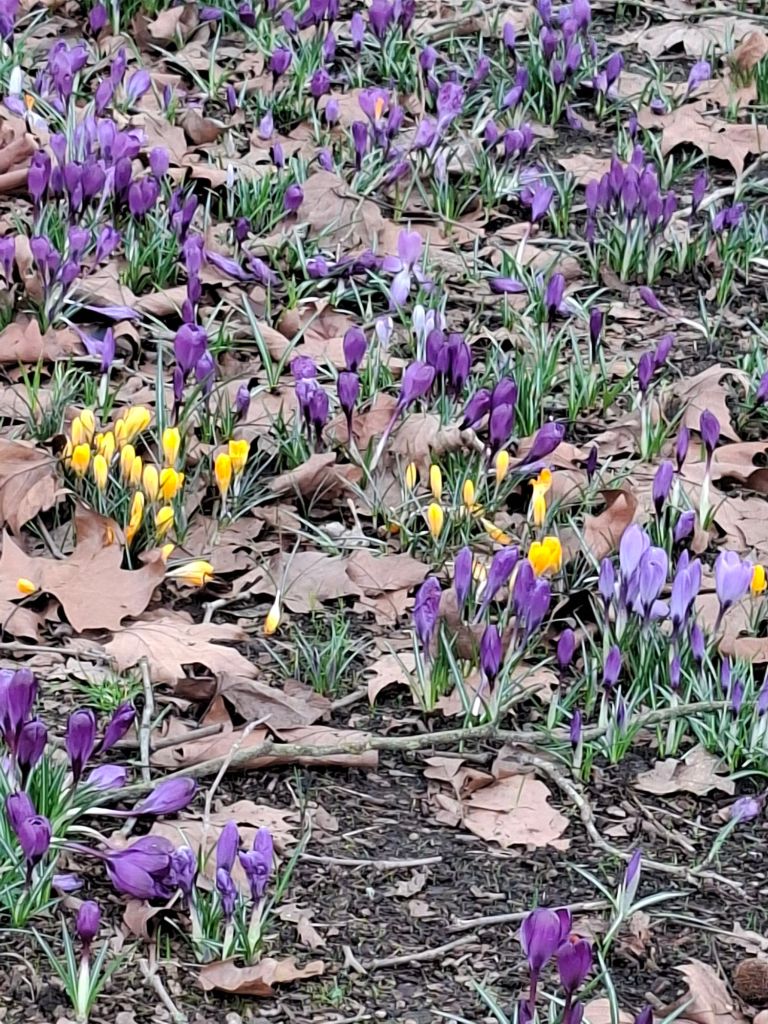
4pm, 9 February, Gloucester Park. I notice the ground in front of my feet. New life is emerging, pushing through last year’s fallen leaves. Crocuses – yellow, white, mauve – are making themselves known. Recent rain gives the blades of new green grass a fresh vitality. Feeling curious and energised, I enjoy an extended moment of contemplation on this small patch of land.
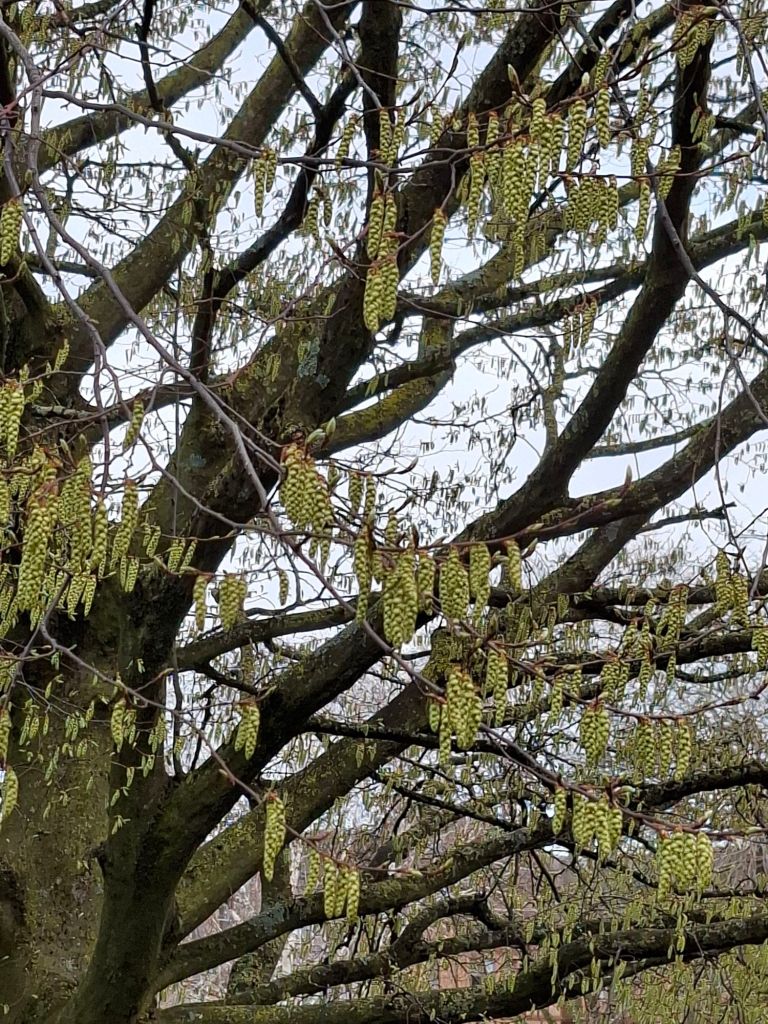
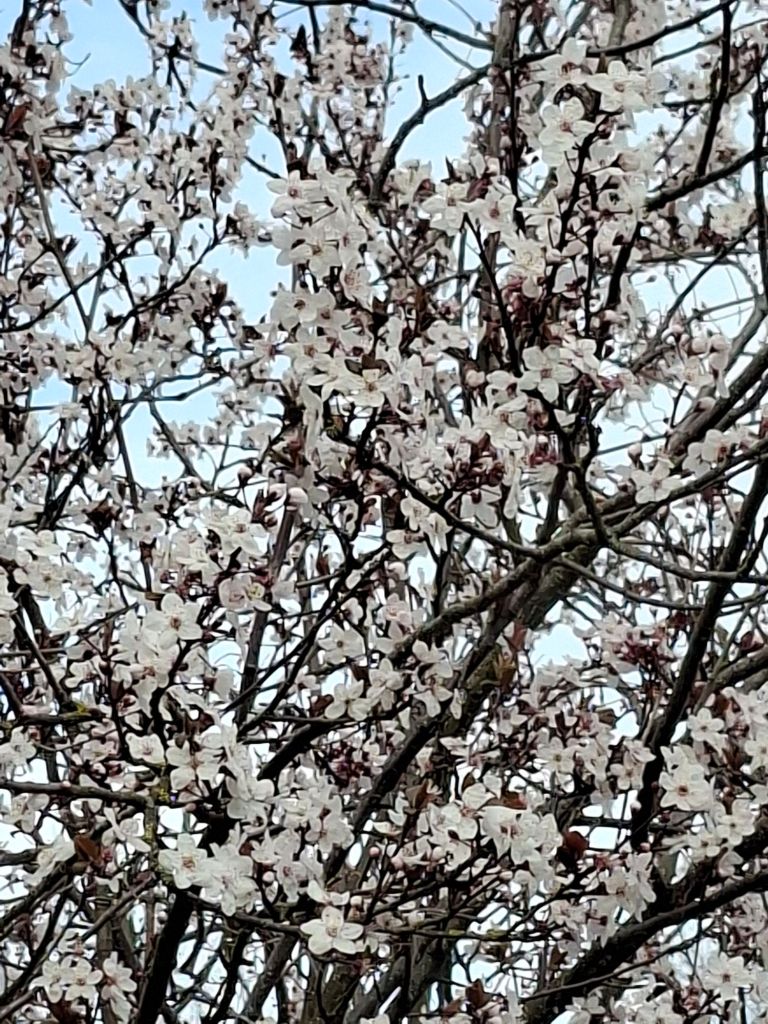
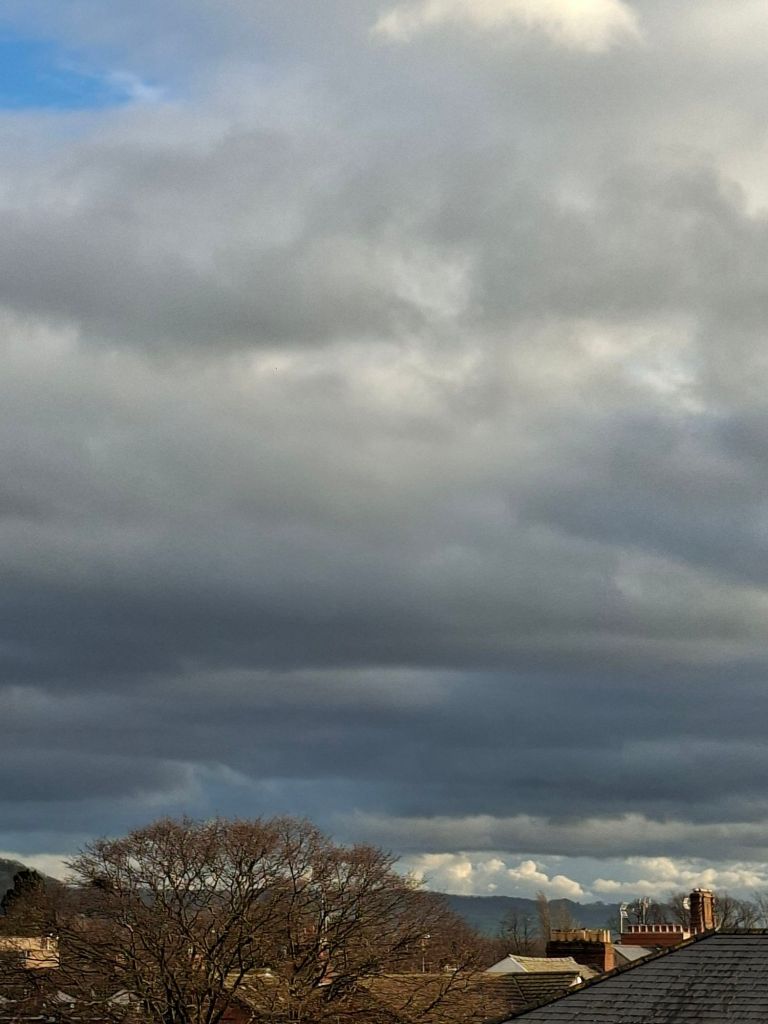
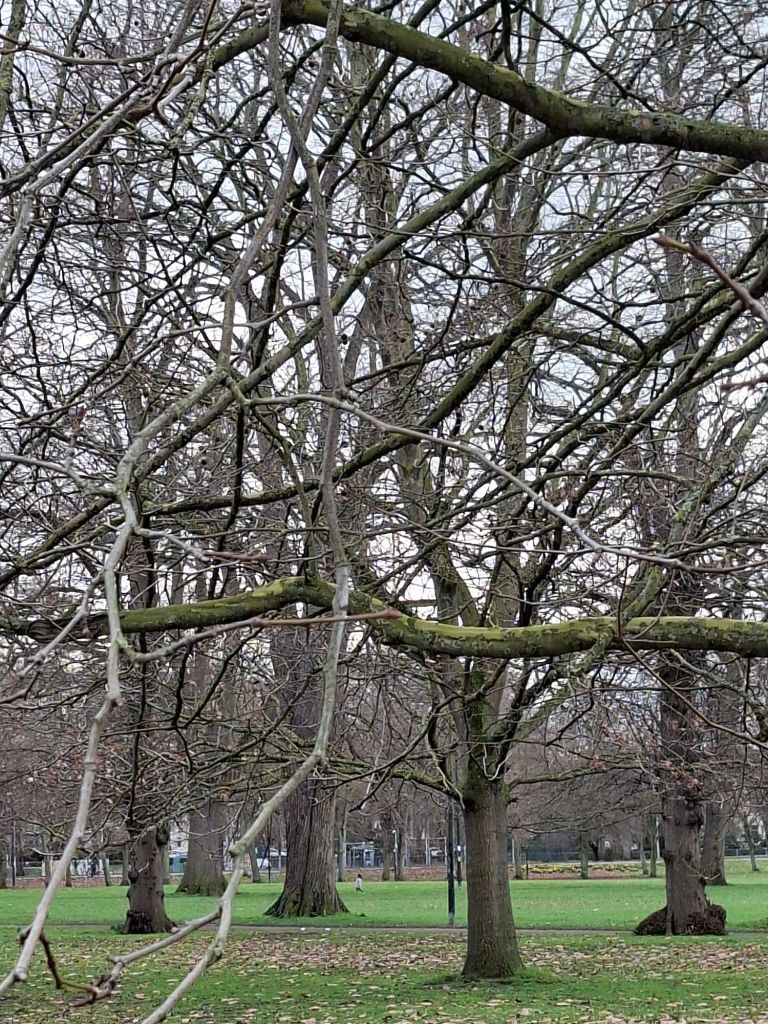
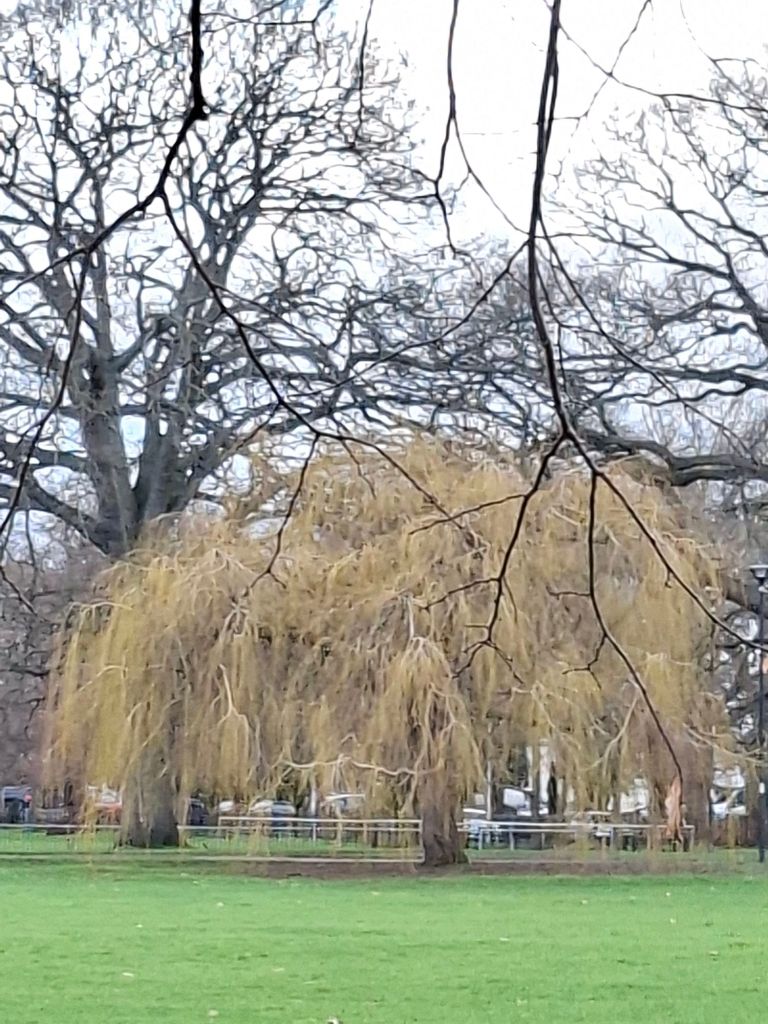
Then, looking around me, I find a contrast between the ground – active, emergent, blooming – and the trees, with their skeletal branches and latent potential. The exceptions are the willows, already moving towards spring.
I reflect on my different states of attention. If I walk briskly through the park, the flowers in particular are easy to miss. They are small and not immediately arresting. To appreciate them, I have to decide to stop and look, emptying my mind of other concerns. Then I can become truly present to the world in front of me, a living world that wants to survive and thrive. Contemplating these flowers, I feel a strong sense of kinship and belonging. The same world is their home and mine: I feel grateful for being born into it. May the abundance of our world be protected and preserved in the days and years ahead.
Yesterday, 31 January, was a day for energy and enthusiasm. I stepped out briskly, mobilised to embrace this late winter afternoon with its spring characteristics.
In my morning practice (see https://contemplativeinquiry.blog/2026/01/28/) I identify a season of ‘winter, dying and regeneration’. Yesterday I both embodied the regeneration I had liturgically named, and saw regeneration all around me. This experience confirmed that, for me, Imbolc is a late winter festival that announces something new. It anticipates spring, whilst not quite being part of it.
I find great comfort in following the wheel of the year. My eager anticipation of spring is simply a moment in the year, which happens every year. I do not have to wait for spring as if for emancipation or redemption in linear time, anxious about whether I will live to see it. I can simply enjoy this moment, which happens to be anticipatory, at this time.
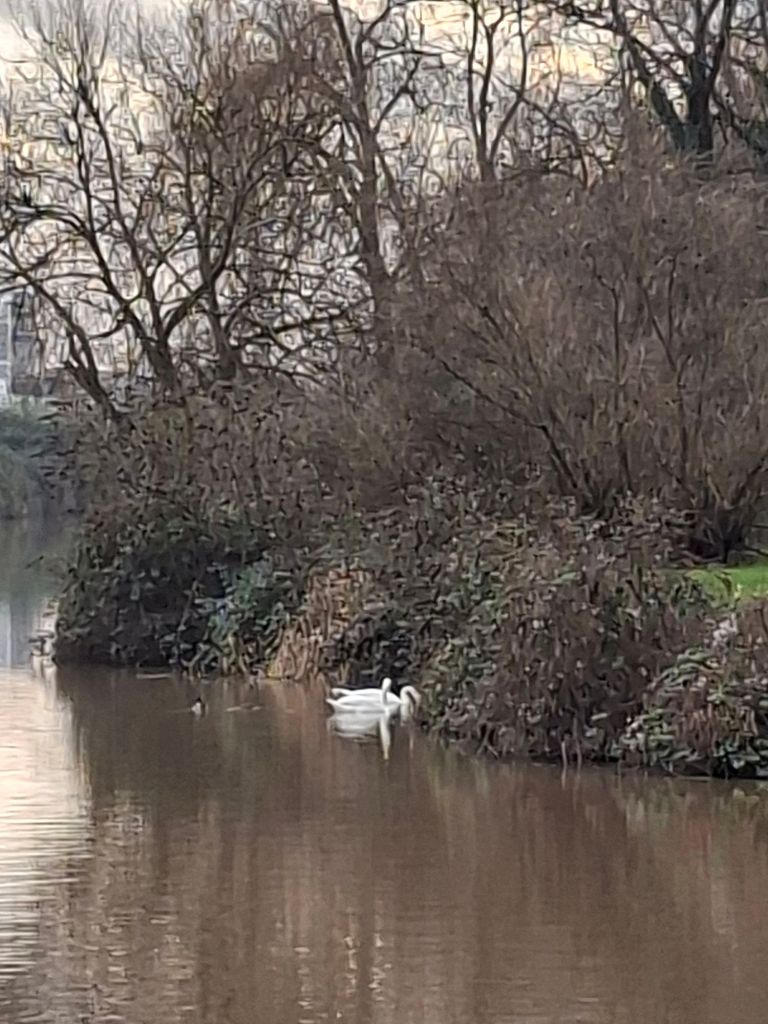
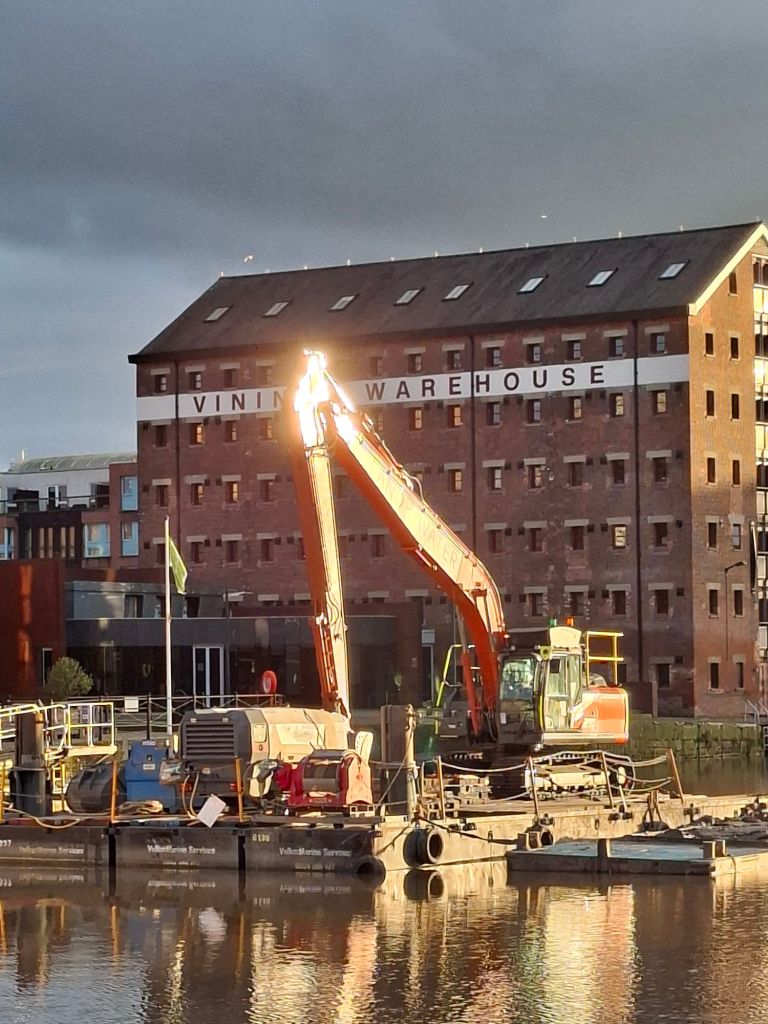
I was walking in the later afternoon. The picture above was taken a little before 4pm and the picture below a little afterwards. I noticed that after many weeks, I was not feeling a primal prompt to hurry back to shelter at this time and thereby avoid the dark. We now have nine hours of sunlight in the day, rather than the eight of the Solstice period. Most of the extra hour has been added to the afternoon. I became fully aware of the experiential difference during this walk.
The pictures themselves were not central to this walk. But they are relevant to its contemplative theme. I was delighted to see two swans together by the canal bank. Because the image is of a pair, I was reminded of their mating time from March onwards – no longer so very far away. I am always heartened by the sight of swans thriving on this stretch of water.
The picture below is of strong late afternoon sunlight striking a dredger in the Gloucester docks, where the canal begins. For me, it is a strong image of the returning light in late winter. I also saw the sun as empowering and blessing a machine that digs down and cleans up, working energetically in unseen depths to help maintain a larger system.

 Contemplative Inquiry