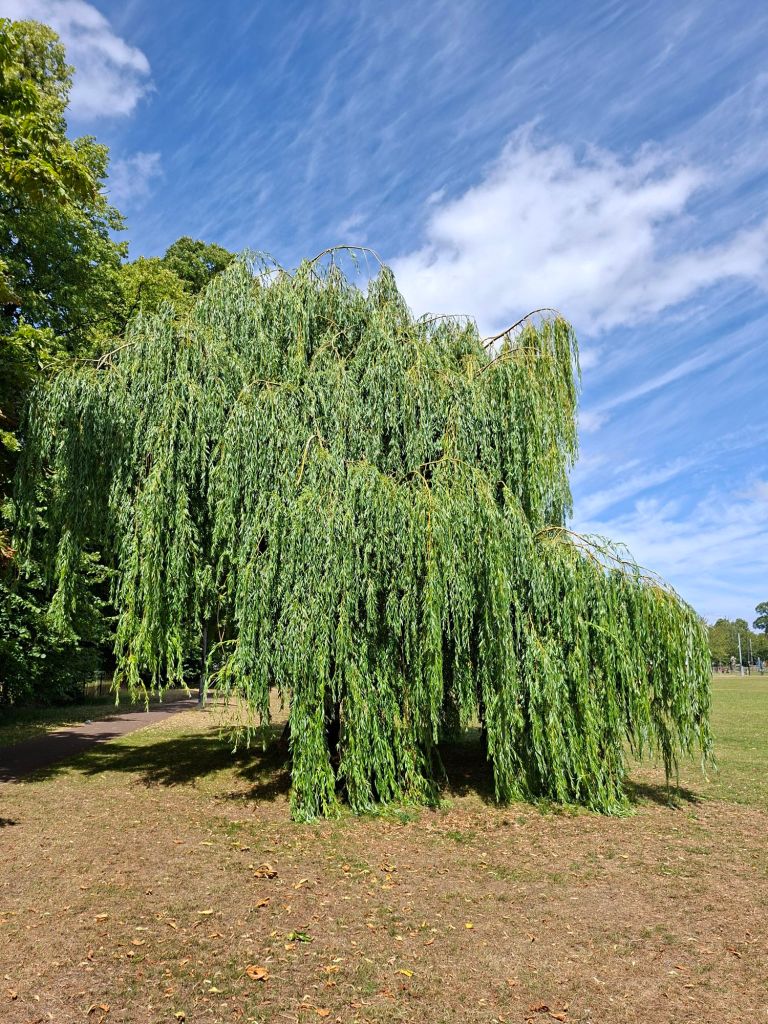
It’s a warm afternoon. The sun is strong. The park is parched. I could do with some moments of shelter. I walk towards a welcome willow tree.
I feel different under the tree’s lush canopy, as if in a benignly altered world. Its sturdy trunk upholds this precious space, embracing both light and shade. Although this space is small, I experience, here, more variety than in the expanse of park immediately surrounding it.
For awhile I cling to the cool softness of this world within the tree, feeling as well as seeing what the branches and leaves of a weeping willow can do. A taste of Nature’s magic. Then I return to the world of the park.
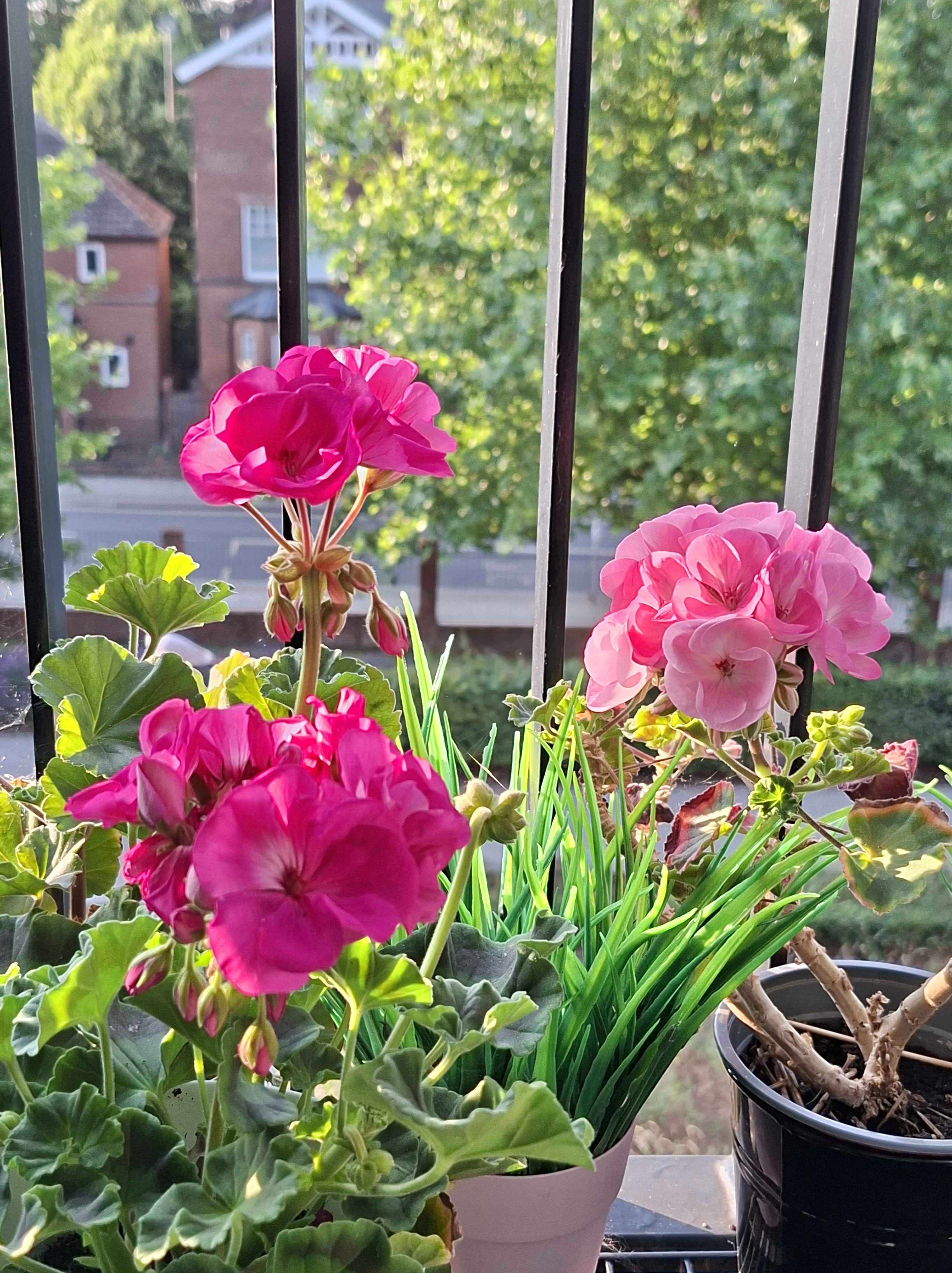
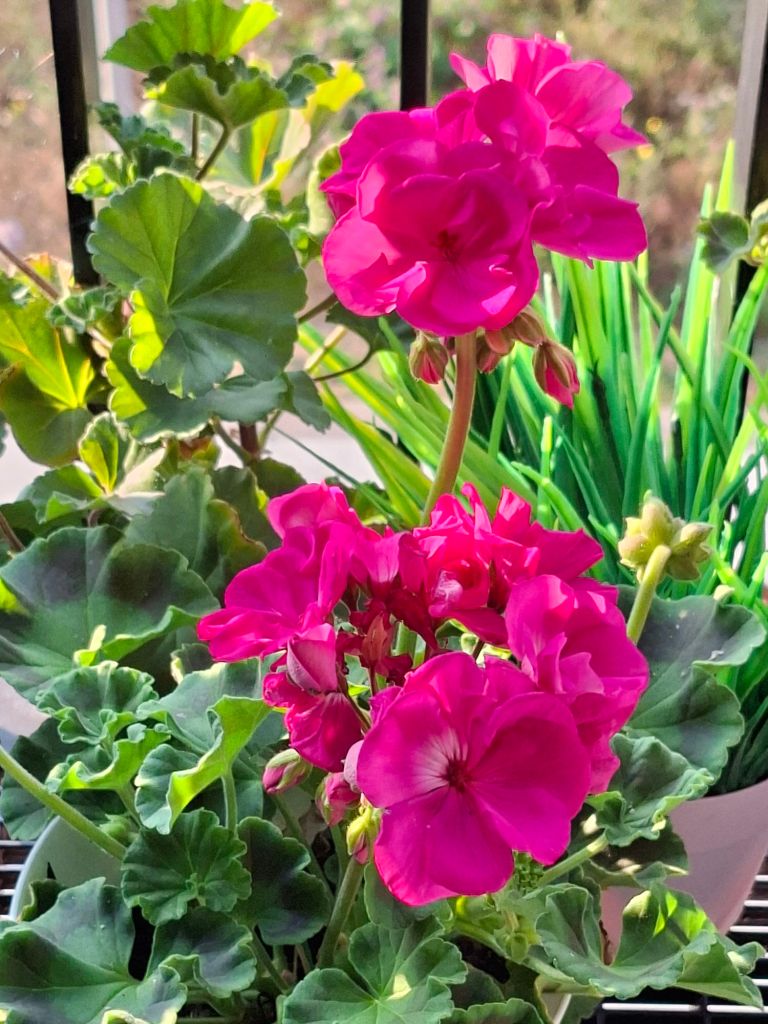
Early this morning I sat in contemplation of some geraniums in pots, for me a good Druid focus of attention. Purchased and tended by my wife Elaine, who is now mobile and active once more, they shone in the early morning light. This was about 6.45 am, some two hours after dawn, on 19 June. It is two days before the Solstice. Where did the time go?
I notice how my eye is drawn to plants and light effects. I find them nourishing and enabling. This has been a theme in my life for awhile. It is though sunlight and the plant world offer hope and reassurance in a bleak, shocking and disorienting historical moment. Life insists on flourishing. I can insist on flourishing too. I am not distracted from the wider world but resourced to engage with it.
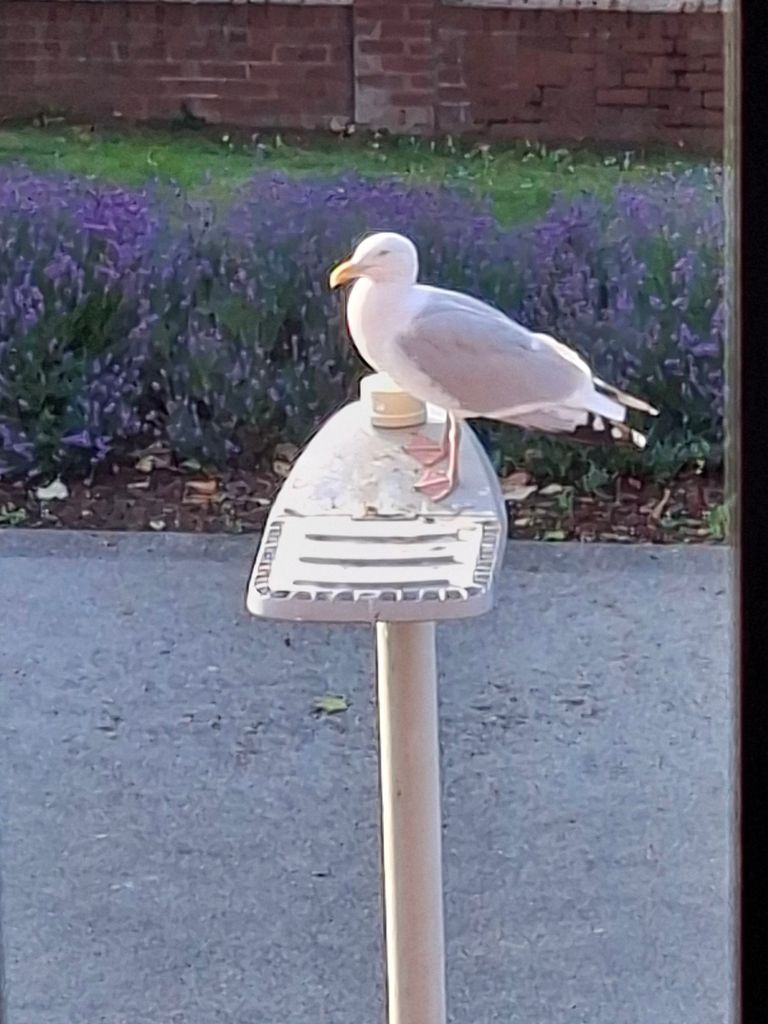
On a convenient lamp post, the seagull seeks an opportunity. This midsummer world is alive.
On completing a breath exercise I sometimes say, ‘I am the movements of the breath and stillness in the breath; living presence in a field of living presence in a more than human world: here, now, home’. This is both my most parsimonious and most spacious sense of home in a world where nothing lasts forever or stays the same. I find my ultimate feeling of home in simple breath and awareness.
Yet my body and feelings, my heart and my imagination cannot thrive on breath and awareness alone. I need love, loyalty and connection inside the turbulence and uncertainty of the world. For me, the risk of getting hurt is an acceptable price to pay.
Thinking simply of ‘home’ spaces, I have lived at my current address for two and a half years. Not long, but enough to establish familiarity and loyalty. The picture above was taken very close to the building I live in. Our estate has planted lavender and let the grasses grow wild. I have come to love this. Our public library building, opened in 1896, is in a simplified and elegant form of 19th century Gothic in its last stage. I know it as a busy and widely loved place. I also know that it won’t be used for its present purpose much longer. Yet I continue to experience it as ‘home’.
Earlier in the year, I wrote about a small group of birch trees growing up beside our flat. Then, they had a bare look apart from a few catkins (1). Now, in the picture below, they are in full leaf. I love the way they are now and also the way they have changed. Without impermanence and mutability nothing can happen. These very characteristics enable ‘living presence in a field of living presence in a more than human world’. They too are a necessary part of ‘home’.
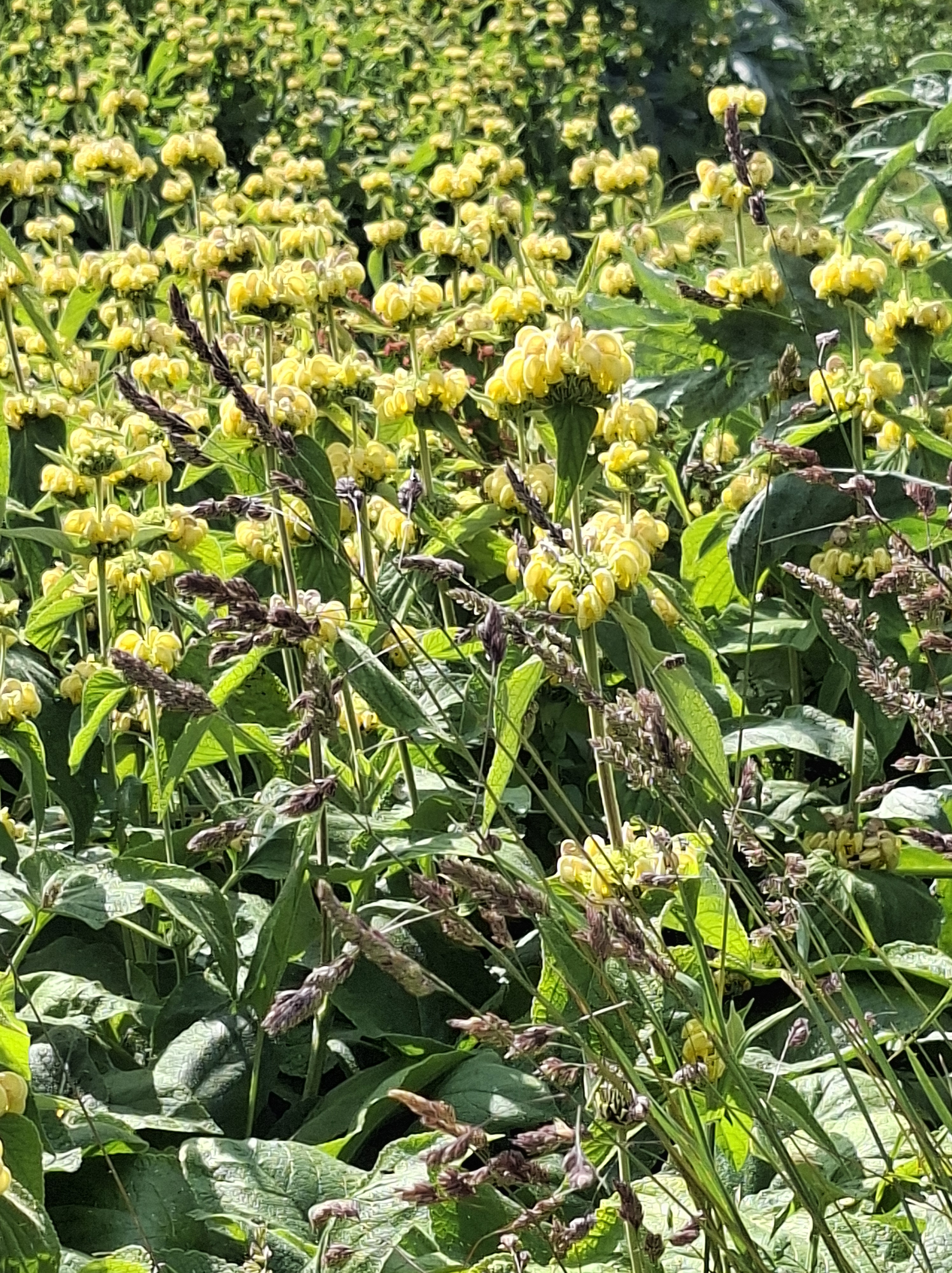
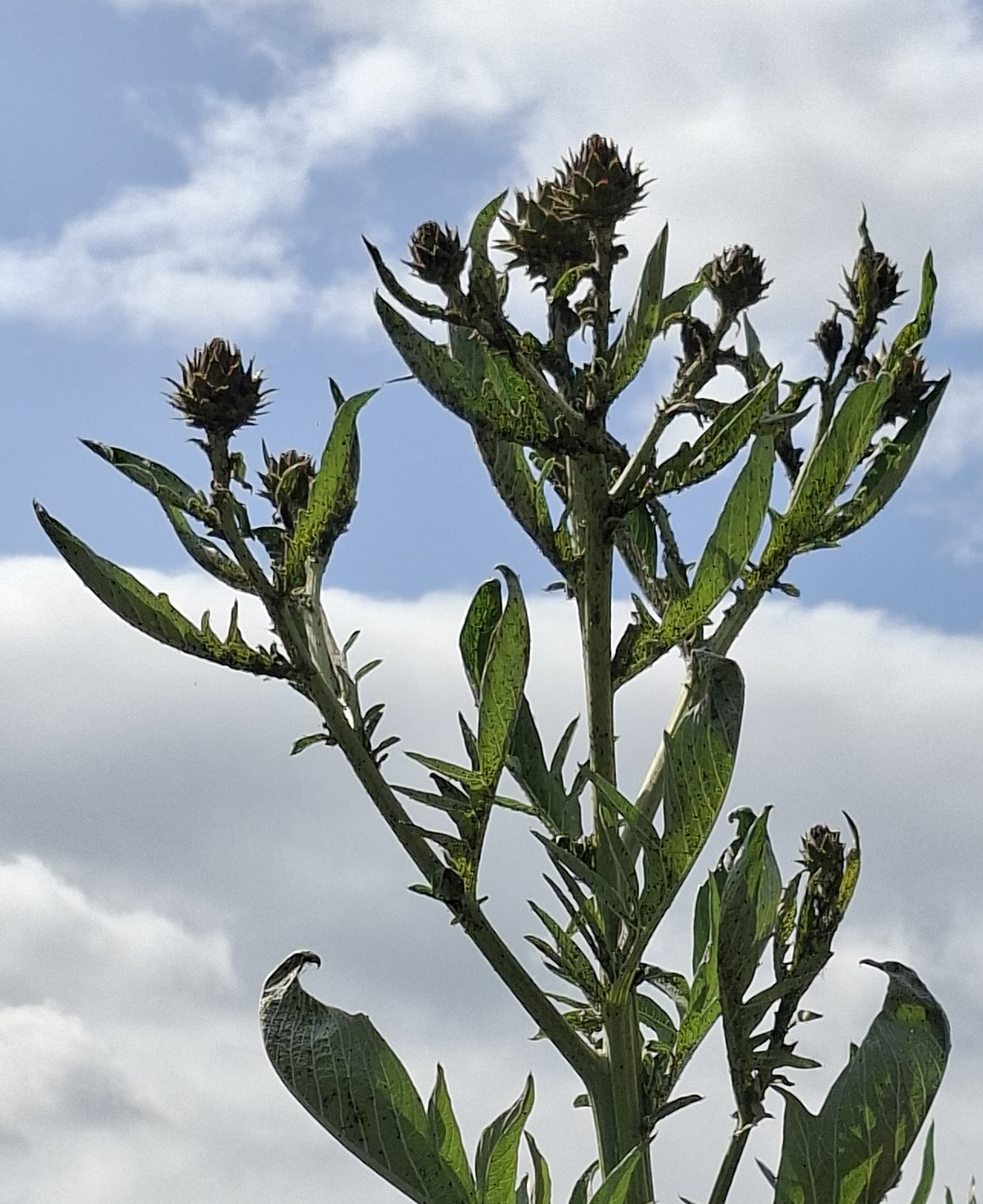
The garden in Gloucester Cathedral’s close is currently a magnificent riot. I was on a walk there with Elaine and we particularly noticed two powerful seeming plants that we couldn’t identify. We simply sat with them, unnamed, and bathed in their energy. It was a glorious 1 June, the first day of our official meteorological summer, and one to savour and enjoy. Only later did we do any research.
We are fairly sure that the plant above is yellow archangel and the plant below, looking like a giant thistle, is cardoon (canara cardunculus) aka prickly artichoke. Friendly feedback from readers on these identifications is welcome. If we are right both plants have long been recognised as sources of power and healing.
In our older traditions, yellow archangel was a symbol of harmony between flora and fauna. A custodian of wildlife, it fostered a bond that transcends mere survival. Herbalists still use this plant to relieve gout, sciatica and other pains of the joints and sinews. It has also been used to draw out splinters and thorns, clean and heal persistent sores, and to dissolve tumours. Yellow archangel can be used as food, in salads, soups and teas. In the wheel of our year, yellow archangel flowers fully after the bluebells die away.
Cardoon is also a plant of power. Traditionally associated with Mars, it has the virtues of strength, protection and abundance. It is has been credited with the power to ward off evil spirits. It is also connected to ideas of nourishment, the riches of nature and, latterly, sustainable gardening. The plant can grow to 2.5 metres in height. Its thick stalks are used as a vegetable. Its full flowering is in late summer and autumn, with thistle-like purple flowers.
These plants, in this garden, are a celebration of values as well as of nature and healing. I see our world through the lens of Modern Druidry and Paganism. The custodians of this space will have a Christian lens. I am happy to note that in this context they seem to be much the same. When in this space, I feel that I am in a beautiful and energising oasis in the city.







 Contemplative Inquiry