Contemplative Inquiry

This blog is about contemplative inquiry

Month: October, 2024

COUNTER CURRENTS IN A DECLINING YEAR

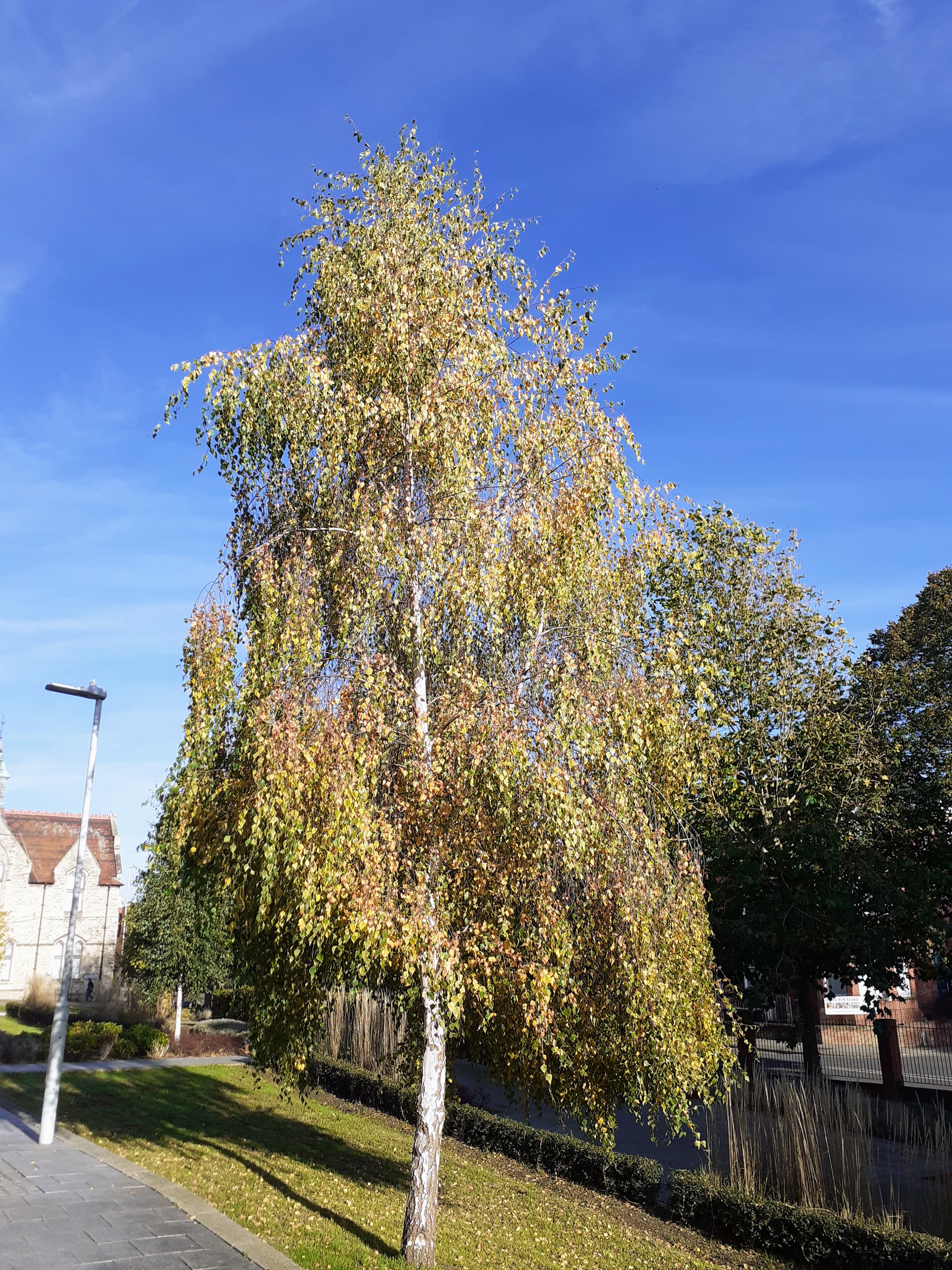
The November around me is grey and gloomy, though not especially cold. I notice this year that I am not entering the seasonal zeitgeist, not going with the flow of time as I normally do. Instead, I am marshalling my resources. I am pushing back. I am not all contemplative and I find myself more concerned with agency than with surrender to what is.

The Ace of Wands card in The Druidcraft Tarot (1) says, in the language of the mundus imaginalis (2): “Here the wand is offered to us from the heart of the sun – the source of creative fire, initiative and energy”. The card fell out of the pack when I believed I was looking for something else. I thought. ‘yes, I as an individual person am not dead. I am not ready to fade away into another realm or be dispersed into universe of interbeing. I’m here, now, home and not done yet. I have life, love and work yet to cherish and enjoy. I can still make things happen, should I so choose”.

I am inspired by my walks with my wife Elaine outside our flats as she relearns to walk with big new boots and a rollator. Such determination. The wand in the card is a birch wand, The wood is alive and leaves are falling from it. Elaine and I walk amongst at least two varieties of birch. One has finished shedding its leaves. The other hasn’t. For Druids, the birch is connected through the ogham alphabet with ideas of birth and new beginnings. Unseasonal or not, this is an energising place to be.

(1) Philip and Stephanie Carr-Gomm The Druidcraft Tarot: Use the Magic of Wicca and Druidry to Guide Your Life London: Connections, 2004 (Illustrated by Will Worthington)

(2) “Mundus Imaginalis or the Imaginal was a term coined by Henry Corbin, a friend and colleague of C. G. Jung. This concept captures the fundamental key to working with symbols and the creative imagination, allowing the psyche to move beyond the limiting constraints and one-sided attitude of the ego.” See; https://appliedjung.com/mundus-imaginalis/

(3) See; https://contemplativeinquiry.blog/2021/02/01/birch-new-beginnings/

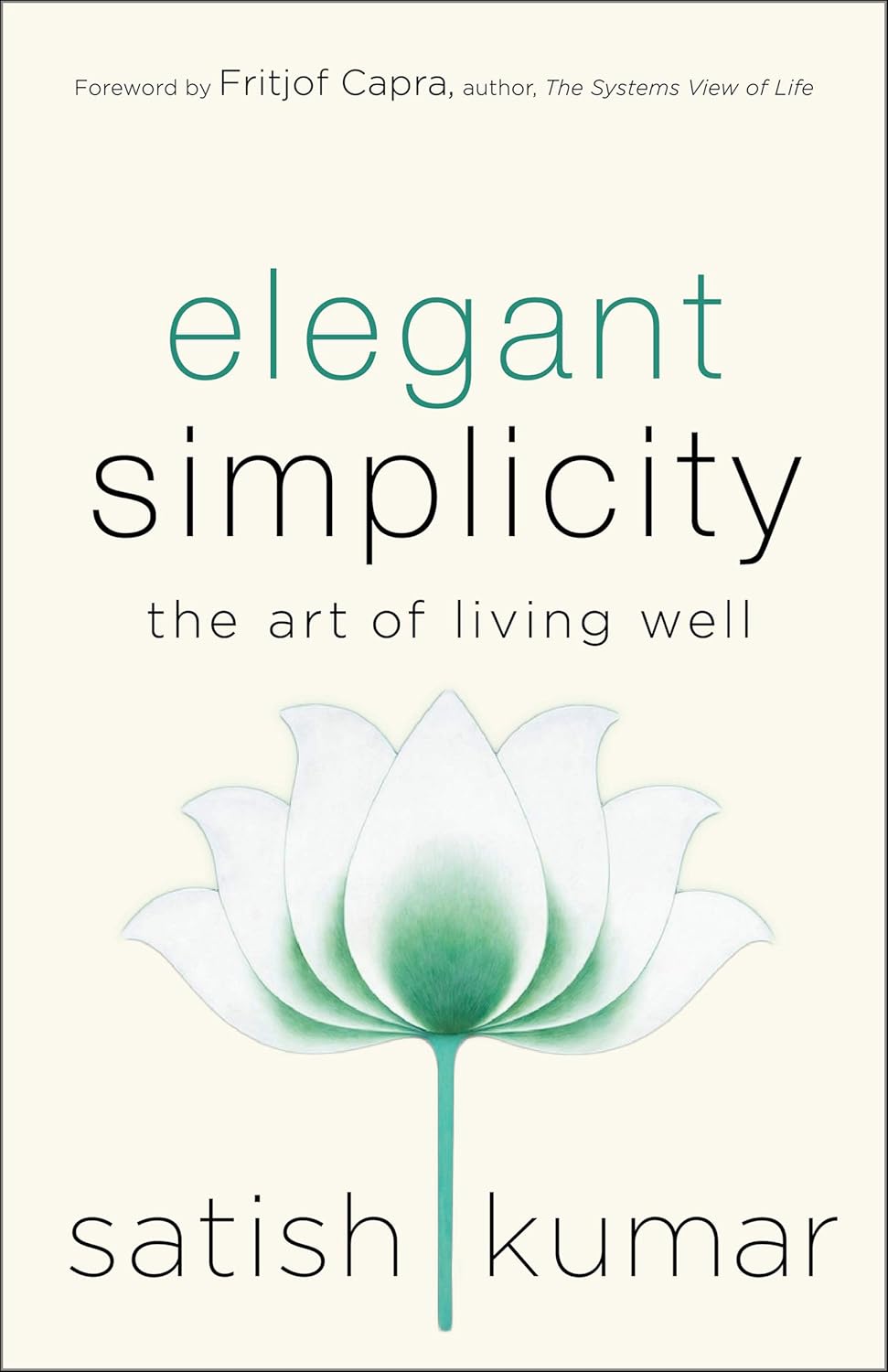
BOOK REVIEW: ELEGANT SIMPLICITY

Highly recommended. Satish Kumar (born in 1936) published Elegant Simplicity: the Art of Living Well in 2019 (1). It begins with a foreword by Fritjof Capra and a preface by the author Let’s be Simple which quotes the 1848 Shaker song ‘Tis the gift to be simple, ‘Tis the gift to be free. The book summarises the author’s personal story as well as discussing his values. I have written posts based on some of his other work before (2). I especially recommend this book to anyone interested in knowing more about Satish Kumar’s practice (grounded in Jain spirituality and Gandhi’s non-violent activism) and his influence on deep ecology, creative arts and education.

Elegant Simplicity has a summarising quality, looking back on decades devoted to sacred activism in different forms. It is divided into fourteen chapters: Each is preceded by a brief and relevant quotation from another thinker. The chapter then becomes a meditation on the quote:

1 My Story: Beginnings – ‘True happiness lies in contentment’ Mahatma Gandhi.

2 Simplicity of Walking – ‘All truly great thoughts are conceived by walking’ Friedrich Nietzsche.

3 Life is a Pilgrimage – ‘Faith is not the clinging to a shrine but an endless pilgrimage of the heart’ Abraham Joshua Heschel.

4 Elegant Simplicity – ‘Any fool can make things complicated, it requires a genius to make them simple’ E. F. Schumacher.

5 A Society of Artists – ‘This world is but a canvas to our imagination’ Henry David Thoreau.

6 Yoga of Action – ‘Life is a process not a product’ Brian Goodwin.

7 Learning is Living – ‘Education is not preparation for life; education is life itself’ Thomas Dewey.

8 Right Relationships – ‘We are all related – relationships based on obligation lack dignity’ Wayne Dwyer.

9 Love Unlimited – ‘There is no charm equal to tenderness of the heart’ Jane Austin.

10 Power of Forgiveness – ‘It’s one of the greatest gifts you can give yourself, to forgive. Forgive everybody.’ Maya Angelou.

11 Dance of Opposites – ‘Life and death are one as the river and the sea are one’ Kahlil Gibran.

12 Deep Seeing – ‘To see clearly is poetry, prophecy, and religion, all in one’ John Ruskin.

13 Union of Science and Spirituality – ‘Science is not only compatible with spirituality; it is a profound source of spirituality’ Carl Sagan.

14 Soil, Soul and Society – ‘We live in an interconnected world and in an interconnected time so we need holistic solutions to our interconnected problems‘ Naomi Klein.

Fellow activist and author Vandana Shiva describes Elegant Simplicity as “the distillation” of Satish Kumar’s ideas and actions. “It shows the intimate connections between the inner and the outer world, soil, soul and society, beauty joy and non-violence. It indicates that the solutions to the big problems of our time – climate change, hate, violence, hopelessness and despair – lie in thinking and living with elegant simplicity, reducing our ecological footprint while enlarging our hearts and minds”.

For me, Satish Kumar is an inspiration rather than a direct model. Even in the conditions of the early 1960’s I would not have walked, or aspired to walk, from New Delhi to Washington DC without carrying any money. Yet Satish Kumar and his companion E. P. Menon succeeded and made a huge public impact at the time. Their peace pilgrimage gave oxygen to the campaign for nuclear disarmament. No state gave up its arms, but treaties limiting the numbers and testing of nuclear arms became normalised for some decades. Satish Kumar’s initiatives in deep ecology and education, especially the ‘small school’ and Schumacher College, have changed lives. Directly and indirectly, his influence has awakened many people from the dystopian trance of our dominant cultures. Satish Kumar is a widely revered elder: a peaceful warrior for a more liveable, generous and creative world.

(1) Satish Kumar Elegant Simplicity: The Art of Living Well New Society Publishers (https://www.newsociety.com): Gabriola Island, BC, Canada: 2019

(2) See previous posts:

NEWS OF A DEATH

TWO VIEWS OF THE DIVINE

OUTDOOR WALKING MEDITATION

NOTE: “Satish Kumar (born 9 August 1936)[1] is an Indian British activist and speaker. He has been a Jain monk, nuclear disarmament advocate and pacifist.[3]Now living in England, Kumar is founder and Director of Programmes of the Schumacher College international center for ecological studies, and is Editor Emeritus of Resurgence & Ecologist magazine. His most notable accomplishment is the completion, together with a companion, E. P. Menon, of a peace walk of over 8,000 miles in June 1962 for two and a half years, from New Delhi to MoscowParisLondon, and Washington, D.C., the capitals of the world’s earliest nuclear-armed countries.[4][5] He insists that reverence for nature should be at the heart of every political and social debate.” (Wikipedia)

LIVING LIGHT

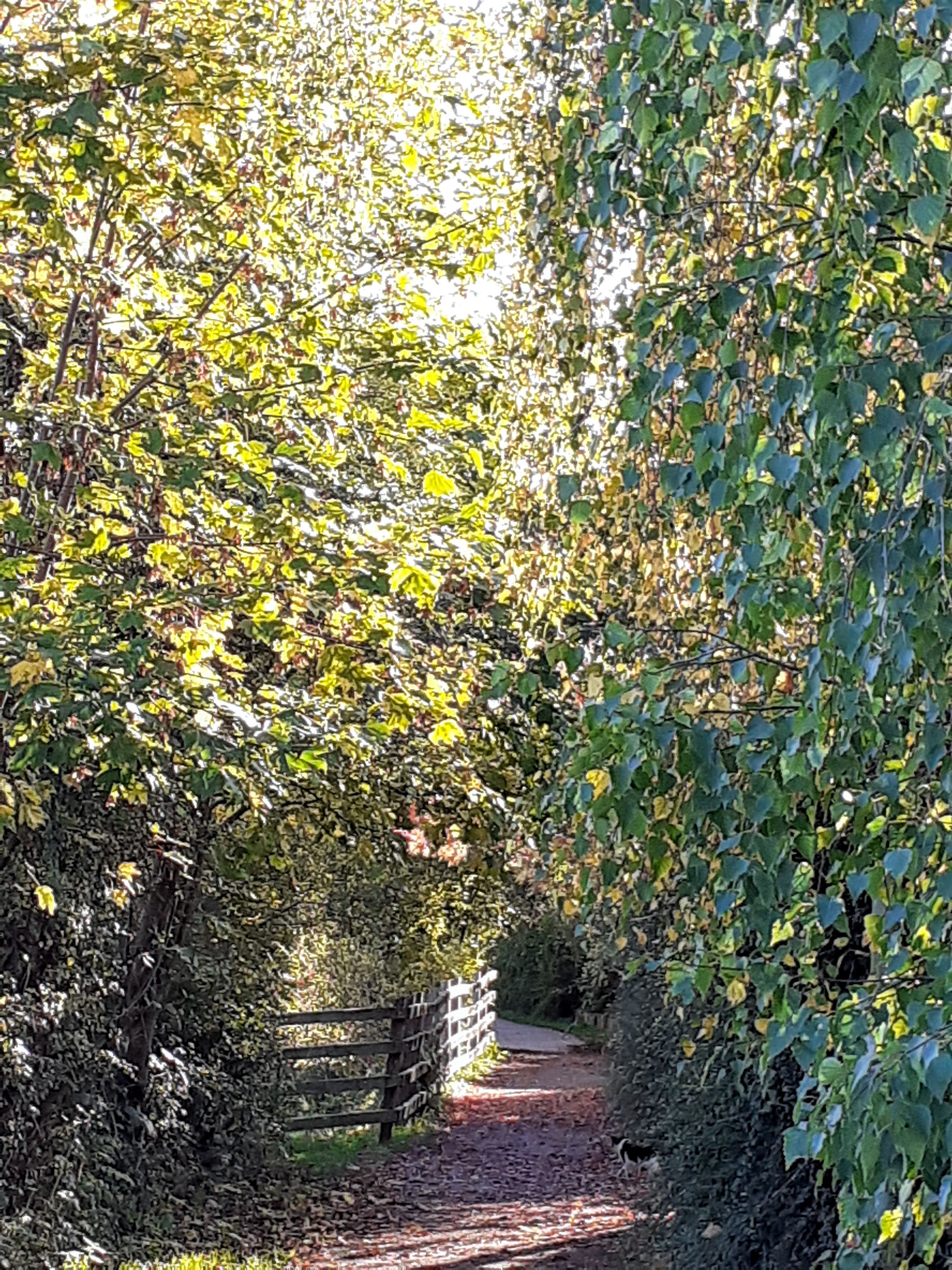
I am walking in woodland beside my local canal. These walks are infrequent now and all the more treasured. I notice how strong mid-afternoon light can be when the sky is clear, even on 22 October. Stepping energetically into its presence, I enter into a kind of communion. The light feels alive and I feel differently alive too – lifted, and touching into joy.

In the picture above, I feel as well as see the effects of the light on trees and water. In the picture below, I both feel and see the living light on leaves which themselves seem to greet me from their horizontal branch. I feel energised by this connection.

Looking up I see blue sky. I do not see the sun, but I can see its effects on the upper branches of trees. both subtle and magical. Looking down, I see a dance of light and shade, with the light present on a fence and on a pathway. A sense of the sacred pervades everything, and I feel blessed.

MY OCTOBER 2024

October, 2024. Outside, leaves turn and fall. The days shorten, long evening walks no longer part of my day. But six months after her accident in Gran Canaria, my wife Elaine is re-learning to walk. A great blessing – we both wondered if she would.

A gift from Awen – three words tumbling into manifestation with no thinking effort from me: healing, peace power (1). A kind of Druid koan. Easy to see that peace might follow healing, and that healing might be a condition of true peace. But the power following on from that peace? – very different from the kinds of ‘power’ most visible in the world today. What do I need to learn?

I had a dream in which I read a map to get to a school. I arrived at the school and was happy enough with my experience. Then I read the map again and saw that it was the wrong school. The one I should have gone to was further away, to the north-west.

At Samhain, the culmination of October, we think of of the dead, and a loosening divide between the dead and the living. What can we say to them – ancestors and recent dead alike? What might they say to us?

(1) see: https://contemplativeinquiry.blog/2024/10/17/awen

AWEN

Recently I have been contemplating both my understanding and my experience of Awen. Above is a picture of my Awen pendant, a modern Druid badge of belonging. It is based on the three ray symbol developed by Iolo Morganwg (Edward Thomas 1747-1826). It also depicts the three drops from Cerridwen’s cauldron in the Taliesin myth. Hanes Taliesin, popularised in Charlotte Guest’s 19th CE English translation of the tale, is now a significant influence on modern Druids.

Ten years ago I published Contemplative Druidry (1), a book based on interviews with active Druids about the place of contemplation within today’s Druidry. It included a chapter on Awen, and revealed a lack of consensus about what Awen actually meant to the interviewees. I wrote: “Awen is classically seen in Druidry as the power of inspiration, and in particular the creative force for poetry and prophecy … Many of the participants in this work uphold the tradition in its conventional form. Others seek to extend the traditional meaning better to express their own experiences and aspirations. Some don’t connect with Awen experientially and treat it as a convention – mainly a shared chant which brings Druids together.”

Since that time (2014), the evolution of modern Druidry has continued apace. In recent years, the most inspirational definition of Awen I have encountered is one by Kristoffer Hughes, Chief of the Anglesey Druid Order and a native Welsh speaker. He describes Awen as (2): “the creative, transformative force of divine inspiration that sings in praise of itself; it is the eternal song that sings all things into existence, and all things call to Awen inwardly”. For him, the personified deity intimately linked with Awen is Cerridwen, for him a goddess of “angular, bending magic” whose cauldron is “a vessel of inspiration, a transformative device, a vessel of testing”.

In a sense Hughes is the Pagan inheritor of the Unitarian Iolo Morganwg, who reframed St. John’s “In the beginning was the Word” (3) as ‘In the beginning was the Song’ – “all the universe leapt together into existence of life, with the triumph of a song of joy … and the sound of the song travelled as far as God and His existence are” (4). Hughes sees Iolo as a model of Awen’s influence in the world: “He carried the seeds of Awen and profoundly influenced a future that he could not imagine … He is testament to Awen’s consistent stream and how it too changed its countenance to meet the needs of different people at different times”. The Romantic period Iolo lived into was “a cauldron of new ideas”, with a new era of bardic tradition in its infancy and “occult fascination among the learned of the time increasing in popularity” (2).

Looking beyond Druidry, I think of the words of Kabir, the Indian 15th century CE poet/singer and mystic: “If you want the truth, I’ll tell you the truth. Listen to the secret sound, the real sound, which is inside you” (5). Kabir was a Muslim who was also heavily influenced by Indian Tantric/Vedantic culture. In this culture, OM is the primal originative sound. AUM (so like Awen) is its feminine form, the creative energy or Shakti of the Cosmos giving shape and substance to the material world. For me it is as if the sound itself holds the power, waiting to be discovered, and transcending any specific cultural context. It seems somehow inherently resonant and inspiring; an anchor for empowering states.

In my current practice I work with Awen both as chant (Aah-ooo-wen) and as mantra (inbreath Aah, outbreath wen). I have done this on and off for many years, and I have fairly recently returned to ‘on’. When I work energetically, I seem to become porous to the world. I experience a lightness and a loosening of boundaries. Reality is not fixed and locked down. Into this space Awen can enter, and I find myself in a place of healing, peace and power. This doesn’t have a direct cause-effect link with creative work in the world, but it does mobilise my capacity for such work. This is now my experience of Awen.

(1) James Nichol Contemplative Druidry: People, Practice and Potential Amazon/KDP, 2014 (Foreword by Philip Carr-Gomm)

(2) Kristoffer Hughes Cerridwen: Celtic Goddess of Inspiration Woodbury, MN: Llewellyn Publications, 2021

(3) Holy Bible: King James Version Green World Classics edition, 2017

(4) J. Williams ab Ithel (editor) The Barddas of Iolo Morganwg: A Collection of Original Documents, Illustrative of the Theology, Wisdom, and Usages of the Bardo-Druidic System of the Isle of Britain Forgotten Books, 2007 (First published 1862, from notes and journals left by Iolo on his death at 79 years of age in 1826).

(5) Sally Kempton Meditation for the Love of It: Enjoying Your Own Deepest Experience Boulder, CO: Sounds True, 2011 (Foreword by Elizabeth Gilbert),

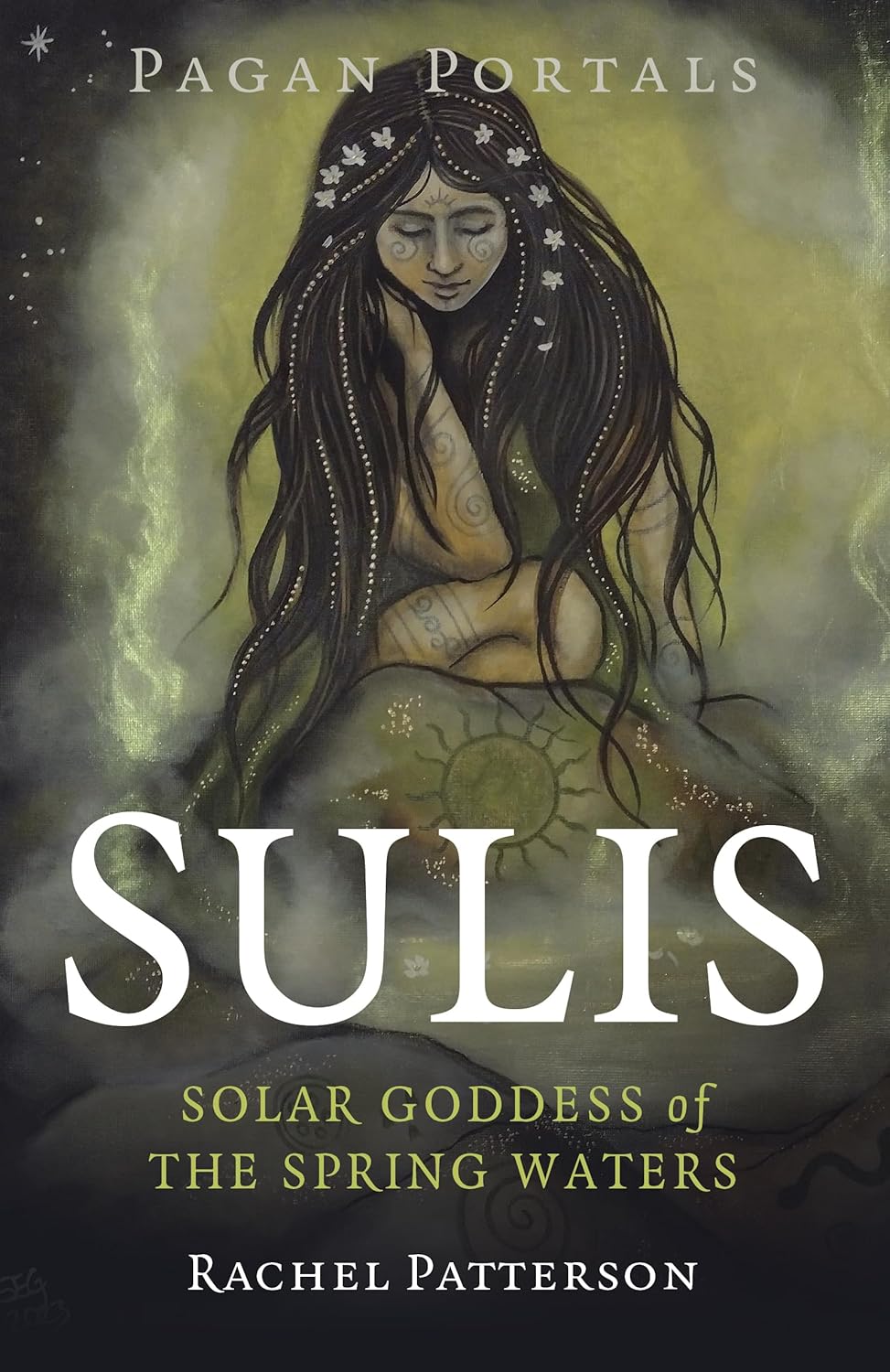
BOOK REVIEW: SULIS, SOLAR GODDESS OF THE SPRING WATERS

Recommended especially to two overlapping groups: first, readers interested in Sulis (later Sulis-Minerva) the presiding deity of the hot springs at Bath, UK; second, readers interested in polytheist Paganism in Britain, both ancient and modern. Author Rachel Patterson describes her heart as that of an English Kitchen Witch and her craft “a combination of old religion witchcraft, Wicca, hedge witchery and folk Magic”. Hence in this book she focuses not only on the history of Sulis and her springs but also on how to work with Sulis today.

The hot springs at Bath are the only ones in the country, appearing after the last Ice Age around 12,000 years ago. The people who re-settled the land as hunter gatherers began leaving offerings at the springs around 9,500 years ago. They continued to do so for several thousand years until the appearance of farming. We have no record of their beliefs, but for them the numinous power may well have been the living presence of the springs themselves, rather than a presiding deity.

The farmers, when they came, seem to have left the springs alone. But early in the first century CE a causeway of gravel and mud was placed in the main spring pool. Offerings were made, principally of coins minted by the local Celtic tribe, the Dobunni. Pottery was also found but there were no buildings. In 43 CE the Romans invaded Britain and quickly established themselves in the south. The Dobunni chose peace and an accommodation with the Romans, who soon created a spa, building on top of the natural springs. They adopted the local goddess Sulis, now to be known as Sulis Minerva. A town gradually grew up, named Aquae Sulis (The Waters of Sulis). A temple and sanctuary began to be built in 70 CE. The baths are now well-kept after an up-and-down history, and are open to visitors. See http://www.romanbaths.co.uk.

Rachel Patterson describes how the temple worked in the Roman period. Many of the extant records are written curses from people whose clothes and possessions were stolen while they bathed. They asked the Sulis for retributive action in return for offerings and the lost possessions themselves (1). Patterson also describes the decoration of the temple and artifacts from it. The best known was once called the gorgon’s head but is clearly the head of a male figure. He seems to be associated with a god named Belenus, who may in turn be connected with the legendary King Bladud included in Geoffrey of Monmouth’s History of the King’s of Britain (2,3).

The second half of Rachel Patterson’s book is about working with Sulis. It is a thorough and practical guide for readers who may want to go down that path. It includes sections on making candles and altars dedicated to Sulis; on finding Sulis; building a relationship with her; advice on oath-taking; and the development of rituals and meditations dedicated to her. There is relevant advice on the use of herbs, crystals, forms of divination, petitions and curses. There are sections on animal companions and (pigs and wild boar as the Celtic contribution, owls and dolphins related to Minerva). As a Kitchen Witch, Rachel Patterson also provides a number of recipes.

I have lived both the first and most recent 20 years of my life within a forty mile radius of Bath. I don’t go there very often. But I have known it from an early age and bathed in the waters during the more recent period. There is indeed something magical about them. So I’m glad to see Sulis taken more seriously. There is a familiar problem about limited information from the past and Rachel Patterson discusses this in her book But for me there is enough resonance from the old times, here, to dream the myth onwards. I can’t assess the practical guidance offered in Sulis: Solar Goddess of the Spring Waters because I don’t work in the same way. But I do know it is comprehensive and comes from a seasoned practitioner. It feels to me like a timely addition to the Pagan Portals series, and I am grateful to have it.

(1) Further information about religion in Roman Britain, and its rather transactional nature, can be found in Prof- Ronald Hutton’s Gresham College lecture on Paganism in Roman Britain. See https://contemplativeinquiry.blog/22/12/12/paganism-in-roman-britain/ – where a link to the lecture is provided,

(2) see picture and narrative at https://contemplativeinquiry.blog/2021/03/23/the-sacred-head-of-bladud/

(3) For creative treatments of the story of Bladud and the Goddess Sulis, see Kevan Manwaring’s account in The Bardic Handbook and two novels by Moyra Caldecott: The Winged Man and The Waters of Sul

WATERFRONT CHANGE

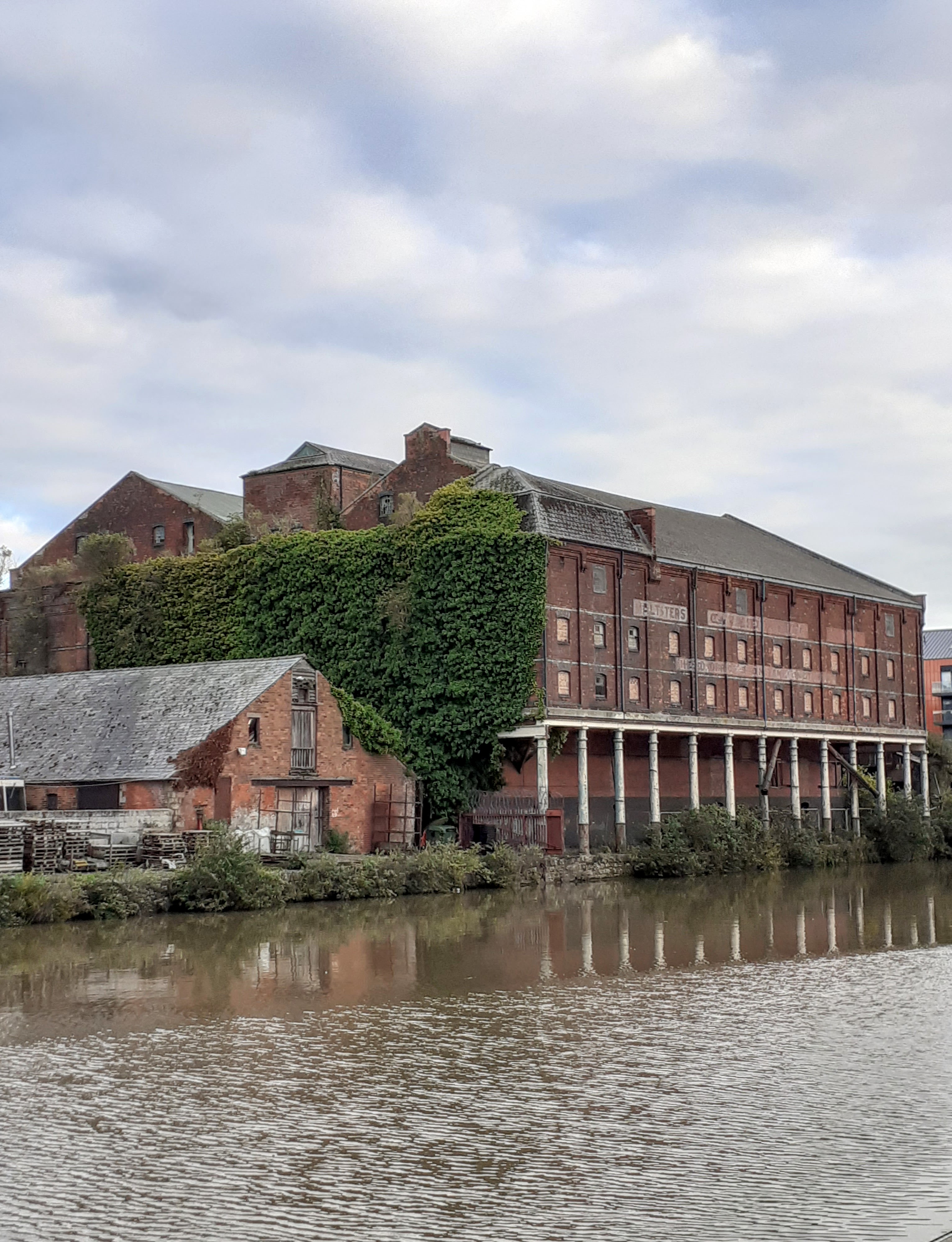
The stretch of water above leads from Gloucester Docks to the Gloucester-Sharpness Canal. The canal was completed in 1827 and the buildings (above) appeared a few years later. The larger, pillared building was known as Downing’s Malthouse and stayed in business until around 1980. For some years thereafter it was used for grain storage. Now it a a Grade II listed building awaiting another life.

From the far side of the canal, the erstwhile malthouse looks tranquil and attractively derelict – solid old brick with greenery on the walls. The forces of decay are relatively slow, and ‘listed’ status provides a degree of human protection. For a few moments I am charmed by by the view. I briefly wish that it could be frozen in time, through a flies-in-aspic form of conservation, admittedly sterile. But the thought doesn’t last. We earthlings experience time and life primarily in change, events and processes – through what happens, interacts and evolves (1). These buildings weren’t designed to be monuments.

So I am glad that people and activity will be returning to Downing’s Malthouse through the building of residential apartments. Housing is in short supply here and I find myself friendly to this kind of development. The shell of Downing’s Malthouse, and its distinctive pillars, will be retained. I dare say that the smaller building will go, and so I’m memorialising it in the picture below.

(1) https://contemplativeinquiry.blog/2018/08/16/carlo-rovelli-on-time/

A BRIEF TASTE OF THE WILD

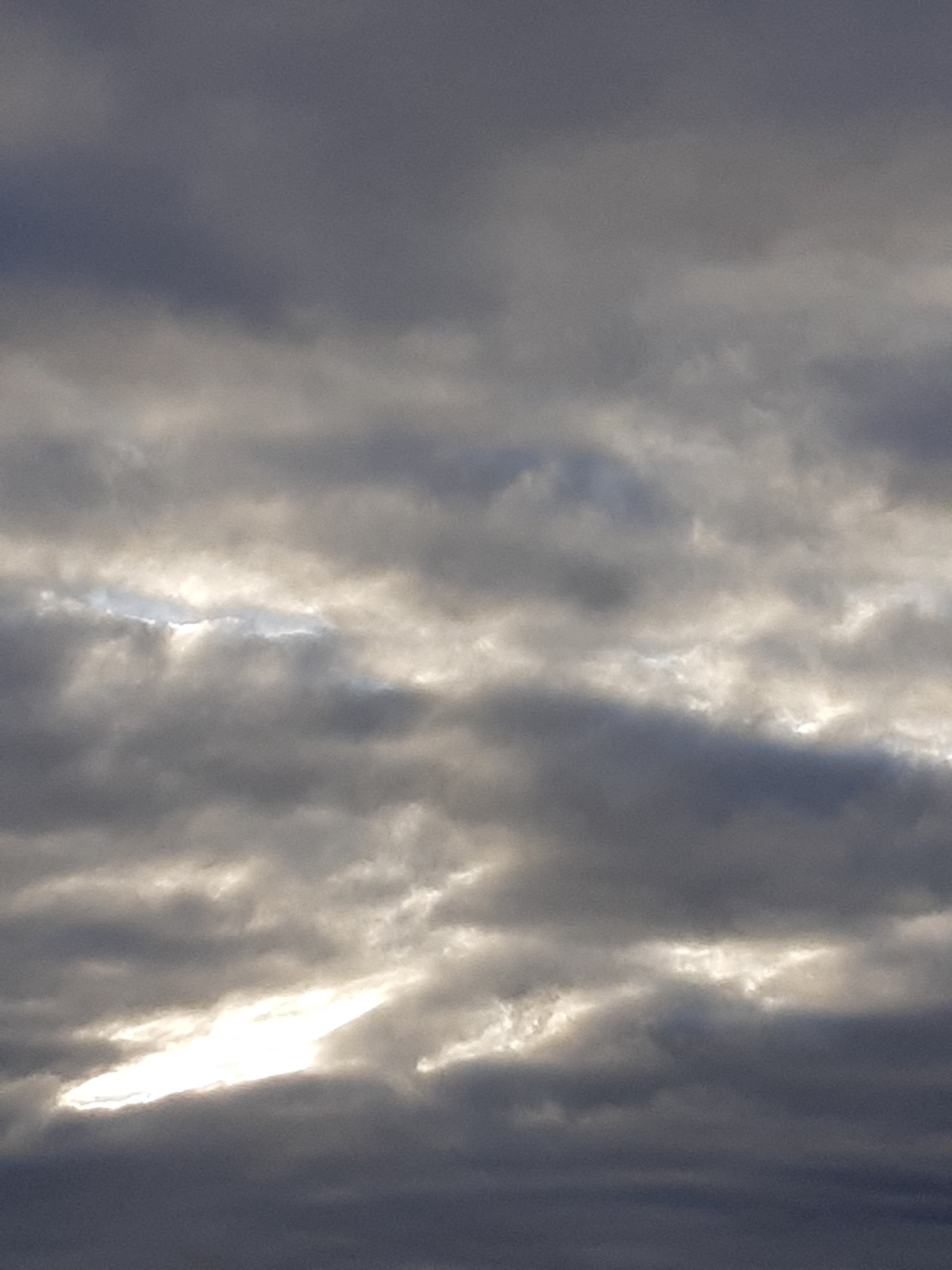
I took these pictures one recent evening in the wetlands of Alney Island, on the River Severn at Gloucester. It felt dark and broody most of the time. There was a threat of rain and storm though not the actuality. The feeling-tone suggested raw nature and remoteness: a place where I as a human didn’t exactly belong. Boggy land and turbulent sky were elementally indifferent to me and my concerns. I was simultaneously inspired and edgy.

Then the sky changed and I changed with it. I noticed the sun. It was declining but that didn’t matter. It was signalling its presence to me from a suitably safe distance. Comfort and familiarity returned. I was on a small reserve in the middle of a city. I had lost a moment of wildness and gained a perceived security. Being human, I both took the deal and wondered about the possibilities I may have abandoned..

Earth Eclectic

music that celebrates Earth and speaks to the heart

Sarah Fuhro Star-Flower Alchemy

Follow the Moon's Cycle

Muddy Feet

Meeting nature on nature's terms

Rosher.Net

A little bit of Mark Rosher in South Gloucestershire, England

Becoming Part of the Land

A monastic polytheist's and animist’s journal

selkiewife

Selkie Writing…

Charlotte Rodgers

Images and words set against a backdrop of outsider art.

Prof Jem Bendell

living with metacrisis and collapse

Towint

The pagan path. The Old Ways In New Times

The Druids Garden

Spiritual journeys in tending the living earth, permaculture, and nature-inspired arts

The Blog of Baphomet

a magickal dialogue between nature and culture

This Simple Life

The gentle art of living with less

Musings of a Scottish Hearth Druid and Heathen

Thoughts about living, loving and worshiping as an autistic Hearth Druid and Heathen. One woman's journey.

Wheel of the Year Blog

An place to read and share stories about the celtic seasonal festivals

Walking the Druid Path

Just another WordPress.com site

anima monday

Exploring our connection to the wider world

Grounded Space Focusing

Become more grounded and spacious with yourself and others, through your own body’s wisdom

The Earthbound Report

Good lives on our one planet

Hopeless Vendetta

News for the residents of Hopeless, Maine